Update on the state of the legislative races; a few GOP Primaries in the near future for Sioux Falls

Catching up on my new State Legislative Filings with the Secretary of State as well as general intel that I’ve collected, it appears that we’ve picked up a couple more primaries in area of (and around) Sioux Falls for the newly formed State Legislative Districts.

  • District 2 is kind of quiet with Spencer Wrightsman as the only one filing a committee to run for the Senate at the moment, but with a few names still floating around undecided as of yet.  Jake Schoenbeck has filed committee papers for the House, where State Rep. Doug Barthel is the only incumbent.  There are rumors that there may be as many as 4-5 people considering getting in that District.. as well as talk that Barthel might not run.  But, rumors are just rumors, and there’s a lot of time between now and the filing deadline in March.
  • Same goes for District 9 where Wayne Steinhauer is the incumbent Senator in the House, and there are rumors of a possible House primary in this District where Representatives Rhonda Milstead and Bethany Soye reside. But nothing official yet.. This will be one to watch.
  • As will be District 10, which is a wide open space at the moment with no Republicans showing their hand against Rep. Erin Healy as the incumbent Democrat for the House, and Senator Maggie Sutton as the anticipated Senate candidate. At the moment.  After redistricting, it’s a tougher district for the GOP, and this may be where Democrats think they can shift a candidate to a higher office. Could be a battleground for both parties.
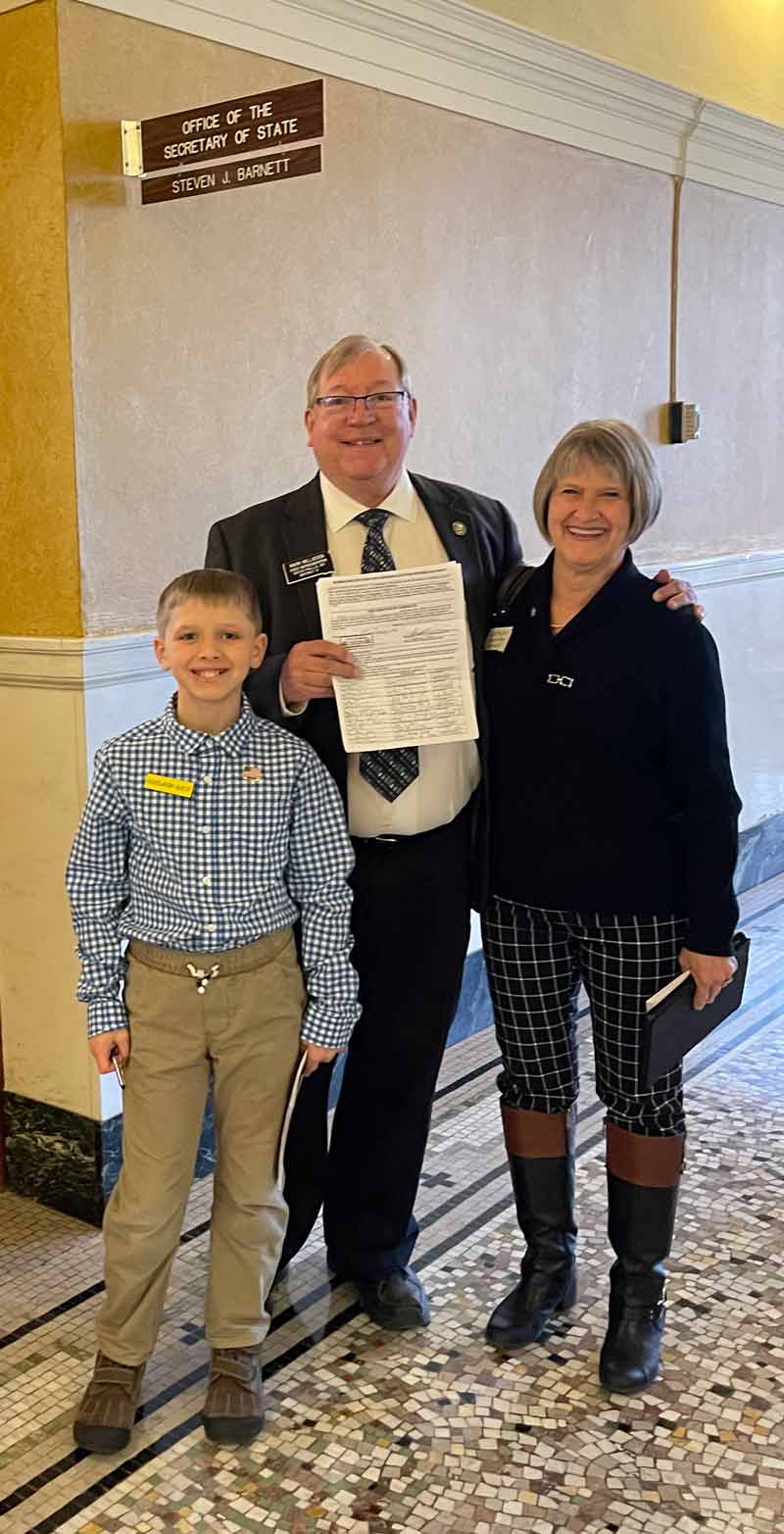
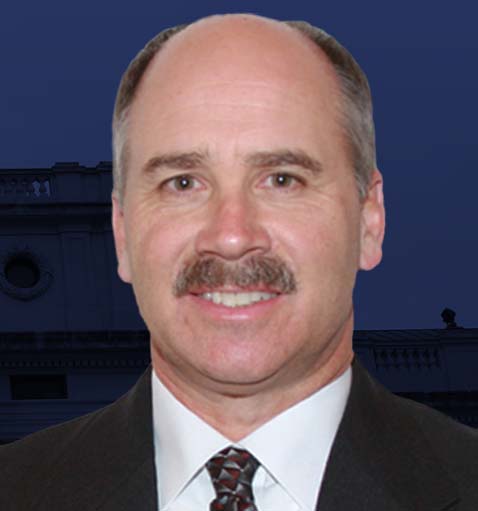
  • District 11 House appears to have incumbent Representative Chris Karr facing newcomers Brian Mulder and Tyler Bonynge all competing for two State House seats. Senate in D11 is stable at the moment with Senator Jim Stalzer expected to run again.
  • At the moment, District 12’s primary slate has incumbent State Representative Greg Jamison likely running against Cole Heisey, who unsuccessfully ran for District 15 House in 2020, and newcomer Gary B. A. Schuster who filed a committee this last week.  There’s a bit of interest as there’s anticipated to be an available seat in the House because State Rep. Arch Beal is pretty open about that he’s jumping to the Senate in 2022.
  • District 13 seems to be stable with incumbent State Representatives Sue Peterson & Richard Thomason expected to run, and Senator Jack Kolbeck also holding strong in a Senate race.
  • District 14 has incumbent State Rep. Taylor Rehfeldt and new candidate & Rounds staff member Tyler Tordsen. With the open seat, there’s talk about others jumping in, but Taylor & Tyler will be two very strong competitors for the GOP.  Watch for Senator Larry Zikmund to stay where he is as well.
  • New Republican candidate Dane Wagner will be facing incumbent Democrats Linda Duba and Jamie Smith for the House in a newly reconfigured District 15. I thought I might have heard of a challenger for Senator Reynold Nesiba, but we’ll see what arises. D15 in past configurations has been traditionally tough for Republicans.
  • Watch for District 16 House to have incumbent State Representatives Kevin Jensen and Richard Vasgaard competing for two House seats, with possibly Karla Lems who announced she was planning to run at a GOP dinner earlier this year.  Unless redistricting scuttled those plans. No word on whether Senator Jim Bolin will have a Senate challenge in either the primary or the general, but 2022 seems to have a lot of people willing to give it a go.
  • As I’d mentioned before, District 25 House still has us anticipating that State Rep’s Randy Gross, Tom Pischke & Jon Hansen will all be forced match up against one another in the District…
  • .. But a new twist is that now there’s a primary in District 25 Senate as well. Kevin Crisp, who served in the State House as a Republican from 1997-2000 has thrown his hat in the ring to run for State Senate, filing to form a committee to run for that office against incumbent Senator Marsha Symens.

And that’s what I’ve got for the moment in the Sioux Falls area.

I’ll continue to up this as intel comes in, and trust me – this list is going to continue to grow and change. Stay tuned as we get closer and closer to when petitioning starts on January 1.

(If you have a press release or even just a hot tip, drop me a note here!)

US Senator John Thune’s Weekly Column: SALT in the Wound

SALT in the Wound
By Sen. John Thune

I may be a little biased when I say this, but South Dakota is the best place in the country to live, work, and raise a family. We have great people who are hardworking and God-fearing. South Dakota boasts a strong economy with one of the lowest unemployment rates in the country. And we value personal freedom and fiscal responsibility. We want people to keep more of their hard-earned money and make their own decisions about how they use it. That’s why South Dakota is one of the few states in the country that doesn’t have a state income tax.

Unfortunately, Washington Democrats are trying to capitalize on states like South Dakota that practice fiscal responsibility by penalizing our taxpayers and rewarding those in other high-tax states. That’s right, Democrats want to use your tax dollars to subsidize millionaires who live in states like New York and California. It sounds crazy, but this proposal is a key pillar in the Democrats’ reckless tax-and-spending spree bill and the second most expensive item over the first five years of the bill’s lifetime, should it be enacted.

It’s called the “state and local tax deduction,” or SALT deduction. It’s a federal law that allows taxpayers in states that have a high state income tax to deduct a portion of that expense from their federal income tax. It forces federal taxpayers in all 50 states to offset the high taxes certain states have chosen to impose on their residents. It’s unfair, and it has the potential to reward fiscal irresponsibility.

The Republican-led Tax Cuts and Jobs Act capped the SALT deduction at $10,000 in order to protect the vast majority of affected middle-income taxpayers. Democrats, however, plan to lift the cap to $80,000 without an income limit, tilting the benefit disproportionately to high-income individuals who mainly live in Democrat-led, high-tax states. Under the Democrats’ proposal, approximately 70 percent of the tax benefit would go to the top 5 percent of households, and nearly one-third of the tax benefit would go to the top 1 percent of households. As for lower- and middle-income families, this benefit would do almost nothing. In other words, Democrats want folks in states like South Dakota to pay for a tax break that would be a windfall for some of the wealthiest individuals in our country who are living in high-tax states.

I believe that it is fundamentally wrong for the taxpayers of South Dakota to be subsidizing wealthy Americans because their states have decided to enact policies that require them to take more money from their citizens. I’m confident that South Dakota taxpayers don’t want their money being used to make the rich richer. It’s clear that Democrats in Washington could learn a thing or two from the way we do things in South Dakota – we aren’t interested in being told how to live our lives by out-of-touch Washington bureaucrats, and we definitely aren’t interested in bailing out costal elites in blue states.

For months, I have been sounding the alarm on many of the egregious items in the Democrats’ reckless tax-and-spending spree. This is one of the worst, and I’m curious to hear how Democrats square their campaign slogan of wanting the “wealthy to pay their fair share” with their proposal to give the wealthy a massive tax break. The bottom line is that the Democrats’ bill is full of radical and irresponsible policies that will hurt middle-income families and increase the role of the federal government in their lives. Folks in South Dakota hired me to be a good steward of their tax dollars, which is why I will continue to speak out and work to stop these damaging and irresponsible proposals.

###

Dusty Johnson’s Weekly Column: Getting It Done

Getting It Done
By Rep. Dusty Johnson
December 10, 2021

There’s a classic narrative that nothing gets accomplished in Washington. I’ll admit there’s a lot of disfunction in government, but this week that wasn’t the case.

The end of the year is a busy time for most folks– from college finals to end of year budgets, project deadlines and Christmas shopping – it’s crunch time. It’s similar in Congress. After months of work and collaboration, two of my bills passed the U.S. House this week.

The Ocean Shipping Reform Act (OSRA) that I led with Representative John Garamendi to hold foreign ocean shippers accountable passed the House 364-60. This bipartisan bill is the biggest overhaul of federal maritime policy in 30 years to address the ongoing supply chain crisis and will safeguard South Dakota agriculture exporters from unfair trade practices like we are seeing at U.S. ports today.

South Dakota businesses from Strider Bikes in Rapid City to Valley Queen Cheese in Milbank are experiencing port delays, equipment access issues, and declined bookings. These delays have a negative impact on our local economy. More than 2 million pounds of South Dakota lactose that’s been sold and is ready to ship is sitting in Valley Queen’s warehouse waiting for an empty container to become available. On top of that, the National Milk Producers Federation estimates that export supply chain challenges cost the U.S. dairy sector nearly $1 billion in only six months.

My bill provides a solution to these problems, and I am confident it will get quick consideration in the Senate.

The Cattle Contract Library Act also passed the House on Wednesday. Currently, cattlemen are unaware of contract terms being offered by packers, leading to a decline in leverage for smaller producers during price negotiations.

Since I came to Congress, producers have made it clear they want transparency. The Cattle Contract Library provides just that and increases competition in an industry that desperately needs it. While no single piece of legislation can solve all problems, it can certainly help. Getting this bill across the finish line was a team effort, and I’m grateful to all of the producers that helped get this done.

I’m a policy guy, so I was encouraged to see a number of victories and real policies pass the House this week. Some might call it a Christmas miracle.

The work is not done though, but I will keep working to get both pieces of my legislation across the finish line in the Senate.

###

More on release of list of House members voting to hold impeachment session

The release of the names of House members who voted to hold a special session on impeachment last night by Senate President Pro Tempore Lee Schoenbeck is sure to be a point of contention among legislative leadership.. but it may not stop lawsuits directed at the Speaker and Legislative Research Council leadership.

“I don’t want to waste taxpayer money on this,” Schoenbeck said Friday, referring to ongoing litigation between the Argus Leader, Gosch and Reed Holwegner, the Legislature’s head record keeper.

However, the release of the petitions might not be enough to stave off a lawsuit. Holwegner in September denied a request for petitions related to previous special sessions called by the Legislature, including special sessions on redistricting in 2011 and 2021, and the Argus Leader continues to argue transparency regarding special session petitions should not be subject to the discretion of any individual lawmaker.

Read that here.

The decision whether to pay to defend Gosch in these lawsuits may be put to the legislature’s executive board. And that vote could potentially not be a sure thing.

Health Secretary Kim Malsam-Rysdon to Join Private Sector

Health Secretary Kim Malsam-Rysdon to Join Private Sector

PIERRE, S.D. – Today, South Dakota Secretary of Health Kim Malsam-Rysdon announced that she will be departing from the Noem Administration to join the private sector. Her last day as Secretary will be January 7, 2022.

“Kim has been a steady hand as our Secretary of Health,” said Governor Kristi Noem. “I have appreciated her help and partnership during unprecedented times. We will miss having her on the team, and we wish her all the best.”

Secretary Malsam-Rysdon has been the Secretary of the Department of Health (DOH) since 2015. She previously served as senior advisor to Governor Daugaard, Secretary of the Department of Social Services, Deputy Secretary of Social Services, and Director of the Divisions of Mental Health and Developmental Disabilities in the Department of Human Services. Prior to working for the state of South Dakota, Kim worked to help people with disabilities live and work in their communities. 

“I am thankful for the opportunity to lead the Department of Health the last seven years, and for Governor Noem’s leadership, particularly during the COVID-19 pandemic,” said Secretary Kim Malsam-Rysdon. “The employees of the Department of Health are some of the best public servants in the state, and I am grateful for their hard work on behalf of people in South Dakota.”

Joan Adam, current Division Director for Administration at DOH, will serve as the Interim Secretary of Health. Joan has worked for the Department for a combined twenty years. She has served as Division Director for Administration since 2010, where she oversees the SD Public Health Laboratory; Correctional Healthcare Services; the Offices of Vital Records and Health Statistics, and Health Information Technology.

Joan and Karl, her husband of 32 years, live in Pierre, SD, where they have raised their five children.  Their family also includes a son-in-law, daughter-in-law, and one grandson. You can find a picture of Joan here.

###

Little or no movement forward by Special Investigative Committee on Impeachment, House Speaker blames frivolous lawsuits.

Dakota News Now has a story on the Special Investigative Committee on Impeachment which was formed by the State House of Representatives to review whether there was any basis to impeach Attorney General Jason Ravnsborg as a result of a traffic accident where Joseph Boever was killed in September of 2020.

And apparently in doing things such as seeking open government and disclosure, the media is being blamed by the Speaker of the House for the committee’s lack of forward momentum:

It has been a month since the South Dakota State House convened to create a committee to consider the impeachment of Attorney General Jason Ravnsborg.

and..

Speaker of the House Spencer Gosch (R-Glenham), who heads the committee, says that part of the reason for the delay is because of a number of lawsuits, or threats of lawsuits, that he and the Legislative Research Council (LRC) have faced.

“In the process of finding special counsel we have run into a few hiccups,” Gosch said. “Whether that be frivolous lawsuits from certain media entities, that takes up a ton of our time, or just threats thereof. Ultimately, we have run into other hiccups too. We are still on the right path and will have more updates as they come.”

Read the entire story here.

They’d have had that all figured out if it wasn’t for those meddling kids in the media?

I’m sure they would.

Governor Kristi Noem’s Weekly Column: Budgeting for the future

Budgeting for the future
By Governor Kristi Noem
December 10, 2021

This week, I outlined my budget recommendations for how we will run our state in the next fiscal year. The past year has brought historic challenges. South Dakota has taken those challenges in stride and has come out stronger.

Our state has the strongest economy in America. I want to make sure that we do not take that for granted, and that we also work to keep that momentum building. We are going to invest in our people and prepare for the future.

South Dakota is ranked in the Top 5 for fiscal stability. That is because for 133 years straight, we have passed balanced budgets and we hedge against potential downturns in the economy. This year, our state has seen tremendous growth in our revenue. That is why I am recommending a historic 14% — about $300 million — for strategic reserves in case the negative indicators in the economy start to make their way into our state.

These include historic investments in workforce housing, to spur new development of single- and multi-family homes. This includes $150 million from the state and $50 million in federal funds. A partnership with local cities and developers will triple the total investment to $600 million for new housing.

Through a partnership with local, state, and federal dollars, we can put $1.5 billion in combined funding to address water projects. These would replace aging infrastructure and help develop new systems for wastewater and sewers.

For those who are already working here, our Department of Social Services will be using $100 million in federal dollars to support existing daycares with one-time costs. These dollars can help expand availability at daycares, and also train more people to work at daycares.

And for those who are looking to switch careers or are getting ready to enter the workforce, I am recommending more than $47 million to expand skilled workforce training capacity at our colleges and universities. These include strengthening programs focused on healthcare, cybersecurity, manufacturing, and farming , and ranching. These programs have the potential to make our schools a top draw for students around the world. They also will attract some of the most competitive companies in a variety of industries.

Of course, we also need to keep our people healthy and strong. That is why I am recommending several key investments in healthcare. In addition to expanding workforce training so we have more qualified nurses, I am recommending we invest in marketing and recruiting for the industries most affected by the pandemic. I am supporting funding to create regional Behavioral Health Centers to help individuals struggling with mental health or substance abuse issues.

To improve access to care in our rural communities, I am recommending a combination of state and federal dollars to improve EMS services. These include funding for new technology to expand telehealth, upgrading life-saving equipment, and regionalizing services to improve response times.

I am recommending that the Department of Tourism use federal dollars to expand our successful marketing of both local and state attractions. South Dakota saw record tourism numbers this past year. We want to help these visitors explore more of our state by working with local cities and Native American tribes on marketing efforts to increase exposure.

I am also continuing my support of law enforcement by recommending several investments to our courts and to the Department of Corrections (DOC). These include targeted pay raises for the DOC to be competitive with other law enforcement agencies.

This week, I revealed that our DOC facility needs currently sit at about $600 million. We will not spend all of that today, but I am recommending the legislature save money for these needs in the future. I am recommending $28 million to build a Community Work Center for Women in Rapid City.

Last, but not least, I am recommending a historic 6% increase in funding for our state employees, educators, and healthcare providers. This increase is the largest in state history, and it is necessary because of dramatic inflation and to keep our salaries competitive.

Of course, this is not the complete budget recommendation. These are some of the highlights of solutions to priority issues facing South Dakota. To view my full budget proposal for the Fiscal Year 2023, go to https://bfm.sd.gov/budget.

###

Sen. Julie Frye-Mueller still spreading crackpot theories on school handbooks

Republican women had a pre-legislative forum recently, and it sounds like State Senator Julie Frye-Mueller took the opportunity to continue to spread her crackpot theories on school handbooks:

“This is where the schools can play doctor with your children in their non-emergency invasive physical exams,” says Rep. Frye-Mueller, eluding to some fine print in school handbooks that she says she’d be happy to show someone if they asked. “It’s in federal law, so it’s in every school handbook. What an invasive physical exam is, is exposure of private body parts, including incision insertion and injection into the body. Now, I could send my child to school and they could get a vaccine. Incision,” she says counting on her fingers, “insertion, injection.”

Read it all here.

(I’m glad for the crowd’s sake she only had to count to three, or they might have been waiting a while.)

If you recall, Frye-Mueller hadn’t been shy about claiming school handbooks would give permission for schools to ‘transgender’ children.

And it sounds as if she’s planning to bring this complete nuttery to the legislature in Pierre next month.

Thune: Democrats Move to Double the Size of the IRS, Jeopardize Taxpayers’ Privacy

Thune: Democrats Move to Double the Size of the IRS, Jeopardize Taxpayers’ Privacy

“Democrats’ reason for this IRS expansion is to raise revenue to help pay for their tax-and-spending spree.”

WASHINGTON — U.S. Sen. John Thune (R-S.D.) today discussed the Democrats’ desire to double the size of the Internal Revenue Service in order to pay for their reckless tax-and-spending spree. Thune noted that the agency’s poor reputation and mismanagement of taxpayer dollars would further jeopardize the privacy of South Dakotans’ personal information.