
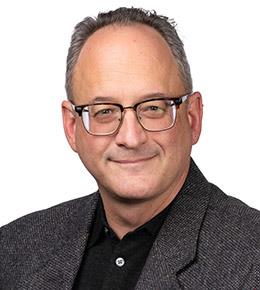
Guest Column: Lies Pt. 2 – Cops Lying to Citizens
Thomas E. Simmons
(This is part 2 of a 2-part series on lies. Part 1 can be found here.)
The case of Frazier v. Cupp (U.S. 1969) stands for the proposition that cops may utilize deception, mislead, and be untruthful in conducting investigations. Cops can and do lie. The badge, the uniform, and the impressively equipped squad car might suggest an unfailing dedication to the truth. Weirdly, it does, but officers may utilize untruth in order to uncover the truth. The ends – at least in this context – justify the means.
As explained by attorney Alexander Ransom, police officers may lawfully:
- Verbalize falsehoods concerning the evidence;
- Momentarily lie about the seriousness of an offense;
- Make unfulfilled promises of leniency in exchange for waivers of rights; and
- Lie about what others may have told them.
In the U.S. Supreme Court decision authorizing such tactics, a man named Frazier was identified as a murder suspect, along with his cousin, Rawls. When Frazier was initially questioned at police headquarters, he admitted to being with Rawls on the night that the victim was slain, but denied being with any third person.
The questioning became more vigorous, but Frazier stuck to his story. Then a police officer told him – falsely – that Rawls had been separately brought to headquarter and that he had confessed to the crime. Still, Frazier maintained that he had not been near the victim on the night of the murder, but before long he lost his nerve and confessed. The jury was allowed to hear his confession and he was convicted of second-degree murder.
Before the U.S. Supreme Court, Frazier argued that the cop’s lie concerning Rawls’ confession rendered his own confession involuntary, and therefore inadmissible. Justice Thurgood Marshall authored the decision which rejected his argument. Marshall explained: “The fact that the police misrepresented the statements that Rawls had made is, while relevant, insufficient in our view to make this otherwise voluntary confession inadmissible.”
The other eight justices agreed. Not a one dissented. Frazier v. Cupp remains good law today.
A popular urban myth asserts that if an undercover officer is directly asked whether he or she is, in fact, a police officer, they must answer truthfully. This is hogwash. Undercover officers are practiced in the art of deception. They adopt a false identify, a fictional name, a concocted motive, and a made-up background. Nothing requires them to be truthful about these deceits, even if they are asked point blank. They may deny the fact that they are an officer of the law.
The fact that the Supreme Court has held that police deception does not in and of itself render a confession induced thereby inadmissible does not preclude lawmakers from providing additional protections for those accused of crimes if they should choose to. About ten states (beginning with Illinois) have recently enacted statutes prohibiting police from deceiving juvenile suspects. But police are still permitted to lie to adults in all fifty states. The same is true in China and Israel, though not in England or Japan.
The argument in favor of the use of deception in interrogations is premised on the claim that it generates far more truthful confessions than false ones. Some research psychologists disagree. But police maintain that the use of subterfuge is a valuable investigative technique. I have personally seen Sioux Falls police straight-out lying to witnesses in an attempt to pry more useful information from them. Police may lie to witnesses as well as suspects.
So, if you are ever questioned by the police and they tell you that you failed a polygraph, that the murder weapon was found in your home covered in your prints, or that your friend just ratted you out, don’t assume that you’re not being lied to. Don’t assume that a badge signifies that its wearer may not lawfully deceive you. It doesn’t signify that at all.
Thomas E. Simmons
University of South Dakota School of Law
Vermillion, SD
—
All of the views and opinions Professor Simmons expresses here on are his as an individual and do not reflect the views of the Board of Regents, the University of South Dakota, its School of Law, their employees, faculty or administrators. The foregoing editoral represents only his views as a private citizen.
I wonder, and Professor Simmons if you see this please weigh in, when lying becomes coercive. I’m thinking about things like false promises of leniency, etc.
Anon.: The deception is one factor in determining whether a confession was involuntary (and therefore inadmissible at trial). Other factors would include things like whether the defendant was mentally impaired, denied access to the bathroom, screamed at, etc. and how long the interrogation went on.
We were taught in the academy never to promise leniency. That is the purview of prosecutors. The only thing we could promise is that we would speak to the prosecutor on their behalf if they cooperated.
Correct. I just wanted to point out that police dont have carte lanche to lie about whatever they want. It’s part of a larger weighing courts undertake to determine the voluntariness of the confession. Lying by police is not NECESSARILY coercive, but it certainly can be.
*carte blanche
As I said in another response, police rarely use only one criteria to place a charge and I would think it is poor technique to do so. It is always preferable to have corroborating evidence to back up a confession.
Deception is an important tool in interrogating criminals. In my law enforcement career, I saw it used often. From a detective who dressed up as a priest to get a confession to deceiving criminals into believing we had more evidence than we had. Of course we always had to have some additional corroborating evidence to obtain a conviction in court.
Detective: You raise a very important point. I don’t disagree with the use of deception in undercover operations (although I am personally aghast at the misuse of the confessional; I’m a devout Catholic) The closer question is whether deception should be used in the interrogation room. I’m personally undecided. Professional psychologists claim it generates more false confessions than truthful ones, but I’m also skeptical about those findings.
Did you or did you also witness cops lying in court? And was that deemed acceptable to get a conviction?
Not to my knowledge, but that doesn’t mean it doesn’t happen. I suspect that it is rare because the risks are immense. Why risk an entire career over the plight of one criminal? My experience is that even if a criminal goes free on a technicality, they seldom change their ways, and we’ll have another opportunity to correct that.
It’s disappointing to realize our law enforcement officers are encouraged to act devoid of integrity. I’ll never trust a cop again.
With that attitude, I understand the anonymous posting.