Governor Noem Signs Criminal Justice Bills into Law
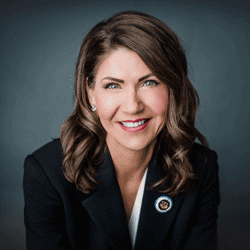
PIERRE, S.D. – Governor Noem has signed SB 135, which enhances training requirements for law enforcement officers, into law.
“Law enforcement does incredible work each and every day to keep us safe,” said Governor Kristi Noem. “In South Dakota, we trust and respect the men and women who put their lives on the line every day. Our objective is to protect and reaffirm this mutual trust, and we believe this enhanced training requirement will help achieve that goal.”
Governor Noem has also signed thirteen other criminal justice bills into law:
SB 79 makes certain uses of laser pointers unlawful.
SB 126 establishes the crime of possession, manufacturing, or distribution of obscene dolls.
SB 150 clarifies the penalty for using fireworks in violation of a county resolution.
Thune, Shaheen, Fischer Introduce Legislation to Incentivize Capital Investments in Rural Businesses
WASHINGTON — U.S. Sens. John Thune (R-S.D.), Jeanne Shaheen (D-N.H.), and Deb Fischer (R-Neb.) today introduced the Rural Capital Access Act, legislation that would incentivize additional capital investments in rural America by improving the Small Business Investment Company’s (SBIC’s) ability to invest in rural businesses and encouraging greater participation in the Rural Business Investment Company (RBIC) program.
“Small businesses are critical to our state’s economy,” said Thune. “While South Dakota small businesses have persevered through the pandemic, relative to other parts of the country, there is always more work to be done to support our Main Street economies. My legislation would improve access to investment capital for rural businesses, which is oftentimes necessary to help businesses innovate and expand.”
“Our rural businesses and entrepreneurs in New Hampshire are the backbone of our local economy, supplying jobs and spurring economic growth, but they often are denied access to venture capital,” said Shaheen. “Rural businesses deserve every support possible to help them rebound, which is why this bipartisan legislation would increase coordination between the Small Business Administration and U.S. Department of Agriculture and make more funds available to invest in rural small businesses. I’m committed to working across the aisle to level the playing field for rural businesses and ensure they aren’t left behind as we build back from the pandemic.”
“Venture capital is critical for helping new businesses to grow, but businesses in rural America often have difficulty accessing this funding,” said Fischer. “By granting these businesses access to additional resources, our legislation will create new opportunities for job creators in the Heartland.”
“There is a real need for patient, more flexible capital for small businesses across America, particularly in rural areas,” said Brett Palmer, president of the Small Business Investor Alliance. “Rural small businesses play a critical role in their communities – economic, social and civic.”
“Even in the best of times and in the largest of cities, access to capital is a major challenge for many small businesses. For small companies in today’s world, particularly those in rural areas, and it can be nearly impossible,” Todd McCracken, president and CEO of National Small Business Association. “I applaud Sens. Thune, Shaheen and Fischer for their leadership and bipartisan efforts to expand the Small Business Investment Company program to better help rural small businesses find much-needed financing.”
The Rural Capital Access Act would:
· Provide SBICs with access to additional federally-backed leverage – leverage that is exempt from the $175 million statutory cap – for investments made to qualifying small businesses located in rural areas.
· Allow the Small Business Administration (SBA), in consultation with U.S. Department of Agriculture (USDA), to extend to RBICs federally-backed leverage intended for SBICs that would otherwise go unused, as appropriate, to improve participation in the RBIC program.
· Establish an interagency working group between the SBA, USDA, and industry stakeholders to improve coordination in administering the vastly similar SBIC and RBIC programs, as well as develop recommendations to further improve access to capital and investment in rural areas through these programs, which would include recommendations to increase the number of licensees.
The SBIC program was established in 1958 to provide investment capital to small businesses across the nation. There are currently approximately 300 licensed SBICs in operation today, and the SBA is authorized to provide up to $4 billion in federally-backed leverage each fiscal year to these SBICs to help supplement their investments in small businesses. However, the SBA does not generally provide up to this statutory cap.
The RBIC program was created by the 2002 Farm Bill to specifically help small businesses located in rural areas access investment capital. However, RBICs do not currently have access to federally-backed leverage and, as a result, there are very few licensed RBICs currently in operation.
In December 2020, Thune led a Commerce Committee subcommittee hearing to examine the lack of access to investment capital across Middle America.
PIERRE, S.D. – Governor Noem has signed SB 34, which provides $75 million in funding for rural access to high-speed broadband, into law.
“South Dakota is Open for Business!” said Governor Kristi Noem. “We’re finishing our efforts to connect the entire state to high-speed broadband. Folks in South Dakota shouldn’t have to choose between their career and the way of life in their hometown. With this funding, they won’t have to make such a choice.”
The $75 million in funding will leverage $25 million in CARES Act funding, as well as other federal and private funding, to finish connecting the state to broadband.
Governor Noem also signed six other “Open for Business” bills into law:
SB 128 revises certain provisions related to news media coverage of high school activities.
Thune to Travel to U.S. Southern Border This Week to See Growing Crisis Firsthand
“For the sake of the unaccompanied children and all those trying to cross our borders, and for the sake of the Americans who have been endangered by his policies, I hope the president will take action.”
Click here or on the picture above to watch the video.
WASHINGTON — U.S. Sen. John Thune (R-S.D.) today discussed the ongoing border crisis and the role that the Biden administration has played in its rapid acceleration. Thune also discussed his upcoming trip to the border to survey the current situation, assess what Congress can do to help, and determine what actions the Biden administration can immediately take to solve this security and humanitarian crisis.
“During my trip to the border, I hope to speak to the men and women who have had to respond to this security and humanitarian crisis, and I will look to see what Congress can do to help,” said Thune. “But President Biden could start stemming this crisis today by making it clear that he is going to start enforcing immigration law, and that the way to come to this country is to come legally. For the sake of the unaccompanied children and all those trying to cross our borders, and for the sake of the Americans who have been endangered by his policies, I hope the president will take action.”
Rounds’ RESPECT Act Unanimously Passes Out of Indian Affairs Committee
WASHINGTON – U.S. Senator Mike Rounds (R-S.D.), a member of the Senate Committee on Indian Affairs, made the following statement after his Repealing Existing Substandard Provisions Encouraging Conciliation with Tribes(RESPECT) Act passed out of committee with unanimous support:
“It’s long past time to remove federal laws that are discriminatory to Native Americans from our books,” said Rounds. “While these laws are no longer enforced, they are a reminder of a painful part of our nation’s past. I thank my colleagues on the Committee on Indian Affairs for their overwhelming support of this legislation. I look forward to working across the aisle to get this bill onto the Senate floor.”
The RESPECT Act would repeal 11 outdated federal laws that are discriminatory to Native Americans. Examples include laws that allow for the forced removal of Native American children from their homes to be sent to boarding schools and laws subjecting Native Americans to forced labor.
The RESPECT Act is supported by the Great Plains Tribal Chairmen’s Association (GPTCA) and the National Congress of American Indians (NCAI). Senators Tina Smith (D-Minn.), James Lankford (R-Okla.), and Kyrsten Sinema (D-Ariz.) are cosponsors of this legislation.
Yesterday, SDSU students Andrew Rasmussen and Rachel Schoon were elected to serve as Student Association Chair and Vice Chair at our state’s largest university, and it’s notable that both come from strong Republican stock. Both have served previously in the SDSU Student Senate, and have been involved in College Republicans. Both also served as Republican interns in the South Dakota Legislature. I know Andrew has also spent time working on statewide campaigns, such as for Dusty Johnson.
Congratulations to Andrew and Rachel for their victory!
A tenured professor at the University of South Dakota School of Law, Thomas Simmons concentrates on trusts, estate administration, and the estate tax. Prior to joining the legal academy, he was a partner with the law firm of Gunderson, Palmer, Nelson & Ashmore, LLP
South Dakota Senate Bill 126 criminalizes the possession of childlike sex devices – or “sexbots.” Although sexbot manufacturing is not an industry with any sort of toe-hold in the state, the bill also forbids the distribution and manufacture of childlike sexbots. And the bill casts a wider net than just child sexbots; it bans the “ordinary” non-android versions, too.
Introduced by Rapid City’s Senator Jessica Castleberry, the Act to Establish the Crime of Possession, Manufacturing, or Distribution of Obscene Dolls had remarkably smooth sailing following two amendments, passing out of both chambers’ committees and both the Senate and the House unanimously. As Senator Castleberry explains on her blog:
[C]hild sized sex dolls … can be custom created to mimic the likeness of any child. Some also come with custom settings such as “rape” or “submissive.” This bill is an important step to protecting our children from predators, and helping law enforcement to identify people involved in child pornography.
Many journalists take a tongue-in-cheek approach to reporting on sexbot legislation. Sex trafficking, the pandemic, and the opioid crisis are more pressing concerns. Sexbots aren’t victims. But they are a growing problem, especially the childlike varieties. I’ve previously called for even broader legislation to criminalize or restrict the adult sexbot models as well.
Sexbot opposition makes for strange bedfellows. Conservatives are often joined by feminists, united in averting societal decay, predatory mindsets, and licentious attitudes. Such an alliance manifested around this bill. Although there was some opposition, not a single member from either side of the aisle opposed the bill. No one raised her or his voice to claim, “You can’t legislate morality.” But don’t be surprised by a court challenge to the new law.
Safeguarding public morality has a long legislative history, stretching back many centuries. Still, some U.S. Supreme Court decisions have attacked laws grounded in “mere” morality. Justice Stevens, for example, once declared (in a dissent), that “the fact that the governing majority in a State has traditionally viewed a particular practice as immoral is not a sufficient reason for upholding a law prohibiting the practice.” Bowers v. Hardwick (U.S. 1986) (Stevens, J., dissenting) (overruled by Lawrence v. Texas (U.S. 2003)).
As articulated in a Scalia dissent, laws approved by elected representatives modulate morality – and even restrict personal liberties – on a regular basis. Good laws are typically founded in good moral sense. And laws often constrain personal actions, such laws criminalizing beastiality. “So do laws prohibiting prostitution, recreational use of heroin, and, for that matter, working more than 60 hours per week in a bakery,” Scalia emphasized, in Lawrence v. Texas.
Morally-based laws are, in fact, constitutional, wrote Scalia. Some sexual morality laws single out a particular group (e.g., sexbot users) and restrain their liberties (with jail time) when those laws are infringed, even if the violation occurs in the privacy of a bedroom. Even if no victim is directly harmed.
Some laws are ill conceived. Some are paternalistic. Some are unnecessary. Some are old-fashioned. Some are ridiculous or even downright moronic. But nothing in the constitution bans “bad” laws or “ill conceived” ones, either. I am personally opposed to Daylight Savings Time. I think it’s ridiculous. But ridiculous laws are presumed to be constitutional as well.
Laws which don’t touch on fundamental rights (like religion or speech) need only be rationally related to a legitimate government end. The courts will strike down laws which fail the “rational basis” test. But only a narrow band of laws should be overturned in the courts. Voters must exercise their franchise to undo the other legislative missteps.
If one wants assurances that Senate Bill 126 will survive constitutional challenges, one can look to a case like Williams v. Pryor, decided twenty-one years ago. In Williams, a court upheld legislation prohibiting the distribution of sex toys. The court reasoned that the “crafting and safeguarding of public morality … indisputably is a legitimate government interest.”
The Williams holding – and others like it – have been eroding ever since. Indeed, the Williams case relied upon Bowers, mentioned above, in upholding Alabama’s sex toy ban. And Bowers has since been overruled. The legitimacy of morally-based laws has been constitutionally weakening in the courts. That is what Justice Scalia was dissenting from.
Still, I’m not entirely convinced that Scalia was correct to characterize morality as a legitimate government end. Recognize this: Scalia’s deferential attitude toward legislative acts does not lead to smaller government; it permits governmental expansion. It extends the potential reach of lawmakers. Scalia also opined that laws criminalizing masturbation pass constitutional muster since they too are rationally related to the aim of preserving morality.
But who defines what constitutes moral behavior? Can lawmakers pursue any end and simply label it a moral prerogative? If the answer is “no,” then by what standard will a judge decide what is moral and what is not? How will judges sort out truly moral laws from others?
Could a new legislature, after listening to the testimony of public health experts, conclude that masturbation is a virtuous practice and that anyone caught not masturbating will be charged with a misdemeanor? The very suggestion is ridiculous. But recall that ridiculousness is not a constitutional standard.
Could the government make it a crime for a citizen to fail to turn his household clocks ahead each spring? After all, punctuality is important – moral, even.
Now, this isn’t to suggest that good laws aren’t moral laws, but government isn’t the author of morality. God is. And there are moral limits on what a government can do – even when the unanimous approval of elected representatives. These are some of the precepts of natural law.
Natural law aside, Castleberry’s legislation can claim more than a merely moral end. It is also aimed (indirectly perhaps) at protecting children from predators. And that is certainly a legitimate government end to which SB 126 is more than rationally related.
These are the views and opinions of the writer and not those of the University of South Dakota, its Knudson School of Law, or the South Dakota Board of Regents..
(updated with a revised story) The Argus Leader is reporting this afternoon that one proposal that may come out of Governor Noem’s office in the short term is to potentially decriminalize using or possessing small amounts of marijuana:
Gov. Kristi Noem’s administration is considering legislation that would decriminalize small amounts of marijuana in South Dakota.
Lawmakers this week got their first look at potential legislation coming out of the governor’s office that limits the number of plants a medical marijuana user could grow in their home, while also ending South Dakota’s practice of incarcerating adults caught using or possessing marijuana for recreational purposes.
and..
Noem’s chief of staff, Tony Venhuizen, said the governor isn’t necessarily in support of the draft proposal, among multiple being considered by Noem and lawmakers behind the scenes.
“This is one of several draft bills being circulated for discussion and Gov. Noem has not endorsed any of them,” he said.