Thune, Warnock Introduce the Promoting Precision Agriculture Act

Thune, Warnock Introduce the Promoting Precision Agriculture Act

Senators’ bipartisan legislation would increase the adoption of precision agriculture technologies for farmers and ranchers

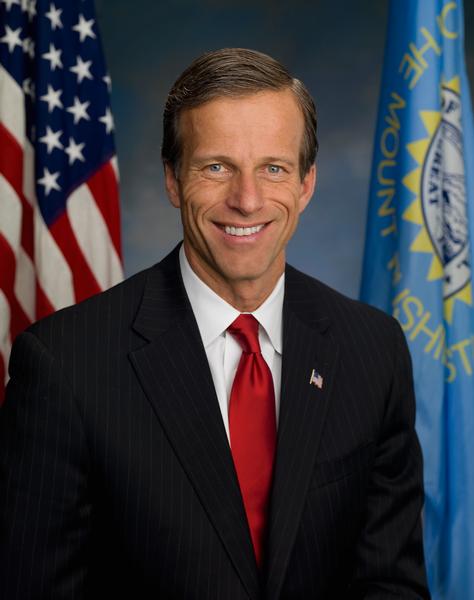
WASHINGTON — U.S. Sens. John Thune (R-S.D.) and Raphael Warnock (D-Ga.), members of the Senate Committee on Agriculture, Nutrition, and Forestry and the Senate Committee on Commerce, Science, and Transportation, today introduced the Promoting Precision Agriculture Act, bipartisan legislation to help facilitate further adoption of precision agriculture technology. The bill would establish a partnership between the government and the private sector to develop voluntary interconnectivity standards and prioritize the cybersecurity needs for precision agriculture technologies.

“Agriculture is the lifeblood of South Dakota,” said Thune. “Making agriculture more efficient and more productive is not only good for our nation’s food supply, it’s good for South Dakota farmers and ranchers and their families. I’m proud to introduce this bill that would help enhance and protect precision agriculture equipment as more producers use next-generation technologies to improve their operations.”

“Technology is an integral part of farming in the 21st century,” said Warnock. “Georgia producers use robotics, sensors, monitors, and even drones to increase crop yield and use their resources effectively. It only makes sense that these technologies should work seamlessly together. This bill is good for farmers and the families they serve. I’m glad to work with Senator Thune, my colleague on the Senate Agriculture Committee, on this bipartisan legislation. We’re going to fight to get this done.”

The Promoting Precision Agriculture Act would:

  • Direct U.S. Department of Agriculture (USDA), in consultation with the National Institute of Standards and Technology (NIST), to support the development of voluntary, consensus-based, industry-led interconnectivity standards, guidelines, and best practices for precision agriculture to encourage the adoption of precision agriculture technology.
  • Support the evolving demands of precision agriculture by requiring USDA, the Federal Communications Commission, and NIST to consider the impacts next-generation technologies will have on precision agriculture.
  • Prioritize the cybersecurity needs of precision agriculture. As advanced precision agriculture technologies become more readily available, the agriculture industry has increasingly become vulnerable to cybersecurity threats.

Thune, who has helped write four farm bills throughout his time in Congress, will continue introducing farm bill proposals ahead of the current bill’s expiration in September 2023. Thune spoke about the Promoting Precision Agriculture Act today on the Senate floor.

###

Gov. Noem VETOES Special Treatment Under the Law

Gov. Noem VETOES Special Treatment Under the Law

Pierre, S.D. – Today, Governor Kristi Noem VETOED Senate Bill 129, which would treat teachers and school employees the same as law enforcement officers in instances of assault in their official duties. You can find Governor Noem’s VETO letter here.

“South Dakota already has a strong and fair criminal justice system, and school districts have robust disciplinary policies tailored to address behavior within their districts,” continued Governor Noem. “The changes SB 129 would make open the door for additional occupations to ask for special treatment under the law.”

The current statute provides sufficient accountability for anyone who assaults a school employee.

Governor Noem has signed 118 bills this legislative session and vetoed 3.

###

People using GOP County organizations which seem to be trying to set themselves up as Republican “Shadow Party.”

Caught this today.

Apparently, there is a group of individuals in a few Republican County organizations who are less interested in advancing the GOP as a whole, and are more interested in using the Republican Party as their own personal soapbox without going through the GOP Executive Board or Central Committee:

A couple things stand out to me.There are no records filed with the Secretary of State to indicate that any such organization actually exists, except in their own minds.

When this statement is undersigned “Chair, Aurora County Republican Party” and “Chair, Fall River County Republican party,” or the various “Executive Boards,” don’t the people signing off on this have the courage of their convictions to put their names on the line?

It also seems as if they are intentionally using their positions to further an agenda which stands apart from the GOP as a whole. If that’s the case, why do they feel the need to use their titles within the Republican party, when they’re creating an organization which is separate from it?

Ultimately, the business of a political party is to unify your group and to get people elected.

This seems as if it’s the opposite.

People using GOP County organizations which seem to be trying to set themselves up as the Republican “Shadow Party.”

I’m sure that’s going to end well.

Gov. Noem VETOES Underage Drinking Bill

Gov. Noem VETOES Underage Drinking Bill

PIERRE, S.D. – Today, Governor Kristi Noem VETOED Senate Bill 108, which would enable underage South Dakotans to consume alcohol as part of college courses. SB 108 does nothing to limit the sale, service, or consumption of alcohol to specific class locations or specific class times. You can find Governor Noem’s VETO letter here.

“[The] flawed language creates potential loopholes that pose problems for law enforcement,” wrote Governor Noem in her letter. “Officers encountering underage students with alcohol on their breath or in their system must determine if this exception to underage drinking law applies before writing a citation. We should respect the work of law enforcement by not needlessly making their jobs any tougher.”

SB 108 amends a 2020 statute which allows alcohol on campuses so that classes could be created under a specific set of protections. That legislation prohibited underage students from participating in courses that produced and consumed alcoholic beverages. SB 108 would completely undermine the intent of the 2020 legislative compromise that allowed these classes to be created.

“The sponsors have cited workforce as their reason for bringing this legislation,” continued Governor Noem. “While I appreciate their acknowledgment that South Dakota has the strongest economy in the nation, I don’t believe that allowing underage students to consume alcohol will solve specific workforce issues. Those industries have continued to grow and thrive, both before and after the legislation I signed only three years ago.”

Governor Noem has signed 118 bills this legislative session and vetoed 2.

###

Johnson, Rounds Re-Introduce Firearm Access Bill for RV-ers, Active-Duty Military

Johnson, Rounds Re-Introduce Firearm Access Bill for RV-ers, Active-Duty Military

Washington, D.C. – Today, U.S. Representative Dusty Johnson (R-S.D.) and U.S. Senator Mike Rounds (R-S.D.) re-introduced the Traveler’s Gun Rights Act. The legislation strengthens Second Amendment rights to allow law-abiding RV-ers, active-duty military, military spouses, and others who rely on a P.O. Box for their primary mailing address to obtain a firearm.

Currently, the Bureau of Alcohol, Tobacco, Firearms and Explosives (ATF) requires Americans purchasing a firearm to fill out paperwork listing an address. However, the ATF prohibits buyers from listing a P.O. Box or Private Mailbox (PMB) on this form. This prohibition unfairly hurts full-time travelers, many of whom live in their RV year-round and utilize a P.O. Box or PMB in order to receive mail. These alternate addresses can be listed on driver’s licenses, but they cannot be used on the ATF paperwork.

“Just because a law-abiding citizen relies on a P.O. Box as their primary address doesn’t mean their Second Amendment rights should be limited,” said Johnson. “South Dakota is home to many RV-ers and active-duty military who have this problem when trying to obtain a firearm. My bill seeks to correct that.”

“As a supporter of the Second Amendment, I am committed to protecting the rights of lawful gun owners,” said Rounds. “The Traveler’s Gun Rights Act removes an unfair prohibition facing Americans with unique living situations. This legislation will make certain that law-abiding citizens do not face a burdensome roadblock when trying to exercise their Second Amendment rights.”

“Americans, especially our active-duty military members, should never be denied the full spectrum of their Second Amendment rights simply because they use a post office box address instead of a physical address,” said Lawrence G. Keane, Senior Vice President and General Counsel for National Shooting Sports Foundation, The Firearm Industry Trade Association. “This legislation is a simple fix to an overlooked problem that unfortunately disenfranchises law-abiding citizens of their ability to lawfully purchase a firearm. It still requires all the safeguards to ensure firearms remain out of the hands of those who should never possess them. Congressman Dusty Johnson’s leadership on the Traveler’s Gun Rights Act to ensure those with unique living situations are not denied their rights is commendable.”

“For many Americans, traveling full-time is a way of life,” said Brian Calabrese, Managing Director for Federal Affairs, National Rifle Association’s Institute for Legislative Action. Unfortunately, ATF does not recognize P.O. Boxes as a legal point of residence the way the IRS does, effectively rescinding the constitutionally protected Second Amendment rights of those who travel full-time. The NRA thanks Rep. Dusty Johnson for his work to close this loophole and protect the rights of those who travel this great country.”

Johnson’s legislation is cosponsored by U.S. Reps. Tom McClintock (R-CA), Paul Gosar (R-AZ), Jake LaTurner (R-KS), Dan Crenshaw (R-TX), Scott Perry (R-PA), Jeff Duncan (R-SC), Don Bacon (R-NE), Doug LaMalfa (R-CA), and Chris Stewart (R-UT).

Rounds’ Senate companion supported by U.S. Senators Cindy Hyde-Smith (R-MS), Kevin Cramer (R-N.D.), Ted Cruz (R-TX), Roger Marshall (R-KS), James Risch (R-ID), James Lankford (R-OK), Mike Crapo (R-ID), Cynthia Lummis (R-WY), and Mike Braun (R-IN).

Read full bill text here.

###

Rep. Fred Deutsch credited as sparking genesis of legislation against sex changes for minors nationwide

You’ll have to filter through the rhetoric of the article coming from the website for the far-left Mother Jones publication, but in an article filed today by the magazine, South Dakota State Representative Fred Deutsch is the subject of a report which seems to credit him as being the father of the legislative movement across the country to ban transgender procedures on minors:

On a Saturday afternoon in August 2019, South Dakota Republican state Rep. Fred Deutsch sent an email to 18 anti-trans activists, doctors, and lawyers with the text of a bill he planned to introduce that would make it a felony for doctors to give transgender children under 16 gender-affirming medical care. “I have no doubt this will be an uphill battle when we get to session,” Deutsch warned the group.

and..

“It was like Deutsch assembled a team of Navy SEALs—we were all trained killers in a specialty,” says Elisa Rae Shupe, a retired US Army soldier who became a vocal anti-trans advocate and participated in Deutsch’s working group after detransitioning.

and..

And in South Dakota, Deutsch finally won the long battle this February, when Gov. Kristi Noem signed an updated version of his bill. The new law strips licenses from doctors who provide minors with gender-affirming care, and requires health care providers to gradually cut off puberty blockers and hormones for any kids they are already treating. That provision is expected to force some South Dakota teens to medically detransition by the end of 2023.

Deutsch returned to Twitter in February to celebrate the signing of the South Dakota ban. “This concludes the effort I began three years ago,” he tweeted, along with a picture of lawmakers toasting. “Many good people have worked to protect our children.”

Read the entire article here.

South Dakota Banker’s Association as to why opposition to HB 1193 is misguided at best.

From the South Dakota Banker’s Association, a good review on why some of the opposition to HB 1193 is misguided …at best:

Before we wrap up this session, I find it imperative to set the record straight and correct the false claims being made regarding HB 1193, “An Act to Amend Provisions of the Uniform Commercial Code (UCC).”

To understand what the bill aims to do, it is important to understand the UCC and its purpose. The UCC is the product of law commissioners from each state who serve together on the Uniform Law Commission (ULC) to develop uniform, model acts, or state laws, for adoption by state legislatures. It is not federal law, nor is it developed by the federal government. Let me be clear, these 2022 amendments to the UCC are drafted by the ULC for adoption in states across the nation, and by doing so, it keeps Congress from imposing federal laws into areas where states should be sovereign.

The UCC serves as the backbone of United States’ commerce, giving all Americans the legal infrastructure necessary to have confidence when conducting business in South Dakota and across state lines. The UCC provides commercial law for broad categories of transactions: the sale or lease of goods, negotiable instruments, bank deposits and collections, funds transfers, letters of credit, documents of title, investment property, and secured transactions in personal property. The UCC has been in place in South Dakota (SD) since the 1960s, and adoption of the UCC by every state has allowed the development of strong interstate markets.

The UCC has been revised in SD and by other state legislatures over the years at the recommendation of the Uniform Law Commission and American Law Institute to reflect the economy’s shift from a largely goods-based economy toward an economy that includes services, software, and information-based transactions. The latest updates, the 2022 amendments, will accommodate and “identify” emerged and emerging technologies such as distributed ledger technology (known as “blockchain”), and artificial intelligence. The amendments were drafted over a multi-year process with many open sessions. These amendments bring the UCC into the digital age by adding a new Article addressing digital assets and providing commercial law rules for the transfer and leveraging of virtual currencies and certain other digital assets. Adoption of the 2022 UCC amendments by all states will bring uniformity and clarity to the current law and allow certainty when transacting business with digital assets across state lines. Nothing in the UCC 2022 amendments prevents anyone from deciding what means of exchange to use or what transactions to enter.

and..

Here are the facts: The opposition to HB 1193 is claiming that the updated UCC is, “…the greatest threat to our personal liberty and privacy we’ve faced in a generation.” This belief is simply untrue and misguided. The UCC establishes interstate commerce, allowing the playing field of the market to remain fair, level, and as South Dakotans can attest, open. Failure to adopt the 2022 amendments jeopardizes South Dakota’s ability to remain competitive in commerce and fair market trade, negating everything we’ve stood for in South Dakota for decades. You can “bank on” the facts, not the political theatre.

Read the entire article here.

Clay County State’s Attorney Alexis Tracy moving to AG’s office

Just caught this announcement. Republican Clay County State’s Attorney Alexis Tracy is moving to the Attorney General’s office starting on June 1.

Clay County State’s Attorney Alexis Tracy to Join South Dakota Attorney General’s Office

PIERRE, S.D. – South Dakota Attorney General Marty Jackley has announced that Clay County State’s Attorney Alexis Tracy has been hired as an assistant attorney general for his office.

“Alexis Tracy has proven herself to be a well-balanced attorney who can handle both criminal and civil cases,” said Attorney General Jackley. “Her experience will serve this office well.”

Tracy has been an attorney for 17 years and has been a prosecuting attorney for more than 16 years. She was first elected as Clay County State’s Attorney in 2016 and was re-elected in 2020.

Alexis currently serves as President of the South Dakota State’s Attorney’s Association; and serves on the Legislative Committee for the Association.  Since 2017, she has served as part of STOP (Services, Training, Officers, and Prosecutors), a grant-funded multidisciplinary state training team providing curriculum and education to prosecutors, law enforcement, and victim advocates in response to crimes of domestic violence and sexual assault.  Alexis was appointed to the South Dakota Open Meetings Commission in 2019.  She is a member of the National District Attorney’s Association and the Clay County Child Protection Team.

“I want to thank the Clay County Commission and the people of Clay County for the opportunity to serve them,” she said. “I look forward to serving them, and the rest of South Dakota, in this new capacity.”

Alexis Tracy is scheduled to join the Attorney General’s office in Sioux Falls June 1.

-30-


Thune Discusses Disastrous Situation at U.S. Southern Border

Thune Discusses Disastrous Situation at U.S. Southern Border

“Border Patrol agents told me that not only do they not feel supported by the Biden administration, they feel like the Biden administration has actually impeded their ability to do their jobs.”


Click here or on the picture above to watch the video.

WASHINGTON — U.S. Sen. John Thune (R-S.D.) today spoke on the Senate floor about his recent trip to the Rio Grande Valley at the U.S. southern border.