Rep. Roger DeGroot addresses crowd at Brookings GOP meeting
From facebook:

From facebook:

Column: Week 1 Session Update
“Serious Problems Demand Serious Legislators and Serious Solutions”
The 2026 Legislative session kicked off in Pierre, and improving South Dakota’s economy needs to be the top issue for my colleagues and I, otherwise our economy will fall behind our neighbors, our kids will leave the state, and everyday South Dakotans will hurt. Getting South Dakota back on track requires bold leadership and vision, because the time is now to make an impact.
Moody’s has flagged South Dakota as a state in or near a recession. At home, sales tax revenue fell 0.6% last fiscal year—only the third time in 30 years for South Dakota. Families feel it. Roughly one in five South Dakotans is delinquent on a credit card payment. People are buying fewer groceries and cutting back. When South Dakotans are asked what matters most, inflation and affordability top the list.
That’s the backdrop for every debate in Pierre. Serious problems demand serious legislators and serious solutions.
Driving home through whiteout conditions Friday, I kept thinking about my kids and their future. I don’t want a South Dakota where the next generation has to leave to build a life because they can’t find opportunities here. We like to say we’re “open for opportunity” in South Dakota, but it can’t be just a slogan. It has to be a commitment shared by the governor, the Legislature, local leaders, and every South Dakotan. The status quo won’t keep our towns alive. Closing our doors won’t either.
That’s why I’ve been in the middle of the big fights—housing and infrastructure funding to keep housing costs low, standing up for biofuels so our farm families can compete globally, and pushing for opportunities that make a real impact across our state. I don’t shy away from a fight because it’s hard. I’d rather stand strong with courage on a hill than be found hiding in a bunker in fear.
The big fight of 2026 is economic development and data centers. South Dakota needs to strengthen its economy, and we can do so in a thoughtful way that benefits hard-working South Dakotans and carefully balances concerns. Data centers play a pivotal role in our national security, provide new high-paying jobs, generate a steady stream of property and sales tax revenue, diversify our economy, and give the state and local communities a more reliable, predictable revenue base. This will increase property tax revenue that can fund our schools and roads in the future and keep more money in your pockets. This discussion is taking place at the federal level as well, with President Trump championing these data centers, while folks like Bernie Sanders lead the opposition.
America First means securing our energy, building critical infrastructure here, and competing to win. South Dakota Always means doing it with clear rules, strong oversight, and built-in local benefits—no blank checks, no sweetheart deals, and no cost-shifting onto local families. If we get it right, we bring investment, expand the tax base, and create high-paying jobs for electricians, plumbers, HVAC workers, and cybersecurity grads who can live in places like Agar, Toronto, Sioux Falls, Rapid City, and communities across the entire state.
As I always say: the best solutions aren’t found in Pierre, they come from folks at home that tackle real challenges every day. So, reach out with your ideas and solutions. If you’ll be in Pierre, let me know, I’d love to visit and recognize you on the Senate floor. Thank you. It’s an honor to serve District 8.
###
While we have *10 days* to wait for the 2025 year end reports to see how fundraising went for the statewide candidates, Governor Larry Rhoden already has an event announced to add to his total this Friday in Watertown at the Redlin Art Center:

I’m sure there will be more to come..
Remember last April when there was a pledge and a facebook page enlisting legislators to join them for a call to shoot down planes that people thought were spreading (the mythical) chemtrails?
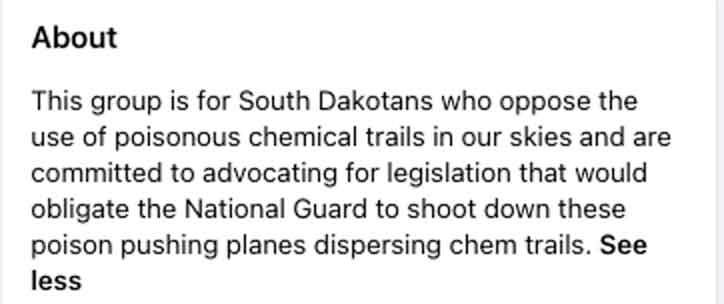
There were legislators who just couldn’t wait to sign on to “taking military action” after the group’s call to arms against our friendly skies:
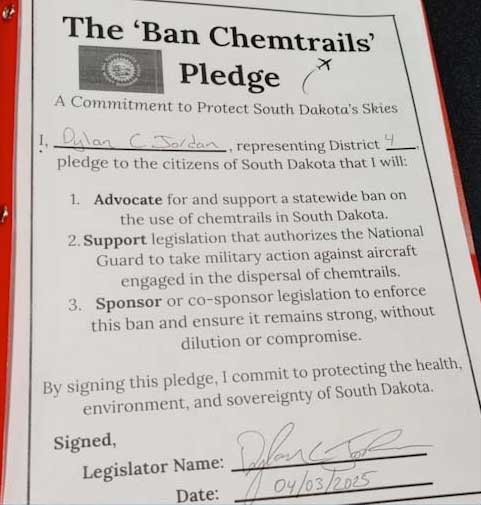

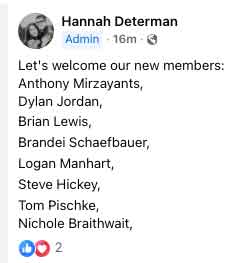
Yet here we are a week into session, and we’re just getting crickets. It seems that these legislators might be slow-rolling their call to shoot down planes. I mean, a pledge is a promise, isn’t it? Even considering the fact that chemtrails are a conspiracy-fueled internet myth, these legislators said they’d be on the front lines for calling out the National Guard for “military action.”
But when the rubber hits the tarmac, I just don’t think we’ve seen their commitment. All keyboard cowboys, and no tinfoil hat.
Kind of “fair-weather” conspiracy kooks, if you ask me.
This disclaimer-less ad started hitting facebook this afternoon.
The South Dakota Freedom Caucus (aka, the free-dumb caucus) – the group which has to hide many of it’s members – is having an event in early February in Sioux Falls featuring former legislator Steve Haugaard. And if you’ve forgotten, Haugaard has been rumored over the past few months to be possibly seeking the office of Attorney General in the 2026 election:

If Steve Haugaard is Phil Jensen, California Carley, Heather Baxter & Dylan Jordan’s choice for Attorney General, it really becomes a hard pass for a lot of Republicans.
South Dakota Republican House Majority Leader Scott Odenbach has posted his update for the first week of the legislative session with a message critical of South Dakota’s education system, going after the people that lobby in Pierre for schools as well as declaring that catering “to the bottom portion of the behavioral spectrum” has gone on long enough:
SCHOOL DISCIPLINE AND PUBLIC SCHOOL LOBBYING
Finally, a word on public school discipline and lobbying. This week we began to also hear bills in committees. The education committee heard testimony and voted on HB1017, a much-needed bill brought by our Department of Education meant to address the behavior crisis faced by too many of our classroom teachers and students. I attended, and testified in favor as a proponent. After hearing much opposing testimony, the committee ended up voting to defer the matter to another day for more discussion.
The essence of the bill states: “A school board may assign a student to receive instruction in an alternative setting for aggressive or violent behaviors that disrupt the school or that affects the health or safety factor of the school or its program.” Simple common sense, right? Well not so fast.
As a former school board member, concerned taxpayer, state representative and someone who cares about applying common sense to enhance the welfare of our teachers and students, I was shocked listening to the opposing testimony by the public school lobbyists purporting to represent school administrators and large schools.
Their testimony was basically that we cannot address the crisis in classroom behavior until we first spend untold millions of additional dollars on everything from new student treatment centers to cater to the troublemakers, to new programs that provide “training to parents.” Their vision for the size and scope of the “education” system puts them totally outside their lane, essentially wanting lawmakers to spend taxpayers into oblivion on side-projects before addressing an issue that is having immediate and ongoing negative impacts on the classroom experience of so many of our kids who do want to learn, and on the overworked teachers tasked with making it happen.
What message does it send to young people in the classroom when we go to superhuman lengths to cater to the bottom portion of the behavioral spectrum while ignoring the unique needs of all others in the process? This has gone on long enough.
Informed citizens and taxpayers need to wake up and be aware of what kinds of things are being said in Pierre by those claiming to speak on your behalf. The positions taken on most issues by the public school lobbyists leads one to conclude they think the “system” would do a better job raising your kids then you would – if only we’d fully fund it. Their efforts too often frustrate the ability of policy makers to address major problems – such as HB1017, which sought to finally address violent school behaviors that are literally putting kids and teachers in danger.
Read the entire facebook post here.
It seems like we’ve gone from the goals of the federal “No Child Left Behind” act in 2001, which increased focus on achievement gaps, especially for minority and low-income students, to asking ourselves “which kids is it ok to skip because they’re a tough kid?” As the parent of a child who from very early on has been a participant in special education services in my school district, I’m not sure I care much for a conversation that seems to say that more challenging kids, most definitely including those who have a disability, are somehow are less deserving of receiving an education.
For those legislators who have taken an oath of office to follow the constitution, let me point out a passage from the South Dakota State Constitution:
ARTICLE VIII
§ 1. Uniform system of free public schools. The stability of a republican form of government depending on the morality and intelligence of the people, it shall be the duty of the Legislature to establish and maintain a general and uniform system of public schools wherein tuition shall be without charge, and equally open to all; and to adopt all suitable means to secure to the people the advantages and opportunities of education.
Equally open to all. I’d place particular emphasis on one specific word here – ALL. The easy kids are those who can learn in any environment, whether you have in-class instruction, or try to do it over the computer in a classroom remotely, or as we suffered through during COVID, force them to learn remotely at home.
It would be great if all kids were easy. I wish all my kids were easy. But they’re not. Life intervenes. Some kids have behavioral issues, Some kids suffer from physical or mental illness. Some have disabilities. And you have some who lost badly in the lottery of life, and they have parents with their own problems including just plain old poverty, criminal behavior, mental illness, drug addiction, etcetera. And parent’s issues sometimes get dumped on the kid who might go to school in unclean clothes, or as happens all too often, they go to school hungry, and any food they get at school might be the only meal they get that day.
That’s the reality schools are forced to deal with. They get to be teachers paid on average at some of the lowest rates in the entirety of the United States. They also get to be disciplinarians, social workers, and mental health advocates, and any number of other professions just in an attempt to deliver an education as required under the constitution to the easy kids, the kids who might have challenges and even those who have behavioral issues. If the legislature has a problem with the requests from the education lobby, and laments that the state is forced to go to “superhuman lengths to cater to the bottom portion of the behavioral spectrum,” then maybe the answer is to change the South Dakota Constitution and exchange the word “all” with “easy kids,” or another phrase to clarify which of our children are worthy of an education and which are not?
If they want to clarify which of our children it’s ok to leave behind, it would make it a lot easier for schools to tailor their requests to the legislature for needs and funding. Until then, whether legislators like it or not, schools are going to send their representatives to Pierre in January seeking assistance, clarification, and a way to pay for all is being demanded of them on how to best deal with the societal challenges they are forced to face just by virtue of doing their jobs.
Return to Sender: Common Sense
By Rep. Dusty Johnson
January 16, 2065
The United States Postal Service (USPS) is not meeting the needs of South Dakotans. I hear almost every day about a lost package, delayed mail resulting in late fees, medication delays, and the questionable routing of mail. USPS delivery times continue to get worse, and it’s having a real impact on individuals and businesses. The data shows USPS service performance data has trended downward in every measurable category for every type of postage for the last four years.
At the end of December, I surveyed South Dakotans about their Postal Service experiences. I received more than 4,200 responses. More than 50% of these folks said their service is poor or very poor. More than 3,000 people shared their stories of difficulties with the Postal Service.
I heard from folks like Susan from Faulkton who incurred a $2,700 late fee because her check took 25 days to get to Sioux Falls. There’s a business in Bath whose customers often don’t receive their checks or get them two months late. And some people like Mary bought Christmas presents early, only to have them travel to nine different states before being delivered to Huron – 10 days late, and after Christmas.

Mary’s package delivery route
I held a roundtable in Sioux Falls to allow constituents to share their USPS story. I was joined by my colleague, Congressman Pete Sessions who chairs the House subcommittee that oversees the U.S. Postal Service, so he could hear directly from South Dakotans.
During the roundtable, we heard about how the unreliable delivery of mail is delaying critical medications, messages between family and friends, and is costing our small businesses money. In Sioux Falls, the closing of several retail counters has caused even longer lines and worsened the customer experience.
Following these discussions, it’s clear the issue with the Postal Service is often not with the individual carriers who deliver the mail. The issue is mostly with the Postal Service leadership whose decisions have decreased the quality of service the USPS provides in South Dakota.
I’m grateful to all who shared their stories with me. While the U.S. Postal Service was unable to attend the roundtable, I’ll be sending them a full report displaying the impact of their service decisions in South Dakota.
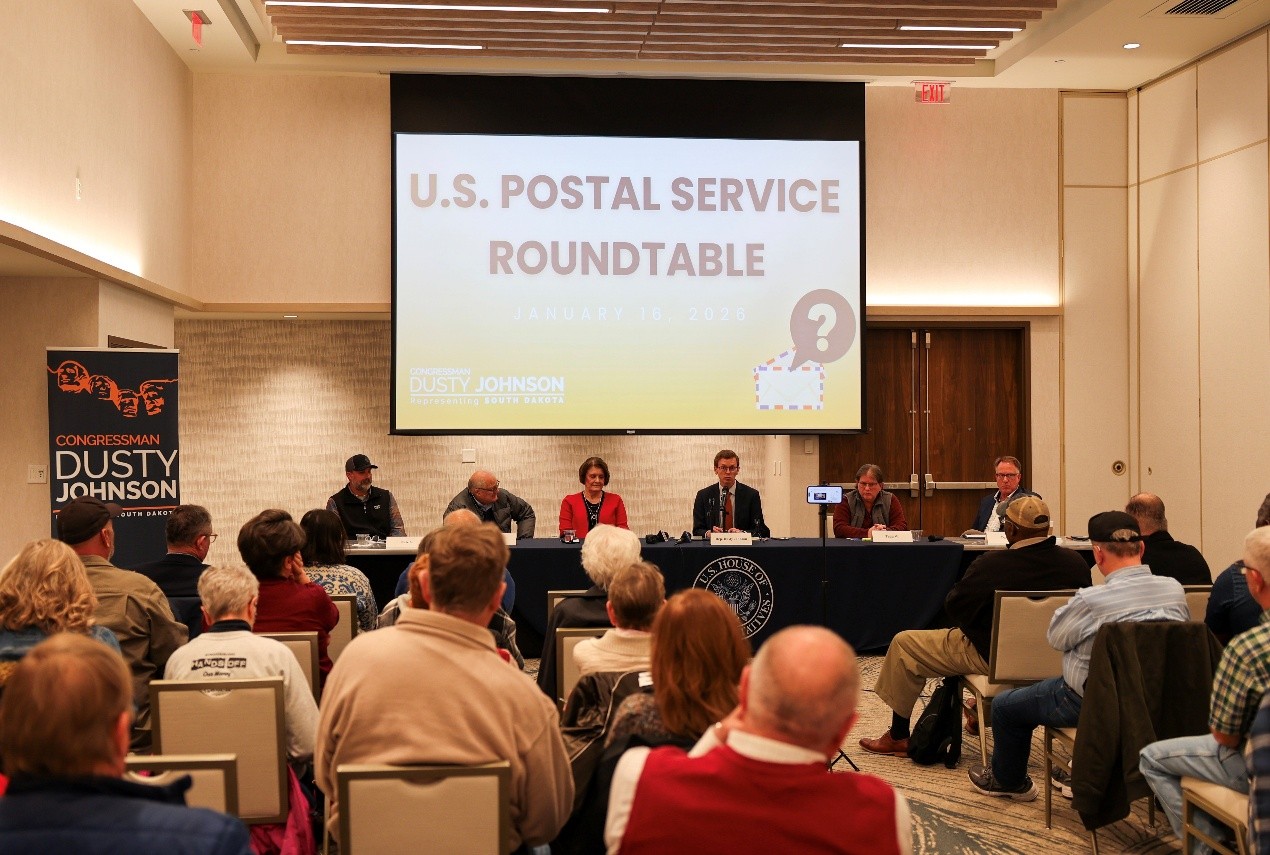
Johnson listens to Postal Service concerns during roundtable in Sioux Falls
###

Cracking Down on Waste, Fraud, and Abuse
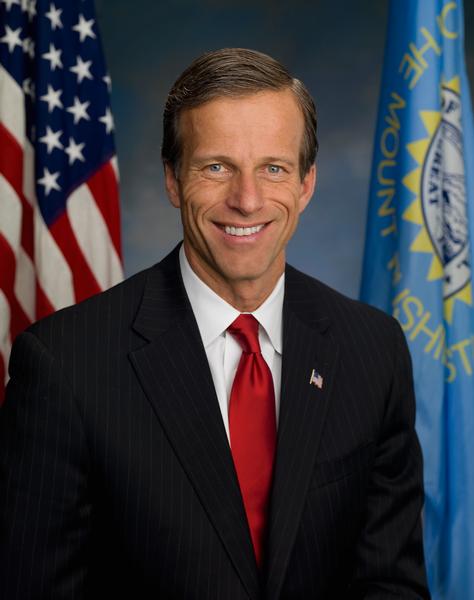
By Sen. John Thune
 The nonpartisan Government Accountability Office (GAO) estimates that as much as $500 billion is stolen from federal programs each year due to fraud. That’s not an inconsequential sum, and every dollar of waste, fraud, and abuse is a dollar that isn’t going to an American in need.
Recent reports suggest that widespread fraud has taken root in Minnesota with as much as $9 billion or more stolen from federal programs since 2018, and prosecutors have indicted numerous individuals for a number of schemes. I hope that these individuals are prosecuted to the fullest extent of the law and that we soon get to the bottom of what happened in Minnesota.
Over the past year, Republicans have been working hard to prevent the type of waste, fraud, and abuse that is now coming to light in Minnesota. Our landmark legislation, the Working Families Tax Cuts, contained a number of reforms to guard against abuse, focus federal dollars on those most in need, and hold states accountable for the federal funding they receive.
New measures in the law prevent noncitizens from receiving federal health care and nutrition benefits and refocus those programs to serving American citizens. It includes stronger work requirements for able-bodied, working-age adults without young children. It increases accountability, requiring states to check enrollees’ eligibility for Medicaid twice per year and taking aim at duplicative enrollment in federal health care programs, which is estimated to cost taxpayers $14 billion per year.
These are just a few of the commonsense reforms that Republicans enacted last year to crack down on waste, fraud, and abuse. Unfortunately, while one would hope this would be a bipartisan issue, it’s not. Democrats panned the commonsense measures in the Working Families Tax Cuts as “cruel.” They have said little about the fraud scandal in Minnesota, and they have shown they are perfectly willing to allow waste, fraud, and abuse to continue in the Obamacare exchanges.
Although there is evidence of fraud in the exchanges and in the Biden COVID subsidies, which were especially susceptible to fraud, Democrats want to extend those subsidies without any reforms. A recent GAO report revealed that the ACA exchanges continue to enroll fake individuals, improperly pay out taxpayer-subsidized health insurance, and fail to ensure payment accuracy. The agency tested 24 accounts, and 23 of them were enrolled with false or no documentation to verify Social Security numbers, citizenship, or reported income. Then there are the 40 percent of enrollees in fully subsidized health insurance who never filed a claim. But despite these and other issues, Democrats voted numerous times to extend enhanced subsidies without a single reform.
We have a responsibility to taxpayers to be good stewards of their tax dollars and ensure that money goes toward its intended purpose. We need to have guardrails on federal programs to protect against nefarious schemes and bad actors and restore integrity to these programs. Republicans have made progress on that this past year, and our work continues.
###
December 2025 wasn’t looking much like Christmas for the SDGOP. Or maybe it was. Because as opposed to raising nothing, they managed to raise $7.01 in unitemized contributions.
SDGOP January 2026 FEC Report by Pat Powers
If you’re selling matches in the snow, I suppose $7 might look like a lot. If you’re a former Obama supporter and 32-year Democrat like Jim Eschenbaum in charge of the State’s largest political party, you probably need to be replaced.
$7.01 raised. $4.53 in interest, and they again raided the State account. This time for $1497.63. This is pretty in line with how the rest of their year has gone (I made a chart), where they raise nothing, and transfer money from the other account.
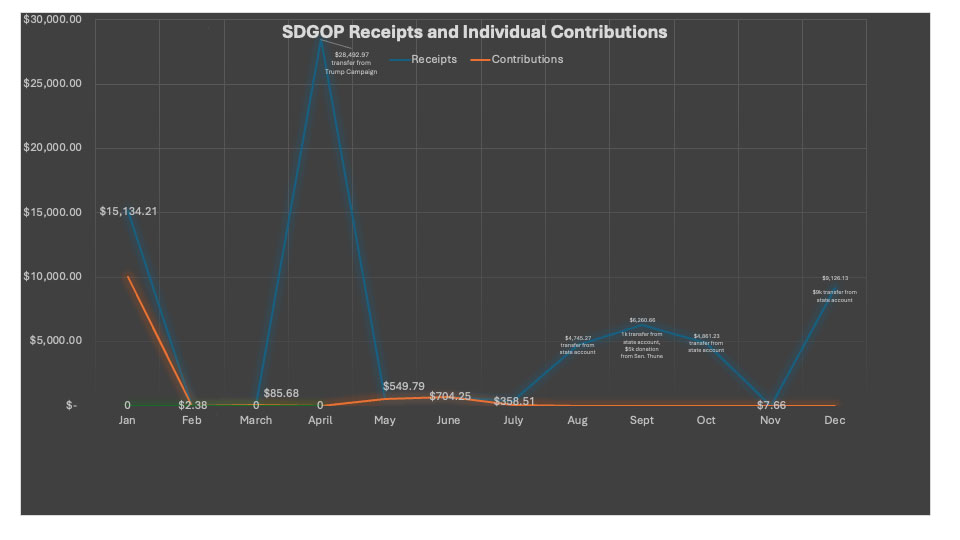
They spent $433 and have $35,953.37 left in the federal account at the end of 2025.
Election year 2026 doesn’t look to be starting off very good for the SDGOP. (Maybe Eschenbaum should stay out of playing favorites in the primary, pay attention to the job he took on, and and start raising money?)
You know that State Representative Lana Greenfield was a long-time teacher. So she’s probably used to students being unhappy over their classroom seating assignments.
Today in House Education which Lana leads she got to experience that all over again. Before they heard a measure on unruly students in school, Representative Greenfield got to deal with District 5 (Watertown) State Representative Josephine Garcia who had a temper tantrum when she and Representative Phil Jensen received new seating assignments:
I’m wondering if the bill should be amended to deal with allowing legislators to receive instruction in alternative settings instead of students?
(Sorry for the quality, I zoomed in to try to catch Rep. Garcia’s tantrum in all it’s glory)
*Update*
A legislator told me that supposedly Garcia and Phil Jensen went to House leadership to complain about the seating arrangements.. and (allegedly) threatened that their caucus – I’m assuming the free-dumb caucus – would somehow not participate if they didn’t get their seat back.
What I’m told is that leadership actually informed them that if they didn’t follow the rules, sit where they’re assigned, and show up for committee they would be replaced. So we’ll see how next week goes.