If you look at the roster for House Ed this AM, the good news is that State Rep. Mike Stevens is the new vice-chair of that committee after Phil Jensen was demoted for trying to de-fund the Huron School District.
The bad news is that House leadership is leaving Phil Jensen on House Ed at all.
If they were going to remove him as a show to South Dakotans that the Legislature has standards and that the asylum is not being ran by the lunatics they’re supposed to protect us from… too late. That ship has sailed.
Senator Jim Dunn who passed away approaching ten years’ now must be rolling over in his grave. Because I don’t think during his lifetime he would have imagined a measure from a Republican in his Legislative District, much less the House Majority Leader, attacking the mining industry in the Black Hills.
And not just that, State Representative and House Majority Leader Scott Odenbach sounds more like “Sierra Club Scott” with the resolution he’s brought – HCR 6010 – encouraging the formation of a legislative committee with the express purpose of more regulation on mining, economic development activities, and residential housing in the Black Hills (his words, not mine):
WHEREAS, the overdevelopment of areas with new residential construction, the expansion of mineral and mining extractive industries, and government-sponsored economic development plans without proper and appropriate regulatory constraints may pose irreparable dangers to the beauty and health of the Black Hills area; and
—
NOW, THEREFORE, BE IT RESOLVED, by the House of Representatives of the One Hundredth Legislature of the State of South Dakota, the Senate concurring therein, that the Executive Board of the Legislative Research Council establish an interim legislative committee to evaluate the regulatory provisions applicable to government-sponsored economic development activities, mineral and mining extractive industries, and residential development taking place within the Black Hills of South Dakota, and to recommend appropriate regulatory provisions to protect the environmental health and historical character of the Black Hills.
So, Scott doesn’t want more people to dig in the Hills, to work in the Hills or to build a house in the Hills until we have more regulations? I mean, seriously? Who wrote this? Because I’m not entirely kidding when I sat that it seems like something that would have come out of the Sierra Club.
If I recall the 2024 South Dakota Republican Party platform, didn’t it have some things to say about this stuff? About economic growth, limited government, private property rights, and that the Republican party is supposed to stand against this type of regulation?
2.0 Economic Development and Jobs
2.1 Economic Growth – We support the creation of new jobs, economic development, and job training which will encourage our youth and adults to stay in the great State of South Dakota.
2.4 Government Intrusion – We believe economic activity thrives in an environment of limited government intrusion and can be stifled by government overreach and excessive taxation and overregulation. We believe government should not compete with private enterprise. We oppose the implementation of Environmental Social Governance (ESG) standards.
ESG standards are exactly what Scott is advocating for with the resolution here, BTW.
In a measure opposed by the state’s largest business group, county commissioners and every group related to public education, as well as the state of South Dakota, the apparent villain of the 2025 legislative session, State Senator John “California” Carley is back at it with yet another attack on South Dakota’s system of public education. This time, he has a plan to directly take $20 million from local schools, diverting those funds instead to private religious academies and homeschools.
He received support for SB 190 from lobbyists with Families for Alternative Instruction Rights in South Dakota, South Dakota Citizens for Liberty, Americans for Prosperity and a homeschool parent from Chancellor.
and..
SB 190 faced opposition from lobbyists with the Department of Revenue, Sioux Falls School District, Large School Group, South Dakota Retailers, Association of County Commissioners, School Administrators of South Dakota, United School Association, Associated School Boards and South Dakota Education Association.
They largely argued that SB 190 would take money directly from school district budgets, has no mechanism to keep districts “whole,” doesn’t require that students are educated or hold their educators accountable. They also argued South Dakota already has school choice — between public, open enrollment, private and alternative education — and already has a school choice finance option with the South Dakota Partners in Education tax credit program.
“What this does is it allows me as a citizen to take 80% of what I pay, and leave folks going to the public school system holding the bag,” Sioux Falls School District lobbyist Sam Nelson said.
The attacks on South Dakota’s system of public education this year are truly unprecedented. This isn’t a simple debate over whether we can afford give teachers a raise that keeps pace with inflation and health insurance costs. This is a legislative body where there are far too many who only see a pot of money which is supposed to be dedicated for the education of our kids that they believe they can just wholesale strip-mine for their special interests.
Another suggestion for GOAC and how state government handles accountability by Michael Wyland
I wrote an 8-page, double-spaced, letter to all legislators in about 2018 addressing the SD GEAR UP scandal and three possible fixes. My letter is available if anyone’s interested. The one-paragraph summary of my proposed solution is as follows:
“The solution to the problem is, quite simply, to restrict GOAC’s committee charter to financial oversight and investigation, as is its current practice and limitation based on statements by the Auditor General. Replicate GOAC’s structure and function in a new oversight and investigative function under the SD Legislature dedicated to program and management review of state government.”
Thune, Warnock Reintroduce the Promoting Precision Agriculture Act
Legislation would facilitate the adoption of precision agriculture technologies
WASHINGTON — U.S. Senate Majority Leader John Thune (R-S.D.) and Sen. Reverend Raphael Warnock (D-Ga.) today reintroduced the Promoting Precision Agriculture Act, legislation that would facilitate the further adoption of precision agriculture technologies for farmers and ranchers. The bill would encourage the government to work with the private sector to develop voluntary interconnectivity standards and prioritize the cybersecurity needed to support innovation in the agriculture industry.
“Farmers and ranchers are always looking for ways to improve their operations, especially in states like South Dakota where agriculture is the backbone of our economy,” said Thune. “Precision agriculture harnesses the power of technology to provide real-time data that helps producers become even more efficient and productive. I’m proud that South Dakota is leading the way with this next-generation technology, and I will continue to work to ensure that producers around our country have the resources they need to reap the benefits.”
“Technology is an integral part of farming in the 21st century to increase crop yield and reduce waste, which would increase savings and net income,” said Warnock. “It only makes sense that these technologies should work seamlessly together – just as you can easily text an Android from an iPhone. I’m glad to continue working with Leader Thune on this bipartisan legislation. We’re going to fight to get this done.”
“South Dakota is a leader in adoption of precision agriculture technology,” said Dr. Barry Dunn, president of South Dakota State University. “Streamlining inter-connectivity, reducing impediments to adoption of new generations of precision technology, and protecting the rich data streams that drive precision agriculture is good for South Dakota agriculture and the nation.”
“Senator Thune’s reintroduction of the Promoting Precision Agriculture Act is crucial for the future of American agriculture,” said Dr. José-Marie Griffiths, president of Dakota State University. “As precision agriculture evolves, integrating technology and protecting farmers’ data are essential for safeguarding our food supply. At Dakota State University, we focus on agriculture innovation, exploring the intersection of cyber, AI, and next-gen technologies to drive industry growth. Through DSU’s Applied Research Corporation, our partnerships with the NSA and other federal agencies, fellow state institutions, and industry collaborations with corporations including Case New Holland, we are actively advancing STEM and agriculture in South Dakota. We fully support the priorities of this legislation and are committed to addressing evolving demands of tech and agriculture integration facing our nation.”
The Promoting Precision Agriculture Act would:
Direct the U.S. Department of Agriculture (USDA), in consultation with the National Institute of Standards and Technology (NIST) and the Federal Communications Commission (FCC), to support the development of voluntary, consensus-based, industry-led interconnectivity standards, guidelines, and best practices for precision agriculture to encourage the adoption of precision agriculture technology.
Support the evolving demands of precision agriculture by requiring the USDA, NIST, and FCC to consider the impacts next-generation technologies will have on precision agriculture.
Prioritize the cybersecurity needs of precision agriculture. As advanced precision agriculture technologies become more readily available, the agriculture industry has increasingly become vulnerable to cybersecurity threats.
Thune, who has helped write four farm bills throughout his time in Congress, will continue introducing farm bill proposals ahead of the current bill’s expiration in September 2025.
State Senate Committee Approves Attorney General Jackley’s Government Accountability Bills
PIERRE, S.D. – Two Government Accountability bills proposed by South Dakota Attorney General Marty Jackley were approved Tuesday morning by the Senate Judiciary Committee.
Senate Bill 62 would establish mandatory reporting requirements related to crimes, improper governmental conduct, and conflicts of interest, and provide a penalty. Senate Bill 63, which passed unanimously, would establish protections for state employees who report crimes, misconduct, or conflicts of interest
“These bills are designed to address crimes or illegal activity that are occurring in state government and also protect state employees when they report improper behavior,” said Attorney General Jackley. “This is part of my effort to strengthen public trust in our state government agencies and protect taxpayer money.”
Both bills, as amended, now go to the Senate floor for future consideration.
The other two Government Accountability bills introduced by Attorney General Jackley this session already have passed the Senate and are waiting committee hearings in the House. Senate Bill 60 would expand the access and investigatory authority of the state auditor, and Senate Bill 61 would modify the authority of the Board of Internal Controls.
US SENATOR MIKE ROUNDS WEEKLY ROUND[S] UP
FEBRUARY 3-9, 2025
Another week, another Weekly Round[s] Up! We had a busy week out in Washington as we continue working to confirm President Trump’s cabinet members. This weekend, I had the opportunity to have dinner with President Trump and most of my Republican colleagues in the Senate at Mar-a-Lago in Florida. It was great to sit down with the President to discuss our legislative priorities for the upcoming year. I had hearings in the Senate Banking Committee and the Select Committee on Intelligence. The best part of this past week was the 12 different meetings I had with groups from South Dakota, with 27 different towns across the state represented. Read more about all of these groups, as well as the rest of the week, in my Weekly Round[s] Up:
South Dakotans I met with: Associated School Boards of South Dakota; Mike Behm, Director of the South Dakota Department of Transportation’s Division of Planning and Engineering; a group of leaders from Special Olympics of South Dakota; South Dakota Association of Rural Water Systems; Troy Wellman, Moody County Sheriff; Erik Gaikowski and Doug DeGroot with AARP South Dakota; Jonathan Kleinjan, Executive Director of the South Dakota Wheat Commission; Tracey LeBeau, Administrator and CEO of the Western Area Power Administration; the South Dakota Native Homeownership Coalition; the Community HealthCare Association of the Dakotas; leaders from tribal colleges and universities in South Dakota; and Ivan Giraud, CEO of Bel Brands USA, which has a facility in Brookings.
South Dakota towns represented: Aberdeen, Arlington, Beresford, Britton, Brookings, Canistota, De Smet, Egan, Fort Thompson, Howard, Huron, Kimball, Kyle, Lake Andes, Madison, Miller, Mission, Mobridge, Pierre, Rapid City, Sioux Falls, Sisseton, Tea, Toronto, Watertown, White River and Woonsocket.
Other meetings: Peter Pham from the Atlantic Council’s Africa Center; Gabriel Schulze, Co-Head of Cerberus Frontier; Ronald Gidwitz, former United States Ambassador to Belgium; a group of cadets from the United States Military Academy at West Point; Michael Duffey, nominee for Undersecretary of Defense for Acquisition and Sustainment; Elbridge Colby, nominee for Undersecretary of Defense for Policy; David Arons, CEO of the National Brain Tumor Society; and Robert Cook, President and CEO of FINRA. I also met with several groups of leaders from countries in Africa, including leaders from Ethiopia, the Democratic Republic of the Congo, Kenya and Rwanda.
I attended our weekly Senate Bible Study. Instead of our usual Senate Prayer Breakfast this week, we had the annual National Prayer Breakfast. This was hosted in Statuary Hall in the Capitol with leaders from across Washington. We had many readers and musical guests, but our main speaker was President Trump. You can watch his remarks here.
Hearings: I attended three hearings this week. Two of them were closed hearings in the Select Committee on Intelligence. One of these hearings was in the Senate Banking Committee, where we heard from witnesses and discussed debanking issues. We even had a South Dakota connection at that hearing – Nathan McCauley from Anchorage Digital headquartered in Sioux Falls was one of our witnesses. You can watch a clip of my questions here.
Votes taken: 20 – we continue to work on getting President Trump’s cabinet confirmed. This past week, we confirmed Chris Wright to lead the Department of Energy, Pam Bondi to serve as Attorney General, Doug Collins to be Secretary of Veterans Affairs, Scott Turner to lead the Department of Housing and Urban Development and Russ Vought to lead the Office of Management and Budget. For those keeping track at home, we confirmed five cabinet members in one week, bringing the total to 13. We had only confirmed six cabinet nominees three weeks into President Trump’s first term in 2017 as well as President Biden’s term in 2021.
Legislation introduced: I led the Timber Harvesting Restoration Act, legislation which would require the United States Forest Service to improve timber sales numbers in the Black Hills National Forest. In recent years, timber sales in the Black Hills National Forest have steadily decreased, putting a significant strain on manufacturers of timber products. In addition, timber harvesting is necessary to keep the Black Hills healthy, prevent wildfires and preserve its beauty for generations to come. Read more about this legislation here.
I also introduced the Taking Account of Institutions with Low Operation Risk (TAILOR) Act. This legislation would require federal regulatory agencies to take risk profiles and business models of institutions into account when crafting regulations. Read more about this bill here.
Inauguration resolution: I introduced a resolution to honor the personnel who worked to support the ceremonies and events for the 60th Presidential Inauguration that took place on January 20, 2025. Read the full resolution here.
My staff in South Dakota visited: Aberdeen, Fort Pierre and Rapid City.
Steps taken: 50,847 steps or 25.54 miles.
Video of the week: I joined Stuart Varney on Fox Business to discuss U.S. relations with China, as well as more of President Trump’s cabinet nominations:
The GOP Confederate group is having another secret SDGOP Chair forum tonight where they are purposefully excluding any state elected officials, legislators, county elected officials, etcetera, because.. well… because.
One tap mobile +16694449171,,98211776523#,,,,*029927# US +16699009128,,98211776523#,,,,*029927# US (San Jose)
Dial by your location • +1 669 444 9171 US • +1 669 900 9128 US (San Jose) • +1 719 359 4580 US • +1 253 205 0468 US • +1 253 215 8782 US (Tacoma) • +1 346 248 7799 US (Houston) • +1 646 558 8656 US (New York) • +1 646 931 3860 US • +1 689 278 1000 US
• +1 301 715 8592 US (Washington DC) • +1 305 224 1968 US • +1 309 205 3325 US • +1 312 626 6799 US (Chicago) • +1 360 209 5623 US • +1 386 347 5053 US • +1 507 473 4847 US • +1 564 217 2000 US
If you’re the nosy type, I’d log in with just your phone. Tougher to tell if you’re not a part of the secret club. I would also venture there’s going to be some worthy soundbites, given the last one of these.
As the Republican Party continues to fall behind Democrats in fundraising and basic donor interest, and the confederate county GOP groups who are putting this meeting on have completely stopped contributing to the state GOP as bylaws require, they do offer in this secret e-mail they want to quiz the candidates about important items such as “Your leadership philosophy” and “The first three significant items/issues (not administrative) on which you will focus.”
However, at the bottom of the e-mail in a second list of possible questions, they do allude to the elephant in the room, as item #9 on a list of 10 more suggested questions asks “What are your fund-raising plans? How will the Party budget be spent? Who decides how the money will be spent?” As in we didn’t contribute anything during the past two years, but we want to know how you’re going to raise money, and are we going to get to tell you how to spend the money we didn’t help you raise?
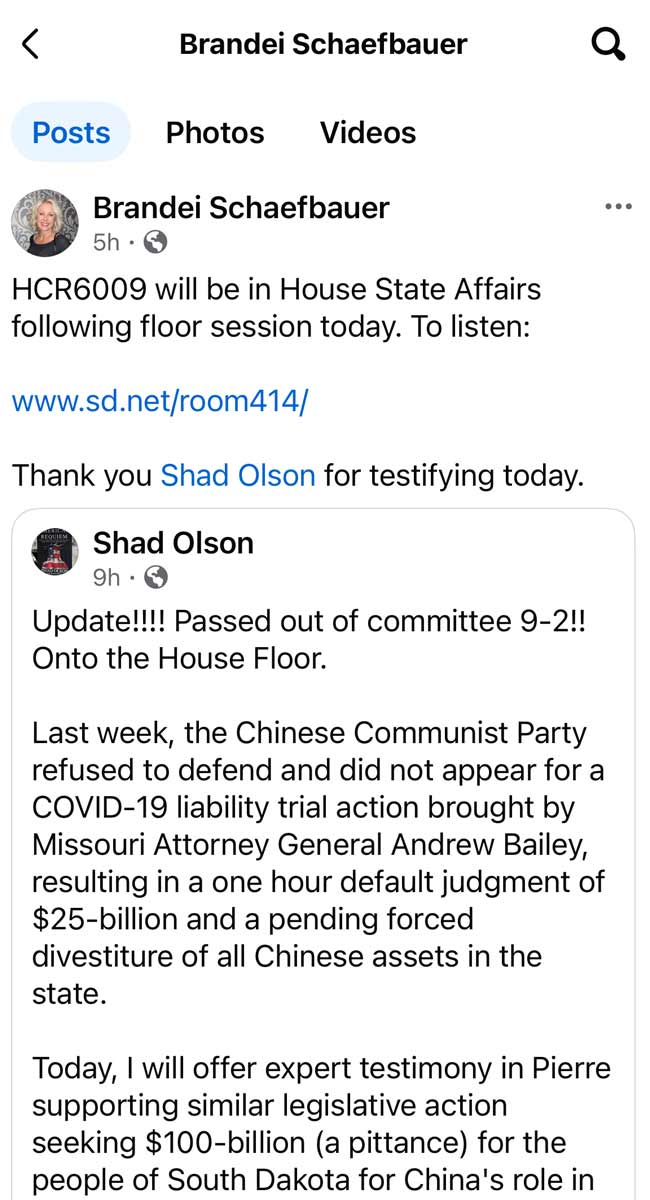
Hot off the press, and I hadn’t heard about it until now. But apparently State Representative Brandei Schaefbauer was on Facebook praising former TV newsreader Shad Olson for his testimony for her bill HCR 6009:
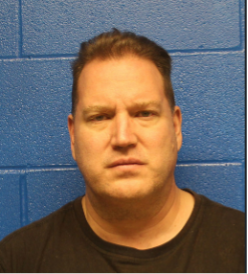
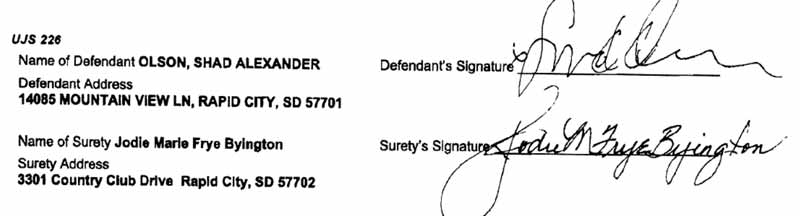
(You can’t see it, but my jaw dropped when I read this, iIf you missed my earlier post on Shad today). I have to find this audio, because for the life of me, I can’t imagine in what way, shape or form Shad Olson would be an expert on anything. Was he testifying as an expert on how to read words off a teleprompter? Was he testifying as an expert on the conditions inside the Meade County Jail and what colors clash with jailhouse painted blue cinderblocks? Or might he have been an expert on how to have women bail him out of jail?
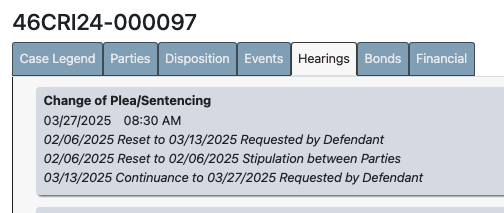
Or, maybe Brandei was seeking someone to testify on how to get charges reduced from a felony Domestic Abuse Aggravated Assault/Strangulation down to Class 1 misdemeanor Domestic Abuse Simple Assault/Recklessly Causes Bodily Injury?
Seriously, I would guess that Brandei hasn’t read the Argus Leader story on Shad if she’s praising him on facebook.
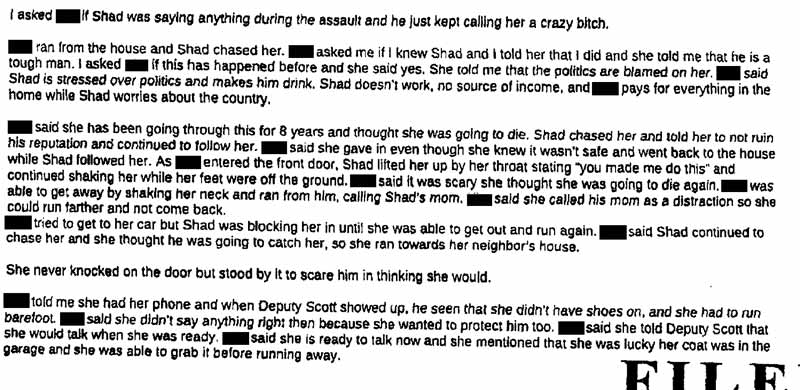
The victim expressed she felt lucky she was thrown on a carpeted floor, because the alleged assault did not leave her with broken bones.
“[The victim] said she was having a hard time breathing and its [sic] hard to talk as she touched the side of her stomach,” the report reads. “[The victim] said she was still aching and described the assault as an animal killing an animal and that Shad isn’t human.”
The victim then told the officer she “thought she was going to die,” but she was able to escape the house. The officer asked if Olson said anything during the alleged assault, but his girlfriend said he only repeated the “crazy [expletive] insult.”
and..
From there, the victim said Olson chased after her as she ran away from her home. They had been living together from some time, but she told the officer “she pays for everything in the home while Olson worries about the country,” the documents read.
The officer asked the victim if Olson had assaulted her before, with her replying “yes.”
The victim said Olson, who runs his own far-right, eponymic podcast, is “stressed over politics,” which influences his drinking. She then told the officer Olson blames his political frustrations on her.
As Olson’s chase continued, the victim said her boyfriend began to tell her “not to ruin his reputation and continued to follow her,” the reports state.
I wasn’t thinking anything this legislative session would surprise me anymore. But, here someone goes again and manages to come up with something crazier than I could imagine.
In House Education which picked up after session ended today, an amended form of House Bill 1201 which removed gay thought reporting and but retained having school employees as mandatory reporters – public or private – requiring that they notify parents if questions regarding “a student’s gender confusion or gender dysphoria are discussed with a student” come up and notes:
A school nurse, school counselor, teacher, administrator, or any other staff member employed by a school district or accredited nonpublic school may not:
(1) Provide any instruction or presentation to a student with the purpose of studying exploring, or informing the student about gender identity, gender expression, or the concept that a student’s gender may be inconsistent with the student’s biological sex at birth; (2) Encourage or coerce a student to withhold from the student’s parent, legal guardian, or other custodian the fact that the student’s perception of the student’s gender or sex is inconsistent with the student’s sex; or (3) Withhold from a student’s parent, legal guardian, or other custodian information related to a student’s perception that the student’s gender or sex is inconsistent with the student’s sex.
The measure passed to the House floor on a vote of 8-7 after amending.