
Why I Believe in Educational Choice — and Strong Public Schools
by Fred Deutsch
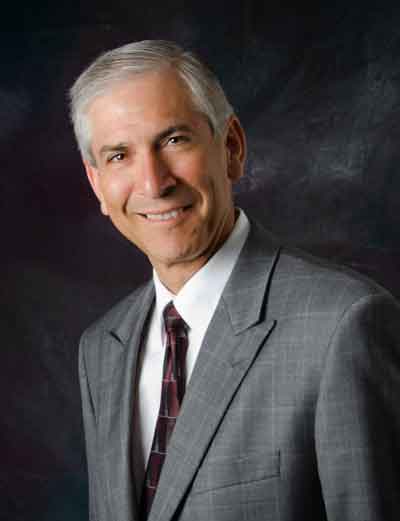 I believe parents should have the freedom to choose the educational path that is right for their children — whether that means enrolling in any public school district, choosing a private school, or homeschooling. These are rights parents already have under South Dakota law, and they reflect a simple truth: parents know their children better than any government system ever will.
Educational decisions should begin with families, guided by their values, their child’s needs, and what they believe will best prepare their children for the future.
I also support Governor Rhoden opting South Dakota into the new federal education choice program. Under this program, any taxpayer can receive a federal tax credit — a direct reduction of their federal tax liability — for contributions made to organizations that provide educational scholarships. Those scholarships can then be used by families for a variety of educational purposes, including alternative schools, supplemental instruction, and other educational supports.
What I do not support is using state tax dollars to pay for private education or homeschooling. I oppose that no more than I would support using state highway dollars to build or maintain a driveway on private land. State education dollars should remain focused on maintaining and improving the public education system that serves the vast majority of South Dakota children.
It is also true that public school test scores are stagnating or declining — and in many cases, the results are unacceptable. That has to change. Our public schools must do better at reaching more children and preparing them for life after graduation.
One shift I believe would help is moving toward a system that advances students based on mastery, not just seat time. Children should move forward when they demonstrate they understand the material, not simply because the calendar says the school year has ended. Likewise, students should advance to the next grade when they have mastered the subject matter, not simply because they occupied a desk for nine months. A mastery-based approach better serves students with different learning styles and prepares them more effectively for college, technical training, or the workforce.
But schools cannot fix everything on their own. Society — you and I — have to do better too. As social problems increase around us, we cannot expect teachers to also serve as full-time social workers while managing growing behavioral challenges in the classroom. At the same time, courts and juvenile services are often under-resourced and unable to provide the level of intervention and support that struggling children truly need. Education reform must be paired with stronger families, better support systems, and accountability across government.
Parents choose homeschooling or private schools for many reasons. Some want a religious education. Others want a smaller or more structured learning environment, or want to avoid persistent behavioral disruptions that interfere with learning. My wife and I made that decision ourselves — we sent our four children to Immaculate Conception School for grades K–6 because we wanted them educated in a faith-based environment that reinforced the values we were teaching at home.
Homeschooling has grown significantly in South Dakota in recent years. Since the 2015–16 school year, homeschool enrollment has increased by approximately 143 percent, rising from just over 4,300 students to more than 10,500 today. Even with that growth, homeschool students still make up only about 6.5 percent of all K–12 students in the state. Private school students account for roughly 8 to 9 percent, while more than 80 percent of South Dakota students continue to be educated in public schools.
Those numbers matter. They remind us that while parental choice is important and should be respected, public education remains the backbone of opportunity for most South Dakota families.
The goal should not be to weaken public schools, but to strengthen them. That means raising standards, supporting teachers, partnering honestly with parents, and reforming outdated systems so every child has the opportunity to succeed — regardless of zip code, income level, or learning style.
Education policy should reflect both freedom and responsibility: freedom for parents to choose what is best for their children, and responsibility on the part of the state to ensure our public schools are strong, effective, and focused on student success. That balance — not ideology — is what will best serve South Dakota’s children and communities for generations to come.
I have no conflict with people choosing which school to send their kids. The cost of that choice should be shouldered by the person making the choice.
To bastardize from the anti pipeliners
NO PUBLIC $ FOR PRIVATE GAIN.
Bravo
Is it government money or tax payer money?
That seems to be the biggest disconnect.
SD Constituion requires an education for our children. People like Deutsch allow home schooling without any type of monitoring from the State. Future generations will be ill equipped to meet the needs of our State. Unemployment is approx. 2% in SD Deutsch and others are hurting all of us by not requiring standards in education . Same Fred
SD Constitution requires an education for our children. People like Deutsch allow home schooling without any type of monitoring from the State. Future generations will be ill equipped to meet the needs of our State. Unemployment is approx. 2% in SD Deutsch and others are hurting all of us by not requiring standards in education . Same Fred
Wrong target. Homeschooling is legal, constitutional, and used by a small minority of families. It is not the reason test scores are flat.
The real problem is a system that lowers standards and then looks for someone else to blame. Parents taking responsibility for their children’s education are not “hurting the state.” They’re stepping in where the system often fails.
And let’s be honest about something else: too many of yesterday’s failed students are today’s loud online “experts” — and too many have become failed parents as well. That doesn’t get fixed by attacking families who are doing the work.
Low unemployment doesn’t prove education is working. It proves we’re coasting. The next economy won’t be so forgiving.
If you want better outcomes, raise standards and fix what’s broken in public education. Stop blaming parents.
The whole debacle started by discriminating against public schools and even private schools to some degree. The home schoolers loudly criticize the aforementioned schools, especially public schools, by saying they are failing. How do they know? Failing in comparison to what? There is no testing accountability with home schoolers. Furthermore to say that homeschool college students have higher GPA than public college students is also a fallacy. There are many, many more public students attending college than home schoolers in our state so that math is also false. Tired of listening to the. false arguments.
No to Deutsch and Jordan in D4
Fred gets it. If Fred or Dylan are my options, I would go with Fred every day of the week and twice on Sundays.
South Dakota’s Constitution requires the state to provide public education — and that responsibility is met through our public schools, which educate the vast majority of our children. Homeschooling does not violate the Constitution, nor does it threaten the state’s future.
Blaming parents who homeschool is a distraction from the real problem. The issue is not too much freedom — it’s a system that too often promotes students without ensuring they’ve mastered the material.
Low unemployment is not evidence that our education system is working; it’s a warning. As jobs become more technical and demanding, we need graduates who can actually read, write, and reason — not students who were advanced because they occupied a seat.
I support higher standards, real accountability, and mastery-based education. What I don’t support is using fear or false claims to attack families who are lawfully educating their children.
If we want better outcomes, we should fix what’s broken in the system — not scapegoat parents
There are some great homeschool situations out there with awesome parents. There are also a number of “no school” situations. We have a number of homeschool kids who have come back to our district. Some of the parents are unsure of what grade they should be in and a number are EXTREMELY behind when compared to their peers which validates their no or low schooling past .
I got an email today from a group call School Choice Week which will be happening the week of January 25th.
I’m trying to setup an interview with them to talk more about. I want to ask them what they believe the South Dakota Legislature should do to address the issue in education in the public, private, and homeschooling.
Here’s their link.
https://schoolchoiceweek.com/states/south-dakota/
The Uber Rich Are Funding “National School Choice Week” to Attack Public Schools
The school privatization PR stunt is a pet project of the Gleason family and Koch family fortunes. By Alyssa Bowen , Ansev Demirhan , Lisa Graves , Truthout
PublishedJanuary 26, 2024
https://truthout.org/articles/millionaires-are-funding-national-school-choice-week-to-attack-public-schools/
Ah yes, makes sense. American’s For Prosperity will be jumping all over this. I wish they would just be honest with everyone. Most homeschool families want nothing to do with AFP and the Koch brothers. Heck, Private School families I have spoke with don’t want tax payer money. It’s the Administrators at the Private Schools that are pushing it. At the end of the day they see dollar signs with 0 accountability plus more money in the church coffers.
When it comes to education, ideas matter—and so do the consequences.
Dylan Jordan has made clear that he supports dramatically shrinking the role of public education. Last session, he sponsored HB 1009, a bill that—by the state’s own analysis—would have resulted in cuts of up to $140 million to South Dakota’s public schools if it had passed.
That level of reduction wouldn’t have been abstract. It would have meant fewer teachers, larger class sizes, reduced programs, and real harm to rural and community schools that families rely on.
Debate about education policy is healthy. But proposals that risk dismantling public education deserve careful scrutiny—because once schools are weakened, communities feel the effects for generations.
Deutsch is a former school board member and education advocate. The choice is obvious.
I don’t think it’s even possible for certain lobbyist groups and advocates of homeschooling and private schooling to advocate for school choice without constantly attacking public education. I think it can be done but one side just can’t seem to stop attacking the education that 84 percent of South Dakotans both choose and/or rely on. They really need to take note of what happened in Nebraska. The Legislature there has tried to pass some sort of ESA voucher and it has been referred three times to the voters and voted down handily. There is already the Partners in Education Tax Credit Program that is a state program and the new Big Beautiful Bill Trump Education Tax credit program. Fred is absolutely correct on this one. I don’t understand how you can interpret the South Dakota constitution to read anything other than face value. “Uniform system of free public schools. The stability of a republican form of government depending on the morality and intelligence of the people, it shall be the duty of the Legislature to establish and maintain a general and uniform system of public schools wherein tuition shall be without charge, AND equally open to all; AND to adopt all suitable means to secure to the people the advantages and opportunities of education. The word “and” is very imporrtant as it means all elements must apply for the statement to be true. Tax payer funded private education in South Dakota would require a change to the constitution.
Gotta hand it to Fred for actually paying lip service to public educators instead of attacking them for once. However, if we’re talking mastery, maybe the “doctor” should model it and learn how to not rewrite the same sentence twice in the same paragraph.
Tecnically the only person who can establish a Bank Account, Trust Account, Obtain a Birth Certificate, Social Security Trust Account, or enter into a Relationship with The State Government, Federal Government, or Other Adult is the “Actual Person” themselves. This is why by state law, a newborn/person does NOT need a Birth Certificate until their 18th Birthday. It is a financial instrument to act in state commerce. Without it, the “State” cannot enter into a relationship with the child (ages 1 mth to 17 years old). Same for the Social Security Trust Account, by Federal Law, a newborn/person does not need one until their 21st birthday as again, it is a financial instrument used to partake in federal commerce. Without it, the Federal Govt cannot enter into a relationship with any man or woman. However, as per the UCC laws, the Public Salary laws, which were passed in the 1930’s, and States adopted their own such laws in the 1960’s, your “Parents” were given the permission to print your name, thus signing their name in place of your name in order to obtain a State issued Birth Certificate, thus informing the state, and placing “You” into the flow of State Commerce, which incidently allows them to print your name, by signing their name in place of your signature to obtain a Social Security Trust Account in your name. Much of this is done in deceit, as parents are told to do this, IF they wish to claim their children as ‘expense deductions” on their federal form 1040 upon self-assessing, volunteering themselves to the I.R.S. In return, they then receive federal tax subsidies, credits, allowances, benefits from federal taxes. The same is true in the “State” – this places your child in the custodial jurisdiction of the state, thus allowing the “State” to reward State Tax subsidies, credits, allowances, benefits to the parents (i.e child support, child subsidies, low income benefits). All the while your “Child” does NOT need either document until they reach the legal age of consent, which is by statute, 18 in most States, and 21 in federal territory. Until then, the government(s) cannot enter into any legal, lawful relationship with your child without their expressed, written, signed consent. For the first 18-20 years of your life, you are a “Man or Woman” bornon land and soil, a true “State National” or whereas your nationality is of someone born of the Republic of ______ South Dakota, Minnesota, Iowa, New York, etc. You would be a complete “Sovereign Individual” at that point. Your child does NOT need a birth certificate to enter public education, your parents can obtain a AFFIDAVIT in leu of the birth certificate explaining in fact, and testimony, that your child was born on land, and soil, to such parents (Mom and Dad) in witness of the Hospital (the doctor), and thereto in witness of your Pastor via baptism. The Hospital by law must provide to you a “Live Birth Document” which is to be kept on file at the hospital, and recorded in your States vital records proving the birth took place. The department of health therefore maintains on public record, a copy of that birth document, therefore, your child is able to enter into state commerce when he or she has the desire to do so. Your job as parent is to provide to your children ages 1-12 with the proper morals, values, self-discipline, giving to them the basic education of reading, writing, math, science, and history so then, by the ages of 13-19, they become awesome young adults, able to make good choices, become responsible adults, affording them to make great choices in life, while by age 13, they can begin working a part time job, by age 14 they can drive on public roads (with permit), while begining to form adult like relationships, while by age 16 with your consent they can get married, while by the time they each 18, they are free, and clear to make make all their own decisions without the consent of the parents. Until then, no government or any adult outside of the home (jurisdiction) may legally enter into a relationship with your person, a minor, a person below the age of consent (18). Make sense?
Sov citting pretty hard today I see. We probably need license plates or drivers licenses either do we……..
* don’t need
Please explain your response, the above post was written by someone who obviously knows and understands the subject, and the law. Rather than attack the person above, you may want to become more knowledgable on the subject the person is speaking on. Cause what the person is saying is true and backed up by law. And there is a legal mechanism to driving on public roads with out a driver license and license plate on a vehicle. You may want to educate yourself before you comment further. You make yourself look like a statist.
Mike, go touch grass.
Come on Big Mouth, did I hurt your feelings? Can you debate people are you a crying fool who does not know how to treat people. Show some balls and debate me like a REAL MAN
You think that Joel Koskan raping his adopted daughter was an “internal family affair” that the state had no business punishing. GTFO
What does Joel Koskan have to do with this topic. You may want to learn to respect people. But we both know you cannot do that. You are just mad cause your side is losing. You act like a democrat.
Sovereign Citizen bullshit arguments have never been validated in court. Ever. At best sov citz are misguided dipshits too dumb to know they’re wrong, at worst they’re mass murderers and secessionists.
There is zero law backing up the sovereign citizen arguments above. Zero. They’ve never worked in any court and have never been upheld by a higher court. Remove your license plate and let your drivers license expire. Report back with how that goes for you the first time you get pulled over. In fact, the number of people that believe the sovereign citizen argument is proof in itself that we can do better in the education system. Because it’s definitely failed that group.
You showed your ignorance when you combined the two words “Sovereign Citizen” together as one term. That is how stupid you people are. And it only shows how much your side is a “Statist” regime.
Sovereign Individual, is a person having independent authority and the right to govern itself
Citizen, naturalized person who owes allegiance to a government and is entitled to protection from it – a member of a state.
One is not a citizen @ birth, citizenship must be applied for, and granted by the “State”.
A newborn, or a man or woman ages 1-20 cannot be a citizen of a state, since the state cannot enter into a relationship with such man or woman without consent given.
Know Your Standing, a man or woman not a citizen of a state, does NOT hold any allegiance to the state, he only holds allegiance to oneself, their god, their domain.
Ope! Might wanna touch some grass!
Just a complete word salad of banal talking points strung together to sound like he supports public education. Bull. He wants your money to pay for religious instructional schools and home schooling that teach a single viewpoint: his.
With unemployment so low in SD we need everybody to be well educated. We have no way to ensure this with no supervision of those home schooled children Currently kids are seen in my community at the rec center, etc during the day while the majority of kids are in school. What curriculum is being taught to these “home shoolers” ? Who knows if the parents are even teaching them anything.? We stand the chance these children will slip through the cracks because we did nothing Shame on you Fred and your ilk
Keep government out of our hones you socialist commie pricks. We parents can teach our own kids. Fred is a moron and so is Jon Hansrn and Scott Odenbach for aligning themselves with AFP
Those kids could be in an environment with parents using drugs or abusing their kids. It needs to be regulated to protect the kids
Do.not make assumptions
Zero regulations with home school. It needs to be regulated.
No it does nit you socialist commie prick. Wr patents do not need government in our lives
The fear is unfounded unless you have something to hide.
My natural right to be free. No governmebt necessary
Mykala, dis you?
Do you teach “keyboarding” in your house?
Another issue among many is that there are plenty of scam artists and shady companies taking advantage of parents who are looking to homeschool their kids. Books to software educational materials are sub par. It is a money making machine for home school grifters. Unfortunately the parents and especially the kids end up being the victims.
Parents should check out all the requirements future educators need to graduate and all the educations requirements and suggested options for educational professionals at our public universities. There is a science to it. Those parents would be amazed!
When we are talking home school the issue of possible abuse could include a number of areas including sexual abuse that could be going on.
Home schooling needs to be regulated and look forward to the many issues and opportunities that needs to be addressed.
Your. Fake Republican, pro socialist prick
You raise some concerns that are worth taking seriously — especially the reality that there are bad actors in every sector, including companies that market low-quality curriculum or materials to families who are trying to do the right thing. Parents should be discerning consumers, and transparency matters.
At the same time, it’s important not to paint homeschooling families with a broad brush. The vast majority of parents who homeschool do so out of deep commitment to their children, not because they’re trying to evade responsibility. They are not “grifters,” and their children are not victims by default.
You’re right that there is real science behind teaching, and our public-school educators go through extensive training. That’s precisely why strong public schools matter — and why I continue to support them. But parental involvement, motivation, and accountability also matter enormously, and those aren’t credentials you earn at a university.
Concerns about abuse — whether physical, sexual, or educational neglect — must always be taken seriously. But those risks exist in every setting, including public schools, private schools, churches, and youth organizations. The question isn’t whether risk exists; it’s how we respond without assuming guilt or building a system that treats all parents as suspects.
That’s why I’ve said I’m open to narrow, carefully tailored safeguards — not blanket regulation. For example, allowing limited local intervention when there are specific, objective indicators of concern, with due process and respect for families. That approach protects children while preserving parental freedom and avoiding unnecessary intrusion.
We should be able to hold two ideas at once:
• Parents deserve the freedom to choose how their children are educated.
• The state has a responsibility to step in when there is credible evidence a child is being harmed or denied an education.
Thoughtful reform lives in that balance — not in extremes
So intervene AFTER the child is damaged. MAGA semper fi
yes that is how it works; a child is born and remains in the custody of his parents until after abuse occurs.
Are you suggesting that all newborns should be placed in the custody of professionals because parents can’t be trusted??
This person has posted multiple times in these comments, never discussing issues, just name calling. This person also thinks they should be an educator. You can’t.make this stuff up, lol.
I don’t accept the premise that homeschooling parents are the problem — and I also don’t believe in pretending that nothing can ever go wrong.
I trust South Dakota superintendents. They are hired by local school boards made up of everyday South Dakotans — neighbors, parents, and taxpayers — who are elected by the people of their communities. That matters. These aren’t distant bureaucrats; they’re accountable to local voters and families.
I also trust homeschool parents. They are among the salt of the earth and the bread and butter of South Dakota. They choose homeschooling because they care deeply about their children and are willing to take direct responsibility for their education. Painting them as irresponsible or neglectful is unfair and disconnected from reality.
Could a child fall through the cracks and not receive an education? Of course. That can happen in any system — public, private, or homeschool. The question isn’t whether risk exists. The question is how we address it without punishing the many responsible families because of rare failures.
That’s why I would be open to narrowly tailored legislation that strikes a balance. For example:
• Giving a local superintendent limited authority to check on a homeschool student only if specific, objective concerns are present.
• Requiring clear triggers — such as documented neglect, or a court or child-welfare referral.
• Ensuring due process and parental notice
That approach respects parental freedom, trusts local leadership, and provides a safety net for children who may genuinely need intervention.
What I don’t support is sweeping regulation driven by suspicion or ideology. Zero trust is not conservative. Nor is turning parents into suspects simply because they chose a different educational path.
We can trust parents. We can trust local school leaders. And we can still protect children — without building an intrusive state apparatus that assumes the worst about families.
How does one identify specific, objective concerns about the learning of a child if home schooling, by its very nature, isolates the child from oversight? How is this any different from a complete lack of educational oversight, save for cases of substantiated abuse or neglect?
That’s a fair question — and all I can do is share what I believe to be true.
First, homeschooling does not exist in a vacuum. Children and families are already visible in multiple systems: health care, churches, co-ops, extracurriculars, libraries, sports, employers, and community programs. Homeschooling changes where learning happens, not whether a child exists outside of society. Concerns about a child’s wellbeing or development are already identified in many contexts today, not just classrooms.
Second, the standard I’m talking about is not proactive surveillance. It’s responsive oversight. There’s a meaningful difference between “monitor every family just in case” and “allow limited, local intervention when credible concerns arise.”
Specific, objective concerns could include:
A documented referral from child welfare, juvenile services, or a court.
Credible reports of neglect from mandated reporters.
A situation where a homeschool student re-enters the public system and is dramatically behind age-appropriate benchmarks.
Evidence that a child is being denied basic literacy or numeracy instruction altogether.
In other words, the trigger would be evidence, not speculation, and the authority would rest locally, not with a distant state agency.
You’re right that this is different from blanket oversight — and that’s intentional. Blanket oversight assumes guilt. A responsive model assumes good faith, intervening only when there is reason to believe a child is being denied an education.
Finally, no system guarantees perfection. Children fall through the cracks in public schools too, despite layers of regulation. The question isn’t whether we can eliminate all risk. It’s whether we can reduce risk without sacrificing liberty and parental responsibility.
I believe we can — by trusting parents, empowering local educators when real concerns exist, and keeping the focus on protecting children rather than building a system that treats every family as a suspect.
So Fred says he doesn’t support state dollars going to private schools but he does support federal dollars going to private schools. If the state takes in a bunch of federal dinars, in good fiscal conservatism, wouldn’t that reduce the dollars available to the state? It’s basically all the same money it just takes a different path to the church.
That’s not how the program works — and it’s not “all the same money.”
State dollars and federal tax credits are fundamentally different. I oppose using state education dollars — money collected and appropriated by South Dakota — to fund private schools. Those dollars are meant to support our public school system, and I’ve been consistent about that.
The federal program is not a federal grant flowing through Pierre. It’s a voluntary federal tax credit claimed by individual taxpayers on their federal return for donations they choose to make. That money never enters the state budget, is never appropriated by the Legislature, and does not reduce state revenue.
South Dakota is not “taking in federal dollars” under this program. There is no check to the state, no federal mandate, and no impact on state education funding formulas. Pretending otherwise blurs an important fiscal distinction.
Good fiscal conservatism means understanding the difference between state appropriations and federal tax policy — and not conflating them for political effect.
You can oppose the policy on philosophical grounds if you want. But saying it drains state dollars or reroutes state money “to the church” is simply incorrect.
lots of hyperbolic ranting here but let’s look at the numbers of our college freshmen who arrive in need of remediation.
It was a shock to me when my first-born, who had been active in debate and drama, and was president of his senior class, applied to USD, received early acceptance…… and needed to take remedial math when he got there.
Somebody in need of remedial math was offered early acceptance??
That was decades ago and since then I have heard that 1/3 of incoming freshmen are not prepared to do college-level work.
That alone tells you public education is in trouble.
But it’s even worse now. That same child now lives in Massachusetts and his children attend public school. In the 4th grade the twins reported that as a class exercise, they were required to stand up and identify themselves . Fourth grade!
They both identified as straight males.
(I said they should have said “let me check” and dropped their pants.)
Don’t blame the parents if they want to get their kids out of the public schools.
Is the cure worse than the disease? Half the time we can’t even tell because there is no regulation here. Many of these kids who have come back to the public schools are absolute train wrecks academically.
Anne, Thank you for the thoughtful and focused response. I appreciate you grounding this discussion in real experience rather than slogans.
Your story about your son needing remedial math after early acceptance is exactly the problem we should be talking about. When a student can be successful, engaged, and even a class leader — yet still arrive at college academically unprepared — that’s not a parenting failure. It’s a system failure. And you’re right: when roughly a third of incoming freshmen need remediation, public education clearly has work to do.
I also want to clarify something. The idea of moving away from seat time and toward mastery-based advancement isn’t my brainchild. It’s something I’ve heard repeatedly from Vivek Ramaswamy, a former presidential candidate and current gubernatorial candidate in Ohio, and from many educators and employers who are frustrated by graduates who have credentials but lack fundamentals.
The logic is simple. Seat time measures compliance. Mastery measures learning. Advancing students because the calendar says it’s June — rather than because they’ve actually learned the material — is how we end up with college freshmen in remedial courses and employers retraining new hires from scratch. A mastery-based approach would allow students to move faster where they’re strong, get real help where they’re behind, and leave school actually prepared for what comes next.
Your experience with your grandchildren also underscores why so many parents are opting out. When academic basics are displaced by ideological exercises — especially at very young ages — parents are going to look for alternatives. That isn’t an attack on public education; it’s a rational response to what families are seeing.
I don’t blame parents for wanting better for their kids. At the same time, I don’t think the answer is abandoning public schools. The answer is refocusing them — back on academics, mastery, character, and preparation for real life.
If we want fewer students needing remediation, fewer parents feeling forced to leave the system, and more graduates ready for work or college, then we need to fix how we measure success in education. Seat time hasn’t delivered. Mastery just might.
Thank you again for engaging seriously on this.
If your kid needed remedial math it sounds to me like you, as the parent, were the one clearly in dereliction of duty.
Also, have some class and not self-identify with your actual name as a would-be sex offender on a message board. Absolutely disgusting, and I’d expect better from you.
my kid needed remedial math because we were not aware he was not doing grade-level math.
Most parents can look at their kids’ math homework, conclude it’s up to par, can’t remember any of the trig or calc we studied when we were that age anyway, and assume they are being taught what is expected of them.
As for accountability, those of us who pay taxes to support the public schools have an interest in kids getting the education we are paying for. Where is the accountability for public school kids being granted diplomas when they aren’t ready to do college level work?
What is present and involved parents, Alex?
I am wondering how many homeschool incoming freshman require remedial math. Do homeschoolers have proficient algebra, geometry, trigonometry, and calculus skills? Highly doubtful…unless their homeschool instructor was a former math professor. The home school ” teachers” do not have to be graduates. I feel sad for kids who get picked on or have a disability( 38 per cent) and retreat from public schools.
Quit watching Fox and reading the NY Post online That would take care of an addled brain
I have two relatives who were homeschooled…one is a nurse and one has a masters degree in mechanical engineering, both with good jobs. If a student is motivated he or she will do well. I’m thankful for public school education, but that was in a different era when academics were stressed over ideologies.
My five grandchildren all attend private schools where academics are emphasized and moral values are part of the curriculum. The older three are taking advanced classes and will be ready for whatever their future paths will be because these schools stress good study habits and a moral foundation.
When my kids were in public school in the 1980s and 1990s it meant something to be on the honor roll. They noticed a few years later that over half of the classes were on the honor roll because standards and the grading system were lowered. Expectations were lowered, leading to more needing remedial classes later on.
it’s interesting that for all the ranting here, only Springer and I produced any anecdotes we have personally observed. Springer has relatives who were very successfully homeschooled, I have a son who graduated from a public school where he was active, engaged, respected by his peers, who needed remedial math when he arrived at USD.
Where is the data that suggests home schoolers are not being educated? We already know large numbers of incoming freshmen have spurious high school diplomas. How many of them were home schooled? How many of them came from public schools? How many came from private schools?
These statistics should not be hard to dig into. Somebody has access to the data.
I don’t even know what high school graduation requirements are any more. I think there is a tendency to believe they haven’t changed.
When I was in high school, everybody took geology and algebra in the 9th grade, biology and geometry in the 10th, trigonometry and chemistry in the 10th, and if you were college-bound, you took physics and calculus in the 12th. Not that those of us who went on to get liberal arts degrees remember much, if any, of it, we still needed all that to take the college boards.
it was unthinkable that a kid could get into college if he had not already mastered those levels.
If the colleges are accepting students who need remediation, That is another problem. The admission standards are too lax.There are people going to college who have no business being there and that needs to stop. The taxpayers are funding sub-par public education, public money goes to these colleges with lousy admission standards, students who don’t belong in college are going deep in debt only to flunk or drop out, and then they want their student loans forgiven. As usual, the bill for all this institutionalized failure is sent to the taxpayers. Make it stop.
It is absolutely bizarre to demand anecdotes for evidence. But sure: I went to public school, went to college and a professional school and needed no remedial education. My daughter is currently in college and needed no remedial education.
Perhaps the most ironic point in all this is that perhaps public education failed you so badly that you think anecdotes are a desirable way of arguing public policy.
Same, my Public School kids needed no remedial education when entering college.
but the stats are that 1/3 of incoming freshmen need remedial work. where did they come from?
That’s a really fair question:
The test score myth and homeschooled students’ academic performance | Coalition for Responsible Home Education https://share.google/C7hPlTgJtiUxzoi40
The remediation figure comes from South Dakota Board of Regents data, reported regularly in Regents performance reports and legislative briefings. The Regents track how many first-time, full-time South Dakota high school graduates entering Regental universities are placed into remedial (non-credit) math or English based on placement assessments. In recent years, that number has hovered around 30%, which is why it’s often described as “about one-third.
This information has been requested from the Regents for Public School South Dakota High Schoolers. They can’t provide it. I’m not sure if they can separate out-of-staters, private schoolers, homeschoolers, and public schoolers.
What a mess Fred. To your first paragraph, they aren’t visible to those other systems though. Libraries don’t compel you to show ID at the door. Health services? If you don’t have insurance and don’t go to a doctor how are they supposed to know? All SDHSAA extracurriculars as through the schools you self-important imbecile. Employers—assuming they are the one’s hiring only show up after what, 14 years at best? Churches? That assumes regular attendance and a particularly nosy community into what you already characterize as “family business.” You’re spitballing bs here, plain and simple.
Second, “responsive oversight” is another hogwash standard. Teachers are mandatory reporters. Joe Churchgoer is not. And if the concern is academic abandonment, by the time you’d catch what exactly do you plan to do for the 15 years old “reading” below a 1st grade level other than dump them in the local public school and have their test scores take the L?
well maybe some of us are not concerned with what home schoolers are learning, or not, nor are we particularly concerned about private schools which are accredited through private organizations . The college admissions process usually requires a high school diploma from an accredited school so the system is self-regulating..If parents choose to send their kid to an unaccredited school, he can get a GED later. That is not the property owners’ problem.
What is the property owners’ problem is the amount of taxes paid for something that isn’t worth much, and property values fall when the local public school is poorly ranked.. Our property values are not affected by lousy home schoolers or sub-par private schools, but the public schools’ ratings are right there in the Zillow listings, for every potential buyer and mortgage lender to see, This can reduce the market value of our real estate..So improving the quality of the public schools comes first.
I’m glad you agree that quality Public Schools are one of the biggest economic drivers for towns in SD. I’m also glad that you agree tax payer dollars do not need to fund choices that are not allowed per SD’s state constitution.
the beauty of it is that local property taxes fund the public schools. The more valuable the real estate, the bigger the revenues, the more money to support education.
When the schools suck, property values go down, and the tax revenues fall, and the less money to support education. This fuels the downward spiral..
if you want to have more money for education, bring the scores up.
And if homeschoolers want.money, subject themselves to scores like everybody else. They want cash and no oversight. No. That’s a terrible idea.
Agreed, it is truly astounding to me how someone can demand tax payer dollars without not oversight or accountability. It’s wild.
Didn’t John Dale comment in the past that he is expecting to be paid by taxpayers to teach & home school his kids without any oversight?
He wanted to paid an annual salary by taxpayers.
Do you know what no one ever complains about. The growth of the Post Secondary education budget in SD. It has been 13 percent higher than Public Ed since 2020. You know why? It doesn’t come from property taxes, so no one really cares.
university education is funded with user fees, not taxes..
They receive State General Fund dollars. They are not fully self-funded.
About 1/3 of their 1 billion annual budget comes from tax payer dollars from the State General Fund. Your statement proves my point. No one understands the college funding because it is not generated from property taxes.
Many good points. Correct, no tax dollars should go to private education. First, we do not want to expand tax-funded education welfare. That would be more socialism, statism, and neo-Marxism. We already have enough of that with state-run public schools. Second, private schooling and private homeschooling are doing well and do not need to be constrained or ruined by State controls that should and must follow tax dollars. Further, family disintegration is one of the core reasons for public-school disintegration.
Empirical research shows the home educated are doing very well academically, socially and emotionally, and into adulthood. Don’t ruin that with tax-funded education welfare dollars and State (government) control. See the research at http://www.nheri.org
Mississippi miracle was driven by added reading interventionists. You have to burn to turn dumbass.
If I had to vote in the District 4 Republican primary, what could possibly convince me to support Fred Deutsch? Dylan Jordan might do it.
Anyway… we need to all send thoughts and prayers to Watertown.