Guest Column: Toby Doeden’s Education and Business Plan: Details Later? by Katherine Mickelson

Toby Doeden’s Education and Business Plan: Details Later?
by Katherine Mickelson

As one of South Dakota’s most successful self-made business owners, Toby Doeden seems to be taking stances to prevent others from achieving similar success. He has repeatedly made anti-business statements in his campaign messaging that are not built on solid pro-business policy, but populist anger.

On July 28th, Doeden’s campaign posted a clip from his state tour campaign in which he criticized residents of Deuel County for thinking AI tech companies will hire rural South Dakotans to work in their “super sophisticated data centers,” claiming that they will instead hire liberals from California, New York City, and Oregon. He said “they ain’t hiring Toby Doeden to run an AI software company, I promise you that.” The speech claimed to be open for business but contradicts itself in its narrow view of developing industries. With a condescending tone that South Dakotans, and specifically rural residents, aren’t bright enough to compete with outside competitors in the developing tech industry. Erin Tobin weighed in on Facebook, saying, “That’s a pretty insulting thing to say to the bright young minds at Dakota State University.” Many of the comments online criticized Doeden, but he has no formal response or indication that South Dakota is able to support and staff data centers.

The comments from Doeden aren’t surprising, as they continue sentiments against institutions of higher education. Episode 8 of “Toby Doeden Unfiltered” describes his personal experience of enrolling at Minot State University and seeing it as a complete waste of time. He talked about the need to re-educate parents, guidance counselors, and administrators on pushing students to go to college. While some individuals are vastly successful without college degrees, this isn’t the norm. The U.S. Census Bureau estimated that the average college graduate with a bachelor’s degree makes 68 percent more per year than someone with a high school diploma. And those with bachelor’s degrees experience half the rate of unemployment.

Promoting trade and alternative tracks are important, but shouldn’t be prioritized over the success of four-year institutions. Especially in a time when rural healthcare needs grow and shortages continue. The projected shortage of registered nurses in 2030 is 14.0% and the demand for nurse practitioners is projected to grow more than 50% by 2032. Doeden has no plan to meet these shortages or incentivize systems to support rural healthcare. He has avoided all healthcare workforce specifics. This continues a trend of vague statements that fail to introduce a formal plan for new business recruitment, workforce retention, or educational improvements.

His education policy on his policy issues page consists only of preventing schools from using indoctrination tactics for gender and critical race theory, advocating for reading, writing, math, and critical thinking, but not having a single stance or plan to achieve these goals. His campaign lacks details with no substantive proposals to rebuild or fund education, instead offering slogans that are hollow and contradictory. He stated in his announcement speech: “I will work with President Trump and our Legislature… to develop and implement an education system that prepares our children for a future of winning.” Clearly, he doesn’t think a future of winning is possible for DSU students despite its 99% placement rate for graduates of the Beacom College of Computer and Cyber Sciences.

He highlights his entrepreneurial success as a qualification to improve state governance, but if he isn’t qualified to run a software company, why should voters trust him with the power to run the state?

Sioux Falls resident Katherine Mickelson is a Junior at Baylor University, where she studies Political Science and is a student media fellow with the Network of Enlightened Women. 

(Editor’s note – Katherine’s grandfather & great-grandfather were trusted with the power to run the state. Both of them twice! – pp) 

Rounds Reintroduces Legislation Supporting AI Innovation in Financial Services

Rounds Reintroduces Legislation Supporting AI Innovation in Financial Services

Legislation supports provision in Trump administration’s AI Action Plan

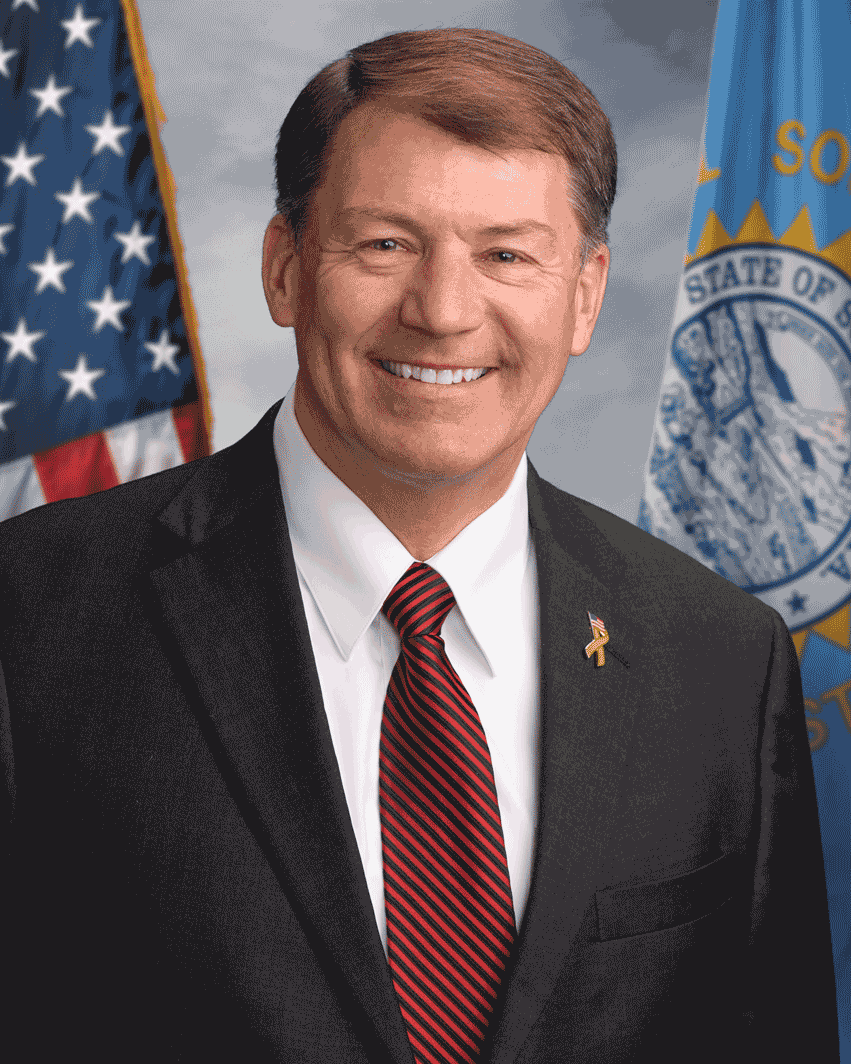
 WASHINGTON – U.S. Senators Mike Rounds (R-S.D.), Martin Heinrich (D-N.M.), Thom Tillis (R-N.C.) and Andy Kim (D-N.J.) and U.S. Representatives French Hill (R-Ark.), Chairman of the House Financial Services Committee, Ritchie Torres (D-N.Y.), Bryan Steil (R-Wis.) and Josh Gottheimer (D-N.J.) today reintroduced bipartisan, bicameral legislation to promote artificial intelligence (AI) innovation in the financial services industry. The Unleashing AI Innovation in Financial Services Act would direct financial regulatory agencies to create Innovation Labs for regulated entities to test AI projects, allowing them to experiment with cutting-edge technologies in a safe way.

The Trump administration’s AI Action Plan, released earlier this month, calls for the establishment of regulatory AI Centers of Excellence to test AI tools while also sharing results and challenges with relevant partners, specifically mentioning the Securities and Exchange Commission (SEC) as a potential participant. The Unleashing AI Innovation in Financial Services Act would create these labs in the financial regulatory agencies, including at the SEC. This legislation is supported by the U.S. Chamber of Commerce.

“The financial services industry has been using AI for decades, but companies must have the opportunity to innovate as major advancements continue to develop,” said Rounds. “The Unleashing AI Innovation in Financial Services Act is designed to foster innovation and economic growth by providing a controlled environment where new financial products and services that use AI can be tested. I’m pleased that the Trump administration shares this vision, as outlined in their recent AI Action Plan. By creating these innovation labs, we aim to strike a balance between encouraging innovation and maintaining consumer protection, ultimately strengthening our financial system and keeping our country at the forefront of global financial technology.”

“To unlock AI’s full potential and ensure it is deployed responsibly, we need regulatory guardrails that are informed by real-life use cases,” said Heinrich. “Our Unleashing AI Innovation in Financial Services Act does exactly this by enabling the private sector and government agencies to work together and encourage innovation that protects consumers.”

“Artificial intelligence is transforming the financial sector, and it is critically important that U.S. firms can innovate at the pace necessary for America to maintain its role as the center of the global economy,” said Tillis. “This bipartisan bill provides a commonsense framework that encourages domestic cutting-edge development while still ensuring the necessary regulatory oversight is in place.”

“Without the necessary safeguards in place to look after consumers, we will not be able to see the full promise of AI or reap the benefits of AI innovation long-term,” said Kim. “This bill puts critical parameters in place to look after the public interest that will allow us to push forward with secure and stable innovation across the financial sector.”

“As AI continues to evolve, we must understand its full impact because it will touch every part of our lives,” said Hill. “The Unleashing AI Innovation in Financial Services Act ensures that federal financial agencies allow the companies they oversee to experiment with AI through regulatory sandboxes. Our Committee looks forward to exploring AI and its uses in the financial services industry. We are committed to fostering innovation and collaboration between the public and private sectors. I’m grateful to my bipartisan House colleagues and to Senator Mike Rounds for leading this effort in the Senate. Advancing this bill is key to keeping the U.S. at the forefront of AI innovation in financial services.”

“In the face of rapid AI advancement, Congress has a responsibility to ensure responsible innovation that protects consumers, strengthens our economy, and maintains American leadership,” said Torres. “I’m proud to co-lead this bipartisan, bicameral effort alongside Congressman French Hill to create AI Innovation Labs, giving regulators a safe and structured way to engage with cutting-edge technologies. This bill ensures that innovation and oversight go hand in hand.”

“The United States must lead in artificial intelligence while responsibly addressing the risks that come with emerging technologies,” said Steil. “Our Unleashing AI Innovation in Financial Services Act will ensure that we are able to develop this technology responsibly and safely, protecting consumers, and allowing the U.S. to win the tech race.”

“When it comes to artificial intelligence, we need smart safeguards in place to protect consumers, prevent abuse, and ensure our families and financial systems are safe. We also must ensure that the United States continues to lead the world in innovation,” said Gottheimer. “That’s why I’m proud to help lead the bipartisan, bicameral Unleashing AI Innovation in Financial Services Act, which will bring together the government, private sector, and innovators to explore the use of new AI technology in financial services. This commonsense bill will allow for experimentation while putting guardrails in place to strengthen consumer protections and help ensure that American technology stays ahead of the curve.”

The Unleashing AI Innovation in Financial Services Act establishes regulatory innovation labs for AI test projects at the Federal Reserve, the Office of the Comptroller of the Currency (OCC), the Federal Deposit Insurance Corporation (FDIC), the Securities and Exchange Commission (SEC), the Consumer Financial Protection Bureau (CFPB), the National Credit Union Administration (NCUA) and the Federal Housing Finance Agency (FHFA). Regulated entities would apply through their primary regulator and must be able to demonstrate the project will serve the public interest (including consumer projection), enhance efficiency or increase competitiveness and not present a systemic risk to the financial system.

Click HERE to read full bill text.

###

Dusty Johnson Safeguards U.S. Infrastructure from Chinese Spy Technology

Dusty Johnson Safeguards U.S. Infrastructure from Chinese Spy Technology

 Washington, D.C. – Today, U.S. Representative Dusty Johnson (R-S.D.), a member of the House Transportation and Infrastructure Committee and the Select Committee on the Chinese Communist Party, re-introduced his legislation to prohibit the Department of Transportation from using foreign adversary digital 3-D mapping technology, LiDAR. Light Detection and Ranging (LiDAR) technology creates 3-D maps with millimeter-level data of surrounding environments.

“LiDAR technology creates incredibly detailed maps of its surroundings. Allowing our adversaries like China to have access to these maps of critical infrastructure like ports, railways, airports, roads, and bridges could allow them to disrupt our supply chains and cause a national security crisis,” said Johnson. “My bill ensures our nation’s critical infrastructure is protected from the malign interests of the Chinese Communist Party.”

“Taxpayer dollars should never be used to fund technology from our adversaries,” said Select Committee on China Chairman John Moolenaar (R-MI). “This bill makes America’s critical infrastructure more secure from foreign surveillance and influence by ensuring the Department of Transportation is not supporting the growing market share of Chinese-made LiDAR equipment. It’s a common-sense step to put American security first.”

“LiDAR is essential to modern infrastructure, but when it’s controlled by companies linked to the Chinese Communist Party, it becomes a security risk,” said Select Committee on China Ranking Member Raja Krishnamoorthi (D-IL). “We can’t allow adversaries to gather sensitive data or disrupt our systems. This bill takes a necessary step to keep our infrastructure secure and our technology supply chains trusted.”

“While LiDAR technology is widely employed in our nation’s transit infrastructure, including in airports, autonomous vehicles, and traffic control systems, it is increasingly being produced by Chinese companies that are required to hand over any data collected by their equipment to the Chinese government upon request,” said Rep. Julia Brownley (D-CA). “This raises serious concerns that China could not only access sensitive data mapping U.S. infrastructure, but also use it to disrupt the systems that rely on their technology. That is why I am joining Rep. Johnson to introduce legislation prohibiting the Department of Transportation from using LiDAR technology sourced from foreign adversaries. Now more than ever, we must remain vigilant and proactive in safeguarding the infrastructure that Americans depend on every day.”

“Trucks reach every corner of the country and routinely access some of our nation’s most sensitive sites—such as ports, border crossings, and military installations.  That is why supply chain and infrastructure security are very important to our industry. The American Trucking Associations commends Reps. Johnson, Brownley, Moolenaar, and Krishnamoorthi for taking this issue seriously by working to block potential national security threats from foreign-owned LiDAR technology,” said Henry Hanscom, Senior Vice President of Legislative Affairs at the American Trucking Associations.

“This legislation marks an important step forward in strengthening the security of America’s transportation systems and critical infrastructure. As LiDAR technology becomes increasingly central to the future of transportation, including autonomous systems, it’s essential that the technology used to build and operate our national infrastructure is safe, secure, and protected against adversarial interference,” said Michael Robbins, President and CEO of the Association for Uncrewed Vehicle Systems International.

The Securing Infrastructure from Adversaries Act is cosponsored by Select Committee on China Chairman John Moolenaar (R-MI) and Ranking Member Raja Krishnamoorthi (D-IL), and Representative Julia Brownley (D-CA).

Click here for bill text.

###

Anti-pipeline lawyer reprimanded by Iowa Supreme Court for South Dakota actions considered “deceptive”

Brian Jorde, an attorney who has represented landowners in South Dakota against Summit Carbon Solutions was recently sanctioned by the Iowa Supreme Court for filing “misleading or deceptive” information during utility commission reviews of permit applications.

According to South Dakota Searchlight:

The Iowa Supreme Court Attorney Disciplinary Board ruled last month that Brian Jorde, an attorney who has represented hundreds of property owners in lawsuits against pipelines in multiple states — including South Dakota and Iowa — submitted “misleading or deceptive” information during both states’ utilities commission proceedings regarding permit applications for the carbon sequestration project.

and..

Jorde’s filings on behalf of Dugan, however, included introductory written testimony, which Dugan later said, in an email to Jorde obtained by the advisory board, were “not statements I would choose to submit.”

The reprimand said Dugan did not approve these written statements. The statement submitted in South Dakota had an electronic signature at the bottom, but the IUC document had not been signed by Dugan.

and..

The board concluded the actions in South Dakota were “deceptive” and wrote it was “deeply concerning” that Jorde and his staff did not mention to Dugan the extra pages filed in addition to the research she had consented to filing.

Read the entire story here.

SDGOP schedules big fundraiser up against three college home games, including SDSU Beef Bowl

Does no one at the SDGOP own a calendar?

I noticed this morning the SDGOP has scheduled their next big fundraiser today, after what must have been a *wildly successful* event with “God’s comic” in Mitchell. (that was sarcasm).

A fundraising pheasant hunt which starts on 9/11 appears to be at a preserve, since the normal season runs resident-only from October 11 to October 13, and the traditional season from October 18, 2025, to January 31, 2026.

But what threw me a little was that it runs through and includes Saturday, September 13.

Um… aren’t there some other things going on in early September in South Dakota that tend to attract people?  Such as in Aberdeen, where the NSU Wolves are playing Wayne State at the Dacotah Bank Stadium. Or in Vermillion, where the University of South Dakota Coyotes are playing the Northern Colorado Bears at the Dakota Dome.

And then there’s the big one – where the South Dakota State University Jackrabbits are playing the Drake Bulldogs at the Dana Dykhouse Stadium at a little game they like to refer to as the SDSU Beef Bowl?  According to Google AI..

The South Dakota State University (SDSU) Beef Bowl typically sees large attendance numbers, often the second highest for home single-game attendance outside of Hobo Day.  In 2023, the Beef Bowl game against Montana State drew a sold-out crowd of 19,332, according to Dakota News Now. The Beef Bowl is an annual event recognizing the beef industry in South Dakota, including a pre-game barbecue and a live steer auction.

Only 3% of those tickets are left, meaning there’s in the neighborhood of just under 19,000 people who have already committed to being there, with several thousand people who will be tailgating all afternoon. Maybe it’s just me, but I’m guessing many of the candidates and attendees are going to be where tens of thousands of people are.

Back when it was being ran by people who know what they were doing, there’s a reason why the SDGOP would usually schedule their pheasant hunt fundraiser on the Sunday after the Governor’s hunt, and they would do quite well.

This one? Well.. we’ll just see when the fund-raising totals are filed.

And the ass-kickings keep coming for Toby Doeden.. More leaders sound off on his lack of confidence in South Dakota

Toby Doeden struck a chord with a number of leaders in South Dakota yesterday with his comments on how South Dakotans aren’t the ones being hired for high tech jobs, so we need to reject those opportunities for our state. The flood gates opened with Erin Tobin, and now others are chiming in AND THEY ALL DISAGREE WITH DOEDEN’S LACK OF VISION AND CONFIDENCE IN SOUTH DAKOTA.

First, Senator Tim Reed who has actually done economic development notes why Toby doesn’t know what he’s talking about:

Even Democrats who may disagree on a lot with Republicans understand that South Dakotans are capable and up to the task. And that Toby is unfit to lead. 

As family members jump in to try to doeden-splain Toby’s words, they’re getting rebuked … although one doesn’t have to be an attorney like Austin to understand that inferring that South Dakotans are incapable is utterly indefensible:

Ben Koisti notes that no matter how much media coaching Toby gets, he still doesn’t get it.

And one of my favorites, from South Dakota tech entrepreneur Matt Paulson who has made a very lucrative career out of being one of those “tech people”..

(I’ll add to this as I catch any others posting to social media. )


Former State Sen. Erin Tobin calls out gubernatorial wannabe Toby Doeden for thinking South Dakotans can’t lead Data Centers

From Facebook, Toby Doeden is taking some heat over his videoed comments against data centers, and claiming that it will be Californians leading Data Centers, not South Dakotans, as former State Senator Erin Tobin takes him to task over not believing in South Dakota innovation and leadership in the technology sector:

Guest Column: Restoring American Energy Dominance Starts in South Dakota by Mike Karbo

Mike Karbo is Director of the Midwest Region for the American Petroleum Institute (API)

Restoring American Energy Dominance Starts in South Dakota
by Mike Karbo

President Trump has been clear since the first day of his campaign that he intends to lead the charge to restore American energy leadership. Delivering on that promise requires us to start building, especially in South Dakota, given the critical role South Dakota energy plays both in our state and across the country.

To continue to deliver on ever-increasing demand, South Dakota needs to build more infrastructure. Infrastructure is essential to protecting American energy independence, and it enables a future where our nation’s oil, natural gas, and other liquid fuels power the world.

This future is actually a return to something we know works well. During the president’s first term, the U.S. became the world’s top energy producer through efforts to prioritize American energy independence that cut red tape, approved infrastructure projects like pipelines, and gave American workers the freedom to build.

Now those efforts are back in action. But to continue to build on this momentum, we need to prioritize physical projects that safely transport gas and liquids. Pipelines are one of the most efficient and environmentally friendly ways to do so.

The silent majority of South Dakotans understand what’s at stake. With foreign rivals like China and Russia locking up critical minerals and industries in the battle for the edge on energy, we can’t afford to give up or slow down, especially when our farmers, truckers, and manufacturers are all depending on reliable energy to do their jobs and keep our economy running. When energy stops moving, so does everything else.

To truly compete, we need to be honest about what the modern energy landscape looks like. That includes being open to new options and tools to help meet the demand for energy while staying ahead. One of those tools is carbon capture, utilization, and storage (CCUS).

CCUS is a crucial part of ensuring American energy security and is vital to advancing American energy leadership. Like other infrastructure, CCUS can bring enormous benefits to nearby communities, often far greater than even the publicly announced investments. Infrastructure enables economic activity and can generate income for local businesses and create well-paying jobs.

This type of technology has been safely used for decades in oil and gas applications, and it is even more vital to support the fuels we need to stay competitive today. CCUS is a practical step toward empowering American energy and keeping our nation moving forward.

Just as roads, rail, grain elevators, and other infrastructure helped turn South Dakota into an agricultural powerhouse, CCUS is part of the next generation of projects that can strengthen the economy and protect critical industries.

South Dakota is well-positioned to succeed, and the time to start building is now.  Let’s get back to doing what we know works. The president’s agenda, American energy security, and South Dakota’s economic future depend on it.

Toby Doeden attacks data center development in SD, claims only California liberals can work there

Toby Doeden must not think much of DSU cyber program graduates, as in this video, starting around 1:25, he uses scare-tactics to run down data center development, claiming they are only going to hire California liberals to work in data centers:

I mean *it is DSU* but I say that as an SDSU grad doing some good-natured trash-talking. (I’m sure Matt Paulson, a DSU alum who has done quite well for himself in cyberspace would disagree.)

Here’s another problem besides Toby thinking South Dakotans are too dumb to be hired in data center operations. Toby Doeden’s attack on Data Centers flies in the face of President Trump’s data center action plan to make sure that they’re built in America (one of the things even his detractors should not find fault with):

The Plan identifies over 90 Federal policy actions across three pillars – Accelerating Innovation, Building American AI Infrastructure, and Leading in International Diplomacy and Security – that the Trump Administration will take in the coming weeks and months.

and..

“Winning the AI Race is non-negotiable. America must continue to be the dominant force in artificial intelligence to promote prosperity and protect our economic and national security. President Trump recognized this at the beginning of his administration and took decisive action by commissioning this AI Action Plan. These clear-cut policy goals set expectations for the Federal Government to ensure America sets the technological gold standard worldwide, and that the world continues to run on American technology,” said Secretary of State and Acting National Security Advisor Marco Rubio.

Read that all here.

Unless South Dakota has shut our doors for business permanently, we need to welcome data centers AND the jobs and development they’ll bring to our communities.

(Or, we could screw it up like we have with bio-jet fuel and ethanol.)

Flags at Half-Staff at State Capitol in Honor of Louis Sebert

Flags at Half-Staff at State Capitol in Honor of Louis Sebert

PIERRE, S.D. – Today, Governor Larry Rhoden ordered that flags be flown at half-staff at the State Capitol from sunrise until sunset on Friday, August 1, 2025, in honor of former state legislator Louis (Lou) Sebert. He served in the South Dakota State House of Representatives from 1999 to 2006.

Funeral Mass will be held at 10:30 AM CT on Friday, August 1, 2025, at Holy Spirit Catholic Church. Graveside services will follow at Calvary Cemetery in Mitchell.

###