Rapid City, SD – Today, Governor Larry Rhoden announced his plans to participate in statewide debates during the 2026 gubernatorial primary. Governor Rhoden accepted two statewide debates that have been announced and laid out a recommendation for one additional gubernatorial and a lieutenant gubernatorial debate.
“This election is not about who I’m running against, but what I’m running for: to keep South Dakota strong, safe, and free,” said Governor Larry Rhoden. “I realize that debates are a crucial tool for South Dakotans to contrast the candidates’ records and their ideas for the state’s future. Being Governor is a full-time job, and the debates that are scheduled should have a statewide media broadcast to reach the most South Dakotans possible.”
Governor Rhoden accepted the two debates that have already been announced:
An April 13 debate co-hosted by South Dakota Public Broadcasting and South Dakota News Watch; and
An April 27 debate co-hosted by the Dakota Scout and Forum News, which includes print and TV outlets on both sides of the state.
“I would welcome a third gubernatorial debate, and the media outlets should also offer a lieutenant gubernatorial debate, since that position is vitally important for our state’s future, as well,” continued Governor Rhoden.
Lieutenant Governor Tony Venhuizen also invited the other campaigns to put forward their lieutenant governor selections for a lieutenant gubernatorial debate.
“Governor Rhoden is built for this moment. He is proof that who you choose as your running mate matters, given that he became our 34th Governor after Secretary Noem’s confirmation,” said Lieutenant Governor Tony Venhuizen. “I would enjoy the opportunity to discuss our state’s future with the lieutenant governor challengers.”
The primary election is June 2, 2026. To learn more about the Rhoden for Governor campaign, visit GovernorLarryRhoden.com.
The Christmas season is here, and with it come the familiar sights, sounds, and smells of yuletide. To this day, the smell of lutefisk and lefse still brings me back to Christmas Eve at my grandmother’s house. While the Thune family has since replaced my grandmother’s Norwegian fare with clam chowder on Christmas Eve, the warm feeling of gathering with family to celebrate the birth of our Savior is still the same as it was all those years ago.
When I was growing up in Murdo, Christmas was always a special time of year. We were a caroling family in a caroling church, and we would go to our neighbors’ houses to sing and spread Christmas cheer. And on Christmas Eve, we would all pile into the car to go to Grandma’s before we continued on to the Christmas Eve service in Okaton.
This time of year, we could usually count on there being snow on the ground, and we were ever eager to sled down Jackson Avenue. Hopefully, a new and faster sled would appear under the tree, too. These days, I’m not-so-eager for snow since it means multiple rounds of snow-shoveling. I’d rather be sledding. Or doing anything else, for that matter.
Our grandchildren bring us plenty of joy on Christmas. This year, Kimberley and I welcomed our sixth grandchild to the family, and we’re looking forward to celebrating his first Christmas. For us, Christmas Eve is still the main event, with the Christmas Eve service and gathering with family. We read the Christmas story to the kids, and we gather around the tree for presents.
In the entire year, there may be nothing I cherish more than opening the Bible and having the grandkids piling on to hear the story of God’s greatest gift to humanity: His Son. “Do not be afraid. I bring you good news of great joy that will be for all the people,” the angel tells the shepherds. This story, however familiar, never grows tired. This good news is never old news. It touches the heart, and it reminds us of what truly matters.
From my family to yours, we wish you a very Merry Christmas and a Happy New Year!
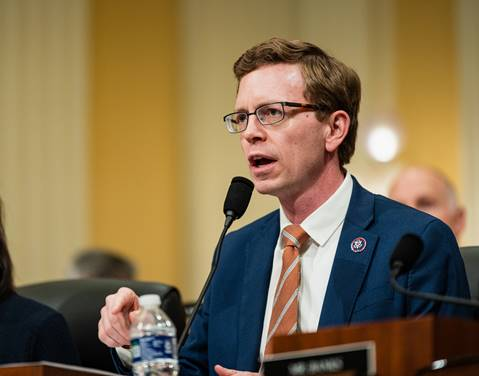
Protecting American Trade By Rep. Dusty Johnson December 19, 2025
BIG Update
Ocean shipping is the backbone of international trade, allowing American products to be sold in other countries while giving American businesses and consumers access to goods we don’t make. Even in America’s heartland, ocean shipping is an integral part of our economy.
My bill to reauthorize the Federal Maritime Commission (FMC) passed the House unanimously this week. My bill will ensure the FMC can continue doing its job to protect American businesses, producers, and consumers from China’s abuse of America’s ocean shipping laws.
This legislation establishes a formal process to report complaints against shipping exchanges and requires the FMC to report on anticompetitive business practices. It also eliminates redundancies in FMC’s reporting requirements.
Click here or the image above for Johnson’s remarks
BIG Idea
It’s clear the health care system in America is broken. The Affordable Care Act made health care unaffordable for the American family with many paying more for their health insurance than they pay for their mortgage or rent. The answer to this crisis is not to write more checks to big insurance companies.
I voted for the Lower Health Care Premiums for All Americans Act which would lower premium costs by 11%. This plan also brings transparency to pharmacy benefit managers and removes hidden costs for prescription drugs.
This plan also allows small business owners and independent workers to form associate health plans and provides more choices for employees to customize their health care plans.
BIG News
The Whole Milk for Healthy Kids Act passed the House this week and now heads to the president’s desk. This bill allows schools to serve whole and 2% milk during lunch in addition to reduced fat options.
It’s important that our kids have healthy options in the lunchroom. Whole milk is filled with essential nutrients that help kids succeed in school. I drink milk every day for lunch and am excited that our kids will now have the same option.
The Spirit of Christmas By: Gov. Larry Rhoden December 19, 2025
Growing up on our family ranch near Union Center, the holiday season was always a time of simple joys. The ornaments might not have been the fanciest, but they were ours – and they reflected the true meaning of Christmas. At the heart of it all was the story of Christ’s birth, a reminder of hope, humility, and sacrifice. That celebration and connection kept us grounded through the long winter ahead.
Similar celebrations are taking place in homes across South Dakota. And we also recognize the traditions of all who call South Dakota home. We recently lit a menorah in the Rotunda of the State Capitol alongside our Christmas trees. It was a great opportunity to honor our Jewish neighbors and the religious freedoms that allow all faiths to flourish in South Dakota.
South Dakota is a place where faith, family, and freedom aren’t just words – they’re the foundation of our way of life. We’ve worked hard to protect those values, ensuring that families can celebrate Christmas without the burdens of overreaching government or economic uncertainty. Our low taxes and balanced budget have kept more money in your pockets. This allows you to focus on what matters: gathering with loved ones, giving to those in need, and building brighter futures for our kids.
Take our economy, for instance. South Dakota has the lowest unemployment rate in the nation – our people are thriving. Whether you’re a rancher checking cattle in the crisp morning air or a small business owner in Sioux Falls preparing holiday shipments, our pro-growth policies have created opportunities that echo the generosity of the season.
Education is another area where we’re celebrating hope and opportunity. We want every child in South Dakota to have access to quality learning, whether in public schools, homeschooling, or innovative programs that prepare them for trades or higher education. We’re giving our children the gift of the tools they need to succeed. And let’s not forget public safety – our commitment to law enforcement means safer communities where families can enjoy the holidays without fear.
Amid these achievements, Christmas calls us to humility. The King of Kings humbled Himself and came to us as a baby, reminding us what true servant leadership looks like. In a world that often seems divided, South Dakota stands as a beacon of civility and common sense. We recognize that the season’s true gift is caring for one another, so we give that gift in abundance.
This Christmas, let’s embrace that South Dakota grit and heart of service – the kind that gets us through blizzards and builds strong communities. To our farmers, teachers, first responders, and families: thank you for making this state special. From my family to yours, Merry Christmas. May the peace of the season fill your homes, and may God bless South Dakota.
On Credit Scores, Governments Blunder, Taxpayers Wonder
by Pete Sepp
Pete Sepp is president of National Taxpayers Union
Taxpayers have a huge stake in ensuring that financial risks are properly and predictably measured for the government loan programs they have been forced to backstop. Credit scores are vital tools for taking those measurements, so the loan space has common reference points for creditworthiness.
But a recent evaluation from American Enterprise Institute (AEI) analysts shows that a years-long effort from the government to create “competition” out of thin air for the credit scoring market may have left taxpayers no better off—and perhaps even worse off.
AEI explored that proposition after a VantageScore White Paper claimed its VantageScore 4.0 model had a clear edge over FICO’s longstanding product by predicting “up to 49% more mortgage defaults leading into the COVID-19 pandemic period than Classic FICO.”
This would normally be great news for taxpayers, who are depending on the most accurate credit score environment possible to help avoid costly bailouts of bad loans going forward.
Unfortunately, AEI found that after adjusting for “methodological inconsistencies and selection bias,” VantageScore’s contentions may not be up to snuff:
Once these issues are corrected, the purported performance advantage of VantageScore 4.0 largely disappears. While VantageScore 4.0 has a marginal advantage over Classic FICO in capturing high risk loans within the bottom risk decile, the difference is relatively small. Across the full sample, Classic FICO performs as well as, and in some cases better than, VantageScore 4.0 on several key predictive measures.
But isn’t AEI going out on a limb in drawing its own conclusions? If so, others are sitting in the same tree with them. In late 2024, an Urban Institute study concluded that:
[b]oth credit scoring models effectively distinguish between high-risk and low-risk borrowers,” and even though “VantageScore 4.0 is marginally more effective at identifying high-risk borrowers from among those with the lowest credit scores . . . the differences are small.
The Milliman firm, which assisted with NTU’s policy paper on credit scoring in 2019, conducted its own side-by-side comparison last year and observed “there is information in using both credit scores in evaluating mortgage default risk,” specifically noting “the default rates are generally consistent between scores, but caution should be used when using Vantage directly in existing mortgage models.”
After the 2018 passage of legislation directing Fannie and Freddie’s watchdog, the Federal Housing Finance Agency (FHFA) to develop a process for evaluating credit score models, in 2022 FHFA finally approved two that the GSEs could use: VantageScore 4.0 and the newer FICO 10T. Incoming FHA Director Bill Pulte’s unexpected decision just three months ago to instead “allow” Fannie and Freddie-handled loans to use either VantageScore 4.0 or Classic FICO further roiled lending markets.
VantageScore (owned by three credit bureaus perched elsewhere in the loan ecosystem) is sure to fire back at AEI and others to defend its turf, while the AEI, Urban Institute, and Milliman studies all have important caveats.
Nonetheless, taxpayers are left to wonder whether they are on any safer ground with government mortgage liabilities now than they were when lawmakers and regulators pushed the credit score competition issue seven years ago.
Three of the four studies referenced above found varying, and relatively small differences in the predictability of the two models. And for these small differences, lenders may be incurring major overhead for converting operations to both models that could raise costs for borrowers.
Less scrupulous actors might also be tempted to play off one score against another in each loan situation to qualify as many borrowers as possible—a “gaming” scenario that defeats the purpose of the models in predicting risk, while leaving taxpayers to guarantee an even bigger government-backed lending portfolio.
Instead of more blunders that imperil the nation’s finances, taxpayers need a policy reset now from both ends of Pennsylvania Avenue. It starts with a full disclosure from FHFA, internal documents and all, about how it arrived at the 2022 credit score competition decision. And as NTU testimony has demonstrated, taxes are by far the single biggest consideration in a consumer’s mortgage closing costs.
Congress at least recognized that problem by making Private Mortgage Insurance a more attractive, tax-deductible product via the One Big Beautiful Bill Act. States and localities need to do their part by reducing transfer taxes and rationalizing the building permit process.
Meanwhile, stronger capital requirements, policies to encourage reinsurance and risk transfer away from taxpayers in the mortgage market, and a genuine plan for government divestment of the GSEs all deserve thoughtful formulation from federal leaders. These approaches will create a stronger housing market that will encourage better predictive tools to evolve organically, rather than at government’s spearpoint.
In a recent op-ed for National Mortgage News, the authors of the AEI study concluded, “given the trillions in mortgage debt, millions of borrowers, and immense taxpayer exposure, it is essential that the debate be grounded in facts rather than marketing.”
Taxpayers agree . . . and they are still wondering when public officials will recognize the need for that debate to happen.
Washington, D.C. – Today, two provisions led by U.S. Representative Dusty Johnson (R-S.D.) in the 2026 National Defense Authorization Act (NDAA) were signed into law by President Trump. The provisions would strengthen America’s deterrence against China and prohibit men from competing in women’s sports at military academies.
“My provisions will keep our military focused on what matters – military readiness and combatting our greatest threat, China,” said Johnson. “America’s military is the strongest in the world and I’m grateful this year’s annual defense bill prioritizes our fighting force.”
Strengthening Deterrence against China:
Johnson’s amendment directs the Department of War to develop and implement a comprehensive strategy to strengthen defense industrial cooperation with U.S. allies and partners across the Indo-Pacific region. It aims to move beyond limited prior directives by identifying concrete actions and priority systems to enable deeper joint development, production, and sustainment.
It is important to both reinforce ongoing efforts with Taiwan while expanding the scope of cooperation to encompass the broader region. China’s sphere of influence does not stop with Taiwan, and the U.S. must pursue a more comprehensive, region-wide strategy in response.
Johnson introduced this provision as an amendment to the NDAA, which was adopted and included.
Prohibiting Men from Competing in Women’s Sports at Military Academies:
Title IX was established to ensure equal opportunities for women in sports, and allowing biological males to compete in these categories directly undermines the intent of the law. While the National Collegiate Athletic Association (NCAA) has failed to implement policies that adequately protect female college athletes, Congress has direct oversight of our nation’s military academies. This issue is not hypothetical—just last year, women’s volleyball teams were forced to either forfeit matches or compete under unfair conditions against teams that included biological males on their rosters.
Johnson’s Protection of Women in Sports at Military Academies Act prohibits biological males from competing in women’s sports at United States military service academies.
Johnson’s legislation was introduced in June. U.S. Senator Tommy Tuberville introduced identical legislation in the Senate.
While Senate Democrats attempt to obstruct government, Republicans in the US Senate led by South Dakota Senator and Majority Leader John Thune are on track to confirm a record number of nominees, according to Fox News:
Senate Republicans inched closer to history Wednesday after blowing past yet another procedural obstacle on their way to confirming nearly 100 of President Donald Trump’s nominees.
As part of their mad dash from Washington ahead of the upcoming holiday recess, Senate Republicans advanced a tranche of 97 of Trump’s picks. The 53-47 party-line vote puts the GOP one step away from confirming the batch of nominees.
The Senate reports that they’re going to approve 417 total confirmations in 2025– clearing +90% of the civilian nominee backlog. In year 1: Joe Biden got 41% of his civilian nominees, while Trump in his first term got 57%.
Johnson Votes to Lower Health Insurance Premiums by 11%
Washington, D.C. – Today, U.S. Representative Dusty Johnson (R-S.D.) voted to pass the Lower Health Care Premiums for All Americans Act, which makes targeted reforms to health care costs.
“Obamacare made health care unaffordable for the American family. Many families are paying more for their health insurance than they pay for their mortgage or rent,” said Johnson. “The program has become riddled with waste, fraud, and abuse, which only drives prices higher for those trying to do right. The Lower Health Care Premiums for All Americans Act will fix a broken system and provide more options for people who are struggling to make ends meet.”
The Lower Health Care Premiums for All Americans Act:
Lowers premium costs through cost-sharing reduction payments.
Appropriates cost-sharing reduction payments to stabilize the broken system and individual market.
Lowers premium costs by 11 percent and reduces out-of-pocket costs like deductibles and copays.
Brings pharmacy benefit managers (PBMs) transparency and removes hidden costs of prescription drugs.
Requires PBMs to provide employers with clear, detailed reporting on prescription drug spending, including rebates, pricing, and formulary decisions.
Provides employers and employees with the transparency they deserve to help lower premium costs and improve access to prescription medications.
Allows small business owners and independent workers to form association health plans.
Expands access to Association Health Plans (AHPs) by allowing small employers and self-employed workers to band together across industries to access more options for more affordable, higher quality plans.
Strengthens bargaining power for small business owners and independent workers by giving them access to group rates, more provider networks, and alternatives to costly small-group or individual marketplace plans.
Provides more choices for employees to customize their health care plans.
Protects small businesses from costly regulatory overreach.
Background:
In 2025, the average family paid $27,000 in health insurance premiums. These premiums are increasing 26% in 2026.
Big insurance is making record profits. Their profits are 600% higher than when Obamacare became law.
Waste, Fraud, and Abuse in Obamacare:
A recent report from the U.S. Government Accountability Office (GAO) showed significant risk of fraud exists with the premium tax credit.
In the course of GAO’s investigation, 100% of fake applicants were approved in late 2024.
18 out of 20 fake applicants are still receiving subsidized coverage for 2025.
CMS approved coverage with no documents or with fake ones, including fake citizenship papers.
One Social Security Number was used on applications totaling over 125 insurance policies—the equivalent of 71 years of subsidized coverage.
In 2024, 66,000 Social Security Numbers had more than one year’s worth of subsidized coverage in a single year.
In 2024, health insurers received $94 million in taxpayer-funded subsidies for deceased individuals.
Bill now heads to President Trump’s desk to be signed into law
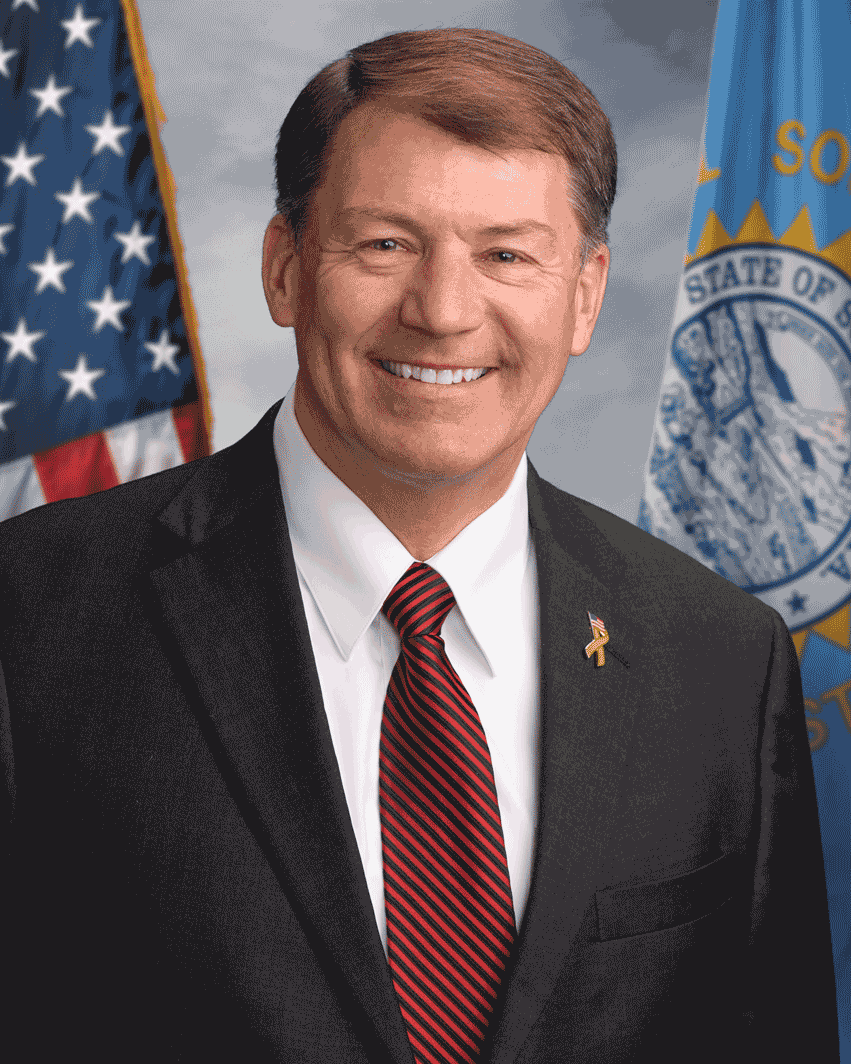
WASHINGTON – U.S. Senator Mike Rounds (R-S.D.), a member of the Senate Armed Services Committee (SASC) and Chairman of the Subcommittee on Cybersecurity, released the following statement on the Senate’s passage of the final National Defense Authorization Act (NDAA) for Fiscal Year 2026. This is the 11th NDAA that Rounds has helped author as a member of SASC and the 65th consecutive NDAA passed by the full Senate.
“The NDAA is an important piece of legislation passed annually to authorize funding for national security programs, as well as support for our servicemembers and their families,” said Rounds. “This year’s NDAA authorizes funding for construction projects at Ellsworth Air Force Base and funding for a facility for the Watertown Army National Guard. It also authorizes a 3.8 percent pay raise for troops and has a total topline of $900.6 billion in defense spending. This keeps our military ahead of the curve, making certain they never enter a fair fight and always have the advantage over our adversaries.
“The NDAA is a great example of what we can accomplish when we work together. I’m grateful to have worked on this legislation from beginning to end for the 11th year in a row. I look forward to President Trump signing the NDAA into law.”
In March, Rounds was named as the 6th most effective member of the United States Senate on defense and national security issues for the 118th Congress. Read a list of his provisions in this year’s NDAA below.
Rounds’ South Dakota Victories:
Fully authorizes the B-21 Raider program, including over $2.59 billion for procurement and $862 million in advanced procurement.
Authorizes $378 million in military construction projects to support the B-21 Raider housed at Ellsworth.
$63 million for B-21 Flight Simulator 2.
$71 million for B-21 Alert Facility.
$75 million for B-21 Environmental Protection Shelters.
$88 million for B-21 South Environmental Protection Shelters.
$81 million for B-21 West Alert Apron & Environmental Protection Shelters.
Authorizes $28 million for Watertown Army National Guard Vehicle Maintenance Shop.
Requires the Department of Defense (DOD) to find ways to partner with communities, universities, and industry to establish Sensitive Compartmented Information Facilities (SCIF). This has been a major priority for many South Dakota universities and defense companies seeking to establish or deepen their relationship with DOD.
Updates the State Partnership Program so that the number of states a partner has is factored into decision-making for additional, new partners. This will directly benefit the South Dakota National Guard.
Modifies the Defense Community Infrastructure Program in order to make South Dakota schools more competitive in receiving grants.
Requires the DOD to give military families clear, timely information about relocation resources when they receive orders to relocate.
Rounds’ Major National Defense Victories:
Authorizes $10 million for Advanced Materials and Manufacturing for hypersonic weapons.
Authorizes $5 million for Cold Regions Research and Engineering Laboratory.
Requires Cyber Command to develop a roadmap and brief Congress on their industry collaboration for developing A.I.-enabled cyber capabilities. The roadmap will include: new collaborative R&D opportunities with industry, strategies for industry engagement, how to implement objectives and milestones, how to transition technology from development to operation, infrastructure requirements and assessment of organizational structures.
Creates an Artificial Intelligence Futures Steering Committee. This establishes an Artificial General Intelligence Steering Committee in the DOD to analyze AI trajectories and develop DOD adoption strategies with Deputy Secretary of Defense and Vice Chairman of the Joint Chiefs of Staff as co-chairs.
Protects the dual-hat leadership arrangement between U.S. Cyber Command and the National Security Agency.
Provides authority to the Department of Defense and military to conduct military operations in defense of critical infrastructure.
Requires a bomber aircraft force structure and transition roadmap, to include training packages and other measures, to make sure our bomber crews are as well-trained and equipped as possible.
As part of the major acquisition reforms, enables the military to acquire technology-supported consumption-based purchases and contracts (e.g. using Uber rather than buying a car; using cloud services, etc.).
Modifies the reporting requirements of the Senior Military Advisor for Cyber Policy now that the Assistant Secretary of Defense for Cyber Policy had been established.
Establishes a Chaplain Corps and Chief of Chaplains for the Central Intelligence Agency.
Establishes criminal penalties for “gate-crashing” intelligence community (IC) facilities and establishes criminal penalties for individuals trying to unlawfully enter IC facilities.
Requires the Department to provide a report and briefing to Congress on cyber and network security policies regarding full content inspection, to include A.I. capabilities to be included in the program.
Requires budget coordination of the Cyber Mission Force to increase mutual support between U.S. Cyber Command and cyber elements of the reserve component.
Implements significant DOD cyber personnel related reforms to include establishing a Cyber Excepted Workforce (CEW) Interchange Agreement and increased flexibility regarding the pay and benefits for cyber personnel.
Rounds-Supported Victories:
Authorizes funding to support a 3.8 percent pay raise for military members
$1.5 billion for new construction of barracks and family housing
$50 million in Impact Aid assistance
$147.7 billion for tech innovation, including hypersonics, AI, quantum computing and new space-based capabilities.
Prohibits men in women’s sports at all military academies.
Requires all military promotions to be based entirely on merit and demonstrated performance rather than race, ethnicity or sex.
Permanently repeals all existing DEI offices, programs, training, activities and authorities in the Department of Defense.
Provides conservative wins by cutting programs that hamper/don’t increase lethality:
$40.5 million from eliminating DEI activities
$1.6 billion in cuts to climate change-related spending
$6.8 billion from reductions in unnecessary Pentagon bureaucracy
$5.5 billion in cuts to consulting and service contracts
Supports President Trump’s Golden Dome for America initiative by updating our homeland missile defense policy and funding air and missile defense development and testing.
Authorizes full funding of our modernization of the nuclear triad, which includes the B-21 Raider, and is the foundation of our deterrence.
Requires the Navy to implement a strategy to address cost and schedule problems with our ship and submarine industrial base, to include the use of A.I. to optimize maintenance and supply chains.
Requires the DOD to establish an AI Task Force to develop an A.I. sandbox environment to support A.I. experimentation, training and model development for users of all technical levels.