Rounds Delivers Opening Remarks at Banking Hearing on Protecting Financial Well-Being of Service Members and Veterans
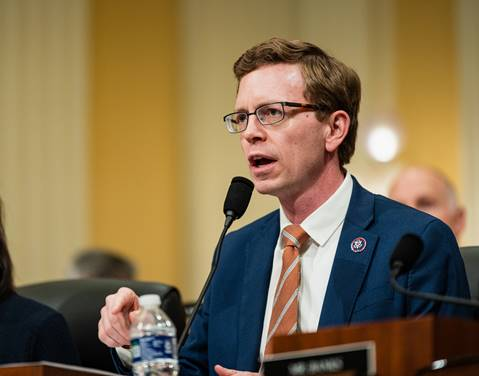
WASHINGTON – U.S. Senator Mike Rounds (R-S.D.), a member of the Senate Committee on Banking, Housing, and Urban Affairs, today delivered opening remarks at a committee hearing on securing financial protections for service members, veterans and their families. Click HERE to listen to Rounds’ opening remarks.
“Protecting the financial well-being of our men and women in uniform is incredibly important – not only while they are serving, but also after their service ends and they transition into civilian life,” said Rounds in his opening remarks.
“Improving financial literacy among our service members empowers them to take advantage of available benefits throughout the entirety of their careers, improve early financial decision-making and better identify and avoid scams and fraudulent activity,” continued Rounds. “And for our veterans, financial literacy paves a continued pathway toward success.”
Rounds closed with, “I look forward to hearing from each of our witnesses today about the financial issues confronting our service members, veterans and their families, with the hope to learn from your experiences and better protect the American dream of our heroes.”
With the support of the Attorney General, as well as House & Senate Leadership, Governor Kristi Noem has requested a Supreme Court opinion clarifying the conflicts between serving in the legislature and constitutional prohibitions against being directly or indirectly engagced in contracts with the State of South Dakota. According to the Governor, it’s necessary prior to naming a replacement to Senator Jessica Castleberry, a legislator whose term of office fell victim to the prohibitions after Castleberry’s business accepted money from the state, after an attorney informed her she could legally take those funds:
The governor has formally asked the Supreme Court to issue an advisory opinion regarding what constitutes a conflict of interest for a legislator.
The governor wants further clarification before appointing someone to replace Jessica Castleberry, who resigned from the state Senate after her business was found to be receiving COVID-19 aid.
and..
Schoenbeck, the Senate’s president pro tempore, in his letter suggested the court would be aided by a hearing. The former state’s attorney wrote, “Prior Courts, and their liberal interpretation of a very specific constitutional provision, have created an unfortunate situation this Court needs to address. It is not a pleasant task to have to clean up the work of predecessors, but it is a very important task for our state.”
This is actually one of the more substantial decisions the court has to review, as it has the potential to overturn decades of Attorney General interpretations and blanket prohibitions that have driven more than one legislator from office, besides the most recent instance involving Senator Castleberry.
Any thoughts on how far you’d like to see the court go?
The head of proposed billion dollar sustainable jet fuel plant near Lake Preston noted in a KELOland interview today that they may have to pick up and go elsewhere unless attitudes change for carbon sequestration in South Dakota:
South Dakota could lose its largest proposed economic development project if the carbon dioxide sequestration landscape doesn’t change, Gevo’s chief executive officer said this week.
“If we don’t have resolution, say, in six months, I think I better move to another state. That’s what I think. I need to have a line of sight that it’s gonna happen for real,” Dr. Patrick Gruber, the CEO of Gevo, said Monday in KELOLAND News interview.
and..
But it’s unlikely that investment will happen without a carbon dioxide pipeline that will transport captured CO2 for sequestration, Gruber said.
Producing sustainable aviation fuel (SAF) from carbohydrates, via ethanol, is the most cost effective way and it also has the lowest carbon footprint, Gruber said.
and..
CO2 pipelines and sequestration have met resistance in South Dakota, but it’s part of the future of carbon abatement and renewable and sustainable fuel, he said.
The question is less about pipelines, and whether people – and elected officials – actually support ethanol and other agriculture derived fuel products.
More and more fuel and ethanol markets are demanding a carbon neutral footprint.
Either South Dakota wants to compete on a world market, or we can fail our local ag producers.
I’ve had multiple reports over the last week that South Dakota Democrats have taken to sending SMS Spam messages as a recruitment tool to get people to run for office.
The curious messages started popping up last week when one correspondent sent me a snapshot of the text that his daughter received:
The note accompanying it, indicated his “daughter just received this text message. She is not politically active in any way she gets this text out of the blue. They must be really desperate.”
This was followed up a couple days later with another message, with a similar take on candidate recruitment:
You can see the disdainful reply they received.
With state and local races quickly coming into the forefront over the next 60 days, I suppose for the Democrats who have long been in dire straits, they have little to lose by sending text messages out to random people to try to get them to run for office.
God knows the traditional methods of recruiting candidates have largely failed them over the years.
South Dakota Democrats. Making 2024 “The Year of the Rando.”
Thune: Biden’s Border Policies Threaten Our National Security
“We need to use every tool we can to secure the border and keep terrorists and criminals out of the United States.”
WASHINGTON —U.S. Sen. John Thune (R-S.D.) today spoke on the Senate floor about President Biden’s failed border policies that have jeopardized our national security. Thune highlighted the third consecutive record-breaking year of illegal border crossings under President Biden, as well as the influx of individuals on the terrorist watchlist who have attempted to enter the country at the southern border. Thune called on the administration to immediately reverse its misguided policies and focus on improving border security and enforcing the law
Biofuels Caucus Bill to Update EPA Greenhouse Gas Modeling
Washington, D.C. – Biofuels Caucus Co-chairs Dusty Johnson (R-S.D.) Adrian Smith (R-NE), Angie Craig (D-MN), and Mark Pocan (D-WI) introduced the Adopt Greenhouse Gases, Regulated Emissions, and Energy Use in Transportation (GREET) Act to direct the Environmental Protection Agency (EPA) to update its greenhouse gas modeling for renewable fuels.
The Adopt GREET Act would require the EPA to adopt the Argonne National Lab’s GREET Model for renewable fuels. EPA would then be required to update its modeling every five years or report to Congress to affirm its modeling is current or otherwise explain why no updates were made.
“The EPA’s current greenhouse gas modeling is limiting adoption of homegrown renewable fuels,” said Rep. Johnson. “In contrast, the GREET model takes into account the full lifecycle of renewable fuels – from a farmer’s field to fuel pumps – and gives consumers a more accurate picture of the benefits biofuels offer. We should be using the best science available and that’s exactly what this bill does.”
“Agencies must use up-to-date, scientifically accurate modeling to ensure we keep pace with the latest technologies and innovations,” said Rep. Smith. “It is crucial EPA adopts the GREET Model to fully reflect the positive impact of biofuels on emissions reductions. Not only does the model reinforce the positive contributions of American farmers and ranchers, it also makes agriculture products and byproducts more competitive exports. As co-chair of the Biofuels Caucus, I thank Reps. Johnson, Pocan, and Craig, as well as our colleagues in the Senate, for their partnership in reinforcing the competitiveness and sustainability of American energy.”
“Homegrown biofuels are tools we have at our fingertips right now to help address climate change – and it’s critically important that the EPA’s data accurately reflects that,” said Rep. Craig. I’m proud to be working across the aisle to pass this bill and make sure the true benefit that homegrown biofuels bring to our environment, economy and ag communities is recognized.”
“This bipartisan bill will help our country harness the power of innovation and science to drive cleaner, more efficient transportation solutions,” said Rep. Pocan. “This commonsense legislation directs the EPA to use the latest tool already used by other federal agencies – the GREET model – to fully capture the impact that biofuels have in making our transportation choices more eco-friendly. Thank you to Reps. Johnson, Smith and Craig for joining me in introducing this vital piece of legislation.”
“We appreciate Reps. Johnson, Smith, Craig and Pocan for leading the reintroduction of legislation, which will ensure the global gold-standard modeling tool for lifecycle greenhouse gas emissions will be used to properly value corn ethanol’s carbon footprint when establishing future regulations impacting biofuels. Enactment of this bipartisan bill will ensure ethanol plays a significant role in decarbonizing the transportation sector,” saidBrian Jennings, CEO of the American Coalition for Ethanol.
“This legislation would go a long way to ensure that renewable fuel regulations are based on sound science and current data, not obsolete information and speculative theories. The Argonne National Laboratory GREET model is recognized around the world as the gold standard for analyzing the lifecycle GHG impacts of renewable fuels like ethanol, regularly updated to reflect efficiency improvements and technological advancements in the fuel production process. We thank Representatives Dusty Johnson, Adrian Smith, Angie Craig and Mark Pocan for your efforts to require scientific integrity and accuracy in federal government regulatory actions on renewable fuels,” saidGeoff Cooper, President and CEO of the Renewable Fuels Association.
“The GREET Model isn’t just the most accurate, complete tool for lifecycle analysis; it’s also a critical part of securing a successful future for America’s biofuels producers and the rural communities they support. The Adopt GREET Act is a commonsense piece of legislation that would give producers greater certainty and allow for homegrown bioethanol to play an even bigger role in decarbonizing the transportation section. We applaud the introduction of this bill in the House by Representatives Johnson, Smith, Craig, and Pocan, and hope to see it quickly approved and signed into law,” saidEmily Skor, CEO of Growth Energy.
The Adopt GREET Act is cosponsored by Reps. Mariannette Miller-Meeks (R-IA), Nikki Budzinski (D-IL), Ashley Hinson (R-IA), Eric Sorensen (D-IL), Ron Estes (R-KS), Mark Alford (R-MO), Mike Bost (R-IL), Brad Finstad (R-MN), Randy Feenstra (R-IA), Zach Nunn (R-IA), on Bacon (R-NE), and Jake LaTurner (R-KS).
The Adopt GREET Act is supported by the Renewable Fuels Association, Growth Energy, American Coalition for Ethanol, National Corn Growers Association, South Dakota Corn Growers Association, POET, Gevo, and the National Oilseed Processors Association.
Thune, Scott, Barrasso, Boozman Urge the Biden Administration to Abandon Unrealistic, Costly Energy Efficiency Standards
“We urge you to change course, as adoption of these standards would impose significant costs on American households, particularly low- and moderate-income families, and put undue pressure on an already constrained housing supply.”
WASHINGTON —U.S. Sens. John Thune (R-S.D.); Tim Scott (R-S.C.), ranking member of the Senate Committee on Banking, Housing, and Urban Affairs; John Barrasso (R-Wyo.), ranking member of the Senate Committee on Energy and Natural Resources; and John Boozman (R-Ark.), ranking member of the Senate Committee on Agriculture, Nutrition, and Forestry; today led more than 20 of their colleagues in urging the U.S. Department of Housing and Urban Development and the U.S. Department of Agriculture to abandon their proposal that would require new single and multifamily homes that are insured or guaranteed by the agencies to be subject to unrealistic and overly burdensome energy efficiency standards. The proposal would reduce the supply of new housing, increase costs on residential contractors, and significantly impact low-income households.
“Over the last few years, the Biden administration has demonstrated a reckless commitment to forcing its unrealistic environmental agenda onto various aspects of the economy via its push toward electrification, regulating household appliances, and the stifling of conventional American energy production,” wrote the senators. “So it is not at all surprising that the administration is now forcing its agenda onto families purchasing or renting a home, all while admitting that ‘lower-income households . . . may be challenged in their ability to address first costs.’ To that end, we request that you abandon this effort and conduct an honest evaluation as to how adoption of the revised international energy conservation code (IECC) and American Society of Heating, Refrigerating and Air-Conditioning Engineers (ASHRAE) standards would increase costs and give special attention to the affect adoption would have on lower-income families.”
In addition to Thune, Scott, Barrasso, and Boozman, the letter was also signed by U.S. Sens. Marsha Blackburn (R-Tenn.), Mike Braun (R-Ind.), Katie Britt (R-Ala.), Shelley Moore Capito (R-W.Va.), Bill Cassidy (R-La.), Kevin Cramer (R-N.D.), Mike Crapo (R-Idaho), Joni Ernst (R-Iowa), Deb Fischer (R-Neb.), John Hoeven (R-N.D.), James Lankford (R-Okla.), Cynthia Lummis (R-Wyo.), Roger Marshall (R-Kan.), Mitch McConnell (R-Ky.), Jerry Moran (R-Kan.), Markwayne Mullin (R-Okla.), Pete Ricketts (R-Neb.), Jim Risch (R-Idaho), Mike Rounds (R-S.D.), Marco Rubio (R-Fla.), J.D. Vance (R-Ohio), and Roger Wicker (R-Miss.).
We write to raise significant concerns with your proposed adoption of revised energy standards for newly constructed and rehabilitated homes insured or guaranteed by the U.S. Department of Housing and Urban Development (HUD) or the U.S. Department of Agriculture (USDA). We urge you to change course, as adoption of these standards would impose significant costs on American households, particularly low and moderate-income families, and put undue pressure on an already constrained housing supply.
As you know, the Energy Independence and Security Act of 2007 (P.L. 110-140) requires HUD and USDA to adopt revised energy standards if, after the U.S. Department of Energy determines that the revised standards would improve energy efficiency, the agencies “make a determination that the revised codes do not negatively affect the availability or affordability” of newly constructed or rehabilitated homes insured or guaranteed by HUD or USDA. Though you preliminarily determined that revised energy standards would not adversely impact the availability or affordability of housing, we disagree as evidence exists to the contrary.
HUD and USDA incorrectly conclude that the availability or affordability of housing will not be negatively impacted by adoption of the revised standards. The agencies, for example, ignore costs that will be placed on single-family borrowers by relying on a Pacific Northwest National Laboratory study to estimate savings that optimistically presume a mortgage interest rate of three percent, disregarding the fact that mortgage rates are currently more than double this estimate. The agencies also admit that “new construction for federal housing administration borrowers would decline” if revised standards are adopted and naively declare that “borrowers could adapt to the supply constraints by seeking a conventional loan or by purchasing an existing home with similar qualities.” Moreover, the agencies cite research finding energy efficiency programs have a lower net benefit for low-income households than expected, and unequivocally conclude that “energy efficiency requires an additional cost and one that lower-income households may not have the disposable income to accommodate.”
It is no secret that the cost of purchasing and renting a home has surged over the last few years, and the problems are more pronounced for lower-income families, making adoption of the revised IECC and ASHRAE standards all the more ill-timed. In recent years, construction of smaller and typically less-expensive, single-family homes represents a small fraction of all new, single-family construction. On the multifamily front, though construction has increased, rental units are increasingly becoming unaffordable for lower-income households partially because permitting activity is overwhelmingly concentrated in large metro areas where the bulk of new construction has been driven by properties with 20 or more units, presumably being built in higher-cost urban centers. Moreover, the supply of lower-cost rentals is consistently declining.
Over the last few years, the Biden administration has demonstrated a reckless commitment to forcing its unrealistic environmental agenda onto various aspects of the economy via its push toward electrification, regulating household appliances, and the stifling of conventional American energy production. So it is not at all surprising that the administration is now forcing its agenda onto families purchasing or renting a home, all while admitting that “lower-income households . . . may be challenged in their ability to address first costs.”
To that end, we request that you abandon this effort and conduct an honest evaluation as to how adoption of the revised IECC and ASHRAE standards would increase costs and give special attention to the affect adoption would have on lower-income families.
Gov. Noem and Colleagues Send Letter Opposing President Biden’s Long-Term Care Regulations
PIERRE, S.D. – Today, Governor Kristi Noem and 14 of her fellow Republican governors sent a letter to President Biden opposing the Centers for Medicare and Medicaid Services’ (CMS) proposed new regulations for long-term care facilities. The governors called on President Biden to reconsider this unfunded mandate and engage in conversation on how to best serve residents of long-term care facilities. You can read the letter here.
“CMS proposed new regulations for long-term care facilities that impose unnecessary, one-size-fits-all staff requirements,” wrote Governor Noem and her colleagues. “If adopted, CMS’s proposed regulations will force many long-term care facilities in our communities to close, eroding access to healthcare for some of our most vulnerable citizens.”
The proposed regulations put additional burdens on an industry that is already experiencing a nationwide workforce shortage. They would also impose significant industry costs that would erode access to care.
“Republican governors are pulling multiple levers to ensure these facilities have the staff they need to care for their vulnerable residents,” continued Governor Noem and the other governors. “In contrast, your proposed rule treats this complex, deep-rooted problem as something to be solved with a simple wave of the bureaucratic wand.”
Governor Noem was joined by the following Republican governors in issuing the statement:
Iowa Governor Kim Reynolds, Nebraska Governor Jim Pillen, Georgia Governor Brian Kemp, Indiana Governor Eric Holcomb, Mississippi Governor Tate Reeves, Missouri Governor Mike Parson, Montana Governor Greg Gianforte, Nevada Governor Joe Lombardo, New Hampshire Governor Chris Sununu, Oklahoma Governor Kevin Stitt, South Carolina Governor Henry McMaster, Tennessee Governor Bill Lee, Texas Governor Greg Abbott, and Wyoming Governor Mark Gordon.
In the public eye, there’s a widespread belief that conservative Republicans hold a narrow, draconian viewpoint on law and order. No doubt, most conservatives support serious consequences for serious crimes, but that doesn’t mean we support tired adages like “Lock ‘em up and throw away the key.” Conservatives, by and large, also believe in second chances and redemption.
Since about 95% of all state prisoners will eventually be released, it’s essential to help prepare inmates to successfully reenter society. Unfortunately, as it stands, there’s not much opportunity for training, education or other programming in our state prisons, largely due to staffing shortages and safety concerns. Though the largest portion of the prison population is incarcerated for drug use and possession, only about one-third are engaged in substance abuse treatment. An operational review of our prisons also noted vocational training attendance is “low or non-existent.” Lockdowns are common and inmates can quickly lose sight of a pathway to redemption.
Given that environment, it comes as no surprise that over 40% of inmates return to prison within three years of release, ranking our state’s recidivism rate 33rd among the 50 states. Too frequently, individuals who have completed their sentences find themselves without skills, tools or encouragement, ensnared in a vicious cycle and further straining communities and the criminal justice system. In the end, as always, the citizens bear the cost, and not just in the form of crime rates. It costs taxpayers an average of $28,749 to incarcerate a single adult offender for one year.
Like a lot of problems in government, there are no quick, easy solutions, but there are some first steps we can take together. Sure, we should stabilize staffing levels and build new, modern prisons, but there are also programs that can have a systemic, lasting effect at little cost. A small group of legislators, law enforcement and inmates have been working on a three-year pilot proposal aimed at enhancing prison reentry initiatives and programming. This proposal, aptly named “Truth in Corrections,” draws on a model program in Oklahoma that reduced recidivism rates by 21%. It provides state nondriver identification cards and other documentation and services to help inmates transition into a job market that is in desperate need of workers. Furthermore, the bill expands programming opportunities and encourages the use of volunteer and faith-based services, many of which are readily available at no cost to taxpayers.
Our working group believes we should invest in the future of our communities by supporting the rehabilitation and reintegration of formerly incarcerated individuals. In the coming weeks, we anticipate refining and releasing the draft language for this bill, titled, “An Act to Enhance Prison Reentry Initiatives and Programming.” We humbly request your support and welcome your suggestions to provide this pathway to redemption. Together, we can build safer communities and lessen the financial burden on all of us.
The author served a career in the military, surviving the 9/11 attack on the Pentagon. He’s a published author, occasional newspaper columnist and currently serves as a state senator for District 9 in glorious South Dakota.




 South Dakota could lose its largest proposed economic development project if the carbon dioxide sequestration landscape doesn’t change, Gevo’s chief executive officer said this week.