Update from the SDGOP; meeting agenda announced, update from the treasurer. Challenges abound for the next crew.

The South Dakota Republican Party has sent out a big update out to Central Committee members this morning around 7:40.  So, of course I had it in my hands around 7:45.

What’s the update regarding? The 2025 Winter Meeting where new officers will be chosen, along with the meeting agenda, as well as a report from long-time Treasurer Brett Koenecke, who with law partner Justin Bell tag-teamed the Treasurer’s office for over a decade to – as Brett put it – “to keep us off the front page of the Argus Leader with respect to our business and fundraising and spending.”

First off – here’s the Invite & agenda:

Next is the very interesting letter from Brett to the party in discharge of his duties, which sheds light on what monies the party currently has in their federal account:

The federal account is subject to federal rules, is all our money, and has $51,762.87 in it. The federal account contains two noteworthy contributions. One is from the trust of a New Jersey man who was killed in a motorcycle accident, the other is our share of joint fundraising with the president. The first is 10,000 and the second is 42,000 and change..

Literally, every dime that’s currently in the federal account comes from unusual sources that the party won’t see in coming months, and there’s currently a little over $35k in the state account.  Likely enough to keep the lights on at a low level this year, but little more.

Here’s where the challenges start.   As noted in the letter, the party is on it’s last month for it’s Aristotle fundraising software, where records are kept, so the new group will have to decide whether to keep that software. Then there’s the services of the accounting firm. Then there’s the very important services of the Minneapolis Lawyer specializing in FEC reporting (Reid LeBeau. Reid was a long time- SD TAR/CR and super good guy. I’m sure this was done partially as a labor of love for the SDGOP.)

Speaking of attorneys, the end of Koenecke/Bell as party officers will also likely mark the end of some extremely discounted legal advice from these gentlemen in Pierre which helped the Republican party #1 dominate when it came to legal challenges the party faced, and #2 helped them avoid unforced errors.

I know when I would work on mail pieces for the SDGOP, as well as candidates working through the party, there were times when there was an obligatory “blessing of the mail piece” where things you thought were proper would go into hard stop because of FEC Rules that might not normally apply on what the party can say in print at the state level, but are quite detailed at the federal level, as well as whether the disclaimer needed to be state compliant or federally compliant. It might seem nitpicky, but that immediate knowledge and attention to detail matters. That’s what has kept the party off the FEC radar.

After a decade (or 2) of that kind of on-call legal expertise being at the party’s disposal for literally no-charge, this will be a very significant institutional loss. And the SDGOP will be entering a new era where they’ll likely be doing a lot of guess work, or having to cut a check when they have to get serious about someone needing assurance on what the rules are.

There are so many challenges that the SDGOP faces in the coming months. And of even greater concern, it’s not the challenges they know about. It’s the challenges they don’t know about that will likely trip them up.


Sen. California Carley’s measure to rob funds public schools stopped dead in its tracks

Senator John “California” Carley had another bad proposal completely smashed today by the South Dakota State Senate, as his proposal to strip funds from neighborhood schools for private religious academies was defeated on more than a 2-1 vote on the Senate floor:

“The primary goal of this bill is to give schooling options for families by offering financial coverage for their nonpublic or alternative education,” said Sen. John Carley, the bill’s prime sponsor, who touts the measure as a way to provide “school choice” without sending state funds directly to families for homeschool or private school tuition.

and..

The Legislative Research Council, however, predicted SB 190 could result in tax discounts totaling between $14 million and $21 million annually.

Read it all here.

This is good reminder to voters that they really need to pay attention to the people they send to Pierre.

Because some of them come with agendas. And they are not there to represent their local constituents.

Gov. Rhoden Unveils Plan to Address Property Tax Burden

Gov. Rhoden Unveils Plan to Address Property Tax Burden

PIERRE, S.D. –  Today, Governor Larry Rhoden announced his plan to address the property tax burden on owner-occupied property in South Dakota: SB 216A. He made the announcement at his weekly legislative press conference, and he was joined by the ten members of the property tax working group from both the South Dakota House and Senate.

“This bill is a strong solution to the property tax burden that so many South Dakota homeowners experience,” said Governor Larry Rhoden. “This was the first ‘Governor’s Bill’ to be introduced in 2 or 3 years, and I’m very proud to have it as a Governor’s Bill.”

SB 216A addresses the property tax burden on homeowners in the following ways:

  • Limits the increase in owner-occupied assessments to 3% countywide for the next 5 tax years;
  • Caps the amount taxing districts and school capital outlay budgets can increase as a result of new construction – local government budgets don’t need to grow just because a homeowner makes a small improvement to their property; and
  • Increases the maximum income limits for the assessment freeze program to $55,000 for single member homes and $65,000 for multi-member homes – the bill also increases the maximum eligible home value to $500,000.

“I want to thank all of the legislators who participated for the great discussions. Every single member of the working group is supportive of this proposal and is ready to move forward,” continued Governor Rhoden.

###

Thune Leads Effort to Permanently Repeal the Death Tax

Thune Leads Effort to Permanently Repeal the Death Tax
45 senators cosponsor legislation to end the punishing, burdensome tax 

WASHINGTON — U.S. Senate Majority Leader John Thune (R-S.D.) today led 45 of his Senate colleagues, including Sen. Mike Crapo (R-Idaho), chairman of the Senate Finance Committee, in reintroducing legislation that would permanently repeal the federal estate tax, commonly known as the death tax. The Death Tax Repeal Act would end this purely punitive tax that can hit family-run farms, ranches, and businesses as the result of the owner’s death.

“Family farms and ranches play a vital role in our economy and are the lifeblood of rural communities in South Dakota,” said Thune. “Losing even one of them to the death tax is one too many. It’s time to put an end to this punishing, burdensome tax once and for all so that family farms, ranches and small businesses can grow and thrive without costly estate planning or massive tax burdens that can threaten their viability.”

“Small businesses are the lifeblood of Idaho’s economy, and family farmers, ranchers and entrepreneurs have often worked lifetimes to grow their businesses,” said Crapo. “The death tax can be a devastating blow to American families who want to pass down their farm or small business to the next generation. It’s time to permanently provide relief from this unfair tax.”

“South Dakota’s farmers and ranchers should not have to worry that their business will die with them because of the death tax,” said Scott VanderWal, president of the South Dakota Farm Bureau. “I thank Senator Thune for leading this important legislation in Congress and for his unwavering commitment to protect agricultural producers from this crippling tax burden and costly estate planning expenses.”

“Mom and pop business owners often spend a lifetime building a viable business that they can pass on to the next generation, but the estate tax presents a very real obstacle,” said Nathan Sanderson, executive director of the South Dakota Retailers Association. “Repealing the estate tax will provide peace of mind for hard-working families who want nothing more than to continue serving their communities for generations to come.”

The legislation is cosponsored by U.S. Sens. Jim Banks (R-Ind.), John Barrasso (R-Wyo.), Marsha Blackburn (R-Tenn.), John Boozman (R-Ark.), Katie Britt (R-Ala.), Ted Budd (R-N.C.), Shelley Moore Capito (R-W.Va.), John Cornyn (R-Texas), Tom Cotton (R-Ark.), Kevin Cramer (R-N.D.), Mike Crapo (R-Idaho), Ted Cruz (R-Texas), John Curtis (R-Utah), Steve Daines (R-Mont.), Joni Ernst (R-Iowa), Deb Fischer (R-Neb.), Lindsay Graham (R-S.C.), Chuck Grassley (R-Iowa), Bill Hagerty (R-Tenn.), Josh Hawley (R-Mo.), John Hoeven (R-N.D.), Cindy Hyde-Smith (R-Miss.), Ron Johnson (R-Wis.), Jim Justice (R-W.Va.), John Kennedy (R-La.), James Lankford (R-Okla.), Mike Lee (R-Utah), Cynthia Lummis (R-Wyo.), Roger Marshall (R-Kan.), Mitch McConnell (R-Ky.), Dave McCormick (R-Pa.), Jerry Moran (R-Kan.), Bernie Moreno (R-Ohio), Markwayne Mullin (R-Okla.), Pete Ricketts (R-Neb.), Jim Risch (R-Idaho), Mike Rounds (R-S.D.), Eric Schmitt (R-Mo.), Rick Scott (R-Fla.), Tim Scott (R-S.C.), Tim Sheehy (R-Mont.), Thom Tillis (R-N.C.), Tommy Tuberville (R-Ala.), Roger Wicker (R-Miss.), and Todd Young (R-Ind.). Companion legislation was introduced in the U.S. House of Representatives by Rep. Randy Feenstra (R-Iowa).

Thune, who has made death tax repeal a priority for a long time, led the Senate’s attempt to repeal the estate tax while Congress considered the Tax Cuts and Jobs Act (TCJA) in 2017. Although the final version of the TCJA did not repeal the death tax, the law effectively doubled the individual estate and gift tax exclusion to $10 million (approximately $13.9 million in 2025 dollars) through 2025, which prevents more families and generationally-owned businesses from being affected by this tax. The increased exclusion expires at the end of 2025, which increases uncertainty and planning costs for family-owned businesses, farms, and ranches.

Thune’s bill is supported by more than 190 members of the Family Business Coalition and more than 105 members of the Family Business Estate Tax Coalition, which includes the National Federation of Independent Business, the National Restaurant Association, the National Association of Home Builders, and the U.S. Chamber of Commerce.

###

Feb 2025 SDGOP FEC Report. $2.38 raised. $9.8k spent, $57.5k cash on hand.

The South Dakota Republican Party has filed their February FEC report covering the month of January 2025. And…

Feb 2025 Sdgop Fec by Pat Powers on Scribd

That headline is not a typo. They raised $2.38 (in interest). And that’s it. Less than $2.50 in income against $9.8k in expenses, leaving them $57.5k cash on hand in the federal account.

They probably spent hundreds more in preparing and filing this report then they raised.

This is why I harp on raising money as being one of the big 2 jobs of the party. When the county parties abandon their duties to help with those expenses, and they make the atmosphere toxic for the party to act on its own, it does not bode well.

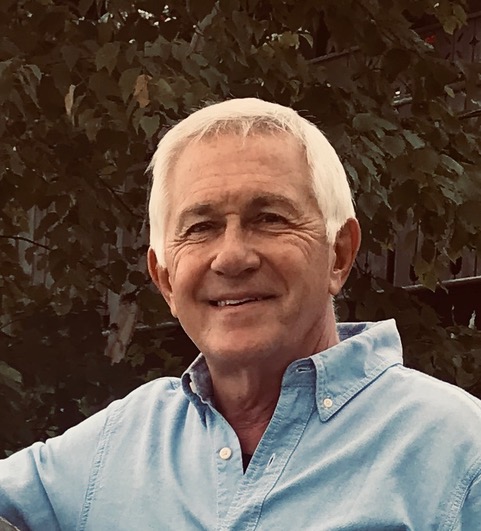
Gov. Rhoden Appoints Tim Czmowski to District 6 House Seat


Gov. Rhoden Appoints Tim Czmowski to District 6 House Seat

PIERRE, S.D. –  Today, Governor Larry Rhoden announced the appointment of Tim Czmowski to the open House seat for District 6, which includes portions of Lincoln County. You can find a photo of Czmowski here.

“It is my honor to appoint Tim Czmowski,” said Governor Larry Rhoden. “He will bring a servant heart, creativity, and a strong work ethic to this role.”

Tim Czmowski graduated from South Dakota State University and was named a Distinguished Alumnus in 2023. He served in the South Dakota Army National Guard for 10 years and was recognized as the “Battalion Soldier of the Year” in 1986.

Czmowski has over 40 years of experience in the cheese industry. He currently serves as the Assistant Chief Judge of the United States and World Cheese Contests and the President and Technical Consultant at CheeseWorld, LLC. Czmowski also served as the Chairman of the Grant County (SD) Republican Party from 1998 to 2004.

“I am grateful for Governor Rhoden trusting my abilities and giving me the privilege to serve the people of District 6 and South Dakota,” said Tim Czmowski. “I will approach these duties similar to my past business and public service experience. I believe in clear, open communications to gather information from all perspectives to determine the best decision amongst the choices available.”

Czmowski has been married to his wife Patty for nearly 40 years. Together, they have 4 adult children and 3 grandchildren. In his free time, he enjoys golfing, pheasant hunting, gardening, and woodworking.

###

Gov. Rhoden Signs Open Meeting Laws Bill 


Gov. Rhoden Signs Open Meeting Laws Bill
 

 PIERRE, S.D. –  Today, Governor Larry Rhoden signed SB 74, which requires the publication and review of an explanation of the open meeting laws of this state.

“This bill will help ensure our public servants are educated about their important duties of service on public boards, commissions, or councils. I will continue to set an example from the top of integrity and openness in public service,” said Governor Larry Rhoden. 

A private signing ceremony was held this morning and included prime sponsors of the bill. You can find a picture of Governor Rhoden signing SB 74 here. 

Governor Rhoden has signed 16 bills into law this legislative session. 

###

Johnson, Fischer Ensure Electric Vehicles Contribute to Highway Trust Fund

Johnson, Fischer Ensure Electric Vehicles Contribute to Highway Trust Fund

 Washington, D.C. – Today, U.S. Representative Dusty Johnson (R-S.D.) and Senator Deb Fischer (R-NE) introduced the bicameral Fair SHARE Act to impose one-time fees on electric vehicles (EVs) to ensure EVs contribute to the Highway Trust Fund (HTF) as internal combustion vehicles do.

“The Highway Trust Fund is on the road to insolvency,” said Johnson. “It’s time to consider real changes and ensure EVs pay their fair share to maintain our roads and bridges. I’m grateful for Senator Fischer’s leadership on this bill that will undoubtedly create a more stable Highway Trust Fund, ensuring the government can continue to make meaningful investments in our road infrastructure needs.”

“EVs can weigh up to three times as much as gas-powered cars, creating more wear and tear on our roads and bridges,” said Fischer. “It’s only fair that they pay into the Highway Trust Fund just like other cars do. The Fair SHARE Act will require EVs to pay their fair share for the upkeep of America’s infrastructure.”

“All Americans benefit from a robust and safe transportation system. When it comes to paying for the maintenance and expansion of our road network, no one should get a free ride,” said American Trucking Associations Senior Vice President of Legislative Affairs Henry Hanscom. “The trucking industry makes up just four percent of the vehicles on our nation’s highways, yet we pay nearly half the tab into the federal Highway Trust Fund—all while moving over 70 percent of the domestic freight tonnage. Clearly trucks are doing their part to invest in the nation’s infrastructure, and it is reasonable to expect electric vehicles to do the same. As fuel efficiency rises and adoption rates for alternative fuels accelerate, we must find long-term, sustainable, and equitable sources of revenue for the HTF. We commend Senator Deb Fischer and Congressman Dusty Johnson for leading this effort to ensure that electric vehicles are paying their fair share.”

“For nearly 70 years, purchasers of gasoline, diesel, gasohol, liquified natural gas and liquified petroleum gas have supported the maintenance and improvement of the nation’s roads and bridges,” said Dave Bauer, President and CEO of American Road & Transportation Builders Association. “The lone exception to this user-fairness principle remains vehicles powered by electricity. Thankfully, Senator Fischer and Representative Johnson have introduced the Fair SHARE Act to correct this oversight and improve mobility for all Americans.”

“This measure will provide a sustainable, long-term revenue stream to the Highway Trust Fund, allowing the construction employers to maintain and rebuild our nation’s roads and bridges,” said Jeff Shoaf, CEO of The Associated General Contractors of America. “The legislation will close a loophole for electric vehicles, which currently do not currently contribute to the Fund. Instead of giving them a free ride, this measure simply asked electric vehicle users to take part in the same user-pay approach that enabled the U.S. to build and maintain the highway network.”

The Fair Sharing of Highways and Roads for Electric Vehicles Act (Fair SHARE Act)would:

  • Impose a one-time fee of $1,000 on all-electric vehicles at the manufacturer level, at the point of sale. This fee would be appropriated to the HTF.
    • The $1,000 fee is derived from the average amount consumers currently contribute to the HTF from gas taxes calculated over a span of 10 years. Internal combustion engines have an average lifespan of 100,000 miles, which equates to approximately 10 years. According to the Congressional Budget Office, light-duty vehicles typically contribute an average of $100 per year to the HTF. The average lifespan of an electric battery is 10-15 years. A comparable fee over 10 years for an EV would amount to around $1,000.
  • Impose a one-time fee of $550 on each battery module with a weight greater than 1,000 pounds to be imposed at the manufacturing level and would be appropriated to the HTF.

The Fair SHARE Act is cosponsored by U.S. Senators Pete Ricketts (R-NE) and Cinthia Lummis (R-WY), and U.S. Representative Dave Taylor (R-OH).

The Fair SHARE Act is supported by the American Trucking Associations, American Road and Transportation Builders Association, American Society of Civil Engineers, Associated General Contractors of America, National Association of Counties, National Association of County Engineers, and National League of Cities.

Background:

The Highway Trust Fund (HTF) supports over 90 percent of federal highway aid to states. The HTF was meant to be funded primarily by federal gas tax. The HTF now faces insolvency. Projections from the Congressional Budget Office show the HTF becoming insolvent in 2028.

The HTF instability has worsened due to EV adoption, which is being encouraged at the federal level through tax incentives. Because EVs do not use gas, they do not contribute to the HTF through the federal gas tax. However, since the gas tax was last raised in 1993, the HTF faces insolvency due to more fuel-efficient vehicles on the roads, leading to reduced fuel consumption.

EVs are not subject to the gas tax and do not contribute to the HTF. Furthermore, their heavy batteries (up to triple the weight of gas-powered cars) lead to more extensive road wear, causing more maintenance and greater costs.

This legislation would fix this discrepancy by implementing a fee at the manufacturer level at the point of sale of EVs. This ensures that every vehicle on the road is paying into the HTF and supporting critical repairs to America’s infrastructure.

Click here for full bill text.

Click here for a one-pager.

###

Attorney General’s office distributing flyer on his package of reforms

The Attorney General’s Office is distributing this flyer to legislators regarding Senate Bill 62 and Amendment A, which is a Government Accountability bill. The legislation passed the Senate Judiciary Committee Tuesday and now goes to the Senate floor for further consideration. The bill and amendment are supported by the Attorney General’s Office.

In this legislation, Attorney General Jackley is asking that a state supervisor who allegedly destroys evidence should be charged with a class 6 felony, punishable by two years in state prison and a $4,000 fine.

South Dakota Law Enforcement Supports Construction of a New Prison


South Dakota Law Enforcement Supports Construction of a New Prison

PIERRE, S.D. –  Three South Dakota Law Enforcement associations issued statements of support for the construction of a new prison. The South Dakota State’s Attorneys Association, the South Dakota Sheriffs Association, and the South Dakota Police Chiefs Association agreed over the need for a new correctional facility.

“Thank you to all of our law enforcement for their continued dedication to protect the people of South Dakota,” said Governor Larry Rhoden. “The construction of a new prison is one way that we can improve public safety. The condition of our current facility is unacceptable – it is gothic, outdated, and unsafe for inmates, staff, and the public. We cannot afford to continue operating under these conditions.”

“As law enforcement leaders dedicated to protecting our communities, we recognize the essential role that a well-functioning prison system plays in maintaining public safety,” wrote Jason Foote, South Dakota Chiefs Association President. “This funding is a necessary step towards ensuring a secure, rehabilitative, and well-managed environment for all stakeholders.” You can find the statement of support from the South Dakota Police Chiefs Association here.

“Much of the current facility is an unsafe environment for both guards and inmates,” wrote the South Dakota State’s Attorneys Association. “A new facility is needed to ensure both are provided with a more-safe environment.” You can find the statement of support from the South Dakota State’s Attorneys Association here.

The construction of a new correctional facility would be made possible through HB 1025, which authorizes the Department of Corrections to construct a prison facility for offenders committed to the Department of Corrections in Lincoln County.

“County jails are increasingly forced to house individuals sentenced to the state, filling local beds that are already in short supply,” wrote the South Dakota Sheriffs Association. “We support the construction of a new Department of Corrections facility to help address these critical safety and capacity issues.” You can find the statement of support from the South Dakota Sheriffs Association here.

The Associated General Contractors of South Dakota also supported HB 1025 in House State Affairs Committee this morning.

###