SD Libertarians elect former Gubernatorial candidate as chair in party election

South Dakota Libertarians elected a new slate of party officials earlier this month (not that anyone noticed), including the selection of 2022 Libertarian Candidate for Governor Tracy Quint as the new Libertarian Party Chair.

Quint had ran against Governor Kristi Noem in the last election, receiving 9,983 of the popular vote, or 2.9% of the ballot against Governor Noem (62%) and Democrat Jamie Smith (35.2%).

The Libertarian Party leadership team is as noted, according to their facebook page:

Release: South Dakota State Representative Mellissa J. Heermann awarded fellowship to attend Midwestern leadership institute

South Dakota State Representative Mellissa J. Heermann awarded fellowship to attend Midwestern leadership institute

(Lombard, Ill) May 22, 2023 – State Representative Mellissa J. Heermann of Brookings was among 39 select lawmakers chosen to participate in a training program that annually identifies and assists promising state leaders in the Midwest.

Representative Heermann will meet with fellow lawmakers from South Dakota and 10 other Midwestern states and four Canadian provinces on August 18-22 in Madison, Wis., for The Council of State Governments’ 28th annual Bowhay Institute for Legislative Leadership Development (BILLD).

“The Bowhay Institute is one of the premier leadership training programs in the nation,” says Iowa Sen. Amy Sinclair, who serves as co-chair of the institute’s steering committee. “The legislatures in the region have benefited greatly from the skills their members have gained through this unique educational experience. Many of the graduates now hold key leadership positions in their state.”

Since 1995, more than 900 lawmakers have graduated from the Bowhay Institute. State legislators from Illinois, Indiana, Iowa, Kansas, Michigan, Minnesota, Nebraska, North Dakota, Ohio, South Dakota and Wisconsin are chosen to participate through a competitive, nonpartisan selection process. Members of the Alberta, Manitoba, Ontario and Saskatchewan legislative assemblies are selected by their caucuses to take part in the program.

BILLO was founded in 1995 to help new legislators meet the demands of increased policy responsibility being shifted to the states and, in many states, term limits and high legislative turnover. These two emerging forces highlight the shortage of training available for legislators – a void that BILLO aims to fill.

A program of The Council of State Governments’ Midwestern Office, the 2023 BILLO program will include courses and seminars conducted by policy experts, Midwestern legislative leaders, and professional development trainers. In addition to curriculum designed to develop leadership skills, the program analyzes a variety of public policy issues, including the economy, trade, and energy policy.

The Bowhay Institute for Legislative Leadership Development is named in honor of the late James Bowhay, longtime director of The Council of State Governments’ Midwestern Office. The program is funded through grants from foundation and corporate sponsors and an in-kind contribution provided by The Council of State Governments’ Midwestern Office.

Founded in 1933, The Council of State Governments has national headquarters in Lexington, Ky., and regional offices in Atlanta, Chicago (Lombard, 111.N), ew York City and Sacramento. The goal of the national, nonpartisan organization is to assist and advance state government by providing research assistance, professional development opportunities, interstate consulting services, and suggested state legislation.

Group shut down on demands to remove most of Butte County Commission over medical marijuana

If you ever thought the meetings of your local board of elected officials was the most dysfunctional in the state, I think Butte County might have you beat.

A local group, the “CONCERNED CITIZENS OF BUTTE COUNTY,” a self-anointed group of crusaders has taken it on themselves to go after various elected officials and has devoted much of their attention on the Butte County Commission, as they have demanded the removal of a majority of the members, as noted in below unsigned complaint which accompanied several petitions:

A number of signatures were turned in, which prompted the following letter from the complainants as the State’s Attorney reviewed and researched their demands. Unlike the first letter of demand, it appears that they claim to have a desk now, as evidenced by their new letterhead with their continued demands, this time adding a threat to go to the attorney general, the governor, and the press:

“If we have not received a report on the status of your investigation or prosecution.. we will take said measures.”  They were threatening to whine to the press, and cry to people that are regularly attacked through their related facebook page?  I’m sure that moved mountains.   Regardless, the State’s Attorney did reply this past week, as noted in the story from KELOland news:

The complaint, itself unsigned, was accompanied by four pages of 120 signatures on petitions circulated by Dale Simanton, of Newell, Travis Ismay, also of Newell, and Katie Hoffmann, of Belle Fourche.

and..

The complaints, listed below in bold italics, were categorically rejected by State’s Attorney McCartney, who found no cause to remove the commissioners.

and..

“In this meeting, there were several speakers, including one who threatened to “kick the ass” of the Commission Chair, causing upset and disruption,” wrote McCartney. “It is unsurprising that the Commission Chair did not turn on the timer or properly note the time to limit remarks for the subsequent speaker.”

While McCartney said that not limiting time for the speaker was a mistake, she said it did not rise to the level of demonstrable gross partiality, adding that at following meetings, citizens with anti-marijuana views had been allowed to speak for longer than the allotted time.

and..

In summary, McCartney found within CCBC’s complaints no reasonable cause to remove the named members of the commission.

Read the entire story (and the full complaint response) here.

Literally, part of their complaint was regarding the disruption of a county commission meeting, including threats of violence… so they wanted commissioners removed?  As you can read in the story, the State’s Attorney shut the group down hard.

What’s the next step?  According to a comment under a Facebook post from Katie Hoffmann on the topic, Travis Ismay notes that he is now going to go to the Attorney General.

I have the sneaking suspicion that the Attorney General’s office uses the same lawbook that the State’s Attorney does, and the result will be the same.

Argus Leader: Carbon pipeline could add $6 Billion to economy, $1 Billion to value of corn production, and nearly $20 Million in annual property taxes to counties.

If you recall a press release which I had posted a week ago, the Argus has a story today referring to that study that was recently completed regarding what South Dakota could expect in terms of returns on the Summit and Navigator carbon sequestration pipelines once they are completed:

Among the key findings of the report are indications the pipelines could bring billions of dollars of revenue to the state, while farmers stand to see an increase in corn prices from 2024 to 2034.

The logic behind these findings is that ethanol producers would be able to gain substantial increases in revenue if they adopt carbon sequestration processes.

and..

According to the study, South Dakota would see about $3.30 billion in gross domestic product, or the market value of finished goods and services, and about $5.92 billion in gross output over the ten-year period.

To put these numbers in perspective, South Dakota’s largest industry, agriculture and forestry, represents 21% of the state’s total GDP at $11.68 billion ― forestry alone is 2% of this figure ― according to the state’s latest study on ag’s economic impact. If built to completion, carbon sequestration would increase GDP in the industry by 28% over a 10-year period.

and..

As part of the study, Summit Carbon and Navigator shared a “good faith” estimate for property tax expenses as part of their combined operating expense budget of $82.8 million. The companies expect to pay nearly $19.7 million in annual property taxes to municipalities once the pipelines are operational. Additionally, electricity costs, accounting for nearly $38.8 million, made up the majority of their operating costs.

and..

“I can share that the relationship we have with Summit is a very good relationship. You know, they didn’t require capital to help them build the plant,” Wendland said. “Summit’s been more closely related to the farmer-owned plants and the private plants … where Navigator is more involved with the oil companies and the pipeline companies, so, in general, I’ve always felt that that Summit’s a little more farmer friendly.”

Read the entire story here.

While South Dakota lacks the petroleum resources our neighbor to the north has, we have it in our power to support our own energy production industry using resources grown by South Dakota’s farmers, and pump badly needed revenue into some of our rural counties that aren’t coming out of landowner’s pockets.

Food (and alcohol) for thought.

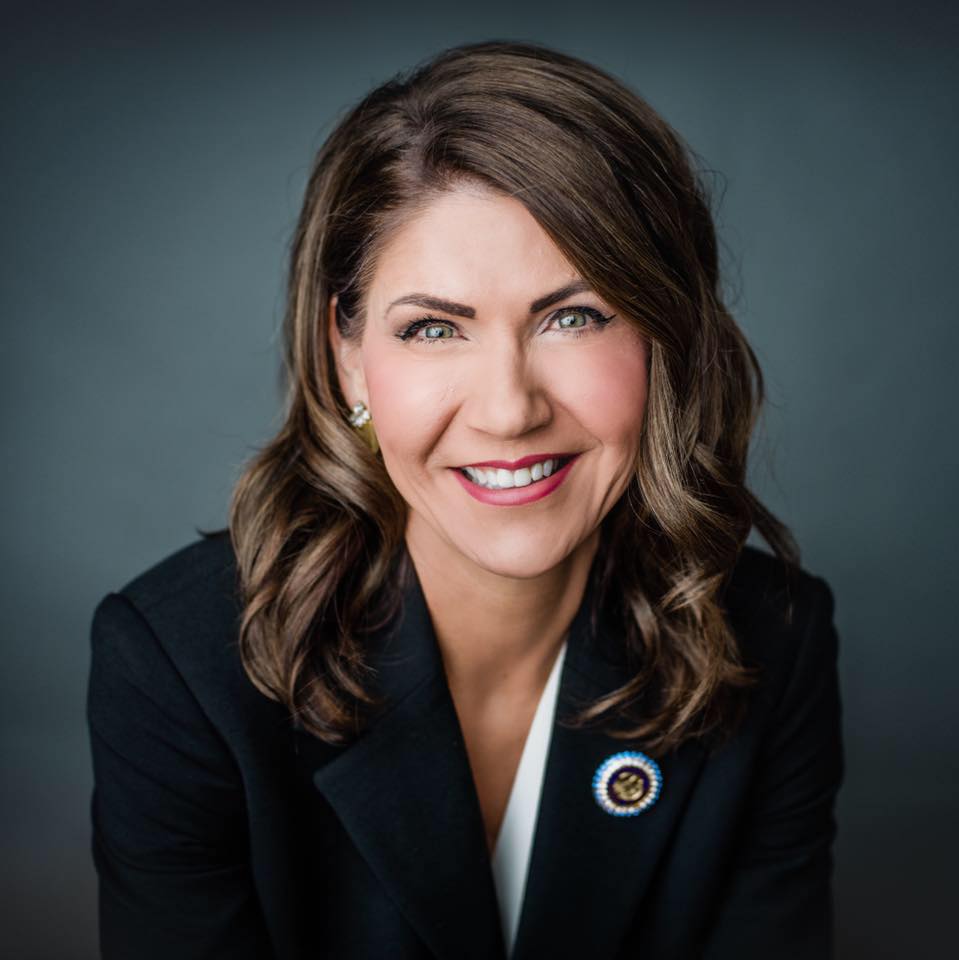
Governor Kristi Noem’s Weekly Column: Improving Higher Education

Improving Higher Education
By: Governor Kristi Noem
May 26, 2023 

South Dakota’s kids are our future. This point really hits home for those of us who are already seeing our own kids have kids of their own! And we must set our kids up with the skills and knowledge to build the best possible future for our state and nation. A big part of that puzzle is our higher education system. Unfortunately, across the nation, higher education is in a state of crisis. I have challenged our South Dakota Board of Regents to show the nation what quality higher education is supposed to look like.

We certainly have room to improve, as well. Less than half of our students are even graduating, compared to 63% nationally. And 43% of students who complete a college degree are underemployed when they graduate. Far too many students have been set up for failure – and they’ve been charged tens of thousands of dollars for their trouble.

We must do better. And South Dakota will.

I challenged our Board of Regents to take eight specific steps to set an example for the nation of what strong, conservative higher education should look like.

The Board of Regents should aim to raise graduation rates to 65% by 2028, far above the low 47% rate that we’re currently seeing. We should be outperforming the nation, not lagging behind. We’ve already taken steps to improve K-12 education for our students, with new social studies standards that teach our nation’s true and honest history. Now, we must do better for higher education, as well.

For South Dakota kids who do graduate, they should have the confidence that their degree will earn them a high-paying job in the career of their choice. I’m encouraging the Board of Regents to work with businesses on registered apprenticeship programs and offer the lowest possible credit rates. These steps will help our schools to focus more on skills that will prepare students for gainful employment. In particular, registered apprenticeships get students engaged with South Dakota businesses before they even graduate.

Our state universities should also remove all references to preferred pronouns in school materials. This practice has resulted in students being compelled and coerced to provide speech that they do not agree with. Our kids should have the ability to exercise their right to free speech. After all, South Dakota defends our constitutional freedoms more than any other state.

The Board of Regents should go further and remove any policies or procedures that prohibit students from exercising their right to free speech. Recently, Black Hills State University came under fire for one such policy that limited student speech – thankfully, the policy was removed. We must prepare our students to discuss and debate opposing ideas in a civil way.

Next, the Board of Regents should prohibit drag shows from taking place on university campuses. Gender theories can and should be debated in college classrooms, but these divisive theories shouldn’t be celebrated through public performances on taxpayer-owned property at taxpayer-funded schools.

As the cost of living continues to rise across the nation, the Board of Regents should find ways to cut costs to keep college affordable. In recent years, the Board of Regents has kept tuition low by backfilling their own budgets with taxpayer dollars. This doesn’t address rising costs. The cost of a degree should align with the value that it provides.

Civics and American history have been all but dismissed in higher education, and the result is abject indifference and lack of competency in our youth. The Board of Regents should require a course in American government and a course in American history as part of the general education graduation requirements.

Finally, the Board of Regents should help tackle the threat posed by communist China. They should immediately review all funding sources of university centers and all donations to ensure there is no money coming into our educational system from China.

As Governor, my duty is to protect the people of South Dakota, ensure that their tax burden remains low, and spend those taxpayer dollars wisely. Together, we can and must set an example to the nation of what strong, conversative higher education can look like. I look forward to continuing to work on this incredibly important goal.

###


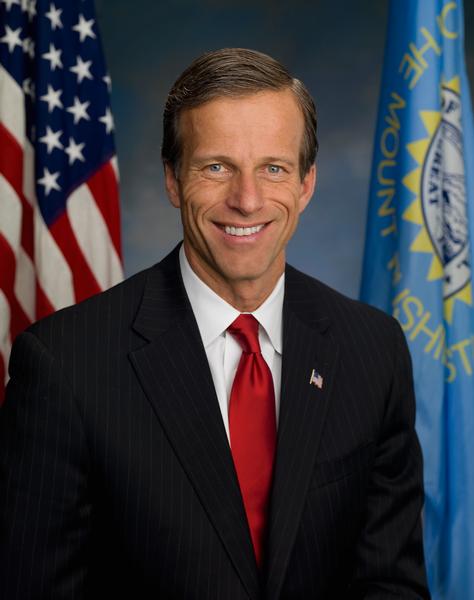
Senator John Thune’s Weekly Column: Duty, Honor, Country

Duty, Honor, Country
By Sen. John Thune

During the month of May, we mark Military Appreciation Month, Armed Forces Day, and Memorial Day. It is a time to honor those who have served and continue to serve our nation in uniform and to reflect on the patriotic values that these brave men and women embody. It’s an opportunity to remember those who have fought and died for our freedoms. And it’s a chance to renew our commitment to honor their memory.

South Dakota has a rich heritage of military service. Generations of South Dakotans have left the comforts of home to answer the call to serve. I would guess there are few families in our state that don’t have a family member or a friend who has spent time in uniform. I don’t think this is a coincidence. Small-town values like hard work, integrity, community, and humility shape a desire to work for something larger than oneself. I saw this firsthand in my dad, who grew up in Murdo and flew Hellcats off the U.S.S. Intrepid during World War II. Dad was the embodiment of those small-town values that made his generation of Americans the Greatest Generation, and they’re still the hallmark of those serving today.

It might be hard to imagine how a small-town kid could play a role in world events, but countless South Dakotans, including my dad and patriots like Cecil Harris from Cresbard, have distinguished themselves in advancing the cause of freedom. Nine South Dakotans have been awarded the Congressional Medal of Honor for going beyond the call of duty. Among the South Dakotans who have received the nation’s highest military honor are soldiers like Captain Arlo Olson from Toronto, who died bravely leading an assault in Italy during World War II; Private Herbert Littleton from Black Hawk, who threw himself on a hand grenade to save his comrades’ lives during the Korean War; and Major Patrick Brady of Philip, who, as a Huey pilot, saved 51 seriously wounded men in one day in Vietnam.

Soldiers, sailors, Marines, airmen, and guardians do extraordinary things, but when you ask most veterans about their service, they often turn the conversation to those they served with, especially those who never came home. In every generation, South Dakotans have given their lives in defense of our country and the values we hold dear. South Dakota’s fallen are memorialized in monuments across the state, ensuring their sacrifice is not forgotten by the generations who enjoy the freedom that their service helped secure. I was humbled by the recent opportunity to greet dozens of South Dakota Vietnam and Korean War veterans at the war memorials built in our nation’s capital to honor their service and sacrifice to the nation.

On Memorial Day, we honor those who chose service above self and were willing to give their lives for our country. We owe them our eternal gratitude. And we owe it to their memory to preserve the security and liberty they helped protect or, in the words of President Lincoln, to “take increased devotion to that cause for which they gave the last full measure of devotion.”

###

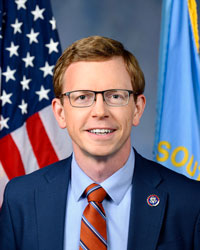
Congressman Dusty Johnson’s Weekly Column: A Deal on the Debt?

A Deal on the Debt?
By Rep. Dusty Johnson
May 26, 2023

As the debt limit “X-date” of June 1 becomes closer and closer, House Republicans have been standing firm on our requests to address our two crises—out-of-control government spending and a debt limit deadline.

  • Limit Government Spending – We want to cap government spending at the levels we were operating under in 2022, just 5 months ago. From there, spending growth would be allowed at 1% annually over the next ten years. This would save $3.2 trillion over the next ten years.
  • Save Taxpayer Dollars – Our plan reclaims unspent COVID funds, repeals tax credits from the far left’s “Green New Deal,” and stops President Biden’s unconstitutional student loan giveaway. Your tax dollars should be used in an effective manner.
  • Grow the Economy – By enforcing existing work requirements for welfare program benefits, preventing costly actions by the executive branch, and cutting unnecessary red tape for American energy projects, the Limit, Save, Grow plan incentivizes investment in our own economy. By growing our GDP, we will rely less on your taxpayer dollars to dig us out of debt.

The White House had been unwilling to negotiate with House Republicans for 97 days. Once talks between President Biden and Speaker McCarthy began, the White House seemed unwilling to cut federal spending and was insistent on raising taxes for hardworking Americans like you. Under the burden of historic inflation, many Americans don’t have room in their budgets to afford higher taxes, too. House Republicans refuse to raise taxes on everyday Americans to meet the demands of the Left’s reckless and irresponsible spending from the past two years.

House Republicans have vowed to not raise taxes, not cut funding for veterans’ programs, and protect Social Security and Medicare. We’re committed to a reasonable, responsible, and sensible deal on the debt limit.

It seems we’re getting closer to a deal each day, and I hope the White House can agree that we have to address the spending problem in this country. Spending more money is not the answer, and most of America agrees.

The clock is ticking, and I hope President Biden will negotiate in good faith. We cannot default on our debts.

###

Huron attorney issues dissenting opinion to SD Advisory Committee’s Recommendations for Federal Involvement in Local Elections, Removal of Local Law Enforcement at Polling Places

Huron Attorney Aaron Pilcher, a participant on the South Dakota State Advisory Committee to the U.S. Commission on Civil Rights, today issued his dissenting opinion on the recommendations issued by the committee in their final report issued on May 8, which does not appear to be available on-line as of yet.  But, given Pilcher’s notation of the recommendations, which he notes include federal oversight of local elections, and the removal of local law enforcement from local polling places, should be of great concern to the people of South Dakota.

Aaron P. Pilcher
Huron, SD 57350

SD Advisory Committee Recommends Federal Involvement in Local Elections, Removal of Local Law Enforcement at Polling Places

For Immediate Release
Contact: Aaron P. Pilcher

HURON, S.D. – On May 8, 2023, the South Dakota State Advisory Committee to the U.S. Commission on Civil Rights approved its final report, “Voting Rights and Access in South Dakota.” The report recommends federal oversight of local elections, and the removal of local law enforcement from local polling places. Aaron Pilcher, a committee member from Huron, filed the lone dissent to the report.

“For the last decade or more, we’ve seen a series of sustained federal activities, particularly within the [U.S. Department of Justice], targeting individuals or entities based on political affiliation and not for any legitimate basis,” Pilcher wrote. “On full consideration, I am obliged to ask whether South Dakota can address our concerns without involvement from federal officials. Based on the testimony we heard, I believe we can.”

Pilcher also took issue with the removal of local law enforcement. “We cannot perpetuate distrust between local law enforcement and the Native American community,” Pilcher wrote. “[I]t is unwise to remove local law enforcement from polling places on a misguided belief that doing so will create a newfound confidence in government.”

This release is issued in Aaron Pilcher’s individual capacity as a member of the committee. He does not speak for the State Advisory Committee, or the U.S. Commission on Civil Rights.

###

Gov. Noem Launches Whistleblower Hotline for Higher Education

Gov. Noem Launches Whistleblower Hotline for Higher Education

PIERRE, S.D. – Today, Governor Kristi Noem announced a new whistleblower hotline for students, faculty, parents, and taxpayers to report concerns at institutions of higher education in South Dakota. These individuals can call 605-773-5916 to voice their concerns.

“Our children are our future, and South Dakota universities and technical colleges should best prepare them for our future,” said Governor Noem. “As I work with our Board of Regents and Board of Technical Education to chart our path for higher education, we are giving students, faculty, and parents this tool to help voice any concerns so that they can be addressed.”

Governor Noem first announced this whistleblower hotline in a letter to the Board of Regents.

Governor Noem recently appointed Jim Lochner and Doug Morrison to the South Dakota Board of Regents. She will be making additional appointments to the Board of Regents in the near future.

###

Attorney General Jackley Says U.S. Supreme Court WOTUS Ruling Protects South Dakotans From Undue Federal Burden

Attorney General Jackley Says U.S. Supreme Court WOTUS Ruling Protects South Dakotans From Undue Federal Burden

PIERRE, S.D. – South Dakota Attorney General Marty Jackley praised Thursday’s U.S. Supreme Court decision that limits the federal Government’s authority regarding the Clean Water Act. South Dakota was part of the lawsuit, Sackett v. Environmental Protection Agency (EPA), that led to the court’s ruling.

“This is a good decision allowing states to determine how to manage their waterways,” said Attorney General Jackley. “This is a states’ rights issue.”

South Dakota was one of 24 states that filed the lawsuit against the Biden Administration’s “Water of the United States” rules. In their lawsuit, the states contend that the proposed rule would redefine “navigable waters” to include ponds, certain streams, ditches, and other bodies of water that would be placed under the Clean Water Act as defined by the EPA and the U.S. Army Corps of Engineers.

“This proposed rule would have created an undue burden on our farmers and developers to get permission from the EPA and the Corps on how use these water ways,” said Attorney General Jackley.

Other states involved in the lawsuit were Alabama, Alaska, Arkansas, Florida, Georgia, Indiana, Iowa, Kansas, Louisiana, Mississippi, Missouri, Montana, Nebraska, New Hampshire, North Dakota, Ohio, Oklahoma, South Carolina, Tennessee, Utah, Virginia, West Virginia, and Wyoming.

“As Attorney General, WOTUS issues have always been a major priority and that is why we were part of this lawsuit,” said Attorney General Jackley. “This decision protects South Dakotans from an undue federal burden.”

-30-