New Minnehaha County GOP official wasting no time attacking GOP

As opposed to raising money, or doing something nominally useful, new Minnehaha County GOP Chair Shawn Tornow is getting busy attacking Republican leadership the day after his election:

“State Republican Chair Wiik was inexplicably ‘excused’ last Thursday for perhaps one of his most important votes of his time in office,” newly elected Minnehaha County GOP Chairman R. Shawn Tornow said in a release.

and..

Wiik said he had not previously heard about growing discontent from Minnehaha County, as well as others, about how Frye-Mueller had been treated.

“You are informing me about it right now,” he said Sunday night.

“They all have my phone number,” he added. “I don’t know why they have to do everything through the press when they can just call me.”

Read the story here (Subscription required).

Senator Wiik missed a couple votes last week as he was attending to his son at the Capital who had taken ill.  I’m sure given Tornow’s concern over legislators missing votes, we can go back and find where he criticized Taffy Howard for missing 14% of all floor votes last session.

It’s going to be a long election season.

Rep. Chris Kassin Weekly legislative Update for January 28, 2023

Rep. Chris Kassin Weekly Legislative Update
for January 28, 2023

It has been a full week in the legislature, and things are in full swing. Bills are being introduced and assigned to committees. Our state has a grand tradition; unlike the U.S. Congress, where the leadership can stop bills from receiving a hearing, all bills introduced in the South Dakota legislature receive a hearing. This tradition allows our 105 legislators to represent their constituents most effectively.

As we talked about, I serve on the House Appropriations Committee. This year, the two Appropriations Committees from the House and Senate decided that we should meet together as often as possible. The two committees make up the Joint Committee on Appropriations or JCA. However, when we begin making decisions on the different tax reduction proposals, for instance, our rules require the House and Senate appropriators to have separate hearings.

This week it was just JCA, and we heard from several state agencies. I have been impressed with those tasked with leading the agencies in this state. I want to commend the professionalism and knowledge demonstrated by our agency leaders.

This week, we heard from the Department of Public Safety, the Board of Regents, the Board of Technical Education, the Department of Education, and the Department of Agriculture and Natural Resources. As the other agencies have done, they presented their progress, challenges, and opportunities, as well as their budget priorities and requests for this fiscal year. If you are interested, here is the link to listen to those hearings on sd.net – https://sdlegislature.gov/Session/Committee/1169/Minutes. Without getting into all the specifics of all the budget requests, one I would like to highlight is the recommendation from the Governor for a 5% increase in funding for public education. The legislature will consider the request and determine what should be added to the school funding formula, which provides money to the districts and allows for increases in teacher pay. Concern about teacher pay was one of the issues I often heard expressed during the campaign. Rightfully so. I am and will continue to champion education at all levels because it is the best investment in our state’s future.

As always, if you have questions about these different agencies or anything happening in the legislature, please do not hesitate to reach out. I encourage your thoughts and feedback. My email address is chris.kassin@sdlegislature.gov, or you can always call/text me at (605) 670-9698.

Thank you again for the opportunity to represent you.

Senate Bill seeks to close loophole in term limits law for Public Utilities Commission

Uh oh! Looks like Senator Jim Bolin is proposing to be a party pooper, and has a bill in to close an election loophole that has long been in existence for members of the Public Utilities Commission.

in 1992, South Dakota passed a Constitutional Amendment (Constitutional Amendment A) to set term limits for many elected officials.  Many, as in “not all.”

Title: Relating to Term Limitations

Attorney General’s Explanation:

The South Dakota Constitution and other state laws do not limit the number of terms of office that may be held by a United States Senator, United States Representative, state senator or representative, attorney general, secretary of state, auditor, treasurer, commissioner of school and public lands, or public utilities commissioner.

The proposed amendment would limit an individual to two consecutive six-year terms (12 years) as a United States Senator, and six consecutive two-year terms (12 years) as a United States Representative, effective as of the 1992 election.

The amendment would limit an individual to two consecutive four-year terms (8 years) as attorney general, secretary of state, auditor, treasurer, or commissioner of school and public lands, effective as of the 1992 election.

This amendment would not place any limit on a public utilities commissioner.

The amendment would limit an individual to four consecutive two-year terms (8 years) as a state Senator or state Representative. This limit would not apply to partial terms to which a legislator may be appointed and to legislative service prior to January 1, 1993.

A vote “Yes” will change the Constitution as explained above.

A vote “No” will leave the Constitution as it exists.

“Shall the proposed change to the Constitution be approved?”

Full Text of Constitutional Amendment A:

That section 6, Article III of the Constitution of the state of South Dakota be amended to read as follows:

Section 6. The terms of office of the members of the Legislature shall be two years; they shall received for their service the salary fixed by law under the provisions of Section 2 of Article XXI of this Constitution, and five cents for every mile of necessary in going to and returning from the place of meeting of the Legislature on the most usual route.

No person may serve more than four consecutive terms or a total of eight consecutive years in the senate and more than four consecutive terms or a total of eight consecutive years in the house of representatives. However, this restriction does not apply to partial terms to which a legislator may be appointed or to Legislative service before January 1, 1993.

A regular session of the Legislature shall be held in each odd-numbered year and shall not exceed forty legislative days, excluding Sundays, holidays and legislative recess, except in cases of impeachment, and members of the Legislature shall received no other pay or perquisites except salary and mileage.

A regular session of the Legislature shall be held in each even-numbered year beginning with the year 1964 and shall not exceed thirty-five legislative days excluding Sundays, holidays and legislative recess, except in cases of the Legislature shall receive no other pay or perquisites except salary and mileage.

That Section 32, Article III of the constitution of the state of South Dakota be amended as follows:

Section 32. Commencing with the 1992 election, no person may be elected to more than two consecutive terms in the United States senate or more than six consecutive terms in the United States house of representatives.

That section 7, Article IV of the Constitution of the state of South Dakota be amended to read as follows:

Section 7. There shall be chosen by the qualified electors of the state at the general election of the Governor and every four years thereafter the following constitutional officers: attorney general, secretary of state, auditor, treasurer, and commissioner of school and public lands, who shall severally hold their offices for a term of four years. Commencing with the 1992 general election, no person may be elected to more than two consecutive terms as attorney general, secretary of state, auditor, treasurer, or commissioner of school and public lands.

As taken from the Secretary of State’s Website.

What the writers of the Amendment didn’t bother to care about was the fact that the Public Utilities Commission is a creature of State Law, and not a Constitutional Office. It was pointed out by the Attorney General at the time, but no one seems to have really cared since. Until now, with State Senator Jim Bolin’s proposal to put PUC Commissioners on even footing with other state level elected officials, capping their terms of office.

If you look at the membership of the Public Utilities Commission’s current membership, you can see where the argument could be made that an application of term limits might not be inappropriate.

With only two six-year terms, Kristie Fiegen is the most junior of commissioners, followed by Chris Nelson with three six-year terms, and Gary Hanson with 4.  I’ve always mused that the PUC was the best gig in Pierre for a couple of reasons. The salary is not dictated in state law, nor are the terms of office. And as noted, Bolin’s bill seeks to close one of those loopholes, and force turnover… starting with “the next guys.”

Not that I blame him, as I certainly support Kristie Fiegen running for another term.. And I believe Gary has already said he’s not running again, but legally, I’m not sure how you can set a term limit without setting a date certain when it takes effect, versus making it based on the people in office.

We’ll see what the legislature has to say about it in the coming weeks.

Guest Column: A Conversation about Nuclear Energy by Sen. Brent “B.R.” Hoffman

A Conversation about Nuclear Energy
by Sen. Brent “B.R.” Hoffman
Electricity seems to touch nearly every aspect of modern society.  It cools and heats our food, makes our favorite television shows possible and powers every light switch we touch.  It drives a dizzying array of computer systems, smart phones, power tools and new cars.  If you’ve every experienced a prolonged blackout, you understand just how reliant we are upon electrical power.
It is what separates us from our ancestors, and so we should be very careful to never take it for granted, especially with population growing and energy demands increasing.  Resources are limited, and our nation is moving away from coal-fired power plants and towards renewable, low-carbon energy sources.
With that in mind, perhaps the timing is right to have a conversation about nuclear energy.  Nuclear power has a number of advantages over both traditional and renewable energy sources, and I offer three for your consideration.
First, nuclear power plants are clean and carbon-free, utilizing the fission process to produce steam, which drives turbines to produce electricity.  Worldwide, nuclear energy is second only to hydropower in the production of low-carbon electricity.
Second, nuclear energy has a higher capacity than any other form of energy and can operate 24/7.  One uranium pellet (about the size of a vitamin tablet) has the fissionable energy potential of more than a ton of coal.  Nuclear power plants currently operate nationwide and provide about 20% of our electricity.
Third, and last, nuclear energy is a national economic driver, contributing over $2.0B in state-level taxes and employing nearly 100K individuals at the highest average wages of any energy source.
Certainly there are other factors to consider, both pro and con.  Our great state currently draws energy from two nuclear reactors in Minnesota that are nearing the end of their life cycle.  Three other plants providing power are coal-fired.  Neighboring states such as Nebraska and Wyoming are considering nuclear energy options, including designs for smaller, advanced nuclear reactors.
Given these considerations, this past week, my colleagues and I in the State Senate introduced a resolution to form an interim legislative committee “to examine the potential use of nuclear energy in South Dakota.”  If the committee goes forward, with the support of the State House, I’m hopeful it can lead to a productive study, which may include draft legislation, policy recommendations, expert testimony and feedback from citizens.
Bear in mind this proposed committee is merely a first step to plan for the future.  It doesn’t propose applying for a permit, appropriating funds or breaking ground on a nuclear power plant.  It merely begins a conversation…with legislators, utility partners, policy experts, and most important, the citizens we represent and serve.
I believe it’s time to have a conversation about nuclear energy in South Dakota, and I hope you’ll be a part of it.
The author served a career in the military, surviving the 9/11 attack on the Pentagon.  He’s a published author, occasional newspaper columnist and currently serves as a state senator for District 9, which includes western Sioux Falls, Hartford and Wall Lake.

Representative Tim Reisch’s Legislative Report for January 28, 2023

Representative Tim Reisch Legislative Report
for January 28, 2023

By the time you see this report we will have completed over 1/3rd of the 2023 legislative session. The last day for unlimited bill introduction by legislators was January 26th.  After that date, each legislator is allowed to file a maximum of three additional bills all of which must be introduced by February 2nd.

As things currently stand, three of my bills will be up for committee consideration this week so I’m in the final stages of preparing the information needed to support their favorable recommendation and movement to the House floor. I’ve introduced my bill to modify penalties imposed by the SD Retirement System on retired K-12 teachers who wish to return to the classroom fulltime.  It is House Bill 1177. Speaker Hugh Bartels has informed me he will assign it to the Retirement Laws Committee for consideration on February 8th. Hopefully the 5-member committee will move the bill to the floor where all 70 House members can have an open and honest debate on the merits of the bill. The K-12 teacher shortage is a serious problem, and frankly I’m aware of no other bill before this year’s legislative session that is attempting to resolve it.

I was happy to be asked by Senator Casey Crabtree to be the prime sponsor in the House of his bill to increase the appropriation for construction costs of the new athletic events center at Dakota State University. Senate Bill 93 would raise last year’s $28 million authorization to $40 million for the beautiful new sports complex at Dakota State. This bill does not tap new tax revenue for the project, but rather authorizes DSU to spend funds currently under their control together with future donations to complete the very worthwhile project.

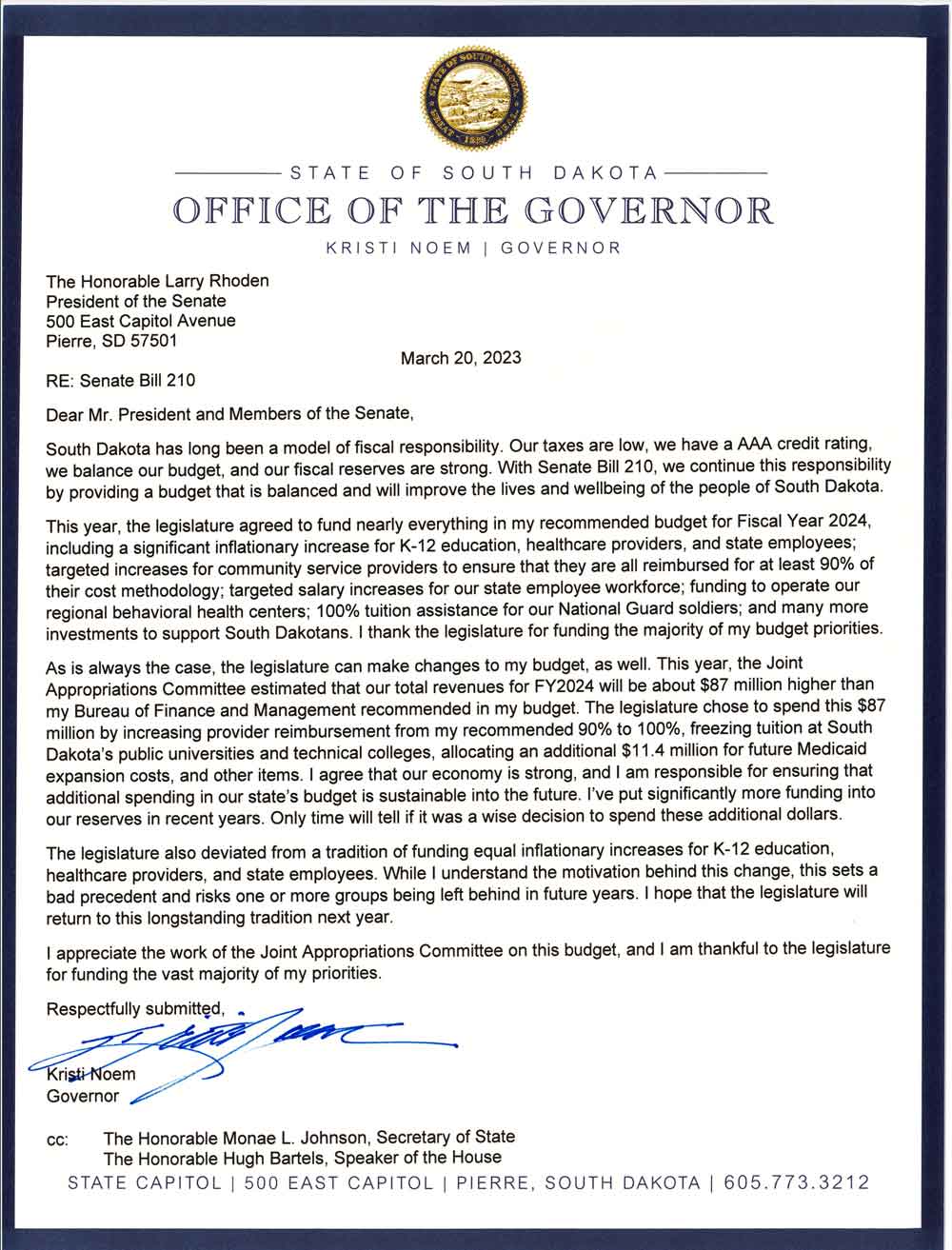
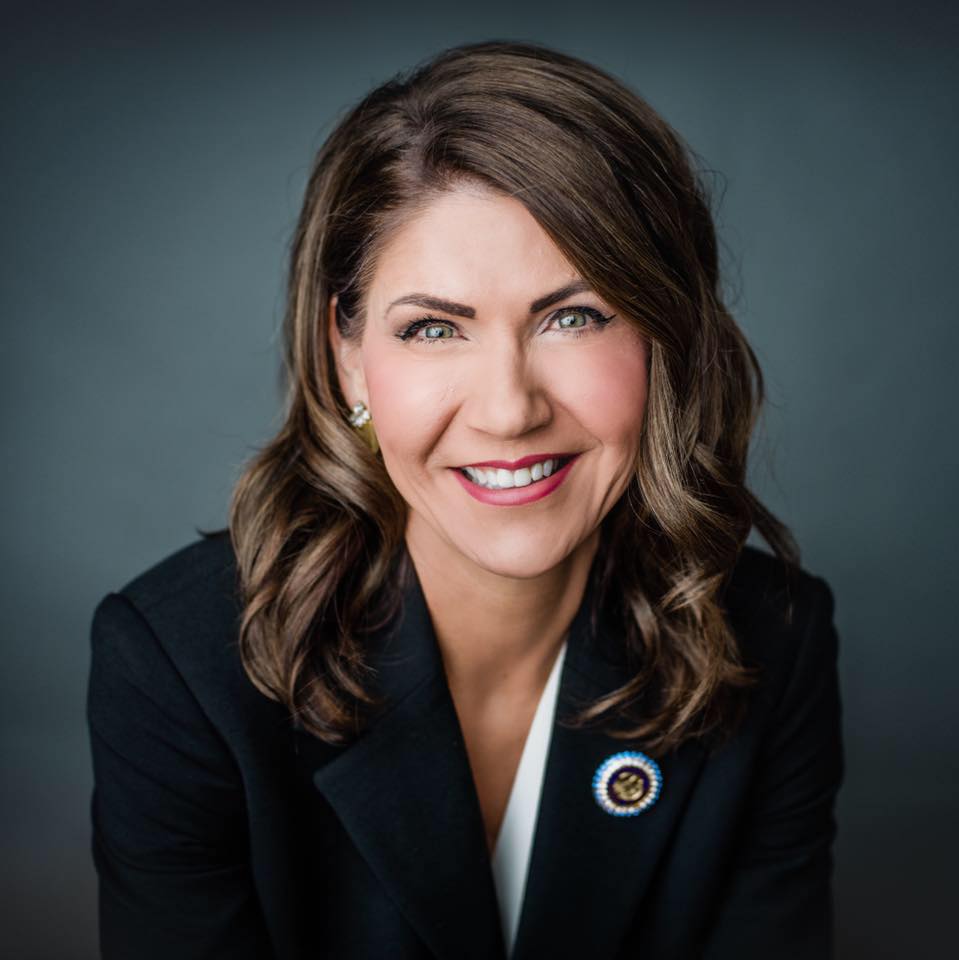
As I mentioned in last week’s column, an estimated $300 million in excess ongoing annual revenue has been identified by the governor’s budget office. During her budget address in December, Governor Noem revealed her plan on how she would like to take advantage of it.  Her proposal to eliminate the tax on food cleared its first hurdle on a 12-1 vote in the House Taxation Committee. Although I absolutely support a healthy tax cut, I’m not yet convinced that the permanent and total elimination of the 4 ½% state sales tax on groceries is the best course of action. I firmly believe that the current revenue situation has been driven in large part by inflation. A wise former legislator once told me “It’s not about this year; its about the next five years.” I prefer to take the long view on issues like this.

Thanks again for electing me to be your representative in Pierre. I consider it a great honor, and I pledge to work hard every day to represent your interests in the best manner possible. If you want to get in touch with me during the session, my legislative email address is Tim.Reisch@sdlegislature.gov.


Weekly Update from Representative Tamara St. John – Jan 28, 2023

Weekly Update
from Representative Tamara St. John
Jan 28, 2023

Greetings!

It has been a very busy third week in Pierre! Things kicked off Monday on the House floor, when we debated SB41, which provides $200 Million In grants and loans for workforce infrastructure. This funding is not in addition to the bill that was passed last year- we must appropriate the funds again due to them not being able to be spent during the previous fiscal year. I’ve been a proud supporter of workforce infrastructure for two years now, and these funds will serve our communities in a monumental way as our economy continues to grow in South Dakota. Additionally, we passed HCR 6002. Which encourages the Executive Board of the legislature to continue researching childhood mental health programs. I believe supporting our children in this way is a needed service for our state, and I was happy to support it.

In House Judiciary this week, I was proud to support HB1041, which provides an exception to the definition of drug paraphernalia to allow for the use of Fentanyl testing strips. This bill is not a “green light” for drug use. Addiction and drug use is a serious problem in South Dakota, and this bill will do great work in helping to prevent overdoses in our communities. Committee work continued into House Ag and Natural Resources, where we heard a presentation from the South Dakota Ag Land Trust. In this briefing, they outlined the services and advocacy efforts that they deliver on behalf of landowners in South Dakota. It was great to hear about their work!

One important date that is coming up in the legislature is the bill deadline- after next week, members are no longer able to introduce legislation into the process, which helps make sure we can conduct our business within the time we have. Here are a couple of the bills that I have signed onto:

  • HB1124: I am proud to sign onto an act that is prime sponsored by my son, Representative Tordsen. This bill requires labeling on Native American Arts and Crafts that are not produced by a tribal member. I agree that we must preserve authentic Native American heritage, and proudly support my son in this legislation.
  • SB136: This is act that I will be co-sponsoring, which provides for a rebuttal presumption favoring the joint custody of children when the separation of parents takes place. This presumption can be overturned with evidence but assumes that it is best for children to see both parents as they grow up. I believe that family is an important value of any child’s life and am happy to see this legislation brought forward.
  • SB69: This past week we had a great State Tribal Relations Committee meeting with the Yankton Sioux Tribe. Senator Rohl and I have been working together to bring us closer to where we hope to be as a State Tribal Relations Committee/STRC in the future. We have heard many discussions in the past about making the STRC a Standing Committee that meets regularly during legislative session. To make that happen we need to bring the STRC in line with the standards of a standing committee and SB69 is the first step in doing that. I will be carrying SB69 in the House to make that change.

I will be doing a larger column in the future on the State Tribal Relations Committee is progressing to engage tribal nations and bring tribal leaders and issues into direct conversations with legislators who can possibly help them to make needed changes or impact who we work together in the future. This past week we have a great meeting with the Yankton Sioux Tribe. Senator Rohl and I have been working together find how best to make these connections and meetings happen. I have been working with tribal people and programs who have ongoing relationships with the State of South Dakota such as in the previous agenda with the Attorney Generals Office and the MMIW/MMIP issue, housing and Native Homeownership Coalition, Native American Tourism and others. Senator Rohl has been leading the efforts to schedule one on one meetings with our South Dakota Tribal Nations. It’s my personal belief that continuing both efforts will bring us closer to where we hope to be as a State Tribal Relations Committee in the future. I think we all agree that we need good communication and change in this area. We have heard many discussions in the past about making the State Tribal Relations Committee a “Standing Committee” like every other committee that meets regularly during legislative session. In order to make that happen we need to bring it in line with the standards of a standing committee and SB69 is the first step in doing that and I will be carrying SB69 in the House to make that change.

There is much, much more to come in the weeks ahead! If you would like to contact me about anything in the legislature, you can reach me at tamara.stjohn@sdlegislature.gov. I hope that you have a blessed weekend!

Weekly Update from Representative Tyler Tordsen – Jan 28, 2023


Weekly Update from Representative Tyler Tordsen – Jan 28, 2023

Another week down!

We just wrapped up week 3 of the 98th legislative session. From committees to the House floor, there was debate heard over several issues facing our South Dakota communities. At the end of the day, however, I believe that the work we did this week is something that we can all be proud of, and I look forward to continuing that momentum as we enter the coming weeks.

Monday started off with SB41 being heard on the House floor, which provides $200 million ($50M of which is federal COVID funds) for housing infrastructure loans and grants. This bill was long overdue. It’s the product of many years of study, discussion, and compromise. Last year, the legislature appropriated $150 million for this same project, but none of it was able to be spent due to logistical problems. Passing it this year ensures that we are going to be able to move this program forward and not miss another construction season. During my travels across South Dakota’s largest and smallest communities, housing opportunities for new and existing residents is problem number one. SB41 is going to be a game changer for South Dakota and I was proud to cosponsor and support it!

I also want to dig into a couple of pieces of legislation that I will be bringing and discussing in the upcoming weeks. Here are a couple of them:

  • HB1101: I’m prime sponsoring this bill, which is an act to ensure the proper labeling of American Indian Arts and Crafts. This bill will strengthen the original 1960’s statute, protecting Native American artisans, and will also provide clarity to retailers. As a tribal member, I’m excited to have this as my first bill. I testified on it before House Commerce and Energy on Wednesday, with it passing out of committee with a “do pass” recommendation unanimously.
  • HB1124: One of the things that I ran on last year was to ensure that we preserve South Dakota as a leader in free and fair elections. I think South Dakota has some of the best-run elections in the nation, but that’s not by accident. We’re constantly looking at ways to safeguard and strengthen our processes to continue to lead the way. My legislation ensures no software or firmware upgrades can take place after pre-election certification, to codify existing rules, and provides guidance and increases public access to tests on tabulation machines during an election.
  • HB1079: I am proud to co-sponsor this bill, which makes an appropriation to the Department of Health to provide grants for mental health and suicide prevention resources. This is a critically important need for South Dakota students and young adults. Those who battle mental illnesses need a strong support system, and this bill is a great step in that direction.

There are many more items to come as we continue our work in Pierre, so please feel free to reach out to me with any questions, or even if you are planning to come visit the legislature and would like to say hi. You can reach me at tyler.tordsen@sdlegislature.gov or by phone at 605-610-8884 anytime. Stay warm this weekend!

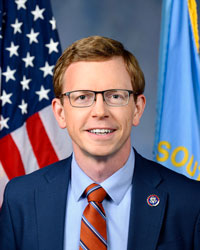
Weekly Update from House Majority Whip Rep Drury – Jan 27, 2023


Weekly Update from
House Majority Whip Rep Drury
Jan 27, 2023

The accomplishments of the house this past week are the kind of days that make me proud to be serving in the House. This week saw the passage of great policies that will benefit our state, and it was an honor to be part of these accomplishments.

Supporting Housing Infrastructure

On the house floor, we passed monumental legislation this week funding $200 Million for housing infrastructure. To best develop our workforce in South Dakota is to ensure that when workers come here they know that housing is going to be available to them. This legislation is a step in the right direction. One thing to note is that this is not a new conversation. We allocated money last year, but due to complications the money was not able to be spent. The legislation we passed this year has an emergency clause and will go into effect as soon as Governor Noem signs the bill. This bill is good for our communities, and I was proud to vote for it.

Serving those who serve us

We passed two major bills to benefit those who serve our state in the National Guard, and their families. HB1039 will allow the state to pay for 100% of in-state tuition costs for a member of the National Guard at either a state school or Technical College. I was proud to vote for this legislation, it’s the least we can do for those who put themselves on the front lines to serve our communities when crisis strikes. Furthermore, we passed HB 1046, which provides free tuition for a spouse or child of a member of the National Guard that’s disabled or deceased in the line of duty. Losing a family member in the line of service is heartbreaking, so it was an honor to be able to help this legislation pass.

At the end of every legislative week, we often ask ourselves: how did the actions that we took make South Dakota a better place? The work of the legislature will always involve tough debates and questions, but I strive every day to support policies that will improve our state one step at a time. With legislation like this, we are surely on the right track for 2023.

If you have any questions about current events during session or pieces of legislation, I am always open to hearing any questions or concerns you may have. Stay in touch by filling out the contact form at www.druryfor32.com. Have a great weekend and stay warm!

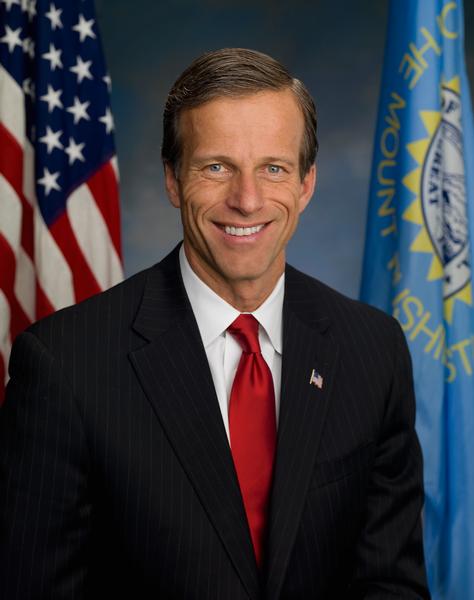
US Senator John Thune’s Weekly Column: Finding Consensus in a Divided Government

Finding Consensus in a Divided Government
By Sen. John Thune

Two years into the Biden administration, it’s clear we need a course correction. We can’t afford a repeat of the last two years of Democrats’ one-party rule, which was characterized by reckless spending, high inflation, open borders, and rising crime. Fortunately, with a Republican majority in the House of Representatives, the Democrats’ one-party control in Washington has ended, and both parties will have to work together to get anything across the finish line.

While divided government may sound like a recipe for gridlock, it’s often proved to be the opposite. In recent history, periods of divided government have delivered the 1986 Reagan tax reform, 1996 welfare reform, the Balanced Budget Act of 1997, and a major reform of the U.S. Department of Veterans Affairs in 2014. And there are a number of areas right now where I believe Republicans and Democrats can work together to find solutions.

A great place to start is the farm bill, which has a strong bipartisan history. As a longtime member of the Senate Agriculture Committee, I’ve worked with both Democrat and Republican colleagues to shape policy that helps meet the needs of South Dakota farmers and ranchers and strengthens our nation’s agriculture production. We also need to get to work on advancing trade agreements to expand markets for American products and services around the world, something the Biden administration has been slow to do.

There has also been a renewed and bipartisan interest in promoting transparency and accountability in Big Tech, including from President Biden. In recent years, I’ve worked on bipartisan legislation to reform existing laws that govern certain internet use, increase transparency, and improve due process for users concerning Big Tech platforms’ content moderation practices. I will continue to find ways to advance these bills as Congress works to build consensus on these important issues.

Democrats and Republicans should also be able to agree that there must be accountability when it comes to spending taxpayer dollars. Recently, I launched an oversight initiative to ensure federal broadband funding is being used for its intended purpose of extending internet access to areas that currently lack it. There is also a critical need to conduct oversight of the IRS, especially given the agency’s shaky record of handling taxpayer data and its recent record of subpar taxpayer services.

With our national debt soaring, Congress must also practice fiscal restraint. And one important way to promote fiscal responsibility is to restore an open process for funding the government that allows all the people’s representatives to have input on spending bills and other legislation. The federal government must live within its means, just like every American household, business, or farm. And it shouldn’t be placing the burden for reckless spending on hardworking middle-income families and small businesses by raising taxes. I hope Democrats will give fair consideration to extending the tax relief Republicans passed five years ago that benefits South Dakota families and businesses.

There’s a great deal we can accomplish that would make real progress on issues facing the American people. To do this, we need a genuine attitude of compromise rather than the “my way or the highway” approach Democrats have taken these past few years with disastrous results. I’m eager to get to work, and I hope we can deliver a bipartisan record of accomplishment over the next two years.

###