
What South Dakota’s Budget Surplus Really Means
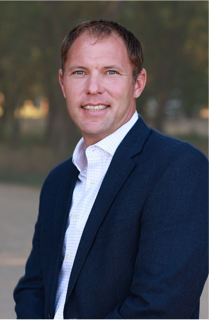
By Representative Chris Kassin
 Each year when South Dakota closes its books, one question inevitably follows:
“If the state ended the year with a $69 million surplus, why didn’t we spend that money?”
It is a fair question and one I hear often from constituents. The answer begins with understanding how South Dakota builds its budget.
Unlike the federal government, South Dakota cannot simply borrow money to cover a deficit. Our Constitution requires a balanced budget. Every year, the Legislature must estimate how much revenue the state will collect and build a budget that does not spend more than that amount.
That estimate is not simply handed down by the Governor. Each February, the Governor’s Bureau of Finance and Management (BFM) and the nonpartisan Legislative Research Council (LRC) independently develop revenue forecasts using different economic models. Those forecasts are presented to the bipartisan Revenue Projection Subcommittee, a subcommittee of the Joint Committee on Appropriations (JCA), which reviews the data and adopts the official revenue estimate used to build the state budget. After carefully reviewing the information presented, the legislature sets the revenue estimate.
That estimate is made months before the fiscal year even begins. By the time the budget year ends, we have been forecasting revenues and expenditures as much as 17 months into the future. Anyone who has tried to predict where the economy will be a year from now knows that is no easy task.
Could we assume the economy will grow faster? Could we budget another $50 million or $100 million because we hope sales tax collections will exceed expectations?
Of course we could.
It would also be one of the most fiscally irresponsible things we could ever do.
Building a budget on revenue you hope to collect instead of revenue you reasonably expect to collect creates the risk of budget shortfalls, spending reductions, and emergency adjustments after commitments have already been made. That’s why South Dakota follows a budgeting process built on conservative, realistic revenue estimates.
This year’s surplus illustrates why.
Some have suggested the $69 million surplus proves the Legislature overbudgeted or failed to spend money that could have helped South Dakotans. That simply is not how the budget works.
The surplus represents only about 2.75 percent of South Dakota’s $2.5 billion general fund budget. Considering we are forecasting nearly a year and a half into the future, that reflects remarkable accuracy.
One of the largest contributors to the year-end balance was the Department of Social Services. The Legislature budgeted enough funding to ensure eligible South Dakotans could receive needed services. Fortunately, actual demand was lower than projected. Fewer people qualified for certain programs, utilization was below expectations, and some services cost less than anticipated. The budget represented prudent planning that ensured services could be provided if needed. The funds were not spent because the demand never materialized.
Healthcare budgeting makes this especially difficult. A handful of catastrophic medical cases can add millions of dollars in costs, and no forecasting model can predict exactly when those expenses will occur.
Good budgeting is not measured by whether every dollar gets spent. It is measured by whether the state has the resources to meet its obligations while protecting taxpayers from unnecessary financial risk.
No forecast will ever be perfect. Economies change. Healthcare utilization changes. Unexpected events happen.
No one can predict the future with perfect accuracy. Our job is to make the best decisions we can with the information we have at the time.
South Dakota has earned one of the strongest fiscal reputations in the nation because we refuse to build budgets on wishful thinking. We build them on evidence, careful analysis, and disciplined forecasting. I believe that approach has served our state well, and it is one worth protecting.
________________
Representative Chris Kassin represents District 17 in the South Dakota House of Representatives. He serves on the Joint Committee on Appropriations and the Legislature’s Revenue Projection Subcommittee, where he helps develop the state budget and revenue estimates.
Great explanation Rep. Kassin!
Excellent analysis by Rep. Kassin. Setting the revenue estimate may be the single most difficult and yet important thing that happens every Session. The folks in the LRC and BFM do an amazing job year after year. There have been times when the SD economy slows during the time after one Session and before the next. That happened during the fiscal 2017 budget year. We, the Appropriations Committee and the Legislature, had to cut spending during the 2017 Session. That’s the last time that state spending was actually cut. Based on those actual spending cuts, I was even able to get Rep. Chip Campbell to vote “Yes” on the General Appropriations Bill. I think he still regrets it!😋
I have all the respect in the world for your job, Representative. This is hard work.
My question is this: I understand the budgeting principles we use, but why and how does DSS keep doing this year after year?
I’m willing to accept that they can’t perfectly predict utilization. But that reversion amount ($32 million) raises eyebrows. That would have been raises for state employees, teachers, and for Medicaid providers to stay competitive.
I can see where the perspectives are coming from on both ends of this.
As a former member of the Appropriations Committee, I appreciate Rep. Kassin’s explanation of the difficult work involved in building a state budget. It’s never an easy task. Crafting a balanced budget requires thoughtful deliberation, tough decisions, and a commitment to serving the people of South Dakota.
Thanks. Most common sense folks understand the budgeting process and the end of the fiscal year financials. What really is irritating is that the token liberals are standing at the feed trough expecting the extra money to be spent on their causes ie- democrats running for election and our tenured teachers wanting an expected pay bonus. Remember “”Pigs eat first”. At the end of the day it would be appreciated that us fatigued taxpayers be thought about when the tax assessment and sales tax adjustments for next year.
Hard work and demonstrated intelligence like this is why Chris will continue to be elected as long as he wants. Great legislator
Well said Representative Kassin. It is a hard job to estimate revenues and control expenses. When the unspent appropriations comes mostly from Soctal Services budgeting was done right.
$60 million of that is people’s missing unclaimed property money. Maybe it should go into the trust before the next bfm gov budget directs it to gov special projects.
The young fellow, Mr. Kassin, shows some visious chops. He’ll be chair of the legislatures in no time, with the crazies taking a back seat.
A good number of the crazies won’t be back. Terrific future for SD legislature.
All the comments glazing this guy…
Compared to the MAGA crazies this guy is a founding father 🤣
Unfortunately the bar is so low you could trip over it.
Great analysis Rep Kassin!! I’m glad we can work together on this.