House Bill 1035 to provide an anti-vaxxer “conscience exemption” to allow people to take a pass on COVID vaccinations if their aunt read something on facebook, predictably took a turn down the rabbit-hole in testimony provided from one of the ‘experts’ gathered to speak on the measure:
The hearing Tuesday included remote testimony from Benjamin Marble, who’s known for appearing on disgraced conspiracy theorist Alex Jones’ show to argue that Anthony Fauci, formerly the chief medical adviser to President Joe Biden, “created” COVID-19 and is “the greatest mass murderer in the history of the world.”
“Earth to poison pushers, you need to wake up,” Marble said during testimony. “These fake vaccines are far more deadly than cyanide.”
and..
“Please focus on the bill and stop the attacks, OK?” Jensen asked of Marble.
“Sure, OK. In summation, are you a retard or did God give you a brain?” Dr. Marble said.
As I got thinking about it in debating the merits of Senate Bill 40, which proposes to put the constitutional offices (except Lt Gov) to a vote of their party members at large, I thought it would be interesting to look at the public offices in South Dakota where we select the partisan candidates in a primary election process to represent those parties in the November election, and those we select at the Republican or Democrat State Conventions.
US Senate – Primary US House – Primary Governor – Primary
Lt. Gov – Convention Atty General – Convention Secretary of State – Convention State Auditor – Convention State Treasurer – Convention School & Lands – Convention Public Utilities Commission – Convention
State Senate – Primary State House – Primary Circuit Court Judge – Primary (if more than 2 for each seat) County Commissioners – Primary State’s Attorney – Primary Sheriff – Primary County Auditor – Primary (and/or county finance officer) County Treasurer – Primary Register of Deeds – Primary Coroner – Primary (appointment after 2023 per HB 1057)
Did I miss any?
For public offices, we select around 15 or more in a primary process, depending on how many commissioners and judges are up in a given year. The parties (party offices, not public) also select a National Committeeman & Woman at their respective conventions. But, the party’s Precinct Committeemen and Women, and at-large convention delegates may also be selected at primary. And only from 1 PUC member (as we will in 2024) up to around 7 or 8 in 2026 are selected as part of the convention process.
If you think about it, the argument against the constitutional offices being decided by the voters in a primary is largely being made by precinct people.. who themselves are chosen in a primary. I imagine they would be the first people against precinct committee positions being chosen and filled by a small group of party insiders. So we’ll see the arguments that are made when the debate is to put some statewide officeholders on the same playing field as they are.
“In each of her nomination hearings, Gigi Sohn has misled the Commerce Committee, and her long record of virulent partisanship and bad judgment make her unfit to serve on the FCC.”
Clickhereor on the picture above to watch the video.
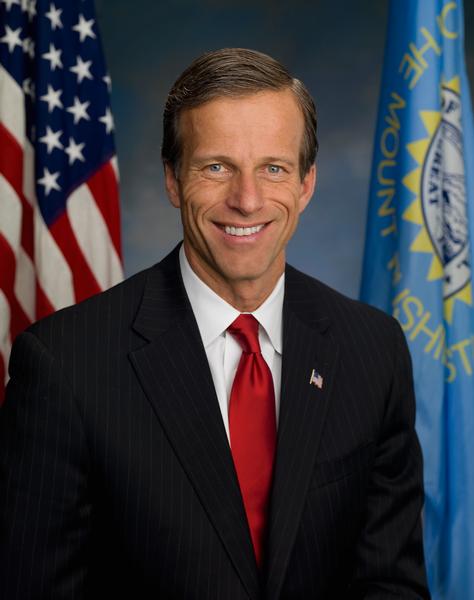
WASHINGTON — U.S. Sen. John Thune (R-S.D.), ranking member of the Subcommittee on Communications, Media, and Broadband, today issued the following statement regarding the nomination of Gigi Sohn to serve on the Federal Communications Commission (FCC).
“Americans deserve an FCC nominee who can do his or her job impartially, regardless of the matter before the commission,” said Thune. “In each of her nomination hearings, Gigi Sohn has misled the Commerce Committee, and her long record of virulent partisanship and bad judgment make her unfit to serve on the FCC. Should her nomination come for a vote before the Commerce Committee, I will oppose it and urge my colleagues to do the same.”
“One of the most important tasks that we will have over the course of the next two years is processing nominees that the president puts forward to the courts or to the executive branch of the government.
“And you would hope that these would be nominees who would be capable of carrying out the task of performing the people’s business. But that hasn’t been the case with a number of Biden administration nominees.
“In fact, there was a huge story in the last couple of weeks about a Biden nominee for a judgeship who couldn’t answer basic, simple questions about the Constitution. That performance, as a matter of fact, went viral.
“There have been nominees who have been soft on crime, anti-police, that have been put forward for important positions on the judiciary. And so, it’s important for us as the Senate to do our diligence when it comes to vetting and processing these nominees. And one that I would like to speak to is one that was before the Senate Commerce Committee this morning, and that is Gigi Sohn to be a commissioner on the Federal Communications Commission.
“Ms. Sohn is somebody who has a record of far-left activism, of rank partisanship. She has expressed disdain for Republicans, including supporting, contributing to, something we’ve never seen before, Democrats’ Senate campaigns this year. She has gone after and demonized conservative media outlets.
“She has been part of, there was a campaign back in 2016, where the then-chairman of the FCC, Tom Wheeler, asked her to leak information to the press, which scuttled a deal, a bipartisan deal, that the commission had agreed to. So, she’s just got a record of partisanship and activism that doesn’t suggest that she would be able to perform her job in a nonpartisan way and do the kind of work that we expect an agency with that kind of jurisdiction that impacts so much of our daily lives to do.
“She is somebody who should be rejected by the United States Senate, and I hope there are enough discerning Democrats out there that will come to that conclusion.
“Right now, the FCC is two-two. It’s functioning in a perfectly normal way, they’re getting things done, and putting her on the FCC would add partisanship, make it increasingly difficult, I think, for the FCC to do its job in the way the American people expect it.”
Coming on the Senate Floor on Wednesday is Senate Bill 40, which would send all statewide partisan office nominations to a primary process, just as we do for US Senate, Congress, Governor, and all legislative and county candidates.
The South Dakota Republican Party has sent out a resolution passed by the GOP back in January directing the executive Board to oppose Senate Bill 40, which eliminates the carve-out for several constitutional offices:
This comes after the Senate State Affairs Committee notes that the last Republican Convention wasn’t exactly…. representative of statewide voters as a whole in trying to foist Steve Haugaard on the Governor as a Lt. Governor in the last Republican Convention, contending that only a select few were empowered with making the selection and made it more about hard-core conservatives sending some sort of message:
Is the process that we use for every other primary candidates not good enough for (most) constitutional officers? Or is it time to put them on the same playing field as every other candidate running for partisan political office?
I don’t know. If the primary process is good enough for your County Auditor, why isn’t it good enough for the State Auditor?
Get your popcorn ready for the Senate this afternoon.
Is there anyone who didn’t get a copy of the “alleged” Freedom Caucus roster that is going around the State Capitol like a raging case of COVID in 2022?
With this supposedly “Confidential” roster abandoned in a pile by a legislative copier, as quickly as the list was posted on a lobbyist corkboard yesterday the denials and disavowals can’t roll out fast enough.
Rep. Overweg wrote on it the piece of paper hanging up that he wasn’t part of this group. Rep. Gross and Rep. Odenbach noted not us in the comment section under my prior post. I’d even heard that Hillary Clinton Donor Liz May has told people that she’s not involved with those guys.
If there really is a caucus in the first place, that’s got to be one of the worst membership drives I’ve ever seen.
I’m sure there will be more to come on the Free-dumb Caucus. Much more.
If you hadn’t noticed the new banner ad on the website, the Safe Surgery Coalition/South Dakota Academy of Ophthalmology has joined us on advertisers row for a short time encouraging legislators to educate themselves on Senate Bill 87, and to ask House members to vote NO on the measure. If you review their website, they note:
The South Dakota House of Representatives is considering Senate Bill 87, which would put patients at risk by allowing optometrists authority to perform a wide variety of surgery on and around the eye using instruments such as scalpels and lasers.
Optometrists are valued members of the eye care team who provide important vision care to eye patients. But they are not medical doctors or trained surgeons.
Eye surgery should only be performed by ophthalmologists–medical doctors and trained eye surgeons who have the necessary level of medical education and clinical training.
And if you have a cause or organization you’d like to bring to the attention of our state’s decision makers, we’re down to only two or three limited advertising opportunities left for reaching South Dakota’s opinion leaders. Advertising on the Dakotwarcollege.com website is based on a first come, first serve basis for available positions.
“We are a low-tax state, and we do not have a lot of revenue sources,” he said as he gave potential examples. “I’m nervous, we’re talking about all this. But a baseball stadium’s $80 million, you want an indoor recreation space with 100,000 square feet, that’s $40 million. We’re at $150 million. How are we going to pay for this? No idea.”
and..
“Very tough sell in South Dakota with a very conservative legislature,” he admitted. “But I think it’s a very important thing that we have to consider. If we want to keep dreaming big, these things cost money.
Of course, these all come at the same time Governor Kristi Noem is working to eliminate the sales tax on groceries, among several other efforts to decrease taxes.
Should the South Dakota state legislature be giving more taxation authority to lower levels of government? Or not?
Gov. Noem to Outline Blueprint for State Response to Communist China
Speech will be Delivered at America First Policy Institute
PIERRE, S.D. – Governor Kristi Noem will outline the blueprint for a state response to the threat posed by the Chinese Communist Party in a speech to the America First Policy Institute on Wednesday.
The speech will take place at 12:30 pm ET on Wednesday, February 15 at the America First Policy Institute – Capitol Hall, 4th Floor, 1001 Pennsylvania Ave. NW Washington, D.C. 20004. Following the speech, Governor Noem will sit down for a fireside chat with Steve Yates, Chair of the China Policy Initiative at the America First Policy Institute.
Governor Noem started a movement to ban the Chinese app TikTok from government devices when she signed an executive order in late 2022. Dozens of states and the federal government quickly followed suit. Governor Noem is also leading the effort to block nations that hate America, like Communist China, from purchasing American agriculture land.
Recently, Mark Schmidt, the Chairman of the Board of Directors for Glacial Lakes Energy in Watertown, gave a speech about the vital importance of carbon capture to the ethanol industry. And in particular, he pointed out how House Bill 1133 which passed recently in the House of Representatives is truly a dagger in the heart of South Dakota’s ethanol industry. If it is signed into law, it will impose the loss of markets – a hardship on the ethanol industry – that they may not be able to recover from.
As the bill moves over from the House to the Senate, Legislators truly need to consider whether they are for the ethanol industry in South Dakota, or if they are against it, and their goal is to kill it. There isn’t a middle ground.
Because that’s what’s at stake in the legislative march to stop these pipelines:
—
My name is Mark Schmidt, from Gary, SD. I am the Chairman of the Board of Directors for Glacial Lakes Energy in Watertown, SD. Thank you for allowing us to be here today.
I’d like to introduce our board of directors who are present with me today.
Troy Mudgett – Clark, SD Brent Gabler – Faulkton, SD Terry Schmidt – Watertown, SD Steve Birkholtz – Willow Lake, SD Todd Jongeling – Estelline, SD Noel Pond – Ipswich, SD Jeff Schmidt – Sioux Falls, SD Richard Wiarda – Castlewood, SD
Mark Schmidt, Chairman of the Board of Directors for Glacial Lakes Energy
Glacial Lakes Corn Processors is the parent company of Glacial Lakes Energy and was founded in 2000.
We are proud to say that GLCP is the only ethanol plant in the State of South Dakota that is solely owned by shareholders – 4,200 of them to be exact. Most of our membership resides in South Dakota and the majority are producers. We do have members who are also main street investors, retired folks, and just about all walks of life.
Our membership is organized as one membership – one vote.
These producers deliver their corn to our four plant locations including Aberdeen, Mina, Huron, and Watertown all located in South Dakota.
Our Watertown location is the corporate office and the original plant which became operational in 2002.
Our Mina location became operational in 2006.
In 2019, we purchased two additional facilities – Huron and Aberdeen.
Combined, we produce over 360 million gallons of renewable ethanol made from 125 million bushels of corn bought from local shareholders and patrons. We also produce 1.1 million tons of distiller grains and 55,000 tons of corn oil.
What we do at GLE is not small by any means.
Since 2003, GLCP has returned to our shareholders nearly $330 million in cash dividends from our operating profits. This money is spent locally at the implement dealerships, local stores, deposited in local banks, and such.
Our heaviest concentration of shareholders in South Dakota, by county, are Codington, Hamlin, Clark, Minnehaha, Spink, Brookings, Brown, Kingsbury, Deuel, Hutchinson, Beadle, and Faulk. In fact, 80% of our shares are owned by members in these counties.
Our dividend history not only benefits our shareholders – but it benefits our communities. It’s been said a $1 spent will turn over as much as 10 times in a community. As you can see, that is a huge financial impact to communities all over South Dakota.
Corn Basis – When GLCP was formed back in 2000, the local corn basis was negative 80 to 90 cents under per bushel. Today, GLCP in Watertown is posting an even basis on corn.
“The SD ethanol industry supports 5,300 jobs, contributes $590 million to South Dakota’s GDP annually, and purchases 50%-60% of the corn grown in South Dakota.“
My point is that South Dakota ethanol plants, like GLE, not only provide a return on investment to shareholders, but also provide increased revenue for producers and the communities we reside in – across the state. The SD ethanol industry supports 5,300 jobs, contributes $590 million to South Dakota’s GDP annually, and purchases 50%-60% of the corn grown in South Dakota.
Prior to the development and maturity of the ethanol industry, our corn that was grown within the state was exported out of the state primarily by the BNSF Railroad to the Pacific Northwest market.
Today the ethanol industry utilizes approximately 50-60% of the corn grown in the State to produce ethanol. The co-products of distiller grains are used as a feed ingredient as well as being exported to other parts of the United States and exported globally.
We also produce corn oil as a third product. The corn oil we produce is used in the renewable diesel industry as a drop in fuel for diesel engine.
Presently, GLE combined, provides approximately 200 jobs to individuals in the four communities we reside. These employees and their families are living and contributing to our communities, enrolled in our school systems, and having an impact on their communities.
In 2012, a study conducted by Dr. Lisa Elliot and Dr. Gary Taylor who were both Assistant Professors at SD State University in Brookings indicated a direct and indirect economic impact of approximately $3.8 billion dollars from the states production of over 1.0 billion gallons of production of ethanol. That would suggest an economic impact of approximately $3.80 per gallon of ethanol provided or an economic impact of approximately $11.00 for every bushel of corn ground to make ethanol.
As I stated earlier, today, GLE produces approximately 360 million gallons of ethanol, 1.1 million tons of distiller grains and 55,000 tons of corn oil.
Regardless of if you believe in global warming or not, our national government and population is pushing for carbon reduction. According to Geoff Cooper from the Renewable Fuels Association, the Inflation Reduction Act is probably the single largest commitment to biofuels from Congress since 2007.
And it’s not only the ethanol industry who is looking to reduce their CI score – there are many other businesses such as the fertilizer industry that are looking at projects like this. These businesses will relocate near the carbon capture pipeline as a means to reduce their carbon score as well.
Like it or not, carbon capture is going to be a way of the future. We are seeing our nation move for lower carbon solution in other ways such as electric vehicles, solar and wind power, just to name a few.
Summit Carbon Solutions is proposing a carbon pipeline that will harvest the CO2 from 30 plus ethanol plants in the Midwest, including our four locations at Glacial Lakes Energy.
The new pipeline will have a positive impact on Glacial Lakes Energy as well as the entire State of South Dakota’s ethanol industry by reducing our carbon footprint by approximately 50%.
This, along with internal projects that we are doing or have planned at GLE, will give us the ability to potentially market at a zero-carbon ethanol fuel score in the future. This is huge for GLE and our shareholders as we will be able to reach markets, we have not been able to in the past.
With the electric vehicle being the newest fad, it’s eating away heavily as the combustible engine. If the fad continues, ethanol plants will be left high and dry without markets we can access. Right now, we can not access the low carbon markets because our carbon footprint is too high. These markets include California, Oregon, Washington, and Canada.
We anticipate other states to follow this trend and require ethanol of a lower carbon score. We can not get to that lower score or access those markets without a substantial change to our carbon footprint. Carbon capture is the most viable way to do this.
“Right now, we can not access the low carbon markets because our carbon footprint is too high. These markets include California, Oregon, Washington, and Canada.“ “We anticipate other states to follow this trend and require ethanol of a lower carbon score. We can not get to that lower score or access those markets without a substantial change to our carbon footprint. Carbon capture is the most viable way to do this.”
This is why this project is so important to GLE. Without access to these markets, we will slowly lose market share. This will affect profits, our ability to post a competitive corn bid, and potentially be the demise of the ethanol industry.
There is no one single project that we know of currently, that can assist ethanol plants such as GLE with lowering our score to stay competitive besides Carbon capture.
We at GLE also know that producers/farmers are our livelihood, and we need to keep South Dakota Ag alive and thriving. We expect our farming community to be treated fairly and are doing our best to ensure that happens.
The time has come that we must act appropriately to keep the ethanol industry vibrant which in turn will keep the ag communities we live in thriving. We need carbon capturing in order to stay a viable industry. There is no question about it.
Not only do we need carbon capturing, but so do other businesses such as the fertilizer industry. We will see businesses move near the pipeline to take advantage of the opportunity to reduce their carbon footprint and like GLE, keep their industry viable. South Dakota industries needs the carbon pipeline – it’s not just about agriculture it’s about all industrial businesses.
We are proud to be a locally owned South Dakota Cooperative. We are proud to be able to purchase 125 million bushels of corn each year from corn grown in our neighbors back yards and at a very competitive price.
Our communities know the impact the ethanol industry has on their businesses through sales tax, good paying jobs, kids enrolled at our local school, patronage at local shops and more. South Dakota needs the ethanol industry.
As I stated previously, not only do we need carbon capturing, but so do other businesses such as the fertilizer industry. We will see businesses move near the pipeline to take advantage of the opportunity to reduce their carbon footprint and like GLE, keep their industry viable. South Dakota industries needs the carbon pipeline – it’s not just about agriculture it’s about all industrial businesses.
“Should House Bill 1133 pass into law, this could be the nail in the coffin to the South Dakota ethanol industry. This bill will essentially kill the carbon capture project and ethanol plants like GLE will lose market access which will cause a hardship we will not be able to recover from.“
Should House Bill 1133 pass into law, this could be the nail in the coffin to the South Dakota ethanol industry. This bill will essentially kill the carbon capture project and ethanol plants like GLE will lose market access which will cause a hardship we will not be able to recover from.
Keep South Dakota ethanol and agriculture alive and thriving – please vote no on House Bill 1133.
But there is some new information that’s worth pointing out.
A PAC known as Not One Step Back paid for printing the cards, according to its chairman and treasurer, Anthony Mirzayants. He described himself Friday as a 23-year-old “grassroots organizer” and told KELOLAND News in an email, “They were not mailed, they were hand distributed by motivated citizens who want to hold these State Senators accountable.”
Asked how much the cards cost and how many senators were targeted, Mirzayants answered, “You will have to wait for the next finance disclosure deadline to see just how many senators have angry voters in their districts, and sitting legislators will have to decide just how much longer they will continue to go against the will of those voters.”