Senator John Thune PSA for VacciNATION

EXCLUSIVE – Working with the Partnership to Fight Infections Diseases, I’m pleased to bring you this video from South Dakota’s Senior US Senator John Thune encouraging people to get out and get vaccinated to help bring an end to the COVID 19 crisis.

As you can find on their website, South Dakota Senator John Thune addresses constituents about the importance of getting vaccinated against COVID-19. As vaccines become increasingly available across the country, communities are working hard to ensure that everyone has accurate information about the vaccines so that anyone who wants to be vaccinated has the opportunity to do so. In the meantime, it is important that we continue to follow guidelines for social distancing, mask wearing, and washing hands.

For more information about COVID-19 vaccines, including answers to common questions and a state-by-state guide to vaccinations in your area, click HERE to find out more.

Johnson Honors Frontline Healthcare Workers on One-Year Mark of COVID-19

Johnson Honors Frontline Healthcare Workers on One-Year Mark of COVID-19

Washington, D.C. – Today, U.S. Representative Dusty Johnson (R-S.D.) honored South Dakota’s frontline healthcare workers following the one-year anniversary of the first COVID-19 fatality in the state. Johnson requested each name of the nurses, doctors, and EMT’s working on the frontlines of the pandemic in South Dakota be entered into the official Congressional Record.


Click here to watch Johnson’s full remarks.

South Dakota healthcare workers should contact Johnson’s office to receive a copy of the Congressional Record honoring their service to the state of South Dakota during this unprecedented pandemic.

Thune: Senate Democrats Use COVID-19 Spending Bill to Push Liberal Agenda

Thune: Senate Democrats Use COVID-19 Spending Bill to Push Liberal Agenda

“It’s becoming clear that collaboration is not a part of the new way of doing business in the Democrat-led Senate.”

Click here or on the picture above to watch Thune’s speech.

WASHINGTON — U.S. Sen. John Thune (R-S.D.) today discussed the recently passed COVID-19 spending bill and the Democrats’ failure to work in a bipartisan way. Thune also discussed the breakdown of where the $1.9 trillion will go, including a $350 billion slush fund for state and local governments, school funding that isn’t tied to reopening, and a massive pension bailout.

A month later, Northern State University is just going to drop the whole ‘dropping Gypsy Days’ thing.

Remember last month when Northern State University decided to drop Gypsy Days as not being politically correct?

The university is now going to refer to the week of festivities capped by a Saturday football game simply as homecoming, though a new theme could emerge from a student effort.

Talk of distancing from the name goes back to 2019, according to university officials.

Justin Fraase, vice president for enrollment, communications and marketing, said that since his arrival on campus four years ago, and even before, outside groups have made comments on social media and sent letters and emails about discontinuing the use of Gypsy Days.

Read that here.

Yeah. A month after someone got all puffed up on political correctness… it sounds like all of the air has sputtered out that trial balloon:

Statement from NSU Senior Cabinet:

Upon further review, Northern State University will not pursue changing the name of Gypsy Days. After hearing from a substantial number of stakeholders, the university has elected to withdraw its plans to rename the homecoming celebration.

The university was not looking to address this in the middle of a pandemic, but due to several circumstances, we announced our intention to change the event’s name. We simply are not looking to create more strife during this stressful time.

Now, following a two-year parade hiatus, due to weather and COVID-19, we look forward to celebrating this year’s Gypsy Days events (Sept. 27 – Oct. 2, 2021), and all of the ongoing successes at Northern.

Go Wolves!

-NSU Senior Cabinet

Read all of that here.

Over 100 Members of the House Send Letter to Address Carriers Declining to Ship U.S. Agriculture Exports from U.S. Ports

Over 100 Members of the House Send Letter to Address Carriers Declining to Ship U.S. Agriculture Exports from U.S. Ports

Washington, D.C. – Representative Dusty Johnson (R-SD) today along with 100 of his colleagues, led a bipartisan group of Members in a letter to Michael A. Khouri, Chair of the Federal Maritime Commission, voicing concern over reports that certain vessel-operating common carriers (VOCCs) are declining to ship U.S. agricultural commodity exports from U.S. ports.

VOCCs serve as an integral link between American producers and overseas customers, without which contracts cannot be met and the ability to compete in or even access foreign markets is threatened.

Read the full letter here.

“Market access is only as good as the access to shipping infrastructure,” said Johnson. “Once again, China is participating in unfair trade practices, prioritizing empty shipping containers over U.S. agriculture products. America’s farmers work hard to produce a high-quality product, and we can’t allow China to shut them out of the market.”

Over the past year, American producers, exporters, and entire economic sectors have grappled with widespread delays, bottlenecks, and increasing fees at our ports. These challenges are exacerbated by reports that VOCCs are delivering shipments to U.S. ports and then electing to leave without refilling empty containers with American goods for export. Such activity constricts entire supply chains and propels trade to move only in an inbound direction.

In March 2020, the Federal Maritime Commission launched Fact Finding No. 29, “International Ocean Transportation Supply Chain Engagement,” to investigate all the congestion, bottlenecks, and fees seen at our ports. In November, Fact Finding No. 29 was expanded to include reports of the decline to ship American exports.

Senator Thune files statement of candidacy for 2022 US Senate Election. Primary Thune organizer claims they’re bigger than GOP.

It’s on.

South Dakota’s senior US Senator, John Thune, filed paperwork with the Federal Elections Commission yesterday declaring his candidacy for the US Senate seat he currently holds for the 2022 election:

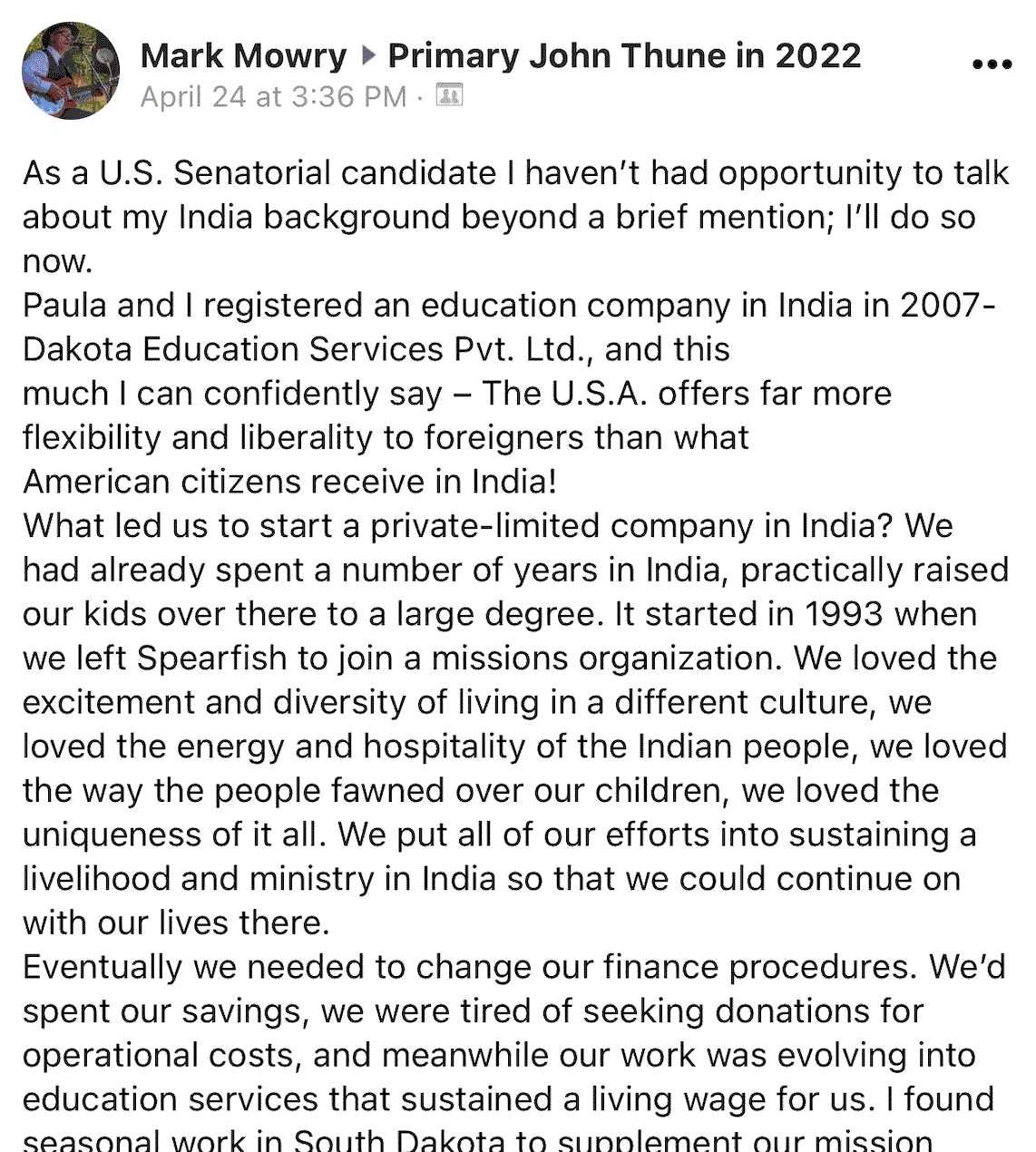
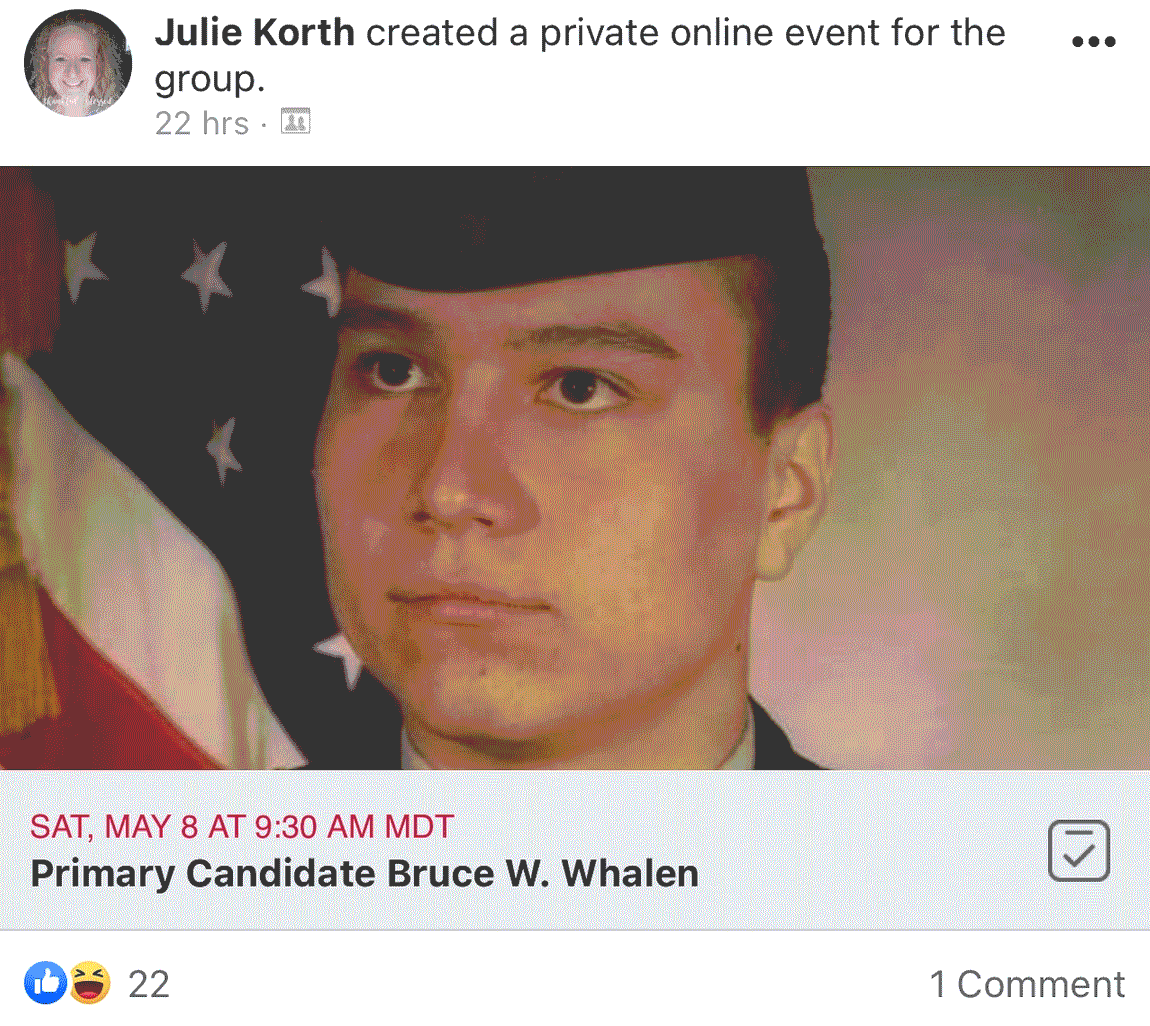
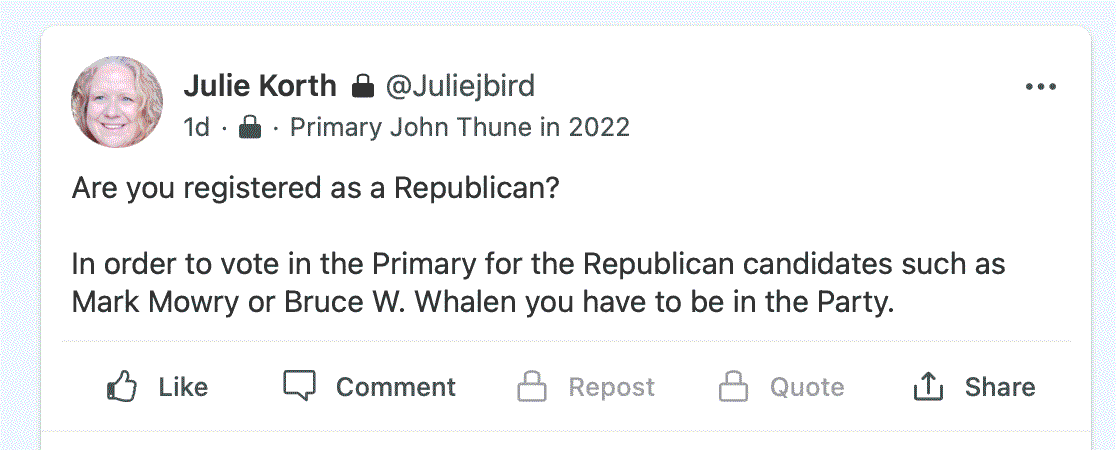
This comes at about the same time that former GOP Congressional Candidate Bruce Whalen, who has taken up the mantle to try to gin up a primary challenge against Thune via facebook, is declaring that his group is bigger than the South Dakota Republican Party.

“We greatly outnumber the State GOP and can use our vast human potential to defeat Thune and hold the seat for any conservative candidate.” – Bruce W. Whalen.

I’m not sure what to say to that. Other than Ha ha hah ha ha ha ha.

He’s actually trying to base a challenge campaign for US Senate on Facebook likes.

Well, good luck with that one Bruce. You’re going to need it.

Thune Leads Colleagues in Reintroducing Bicameral Legislation to Permanently Repeal the Death Tax

Thune Leads Colleagues in Reintroducing Bicameral Legislation to Permanently Repeal the Death Tax 

“Agriculture is our state’s top industry, which is why I remain committed to removing roadblocks for these family businesses, and we can start by repealing the death tax once and for all.”

WASHINGTON — U.S. Sen. John Thune (R-S.D.), a member of the tax-writing Senate Finance Committee, joined Senate Republican Leader Mitch McConnell (R-Ky.), Sen. Mike Crapo (R-Idaho), ranking member of the Senate Finance Committee, and dozens of his Senate colleagues in reintroducing legislation to permanently repeal the federal estate tax, more commonly known as the death tax. Thune’s bill, the Death Tax Repeal Act of 2021, would finally end this purely punitive tax that has the potential to hit family-run farms, ranches, and businesses as the result of the owner’s death.

“I’ve fought hard to repeal the onerous and unfair death tax since I came to Washington, including by leading the effort in 2017 to protect more farm and ranch families from it,” said Thune. “Family-owned farms and ranches, like those in South Dakota, can bear the brunt of this tax, which oftentimes makes it difficult and costly to pass these businesses down to future generations. Agriculture is our state’s top industry, which is why I remain committed to removing roadblocks for these family businesses, and we can start by repealing the death tax once and for all.”

“Kentucky farm families and small businesses have enough to deal with during this pandemic. They shouldn’t also have to worry about an unfair death tax when they pass their livelihoods down to the next generation,” said Senate Republican Leader Mitch McConnell. “Republicans’ historic tax reform helped unleash the best American economy in 50 years, including exempting many Kentuckians from the death tax. Unfortunately, Washington Democrats want to double down on the federal government’s final insult and force more grieving families to visit the undertaker and the IRS on the same day. I’m proud to join Senator Thune to permanently end the death tax and support opportunity for rural families and communities.”

“The estate tax may be the most unfair tax on the books,” said Finance Committee Ranking Member Mike Crapo. “High federal taxes should not prevent a family farmer, rancher or other business owner from passing the business they built onto their children. This unfair tax must be permanently repealed.”

“Typically, farming and ranching operations have large holdings of assets but generate low amounts of cash return,” said Eric Jennings, president of South Dakota Cattlemen’s Association. “A loss of a loved one often results in large estates that do not generate enough income to pay the estate tax without selling part of the operation. It is heartbreaking to see a family have to sell off so much of their parent’s farm or ranch that they are unable to continue the operation they have worked into with the intention of continuing their family’s legacy. Eliminating the estate tax will help insure the survival of family farms and ranches.”

Thune led the Senate’s effort to repeal the death tax while Congress considered the Tax Cuts and Jobs Act (TCJA) in 2017. Although the final version of the TCJA did not repeal the death tax, the law doubled the individual estate and gift tax exclusion to $10 million ($11.7 million in 2021 dollars) through 2025, which will prevent more families from being affected by this tax.

In addition to Thune, McConnell, and Crapo, the bill is cosponsored by U.S. Sens. John Barrasso (R-Wyo.), Marsha Blackburn (R-Tenn.), Roy Blunt (R-Mo.), John Boozman (R-Ark.), John Cornyn (R-Texas), Tom Cotton (R-Ark.), Kevin Cramer (R-N.D.), Ted Cruz (R-Texas), Steve Daines (R-Mont.), Joni Ernst (R-Iowa), Deb Fischer (R-Neb.), Chuck Grassley (R-Iowa), John Hoeven (R-N.D.), James Inhofe (R-Okla.), John Kennedy (R-La.), Roger Marshall (R-Kan.), Jerry Moran (R-Kan.), Jim Risch (R-Idaho), Mike Rounds (R-S.D.), Marco Rubio (R-Fla.), Rick Scott (F-Fla.), Richard Shelby (R-Ala.), and Roger Wicker (R-Miss.).

Thune’s bill is supported by the American Farm Bureau Federation, the National Cattleman’s Beef Association, NFIB, the National Association of Manufacturers, the Family Business Coalition, the Family Business Estate Tax Coalition, the Policy and Taxation Group, the Associated General Contractors of America, the National Taxpayers Union, and many others.

Companion legislation was introduced in the U.S. House Representatives by Rep. Jason Smith (R-Mo.).

###

Governor Noem Signs Telehealth Flexibilities into Law

Governor Noem Signs Telehealth Flexibilities into Law
Also Signs SB 83

PIERRE, S.D. – Today, Governor Kristi Noem signed Senate Bill 96 into law, which increases access to healthcare by allowing South Dakotans to utilize telehealth flexibilities.

“COVID-19 challenged us in new, unforeseen ways, and those challenges provided us an opportunity to adapt and find innovative ways to deliver healthcare in South Dakota,” saidGovernor Kristi Noem. “We greatly expanded telehealth in 2020. Going forward, we will build on these technological advancements and continue to find ways to remove government red tape in healthcare.”

SB 96 is a permanent extension of portions of both Executive Order 2020-07 and Executive Order 2020-16, which Governor Noem signed last year to increase flexibility in the state’s response to COVID-19. Pictures of the bill signing can be found here.

Governor Noem also signed SB 83 into law, which requires the provision of information regarding perinatal hospice. Pictures of that bill signing can be found here.

Governor Noem has signed 123 bills into law this legislative session.

Johnson, Spanberger Introduce Bipartisan Legislation to Improve Broadband Internet Speeds, Close Digital Divide

Johnson, Spanberger Introduce Bipartisan Legislation to Improve Broadband Internet Speeds, Close Digital Divide 

The Speedy Updates Act Would Require a Report on How Best to Update Speed Thresholds Used to Determine High-Speed Internet Connectivity in South Dakota 

WASHINGTON, D.C. – U.S. Representatives Dusty Johnson (R-SD) and Abigail Spanberger (D-VA-07) today introduced legislation to ensure that new broadband networks are built to provide rural internet customers with sufficient upload and download speeds.

Since 2015, the Federal Communications Commission’s (FCC’s) broadband mapping data has relied on the same speed threshold to define whether an area can be said to have adequate broadband service. However, this threshold is already outdated due to new and emerging internet technologies — meaning rural residents who technically meet the current threshold could still lack the ability to connect to cutting-edge internet services.

To address this challenge, the bipartisan Speedy Updates Act would help update broadband internet speed thresholds. Specifically, the Spanberger-Johnson legislation would require the Government Accountability Office to conduct an evaluation and write a report on the efficacy of the FCC’s existing process for establishing, reviewing, and updating its speed thresholds for broadband service.

“As Congress makes record investments in broadband connectivity, we need to ensure our programs promote speeds that keep pace with today and tomorrow’s business speeds,” said Johnson. “The Speedy Updates Act will make sure the FCC prioritizes speed in rural America.”

“As we focus on making historic investments in internet connectivity, we need to ensure the infrastructure we build will reflect the growing need for faster downloads and uploads. Even in areas of Virginia with existing broadband internet access, many homes and businesses are experiencing lags in their service when using the latest apps and programs — simply because technology is rapidly advancing,” said Spanberger. “Our bipartisan legislation would review the FCC’s process for updating speed thresholds and help make future recommendations about how to keep up with these changes. With this additional information, we can make sure Central Virginia’s rural communities can both increase local internet access and take advantage of this progress for years to come.”

Click here to read the full legislation.

###