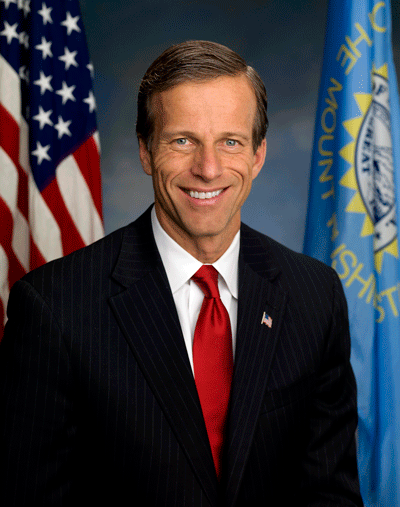
Independent US Senate Candidate Brian Bengs claims he’s against Data Centers while he and his spouse bank on them in their investment portfolio.

Fresh off of being on the front lines of forcing South Dakota Democrat Julian Beaudion out of the race for US Senate…

Beaudion writes that “an influential Democrat in the state … told me that I was the most toxic thing ever to happen to the South Dakota Democratic Party. He told me that if I remained in the race, donors would leave the party and that he intended to contact people about it.”

Beaudion also relates a direct conversation with independent candidate Brian Bengs, in which Bengs says, “if you stay in the race, things will get worse for you.”

Read that here

“Allegedly Independent” Brian Bengs has been part of a behind the scenes effort to make sure there was no traditional Democrat in the race, preferring his own brand of using Democrat Party resources to do and say anything he wants to get elected.  Instead of referring to him as Independent Bengs, after the Beaudion substack article, we might need to refer to him as “dirty fighter Bengs” after he cleared his opponent off the field.

Like it or not, Bengs’ strong arming of Julian Beaudion is the past. So Let’s talk about Bengs in terms of a more current topic. Data Centers – the new boogie man in South Dakota Politics, which is convenient for Bengs to use as a throw away issue.   Fresh off the the newly cleared slate, Data Centers are one of his first selling points that he’s is pushing in an effort to appeal to populists, according to KOTA News:

Brian Bengs, the independent candidate who is now the only remaining challenger for Sen. Mike Rounds’ seat, is receiving national coverage for his criticism of the war in Iran and other issues.

And..

Bengs also discussed his opposition to data centers during the CNN interview. He said that if a local community votes in favor of building a data center facility, he would support that decision.

Read that here.

Here’s that very same story on Forbes:

I say it’s a throw away issue for Bengs, because he’s skipping a couple of items when it comes to them. He’s failing to disclose that BRIAN BENGS has investments in data center companies according to his financial disclosure filed with the US Senate in May:

Here’s the write up:

Kyndryl Holdings operates a global footprint of roughly 66 data centers across 25 countries, alongside strategic hyperscaler cloud integrations, combining legacy asset management with modern colocation and hybrid IT infrastructure services.Global Operations & FootprintOperates facilities spanning major regions including North America (such as Markham, Ontario and Edmonton, Alberta), Europe, Latin America, and Asia-Pacific.Relies on an asset-light strategy, consolidating traditional real estate footprints while expanding colocation hosting capacity and peering partnerships.

And let’s not forget an oldie but a diverse company from Bengs’ portfolio that also likes it’s data centers:

IBM’s data center related activity? Here you go:

IBM operates over 60 global cloud data centers across 19 countries and 6 continents. These centers use a multi-zone region (MZR) design to offer high-availability, low-latency cloud infrastructure, bare-metal servers, and strict federal compliance standards like FedRAMP.Infrastructure and NetworkZones: Independent fault domains grouped inside metropolitan regions to limit downtime.Security: 24/7 on-site guards, surveillance, and restricted physical entry.Power: Redundant N+1 power and cooling systems.

So, Bengs thinks Data Centers are bad, unless they can make Bengs bank?

Go read Brian Bengs’ financial disclosures for yourself, and come to your own conclusions.

I’m sure there’s other breadcrumbs he’s left along the campaign train as to where he really sits on the issues.

Former Dem Senate candidate accuses members of SDDP of racism

In a substack post attributed to former Democrat Senate candidate Julian Beaudion, the recently exited candidate wastes no time in relating his story. One that seems like it comes from a darker time in our country.

Beaudion wastes no time accusing people including un-named state Dem party leaders of racism and says Brian Bengs personally participated in trying to pressure him out of the race:

I learned that representatives associated with American Muckrakers had contacted the South Dakota Democratic Party regarding financial information about me. According to what was relayed to me, the message was essentially this: pressure Julian to leave the race or damaging information would be released.

I did not leave.

And..

On Saturday, Brian reached out and asked to meet face-to-face with me and my wife, Inkka.

And…

I will never forget how that conversation began.

My recollection of his words is:

“I’m not dropping out of this race, and if you stay in, things will get worse for you.”

And..

According to her account, she was given information about efforts against my candidacy, including an allegation that people connected to the earlier “East River White Men” effort included individuals holding senior positions within the South Dakota Democratic Party.

She told his campaign manager that she was uncomfortable with how personal things had become and reminded him that I had young children.

And..

This is what systemic white supremacy can look like.

Not necessarily a person wearing a hood.

Not necessarily someone shouting a racial slur.

Sometimes it is a system in which institutions, money, relationships and access to power converge in ways that determine who is considered acceptable, who gets protected, who gets heard, and who is told that continuing to participate will make life worse.

Read the entire story here.

These are Beaudion’s words.. as he points a finger at his former opponent Bengs, and the party on who’s behalf he was running.


Release: Medical Marijuana Oversight Committee to Meet

(Get the popcorn ready for another crazy ****-show led by Garcia and California Carley – PP)

MEDICAL MARIJUANA OVERSIGHT COMMITTEE TO MEET

PIERRE – The Medical Marijuana Oversight Committee will hold its first meeting of the 2026 Interim on Monday, August 17, 2026, beginning at 10:00 a.m. (CT). The meeting is being conducted in Room 413 of the State Capitol in Pierre, South Dakota.

The Medical Marijuana Oversight Committee, chaired by Representative Josephine Garcia (R-Watertown) with vice chair Senator John Carley (R-Piedmont), will meet to receive an overview and status update on the state’s Medical Cannabis Program and hear from representatives of the National Conference of State Legislatures on federal cannabis rescheduling and its effect on state actions. Public comment will also be taken. The full agenda is available online.

Those wishing to present or testify before the committee should register electronically prior to the meeting. The online registration form can be accessed through the link or the QR code that appear on the meeting agenda or by clicking the “Register to Testify” icon next to the agenda link at https://sdlegislature.gov/. Individuals should complete and submit the online registration form regardless of whether they will appear in person or remotely.

In addition to Representative Garcia and Senator Carley, committee members include Representative Bobbi Andera (R-Sioux Falls); Senator Lauren Nelson (R-Yankton); and non-legislators Francise Arneson, Julie Bostic, Kasey Entwisle, Kristi Palmer, Andrew Schock, Jon Thum, and Pat West.

-30-

NFIB: Major Win for Small Businesses as Trump Administration Finalizes Rule on Beneficial Ownership Reporting

NFIB: Major Win for Small Businesses as Trump Administration Finalizes Rule on Beneficial Ownership Reporting
Main Street still needs Congress to permanently repeal invasive BOI mandate and protect small businesses

PIERRE, SD (Aug. 12, 2026) – The National Federation of Independent Business (NFIB), the nation’s leading small business advocacy organization, released the following statement in support of the U.S. Department of Treasury’s final rule protecting over 32 million U.S. small businesses from registering their Beneficial Ownership Information (BOI) with the Financial Crimes Enforcement Network (FinCEN). The final rule also commits FinCEN to quickly destroying the personal BOI data unnecessarily submitted by U.S. small business owners. This significant action saves small businesses from over $128 billion of regulatory and compliance costs.

“Small businesses greatly appreciate President Trump and Secretary Bessent standing up for Main Street,” said NFIB President Brad Close. “The final rule protects American small and independent businesses from this onerous reporting mandate and requires the destruction of previously submitted personal data. But Congress needs to finish the fight. We look forward to working with the Trump Administration to urge Congress to permanently repeal the invasive BOI law. We thank the Trump Administration for its work on behalf of America’s small businesses.”

“South Dakota small businesses are thankful the Trump Administration has stopped the unconstitutional BOI mandate,” said NFIB South Dakota State Director Jason Glodt. “South Dakota’s business community performs better when it’s not weighed down by regulatory burdens. Congress must finish the fight and repeal the BOI law permanently.”

###        

Bipartisan “America the Beautiful Act” Offers Historic Opportunity to Protect South Dakota Public Lands for Nation’s Semiquincentennial 

Bipartisan “America the Beautiful Act” Offers Historic Opportunity to Protect South Dakota Public Lands for Nation’s Semiquincentennial 

Advocates Call on Congress to Renew a Landmark Investment to Fix Public Land Infrastructure and Boost Local Economies 

PIERRE, S.D. — As the nation continues to celebrate our 250th anniversary, a broad, bipartisan coalition is calling on Congress to pass a crucial piece of legislation that maintains our public lands and national heritage for generations to come. The America the Beautiful Act (S. 1547, H.R. 9250) would ensure that America’s national parks, forests, public lands, and wildlife refuges remain safe and accessible for the hundreds of millions of annual visitors. The legislation enjoys significant bipartisan support in the U.S. Senate and House of Representatives.      

Established under the Great American Outdoors Act of 2020, the Legacy Restoration Fund was a generational, non-taxpayer funded investment that facilitated the repair of hundreds of trails and roads, campgrounds, marinas, visitor centers, and water systems across all 50 states. Since the Fund expired last year, advocates are urging Congress to pass the America the Beautiful Act as quickly as possible. Extending this investment would be an appropriate gift to the American people during the nation’s 250th birthday.


The congressional legislation has the support of lawmakers from all political parties who recognize that safeguarding our public lands, providing visitor access and safety, and sustaining local economies that depend on visitor spending transcend political differences. In South Dakota, the following member of the congressional delegation supports the bill:  

  • Rep. Dusty Johnson (R-SD-At Large) 

By extending the Legacy Restoration Fund, the America the Beautiful Act will deliver nearly $2 billion annually to address high-priority infrastructure and maintenance needs nationwide. Enacting this legislation will provide an opportunity to fund priority repair projects within parks and public lands in South Dakota, boosting travel and tourism, safeguarding historic sites and ecological resources, and benefiting local communities that rely on visitor spending. 

Examples of projects that received funding include: 

  • Rehabilitation of headquarters and concession facilities at Badlands National Park: Badlands National Park used portable trailers to conduct concession operations for over 20 years. Funding has provided Badlands National Park with a new headquarters that can better suit the growing needs of guests and employees. 
  • Residence repairs at the Wounded Knee District School: Funding is allowing 48 residences to be repaired or replaced for teachers at the Wounded Knee District School, replacing academic buildings, and repairing wastewater treatment facilities at the school. The Wounded Knee District School is a Bureau of Indian Education school on the Pine Ridge Indian Reservation, and these repairs will allow the school to continue to effectively serve students. 

For more information about the America the Beautiful Act, please visit this article from the Pew Charitable Trusts: As the U.S. Celebrates its 250th Year, the National Parks Face Unfinished Business 

### 

Update: Senator Mike Rounds has signed on as a cosponer of the America the Beautiful Act bill. Thanks Senator!

Hearing Ismay, possibly Piscke disinvited to the White House.

Sources inform me today that potential felon and State Rep Travis Ismay was denied entry to White House as part of the trip that several legislators took.

Even more, I’m also told that Senator (and similarly legally challenged) Tom Pischke took the plane ride – but was not at the event that legislators attended. I hope the state does not pay the bill on that one if he’s not going to attend the functions.

Another legislator told me Pischke was not at the White House like Ismay, and may have been similarly denied, but nothing official on that.

US Senator John Thune’s Weekly Column: Working for Small-Town South Dakota

Working for Small-Town South Dakota
by Sen. John Thune

I was recently back in Murdo for my high school reunion, which coincided with the town’s 120th birthday. Visiting my hometown always brings back fond memories of growing up in Murdo and the sense of community, belonging, and responsibility that it instilled in me.
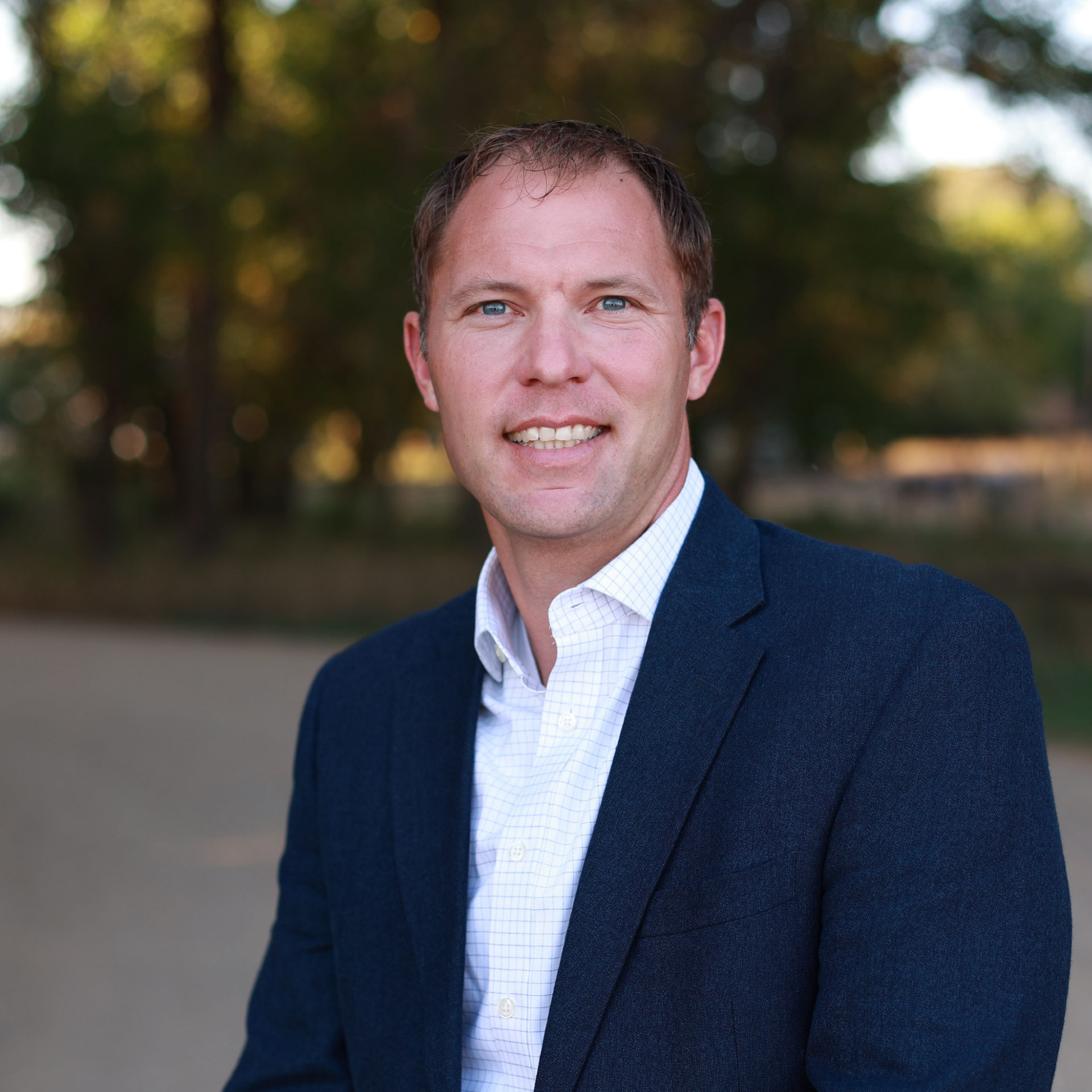
I’ll always be the son of a small town in South Dakota, and the values I learned in Murdo help to guide my work in Washington. I think about what regulations and other mandates will do to businesses like the Star Family Restaurant, where I got my start. I think about people living paycheck-to-paycheck, or harvest-to-harvest, and work to make sure government doesn’t stand in their way and take all the extra money in their budget.

It was small-town South Dakota that I had in mind last year when Republicans were working on the landmark Working Families Tax Cuts. Without action from Congress, a typical South Dakota family would have seen a $2,500 tax hike this year. Thanks to the Working Families Tax Cuts, that tax hike didn’t come. More than that, Republicans delivered permanent tax relief, including raising the child tax credit and standard deduction, and we provided additional tax cuts on top of that. This landmark bill included no tax on tips and overtime and a new $6,000 senior deduction. All told, 97 percent of American taxpayers saw a tax cut this year, collectively saving $82 billion on their individual tax returns they would otherwise have sent to the IRS.

There was also good news in this bill for South Dakota’s Main Street businesses as well as the farmers and ranchers who are the lifeblood of our state. The 199A small business deduction and immediate expensing for new equipment are now permanent features of the tax code. These pro-growth tax policies free up cash so that small businesses, farms, and ranches can invest in their operations, whether hiring another employee or purchasing a new piece of equipment.

The Working Families Tax Cuts also protects a lot more family farms, ranches, and businesses from the death tax. It’s long been a priority of mine to lift this burden off of farmers, ranchers, and family businessowners, and I’m proud that these hardworking South Dakotans can breathe a sigh of relief because the Working Families Tax Cuts doubled the exemption threshold for the death tax. Now these folks can spend more time running their operation rather than worrying about the death tax and the estate planning that comes with it.

I’m a proud product of a small town, and I carry my Murdo values with me every day in the U.S. Senate. Whether it’s tax policy, agriculture policy, regulations, or anything else, small-town South Dakota is on my mind every day as I represent our state.

###

Guest Column: The Way We Govern By Representative Chris Kassin, District 17

The Way We Govern
By Representative Chris Kassin, District 17

Every election year, I’m asked the same question: “Why do you keep doing this?”

It’s a question I’ve thought about a lot.

My answer is simple. The decisions we make today help shape the future our children and grandchildren will inherit. That’s why I decided to run for office.

After serving in the Legislature, I’ve come to understand that the legacy we leave isn’t measured only by what we accomplish. It’s also measured by how we govern.

South Dakota has much to celebrate. We enjoy one of the nation’s strongest economies, one of its lowest overall tax burdens, and communities where people still believe in helping their neighbors. Those successes didn’t happen by accident. They are the result of generations of thoughtful leadership, responsible budgeting, strong communities, and citizens who value hard work, personal responsibility, and service to others.

Those successes are worth protecting. But preserving them requires more than sound policy. It also requires preserving the character that made them possible.

The Legislature was never intended to be a place where everyone agrees. It was designed to be a place where ideas are debated, tested, and improved. Honest disagreement is one of representative government’s greatest strengths. The real measure of leadership is how we conduct ourselves during those disagreements.

Good government is built when people come prepared, ask thoughtful questions, listen carefully, and work through difficult problems together. The best public policy is shaped by careful preparation, honest debate, and a willingness to keep the focus on what’s best for South Dakota.

We should never lose sight of the fact that we’re neighbors first. Strong convictions and mutual respect are not competing values. They strengthen one another. We can defend our principles without questioning another person’s character. We can challenge ideas without diminishing someone’s dignity. We can disagree with one another while remembering that we’ll still be working together long after the vote is over.

Respect is not weakness, nor is it the absence of conviction. Some of the legislators I respect most aren’t always the loudest voices in the room. They’re the ones who come prepared. They study the numbers. They ask thoughtful questions. They listen before they speak. They understand they’re temporary stewards of the public’s trust. Their responsibility isn’t to win an argument. It’s to do the work well and make the best decision possible for the people of South Dakota.

After serving in the Legislature, I’ve also learned that the relationships we build are just as important as the legislation we pass. Long after a vote is cast, we still have the responsibility of working together on behalf of the people we represent. That reality shapes the way I try to approach every committee hearing, every floor debate, and every conversation.

Campaign signs will go up, and campaign signs will come down. Elections will be decided, and another legislative session will begin. When that happens, we’ll still be neighbors. We’ll still have the responsibility of governing together. The respect we show one another during a campaign helps build the trust we’ll need when it’s time to solve problems together.

Our challenge isn’t simply to preserve what has made South Dakota successful. It’s to preserve the character that made that success possible.

Because public office isn’t about holding power. It’s about earning trust. And trust isn’t built only by what we accomplish. It’s built by how we accomplish it.

_______________________________

Chris Kassin was first elected to the South Dakota House of Representatives in 2022 and proudly represents District 17, serving the communities of Clay and Union counties.