Rapid City radio host claiming that Matthew Monfore slapped by legislator’s husband at crackerbarrel

Just caught this story about this weekend’s crackerbarrels, and at least one person is claiming that things might have gotten heated enough that hands were thrown.

Remember the flyers that were being passed out by the “shunned by Pine Ridge evangelist” Matthew Monfore that I had posted earlier this week?  These one-sided documents were being distributed at the D30 Crackerbarrels.

Apparently they caused at least one legislative spouse to get a little hot under the collar. And no, not the one who smiles and nods when his wife gives lactation advice.

In his program yesterday, KOTA AM Radio host Matt Smith claims that after one of this weekends’ crackerbarrels, Bobby Ladner, husband of State Representative Trish Ladner, using his open hand slapped the glasses off of Matthew Monfore’s face until as Smith claims, he stepped in between the two.  In the episode dated February 28, if you have time, you can start listening at about 01:13:00. But the part where he claims there was an alleged slap is about 01:19:00 – Click here to listen.

Not finding anything to immediately corroborate it, but I’m sure there will more to come.

Stay tuned.

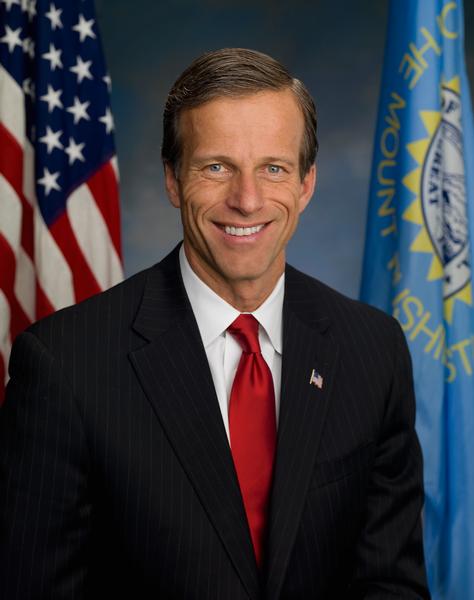
Thune: Biden’s Radical Nominees Fly in the Face of Bipartisanship

Thune: Biden’s Radical Nominees Fly in the Face of Bipartisanship   

“If the president truly wants to usher in an era of bipartisanship in this period of divided government, he could start by rethinking some of the highly partisan renominations he’s made in this Congress, and consider nominating individuals who are able to gain at least some bipartisan support.”

Click here or on the picture above to watch the video.

WASHINGTON — U.S. Sen. John Thune (R-S.D.) today spoke on the Senate floor about President Biden’s highly partisan nominees. Thune stated that the president has renominated at least 15 individuals who were unable to get any bipartisan support in the last Congress. Thune noted that if the president truly wants to usher in an era of bipartisanship in this period of divided government, he should consider nominating individuals who are able to gain at least some bipartisan support.


Senate Bill 40 moves through House State Affairs 8-5. Does the GOP hold on to 1990 and tell voters their input isn’t needed, or do we expand the process for all Republicans?

Senate Bill 40, which proposes to bring all Republicans into the process of moving the primary process of selecting several constitutional officers from the Republican State Convention to all voters at large has passed another hurdle in the House State Affairs Committee.

On a vote of 8-5, the Committee moved the measure to the floor with a “Do Pass” motion to allow all of those registered with a political party to vote in the June primary for the State Auditor and State Treasurer the same way that they do their County Auditor and County Treasurer, referring these offices to all Republicans (and Democrats).

I’ll have more on this after I have some time to listen to the committee hearing.   At least on the Republican side, when people argue against it claiming that it somehow takes it away from “the grassroots,” that is not a cogent argument. Because what is more grassroot than ALL Republicans? Or should these offices continue to be decided by an elite few?

And as part of the discussion, it’s time for another history lesson.

In the 1990 GOP convention when GOP Chair Dwight Adams (Doing double duty as Mickelson re-election chair) threw the doors open to bring more people into the process in exchange for precinct peoples labor, it was lauded as an expansion of the process.  In fact, I wrote about it in Dakotawarcollege’s early days waaaaay back in 2005:

Dwight took the party representation for the State Party convention and blew it wide open. He went from having county representation comprised of only a few select individuals on a county wide basis to opening it up to dozens or more per county. He opened up participation and guaranteed that precinct level representatives would be part of county delegations at the state convention. What he did was in effect a molding of the command structure of the party to a military model. It was an organized and well defined structure from the state chairman at the top down the precinct level.

The system was transformed! The “carrot” was that the precinct level people could vote for the candidate of their choice and on issues at convention. But in turn, they also had to be active in precinct level activities, such as poll watching, etc. This in turn gives the party a literally endless pool of volunteers and activists – activists, many of whom someday might be candidates.

With the simple change of a set of rules, the number of people who attended conventions exploded. While the loyal opposition still might be pushing 100 or so for their convention, in some years the GOP has had numbers exceeding 800 or more. (Why do you think Frank Kloucek sometimes makes an appearance at our convention? It’s where the people are). County GOP meetings have people attending simply because they identify themselves as precinct people – another positive effect.

I would make the argument that no other single factor has helped ensure the party’s continued electoral success than making it more participatory. It’s not that people didn’t identify before – party registration numbers illustrated that – but more people than ever could dig into the nuts and bolts work that happens behind the scenes with the party.

You can read that entire piece here at Dakotawarcollege Classic.

The issue that has come about since I wrote that piece in 2005 is that there’s a lot of the precinct process that has changed in the years since 1990.  Technology has made precinct watchers obsolete. The phone tree has been replaced with auto dialers and call centers, and a lot of their job has gone away.  But, while the call to action for working together has gone away, it’s been replaced in some cases by those who have no interest in being representative of their communities for the GOP, and are more interested in weaponizing the process. These are the people who are recruited for one candidate, only to vote and never be seen again.  These are the same people who complain incessantly that when a convention is held, it should all be a free lunch, as a number attempted to do in 2022.

If there is to be a change in the role of the precinct people, there needs to be an evolution of the process. Just like in 1990, the process needs to expand. And what would be more of an expansion than to let ALL Republicans choose their candidates, rather than the few. Because what’s the worst that can happen? That we’d be like the other 47 states who don’t use this process anymore? There would be an outbreak of Democracy?

Opponents claim that only the wealthy would run for these positions. Unfortunately for them, that’s a completely BS argument.  There will be no more wealthy people trying to buy these offices in a primary than they do in the general election.  If anything, making it a process that is more open, and encourages more candidates applying a reduced number of signatures to gain access to the race. Getting six or seven hundred signatures is much less intimidating to the uninitiated than trying to access a group of 1000 party insiders, especially since phone numbers and e-mails are not given out for them.

And really, what is the argument going to be to a Republican constituent who isn’t a precinct person when they ask why legislators voted against letting them vote in the primary for State Treasurer or Commissioner of School & Public Lands?  Are legislators going to tell them they aren’t informed enough?  That they can vote in the General, but when it comes to the primary, they can vote for Senate, Congress, Governor, and then jump down to legislators and county officials, but the ones in the middle are a special selection for only those in the know?  THAT would go over well.  (sarcasm here)

I would argue that nothing would be more revolutionary and evolutionary than opening up the primary process to all Republicans.

Along with that change, it could be a new dawn for the GOP. The party could be fully empowered to revise their charter and instead of having a selection convention, move forward and have an actual party endorsement convention, like many other states do, including North Dakota.  It would reap a benefit for those who do participate. Why not let delegates put their stamp of approval on all primary candidates, as opposed to just a short list of 5 or 6? They would still get an up or down vote and provide guidance.

Now, I’m sure there are those who disagree with me, and that’s ok. But I think most would agree that we should do something to change the way things are now.

The question that needs to be answered is whether the GOP holds on to 1990 and tells Republican voters at large that their input isn’t needed. Or do we expand the process for all Republicans?

I think the Republican Party is a big tent, and that hearing from everyone isn’t a bad thing.  If we can trust our voters to make a selection in the primary for US Senate, Congress & Governor, we can add a few other races to the list.

That’s new. Legislative photos on LRC website now bear copyright notice. Use at your peril.

I was working on something and went to a legislative profile.. and something brand new caught my eye.

The legislative photos for South Dakota State Legislators, which have long been considered and used by literally everyone as if they are public domain, are now adorned with a copyright notice for the photographer Johnny Sundby Photography, Inc./SD Legislative Research Council, and stamped that they are only available to “Use by Permission Only.”  This brand new notice has certainly caught my attention, as I think it was in the last 2 weeks that a legislator directed me to their photo as the one they preferred to use with a release, and there was no such notice at the time.

But as we’re seeing today, the copyright line is up, and everyone is on notice that legislators telling people to just use their LRC photo might just be verboten.  I’ve asked legislators if they had seen it or heard about it, and all are telling me that it’s news to them.

Certainly, LRC is allowed to sign a contract with the photographer (who has always done nice work, BTW) which allows them to retain copyright for their works.  But in way, it also sets a precedent that might make people uncomfortable, especially in the news media.

So now the media apparently shouldn’t  assume they are free to use the official legislative photos alongside stories of interest about that legislator, without first obtaining permission from a government office?

A little troubling, especially since those pictures are paid for with taxpayer dollars.

Something to think about.

Are we still doing this? Apparently Sen. Pischke has a reading comprehension issue.

Remember last week when the Hughes County States Attorney noted the following to Senator Tom Pischke when he tried to gin up criminal charges against 27 of his Senate colleagues?  And the Hughes County State’s Attorney said no dice:

The South Dakota Supreme Court has ruled that neither the Executive Branch nor the Judicial Branch have any role in the internal working of the Legislative Branch. McIntyre v. Wick, 1996 SD 147, 558 NW2d 347 (1996) relying on State ex rel. Ingles v. Circuit Court of Spink County, 63 SD 313, 258 N.W. 278 (1934). This includes the investigation and discipline of a member of the Legislature.

and…

The law is clear in South Dakota. The Executive Branch, which includes State’s Attorneys, cannot interfere in the internal workings of the Legislature including the investigation and discipline of a legislator.

Read that here, and it’s pretty clear..

It was clear from the State’s Attorney’s reply that it’s more than settled law that the executive branch cannot interfere in the internal workings of the Legislature.   So what does Senator Pischke do for his seatmate?  Instead of spending his time representing his district, he’s stuck on stupid, and asking the question again, this time going to the Attorney General – a member of the executive branch – for the same thing:

“I write to request the intervention of the Attorney General’s Office; as the highest law enforcement office in the State of SD, with power to review criminal conduct on the part of government officials, especially upon failure or refusal of the local State’s Attorney to act, or in the event of a conflict of interest,” reads a letter Pischke sent to Jackley Tuesday.

and..

Unsatisfied, Pischke wrote to Jackley that he is “angry, appalled and embarrassed” that “members of the State Legislature, lawmakers, are above the law.”

Read the entire story here.

Maybe if Senator Pischke devoted more time working for the interests of the constituents of his district, and less time working for the interests of his seatmate and lactation consultant gone wild Julie Frye-Mueller, he might actually be able to pass legislation.

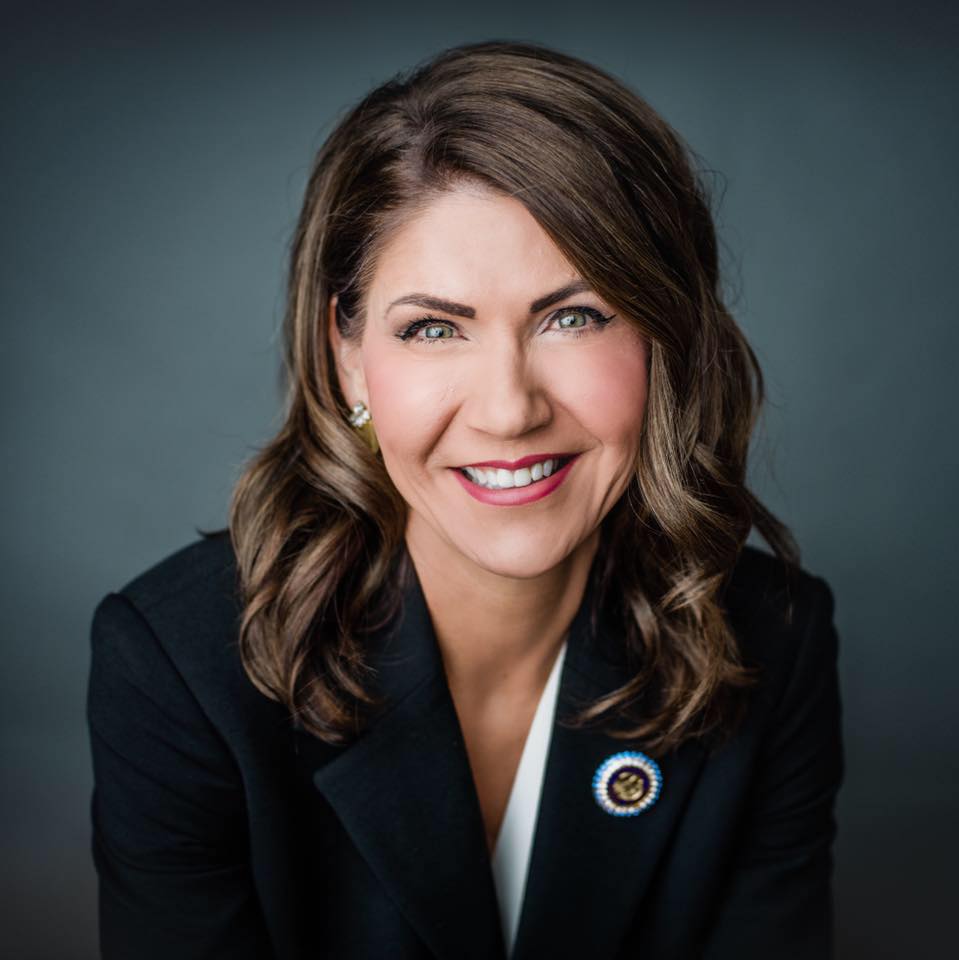
Gov. Noem: “Temporary tax cut will hurt our families and businesses”

Gov. Noem: “Temporary tax cut will hurt our families and businesses”

PIERRE, S.D. – Today, Governor Kristi Noem asked legislators to support a permanent tax cut. Governor Noem thanked the people of South Dakota for turning challenges into opportunities – and she advocated for the tax cut that the people of South Dakota overwhelmingly want: the grocery sales tax cut. You can watch Governor Noem’s video here.

“I want to help every single person who lives here in our great state. [The grocery sales tax cut] is the fairest tax cut for all people,” Governor Noem said in the video. “It doesn’t decide who gets a tax cut and who doesn’t – because everyone who lives here eats: the single mom trying to put food on the table, the senior citizens living on fixed incomes, the family where both parents have to work to make ends meet with rising record inflation nationwide. Overwhelmingly, the people of South Dakota want this tax eliminated.”

Eliminating the grocery sales tax is overwhelmingly supported by the people of South Dakota. A recent poll found that 58% of South Dakotans prefer this tax cut to other options. But last week, the House of Representatives opted to instead reduce the overall sales tax rate by 30 cents for every $100 spent.

“If the legislature pursues a temporary tax cut and instead embraces a spending spree, it will hurt our families and our businesses,” continued Governor Noem.

Yesterday, the Senate Tax Committee put a 2-year sunset on that tax cut because they know that the people will support repealing the sales tax on groceries in the near future. Legislators should be giving the people of South Dakota what they want now instead of thinking they know better how to spend someone else’s money.

“As we go into the last two week of legislative session, my hope is that policy makers remember they work for the people and will be accountable to the people,” continued Governor Noem. “They will present me a budget soon, and I will decide if it is worthy of my signature or not. I have proved in the past that I am willing to make hard decisions – and I will again, especially if it is something that respects our Constitution and the will of the people.”

South Dakota can afford eliminating the sales tax on groceries because of our permanent economic growth. Our businesses are growing and expanding quicker than ever before, incomes are going up faster here than in almost any state, we have the lowest unemployment rate in South Dakota history, and our population is growing at 5 times the national average.

###

Interesting newspaper statistics as the number of staff plummet.

Saw this on the Internet today:

According to this, over the last 20 years the number of staff employed by the Argus has been reduced from 65 to 8. Yet in that time, it’s parent company has acquired 2 daily and several weekly newspapers around the state, and shipped their publication out to Iowa.

Someone explain to me why exactly why taxpayers still have to be on the hook to place public notices, as opposed to filing such things in local libraries, or being placed on-line?

If it is going to be in law that taxpayer dollars are spent to support their mission, We should go back to supporting community sources of news and information and the local jobs they create.

Not media conglomerates who come in and strip-mine them for assets and ship jobs and production out of state.

Attorney General Jackley Releases Explanations for Proposed Constitutional Amendment, Initiated Measure

Attorney General Jackley Releases Explanations for Proposed Constitutional Amendment, Initiated Measure

PIERRE, S.D. – South Dakota Attorney General Marty Jackley has released the final ballot explanation for both a proposed constitutional amendment and an initiated measure, both of which would prohibit the implementation of taxes on anything sold for human consumption.

Language for the constitutional amendment can be found here. The initiated measure language can be found here.

For either measure to be placed on the 2024 general election ballot, they must receive enough valid petition signatures. The proposed constitutional amendment requires 35,017 valid signatures, and the initiated measure needs 17,509 valid signatures.

A majority of the votes cast in the general election will be needed to pass either or both measures.

The Attorney General’s explanation was drafted after a review of all the comments received during the proposed amendment’s 10-day comment period. Two comments were received.

State law requires the Attorney General to draft a title and explanation for each initiated measure, initiated constitutional amendment, constitutional amendment proposed by the Legislature, or referred measure that may appear on an election ballot.

For more information regarding ballot measures, please visit the Secretary of State’s website.

-30-

Attorney General Jackley Releases Draft Explanation for Proposed “Top Two Primary” Constitutional Amendment

Attorney General Jackley Releases Draft Explanation for Proposed “Top Two Primary” Constitutional Amendment

PIERRE, S.D. – South Dakota Attorney General Marty Jackley has released a draft ballot explanation for a proposed Constitutional Amendment regarding top-two primary elections.

State law requires the Attorney General to draft a title and explanation for each initiated measure, initiated constitutional amendment, constitutional amendment proposed by the Legislature, or referred measure that may appear on an election ballot. The Attorney General’s explanation is meant to be an “objective, clear, and simple summary” intended to “educate the voters of the purpose and effect of the proposed” measure, as well as identify the “legal consequences” of each measure.

The proposed amendment would allow top-two primary elections, regardless of political party, for Governor, legislative office, county office, United States Senator, and United States Representative. The two top vote getters in each primary would advance to the general election.

State law requires the Attorney General to draft a title and explanation for each initiated measure, initiated constitutional amendment, constitutional amendment proposed by the Legislature, or referred measure that may appear on an election ballot. Attorney General Jackley’s draft explanation on this proposed amendment can found here.

Once the Attorney General has filed and posted the draft explanation, the public has 10 days to provide written comment. The deadline for comments on this amendment explanation is March 9, 2023, at the close of business in Pierre, South Dakota. The final explanation is due to the Secretary of State on March 29, 2023.

The draft amendment would require 35,017 valid petition signatures to qualify for the 2024 general election ballot.

To file written comments on a draft Attorney General’s explanation please use one of the following methods below. Copies of all received comments will be posted on this website.

Comments may be submitted via mail, or through hand delivery, to the Attorney General’s Office at:

Office of the Attorney General
Ballot Comment
1302 E. Hwy. 14, Suite 1
Pierre, SD 57501

Comments that are hand delivered must be received by the close of business in Pierre, South Dakota, by March 9, 2023. Comments that are mailed must be received by the Attorney General’s Office before the deadline expires to be accepted.

Comments may also be emailed to ATGballotcomments@state.sd.us by March 9, 2023.  Comments should be clearly expressed in the body of the email.  The Attorney General’s Office will not open attachments in an effort to prevent malware or other digital threats. Please include your name and contact information when submitting your comment. The title of the comment must be included in the subject line of the email.

-30-

Gov. Noem Signs Bills into Law

Gov. Noem Signs Bills into Law

PIERRE, S.D. – Today, Governor Noem signed the following 12 bills into law:

  • SB 31 creates an off-road vehicle decal for non-residents visiting the state;
  • SB 34 authorizes the sale of real property in Lake County by the Board of Regents;
  • SB 61 revises driver’s license suspensions for restricted permit holders over the age of sixteen;
  • SB 77 reinstates the restricted real estate broker’s license for auctioneers and revises real estate licensing;
  • SB 83 revises provisions regarding water development districts;
  • SB 84 authorizes compensation for water project district directors;
  • SB 88 amends a provision allowing municipalities to jointly license and regulate intercity services;
  • SB 92 requires that certain operations obtain their own general or individual water pollution permits;
  • SB 93 provides an increased appropriation for the construction costs of an athletics event center at Dakota State University;
  • SB 95, amends provisions regarding trusts;
  • SB 162 revises public meeting requirements; and,
  • HB 1054 provides a stipend for the erection of a private headstone for a deceased veteran.

Governor Noem has signed 67 bills into law this legislative session.

###