Dakota Scout has story on how candidates are selected in the party convention process, but didn’t dig into the meat of the issue.

The Dakota Scout newspaper just released a story on-line about some of the convention fights that were had this last year at the GOP Convention.. but they might want to revisit one of their sources.

“Near as I can tell, these people hate Republicans,” the Watertown Republican said while referring to GOP delegates responsible for nearly upsetting Lt. Gov. Larry Rhoden and Attorney General candidate Marty Jackley’s nominations at the South Dakota Republican Party Convention.

and…

“They didn’t like the outcome so they want to change the rules that favor themselves,” said Dave Roetman, an influential political operative in South Dakota politics who helped earn election victories for Johnson and other candidates whom his intra-GOP adversaries peg as “far-right” Republicans.

Read it all here.

Dave Roetman is influential in SD politics?  Er, maybe several elections ago, before he was ousted as chair by the Minnehaha County GOP, quietly removed as political director by the State GOP and most recently shown the door by the Monae Johnson campaign, as they promptly off-loaded him after the convention.

I’m not sure who else Dave can point to as support his alleged influence, as in his latest stint as co-founder of the Patriot Ripple Effect, a group who has been trying to replace incumbent elected officials, his track record hasn’t been so hot.

The other big item in the article by Sneve is that he completely and utterly ignores the main issue that those in local county Republican leadership have with what has come to be a biennial feature of the Republican Convention process, as brought to a head at the last Republican State Central Committee.  It’s that the people who come to convention simply to vote for these candidates show up for one day. And like a liquidation sale, it’s one day only.

More than one County GOP official has lamented the fact that the precinct committeeman and committeewoman positions were originally set up to assist the county organizations with their campaign activities in the counties, but many of the people who are coming in for the Saturday convention candidate vote are open about saying they only signed up to vote for their candidate and they’re never to be seen again.

They don’t volunteer, they don’t donate. Most won’t ever show up for a meeting. Yet, they believe they’re entitled to be a representative voice of the Republicans in their precinct, which their votes at last couple of conventions don’t exactly illustrate. And party leadership is getting a bit tired of it.

The world is ran by people who show up. And that’s what both the GOP Central Committee and Senator Schoenbeck each want to ensure in their own way.

Word from Monae Johnson campaign that SOS hopeful has already started selecting staff.

Glad I was able to make the local GOP monthly meeting yesterday, as I picked up a bit of political gossip I hadn’t yet heard.

One of the chief Lieutenants of the Monae Johnson for Secretary of State campaign was announcing to the room that the SOS hopeful had already started vetting employees to serve under her employ if she’s elected for the office, and that people will be excited to hear who will be in the office come this next January, assuming she wins her seat.

I did hear later in the day that Monae herself had dispelled rumors that Citizens for Liberty honcho Tonchi Weaver, whose group had recently hosted Democrat Candidate Jamie Smith, would NOT be one of those persons working at the SOS.

So, we’ll have to wait and see who does make the list.

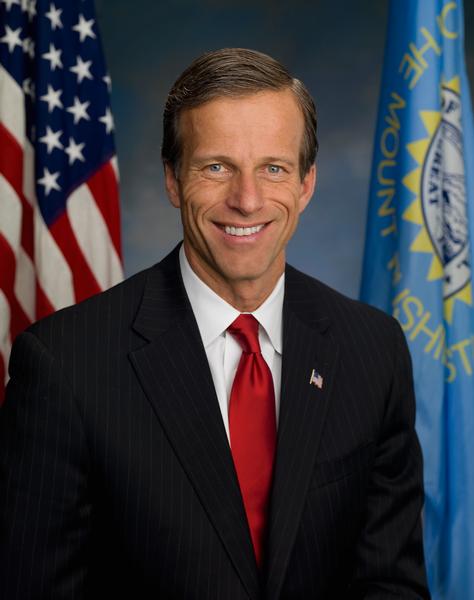
US Senator John Thune’s Weekly Column: Democrats’ Supersized IRS Hits Working Families

Democrats’ Supersized IRS Hits Working Families
By Sen. John Thune

Last week, the official statistics confirmed what Americans are feeling every day: Inflation remains at a 40-year high. Seventeen straight months of higher prices have taken a toll on family budgets, driving up grocery bills and causing one in six households to fall behind on utility bills. As I travel across South Dakota, inflation is undoubtedly the top concern I hear from farmers, business owners, and working families.

Unfortunately, soaring prices are likely to continue for the foreseeable future. If you ask the president, though, he says he’s not concerned. In fact, on the same day the inflation rate rose 8.3 percent from the same month a year ago, the White House hosted a celebration for passing the so-called Inflation Reduction Act, which more than one independent analysis confirms will do little to nothing to reduce inflation. It’s difficult to understand what there was to celebrate about a bill that won’t reduce inflation, falls short on deficit reduction, and is chock-full of tax increases that are expected to result in slower growth, lower wages, and thousands of fewer jobs.

In addition to Democrats’ usual reckless, big-government spending and tax hikes, the bill included an unprecedented $80 billion for the Internal Revenue Service (IRS) to raise revenue by increasing audits and placing new burdens on taxpayers. This funding will enable the IRS to hire as many as 87,000 new employees, more than doubling its current workforce and making it larger than Customs and Border Patrol and the Coast Guard combined.

More than half of the new IRS funding is earmarked for increased enforcement, while a mere 4 percent goes to improving customer service at an agency that answered just 10 percent of taxpayers’ phone calls this filing season. That is why, as the ranking member of the Subcommittee on Taxation and IRS Oversight, I recently introduced the Increase Reliable Services Now Act to prevent the IRS from hiring new employees for enforcement until customer service at the agency reaches an acceptable level. It is unconscionable that audits on South Dakotans should increase when 90 percent of taxpayer phone calls to the IRS go unanswered.

I also joined my Republican colleagues on the Senate Finance Committee to introduce legislation to prevent the IRS from using this new funding to audit American workers and small business owners earning less than $400,000 per year. The nonpartisan Congressional Budget Office estimates that this funding will help the IRS collect an additional $4 billion from middle-income taxpayers, which contradicts the president’s pledge and his treasury secretary’s assurances that this group of Americans would be protected.

In recent years, there have also been disturbing instances of the IRS compromising private taxpayer information. As the IRS has not provided accountability on recent data breaches, I have pressed the IRS commissioner to inform Congress how the agency plans to ensure these breaches do not happen again. At a minimum, taxpayers deserve to be confident that their personal information will be protected when they file their taxes.

Democrats’ $1.9 trillion spending spree early last year helped spark the ongoing inflation crisis. While Americans are experiencing serious economic hardship, Democrats have doubled down on policies that threaten to worsen economic pain and create additional frustrations from an even bigger bureaucracy. I will continue to fight back against these out-of-touch ideas and push for common-sense solutions for South Dakotans.

###

Congressman Dusty Johnson’s Weekly Column: Keeping Supply Chains on Track

Keeping Supply Chains on Track
By Rep. Dusty Johnson
September 16, 2022

Cargo ships to planes, semi-trucks to trains, it seems we keep hitting roadblock after roadblock to get our supply chain on the right track – and keep it there.

First, it was the clogged ports due to unfair practices by cargo shipping companies. My Ocean Shipping Reform Act (OSRA) addressed this issue and now the average shipping rate is less than half the price before OSRA became law.

Next, it was the airlines. The looming pilot shortage is threatening to disrupt already difficult air travel and air cargo shipments. I introduced the Let Experienced Pilots Fly Act with U.S. Rep. Chip Roy (R-TX) to allow pilots to fly for two more years than they are currently allowed, effectively filling the 12,000-pilot shortage that will be caused by their retirement under current law.

Then, it was trucking. An 80,000-truck driver shortage combined with new, more stringent CDL requirements, not enough safe truck stops, and record-high gas prices, provided another obstacle for the supply chain. I pushed the Biden Administration to allow 18-year-olds with a trucking license to drive across state lines and delay the new Entry-Level Driver Training rule earlier this year, and I introduced the Truck Parking Safety Improvement Act to alleviate the parking shortage and make driving safer for all.

Now, at a time when Americans are still experiencing supply chain delays, record-high prices, and persistent inflation, earlier this week we saw what could happen if rail workers go on strike. Labor negotiations between railroad workers and railroad companies lasted three years, but if they didn’t reach a deal by midnight last night, the workers would go on strike.

Unsure if an agreement would be met, early this week, rail companies were canceling shipments of hazardous materials, fertilizer, grain, animal feed, and refrigerated goods. These cancelations gave us a preview of how cancelation of all freight would cause major disruptions to our economy, supply chain, food supply, and energy supply. A disruption like this would cause $2 billion of economic losses per day. Even a short-term disruption could cause massive problems in the supply chain.

The supply chain backlogs that began at our ports trickled down to our freight rail networks, and a strike by employees would exacerbate these delays. In August, I introduced the Freights First Act to ease the supply chain-related gridlock and delays by prioritizing the movement of goods by freight rail.

I am even more grateful an agreement between rail companies and workers was reached after seeing this week’s news that food-at-home prices are up 13.5% over the past year. This is a stark reminder of how high the stakes are to keep the rail supply chain moving. An efficient and effective supply chain is necessary to bolster our economy. It is imperative that we keep our trains on track, and our supply chain and our country moving in the right direction.

###

Governor Kristi Noem’s Weekly Column: The Best State In the Country To Do Business

The Best State In the Country To Do Business
By: Governor Kristi Noem
September 16, 2022

2022 is on track to be another fantastic year for economic investment in South Dakota. Since I took office, I have championed our state as the best place in the country to do business. We had all the ingredients to succeed, even before the COVID pandemic hit, but now we’re breaking records for economic growth and business investment.

We have always had the potential to become an economic powerhouse – we’re one of the best states in the nation to start a small business thanks to our low taxes, limited red tape and regulations, and – most importantly – our hardworking people. We can be flexible and innovative in ways that other states can’t be.

The attention that we received during the pandemic gave us the opportunity to tell this story. And now, we have another success story to celebrate. We recently welcomed Gevo to Lake Preston and celebrated the groundbreaking of their new facility – the largest economic investment in South Dakota history.

Gevo’s new, $1 billion jet fuel plant will be a world-class sustainable fuel production facility. They will create 1,000 jobs during construction and 90 long-term, high-paying jobs. It’s the first billion dollar project in the history of the Governor’s Office of Economic Development.

Gevo will also be giving back to their community on day one by supporting two Build Dakota Scholarships for students at Lake Area Technical College. These students will start their careers right here in South Dakota. And that underscores another major success that we’ve had – South Dakota is turning around the longstanding trend of students leaving the state. Now, all the exciting new jobs are right here at home!

Gevo is one of dozens of businesses that have noticed our great state over the last few years and chosen to expand or relocate in South Dakota. My Office of Economic Development facilitated $4.5 billion in capital investment in South Dakota in 2020 and 2021 alone. Communities from Belle Fourche to Brandon to Yankton thrived in a state where government stayed out of the way. We allowed families and businesses to make their own decisions.

Along with Gevo’s incredible investment in our state, we’ve seen longtime South Dakota businesses growing their operations here. Valley Queen in Milbank announced the largest expansion in their history in May. Terex celebrated the grand opening of their new manufacturing headquarters in Watertown. And in March, Dakota State University secured $90 million to make cybersecurity the state’s next big industry with a new lab facility in Sioux Falls.

Companies like Gevo are also proving that government mandates aren’t necessary for our energy industry to be environmentally responsible. They are taking the lead to “go green,” and they’re working with our farmers to do it. The facility will use sustainable, regionally grown corn as its feedstock and will pay farmers a premium for sustainably grown corn. This is one area where the free market should – and is – taking the lead.

I’m proud of Gevo and all the innovative, hardworking businesses in South Dakota. They are helping make our state an example to the nation.

###

Vote No on IM27 flyer making the rounds today among Republicans

This flyer from the Vote No on IM27 group is making the rounds among Republicans today, as I saw it at the local Republican meeting, as well as an e-mail from another part of the State.

It’s part of the opening salvo against Initiated Measure 27 to legalize pot, which some say is on tenuous grounds, and could fail this November. And that was before anyone began campaigning against it.

Stay tuned.

Candidate Profile: John Mogen for District 10 House

One of the new candidates running for the State House of Representatives this year isn’t truly a new candidate, as he has run in the past. But the time might be right for this tremendously busy man who was recently recognized for his contributions to music and education in South Dakota.

John Mogen had previously ran for State House in District 13 in 2008, when the districts were configured much differently, coming in third in his House race when Democras had swept the District. A little older, and a little wiser, this long-time musician and retired teacher is giving it another go. I’ve had the pleasure of talking with John – when you can catch him sitting still. He’s constantly in motion and out in the Sioux Falls Community.

What’s he busy doing?  Much of it has to with the arts and music community in Sioux Falls. Indeed, he’s found all over the state.

Most recently Mogen was recognized and inducted into the South Dakota Rock & Roll Hall of fame for the second time. Originally inducted in 2018 as part of the group “Mogen’s Heroes” after 40 years of consecutive playing, 2022 found John Mogen indicted individually in 2022 for lifetime achievement. As noted in the biography for his induction:

It was while teaching elementary vocal music in Parkston, South Dakota, that rock and roll played a bigger part in his life. He and Bob Carlson, Dan Hills, and Joel Wudel formed Spur of the Moment. That put the bug to play music full-time in his head. John joined the Upson Downs, a Las Vegas-style show band, in late 1975. That group included Terry Klein, Rusty Davis, Kevin King, and Gary Swanson. They toured the Midwest, playing nightclubs and bars. Mogen decided that eating restaurant food and staying in motels wasn’t the greatest life, so he returned to teaching music in Lennox, South Dakota, in the fall 1977.

and..

Mogen taught vocal music in South Dakota for 34 years (including 22 years at Patrick Henry Middle School in Sioux Falls) and has taught hundreds of piano students. He loves composing piano pieces for them to play. His radio jingles have won several Addy awards. He has been sought after as a clinician and as an adjudicator. His choral compositions have been performed by the University of Sioux Falls Concert Choir, Sioux Falls Master Singers, and Madison Master Singers. He has been honored to play piano for two U.S. Presidents. Leading worship at several churches has been an important part of his musical and spiritual life.

Read that all here.

While all of this is going on, John found himself running again for the State Legislature, this time for State House in District 10.

As noted in his campaign, Mogen is running as a candidate concerned about people, and supporting education and teacher salaries in the state, recognizing how education contributes to economic development:

“As a lifelong educator, I have invested in the lives of thousands of Sioux Falls students. Teachers are critical to the education of our children and they should be properly rewarded. I will work diligently on funding competitive salaries for dedicated educators. Education at all levels is key to driving our states continued economic development.”

”It is our duty to keep the youth in our state by maintaining and developing our universities, colleges, and technical schools. I will work to advance higher education throughout South Dakota.”

So far, 2022 has been bright and active for John professionally. With a new District seating two new House members, it may also translate into a win for for this genuinely good guy.

On November 8, keep John Mogen in your thoughts for District 10.


Thune, Ernst Introduce Bill to Prohibit Government Monitoring of Livestock Emissions, Block Radical Climate Policies

Thune, Ernst Introduce Bill to Prohibit Government Monitoring of Livestock Emissions, Block Radical Climate Policies
Senators’ legislation would safeguard livestock producers from overreaching methane monitoring

WASHINGTON — U.S. Sens. John Thune (R-S.D.), a member of the Senate Committee on Agriculture, Nutrition, and Forestry, and Joni Ernst (R-Iowa), a member of the Senate Committee on Agriculture, Nutrition, and Forestry and Senate Committee on Environment and Public Works, today introduced a bill that would prohibit the Environmental Protection Agency (EPA) from monitoring methane emissions from livestock. Specifically, this legislation would prohibit the EPA from using any of the new methane monitoring funding provided in the Democrats’ reckless tax-and-spending spree to surveil livestock methane emissions in South Dakota, Iowa, or anywhere else in the country.

“Farmers and ranchers – the people who work tirelessly to help feed America and the world – should not be subject to government surveillance as part of a broader effort to implement radical climate policies that would threaten their ability to operate,” said Thune. “This common-sense legislation would protect South Dakota livestock producers and their operations from government snooping.”

“Democrats are seeking to weaponize the EPA against our farmers by spying on their operations. I’m not going to let that happen on my watch!” said Ernst. “With this effort, I’m fighting to protect Iowa’s livestock producers from the Left’s radical climate agenda and costly government overreach that will only fuel higher food costs and more reckless spending in Washington.”

Thune recently spoke at a Senate Committee on Environment and Public Works hearing about his related bill, the Livestock Regulatory Protection Act. Thune’s legislation would prohibit the EPA from issuing permits related to livestock emissions. Specifically, the bill would amend the Clean Air Act to prohibit the EPA from issuing permits for any carbon dioxide, nitrogen oxide, water vapor, or methane emissions resulting from biological processes associated with livestock production.

###