Senator Thune posts photos on Biden’s border crisis
From Facebook:
From Facebook:
Sneak peak for tomorrow’s @MPRnews Capitol View politics newsletter (subscribe: https://t.co/1YbkEqCTuX) pic.twitter.com/0M32rQy7Hv
— David H. Montgomery (@dhmontgomery) March 26, 2021
The latest from our neighbor to the east has a lawmaker proposing a measure to allow counties to secede from Minnesota and join South Dakota:
A bill being introduced at the Minnesota State Capitol seeks to allow Minnesota counties to secede and join South Dakota.
Representative Jeremy Munson (R – Lake Crystal) wants to amend the state’s constitution to allow counties the right to leave Minnesota.
I imagine there would be a few advantages to that.
Such as Vikings fans (generally east river) would outnumber Broncos fans who tend to be in the west, The darn speed limit would be a lot more manageable if you were heading to Minneapolis for the weekend, and I’m sure we could think of a few more.
But realistically, I don’t think this one is going to happen.
State Senator and Senate President Pro Tempore Lee Schoenbeck was interviewed by Public Broadcasting recently, and is one of the dissenting voices on House Bill 1217, noting that he believes the bill is unnecessary because the High School Activities Association dealt with it 9 years ago, and the system works:
Republican State Senator Lee Schoenbeck says her partial veto takes out the worst parts of the bill that are bad for South Dakota, but…
“I still believe the bill should die because it is not needed,” Schoenbeck says. “Our South Dakota High School Activities Association, which is our local school districts dealt with this at the local level nine years ago. The governor had to deal with what was put on her desk. The fact is the train left nine years ago and for political reasons they’re making noise chasing it now.”
In that nine year span only one transgender girl has played on a girls’ sports team. The policy recently rejected a transgender girl athlete, because the South Dakota High School Athletics Association determined the applicant would have a competitive advantage.
You have to admit, that’s a lot of fuss for one student. And it seems like the High School Activities Association actually looked at it fairly.
Without new layers of government.
Rounds, Colleagues Introduce Bill Requiring DNA Border Testing to ‘End Child Trafficking Now’
WASHINGTON – U.S. Senator Mike Rounds (R-S.D.) along with Senators Marsha Blackburn (R-Tenn.), Joni Ernst (R-Iowa), and Thom Tillis (R-N.C.) introduced the End Child Trafficking Now Act to prevent drug cartels and transnational criminal gangs from trafficking and exploiting migrant children to gain illegal entry into the country.Representative Lance Gooden (R-Texas) introduced companion legislation today in the House of Representatives.
“We need to stop criminals from exploiting our immigration policies and using vulnerable children as pawns to get into the United States,” said Rounds. “Our legislation would help rescue children from human trafficking by mandating a DNA test to verify family ties at the border. If family ties cannot be proven, children will be processed as unaccompanied minors and their kidnappers will not be released into the U.S.”
“After seeing the crisis firsthand, I’m reintroducing legislation to require DNA testing at the border to deter fraud and child trafficking. Adults attempting to slip across our borders under the guise of being a parent or relative to a minor must be DNA tested to prove they are related,” said Blackburn. “Drug cartels and gangs are using children to falsely present themselves as family units and seek asylum at our southern border. These unaccompanied minors are especially vulnerable to trafficking and are often forced to perform sex acts. Making DNA tests mandatory on anyone claiming a family relationship with a minor will send a powerful message that traffickers will be caught and aggressively prosecuted.”
Unaccompanied children made up nearly 10% of the 100,441 arrests for illegal border crossings in the month of February 2021. For the month of March, the government has caught an average of 523 unaccompanied minors a day over the past three weeks, according to The Wall Street Journal. At that rate, March would set a record month, with 16,000 unaccompanied children apprehended.
BACKGROUND
· The bill requires DHS to deport alien adults if they refuse a DNA test and mandates a maximum 10-year prison sentence for all alien adults who fabricate family ties or guardianship over a minor.
· It also criminalizes “child recycling,” which happens when the same child is used repeatedly to gain entry by alien adults who are neither relatives nor legal guardians.
· If family ties or legal guardianship cannot be proven with the accompanying adult, the Act requires HHS to process the child as an unaccompanied minor under current law.
###

Governor Noem Signs Criminal Justice Bills into Law
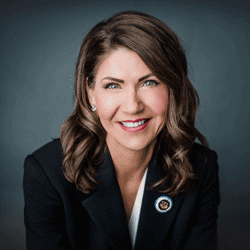
PIERRE, S.D. – Governor Noem has signed SB 135, which enhances training requirements for law enforcement officers, into law.
“Law enforcement does incredible work each and every day to keep us safe,” said Governor Kristi Noem. “In South Dakota, we trust and respect the men and women who put their lives on the line every day. Our objective is to protect and reaffirm this mutual trust, and we believe this enhanced training requirement will help achieve that goal.”
Governor Noem has also signed thirteen other criminal justice bills into law:
Governor Noem has signed 227 bills into law this legislative session.
###
Hey @JoeBiden – come and take it. Careful, she bites too. pic.twitter.com/NOKWlq5aQv
— Senator Mike Rounds (@SenatorRounds) March 25, 2021

Thune, Shaheen, Fischer Introduce Legislation to Incentivize Capital Investments in Rural Businesses
WASHINGTON — U.S. Sens. John Thune (R-S.D.), Jeanne Shaheen (D-N.H.), and Deb Fischer (R-Neb.) today introduced the Rural Capital Access Act, legislation that would incentivize additional capital investments in rural America by improving the Small Business Investment Company’s (SBIC’s) ability to invest in rural businesses and encouraging greater participation in the Rural Business Investment Company (RBIC) program.
“Small businesses are critical to our state’s economy,” said Thune. “While South Dakota small businesses have persevered through the pandemic, relative to other parts of the country, there is always more work to be done to support our Main Street economies. My legislation would improve access to investment capital for rural businesses, which is oftentimes necessary to help businesses innovate and expand.”
“Our rural businesses and entrepreneurs in New Hampshire are the backbone of our local economy, supplying jobs and spurring economic growth, but they often are denied access to venture capital,” said Shaheen. “Rural businesses deserve every support possible to help them rebound, which is why this bipartisan legislation would increase coordination between the Small Business Administration and U.S. Department of Agriculture and make more funds available to invest in rural small businesses. I’m committed to working across the aisle to level the playing field for rural businesses and ensure they aren’t left behind as we build back from the pandemic.”
“Venture capital is critical for helping new businesses to grow, but businesses in rural America often have difficulty accessing this funding,” said Fischer. “By granting these businesses access to additional resources, our legislation will create new opportunities for job creators in the Heartland.”
“There is a real need for patient, more flexible capital for small businesses across America, particularly in rural areas,” said Brett Palmer, president of the Small Business Investor Alliance. “Rural small businesses play a critical role in their communities – economic, social and civic.”
“Even in the best of times and in the largest of cities, access to capital is a major challenge for many small businesses. For small companies in today’s world, particularly those in rural areas, and it can be nearly impossible,” Todd McCracken, president and CEO of National Small Business Association. “I applaud Sens. Thune, Shaheen and Fischer for their leadership and bipartisan efforts to expand the Small Business Investment Company program to better help rural small businesses find much-needed financing.”
The Rural Capital Access Act would:
· Provide SBICs with access to additional federally-backed leverage – leverage that is exempt from the $175 million statutory cap – for investments made to qualifying small businesses located in rural areas.
· Allow the Small Business Administration (SBA), in consultation with U.S. Department of Agriculture (USDA), to extend to RBICs federally-backed leverage intended for SBICs that would otherwise go unused, as appropriate, to improve participation in the RBIC program.
· Establish an interagency working group between the SBA, USDA, and industry stakeholders to improve coordination in administering the vastly similar SBIC and RBIC programs, as well as develop recommendations to further improve access to capital and investment in rural areas through these programs, which would include recommendations to increase the number of licensees.
The SBIC program was established in 1958 to provide investment capital to small businesses across the nation. There are currently approximately 300 licensed SBICs in operation today, and the SBA is authorized to provide up to $4 billion in federally-backed leverage each fiscal year to these SBICs to help supplement their investments in small businesses. However, the SBA does not generally provide up to this statutory cap.
The RBIC program was created by the 2002 Farm Bill to specifically help small businesses located in rural areas access investment capital. However, RBICs do not currently have access to federally-backed leverage and, as a result, there are very few licensed RBICs currently in operation.
In December 2020, Thune led a Commerce Committee subcommittee hearing to examine the lack of access to investment capital across Middle America.
###

Governor Noem Signs Broadband Funding into Law
Also Signs Other “Open for Business” Legislation
PIERRE, S.D. – Governor Noem has signed SB 34, which provides $75 million in funding for rural access to high-speed broadband, into law.
“South Dakota is Open for Business!” said Governor Kristi Noem. “We’re finishing our efforts to connect the entire state to high-speed broadband. Folks in South Dakota shouldn’t have to choose between their career and the way of life in their hometown. With this funding, they won’t have to make such a choice.”
The $75 million in funding will leverage $25 million in CARES Act funding, as well as other federal and private funding, to finish connecting the state to broadband.
Governor Noem also signed six other “Open for Business” bills into law:
Governor Noem has signed 213 bills into law this legislative session.
###

Thune to Travel to U.S. Southern Border This Week to See Growing Crisis Firsthand
“For the sake of the unaccompanied children and all those trying to cross our borders, and for the sake of the Americans who have been endangered by his policies, I hope the president will take action.”
Click here or on the picture above to watch the video.
WASHINGTON — U.S. Sen. John Thune (R-S.D.) today discussed the ongoing border crisis and the role that the Biden administration has played in its rapid acceleration. Thune also discussed his upcoming trip to the border to survey the current situation, assess what Congress can do to help, and determine what actions the Biden administration can immediately take to solve this security and humanitarian crisis.
“During my trip to the border, I hope to speak to the men and women who have had to respond to this security and humanitarian crisis, and I will look to see what Congress can do to help,” said Thune. “But President Biden could start stemming this crisis today by making it clear that he is going to start enforcing immigration law, and that the way to come to this country is to come legally. For the sake of the unaccompanied children and all those trying to cross our borders, and for the sake of the Americans who have been endangered by his policies, I hope the president will take action.”
###
Rounds’ RESPECT Act Unanimously Passes Out of Indian Affairs Committee
WASHINGTON – U.S. Senator Mike Rounds (R-S.D.), a member of the Senate Committee on Indian Affairs, made the following statement after his Repealing Existing Substandard Provisions Encouraging Conciliation with Tribes(RESPECT) Act passed out of committee with unanimous support:
“It’s long past time to remove federal laws that are discriminatory to Native Americans from our books,” said Rounds. “While these laws are no longer enforced, they are a reminder of a painful part of our nation’s past. I thank my colleagues on the Committee on Indian Affairs for their overwhelming support of this legislation. I look forward to working across the aisle to get this bill onto the Senate floor.”
The RESPECT Act would repeal 11 outdated federal laws that are discriminatory to Native Americans. Examples include laws that allow for the forced removal of Native American children from their homes to be sent to boarding schools and laws subjecting Native Americans to forced labor.
The RESPECT Act is supported by the Great Plains Tribal Chairmen’s Association (GPTCA) and the National Congress of American Indians (NCAI). Senators Tina Smith (D-Minn.), James Lankford (R-Okla.), and Kyrsten Sinema (D-Ariz.) are cosponsors of this legislation.
Click HERE or above to watch Senator Rounds’ statement.
###