Senate Majority Leader Casey Crabtree: Promise Fulfilled

Senate Majority Leader Casey Crabtree addresses Senate

MADISON–Going into the 2023 Legislative Session, a top priority for lawmakers was delivering tax relief for South Dakotans. After weeks of debate and negotiations, I am proud of the House and Senate for coming together and passing the largest tax relief package in state history–$104 million.

South Dakota’s economy has been incredibly strong, especially in recent years. After consecutive years of surplus tax dollars, it was time for lawmakers to consider tax reduction. The Senate took a cautious conservative approach to its consideration of three proposals–elimination of the sales tax on groceries, reduction in property tax, or a decrease in the overall sales and use tax rate.

Ultimately, the Legislature reduced the sales and use tax rate from 4.5 to 4.2 percent. This tax cut is a major victory for the people of South Dakota, and I am proud of my colleagues for working together toward a common goal of protecting South Dakota’s economy, but more importantly, looking out for your pocketbook.

South Dakota is a fiscally conservative state. We balance our budget and meet our obligations to serve our residents. National economic pressures as a consequence of Democrats in Washington, D.C., have caused concern amongst many of a recession or reduction in economic growth. Additionally, in four years the one-time federal ARPA dollars will have fully cycled through the economy and we will have a clearer understanding of the real cost of Medicaid expansion. While Lawmakers don’t have a crystal ball to see the future, we do look at trends in the economy and listen to the experts. No one knows if the recent surpluses are the new normal or the result of inflation and the influx of federal dollars related to COVID relief.

Because of these concerns, the sales tax cut has a four-year sunset clause, which allows legislators to revisit tax cuts in the future. Simply put, with the artificial federal stimulus dollars still impacting our economy, it’s fiscally irresponsible to reduce taxes without a trigger or insurance plan if the economy takes a turn for the worse. In the end, only the Democrat leader and assistant leader in the Senate disagreed and the rest of the Legislature approved the largest tax cut in South Dakota history after months of careful debate. This tax cut represents sound fiscal policy as we will not tie the sustainability of South Dakota’s budget to Democrats’ policies in D.C.

At this time, a tax cut with a sunset clause is prudent. It’s an insurance plan. Being a fiscal conservative doesn’t mean we attempt to get tax rates down to zero percent, but rather only taking what we need from taxpayers and doing the very best with the dollars we collect. South Dakota is a low tax, small government state, and we will continue to operate that way under conservative, Republican leadership in the South Dakota Legislature.

###

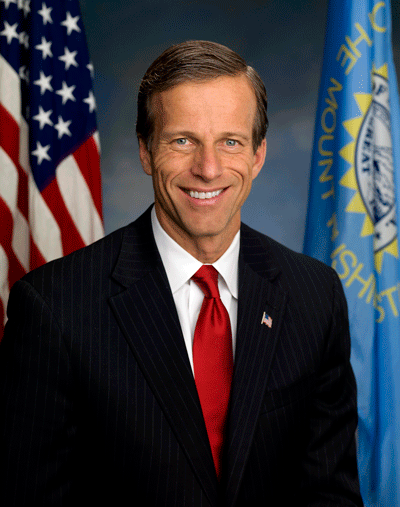
US Senator John Thune’s Weekly Column: Agriculture Keeps Moving into the Future

Agriculture Keeps Moving into the Future
By Sen. John Thune

Agriculture may well be among the world’s oldest ways of life, but it’s never been stagnant. Farmers and ranchers have always sought new and better ways to grow more and use less, and innovative practices, more resilient crops, and new technologies have helped make it possible. Today, data, advanced technology, and connectivity are helping our agricultural producers feed America and the world.

Before adopting a new conservation or production practice, farmers and ranchers want to be sure it’s effective. Access to reliable data would help agricultural producers determine whether a certain practice is right for them. Although the U.S. Department of Agriculture (USDA) collects a lot of data, little has been done to analyze and organize it so it’s useful to producers. To address this issue, I introduced the Agriculture Innovation Act to improve USDA’s secure and confidential data collection procedures. My bill would make it easier for farmers, ranchers, and trusted researchers to use this data to assess the impact of various conservation and production practices so producers can make an informed decision about the right option for their farm or ranch.

While the macro-level data that USDA collects can provide valuable insight, many farmers and ranchers are already looking to the next frontier: collecting real-time, micro-level data from their own fields. Precision agriculture technology puts real-time information about land and livestock at a farmer’s fingertips – whether it’s soil, plant, or livestock health, input needs, or field maps. It represents a quantum leap for farmers and ranchers, enabling greater efficiency, increased profitability, and broader use of conservation practices that will keep farm land productive for generations to come.

There’s more work that needs to be done for Americans to be able to reap the full benefit of precision agriculture. I recently introduced the Promoting Precision Agriculture Act to help facilitate widespread adoption of this technology. My bill establishes a partnership between government and the private sector to develop voluntary, consensus-based, interconnectivity standards and to prioritize the cybersecurity needs for these technologies. These standards will help enhance uptake of precision agriculture technologies and ensure reliability, usability, and security for producers and their data.

I’m also continuing to work to connect unserved areas to reliable broadband because without a reliable internet connection, precision agriculture just doesn’t work. We’ve made a good deal of progress, but we still have a lot to do. My priority is ensuring federal broadband funding goes toward expanding access to areas that currently lack it. I’ve introduced legislation to streamline USDA’s broadband authorities and direct funding to areas that are truly unserved. And, last year, I launched a nationwide broadband oversight initiative to ensure $79 billion in recent federal broadband funding actually delivers broadband to Americans who need it the most.

Agriculture is the lifeblood of South Dakota and anything we can do to make agriculture more efficient and more productive is not only good for our nation’s food supply, it’s good for South Dakota farmers and ranchers, and their families. Better data, precision agriculture, and reliable connectivity are among the advancements that will define the next era in agriculture. I’ll continue to work hard to ensure South Dakota farmers and ranchers have the resources they need to keep agriculture moving forward.

###

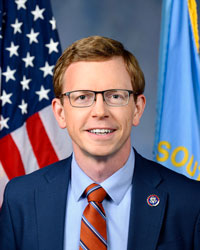
Congressman Dusty Johnson’s Weekly Column: Why a Republican Majority Matters

Johnson at Speaker McCarthy’s Bill Signing to Roll Back the D.C. Council’s soft-on-crime efforts.

Why a Republican Majority Matters
By Rep. Dusty Johnson
March 10, 2023

We are three months into the Republican House majority, and House Republicans are fulfilling promises we made to the American people. We have seen win after win, pushing back on the far-left agenda and blocking unnecessary, unchecked spending.

Here are a few of our wins so far:

We started with opening the People’s House. The Capitol and House Office Buildings had been closed to the public for nearly three years. Once again, constituents can come talk to their Representatives in person and watch the business happening on the House Floor from the Galleries.

One priority of House Republicans is keeping America safe. We established the Select Committee on the Strategic Competition Between the United States and the Chinese Communist Party (CCP) which has already begun important work analyzing the threat posed to America’s national security by the CCP. We also addressed rising crime rates and successfully reversed the D.C. Council’s bill to ease penalties for violent crimes like carjacking. After House Republicans voted to reverse the soft-on-crime D.C. proposal in the House, the Biden Administration back-tracked on previous comments and agreed they had no choice but to pass our bill given the drastic crime increase in our nation’s capital. This marks the first time in 30 years that Congress has rolled back a D.C. regulation.

Restoring energy security and increasing domestic production has been top-of-mind the past couple of years due to President Biden’s policies that severely limit domestic energy production and increased energy prices. We’ve passed bills to prevent any Strategic Petroleum Reserve oil sales to China and the CCP, and require President Biden to put forward a plan to increase our domestic energy production should he conduct a non-emergency drawdown of the SPR.

President Biden’s policies stretch the letter of the law, which we have seen in his policies to allow retirement savings managers to make financial decisions on the basis of climate change and social justice standards. House Republicans passed a bill to block this rule. We also passed a bill to block the President’s Waters of the United States (WOTUS) overly burdensome rule which allows the Environmental Protection Agency to regulate the waters of streams, small creeks, and puddles.

President Biden continued to extend the COVID-19 national emergency for months after he stated, “the pandemic is over.” Several bills have been passed to end the national emergency declarations, end COVID-19 vaccine mandates, and make sure Americans are getting back to work.

The House Republican majority is an important check to fighting inflation. We passed the REIN IN Inflation Actand our voting block will work hard to prevent President Biden’s reckless spending from continuing.

The House Republican majority is righting the ship and pushing government to do what it should always strive to do: work for the American people.


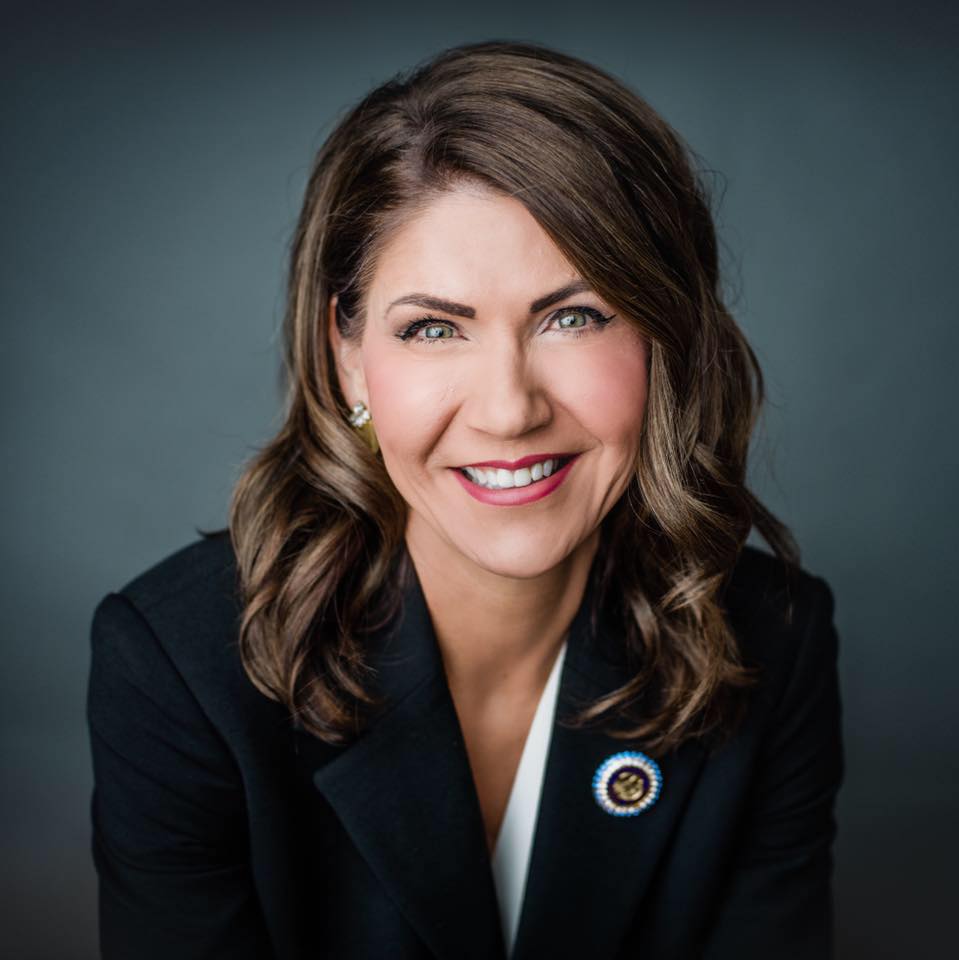
Governor Kristi Noem’s Weekly Column: For the People

For the People
By: Governor Kristi Noem
March 10, 2023 

There’s a perception that South Dakota’s future is charted in Pierre. That’s where big decisions get made; where Governors have taken historic actions; where legislators go every winter to represent the people and vote. But that perception misses our state’s foundational principle, our beautiful slogan: “Under God, the People Rule.” As elected leaders, when we make those decisions and cast those votes, we must do it on behalf of the people.

The wonderful men and women across the state of South Dakota are the ones who actually chart our future. They each take actions every day for the sake of their family, their small business, or their community. They get up, drive the kids to school, go to work, buy their groceries, put food on the table, and lay their heads down at night. And in the process, they are each individually building the greatest state in America.

When I make decisions, I don’t pretend to be smarter or wiser than our people. I don’t see myself as making decisions that they cannot. Instead, my job is to make it easier for South Dakotans to make decisions for themselves. As elected leaders, we must create a level playing field that provides Freedom and Opportunity for each and every South Dakotan. And every winter in Pierre, one of the most important decisions we make is how we will lay out the state’s budget.

When we pass that budget, we have to deliver on our responsibilities to take care of people. But we must also have respect for money that does not belong to us. It belongs to the people. When opportunity comes to return some of that money to the people, we should do so. When the option presents itself to spend less of the people’s money, we should pursue that option, too. After all, the people know better than we do what their own needs are. They understand how best their own money can be spent to take care of their loved-ones and their communities.

This year, some elected leaders in Pierre made different decisions. They chose to spend more of the people’s money than I recommended, including on new programs. And they decided to deliver a temporary tax holiday to the people, rather than a permanent tax cut. I still believe that the best budget option for our state’s future is the one that I presented in December, including the elimination of the sales tax on groceries. And in the coming weeks, I will have to decide whether the budget that has been presented to me is worthy of my signature.

In making that decision, I will be weighing what is best for our people. This decision is not about me, and it’s not about the elected representatives in Pierre. It’s about the folks who we serve, the folks who rule: the people of the great state of South Dakota.

###

Gov. Noem VETOES House Bill 1193

Gov. Noem VETOES House Bill 1193

 PIERRE, S.D. – Yesterday, Governor Kristi Noem VETOED House Bill 1193, which would infringe upon Freedom in digital currency. You can find Governor Noem’s VETO letter here.

“HB 1193 adopts a definition of ‘money’ to specifically exclude cryptocurrencies like Bitcoin, as well as other digital assets. At the same time, these UCC revisions include Central Bank Digital Currencies as money,” wrote Governor Noem in her VETO letter. “By expressly excluding cryptocurrencies as money, it would become more difficult to use cryptocurrency. By needlessly limiting this freedom, HB 1193 would put South Dakota citizens at a business disadvantage.”

Governor Noem has consistently advanced an “Open for Business” approach to the economy, emphasizing individual Freedom and personal responsibility. This extends to the ways in which individuals choose to make transactions in a free-market economy.

“By defining ‘money’ in this proposed way, HB 1193 opens the door to the risk that the federal government could easily adopt a Central Bank Digital Currency, which then may become the only viable digital currency,” continued Governor Noem. “At this moment in time, such a government-backed electronic currency has not been created. It would be imprudent to create regulations governing something that does not yet exist. More importantly, South Dakota should not open the door to a potential future overreach by the federal government.”

Governor Noem has signed 126 bills this legislative session and vetoed 4.

###

Thune, Warnock Introduce the Promoting Precision Agriculture Act

Thune, Warnock Introduce the Promoting Precision Agriculture Act

Senators’ bipartisan legislation would increase the adoption of precision agriculture technologies for farmers and ranchers

WASHINGTON — U.S. Sens. John Thune (R-S.D.) and Raphael Warnock (D-Ga.), members of the Senate Committee on Agriculture, Nutrition, and Forestry and the Senate Committee on Commerce, Science, and Transportation, today introduced the Promoting Precision Agriculture Act, bipartisan legislation to help facilitate further adoption of precision agriculture technology. The bill would establish a partnership between the government and the private sector to develop voluntary interconnectivity standards and prioritize the cybersecurity needs for precision agriculture technologies.

“Agriculture is the lifeblood of South Dakota,” said Thune. “Making agriculture more efficient and more productive is not only good for our nation’s food supply, it’s good for South Dakota farmers and ranchers and their families. I’m proud to introduce this bill that would help enhance and protect precision agriculture equipment as more producers use next-generation technologies to improve their operations.”

“Technology is an integral part of farming in the 21st century,” said Warnock. “Georgia producers use robotics, sensors, monitors, and even drones to increase crop yield and use their resources effectively. It only makes sense that these technologies should work seamlessly together. This bill is good for farmers and the families they serve. I’m glad to work with Senator Thune, my colleague on the Senate Agriculture Committee, on this bipartisan legislation. We’re going to fight to get this done.”

The Promoting Precision Agriculture Act would:

  • Direct U.S. Department of Agriculture (USDA), in consultation with the National Institute of Standards and Technology (NIST), to support the development of voluntary, consensus-based, industry-led interconnectivity standards, guidelines, and best practices for precision agriculture to encourage the adoption of precision agriculture technology.
  • Support the evolving demands of precision agriculture by requiring USDA, the Federal Communications Commission, and NIST to consider the impacts next-generation technologies will have on precision agriculture.
  • Prioritize the cybersecurity needs of precision agriculture. As advanced precision agriculture technologies become more readily available, the agriculture industry has increasingly become vulnerable to cybersecurity threats.

Thune, who has helped write four farm bills throughout his time in Congress, will continue introducing farm bill proposals ahead of the current bill’s expiration in September 2023. Thune spoke about the Promoting Precision Agriculture Act today on the Senate floor.

###

Gov. Noem VETOES Special Treatment Under the Law

Gov. Noem VETOES Special Treatment Under the Law

Pierre, S.D. – Today, Governor Kristi Noem VETOED Senate Bill 129, which would treat teachers and school employees the same as law enforcement officers in instances of assault in their official duties. You can find Governor Noem’s VETO letter here.

“South Dakota already has a strong and fair criminal justice system, and school districts have robust disciplinary policies tailored to address behavior within their districts,” continued Governor Noem. “The changes SB 129 would make open the door for additional occupations to ask for special treatment under the law.”

The current statute provides sufficient accountability for anyone who assaults a school employee.

Governor Noem has signed 118 bills this legislative session and vetoed 3.

###

People using GOP County organizations which seem to be trying to set themselves up as Republican “Shadow Party.”

Caught this today.

Apparently, there is a group of individuals in a few Republican County organizations who are less interested in advancing the GOP as a whole, and are more interested in using the Republican Party as their own personal soapbox without going through the GOP Executive Board or Central Committee:

A couple things stand out to me.There are no records filed with the Secretary of State to indicate that any such organization actually exists, except in their own minds.

When this statement is undersigned “Chair, Aurora County Republican Party” and “Chair, Fall River County Republican party,” or the various “Executive Boards,” don’t the people signing off on this have the courage of their convictions to put their names on the line?

It also seems as if they are intentionally using their positions to further an agenda which stands apart from the GOP as a whole. If that’s the case, why do they feel the need to use their titles within the Republican party, when they’re creating an organization which is separate from it?

Ultimately, the business of a political party is to unify your group and to get people elected.

This seems as if it’s the opposite.

People using GOP County organizations which seem to be trying to set themselves up as the Republican “Shadow Party.”

I’m sure that’s going to end well.

Gov. Noem VETOES Underage Drinking Bill

Gov. Noem VETOES Underage Drinking Bill

PIERRE, S.D. – Today, Governor Kristi Noem VETOED Senate Bill 108, which would enable underage South Dakotans to consume alcohol as part of college courses. SB 108 does nothing to limit the sale, service, or consumption of alcohol to specific class locations or specific class times. You can find Governor Noem’s VETO letter here.

“[The] flawed language creates potential loopholes that pose problems for law enforcement,” wrote Governor Noem in her letter. “Officers encountering underage students with alcohol on their breath or in their system must determine if this exception to underage drinking law applies before writing a citation. We should respect the work of law enforcement by not needlessly making their jobs any tougher.”

SB 108 amends a 2020 statute which allows alcohol on campuses so that classes could be created under a specific set of protections. That legislation prohibited underage students from participating in courses that produced and consumed alcoholic beverages. SB 108 would completely undermine the intent of the 2020 legislative compromise that allowed these classes to be created.

“The sponsors have cited workforce as their reason for bringing this legislation,” continued Governor Noem. “While I appreciate their acknowledgment that South Dakota has the strongest economy in the nation, I don’t believe that allowing underage students to consume alcohol will solve specific workforce issues. Those industries have continued to grow and thrive, both before and after the legislation I signed only three years ago.”

Governor Noem has signed 118 bills this legislative session and vetoed 2.

###

Johnson, Rounds Re-Introduce Firearm Access Bill for RV-ers, Active-Duty Military

Johnson, Rounds Re-Introduce Firearm Access Bill for RV-ers, Active-Duty Military

Washington, D.C. – Today, U.S. Representative Dusty Johnson (R-S.D.) and U.S. Senator Mike Rounds (R-S.D.) re-introduced the Traveler’s Gun Rights Act. The legislation strengthens Second Amendment rights to allow law-abiding RV-ers, active-duty military, military spouses, and others who rely on a P.O. Box for their primary mailing address to obtain a firearm.

Currently, the Bureau of Alcohol, Tobacco, Firearms and Explosives (ATF) requires Americans purchasing a firearm to fill out paperwork listing an address. However, the ATF prohibits buyers from listing a P.O. Box or Private Mailbox (PMB) on this form. This prohibition unfairly hurts full-time travelers, many of whom live in their RV year-round and utilize a P.O. Box or PMB in order to receive mail. These alternate addresses can be listed on driver’s licenses, but they cannot be used on the ATF paperwork.

“Just because a law-abiding citizen relies on a P.O. Box as their primary address doesn’t mean their Second Amendment rights should be limited,” said Johnson. “South Dakota is home to many RV-ers and active-duty military who have this problem when trying to obtain a firearm. My bill seeks to correct that.”

“As a supporter of the Second Amendment, I am committed to protecting the rights of lawful gun owners,” said Rounds. “The Traveler’s Gun Rights Act removes an unfair prohibition facing Americans with unique living situations. This legislation will make certain that law-abiding citizens do not face a burdensome roadblock when trying to exercise their Second Amendment rights.”

“Americans, especially our active-duty military members, should never be denied the full spectrum of their Second Amendment rights simply because they use a post office box address instead of a physical address,” said Lawrence G. Keane, Senior Vice President and General Counsel for National Shooting Sports Foundation, The Firearm Industry Trade Association. “This legislation is a simple fix to an overlooked problem that unfortunately disenfranchises law-abiding citizens of their ability to lawfully purchase a firearm. It still requires all the safeguards to ensure firearms remain out of the hands of those who should never possess them. Congressman Dusty Johnson’s leadership on the Traveler’s Gun Rights Act to ensure those with unique living situations are not denied their rights is commendable.”

“For many Americans, traveling full-time is a way of life,” said Brian Calabrese, Managing Director for Federal Affairs, National Rifle Association’s Institute for Legislative Action. Unfortunately, ATF does not recognize P.O. Boxes as a legal point of residence the way the IRS does, effectively rescinding the constitutionally protected Second Amendment rights of those who travel full-time. The NRA thanks Rep. Dusty Johnson for his work to close this loophole and protect the rights of those who travel this great country.”

Johnson’s legislation is cosponsored by U.S. Reps. Tom McClintock (R-CA), Paul Gosar (R-AZ), Jake LaTurner (R-KS), Dan Crenshaw (R-TX), Scott Perry (R-PA), Jeff Duncan (R-SC), Don Bacon (R-NE), Doug LaMalfa (R-CA), and Chris Stewart (R-UT).

Rounds’ Senate companion supported by U.S. Senators Cindy Hyde-Smith (R-MS), Kevin Cramer (R-N.D.), Ted Cruz (R-TX), Roger Marshall (R-KS), James Risch (R-ID), James Lankford (R-OK), Mike Crapo (R-ID), Cynthia Lummis (R-WY), and Mike Braun (R-IN).

Read full bill text here.

###