The new boss doesn’t want the old boss. But the new boss sure wants the product of the old boss’ hard work.

I’d heard about this for several weeks now, and it seems to be a bit of a lesson for those in the hard right of the GOP who want to turn out people who have worked to build the party for years.

You can certainly up-end things. But, there’s always a possibility that those that are tossed out might decide that they can go do their own thing. And the new people will have to start from scratch:

According to pre-election disclosures from last October, the county party held $15,530 in net assets, largely earned through small-dollar direct contributions and proceeds from party functions such as the annual Lincoln Day Dinner.

On Dec. 7, Duane “Butch” Becker, the outgoing treasurer, used these assets to write a check for $12,000 to the District 18 Republican Political Action Committee, an organization formed one week earlier by three now-former members of the Yankton County GOP’s executive board: Becker, Vice Chair Roger Meyer and State Committeeman Greg Adamson.

“We’ve had no cooperation. They haven’t given us anything. They are not giving us past minutes, email addresses, the Facebook account. They’re not helping with the transition whatsoever,” Stacey Nickels, the newly elected treasurer, told Forum News Service. “They took our money and ran.”

Read the entire story here.

I notice how the new committee members are howling to the press that “They took our money and ran.”  Well, up until the new committee took office, arguably, “they” very possibly had every right as the committee as an organization to do so.  For a group that’s coming in, they were very happy to push the existing committee (a.k.a. “they”) out, until they found that the new group possibly didn’t get the benefit of the finds that “they” raised.

That’s the problem. Too much of “us” and “them” going on within the GOP when everyone’s goal should be to build the organization, and not simply be about who is in charge, so they can push the others out of the big tent. We’ve heard it for quite a while from the hard right wing of the party, on how once they’re in charge all the RINO’s and fake Republicans are going by the wayside.   And as they’ve taken the leadership in a few County organizations, they’re finding that mmmmmaybe they need some of the skills, knowledge and resources the previous group built along the way.

Such as in Minnehaha County. They’re arguably as hard-right as Republican County organizations come. Last time we had this far right of an organization, it was Lora Hubbel in charge of the group. And they just collapsed in terms of their ability to raise funds and prestige in the community. They claimed that they wanted to work on fundraising in one breath, yet in literally the next the new chair Shawn Tornow is attacking the State GOP Chair for attending to a sick child during a vote.

Maybe they’ll figure it out. Maybe they won’t.

But hopefully they haven’t cost the GOP too many elections in the meantime.

You guys are killing me… Had to boost my computing capacity over the JFM traffic

Ugh. Worst part of having to do your own tech work.  You guys are killing me, as everyone tries to keep up on the JFM accusations.

Because seriously. This is not the topic anyone was expecting for the middle of the legislative session. Good God.

I literally had to double the number of CPU’s on the cloud server, and increase my storage to handle all the traffic being thrown at the website over the Julie Frye Mueller scandal.

Hopefully that solves some of the problem of the website going up and down.

Called that one! Former State Rep. Haugaard representing Senator Julie Frye Mueller. Lawsuit filed in federal court.

I called that one. Unsuccessful Republican Primary Candidate for Governor Steve Haugaard is representing Julie Frye Mueller in bringing a lawsuit against the State Senate to fight her expulsion from that body for her actions with an employee of the Legislative Research Council:

Via @dakotascoutjoe – Complaint against Senator Julie Frye Mueller released. And yes, it’s bad.

Oh my God. Yes, this is bad:

Did not need to read Senator Julie Frye Mueller’s (alleged) advice trying to substitute for the La Leche League.

I was told by Senator Frye-Mueller that my husband could “suck on my breasts” to get milk to come in. She indicated, “a good time for that is at night.” She proceeded to provide hand gestures to her chest area and motion to her husband to see if he agreed. He smiled and nodded.

Good lord. WHO SAYS THIS TO AN EMPLOYEE!?!

I was originally thinking that it was going to be censure. Now? Expulsion might just be in the cards.

Gov. Noem and Colleagues Oppose Biden’s WOTUS Rule

Gov. Noem and Colleagues Oppose Biden’s WOTUS Rule

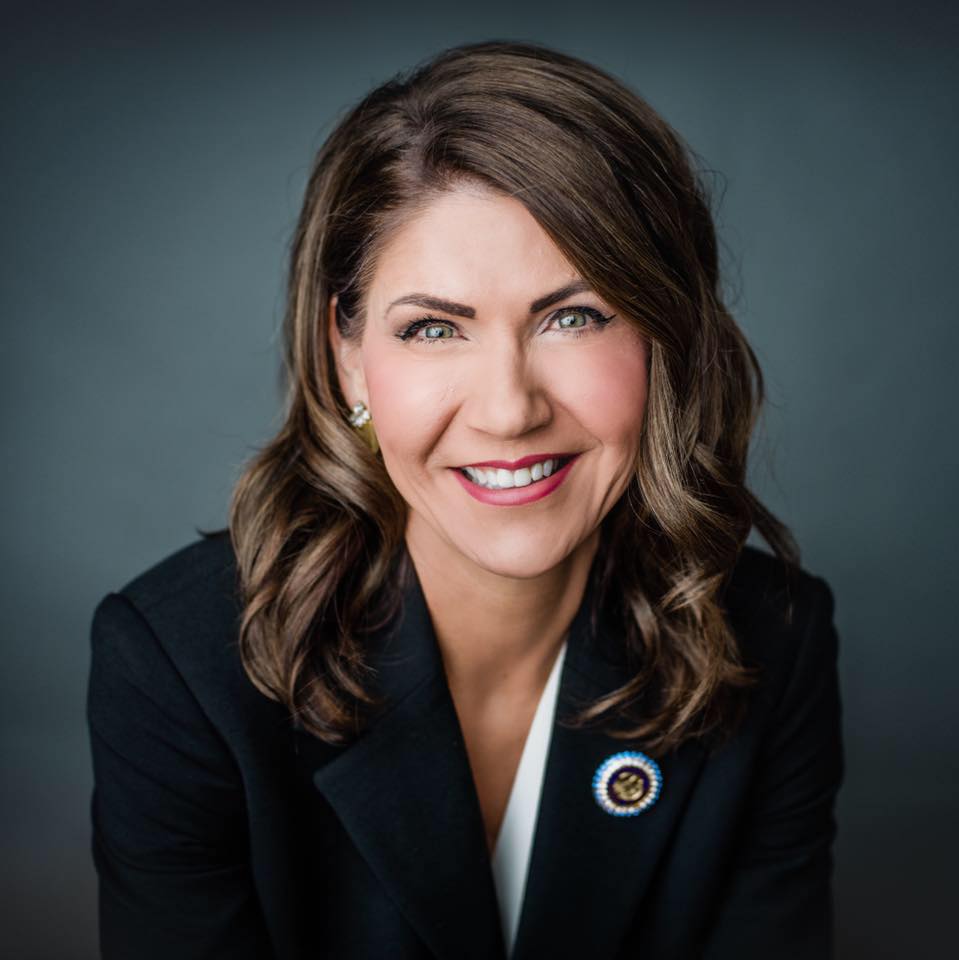
PIERRE, S.D. – Today, Governor Kristi Noem and 24 of her fellow Republican governors sent a letter to President Biden saying they oppose his rule regarding the Clean Water Act and the revised definition of “Waters of the United States” (WOTUS). You can read the letter here.

“The rule is problematic in and of itself, but its timing is particularly troubling given record inflation and gas prices that threaten the livelihoods of so many communities,” wrote Governor Noem and her colleagues. “Those who rely on farming and small business as a backbone of their local economies are particularly vulnerable.”

The new WOTUS rule creates significant regulatory overreach by the federal government over private land use. It allows the EPA to regulate ditches, low spots, and temporary drainages on agriculture land. This creates additional federal overreach that will result in more South Dakota waters coming under federal jurisdiction. Under this rule, many waters will need a federal jurisdictional review to determine whether or not they are subject to this rule, resulting in uncertainty, delays, and additional costs for property owners.

The governors in their letter questioned the timing and necessity of the rule given the U.S. Supreme Court’s decision in Sackett v. EPA, which sets for a test for whether wetlands are “waters of the United States.” This opinion could significantly impact the final rule and its implementation, the governors continued. And the president’s plan could result in changing the rule multiple times within six months, an inefficient and wasteful use of State and Federal resources.

“The substance of the rule hinders State governments as we seek to give clarity and consistency to businesses, farms, and individuals regarding the regulatory framework for water,” continued Governor Noem and the other governors. “The broad definitions used in the 514-page document only add to the confusing and complicated history of WOTUS. In fact, it appears that the EPA is seeking to regulate private ponds, ditches, and other small water features.”

Governor Noem was joined by the following Republican governors in issuing the statement: Idaho Governor Brad Little, Alabama Governor Kay Ivey, Alaska Governor Mike Dunleavy, Arkansas Governor Sarah Sanders, Florida Governor Ron DeSantis, Georgia Governor Brian Kemp, Indiana Governor Eric Holcomb, Iowa Governor Kim Reynolds, Mississippi Governor Tate Reeves, Missouri Governor Mike Parson, Montana Governor Greg Gianforte, Nebraska Governor Jim Pillen, Nevada Governor Joe Lombardo, New Hampshire Governor Chris Sununu, North Dakota Governor Doug Burgum, Ohio Governor Mike DeWine, Oklahoma Governor Kevin Stitt, South Carolina Governor Henry McMaster, Tennessee Governor Bill Lee, Texas Governor Greg Abbott, Utah Governor Spencer Cox, Virginia Governor Glenn Youngkin, West Virginia Governor Jim Justice, and Wyoming Governor Mark Gordon.

###

New Minnehaha County GOP official wasting no time attacking GOP

As opposed to raising money, or doing something nominally useful, new Minnehaha County GOP Chair Shawn Tornow is getting busy attacking Republican leadership the day after his election:

“State Republican Chair Wiik was inexplicably ‘excused’ last Thursday for perhaps one of his most important votes of his time in office,” newly elected Minnehaha County GOP Chairman R. Shawn Tornow said in a release.

and..

Wiik said he had not previously heard about growing discontent from Minnehaha County, as well as others, about how Frye-Mueller had been treated.

“You are informing me about it right now,” he said Sunday night.

“They all have my phone number,” he added. “I don’t know why they have to do everything through the press when they can just call me.”

Read the story here (Subscription required).

Senator Wiik missed a couple votes last week as he was attending to his son at the Capital who had taken ill.  I’m sure given Tornow’s concern over legislators missing votes, we can go back and find where he criticized Taffy Howard for missing 14% of all floor votes last session.

It’s going to be a long election season.

Rep. Chris Kassin Weekly legislative Update for January 28, 2023

Rep. Chris Kassin Weekly Legislative Update
for January 28, 2023

It has been a full week in the legislature, and things are in full swing. Bills are being introduced and assigned to committees. Our state has a grand tradition; unlike the U.S. Congress, where the leadership can stop bills from receiving a hearing, all bills introduced in the South Dakota legislature receive a hearing. This tradition allows our 105 legislators to represent their constituents most effectively.

As we talked about, I serve on the House Appropriations Committee. This year, the two Appropriations Committees from the House and Senate decided that we should meet together as often as possible. The two committees make up the Joint Committee on Appropriations or JCA. However, when we begin making decisions on the different tax reduction proposals, for instance, our rules require the House and Senate appropriators to have separate hearings.

This week it was just JCA, and we heard from several state agencies. I have been impressed with those tasked with leading the agencies in this state. I want to commend the professionalism and knowledge demonstrated by our agency leaders.

This week, we heard from the Department of Public Safety, the Board of Regents, the Board of Technical Education, the Department of Education, and the Department of Agriculture and Natural Resources. As the other agencies have done, they presented their progress, challenges, and opportunities, as well as their budget priorities and requests for this fiscal year. If you are interested, here is the link to listen to those hearings on sd.net – https://sdlegislature.gov/Session/Committee/1169/Minutes. Without getting into all the specifics of all the budget requests, one I would like to highlight is the recommendation from the Governor for a 5% increase in funding for public education. The legislature will consider the request and determine what should be added to the school funding formula, which provides money to the districts and allows for increases in teacher pay. Concern about teacher pay was one of the issues I often heard expressed during the campaign. Rightfully so. I am and will continue to champion education at all levels because it is the best investment in our state’s future.

As always, if you have questions about these different agencies or anything happening in the legislature, please do not hesitate to reach out. I encourage your thoughts and feedback. My email address is chris.kassin@sdlegislature.gov, or you can always call/text me at (605) 670-9698.

Thank you again for the opportunity to represent you.

Senate Bill seeks to close loophole in term limits law for Public Utilities Commission

Uh oh! Looks like Senator Jim Bolin is proposing to be a party pooper, and has a bill in to close an election loophole that has long been in existence for members of the Public Utilities Commission.

in 1992, South Dakota passed a Constitutional Amendment (Constitutional Amendment A) to set term limits for many elected officials.  Many, as in “not all.”

Title: Relating to Term Limitations

Attorney General’s Explanation:

The South Dakota Constitution and other state laws do not limit the number of terms of office that may be held by a United States Senator, United States Representative, state senator or representative, attorney general, secretary of state, auditor, treasurer, commissioner of school and public lands, or public utilities commissioner.

The proposed amendment would limit an individual to two consecutive six-year terms (12 years) as a United States Senator, and six consecutive two-year terms (12 years) as a United States Representative, effective as of the 1992 election.

The amendment would limit an individual to two consecutive four-year terms (8 years) as attorney general, secretary of state, auditor, treasurer, or commissioner of school and public lands, effective as of the 1992 election.

This amendment would not place any limit on a public utilities commissioner.

The amendment would limit an individual to four consecutive two-year terms (8 years) as a state Senator or state Representative. This limit would not apply to partial terms to which a legislator may be appointed and to legislative service prior to January 1, 1993.

A vote “Yes” will change the Constitution as explained above.

A vote “No” will leave the Constitution as it exists.

“Shall the proposed change to the Constitution be approved?”

Full Text of Constitutional Amendment A:

That section 6, Article III of the Constitution of the state of South Dakota be amended to read as follows:

Section 6. The terms of office of the members of the Legislature shall be two years; they shall received for their service the salary fixed by law under the provisions of Section 2 of Article XXI of this Constitution, and five cents for every mile of necessary in going to and returning from the place of meeting of the Legislature on the most usual route.

No person may serve more than four consecutive terms or a total of eight consecutive years in the senate and more than four consecutive terms or a total of eight consecutive years in the house of representatives. However, this restriction does not apply to partial terms to which a legislator may be appointed or to Legislative service before January 1, 1993.

A regular session of the Legislature shall be held in each odd-numbered year and shall not exceed forty legislative days, excluding Sundays, holidays and legislative recess, except in cases of impeachment, and members of the Legislature shall received no other pay or perquisites except salary and mileage.

A regular session of the Legislature shall be held in each even-numbered year beginning with the year 1964 and shall not exceed thirty-five legislative days excluding Sundays, holidays and legislative recess, except in cases of the Legislature shall receive no other pay or perquisites except salary and mileage.

That Section 32, Article III of the constitution of the state of South Dakota be amended as follows:

Section 32. Commencing with the 1992 election, no person may be elected to more than two consecutive terms in the United States senate or more than six consecutive terms in the United States house of representatives.

That section 7, Article IV of the Constitution of the state of South Dakota be amended to read as follows:

Section 7. There shall be chosen by the qualified electors of the state at the general election of the Governor and every four years thereafter the following constitutional officers: attorney general, secretary of state, auditor, treasurer, and commissioner of school and public lands, who shall severally hold their offices for a term of four years. Commencing with the 1992 general election, no person may be elected to more than two consecutive terms as attorney general, secretary of state, auditor, treasurer, or commissioner of school and public lands.

As taken from the Secretary of State’s Website.

What the writers of the Amendment didn’t bother to care about was the fact that the Public Utilities Commission is a creature of State Law, and not a Constitutional Office. It was pointed out by the Attorney General at the time, but no one seems to have really cared since. Until now, with State Senator Jim Bolin’s proposal to put PUC Commissioners on even footing with other state level elected officials, capping their terms of office.

If you look at the membership of the Public Utilities Commission’s current membership, you can see where the argument could be made that an application of term limits might not be inappropriate.

With only two six-year terms, Kristie Fiegen is the most junior of commissioners, followed by Chris Nelson with three six-year terms, and Gary Hanson with 4.  I’ve always mused that the PUC was the best gig in Pierre for a couple of reasons. The salary is not dictated in state law, nor are the terms of office. And as noted, Bolin’s bill seeks to close one of those loopholes, and force turnover… starting with “the next guys.”

Not that I blame him, as I certainly support Kristie Fiegen running for another term.. And I believe Gary has already said he’s not running again, but legally, I’m not sure how you can set a term limit without setting a date certain when it takes effect, versus making it based on the people in office.

We’ll see what the legislature has to say about it in the coming weeks.

Guest Column: A Conversation about Nuclear Energy by Sen. Brent “B.R.” Hoffman

A Conversation about Nuclear Energy
by Sen. Brent “B.R.” Hoffman
Electricity seems to touch nearly every aspect of modern society.  It cools and heats our food, makes our favorite television shows possible and powers every light switch we touch.  It drives a dizzying array of computer systems, smart phones, power tools and new cars.  If you’ve every experienced a prolonged blackout, you understand just how reliant we are upon electrical power.
It is what separates us from our ancestors, and so we should be very careful to never take it for granted, especially with population growing and energy demands increasing.  Resources are limited, and our nation is moving away from coal-fired power plants and towards renewable, low-carbon energy sources.
With that in mind, perhaps the timing is right to have a conversation about nuclear energy.  Nuclear power has a number of advantages over both traditional and renewable energy sources, and I offer three for your consideration.
First, nuclear power plants are clean and carbon-free, utilizing the fission process to produce steam, which drives turbines to produce electricity.  Worldwide, nuclear energy is second only to hydropower in the production of low-carbon electricity.
Second, nuclear energy has a higher capacity than any other form of energy and can operate 24/7.  One uranium pellet (about the size of a vitamin tablet) has the fissionable energy potential of more than a ton of coal.  Nuclear power plants currently operate nationwide and provide about 20% of our electricity.
Third, and last, nuclear energy is a national economic driver, contributing over $2.0B in state-level taxes and employing nearly 100K individuals at the highest average wages of any energy source.
Certainly there are other factors to consider, both pro and con.  Our great state currently draws energy from two nuclear reactors in Minnesota that are nearing the end of their life cycle.  Three other plants providing power are coal-fired.  Neighboring states such as Nebraska and Wyoming are considering nuclear energy options, including designs for smaller, advanced nuclear reactors.
Given these considerations, this past week, my colleagues and I in the State Senate introduced a resolution to form an interim legislative committee “to examine the potential use of nuclear energy in South Dakota.”  If the committee goes forward, with the support of the State House, I’m hopeful it can lead to a productive study, which may include draft legislation, policy recommendations, expert testimony and feedback from citizens.
Bear in mind this proposed committee is merely a first step to plan for the future.  It doesn’t propose applying for a permit, appropriating funds or breaking ground on a nuclear power plant.  It merely begins a conversation…with legislators, utility partners, policy experts, and most important, the citizens we represent and serve.
I believe it’s time to have a conversation about nuclear energy in South Dakota, and I hope you’ll be a part of it.
The author served a career in the military, surviving the 9/11 attack on the Pentagon.  He’s a published author, occasional newspaper columnist and currently serves as a state senator for District 9, which includes western Sioux Falls, Hartford and Wall Lake.