Open and Civil Discourse
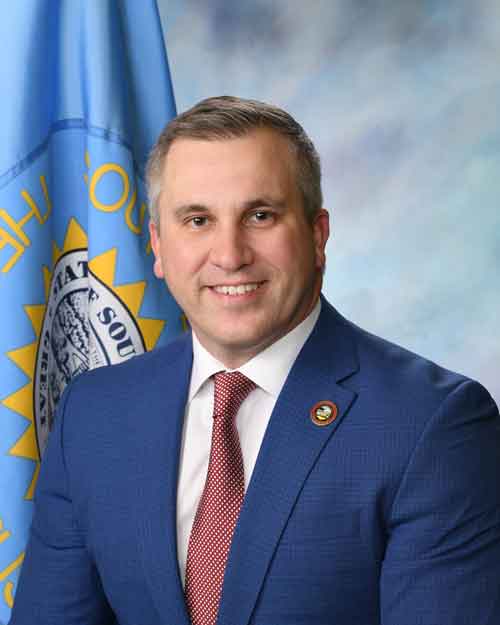
By: Gov. Larry Rhoden
September 12, 2025
Decades before the American Revolution, Benjamin Franklin wrote, “Without freedom of thought, there can be no such thing as wisdom; and no such thing as public liberty, without freedom of speech.”
Our Founding Fathers believed so strongly in civil and open public discourse that they put freedom of speech in the First Amendment. They knew that our American republic could only function if people openly shared their beliefs and the reason for those beliefs – and that had to happen at all levels of society, from statehouses and the U.S. Capitol to individual conversations between friends, family, and neighbors.
Recently here in South Dakota, we embarked on a process rooted in civil and open public discourse. When the previous prison plan failed during the legislative session, I started a prison task force to build consensus on this issue. I knew that the Legislature was very divided on the subject, so I included an even number of supporters and opponents of the original plan, as well as both Republicans and Democrats.
I challenged the task force to answer three questions: 1) Do we need a new prison? 2) How big should it be? 3) Where should it go? The task force met four times in open session and took hours of public comment. Through debate and negotiation, they came to unanimous agreement on each of the three questions.
The prison task force proved that civil and open public discourse doesn’t just make for a good process – it makes for good policy.
Just a few days ago, our nation lost one of our greatest advocates and examples of open and civil discourse. Charlie Kirk was a great champion of free speech. He would go onto college campuses, environments where most folks did not agree with him, and offer everyone the opportunity to debate him. He did not attack individuals personally. His answers were focused on his Christian faith, his conservative principles, and his reason and common sense.
We could sure use a lot more Charlie Kirks in the world today.
Charlie Kirk was killed doing what he loved: participating in open and civil discourse. He was shot for the crime of having a difference of opinion and practicing the very thing that the First Amendment protects. We can honor his legacy by continuing to talk to each other and focusing on reason and principle, rather than personal attacks.
As we approach the upcoming special session on the new prison, I hope that everyone takes the time to review the facts and make their decision based on common sense and the principles of public safety and fiscal conservatism. We had a good process, we have a good plan, and we have the money to pay for it. Let’s get it done so that we can focus on rehabilitating people and make our state a better, safer place to live.
###


 #1 – Amber Hulse to remain in the Senate, pass on statewide office. Early on, the word was Amber was looking strongly at the Congressional race, and once Marty got in, there were rumors that she might be thinking about one of the undercard contests. This weekend, I’m hearing that Amber is telling people that she’s running for re-election to her current seat in the South Dakota State Senate.