Gov. Noem Launches “Saddle Up” Ad Buy

Gov. Noem Launches “Saddle Up” Ad Buy

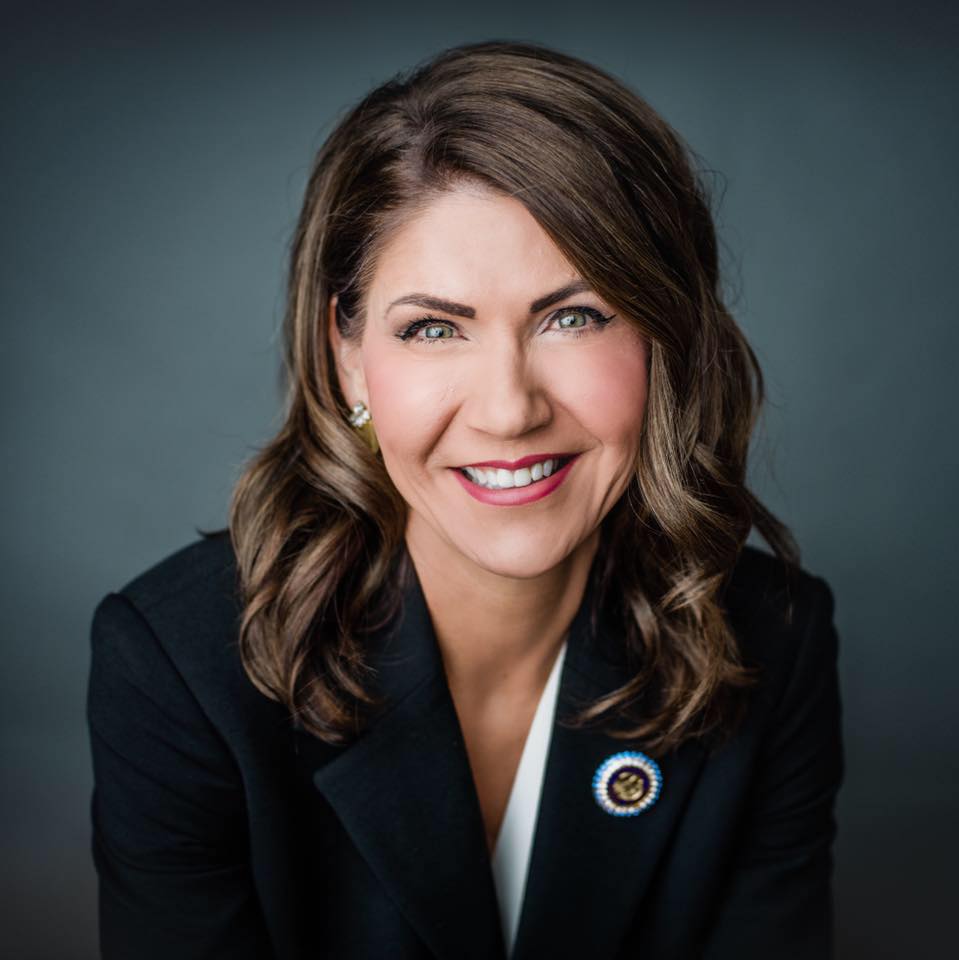
PIERRE, SOUTH DAKOTA – Today, the Kristi for Governor campaign launched a multi-week, six-figure ad buy called “Saddle Up” as part of Governor Kristi Noem’s reelection efforts. The ad features lessons that Governor Noem learned from her dad, how she has applied those lessons to her leadership decisions as Governor, and how they will shape her conservative policies over the next four years.

“‘Get back on that horse and ride.’ It’s what my father taught me since I was a little girl,” Governor Noem says in the ad. “In South Dakota we don’t complain about things, we fix them. I held the reins and refused to let fear steal our Freedom. Here, Freedom runs free. So, saddle up. We’re just getting started.”

Under Governor Noem’s unwavering conservative leadership, South Dakota is thriving. Because of the Governor’s refusal to accept one-size-fits-all, big government overreach, South Dakota has the number one economy in the nation, leads the nation in personal income growth, ranks number one in tourism, and our schoolchildren lead the nation in educational outcomes.

###

Op Ed from Senator Thune: Google May Send Republicans to Spam, but We’re Holding Big Tech Accountable

Google May Send Republicans to Spam, but We’re Holding Big Tech Accountable

Big Tech has an outsized ability to shape our online experiences
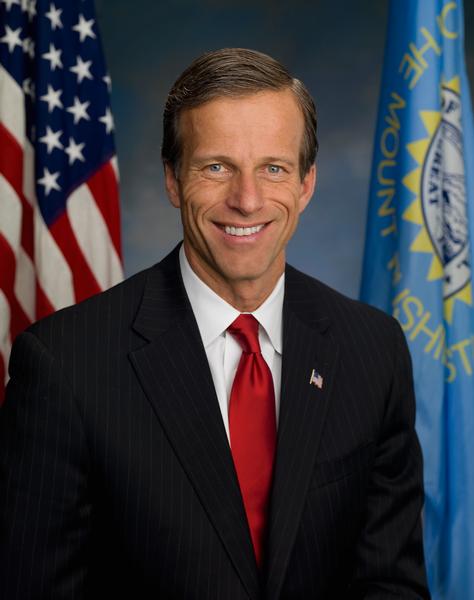
By Sen. John Thune
Fox News

Today’s debates around Big Tech giants like Facebook, Twitter, or Google, among others, typically center around the ability that these platforms have to shape social media and determine the content that people see or don’t see. Little is known by consumers, or even Congress, about the secretive algorithms used by these platforms and the intentional or unintentional political biases at play, which is why I’ve long argued that these manipulative practices are worthy of congressional oversight and action. Big Tech, much like the Wizard of Oz, would prefer that we don’t look behind the curtain and instead just focus on what we can see. That will change if I have anything to say about it.

New research shows that Big Tech companies are manipulating the online experiences of millions of Americans in ways unknown before, with a demonstrated and disturbing bias against communications from Republican candidates and policymakers. Republican leaders have had enough, and we’ve introduced legislation to stop it.

Researchers at North Carolina State University recently analyzed emails sent by Republican and Democrat candidates during the 2020 election cycle. The non-partisan study found that Gmail, which is the largest email provider in the United States, sent nearly 70 percent of emails from Republican candidates to spam while allowing 90 percent of emails from Democrat candidates to sail through Google’s filtering algorithms without issue. A data discrepancy like this one can’t be ignored.

These findings are alarming on many levels, but especially when it comes to the integrity of our elections. Email is a vital method of communication for elected officials and candidates to reach voters, and it’s a problem when the most-used email provider in the United States demonstrates a pattern of limiting political discourse from one of the major political parties while essentially amplifying it for the other party. No major Big Tech company should have the ability to place its thumb on the scales by limiting the content that voters see, especially behind closed doors.

I recently pressed Google’s CEO Sundar Pichai on this issue. Google disagrees with the allegation that its e-mail filtering algorithms are politically biased. Thankfully, there’s an easy way to clear everything up: Google could be more transparent with the public about its algorithms and why Republican emails are discriminated against at such a high rate.

Or better yet, Google could leave the decision up to the consumers to make their own online decisions. That might be a novel idea to Big Tech, but it’s something American consumers are demanding now more than ever before.

This would be required of all major platforms if Congress passes my Political Bias in Algorithm Sorting (BIAS) Emails Act, which I introduced earlier this month. It would prohibit email platforms from using biased filtering algorithms on emails from federal political campaigns unless a user took a proactive action to apply a label to that email. My bill would also require these platforms to explain when emails from political candidates are marked as spam and provide transparency reports into the platform’s sorting practices.

Consumers should have the most power to determine what they do or don’t see online, especially when they have opted to receive emails in the first place. Nothing in the Political BIAS Emails Act would stop a user from marking an email they don’t want as spam – but it would prevent large platforms from trying to make those decisions for the user.

Last week, Republican leaders in the House of Representatives introduced companion legislation to the bill I introduced in the Senate. Their support and leadership will be necessary if we are going to take on the largest Big Tech companies on behalf of consumers everywhere. I’m not new to this effort. In fact, I’ve introduced multiple pieces of legislation that would also hold Big Tech accountable and empower American consumers. My Filter Bubble Transparency Act and Platform Accountability and Consumer Transparency Act would also create meaningful change for online users, and they both enjoy bipartisan support.

Big Tech has an outsized ability to shape consumers’ online experiences, and it’s only growing. Republicans believe in empowering consumers to make their own decisions within a free market of ideas, and if we are trusted with majorities in Congress next year, we will have more tools and leverage at our disposal to hold Big Tech accountable.

The decision is up to the voters – they just might want to check their spam folders to learn more.

###

Gov. Noem Appoints Mark Vargo as Attorney General

Gov. Noem Appoints Mark Vargo as Attorney General

PIERRE, S.D. – Governor Kristi Noem has appointed Pennington County State’s Attorney Mark Vargo as Attorney General effective today.

“Mark Vargo returns integrity, experience and stability to the Attorney General’s Office,” said Governor Noem. “He is an outstanding prosecutor who has the respect of law enforcement agencies and prosecutors statewide. Mark will provide the leadership the office needs until the next Attorney General is elected in November and takes office in January.”

Vargo has more than 30 years of professional and public legal experience. He graduated from Princeton University in 1985 with a Bachelor of Arts degree and earned his law degree with honors from Georgetown Law Center in 1988. He has served as an Assistant State’s Attorney for Florida’s Dade County, Assistant United States Attorney for the District of South Dakota and has been Pennington County State’s Attorney since 2013. He was nominated in 2010 for a U.S. Department of Justice’s Director’s Award and was named the South Dakota Prosecutor of the Year in 2015. Vargo has been active in the Rapid City area serving as an adjunct professor, high school debate coach and youth soccer coach.

Last week, Vargo was the lead prosecutor in the Senate impeachment trial against the former attorney general.

“I am honored to have been asked by Governor Noem to serve as the Attorney General,” said Vargo. “I have worked closely with the Attorney General’s office in the past and have a high respect for the abilities of the staff. My goal is to provide office members the necessary support so they can keep doing their job and honoring the rule of law for the citizens of South Dakota.”

Vargo will serve as Attorney General through Friday, Jan. 6, 2023. The new Attorney General is scheduled to be sworn in Saturday, Jan. 7, 2023.

-30-

Impressions from the 2022 State GOP convention: Not a bad event, but the dated format is showing.

After a couple half days, and all of Friday off for convention, I’m still playing catch-up and trying to unbury myself with work, so I’m not doing a lot of posting beyond pictures. But I did want to start to recap the convention.

The Republican State Convention has kind of morphed into this beast which seems to be a greater challenge to wrangle every year. Not wrangle in any definition of trying to pre-determine an outcome, but in terms of planning for event size, and “who is going to show up for this meal.”  No matter how much they plan and plead for people to pre-register, people just aren’t doing it. And in a phenomena which was not unusual to this convention but it happened in 2018 as well, there’s a faction who think that they are entitled to participation without paying convention fees, with some showing up feeling entitled to a free lunch.

Well, ..if someone tries to argue to the convention that it should be free, despite the event costing over $50,000 to put on, then this no-name blogger is going to say that the freeloader label might be accurate. You know, if it walks like a duck, etcetera…. Unless someone wants to go out and find someone to pay for everything, then they should not be trying to bankrupt the Republican Party by demanding everything be free. Which is just an odd position for someone claiming to be conservative.

I’m not sure how the GOP can combat those expecting free meals any more than they have. It was a battle they faced in 2018, (not for the 2020 on-line COVID convention), and again this year. And to address it then as in now, all days with party convention business had the registration fee, and on the day when they selected candidates, there was the free option for the Saturday when the votes were taken.

But even doing as much pre-planning as humanly possible, without the cooperation of the attendees giving them an RSVP that they were coming, the venue found itself overwhelmed at times by the people who just showed up, some of which who didn’t pay, or at least pay ahead of time.  It’s like some of the delegates knew R.S.V.P. is an abbreviation for a French phrase, and they rejected it out of hand.

On Thursday, at the event at Joy Ranch, they were able to handle it like champs at an excellent event with excellent food. But the hotel events… it was quickly evident that they weren’t as scalable. And how can you scale when 200 RSVP, and 300 or more show up wanting to be fed? It’s an impossible task.

At more than one event, organizers found themselves buying pizza, and the chair was trying to buy a group food elsewhere because the hotel could not ramp up quickly enough for all the extras. There were a couple of meals I found myself rolling through Taco Johns to pick up something on the way home out of town, because after the speech I went there for, two hours later it wasn’t worth hanging around for mediocre at best hotel food.

Those was just the meals. Hospitality suites? Been there done that.  I only did a quick loop on Thursday night.   Dozens if not hundreds of people jam packed in the hallway trying to get into an overly small hotel room.  It’s great seeing old friends, but, there’s this sense of Déjà vu.  And that illustrates something that’s more than a bit outdated about how we select sites and organize these things.

At the end of the convention, they announced that the recommendation of the Site Selection Committee that next two conventions were going to be in Pierre and Rapid City.  I literally groaned when I heard it.

Rapid City gives a glimmer of possibility if they have some imagination, but in Pierre, I predict we’ll be stuck doing this dance again at the Ramkota Inn, shoe-horned in the convention space, using the same beat-up podiums that we used at the last Pierre convention, and the one before that, clustered around the pool hospitality suites, and you could play a video of this and many other years’ conventions and not see any differences.

Why do I bring this up? Because we shouldn’t be doomed to a format we’ve been using for 40 years or more.

Among the presentations during the Site Selection Committee process, there was one from former Executive Director of the SDGOP, and now the Executive Director of Visit Brookings, Laura Schoen Carbonneau, that made a huge impression on me. Not because it was from my town, but because it offered a way forward with an update on how conventions could be done.  Not pushing the same format that we’ve been holding them in for the last 30-40 years, but making them more community-based.

The model that Laura offered was based on the Republican National Convention, where there is a central large venue for convention activities. There would be a larger hotel where the Party HQ is based, but they aren’t operating the entire convention there, because they know they can’t fit everyone there, and they operate accordingly.

Showcase events are off-site, and hospitality events are distributed elsewhere in the community such as downtown restaurants and other venues.

Most communities large enough to host a convention have mass transit or ride-share. And if you focus the hospitality venues to a certain area, such as a downtown, it is pretty darned manageable.

Some of the best events of recent conventions are those held away from the main convention hall.  Joy Ranch this time. Last time the convention was in Pierre, it was at the Riverboat in the Ft. Pierre park, and I could go on. Those events were good, so do more of that! Get us out of the cramped and dated hotel facilities.  And it would show more of the host community than trapping us all at the hotel, and condemning us to eat rubber chicken or overcooked sirloin. Or pizza, if you’re last one in.

I’d issue that challenge to the host committee for the Rapid City convention. Put us at events in community venues that can meet the need. Paraphrasing Joan Crawford’s character in Mommie Dearest, I’d declare with what I don’t think would be a singular voice – NO MORE RUBBER CHICKEN!  Yes, that would require us to take a break from many years of now-stale precedent, but I would argue that if it’s good enough for the Republican National Convention, there’s no reason we can’t scale down the model for our own purposes.

That’s not to say that the event this last weekend was bad. No, not at all, and noting how we could do things better is not to be meant as a complaint.  Everyone did a great job with the tools they had at hand in a convention that was overwhelmed with people.

Rather, it should be considered an opportunity to recognize that this convention has grown, and maybe the “one motel” model should be scrapped moving forward should instead be designed to see the best these communities have to offer.

Release: SDGOP hosts Largest ever convention in Watertown, Selects Rhoden, Jackley, Johnson, and other nominees in convention races

SDGOP hosts Largest ever convention in Watertown, Selects Rhoden, Jackley, Johnson, and other nominees in convention races

This past weekend, the South Dakota Republican Party held their 2022 State Convention which proved to be the largest ever political convention in modern state history and selected the party’s nominees to move forward towards the 2022 fall election.

Smashing the old record, the Republican Party had 687 delegates attending, which exceeded the old record in 2018 of 625 by over 60 attendees. “There’s nothing that shows a vibrant and healthy Republican party than the overwhelming interest people have in participating in the process,” State Republican Party Chairman Dan Lederman noted.

Several contested races were decided at convention including the selection of Lt. Governor Larry Rhoden to return to the campaign trail as Governor Kristi Noem’s running mate for the November election. After Rhoden’s nomination speech was proudly given by Governor Kristi Noem herself, Rhoden dominated among the delegates, despite a last minute challenge from State Representative Steve Haugaard. Rhoden won on a vote of 56-44%, or 92,991 votes to 72,961, which is weighted by the number of votes that each county cast for Kristi Noem in the 2018 gubernatorial election.

For the office of Attorney General, former Attorney General Marty Jackley won the nomination over David Natvig on a vote of 52.7% (89,150) to 47.3% (80,084).   In the contested race for Secretary of State, newcomer Monae Johnson defeated incumbent Secretary of State Steve Barnett on a vote of 61% (103,046) to 39% (65,920).

In the open office of School and Public Lands, State Senator Brock Greenfield won his first-time nomination for the office without being contested.  State Auditor Rich Sattgast, State Treasurer Josh Haeder, and Public Utilities Commissioner Chris Nelson all successfully ran for the nomination to run once again for their respective offices on unanimous and uncontested ballots.

Lederman said, “The unprecedented and record-setting  level of interest by delegates in attending and being active in the party’s election process should give Democrats pause at the absolute freight train’s worth of momentum that the GOP has coming out of this convention.  Republicans are here to win elections this fall, and Democrats had better get out of the way, because there’s a red wave coming!”

SDGOP Releases weighted vote totals in Lt Gov, Ag and SOS nomination contests

In case you were wondering how the county delegations voted at the election, the Republican Party has released the votes by county in yesterday’s convention nominating elections.

First up, Steve Haugaard versus Larry Rhoden for Lt. Governor:

David Natvig versus Marty Jackley for Attorney General:

and Monae Johnson versus Steve Barnett for Secretary of State: