Congressman Dusty Johnson: Tightening SNAP work requirements lift Americans out of poverty and away from dependence


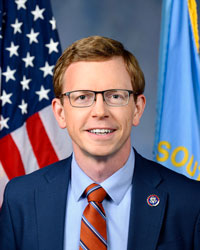
By Rep. Dusty Johnson
March 17, 2023
The Hill

I was that kid on food stamps—I know firsthand how government assistance can both help and hurt. Education, training, and work provide dignity and economic opportunity. Too many Americans are on the sidelines while we are facing a record labor shortage.

We have the jobs, but we don’t have the people to fill them. There is no one-size-fits-all solution to this problem, but there are policy areas where government is hurting, rather than helping Americans re-enter the workforce.

During the peak of the COVID-19 pandemic, the federal government waived all existing work requirements for government assistance programs like the Supplemental Nutrition Assistance Program (SNAP). In the fog of war, this made sense. Government was right to not stand in the way of getting food benefits to Americans who lost their jobs because of the pandemic—quickly.

However, we are three years removed from 2020 and these blanket waivers have gone on far too long. Long before the pandemic, work requirements for welfare programs like SNAP had been abused. As we approach the end of the COVID-19 Emergency Authorization and previous laws go back into effect, it’s past time for reform. It’s time for my bill, the America Works Act.

Under existing law, Able-Bodied Adults Without Dependents (ABAWDs) are required to work or participate in work-related training or education for at least 20 hours per week in order to receive SNAP benefits. Unfortunately, states have long abused waivers for ABAWDs that allow them to suspend these very modest work requirements.

When the idea of work requirements gets brought up in Congress, many of my colleagues on the other side are quick to call out Republicans for seeking to take away benefits from single mothers with young children and disabled Americans—that is not accurate.

1.36 million ABAWD households recorded zero gross income in 2020—if you have no children, no disabilities, no dependents, and no job—what are you doing with your day? People who can work, should work. Especially if they expect to receive government assistance.

The America Works Act is simple. It restores the integrity of the SNAP state exemption waiver process by repealing language where the United States Department of Agriculture can simply grant a waiver for work requirements if a state “believes” it doesn’t have enough jobs to provide employment to an individual. There are nearly 11 million open jobs in the United States, I’d challenge any state to prove with data the “belief” that they can’t find an American a job.  Additionally, states can currently roll over their waivers from year to year. This has allowed states to rack up thousands of waivers, further abusing the program—my bill removes this rollover provision.

The America Works Act also changes age eligibility for SNAP waivers. Currently, if you are over 49 years old, you can receive SNAP benefits with no need for a waiver. As I approach 49 years old, I know I still have decades left of work ahead of me. My bill changes the maximum age rate of an ABAWD to be 65 years old, consistent with retirement and Medicare age.

Finally, the America Works Act limits the provision that exempts ABAWDs from work requirements if they have any dependent children to if they have any dependent children under the age of seven years old. By seven years old a child is in school nearly 35 hours a week. If a child can go to school nearly full-time, a parent with no other children under the age of seven can work 20 hours per week.

This bill is commonsense—and it continues to leave waivers in place for areas with certain levels of unemployment.

As Congress weighs solutions to our labor crisis, record government spending, and work requirements in the 2023 Farm Bill, I hope the America Works Act is strongly considered as a solution to lift Americans out of poverty and encourage work rather than government dependence.

###

Governor Kristi Noem’s Weekly Column: Preserving Agriculture, Preserving Patriotism

Preserving Agriculture, Preserving Patriotism
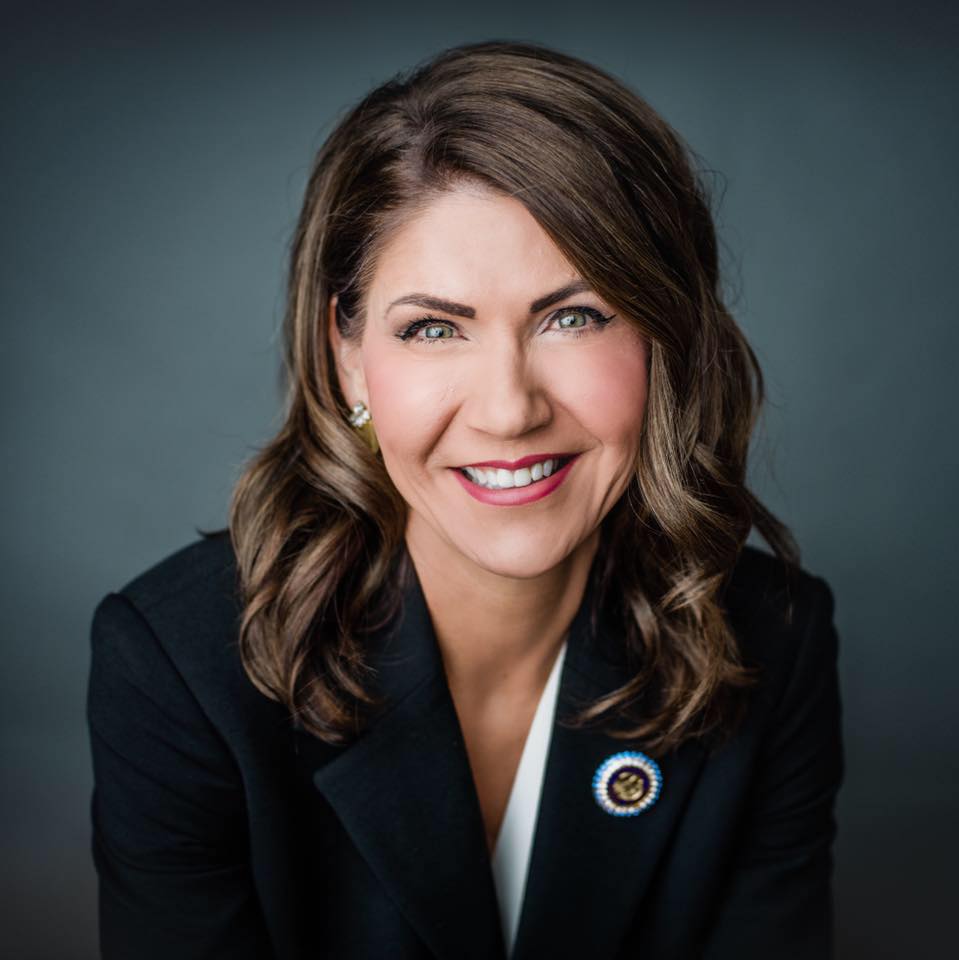
By: Governor Kristi Noem
March 17, 2023

I talk a lot about the American Dream. Unfortunately, that’s unusual these days. To me, the American Dream was an ideal that was embedded in my heart since I was a child. I think that had a lot to do with growing up on the farm. It was tough work, but one of the best lessons my parents taught us kids was that life isn’t easy.

The road to success isn’t paved by anyone but yourself. Sure, others can help – but you have to work hard to attain it yourself. There is something so inherently American about being self-taught and self-starting – about making decisions and solving problems as you go. As my dad always said, “we don’t complain about things, we fix them.”

That’s the mindset of so many of our farmers across the state of South Dakota. Their job is tiring, it’s often thankless, but they still get up every single morning and get to work. Our farmers show what South Dakota grit and grind is all about. They’re some of the hardest workers I know. And I figure the least I can do is protect their industry.

I recently had the pleasure of meeting Travis Mockler, a local ag producer near Centerville, South Dakota. Travis grew his independent farming operation into a diversified farming enterprise where he raises corn, soybeans, alfalfa, and stock cows, in addition to providing a custom haying service.

Folks like Travis truly embody the American Dream. But that success comes with its own challenges. Travis’ ag operation was previously sued by a liberal activist group with a nuisance complaint. Fortunately, he was able to get back on his feet. I want to prevent South Dakota farmers from having to endure those kinds of struggles in the future.

That’s why I signed legislation to preserve agriculture in South Dakota. This new law will keep our farmers protected from frivolous claims that can delay development and increase costs for producers.

South Dakota farmers have built ag into a $32 billion industry. It accounts for one in every five jobs in the state. We need to make sure we can pass this thriving industry down to our kids and grandkids. That’s why This legislation is so important to preserve the future of agriculture.

I hope that future generations can learn the same lessons that my parents taught me on the farm – that our rural way of life continues to instill the value of building the American Dream in so many young hearts. In my experience, I have come to find that preserving agriculture also preserves patriotism. And we need a whole lot of both of those nowadays.

Growing up, I always thought God must really love farmers. Just look at how often sowing and reaping are mentioned in the Bible. Now, I’m more convinced than ever that’s true. It does take incredible faith to be in a profession where so much is out of your control. South Dakota farmers are literally feeding America – and the world – every single day. And when I look at our state’s rolling hills and ag land and think about the hard work of our people, I’m sure that God has a hand in it all.

###


Gov. Noem Signs Prison Funding and Criminal Justice Bills into Law

Gov. Noem Signs Prison Funding and Criminal Justice Bills into Law

 PIERRE, S.D. – Today, Governor Noem signed HB 1016, which funds $60 million for construction of a new women’s prison in Rapid City. She also signed HB 1017, which funds $52 million for the purchase of land and design costs for a new men’s prison near Sioux Falls. The legislation also transfers more than $270 million to the Incarceration Construction Fund for future construction of the men’s prison.

“Funding new prisons is a public safety issue,” said Governor Noem. “Last year, we made the point to legislators that this was necessary. I’m glad that just a year later, they have come to agree and appropriately prioritized the security of South Dakotans.”

When including the budget bills signed earlier today, South Dakota is investing $391 million in the state’s prison system this legislative session.

Governor Noem also signed the following 10 criminal justice bills into law:

  • SB 4 – Modifies a court’s authority to commit a habitual juvenile offender to the Department of Corrections;
  • SB 51 – Revises certain provisions regarding the reimbursement of county expenses in detaining parole violators;
  • SB 53 – Exempts records regarding jail inmate disciplinary matters from public inspection and copying;
  • SB 64 – Repeals provisions related to the jail mental health screening pilot program and oversight council;
  • SB 70 – Revises provisions related to courtroom modifications for child witnesses;
  • SB 90 – Provides certain definitions related to the crime of rape;
  • SB 91 – Revises certain provisions regarding the crime of rape and provides a penalty therefor;
  • SB 146 – Limits parole for violent offenders;
  • SB 168 – Authorizes a board of a school district to adopt policies regarding students who are registered sex offenders; and,
  • HB 1170 – Establishes mandatory sentences for certain driving while under the influence violations.

Governor Noem has signed 170 bills into law and vetoed four this legislative session.

###

Gov. Noem Signs Budget Bills into Law

Gov. Noem Signs Budget Bills into Law

 PIERRE, S.D. – Today, Governor Noem signed SB 210 into law. She sent a signing letter to legislators. That letter can be found here.

“I appreciate the work of my BFM Commissioner Jim Terwilliger and the BFM team on this budget,” said Governor Noem, “and I appreciate the legislature for recognizing that it should fund my administration’s priorities to maximize freedom and liberty for the people of the state.”

This budget for Fiscal Year 2024 will fund important South Dakota needs including K-12 education, healthcare providers, and state employees. It also includes funding for the operation of regional behavioral health centers, 100% tuition assistance for our National Guard soldiers, and targeted increases for our state employee workforce and community service providers.

Governor Noem also signed the following three budget bills into law:

  • SB 16 – Makes an appropriation to rehabilitate the rail line form the city of Milbank to the city of Sisseton;
  • SB 24 – Revises property tax levies for school districts and revises the state aid to general and special education formulas; and,
  • HB 1049 – Revises the General Appropriations Act for fiscal year 2023.

Governor Noem has signed 158 bills into law and vetoed four this legislative session.

###

Attorney General Jackley Releases Final Explanations for Proposed “Top Two Primary” Constitutional Amendment

Attorney General Jackley Releases Final Explanations for Proposed “Top Two Primary” Constitutional Amendment

 PIERRE, S.D. – South Dakota Attorney General Marty Jackley has released the final ballot explanation for a proposed constitutional amendment regarding top two primary elections.

Language for the constitutional amendment can be found here. The constitutional amendment will be placed on the 2024 general ballot. A majority of the votes cast in the general election will be needed to pass the measure.

The Attorney General’s explanation was drafted after a review of all the comments received during the proposed amendment’s 10-day comment period. A total of 29 comments were received.

State law requires the Attorney General to draft a title and explanation for each initiated measure, initiated constitutional amendment, constitutional amendment proposed by the Legislature, or referred measure that may appear on an election ballot. The Attorney General must remain neutral when drafting explanations for all such proposed measures.

Joe Kirby of Sioux Falls was the prime sponsor of the proposed amendment.

For more information regarding ballot measures, please visit the Secretary of State’s website.

 -30-

Gov. Noem Signs Workforce Bills into Law

Gov. Noem Signs Workforce Bills into Law

PIERRE, S.D. – Today, Governor Noem signed six bills to enhance South Dakota’s workforce. Earlier this legislative session, Governor Kristi Noem signed SB 76 into law, which enhanced workforce freedom by recognizing out-of-state licenses for nearly every profession.

“South Dakota has the lowest unemployment rate in the nation, but we still have 25,000 open jobs,” Governor Noem said. “We’re tackling this workforce shortage head-on. And we’re making it easier for those moving here to pursue the American Dream to join our booming economy.”

The six workforce bills that Governor Noem signed include:

  • SB 59 – Makes an appropriation to the Department of Education for grants to support career and technical education programs;
  • SB 173 – Makes an appropriation for design costs related to the new Lincoln Hall at Northern State University;
  • HB 1059 – Establishes a community paramedic endorsement;
  • HB 1153 – Updates travel expenses, moving expenses, and other reimbursements;
  • HB 1183 – Authorizes the state’s participation in the interstate compact on occupational therapy licensure; and,
  • HB 1185 – Prohibits certain restrictions in employment contracts.

Governor Noem has signed 154 bills into law and vetoed four this legislative session.

###

Gov. Noem Signs Tuition Reimbursement for Members of the SDNG and Other Bills to Help South Dakota’s Military and Veterans into Law

Gov. Noem Signs Tuition Reimbursement for Members of the SDNG and Other Bills to Help South Dakota’s Military and Veterans into Law


PIERRE, S.D. – Today, Governor Noem signed HB 1039, which provides 100% tuition reimbursement for members of the South Dakota National Guard attending college in-state. You can find photos from the bill signing event here.

“The members of the South Dakota National Guard of some of the strongest and bravest men and women in the country. They have proven that time and time again,” said Governor Noem. “They’re the kind of folks we want to stay in South Dakota to earn an education, participate in our booming economy, and raise a family. This legislation will help them to do just that.”

Governor Noem also signed the following 2 bills to help South Dakota’s military and veterans into law:

  • HB 1045 – Increases the basic salary schedule for county veterans’ service officers; and,
  • HB 1065 – Increases the maximum amount of dollars payable by the state to erect the headstone of a deceased veteran.

Governor Noem has signed 145 bills into law and vetoed four this legislative session.

###

USDA Rural Development Under Secretary Torres Small & Rep. Johnson in Wall on Friday

USDA Rural Development Under Secretary Torres Small & Rep. Johnson in Wall on Friday

Washington, D.C. – On Friday, U.S. Representative Dusty Johnson (R-S.D.) will join U.S. Department of Agriculture (USDA) Rural Development Under Secretary Xochitl Torres Small to announce a $3.3 million investment in CNF Enterprises to construct a new 30,000 square foot meat processing facility in New Underwood, S.D. This new facility will have the capacity to process 4,000 head per year – including beef, pork, lamb, and buffalo. The USDA grant mirrors Johnson’s Butcher Block Act.

Gov. Noem and Colleagues Support State Action Against ESG

Gov. Noem and Colleagues Support State Action Against ESG

PIERRE, S.D. – Today, Governor Kristi Noem and 18 of her fellow Republican governors released a joint policy statement opposing President Biden’s potential veto of a matter against the radical environmental, social, and corporate governance movement. You can read the full statement here.

“We as freedom loving states can work together and leverage our state pension funds to force change in how major asset managers invest the money of hardworking Americans, ensuring corporations are focused on maximizing shareholder value, rather than the proliferation of woke ideology,” wrote Governor Noemand her colleagues.

Congress took action to keep politics out of Americans’ retirement funds – but President Biden threatened to veto that measure. In doing so, he puts the pensions of thousands of hardworking Americans at risk to the environmental, social, and corporate governance

movement.

The expansion of environmental, social, and corporate governance “throughout America is a direct threat to the American economy, individual economic freedom, and our way of life,” continued Governor Noem and her colleagues.

Governor Noem and the other Republican governors agree to lead state-level efforts to protect individuals from this movement. Those efforts include protecting taxpayers from environmental, social, and corporate governance influences across state systems and protecting citizens from similar influences in the financial sector.

“As Governors, we are committed to protecting the interests of our constituents and will keep fighting the Administration’s decision to jeopardize retirement saving for millions of Americans to promote far left priorities,” concluded Governor Noem and her colleagues.

Governor Noem was joined by the following Republican governors in issuing the statement: Alabama Governor Kay Ivey, Alaska Governor Mike Dunleavy, Arkansas Governor Sarah Huckabee Sanders, Florida Governor Ron DeSantis, Georgia Governor Brian Kemp, Idaho Governor Brad Little, Iowa Governor Kim Reynolds, Mississippi Governor Tate Reeves, Missouri Governor Mike Parson, Montana Governor Greg Gianforte, Nebraska Governor Jim Pillen, New Hampshire Governor Chris Sununu, North Dakota Governor Doug Burgum, Oklahoma Governor Kevin Stitt, Tennessee Governor Bill Lee, Utah Governor Spencer Cox, and Wyoming Governor Mark Gordon.

###

District 30 Legislator’s spouse charged with simple assault after crackerbarrel run-in with agent provocateur sticking camera in his face.

Following up to the story from a couple weeks back, State Representative Trish Ladner’s husband was charged with simple assault after fending off agent provocateur Matthew Monfore whom he said was sticking a camera in his face, which Ladner felt was an act against his person:

Yenulonis is the Custer County Sheriff’s Deputy who took the initial report.

Big takeaway from the article is that Monfore was sticking a camera in Ladner’s face, and Ladner claims he slapped at it, and it hit the ground.   Ladner has been charged with simple assault (Class 1 misdemeanor), or alternatively, disorderly conduct (Class 2 misdemeanor).

Could they get a conviction for someone feeling they needed to defend themselves for having a camera stuck in their face in Custer County? We’ll see.

You’ll have to chase down a hard copy of the Hill City Prevailer to read the entire article.