Hospitalizations for COVID continue to creep upwards…
Here’s the latest on COVID hospitalizations from Sanford Health:
As compared to last weeks’ numbers:
Those numbers continue to be creeping upwards..

Here’s the latest on COVID hospitalizations from Sanford Health:
As compared to last weeks’ numbers:
Those numbers continue to be creeping upwards..

Thune: Biden’s Disastrous Afghanistan Withdrawal Emboldens Terrorists, Abandons Americans and Allies
“The United States’ disastrous, hasty withdrawal is a stain on our nation’s history and a betrayal of the men and women who fought there.”
Click here or on the picture above to watch the video.
WASHINGTON — U.S. Sen. John Thune (R-S.D.) today called for Congress to conduct a thorough investigation into the Biden administration’s disastrous and chaotic withdrawal from Afghanistan. With the nation having recently marked the 20th anniversary of the September 11, 2001, terrorist attacks, Thune reiterated that the service and sacrifice of those American troops who served in Afghanistan was not in vain. Thune also discussed the Democrats’ out-of-control spending in Washington, D.C., and the urgent need to prevent saddling future generations with burdensome debt.
A while back I’d heard some rumors that state Democrats might be running Dan Ahlers for US Senate as their sacrificial lamb candidate against US Senator John Thune.
And given his performance in the last election (35.3% to Mike Rounds’ 65.7%), one would not be considered poorly for thinking “naaahhh.”
Because seriously, he got smoked. Trounced. Soundly defeated and shellacked.
But this morning, a Federal Elections Commission filing was made, correcting an error on an old filing. And it drew my attention to his most recent FEC filing, for April through the end of June where apparently Ahlers is spending a bit to keep up his US Senate website. And he’s still actively sitting on $20k in cash.
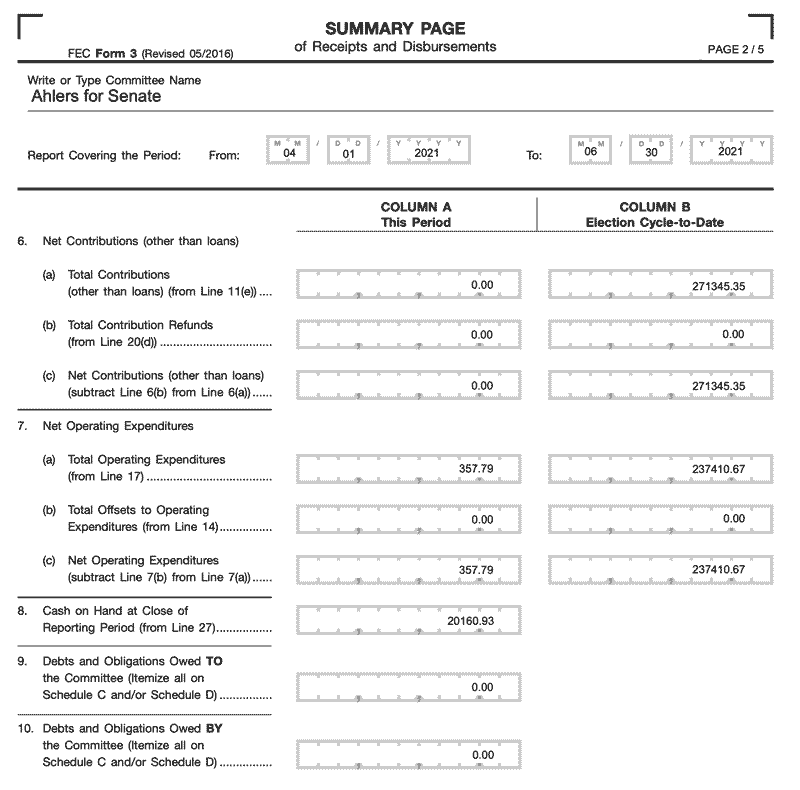
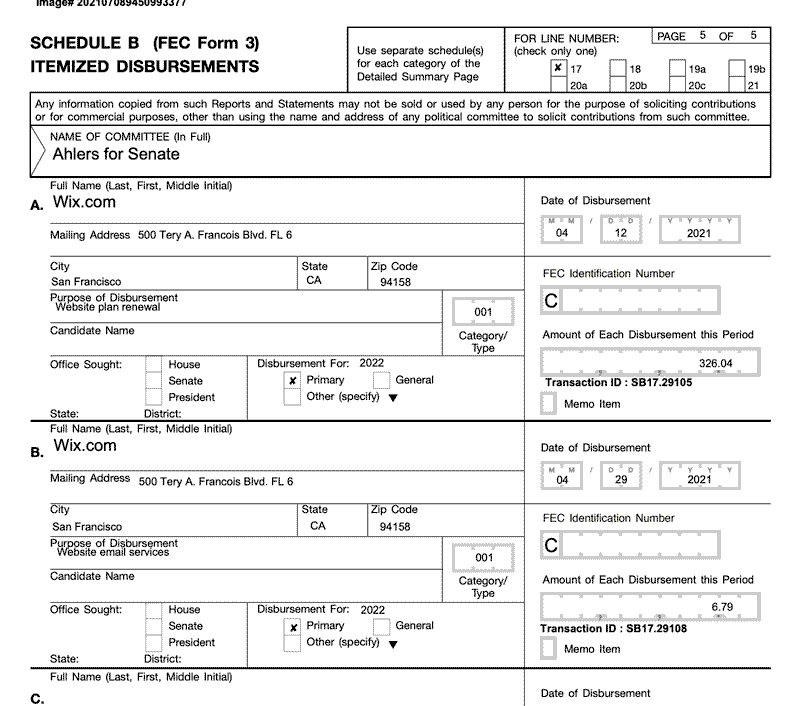
Interesting. And maybe an indication that there’s at least a hint of truth to the rumors.

Rounds on Fox News: President Biden Made a Very Serious Mistake That Cost American Lives
WASHINGTON—U.S. Senator Mike Rounds (R-S.D.), member of the Senate Committee on Foreign Relations, joined Bill Hemmer and Dana Perino on Fox News’ America’s Newsroom this morning to discuss the upcoming Senate Committee on Foreign Relations hearing with Secretary of State Blinken on the U.S. withdrawal from Afghanistan. The hearing begins this morning at 10 AM ET/ 9 AM CT/ 8 AM MT.
“This administration had every opportunity to modify the withdrawal.” @SenatorRounds discusses what Secretary Blinken will be pressed on during the Senate Foreign Relations Committee hearing on the US Afghanistan withdrawal @BillHemmer @DanaPerino pic.twitter.com/1qNXs4Pn6K
— America’s Newsroom (@AmericaNewsroom) September 14, 2021
Click here or on photo above to watch Rounds’ full interview
Excerpts from Senator Rounds’ interview below:
PERINO: What have you not heard the administration answer so far that you would like to get to the bottom to?
ROUNDS: Right now they said they have about 124,000 individuals that they’ve helped get out. The problem is that out of the 124,000, about half of them, we don’t know who they are. There’s between 5,000-6,000 Americans they said they’ve helped out. There’s about half of the remaining 124,000 that are SIVs—Special Immigration Visas. But the remaining numbers, we don’t know who they are. We want to find out who those individuals are and how they were allowed to come out. We’ve got literally 100,000 more individuals who helped our men and women in uniform over the last twenty years. Their lives are at risk. We don’t know where they’re at. We are not getting good answers from the Department of State as to how we are going to help them get out of Afghanistan alive.
…
HEMMER: …this whole idea about the deadline—that was moved by the current administration and so the debate goes to what was their plan to get out?
ROUNDS: The previous administration, under President Trump, was set up to do a conditions-based withdrawal. There were changes being made. The Taliban has not lived up to their side of the deals that were being made. This administration had every opportunity to modify a withdrawal. When Joe Biden decided to arbitrarily set a date and set it without regard to whether or not the Taliban was honoring their side of the commitment so far and was not based on conditions on the ground, he made a very serious mistake and it’s cost American lives.
…
ROUNDS: …today with the Secretary of State, I think we need to focus on moving forward, how are we going to help get the remaining Americans out? What’s your plan? What about the other individuals who helped our young men and women in uniform—what’s your plan to get them out? And how are you going to respond to China and to Russia and to Iran and to Pakistan who now see this void in Afghanistan…what’s your plan moving forward? Why is it that after this arbitrary date, how do you except to be able to respond accordingly in that area now that you’ve withdrawn our forces and you have very little to negotiate with?
###

FOUR MORE YEARS
TenHaken Announces Re-election Bid
SIOUX FALLS–Mayor Paul TenHaken announced his re-election bid for his second term as mayor of Sioux Falls today .
“Today, I’m excited to announce my desire to continue serving as mayor for the next four years,” said TenHaken. “It’s a decision my family and I don’t take lightly, but the honor of serving this community is incredibly rewarding, humbling and exciting.”
Sioux Falls has benefited from TenHaken’s leadership since being elected in a historic election. His “One Sioux Falls” approach to leading the city has resulted in key accomplishments during TenHaken’s first term as mayor including successfully managing the city through numerous crisis events, increasing funding for road and infrastructure improvements, and prioritizing law enforcement, public safety and mental health policies. TenHaken’s principled, collaborative and transparent leadership has helped advance Sioux Falls as one of the best quality of life communities in the world, especially for youth and families.
“I’m proud of the work of my administration and the direction Sioux Falls is headed,” said TenHaken. “There is so much energy and optimism in our community right now, and I’m eager to continue building on Sioux Falls’ successes in a second term. Sioux Falls has a unique opportunity to set itself up for success in the coming decades, and I hope that the voters of Sioux Falls continue to entrust me to lead our city as we advance priorities and tackle our growing needs.”
Before being elected as the 32nd Mayor of Sioux Falls in May 2018, Paul served as the Founder and CEO of Click Rain, a marketing technology agency he started in 2008. Under his leadership, the company received numerous awards for their tremendous growth and innovative employee-first culture. Most important to Paul has been raising his three children — Jade, 15; Max, 12; and Nora, 8. As a father and husband of 22 years to Jill, Paul brings a unique perspective on what issues are most important to growing young families in Sioux Falls.
The city election is scheduled for April 12, 2022.
-30-
From my mailbox:


Friend,
I’ll keep this short. It would be my honor to serve as mayor of Sioux Falls for another four years.
The last few years have certainly had their share of challenges, but as One Sioux Falls we have not just survived, we’ve thrived. We have a record-breaking economy, historic investments being made in infrastructure, a laser focus on properly funding and supporting public safety, and so many other good things happening in our community. But, there’s more work to be done.
So today, I’m announcing my intent to run for re-election as your mayor on April 12, 2022. It’s been the honor of a lifetime to serve and I hope you’ll join me on this next chapter for Sioux Falls.
Onward!
Paul
P.S. If you want to help my campaign, I’d be honored to have your financial support.
*Individuals/entities may contribute up to $1,000 per calendar year.
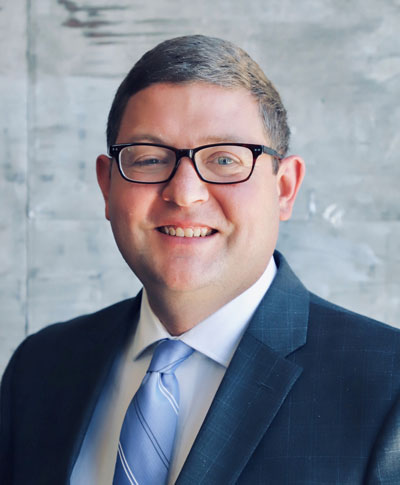 Tony Venhuizen, Sioux Falls, holds a bachelor’s degree in history and political science from South Dakota State University, and a law degree from the University of South Dakota. Venhuizen is a member of the South Dakota Board of Regents, and previously served as chief of staff and education policy advisor in the administrations of Gov. Kristi Noem and Gov. Dennis Daugaard.
South Dakota’s proposed social studies content standards have been in the news recently. These standards cover history, civics and government, geography, and economics, and are set by the state so that students cover the same high-level topics as they progress through school. Curriculum – that is, what is taught each day and what textbooks and materials are used – is decided locally by school boards, administrators, and teachers.
The current standards were written in 2015. This summer, a committee of educators prepared a new draft. The Department of Education revised that draft and released a new proposal a few weeks ago. Much of the media coverage so far has focused on the changes the Department made to the summer draft, specifically relating to Native American history and culture.
I have reviewed all three versions of the standards and, although I appreciate the summer committee’s work, I can understand why the Department made changes.
The study of American history needs to include Native American history. In South Dakota, students need to learn this history, and they also need to learn how our tribal communities fit into the state today.
The current 2015 standards make specific mention of Native American topics 6 times, by my count. That doesn’t seem like enough, although my count doesn’t include standards that likely lead to discussion of Native American topics – for example, when 5th graders are asked to “describe the role of trading in early U.S. History,” it is very likely that the curriculum will include a discussion of trade with the tribal nations.
The Department’s 2021 proposal improves on the current standards by increasing the number of specific mentions of Native American or tribal topics from 6 to 28, again by my count.
The summer draft standards mention Native American or tribal topics 63 times. This is far out of proportion to other topics. For comparison, the summer draft mentions topics relating to the U.S. Constitution 24 times; the American Revolution 8 times; the Declaration of Independence 5 times; the Civil War 5 times; the abolition of slavery 1 time; and the Second World War 4 times.
I will admit that merely counting references to a certain topic is a crude and imprecise way to evaluate the standards. Having read all three versions of the standards, though, I can say that the summer draft makes Native American and tribal topics the single most prevalent topic in the entirety of K-12 social studies.
I would offer a more specific example to illustrate the same point. The summer draft includes only four specific standards for 1st Grade History: “Demonstrate chronological order using events from students’ own lives,” “Examine historical records and artifacts to learn about family and school life in the past,” “Connect people and events honored in commemorative celebrations and ceremonies,” and “Discuss the Oceti Sakowin Oyate creation story, including correct chronological order of the story.” The last standard is far more specific than the others, and it seems odd in any case to require that a history class cover the creation story of one particular religious tradition.
This heavy emphasis is hard to understand, given that South Dakota already makes available to every school the Oceti Sakowin Essential Understandings and Standards, a set of specific Native American K-12 standards that were written with tribal involvement and adopted in 2018.
The summer draft has other problems. It adds a requirement that 8th graders learn about “The Constitution as a living document,” a view of the Constitution that is rejected by many lawyers and judges and should not be taught as settled fact. The draft also removed specific reference in 3rd Grade history to George Washington, Thomas Jefferson, and Abraham Lincoln, and instead just says that should “compare and contrast historical American figures.” The Department draft fixed both problems.
The Department’s proposed standards are an improvement. Compared to the current standards, they increase coverage of U.S. history and government and of South Dakota-specific topics. They emphasize the Constitution and the Bill of Rights, the structure of our federal, state, local, and tribal governments, and key historical events like the Revolution, the Civil War, both World Wars, and the Cold War. As I already described, they greatly increase coverage of Native American topics, including tribal history and government.
Yet, there is always room to improve. The Department will be soliciting feedback in the coming months, in writing and during four in-person hearings, starting this week in Aberdeen. I would encourage you to read each version of the standards for yourself and make your own judgments. We owe it to our young people to get this right.
Links
Social studies standards, adopted 2015 (“current standards”): https://doe.sd.gov/contentstandards/documents/SDSocialS.pdf
Draft social studies standards prepared by summer 2021 committee (“summer draft”): https://docs.google.com/document/d/1cZl1nVcMiAzvuoRQAbjaDFwC0WkMcpOr/edit
Department of Education proposed social studies standards (“Department’s proposed”): https://doe.sd.gov/contentstandards/documents/SS-StandardsProposed.pdf
Oceti Sakowin Essential Understandings and Standards (adopted 2018): https://doe.sd.gov/contentstandards/documents/18-OSEUs.pdf
Thune Reflects on 20th Anniversary of September 11 Terrorist Attacks
SIOUX FALLS, S.D. — U.S. Sen. John Thune (R-S.D.) today released the following statement reflecting on the 20th anniversary of the terrorist attacks on September 11, 2001:
“Twenty years ago, the worst of the world was met by the best of America. Nearly 3,000 men and women lost their lives in the cowardly terrorist attacks on September 11, 2001, a day that touched each and every one of us. Our country has never stopped grieving that horrible loss, but we responded with two decades of American resolve and resilience. Everyday Americans, first responders, and the members of the Armed Forces who fought back against the terrorists have been united in purpose to protect our American way of life. Twenty years after that horrible day, I join all Americans in remembering the heroes who made the ultimate sacrifice for our nation and thanking the men and women who continue to defend our freedoms at home and abroad. We will never forget.”
From Twitter:
My full statement on President Biden’s executive orders on vaccine mandates ⬇️ pic.twitter.com/GYgyRr3wfe
— Senator Mike Rounds (@SenatorRounds) September 10, 2021