Senate Appoints Select Committee on Discipline and Expulsion; alleging inappropriate behavior and harassment related to private maternal matters, including childhood vaccines and breastfeeding

(From my mailbox – PP)

Senate Appoints Select Committee on Discipline and Expulsion

PIERRE—Today, Senate leadership announced details of the investigation into the alleged actions of Senator Julie Frye-Mueller (R-District 30) and Senate appointments to a Select Committee on Discipline and Expulsion.

On Jan. 25, 2023, Senate leadership were notified of an allegation of unprofessional behavior against Senator Julie Frye-Mueller by a Legislative Research Council (LRC) staff member. Because of the seriousness of the allegations, Senate President Pro Tempore Lee Schoenbeck (R-District 5) removed Senator Frye-Mueller from her committee assignments as permitted by Senate Rule S4-1.

On Jan. 26, Senate Republicans received a detailed report from an LRC staff member alleging inappropriate behavior and harassment related to private maternal matters, including childhood vaccines and breastfeeding, which took place in the LRC office inside the State Capitol Building. Senator Frye-Mueller was given an opportunity to speak to the Senate Republican Leadership on Jan. 25. Comments made by Sen. Frye-Mueller in that private discussion are inconsistent with her public statements and the report received from the LRC staff member.

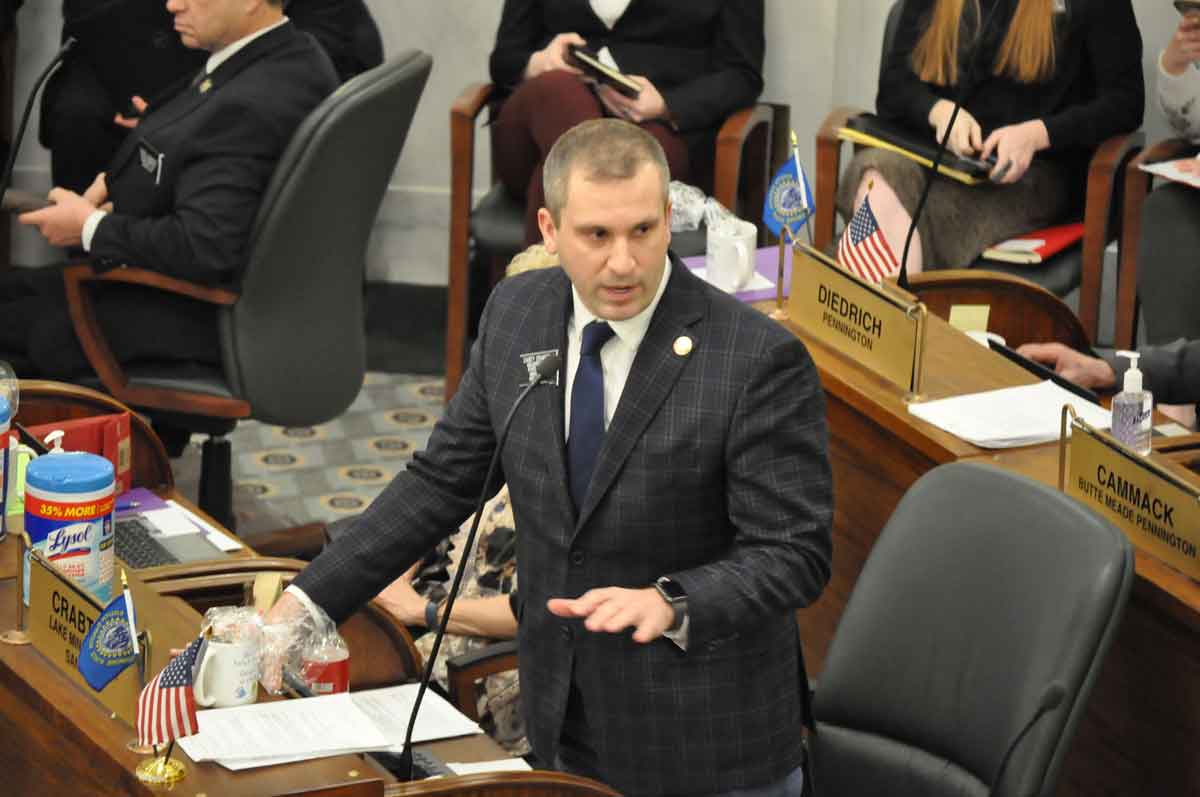
“We thank the state employee for bringing this matter to our attention,” said Senate Majority Leader Casey Crabtree (R-District 8). “Our goal is to create a safe work environment for staff and legislators, and an environment where employees feel safe bringing concerns forward. All allegations of harassment must be taken seriously. There will be due process afforded to all parties as this matter moves forward.”

Senators voted to suspend Senator Frye-Mueller on Jan. 26 pending a full hearing on the merits which Senate leadership plans to commence next week. Since the allegations involve a sensitive personnel matter and formal accusations against a public official, the Senate will determine a procedure that respects the rights of all parties involved and keeps the public informed throughout the process.

The South Dakota Constitution states that “each house shall determine the rules of its proceedings” and “qualifications of its own members.” These rules are adopted in Legislative procedure and this precedence has been affirmed by Gray v. Gienapp, 727 NW2d 808 (SD 2007).

Senator David Wheeler (R District 22) will chair the Select Committee on Discipline and Expulsion that will hear the complaint and make a recommendation to the full Senate. Also appointed to the select committee are Senators Jim Bolin (R-District 16), Sydney Davis (R-District 17), Helene Duhamel (R- District 32), Red Dawn Foster (D-District 27), Brent Hoffman (R-District 9), Liz Larson (D District 10), Tim Reed (R-District 7), and Dean Wink (R-District 29).

The Senate will be asked to adopt the rules on Monday, and the Select Committee intends to provide a report back to the full Senate before the end of the fourth week of the legislative session. Except as provided by South Dakota law, the Select Committee hearings will be open to the public and the final report will be a public record.

###

Where do you think the Senate is going to go with the Committee investigating Senator Julie Frye Mueller’s conduct?

The Senate will be appointing and convening a special committee meeting this next week to deal with the conduct of State Senator Julie Frye Mueller as it allegedly relates to her conduct during an interaction with an employee of the Legislative Research Council.

There’s a lot of speculation going on at the moment because Senators are taking this matter serious enough that there is an information lockdown like no one has ever seen with previous allegations or disciplinary matters. To their credit, they are taking this employee matter very seriously.

What do we know? We know they’re not talking about it. And that the allegations against Julie Frye Mueller are shocking enough to the Senators that they voted 27 – 6 to suspend her and convene a committee. That 6 includes Senator Frye Mueller herself, as well as her physical and ideological seatmate Tom Pischke.

Only 4 others in the Senate voted NOT to suspend the rules, not call the committee, and not suspend her immediately meaning that over 77% demanded that she needs to go NOW.

So where do we go from here?

I noted last night who we might see on the committee.  But what are the options once they meet, and what is the likely outcome?

Next week will likely bring us snippets of the evidence against Senator Mueller, if not the entire thing. It’s an employment related action, so things are a bit more locked down to the public to protect the employee.

According to Senate Rules..

S8-1. Select Committee on Discipline and Expulsion. Any two Senators may by written motion first delivered to the president pro tempore move for the establishment of a Select Committee on Discipline and Expulsion to investigate the conduct of any other Senator. Upon being seconded, the motion is debatable, and passage of the motion requires a majority vote of the members-elect. The Select Committee on Discipline and Expulsion shall be composed of nine members of the Senate. The chair and vice chair of the select committee shall be chosen by the president pro tempore and may not both be members of the same political party. The other seven members of the select committee shall be chosen by the president pro tempore in consultation with the majority leader and the minority leader. The party makeup of the select committee shall be proportional to the party makeup of the Senate.

So, seven members. Republican Chair and Dem co-chair all chosen by the President Pro-Tempore. They will go through a hearing process, with Frye-Mueller likely represented by legal counsel, in a meeting structures like any other Senate Committee hearing. Let’s assume Senator Frye-Mueller did something stupid. (Because, let’s not kid ourselves. This is Julie Frye-Mueller.)    She’s already claimed that she’s being persecuted for “advancing freedom,” and has a history of saying off-the-wall things.

If she’s found guilty of saying stupid things to a Senate Employee, what are the Senate’s options?  Going back to Senate Rules:

S8-7. Select committee report. Any action to expel, censure, discipline, or exonerate a Senator shall be proposed in a select committee report of the Select Committee on Discipline and Expulsion. If the select committee report calls for expulsion, censure, or discipline, the report shall set forth the causes and grounds for which expulsion, censure, or discipline is being recommended by the Senate, and it shall state the particular form of action recommended to the Senate. If the select committee report calls for exoneration, the report shall set forth the reasons why exoneration is appropriate.

S8-8. Procedure in the Senate. Adoption of a select committee report for the expulsion of a Senator requires the favorable vote of a two-thirds majority of the elected members. Adoption of a select committee report for the censure or discipline of a Senator requires the favorable vote of a three-fifths majority of the elected members. Adoption of a select committee report for the exoneration of a Senator requires the favorable vote of a majority of the elected members.

Expel, censure, discipline or exonerate.  If those are the options, what is the likely outcome for JFM?

ExonerationRequires the favorable vote of a majority of the elected members.

Given the strength of the sentiment in the State Senate, unless there is video of her not doing what she’s being accused of, that’s not going to happen.

Discipline Requires the vote of a three-fifths majority of the elected members.

Again, there are a lot of people who voted to move this forward based on what they’re not telling us behind the scenes.  I’m kind of doubting they’ll go with this. And it requires the same number of people to vote to punish as….

CensureRequires the vote of a three-fifths majority of the elected members.

Without knowing the substance of what the accusations are against Senator Frye-Mueller, but being given the impression that they’re bad, I think censure is a strong favorite. It’s more of a formal reprimand, and at least to the public is as strong as an admonishment as they can do, short of…

ExpulsionRequires the vote of a two-thirds majority of the elected members.

This might be a reach too far for all of the legislators who voted to move it forward, unless the conduct was particularly egregious.  There are her allies who would likely argue that it would deny the will of the voters. But, the other side of the sword is that the voters didn’t send JFM to Pierre to be abusive to the legislature’s employees, even though she’s claiming the “advancing freedom” privilege. And that was a pretty strong vote to suspend her.  Well within what they need to give her the boot.

They could vote to expel her, but I think it’s going to have to be bad – really bad – for them to do so.

So what say you? Exonerate, Discipline, Censure or Expulsion?

Let us know what you think is going to happen, and why.

Governor Kristi Noem’s Weekly Column: Strengthening South Dakota Families

Strengthening South Dakota Families
By: Governor Kristi Noem
January 27, 2023

Family is everything. I grew up working our family farm and ranch with my parents and siblings. When my dad passed away, my siblings worked together to keep our family’s dreams alive. My greatest joy in life has been watching my children grow up into incredible adults with a deep love of their country and an even deeper love for the Lord – and now they’ve started blessing me with grandchildren, too!

Every time I agree to a business deal, make an appointment, or sign a bill, I always ask myself how that decision will impact South Dakota for our kids and our grandkids. Every decision is filtered through the lens of family. And this legislative session, we are continuing to build stronger families in South Dakota.

The biggest way that we’re doing that is by extending paid family leave opportunities across South Dakota. Three years ago, I brought legislation to offer paid family leave benefits to state employees for the very first time. Now, it’s time for us to expand this benefit even more.

This year, together with legislators, I announced a two-part paid family leave initiative. First, we’re going to allow state employees up to 12 weeks of leave when they have a new baby or adopted child, to take care of a sick family member, or to deal with a military deployment in the family. They’ll receive 100% of their salary as they take the time they need to be with their families. We’ll take out a state insurance policy to make this possible.

Then, we’re going to create a path for private businesses to join our state’s insurance group and offer these benefits to their employees, as well. This is going to make it much more affordable for private businesses and ensure that as many South Dakota families as possible have access to paid family leave. And the more businesses that join the pool, the lower the cost will be for everyone.

We’re also creating a new educational opportunity for kids in the foster care system called the “Stronger Families Scholarship.” Under this new initiative, any child in the foster care system will have the opportunity to receive up to $4,000 in a scholarship to help them achieve their full potential, from kindergarten through 12th grade. This money can be used to pay tuition at a private school, pay for tutoring or teaching services, purchase curriculum, pay for standardized tests or AP exams, and more.

We’ll strengthen families in other ways, like providing pregnancy and postpartum care for moms who are Medicaid recipients, supporting the cost of domestic adoptions for state employees, providing an additional $38 million in grants to South Dakota childcare providers, and creating a new path to healthcare benefits for childcare employees.

When we provide these kinds of flexible options for families, we make it easier for them to make decisions in their day-to-day lives. We open opportunities for them to bond with their kids, find childcare or educational options, get into the career of their dreams, and more. By tackling these challenges, we will strengthen South Dakota’s workforce, as well.

It all starts with stronger families. By continuing to focus on this, we will truly leave an even better South Dakota for our kids and grandkids.

###

Thune: South Dakota Agriculture Must Be a Priority in 2023 Farm Bill

Thune: South Dakota Agriculture Must Be a Priority in 2023 Farm Bill

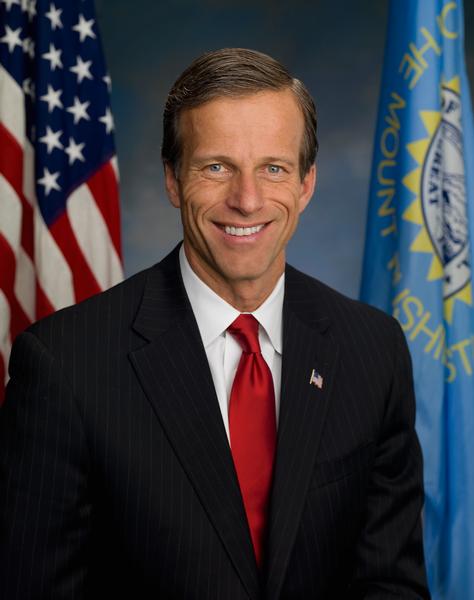
“I will do everything I can to ensure that this year’s farm bill meets [farmers’ and ranchers’] needs and does everything it can to make their life a little easier, so that they can continue to feed our nation, and the world.”

Click here or on the picture above to watch the video.

WASHINGTON — U.S. Sen. John Thune (R-S.D.) today discussed his goals for the 2023 farm bill. Thune noted that he is fortunate to be a longtime member of the Senate Agriculture Committee, which gives him an important platform from which to address the needs of South Dakota agriculture producers.

Johnson Cattle Bills Seek to Drive Competition in the Packing Industry

Johnson Cattle Bills Seek to Drive Competition in the Packing Industry

“The Butcher Block Act and the A-PLUS Act will provide increased capacity to small packers and drive healthy competition to create a more stable market.”


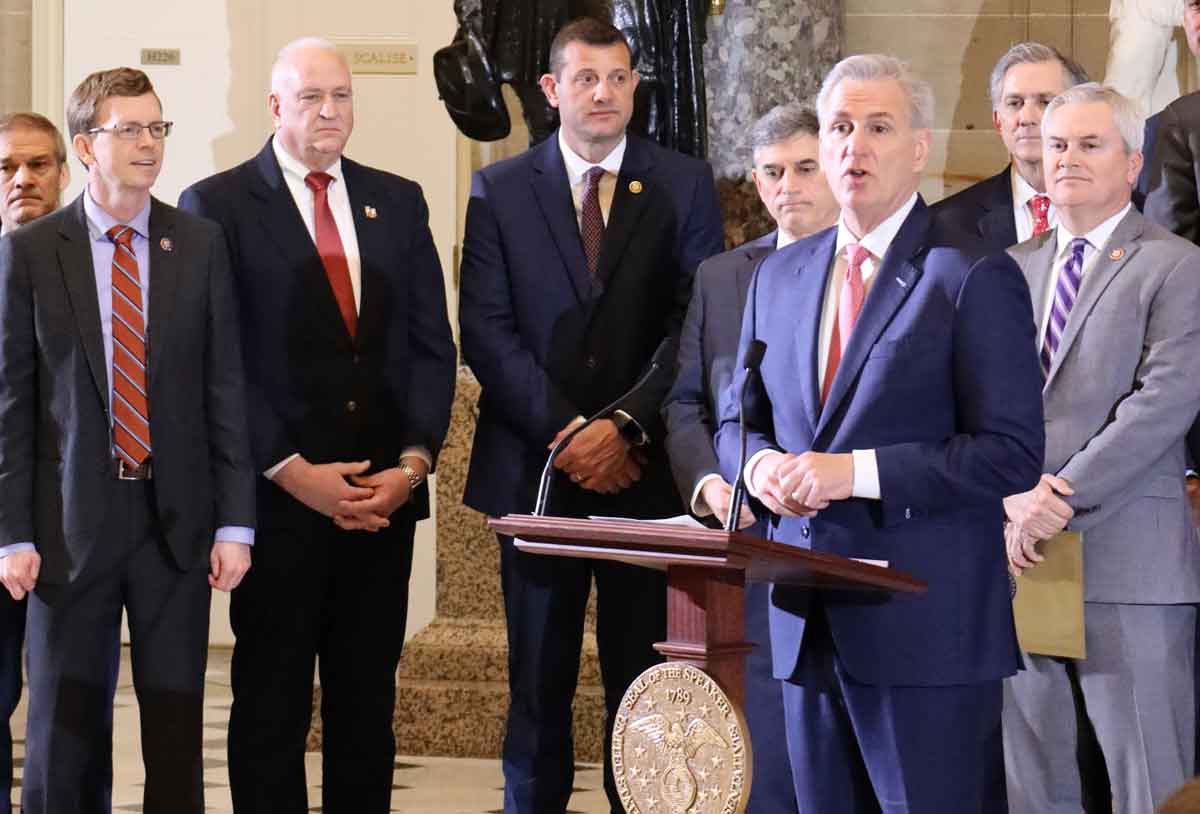
Washington, D.C. – Today, U.S. Representative Dusty Johnson (R-S.D.) re-introduced two cattle-focused bills to improve the industry – his Butcher Block Act with co-lead Rep. Abigail Spanberger (D-VA) and the Amplifying Processing of Livestock in the United States (A-PLUS) Act with lead Rep. Mark Alford (R-MO).

According to a 2020 report, an increase of packing capacity by 5,000-6,000 head of fed cattle per day is needed to get back to the historic baseline. Building new facilities could cost $100-250 million for every 1,000 head of cattle processed daily, according to estimates. TheButcher Block Act would establish a grant and loan program at USDA for new and expanding meat processors to drive competition within the packing industry.

Currently, regulatory barriers prevent livestock auction market owners from investing in packing facilities. The A-PLUS Act would allow for expanded investment to small and local packers, increasing capacity and diversifying market options for producers.

“Cattle country needs solutions,” said Johnson. “The past few years have taken a toll on the livestock owners who have experienced black swan event after black swan event. The Butcher Block Act and the A-PLUS Act will provide increased capacity to small packers and drive healthy competition to create a more stable market.”

In July 2021, following Johnson’s leadership on the Butcher Block Act, the U.S. Department of Agriculture implemented a pilot program mirroring the legislation, supplying grants to small processors. Additionally, it passed the House in June 2022 as part of a larger package.

The Butcher Block Act:

  • Assists new and expanded livestock or meat processors to improve marketing options for livestock producers, further competitive markets, and facilitate value-added opportunity for livestock producers.
  • Allows for financing of cooperative stock in producer-owned processing facilities and refinancing for expanded processing capacity.
  • Establishes a Rural Development grant program for eligible entities to assist with new construction or expansion planning and compliance.

The A-PLUS Act:

  • Revises the Packers and Stockyards Act to clarify that livestock auction owners may have an investment interest in small meat packers.
  • Allows livestock auction owners to invest in packers that have a slaughter capacity of less than 2,000 head per day and less than 700,000 head per year of cattle and sheep, and less than 10,000 head per day and less than 3,000,000 head per year of hogs.
    • This cap aims to exclude investment in the ten largest meat packers in the country.

###

Today’s floor vote in the Senate to suspend the rules, and to suspend Senator Julie Frye Mueller

If you’ve been following the Julie Frye Mueller suspension today, I do have the floor vote from today’s Journal in case you wanted to see where your State Senator stood. (odds were more than 3-1 it was a vote to suspend), as 27 State Senators cast a ballot to suspend Frye Mueller for her actions while they investigate the matter:

That’s a lot of “yea” votes, as it was 27 – 6 against Frye Mueller. Excused were Foster & Wiik.  While I don’t know where Foster was, I am informed that GOP Chair John Wiik’s son is a legislative page who took ill yesterday up at the Capital, and dad was stepping into help when this all went down. He did tell me that he would have been a “nay.”

What’s next? Early next week the senate will proceed with a Select Committee on Discipline and Expulsion.  Who will be on this panel?  I’m guessing Dave Wheeler as one of the attorneys in the Senate – who is not in immediate caucus leadership – will be one of the main ones. Doubtful on Schoenbeck since Frye-Mueller is claiming this was orchestrated by him.

I think we’ll also see a panel that’s strongly diverse in terms of gender, since both the accused and the accuser are women. Duhamel, Hunhoff, Tobin, Davis, Castleberry are all possibilities, as are Larson or Foster, two of the Democrats. Probably not Nesiba after that whole pants thing a few years back.

Might also see some higher ups who have organizational experience. Breitling might have had the headache of dealing with HR issues between employees at Avera, as might Steve Kolbeck with his executive experience at XCel and on the PUC.

Lots of good options to choose from to make sure the rights of the employee are protected and she feels comfortable in that environment.

And we will see you next week!

Release: Bill Introduced to Protect Lives of Mothers

Bill Introduced by Rep. Taylor Rehfeldt, Sen. Tobin to Protect Lives of Mothers

PIERRE–Today, House of Representatives Assistant Majority Leader Taylor Rehfeldt (R-District 14) and Senator Erin Tobin introduced HB1169 in an effort to protect the lives of pregnant mothers.

“The lives of both mother and child are precious, and South Dakotans understand that,” said Rep. Taylor Rehfeldt. “There is uncertainty today amongst health care providers on when they can intervene to save the life of the mother during a complicated pregnancy. Doctors need certainty, and patients deserve care.”

The June 2022 Dobbs v. Jackson Women’s Health Organization decision overturned Roe v. Wade and triggered an abortion ban in South Dakota except for protecting the life of the mother. HB 1169 adds a clear definition to protect the life of the mother in the circumstance of death or irreversible injury.

The proposed legislation states:

Notwithstanding any other law, before an abortion may be justified as necessary to preserve the life of a pregnant female, as set forth in § 22-17-5.1, the attending physician, exercising reasonable medical judgment, must determine that, by continuing the pregnancy, the female is at serious risk of death or of a substantial and irreversible physical impairment of one or more major bodily functions.

“I look forward to discussing this important update to South Dakota’s abortion ban so that doctors have an understanding of when to act in an emergency situation for the long-established belief that preserving the life of the mother is the moral and right thing to do.” said Rehfeldt.

The draft legislation is available to view here.

Senate Majority Leader Casey Crabtree’s Weekly Column: Stronger and Safer Election Laws for 2024

Stronger and Safer Election Laws for 2024
by Senator Casey Crabtree
Senate Majority Leader

MADISON–The third week of session was a good week for conservative principles in your South Dakota legislature. We took action on tax reductions, election integrity, and infrastructure investments.

This week, Republican lawmakers introduced the Stronger and Safer for 2024 legislative package. It includes proposals to secure ballot tabulation machines, create a postelection audit process, establish distance requirements and poll watchers’ rights, ban unmonitored drop boxes, ban ballot harvesting activities, and clean up the state’s voter rolls. If enacted, these measures will strengthen South Dakota’s already strong election laws and further protect South Dakota’s reputation for fair and honest elections.

Senate Democrats advocated for more folks to be on unemployment during debate on HB 1011. Republicans recognize that workforce recruitment is one of our biggest challenges. The solution is incentivizing work, and keeping more money in the hands of taxpayers. We are proud to deliver this $18 million tax cut.

On Monday, the House will hold its first hearing on a joint resolution I sponsored with Rep. Tony Venhuizen (R-13). HJR 5004 would allow the state to impose a work requirement for able-bodied adults on Medicaid at the expansion level poverty mark. As South Dakota expands entitlement programs per the will of the voters, it’s important that we incentivize able-bodied adults to work and contribute to the success of our state.

Lastly, a proud moment for me this week was the final passage of SB 41, my housing bill to help fund infrastructure for new housing. This session the Legislature made revisions to open the fund up for disbursements to qualifying communities. I’m excited for the bill to be signed by Gov. Noem ahead of the 2023 construction season.

Looking ahead to Week 4, the Legislature has its deadline to file legislation, so we will know what’s on the table for consideration this year. So far, 168 Senate bills and 177 House bills have been filed. As your District 8 Senator, I’ll continue to keep you updated on the important matters as the Legislature works hard for the people of South Dakota.

###

Statement from Senate Republican Caucus Leader Crabtree on Senator Julie Frye Mueller allegations

When the Senate took action today against State Senator Julie Frye Mueller, Mueller seemed to have a little less bravado than when she earlier proclaimed  “It is a sad day in America when advancing freedom becomes a crime,” and the Senate wasted little time in taking action as a regular employer would in investigating a matter of workplace harassment.

As noted in a statement issued today from Senate Majority Leader Casey Crabtree:

We were made aware of serious personnel allegations. Based on the nature of that allegation we needed to act quickly and prudently to protect the person involved. We will have due process in public with a goal to complete the process early next week.

Unfortunately, this whole circus interrupts a tremendous amount of progress that the legislature has been making on it’s own proposals. But hopefully, things will get back on track in short order.