Governor Kristi Noem’s Weekly Column: Economic Growth the South Dakota Way

Economic Growth the South Dakota Way
By: Governor Kristi Noem
October 21, 2022

It’s no secret that costs are rising in just about every aspect of our daily lives. We’ve talked quite a bit about the skyrocketing cost of food and gas, and our businesses are facing these challenges, too. Rising costs can create a lack of predictability about the future. Thankfully, over the past few years, South Dakota has built an economic climate that shores up that predictability by creating steady growth.

Businesses are starting in South Dakota at a faster rate than any state in America, and the businesses that have been here for years are flourishing. That’s a testament to the predictability and sustainability of our low tax environment, which enables businesses to feel comfortable making long-term investments in our state. And families are making the same choice for the long term, moving to South Dakota at such a rate that we are the no. 2 state in the country for inbound migration. This, in turn, will continue to give our old and new businesses the workforce needed to shore up their long-term growth.

When outside organizations evaluate how well  a state is governed, they look at a number of factors. Primarily, they ask how a state manages in a competitive business climate. The American Legislative Exchange Council ranked me the no. 1 Governor in America because of our state’s “fiscal and executive policies,” meaning that they believe we have created a climate where businesses can succeed. And this ranking is validated by the fact that we are setting the pace for new business applications, leading the country in income growth for our people, and setting the bar for new housing development.

Those fiscal and executive policies are simple: we live within our means; we balance our budget; we save money wherever we can, spending $43 million less than budgeted this past fiscal year; we pay down debt; we protect our AAA credit rating; we have the most well-funded pension system in the nation; and we invest in long-term growth, like connecting every corner of the state to high-speed broadband and developing our cyberresearch industry. These policies have inspired long-term capital investments in our South Dakota communities, helping us to build the strongest economy in the nation.

And we’re just getting started. I will include in my next budget the largest tax cut in South Dakota’s history – and it will be my top priority for the next legislative session. South Dakota already has some of the lowest taxes in America. We have no individual or corporate income tax, nor do we have a statewide personal property tax. This past legislative session, I eliminated additional taxes, as well.

We want to tax less in South Dakota, not more – to cut taxes, not add to them – to give people more control over their money, not less.

South Dakota will continue to build on these policies to guarantee predictable, steady growth for our future. We will guarantee that there are jobs available for our kids and grandkids. In doing so, we will continue to grow the incomes of our people and battle back against the rising inflation being driven by liberal policies in Washington, D.C.

And we will accomplish these goals by continuing to trust in the Freedom of our people.

###

Legalized Marijuana opponents spurred into action on IM 27

The Dakota Scout has an article this week on the community leaders who are joining the effort to keep recreational marijuana illegal in South Dakota after it passed only after being bundled together with medical pot:

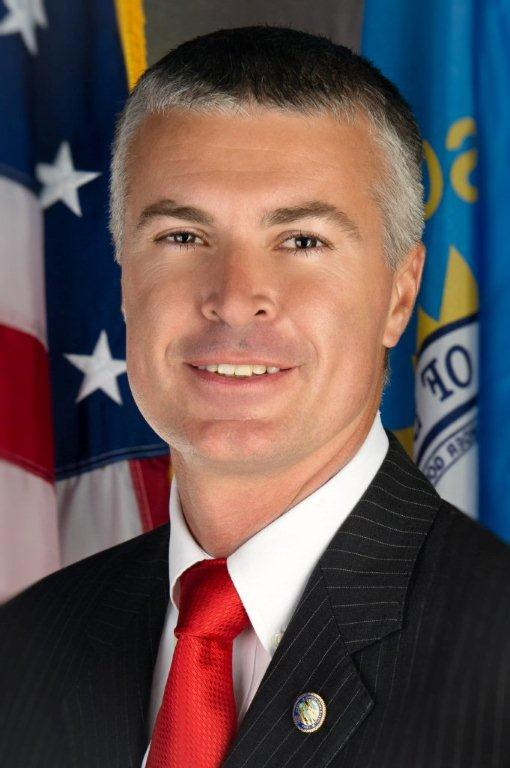
“I didn’t expect recreational marijuana to pass last time,” TenHaken told The Dakota Scout on Tuesday after recording a series of radio advertisements on behalf of Protecting South Dakota Kids.

TenHaken’s surprise at the passage of Amendment A two years ago isn’t unique for many of the opponents to IM-27. Amendment A won by a comfortable margin, with 54 percent of the vote.

and..

“I am more vocal now, because we have more proof that it doesn’t work,” said Milstead, who joined TenHaken during a press conference on violent crime last month in which both urged people to vote against IM-27.

Read the entire story here at the Dakota Scout.

This vote will be interesting to watch, as recreational marijuana does not seem to have the popularity it claimed to have in the last election where it was bundled with medical.  While the party has taken no official position on ballot measures this year, some conservative Republicans have banded together to fight it, and to help promote the effort against IM27.

Related to the topic, I do know that some local groups are so opposed to IM 27 that they are sending money to the anti-im27 group while at the same time not sending money to candidates.

Hm.. I think funding ballot measures over people isn’t the way to go. That’s what Democrats do, and look how they’ve ended up in the legislative process.

What exactly does Jamie Smith mean when he says we need more to tax? That’s a question everyone should be asking.

Jamie Smith is attempting to roll back his statement where he claims there was a misinterpretation of his words that he wants “more things to tax.”

But, taking him at face value, recognizing the words that came out of his mouth, I think it’s very valid to question what his intentions are in making that statement. Some supporters are claiming it’s a referral to the sales tax, and if that’s the case, what things does Jamie intend to remove exemptions on?

In it’s wisdom, South Dakota has a number of things that are not taxed. Such as livestock, commercial fertilizer, cattle feed, and repairs on ag equipment and machinery. Insulin is also not taxed, nor is durable medical equipment, or medical services. If Jamie Smith intends to cost taxpayers an arm and a leg in new taxes, he could actually do so, by attempting to repeal the tax exemption for prosthetics.

There’s a wide open space to examine that in his view we need “more things to tax.” The question is whether or not we’re going to get full disclosure as he now tries to backtrack the statement.

Senator Thune out west hearing concerns of ranchers, focused on 2023 farm bill

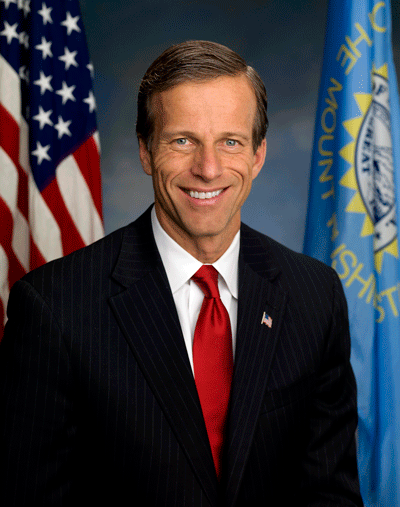
Senator John Thune is out west this week speaking with South Dakota Ranchers on issues they have with the federal government, as well as gaining their input on the next Farm Bill:

“It’s just nice to know that he actually gives a crap about other people,” Litzel said. “Our time here probably, in the whole scheme of things, doesn’t make a difference. But maybe one sentence or one thing I said will spark something that will make a difference.”

and..

Despite the upcoming November election where Thune is vying for re-election against Democrat Brian Bengs and Libertarian Tamara Lesnar, Thune said he is focused on the next Farm Bill with the current one set to expire in September 2023.

“These things take a long time to negotiate. And part of it’s going to be trying to figure out what the baseline is (and) how much money we have to work with, because if you’re going to add a program here, you have to take money from over there,” he said.

Read the entire article here.

If you have input for the 2023 farm bill, reach out to Senator Thune’s office through his website at Thune.senate.gov.

Kristi for Governor Launches New Ad: “What Did He Just Say?”

Kristi for Governor Launches New Ad: “What Did He Just Say?”

PIERRE, SOUTH DAKOTA – Today, the Kristi for Governor campaign launched a new ad called “What Did He Just Say?” The ad plays verbatim Jamie Smith’s own comments at the Sioux Falls Downtown Rotary where he stated, “We need more things to tax.”

“Wait, what did he just say?” the ad states, highlighting Jamie Smith’s repeated statements that he wants to create additional taxes for South Dakota residents.

Jamie Smith has a record of raising taxes. He opposed the 2017 Tax Cuts and Jobs Act, which then-Congresswoman Noem helped pass for the people of South Dakota. That bill put $2,400 back in the pockets of the average South Dakota family.

Jamie Smith also wanted to make it easier for counties to raise taxes on South Dakotans, and he cosponsored a bill to raise the state sales tax from 4.5% to 4.85%.

Governor Kristi Noem is proud that South Dakota has a low, simple tax code. South Dakota has no personal income tax, no corporate income tax, and no statewide personal property tax. Governor Noem has proposed eliminating the sales tax on food, which will lower the tax burden on South Dakotans by another $100 million.

To learn more about Jamie Smith’s history of supporting high taxes, visit JamieandJoe.com.

###

You knew that was coming. Hotel that banned Native Americans now subject of a lawsuit by US Justice Department.

From the US Department of Justice, the Grand Gateway Hotel is going to have to explain their side in court. From the release:

Justice Department Files Lawsuit Challenging Policy Barring Native Americans From Accessing South Dakota Hotel and Sports Lounge

WASHINGTON – The Justice Department filed a lawsuit today against the owners and operators of the Grand Gateway Hotel, and the Cheers Sports Lounge and Casino, a sports bar that operates within the hotel, located in Rapid City, South Dakota. The lawsuit alleges that the defendants discriminated against Native American customers in violation of Title II of the Civil Rights Act of 1964, which prohibits discrimination on the basis of race, color, religion or national origin in places of public accommodation, such as hotels and other places of entertainment. The suit is brought against the corporate owner, Retsel Corporation, and two of the company’s directors, Connie Uhre and her son, Nicholas Uhre.

“Policies prohibiting Native Americans from accessing public establishments are both racially discriminatory and unlawful,” said Assistant Attorney General Kristen Clarke of the Justice Department’s Civil Rights Division. “The Justice Department will continue to vigorously protect the rights of all people to go about their daily lives free from discrimination at hotels, restaurants, and other public accommodations around the country.”

“Restricting access to a hotel based on a person’s race is prohibited by federal law,” said U.S. Attorney Alison J. Ramsdell for the District of South Dakota. “At the U.S. Attorney’s Office, we are called to ensure that individuals are treated equally at public accommodations in South Dakota. We are committed to protecting that fundamental right for Native Americans.”

The lawsuit, filed today in the U.S. District Court for the District of South Dakota, alleges that, since at least March 20, the Retsel Corporation, Connie Uhre and Nicholas Uhre discriminated against Native American customers through policies and practices that denied Native Americans the full and equal enjoyment of access to the services, accommodations and privileges at the Grand Gateway Hotel and the Cheers Sports Lounge and Casino.

Specifically, the complaint alleges that on March 20, Connie Uhre told other Rapid City hotel owners and managers that she did “not want to allow Natives on property. . . . The problem is we do not know the nice ones from the bad natives…so we just have to say no to them!” That same day, the complaint alleges, Ms. Uhre posted a statement in a comment thread from her Facebook account announcing that “we will no longer allow any Native American [sic]” in the Grand Gateway or in the Cheers Sports Lounge and Casino. The complaint further alleges that on at least two occasions on March 21 and March 22,  respectively, the defendants turned away Native Americans who sought to book a room in the Grand Gateway.

Under Title II, the Justice Department’s Civil Rights Division can obtain injunctive relief that changes policies and practices to remedy the discriminatory conduct. Title II does not authorize the division to obtain monetary damages for customers who are victims of discrimination.

More information about the Civil Rights Division and the laws it enforces is available at http://www.justice.gov/crt. Individuals may report discrimination in places of public accommodation that violates Title II by calling the Justice Department at 1-833-591-0291, or submitting a report online.


Governor Noem Orders Flags at Half Staff in Honor of Former Governor Harvey Wollman  

Governor Noem Orders Flags at Half Staff in Honor of Former Governor Harvey Wollman

PIERRE, S.D. – Today, Governor Kristi Noem announced that flags will be at half-staff from sunrise until sundown statewide, effective immediately, in honor of former Governor Harvey Wollman. Flags will remain at half-staff until the day of Governor Wollman’s interment, which will be announced at a later time.

“Harvey Wollman stood up and answered the call of duty, stepping into the role of Governor at a difficult time for our state,” said Governor Kristi Noem. “During his brief tenure as governor, he advanced water development in our state and helped bring about the eventual repeal of the state’s personal property tax. In South Dakota, we honor our leaders. We honor their accomplishments. We honor our history.”

Wollman ran for Lieutenant Governor on a ticket with Governor Richard Kneip in 1974. When Governor Kneip resigned to become the United States Ambassador to Singapore in 1978, Wollman stepped up to the role of Governor of South Dakota. Before serving in the executive branch, Wollman served in the State Senate from 1969-1975, including as Democrat leader from 1971-1974.

Details on funeral arrangements will be announced at a later time.

###

Last living Democrat Governor, Harvey Wollman, passes away

The last living Democrat to serve as Governor of South Dakota, Harvey Wollman, has passed away.  According to the Trail of Governor bio on Wollman:

Governor Harvey Wollman was the twenty-sixth governor of South Dakota, serving from 1978 to 1979. Wollman was born on March 14, 1935 in Frankfort, South Dakota and grew up on his family’s farm in Spink County. Wollman graduated from Doland High School in 1953. He married Anne Geigel in 1958, and they had three children: Kristine, Michael and Daniel.

and..

In 1974, Governor Richard Kneip invited Wollman to join him on the Democratic ticket as the candidate for lieutenant governor. The Kneip-Wollman team was elected, and Wollman took office in 1975.

Governor Kneip resigned in 1978 to become the U.S. Ambassador to Singapore. Wollman became the first lieutenant governor to succeed to the governorship, taking office on July 24, 1978. He was sworn in as governor by his brother, Chief Justice Roger Wollman.

Although Governor Wollman only served in office for five months, he was not a caretaker. As governor, he focused on water project development, proposed a plan to accelerate the elimination of the personal property tax, and highlighted the threat that railroad abandonment posed to the agricultural industry.

Read that here.

Services are pending at this time.