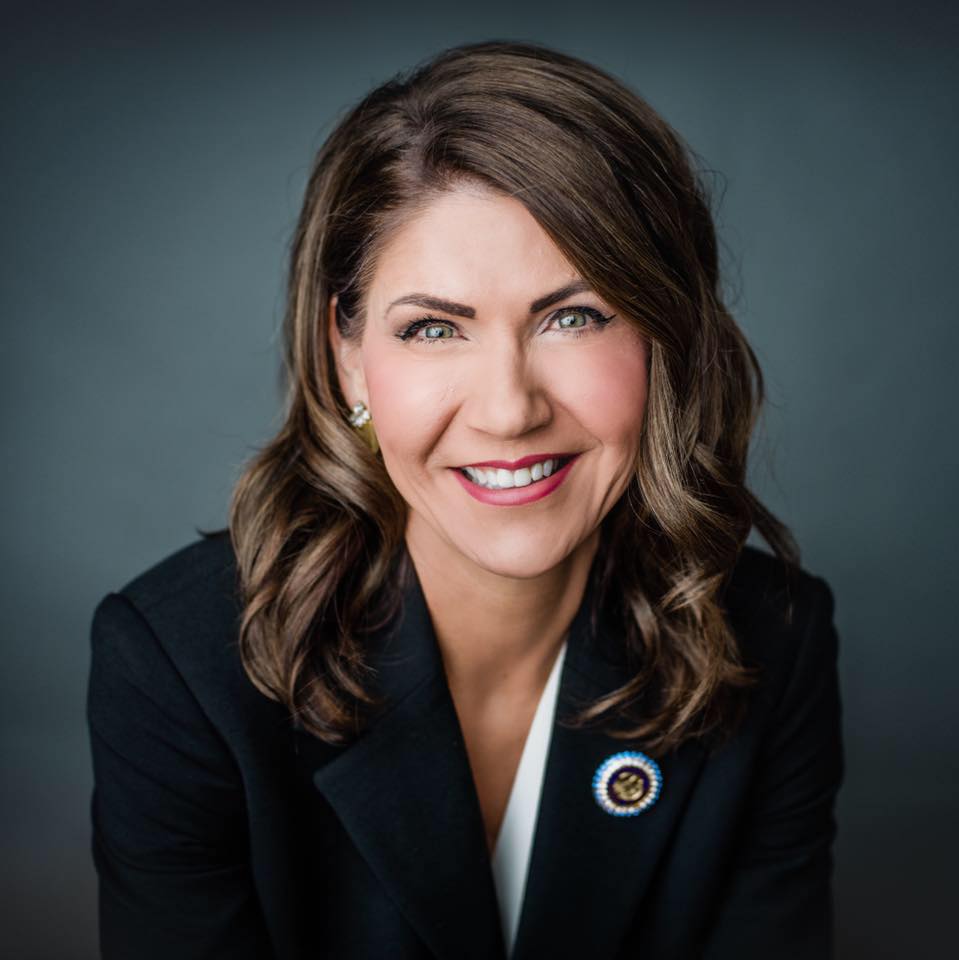
Lt. Governor Larry Rhoden’s Weekly Column: In Honor of all Fathers

In Honor of All Fathers
By: Larry Rhoden  
June 17, 2022

Family is important. President Ronald Reagan once said, “if the family goes, so goes our civilization.”   

While our society has changed greatly since President Reagan spoke these words, kids still need a father in their lives. There is more than one path to fatherhood. There’s one I would like to highlight this Father’s Day weekend: Foster Fathers.  

Last year, Governor Noem created a new initiative called Stronger Families Together and set a goal of enrolling 300 new foster families every year for five years. The Stronger Families initiative was successful in reaching its goal in our first year, and I am proud to be a part of it.  

I want to thank all the families who have stepped up to provide this support for children and families in crisis. As the Bible says, “Iron sharpens iron.” Foster families do this by providing additional support and encouragement to the parents of the children they are fostering. They provide a safe, loving home for kids to live in while their birth parents work through their struggles. Sometimes, foster families become that forever home for the kids they help.   

Whether you’re a dad, a stepdad, a foster dad, an adopted dad, or even just a father figure in a child’s life, you are providing something that our children cannot buy. You are a protector, a mentor, a disciplinarian, a source of comfort, and whenever called upon, a friendly ear to listen. Their tiny feet find their way through the world by following your footsteps.   

My wife Sandy and I have worked hard as parents, raising our kids to be strong and successful. They are taking those lessons now and applying them to their own families. Just this week, Sandy and I were blessed with our sixth grandchild – a baby girl. There’s nothing more amazing than the day you get promoted to grandpa.    

My father was my hero when I was growing up. If on the day I die, my children have half as much respect and admiration for me as I did for my father, I will consider life a success. For those new fathers who may be short on experience, here are a few quotes from inspiring Americans on what it means to be a father:  

“My father used to say that it’s never too late to do anything you want to do. And he said, ‘You never know what you can accomplish until you try.’” — Michael Jordan  

“The greatest tribute a boy can give to his father is to say, ‘When I group up, I want to be just like my dad.’” — Billy Graham  

Happy Father’s Day to all the dads out there. May God bless you and your families.  

### 

Great addition to my collection – S. Dakota First Voters Taft League

Great mail day today for me. Not only did I pick up a couple of pins from Bryce Healy (a 3in McGovern pin, and a George Cunningham for US Senate pin), I picked up a great example of a very rare pin I did some horse trading for:

I traded one of my two “one of a kind” Taft Day – Edgemont, SD Ribbons for it, and I think we’re both pretty happy.

It’s in the “top ten” of South Dakota/presidential pins for values realized and has gone for as much as $250, according to Anderson Auction, one of the mainstay sources of political collectibles. Although, many collectors peg it closer to $125-150.

This pin was issued in 1908 in every state at the time for the purpose of organizing those who had voted for the first time, as noted in this article from 1908 in Idaho:

The South Dakota versions of Presidential items can tend to be rare, because they just didn’t/don’t make as many for our sparsely populated states in comparison to a New York or Illinois. And especially in this era, political pins were still somewhat new at the early part of the 20th century, as opposed to ribbons which had been around for a while at the time.

A great addition to the collection.


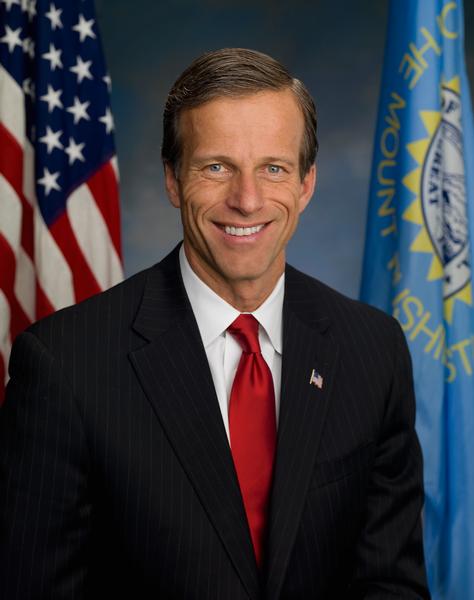
Thune: Rural Communities Must Have Access to Quality, High-Speed Internet    

Thune: Rural Communities Must Have Access to Quality, High-Speed Internet    

“I will continue to work to support every side of the 5G equation – from physical technology to spectrum to a 5G workforce – so that the United States can stay at the forefront of this internet revolution.”


Click here or on the picture above to watch the video.

WASHINGTON — U.S. Sen. John Thune (R-S.D.), ranking member of the Subcommittee on Communications, Media, and Broadband, today spoke on the Senate floor about his efforts to ensure rural communities in South Dakota have access to broadband services. Thune discussed his Reforming Broadband Connectivity Act, legislation that would help guarantee a stable funding stream for the Federal Communications Commission’s Universal Service Fund, which promotes universal access to broadband and other telecommunications services. Thune also noted that his STREAMLINE  Act would make it more affordable to bring 5G to rural areas by addressing the costs of small cell deployment.

Last week, the communications subcommittee held an oversight hearing on the National Telecommunications and Information Administration (NTIA), one of the leading agencies charged with expanding rural broadband access and promoting wireless access. During that hearing, Thune pressed NTIA Assistant Secretary Alan Davidson on removing unnecessary burdensome requirements when distributing broadband funding.

SOS Candidate Monae Johnson tells delegates that if elected, her intent is to disenfranchise a group of voters

I received a letter in the mail today from Secretary of State candidate Monae Johnson, where she explained her platform as a candidate for Secretary of State. Unfortunately, I’m not getting the impression that she researched the issues she’s running on very well, because one of the major parts of her platform she’s running on has been held as being unconstitutional:

Johnson throws out the canard that “Residency requirements should be tightened so that non-South Dakotans cannot register to vote using campgrounds, mail forwarding services or businesses like Walmart as their residential addresses.”

Ugh. The problem with her platform of disenfranchising a group of people because they might travel in RV’s? It might be a trendy talking point for the “my pillow” crowd, but in her quest to strip voting rights from a group of people, she doesn’t note that it has been tried before. And courts had held that you can’t do that.

I’d written about this topic back in 2016, and the same ruling from the US Supreme Court is still out there, last I’d checked, as per Dunn v. Blumstein:

Durational residence requirements completely bar from voting all residents not meeting the fixed durational standards. By denying some citizens the right to vote, such laws deprive them of ” `a fundamental political right, . . . preservative of all rights.

and…

This exacting test is appropriate for another reason, never considered in Drueding: Tennessee’s durational residence laws classify bona fide residents on the basis of recent travel, penalizing those persons, and only those persons, who have gone from one jurisdiction to another during the qualifying period. Thus, the durational residence requirement directly impinges on the exercise of a second fundamental personal right, the right to travel.

“[F]reedom to travel throughout the United States has long been recognized as a basic right under the Constitution.”

and…

In sum, durational residence laws must be measured by a strict equal protection test: they are unconstitutional unless the State can demonstrate that such laws are “necessary to promote a compelling governmental interest.

and…

Preservation of the “purity of the ballot box” is a formidable-sounding state interest. The impurities feared, variously called “dual voting” and “colonization,” all involve voting by nonresidents, either singly or in groups. The main concern is that nonresidents will temporarily invade the State or county, falsely swear that they are residents to become eligible to vote, and, by voting, allow a candidate to win by fraud. Surely the prevention of such fraud is a legitimate and compelling government goal. But it is impossible to view durational residence requirements as necessary to achieve that state interest.

Read it all here.

The effort to preserve the “purity of the ballot box” by keeping those RV residents out has been attempted, and declared out of bounds by the US Supreme Court.  There are also those who consider these requirements to be violative of the equal protection clause.

There’s also the question of why on earth we would want to bar people from establishing residency in this state? If people who travel the country want to establish their home base here, pay license registration fees here, get a driver’s license here, after we market this state as having no state income tax, and low fees.. why would we then put up an artificial wall and declare we do not want them?

This is just bad policy. And an even worse campaign plank.

If we’re going to send someone to Pierre, it should be someone who speaks to our aspirations. Not on the basis of some ginned up xenophobia to outsiders.

Colin Paulsen brings lawsuit against City of Watertown, claiming smaller signs caused his loss in Senate race.

Watertown City Councilman Colin Paulsen got his tail good and kicked in the District 5 State Senate election by Senate President Pro Tempore Lee Schoenbeck in a 59-41% blowout.

So what is a losing candidate to do?

You bring a lawsuit against the city of Watertown, of course, because it’s all their fault.

14civ22-000182_affidavit of Plaintiff by Pat Powers on Scribd

I’ve honestly got to say, that’s a first. Haven’t seen that one before.

Paulsen is relying on the supposition that he lost his election because Lee Schoenbeck might have had bigger signs than he did. And he thinks because he lost on this basis, the taxpayers of the city should have to pay up the money he’s out from what he would’ve earned as his legislative salary.

There are no words to describe how loony this lawsuit appears. Especially as he gives a description of the cause of action.

If you’re on the City Council, and you can’t spell it correctly in your lawsuit, people might question if your head is screwed on right.

Collin Paulsen lost one election because voters judged Lee Schoenbeck to be the better man. I suspect when Colin is up for his next election, voters will remember this, and think the same about his next opponent as well.

In run up to convention, Natvig addresses rumors of possible Ravnsborg hiring.

In the run up to the Republican convention, apparently there were rumors swirling of Attorney General Jason Ravnsborg staying on at the AG’s office if DCI director Dave Natvig was selected. But according to the Argus this afternoon, those rumors are not true:

DCI Director Dave Natvig, among two declared Republicans seeking the soon-to-be open attorney general position, told the Argus Leader this week that if his candidacy is successful, he will not hire outgoing Attorney General Jason Ravnsborg.

“He will not be employed by either the attorney general’s office or the Division of Criminal Investigation,” said Natvig in hopes of dispelling rumors to the contrary that have swirled in South Dakota political circles ahead of the convention.

and..

If he’s elected in November, Jackley said Wednesday that he has no intention of hiring Ravnsborg either.

Read the entire story here.

As a delegate myself, I hadn’t heard those rumors, but apparently it’s a slow news day.

Thune introduces measure to stop Google from selecting which political e-mails you get and which you don’t.

From FOX News, South Dakota Senator John Thune has introduced a measure to ensure that Google and other e-mail providers aren’t being selective when they decide which political e-mails you receive, and which you don’t:

The bill from Thune, R-S.D., is a reaction to a study from North Carolina State University that found Gmail sends a much higher percentage of Republican candidates’ emails to spam than Democrats. It has the support of the entire GOP leadership team, including Senate Minority Leader Mitch McConnell, R-Ky., and 19 other Republican senators.

Called the Political BIAS Emails Act, the bill would ban email services from applying filtering algorithms to messages from federal political campaigns.

and..

“We asked people come in and defend it, and they said, well, you know, that doesn’t comport with our data or whatever. But they didn’t really offer an alternative,” the Senate minority whip said.

“What happened was our members got more and more agitated as they talked about this,” Thune continued, “because they didn’t have a good explanation for why a consumer shouldn’t have the option of making a decision about whether or not, you know, a company sends information based on a filtering algorithm to spam.”

Read the entire story here.

Big brother might be subtle in how they select what information you receive, but unless they’re going to treat everyone equally, it may very well require intervention to make sure that one group isn’t favored over another.

Former Legislator, Commissioner of School and Lands Sheldon Cotton passes away

I’m a little late on this, but former School & Lands Commissioner Sheldon Cotton passed away late this last month, having served as both State Representative, and served as an appointee to the office of School & Public Lands for a few years:

Always active in Republican Party Politics, he was elected to the South Dakota State House of Representatives in November 1980. There, he served for two terms on the Committee on State Affairs, as well as the Committee on Agriculture and Natural Resources, where for the last two years of his term he was Vice Chair. In the spring of 1984, he was engaged by the South Dakota Department of Economic Development as the Agricultural Resources Development Coordinator for the State of South Dakota.

In November 1984, Cotton was appointed by Governor Janklow to be commissioner of school and public lands for the State of South Dakota, a position he held until January 1987, when he became territory manager for Gerber Industries.

Read that here.

Sheldon’s tenure in the Office of School and Lands is interesting to reflect on as we approach this years’ convention, as he was an appointee assuming a vacancy who ran for a full term, but found himself narrowly turned away at the 1986 Republican Convention by convention attendees who went for Tim Amdahl, who successfully wooed 4 of 5 Minnehaha delegates, giving him a win of 104,341 to 91,402 in the weighted vote.

Amdahl found himself embattled at the time of his own re-election in 1990, when he was hotly criticized for the School and Lands proceeds falling short 2.3 Million from the prior year after reducing lease rates to fulfill a campaign promise, but not keeping the legislature abreast of the development. He made it through convention, surviving a challenge from his Deputy Jim Schade, but lost in the fall to Democrat Curt Johnson.

Release: South Dakota Retailers Releases Tax Polling Results

SOUTH DAKOTA RETAILERS RELEASES TAX POLLING RESULTS

PIERRE, SD – In the leadup to the June 7 primary election, the South Dakota Retailers Association commissioned a poll to gauge public perceptions of property taxes, income taxes, and the state’s 4.5 percent sales tax rate.

The poll, conducted by Public Opinion Strategies May 12-15, 2022, surveyed 300 likely primary voters, including 180 cell phone respondents. It has a margin of error of plus/minus 5.66 percent.

Voters overwhelmingly say that the current 4.5 percent sales tax rate is “about right,” but are split on property taxes. Opposition to implementing a personal income tax is high.

“South Dakota is often cited as one of the best-run states in the nation and our current tax system reflects that,” said Retailers Association Exec. Dir. Nathan Sanderson. “Policymakers sometimes talk about dramatic changes, but from the perspective of our citizens, our tax policy seems about right.”

When asked, “Do you think the South Dakota sales tax of four point five percent is too high, too low, or about right?,” 14 percent say too high, 5 percent too low, and 79 percent about right, with 2 percent unsure.

Large majorities of voters across partisan lines believe the 4.5 percent sales tax is about right. Base Republicans (83 percent), Soft Republicans (79 percent), Independents (77 percent), Soft Democrats (73 percent), and Base Democrats (76 percent) all say the current sales tax rate is about right.

Property taxes poll somewhat differently. When asked, “Do you think real estate property taxes in South Dakota are too high, too low, or about right?,” 49 percent say too high, 3 percent too low, and 41 percent about right, with 7 percent unsure. Black Hills voters (60 percent) and older voters (55 percent) are most likely to think property taxes are too high.

Little support exists for a personal income tax. When asked, “Would you favor or oppose South Dakota having a personal income tax?,” 6 percent strongly favor, 10 percent somewhat favor, 13 percent somewhat oppose, and 67 percent strongly oppose, with 4 percent unsure. Overall, 80 percent of South Dakotans polled oppose an income tax, while only 16 percent favor.

“South Dakotans enjoy one of the country’s lowest overall tax burdens,” Sanderson noted. “It’s pretty clear that South Dakota voters appreciate the state’s responsible approach to tax policy.”

Retailers Poll Key Findings Memo June 2022 by Pat Powers on Scribd