Congressman Dusty Johnson’s Weekly Column: The Next Big Thing

The Next Big Thing
By Rep. Dusty Johnson
March 26, 2021

Over the last two months, Speaker Pelosi has passed one large bill after another. From the federalization of state elections to immigration reform, we’ve just about seen it all.

I’m eager to move past the first 100 days of the session and hopeful we can move on to legislation that has a chance of passing in the Senate. So what’s the next big thing Congress will tackle?

At the beginning of the Congress, I was newly appointed to the Transportation and Infrastructure (T&I) Committee. T&I is known for its bipartisan work – every five years this committee tackles a highway reauthorization package, and this year will be no different. Both Republicans and Democrats have started to lay the groundwork for what’s to come.

Yesterday, I joined Transportation Secretary Pete Buttigieg in a committee hearing on the new administration’s priorities for the highway bill. Secretary Buttigieg highlighted the bipartisan approach the committee has taken in the past because “every citizen, regardless of political affiliation, shares the need for reliable roads.” I share that sentiment.

But actions speak louder than words. Nancy Pelosi and the Biden Administration have shown, through legislation and executive orders, that they prioritize “environmental justice” over small business owners and rural communities. I believe there is a lot of room for environmentally-sound policies in the transportation space, but Secretary Buttigieg’s plan will have a price tag of $3 trillion. Incredibly, that’s ten times the price tag of the last five-year highway bill.

Infrastructure is popular. So it worries me that like the last COVID package, the Biden Administration is using it to advance $2 trillion of the proposed spending is completely unrelated to roads, bridges and even broadband.

As I mentioned, the last bipartisan five-year highway reauthorization, which occurred under the Obama Administration, cost $305 billion. While hundreds of billions is by no means small, why can’t we move forward in the same, more appropriately sized manner?

I’m hopeful we can get on track and push forward a highway bill that meets the middle of the road. We need to ensure American infrastructure stays competitive and accessible, that our permitting process is fair and certain, and that rural roads receive the updates they desperately need.

President Biden promised unity and that he would work on behalf of all people, I hope he maintains that promise of bipartisanship as we begin our work on the reauthorization of the highway bill. It only happens every five years, we need to get it right.

###

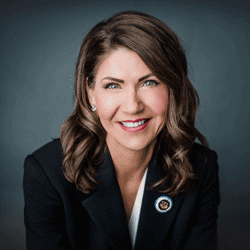
Governor Kristi Noem’s Weekly Column: Fairness in Women’s Sports


Fairness in Women’s Sports

By: Governor Kristi Noem 
March 26, 2021

Everyone knows that I am willing to fight for what I believe in. Some have even accused me of fighting too much! And one fight that I’ve taken on for years is fairness in women’s sports. And it’s a very simple fight: only girls should play girls’ sports.

This is very personal for me. I’ve been a 15-year-old girl in a locker room. Thankfully, I never had to worry about having a boy in that locker room next to me. My daughters, Kassidy and Kennedy, both played sports in college. If my girls had been playing against men, their ability to compete would have been dramatically limited.

Kassidy is pregnant with a baby girl right now. I want that baby – my granddaughter – to have the same opportunities that I had and that my daughters had.

And it’s a fight that I’ve taken on in the past. When the federal government tried to force boys and girls to compete against each other in 4-H rodeo, I stood up to protect fairness. Other leaders stayed out of that fight. But we won. We protected fairness in rodeo.

When we take on these important fights, we have to do so in a smart way. Throughout the COVID pandemic, I always made sure that I knew what my authorities were, and what they were not. We have to fight these important battles in smart ways, based on the authorities that we do have. We have to take actions that actually do good for the people of South Dakota, not just pick fights that feel good.

We have to do this right. If we lose, we could set back protections for our girls. And that’s not what anybody wants.

We are going to continue to protect women’s sports in South Dakota. We’re working to protect them at the K-12 level. And we’re building a coalition to take on the NCAA so that we can ensure protections at the collegiate level as well. To join that coalition, you can go to DefendTitleIXnow.com and sign our compact.

Again, the issue is very simple: only girls should play girls’ sports. Let’s take on this fight in a way that we can win, and let’s keep working together to build a coalition to make sure that the NCAA protects fairness as well.

###

Thank you Governor Noem for signing SB 182 and Senator Otten for bringing it and helping families of people with disabilities.

In the Press Release that just went out, Governor Noem signed Senate Bill 182, brought by Senator Herman Otten.  While not a big or flashy piece of legislation, it’s a measure that will do some good for families who have children with disabilities.

What Senate Bill 182 does is to provide a modest and logical addition to the tax code for property taxes to help support parents of adult children with disabilities.

This bill seeks to add language regarding who can claim “owner-occupied” for property taxes to include an “adult child with a disability”. The current statute as written already includes “a parent.” This means, currently, I purchased a home for a parent, it would be classified as “owner occupied” and we would be taxed at that rate. What the bill did was to also include “adult child with a disability” so families like my own who might purchase a home to rent to their adult child with a disability would be categorized as “owner occupied” and taxed at that rate.

What the bill does is offers a slight bit of relief as families try to balance assisting their child with a disability, while helping to give them a sense of independence. In my own case, my wife and I have a 16 year old daughter with Autism and her future is always on our minds. Providing this small change in law will provide a much needed and appreciated support for families as we parent our adult children with disabilities and help them to reach their highest level of independence in their home communities.

Thank you Governor Noem for signing SB 182 and Senator Otten for bringing this measure to help families of people with disabilities.

Governor Noem Signs Remaining Bills into Law


Governor Noem Signs Remaining Bills into Law

PIERRE, S.D. – Governor Noem has signed sixteen bills into law:

  • SB 17 authorizes the South Dakota Department of Corrections to purchase certain real property.
  • SB 95 provides protection for actions assisting an impaired lawyer or judge.
  • SB 144 makes an appropriation to provide for a crisis stabilization unit.
  • SB 167 establishes criteria for a regional nursing facility designation.
  • SB 182 revises provisions regarding owner occupied dwelling requirements.
  • SB 186 makes an appropriation for behavioral and mental health service support in crisis stabilization.
  • HB 1013 makes an appropriation to fund tax refunds for elderly persons and persons with a disability.
  • HB 1064 makes an appropriation for and the establishment of peer support and critical incident stress management training for first responder organizations.
  • HB 1065 adopts the emergency medical personnel licensure interstate compact.
  • HB 1139 requires that assisted living facilities create and post visitation policies.
  • HB 1154 prohibits employment contracts restricting competitive health care practices.
  • HB 1179 provides for physician wellness programs.
  • HB 1228 revises provisions regarding industrial hemp.
  • HB 1261 revises certain provisions related to the training curricula required of a person appointed as a guardian or a conservator.
  • HB 1263 provides price transparency for healthcare costs.
  • HB 1265 makes an appropriation for the improvement of the radio system in South Dakota.

Governor Noem has signed 247 bills into law this legislative session. There are no remaining bills awaiting action by the Governor.

Governor Noem Signs Pro-Life Bills into Law


Governor Noem Signs Pro-Life Bills into Law

PIERRE, S.D. – Governor Noem has signed four pro-life bills into law, includingHB 1110, which bans abortions based on a diagnosis of Down syndrome.

“The Declaration of Independence summarizes what we all know in our hearts to be true: God created each of us and endowed all of us with the right to life. This is true for everyone, including those with an extra chromosome,” said Governor Kristi Noem. “I look forward to the day when the Supreme Court recognizes that all preborn children inherently possess this right to life, too. Until that time comes, I am pleased to sign a ban on the abortion of a preborn child, just because that child is diagnosed with Down syndrome, as well as several other important pro-life bills.”

The three other pro-life bills include:

  • SB 183 declares certain contract provisions regarding abortion as unenforceable.
  • HB 1114 provides a definition of abortion.
  • HB 1130 establishes requirements for the presentation of a written statement regarding the discontinuance of a drug-induced abortion.

Previously this session, Governor Noem signed HB 1051, which maintains the life of any child born alive.

Governor Noem has signed 231 bills into law this legislative session.

###

Governor releases letter on Medical Marijuana changes prior to final legislative day

The Governor is offering some suggestions to legislators in advance of Monday’s return of legislators for Veto day advocating for a legislative fix for the mess that was the medical marijuana initiated measure:

Letter to Legislators on Medical Marijuana by Pat Powers on Scribd

As detailed in the letter, the Governor has offered the following as draft legislation:

Draft Legislation for Medical Marijuana by Pat Powers on Scribd

What are your thoughts? Will legislators fix this on Monday, or are we going to a special session?

Are you ready for the “Mega-Dakota” proposal?

The latest from our neighbor to the east has a lawmaker proposing a measure to allow counties to secede from Minnesota and join South Dakota:

A bill being introduced at the Minnesota State Capitol seeks to allow Minnesota counties to secede and join South Dakota.

Representative Jeremy Munson (R – Lake Crystal) wants to amend the state’s constitution to allow counties the right to leave Minnesota.

Read that here.

I imagine there would be a few advantages to that.

Such as Vikings fans (generally east river) would outnumber Broncos fans who tend to be in the west, The darn speed limit would be a lot more manageable if you were heading to Minneapolis for the weekend, and I’m sure we could think of a few more.

But realistically, I don’t think this one is going to happen.

Senate leader says HB 1217 not needed, topic dealt with 9 years ago

State Senator and Senate President Pro Tempore Lee Schoenbeck was interviewed by Public Broadcasting recently, and is one of the dissenting voices on House Bill 1217, noting that he believes the bill is unnecessary because the High School Activities Association dealt with it 9 years ago, and the system works:

Republican State Senator Lee Schoenbeck says her partial veto takes out the worst parts of the bill that are bad for South Dakota, but…

“I still believe the bill should die because it is not needed,” Schoenbeck says. “Our South Dakota High School Activities Association, which is our local school districts dealt with this at the local level nine years ago. The governor had to deal with what was put on her desk. The fact is the train left nine years ago and for political reasons they’re making noise chasing it now.”

In that nine year span only one transgender girl has played on a girls’ sports team. The policy recently rejected a transgender girl athlete, because the South Dakota High School Athletics Association determined the applicant would have a competitive advantage.

Read the entire story here.

You have to admit, that’s a lot of fuss for one student. And it seems like the High School Activities Association actually looked at it fairly.

Without new layers of government.

Rounds, Colleagues Introduce Bill Requiring DNA Border Testing to ‘End Child Trafficking Now’ 

Rounds, Colleagues Introduce Bill Requiring DNA Border Testing to ‘End Child Trafficking Now’

WASHINGTON – U.S. Senator Mike Rounds (R-S.D.) along with Senators Marsha Blackburn (R-Tenn.), Joni Ernst (R-Iowa), and Thom Tillis (R-N.C.) introduced the End Child Trafficking Now Act to prevent drug cartels and transnational criminal gangs from trafficking and exploiting migrant children to gain illegal entry into the country.Representative Lance Gooden (R-Texas) introduced companion legislation today in the House of Representatives.

“We need to stop criminals from exploiting our immigration policies and using vulnerable children as pawns to get into the United States,” said Rounds. “Our legislation would help rescue children from human trafficking by mandating a DNA test to verify family ties at the border. If family ties cannot be proven, children will be processed as unaccompanied minors and their kidnappers will not be released into the U.S.”

“After seeing the crisis firsthand, I’m reintroducing legislation to require DNA testing at the border to deter fraud and child trafficking. Adults attempting to slip across our borders under the guise of being a parent or relative to a minor must be DNA tested to prove they are related,” said Blackburn. “Drug cartels and gangs are using children to falsely present themselves as family units and seek asylum at our southern border. These unaccompanied minors are especially vulnerable to trafficking and are often forced to perform sex acts. Making DNA tests mandatory on anyone claiming a family relationship with a minor will send a powerful message that traffickers will be caught and aggressively prosecuted.”

Unaccompanied children made up nearly 10% of the 100,441 arrests for illegal border crossings in the month of February 2021. For the month of March, the government has caught an average of 523 unaccompanied minors a day over the past three weeks, according to The Wall Street Journal. At that rate, March would set a record month, with 16,000 unaccompanied children apprehended.

BACKGROUND

·         The bill requires DHS to deport alien adults if they refuse a DNA test and mandates a maximum 10-year prison sentence for all alien adults who fabricate family ties or guardianship over a minor.

·          It also criminalizes “child recycling,” which happens when the same child is used repeatedly to gain entry by alien adults who are neither relatives nor legal guardians.

·         If family ties or legal guardianship cannot be proven with the accompanying adult, the Act requires HHS to process the child as an unaccompanied minor under current law.

###