US Senator John Thune’s Weekly Column: Let’s End the Madness

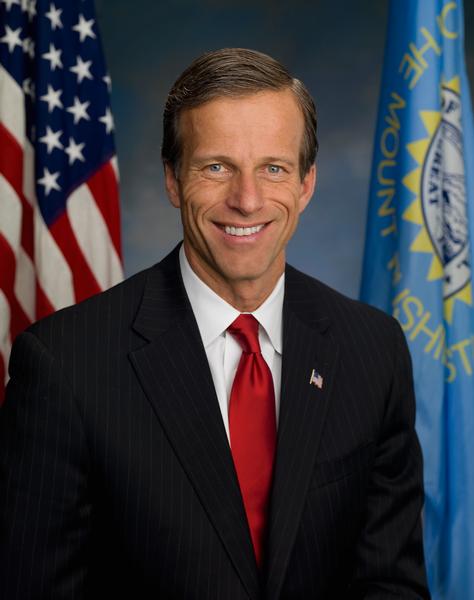
Let’s End the Madness
By Sen. John Thune

I always look forward to the month of March because the weather slowly starts to improve, and, of course, we have the start of March Madness basketball. While I’m all for the madness of the basketball variety, this March marked the first anniversary of a different kind of madness that was happening in Congress. Unfortunately, if many Democrats had it their way, it would never end.

One year ago, just weeks after Congress responded to the COVID pandemic by again providing some much-needed, targeted assistance, Democrats were busy passing their multi-trillion-dollar American Rescue Plan. In my view, the only thing it rescued was Democrats who were eager to spend more taxpayer money. Unfortunately, though, it helped create the inflation crisis that many South Dakotans are dealing with today. While it’s true that supply chain issues and the reopening of economies after COVID shutdowns created certain inflationary pressures, a major cause of our current inflation crisis was Democrats’ decision to pass the American Rescue Plan last March.

The definition of inflation is too many dollars chasing too few goods and services, and that’s exactly the situation Democrats helped create. At the time, our economy was well on its way to a healthy recovery, and the majority of states had the money they needed to deal with the pandemic. It was abundantly clear that the economy was not in immediate need of trillions of dollars more in government spending. But that didn’t stop Democrats and the far-left political base to which they were trying to appeal.

Now that they were in charge, they were eager to take advantage of the COVID crisis to begin implementing their big-government vision. So, in the name of “COVID relief,” they pushed through a massive, partisan $1.9 trillion piece of legislation filled with unnecessary spending and handouts to Democrat interest groups. Less than 9 percent of that $1.9 trillion was directed to actually combating COVID. And despite being billed as essential and urgent COVID relief, a substantial portion of the money appropriated isn’t required to be spent until after this year.

The end result of the Democrats’ partisan crusade was entirely predictable. They flooded the economy with unnecessary government money, and the economy overheated as a result. Inflation started to rise almost as soon as the ink was dry on the American Rescue Plan, and it just keeps rising. Going to the grocery store is taking up a huge chunk of South Dakotans’ paychecks, not to mention what rampant gas prices are doing to family budgets.

The bottom line is that the American Rescue Plan was a bad deal for Americans. It was a bloated and unnecessary bill, and it was irresponsible legislating. I hope that Democrats do not have the chance to double down on this legislation and make our current inflation crisis even worse. My message to Democrats in Washington: Let’s keep the madness on the basketball court.

###

Congressman Dusty Johnson’s Weekly Column: PROBLEM SOLVING—Supply Chain Edition

PROBLEM SOLVING—Supply Chain Edition
By Rep. Dusty Johnson
March 18, 2022

Supply chain problems are still plaguing producers, manufacturers, transporters, and consumers across America. These high prices and delayed shipments have been aggravated by steady increased demand. Consumer spending on e-commerce is expected to hit a record $1 trillion this year due to the shift of online shopping driven by the pandemic. This is a 13% increase from 2021.

Increased demand is placing more stress on our port system and this stress is complicated by unfair practices by foreign ocean carriers. These carriers are leaving American exports at our ports and going back to Asia with empty containers—leaving American products heading overseas, stuck. This new practice increased the largest ocean carrier profits by more than triple over the last year.

This dilemma is what led U.S. Rep. John Garamendi (D-CA) and I to introduce the Ocean Shipping Reform Act (OSRA), which passed the House overwhelmingly (364-60) in December 2021. As OSRA is still pending Senate consideration, members of the House are still speaking up to ensure its quick passage.

On Thursday, I held a roundtable discussion with some of my Problem Solvers Caucus colleagues—U.S. Reps. Jim Costa (D-CA), and David Valadao (R-CA)—and supply chain experts to discuss these problems and how OSRAwould help alleviate some of the supply chain delays felt across the country.

Last month, loaded exports from the Port of Los Angeles decreased 24.7%, while the number of imports increased. With the current state of the supply chain, manufacturers are expecting delays to continue into the first half of 2023. This is alarming.

Experts in American manufacturing and agriculture made it clear at this week’s roundtable: America’s economy and businesses need OSRA signed into law. There are solutions to some of the problems we’re seeing with our supply chain and foreign flagged ocean shippers – OSRA establishes rules of the road and puts America on an equal playing field.

The Senate will hold a markup on OSRA on March 22. Getting this bill across the finish line and signed by the President is crucial to begin easing the costly problems created by foreign carriers’ unfair shipping practices. My colleagues and I in the House will keep working alongside industry experts to ensure Senate passage of the House version of OSRA to strengthen our supply chain security.

Release: Rachel Dix Announces Candidacy for South Dakota District 3 Senate

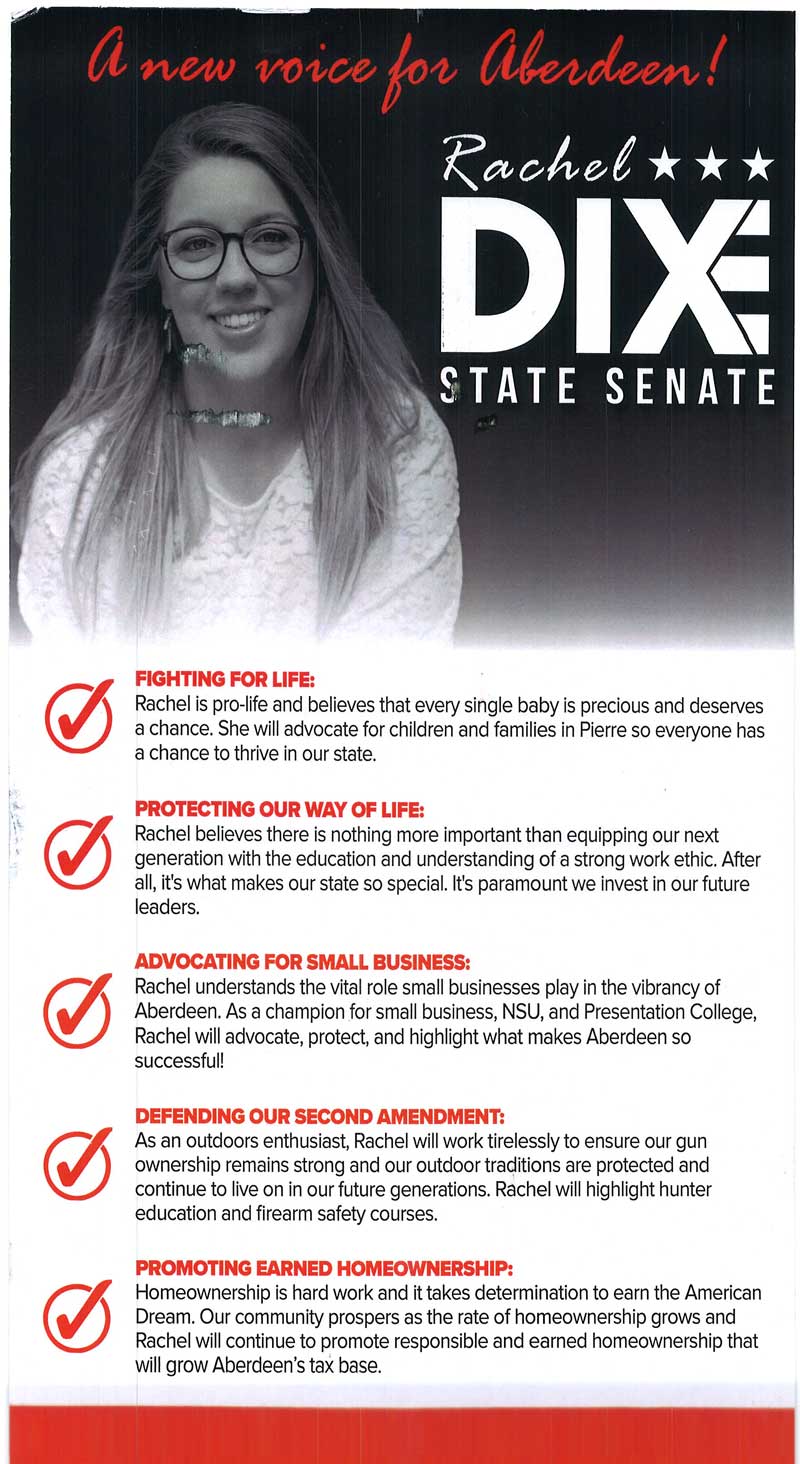
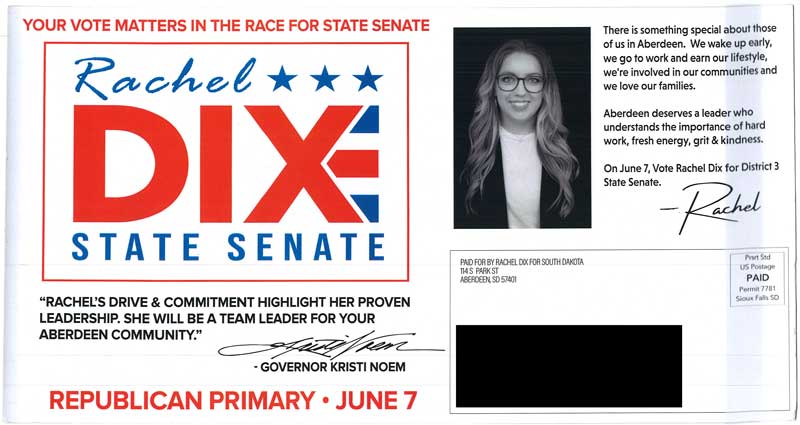
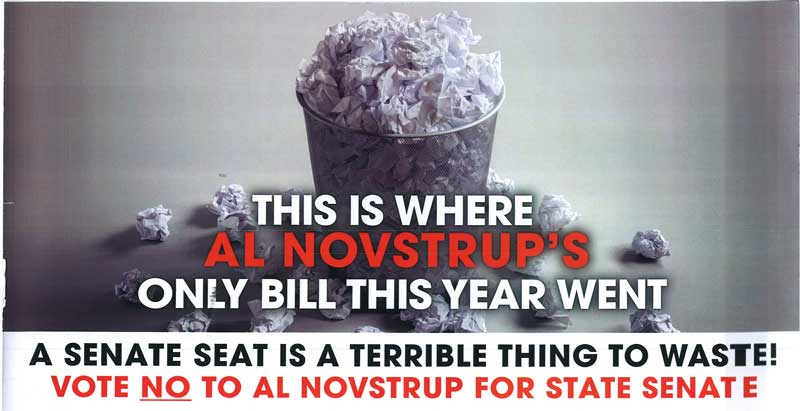
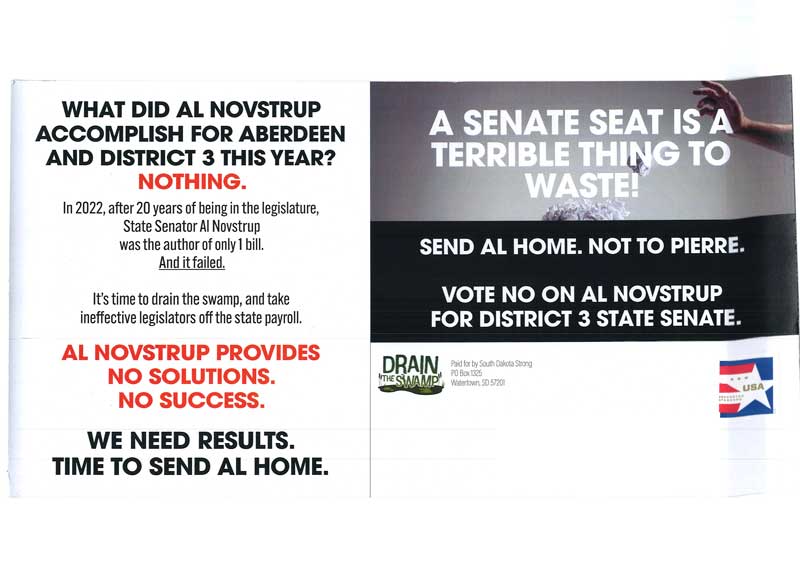
RACHEL DIX ANNOUNCES CANDIDACY FOR SOUTH DAKOTA DISTRICT 3 SENATE

ABERDEEN, SD – MARCH 2022: Rachel Dix will be on this year’s Republican primary ballot for SD District 3 Senate. Rachel has been involved in state and federal government for the past several years with her role in the building and housing industries. She is eager to continue to serve the Aberdeen community through advocacy, building collaborative partnerships, and volunteerism. Rachel believes South Dakota has laid a solid foundation of freedoms and access to education and she will strive to continue that path for Aberdeen.

“I look forward to the opportunity to serve as your district 3 Senator. I will be a strong voice advocating for the needs of Aberdeen by being conservative, yet open-minded, towards our community’s future. Together, we’ll invest in Aberdeen through increasing the skilled trades workforce, promoting education, and expanding homeownership in our community.” – R. Dix

In February 2022, Rachel earned her Master of Business Administration degree from Western Governor’s University and is a local graduate of Presentation College. She earned her Bachelor of Science in Management and minor in Finance. As the Executive Officer for the Aberdeen Home Builders Association, an affiliate organization of the National Association of Home Builders (NAHB), she enjoys meeting and collaborating with individuals and businesses across the state and supports the growth of northeastern South Dakota. Rachel has attended and hosted multiple meetings with city, state, and national delegations in this position. The NAHB Executive Officer Council awarded Rachel the Small Office Honor Honoree of 2019. In February 2022, Rachel was installed as a regional director of the NAHB Executive Officer Council.

Additionally, Rachel is the Homeownership Coordinator for Homes Are Possible, Inc. She teaches sessions that promote homeownership for all in our communities. Rachel is a Homeownership Education Resource Organization (HERO) partner with the South Dakota Housing Development Authority (SDHDA.) She is also a certified SD Real Estate Education Instructor. Rachel’s energetic nature and love of learning are shared during her interactive sessions. In this position, Rachel collaborates with the South Dakota Native American Homeownership Coalition promoting housing education and sustainability across the state.

Rachel is an active community volunteer. As a member of the Aberdeen Chamber of Commerce, she works closely with the Community Affairs and Workforce & Education Committees. Through the Aberdeen Chamber, Rachel received the Emerging Leader Award of 2020. She sits as the second vice-chair on the Dakotaland Federal Credit Union Board of Directors and is a member of the Aberdeen Area Realtors Association promoting homeownership. She was honored to be selected to attend BushCon November 2018, an annual convention of the Bush Foundation, with the Aberdeen Diversity Collation learning to communicate more efficiently and effectively with all community members. The Diversity Collation involvement led to Rachel accepting the position as the national Executive Officer Liaison for the NAHB Diversity, Equity and Inclusion Taskforce.

Rachel is homegrown and understands and enjoys the amazing freedoms offered to our community. In her spare time, Rachel and her husband, Nathan, will be found in the great outdoors of South Dakota! Rachel is an avid huntress, with her favorite seasons being east river rifle and archery deer. She and Nathan can be found kayaking, fishing, and hiking across the state during the summer. Rachel and Nathan reside in Aberdeen, SD, with their dogs, Lacy and Randy, and their cats, Betty and Mocha.

###

Rachel Dix for South Dakota
Website: racheldix.com

Fundraising Letter from former Speaker of House pushes hard against Rep. Sue Peterson.

Today was not the day for supporters of State Rep. Sue Peterson to check their mailbox. Because there was a letter that went out that hit her hard as an opening salvo in the District 13 Primary.

Former State Representative Speaker of the House Mark Mickelson, who once represented the area alongside Peterson, sent a letter advocating for State Rep. Richard Thomason, and just blasted Peterson for being “not a supporter of public education,” for being against the Sioux Falls Chamber, and for missing votes.

Whoof.

It looks like it is game on in D13.

Gov. Noem Signs Medical Cannabis and Hemp Bills into Law

Gov. Noem Signs Medical Cannabis and Hemp Bills into Law

PIERRE, S.D. – Today, Governor Kristi Noem signed six medical cannabis and hemp bills into law. Implementing these bills will be part of Governor Noem’s focus on implementing a safe and responsible medical cannabis program that is the most patient-focused in the country.

  • SB 19 permits certain facilities to establish reasonable restrictions related to the medical use of cannabis.
  • SB 21 revises provisions related to the revocation of a medical cannabis registry identification card.
  • SB 24 establishes a maximum number of cannabis plants that may be cultivated by a medical cannabis cardholder.
  • SB 26 revises the definition of practitioner for purposes of the medical cannabis program.
  • SB 118 establishes provisions related to the testing of medical cannabis.
  • SB 201 revises provisions regarding industrial hemp.

Governor Noem had previously signed an additional 18 medical cannabis bills into law during the 2022 legislative session.

Governor Noem has signed 180 bills into law and vetoed one this legislative session.

###

Looks like the Haugaard for Governor campaign earns another 1-month coin for “no news”

From the Steve Haugaard for Governor website, it looks like they’ve earned another 1-month coin for going 30 days between posting a press release.

The last news item is from February 16. And before that, January 28th.  For someone running for Governor, they’re not trying very hard at earned media.

Unless that whole “wrung out whore” thing was just for the press?

Letter from concerned Appropriators sent to caucus leaders about impact of House Bill 1281

A letter just went out this afternoon from several concerned members of the House & Senate with regards to the impact and implications of House Bill 1281, which refers a number of day to day decisions on federal spending which have been done within expenditure guidelines set by the budget, and puts it on a far tighter rein, and might require Appropriators to spend a lot more time in Pierre:

Dear Caucus Leaders:

It is no secret that we believe HB 1281, which was reincarnated as the “budget deal Federal spending framework”, was the wrong direction for South Dakota. We ask the Leadership of both Chambers to consider the issues we raise below and acknowledge the need for a Legislative fix to the problems we created.  The House majority spoke when House Bills 1333, 1334, 1335, 1336, and 1339 were defeated and the Senate spoke with one unanimous voice on SR701, yet somehow, we’re living with the reality of HB 1281 and we have many questions that we cannot find answers for.  We’ve developed a short list of the most obvious questions/concerns we’ve arrived at thus far.

    1. As appropriators or former appropriators, we are aware that there are agencies not explicitly referenced in HB 1281 which may receive funding from the federal legislation referenced in the bill. We believe that there is confusion regarding what process those agencies should follow under this new legislation. Should they follow the new budget unit process, or should they simply continue conducting business as usual?
    2. What constitutes a “change in policy” as referenced in section 10 of HB 1281? If a department must alter a program to match shifting federal guidance, would that constitute a “change in policy?” For instance, theSouth Dakota Department of Transportation frequently has to adjust to revised rules and criteria for various federal funds, yet all funds would still be used for roads and bridges.  Who is the arbiter of the “change in policy”?  Does the Transportation Commission have authority to accept grants with changing parameters or have we destroyed that Commission and must now legislate which highways are repaired or not?  Is the STIP now worthless or at best subject to legislative approval? 
    3. Do discretionary, competitive grants – like local law enforcement grants – constitute new programs? This same situation repeats time and time again across state government.
    4. Section 10 also states that an agency may not expend federal funds for these new programs (again, unclear on what constitutes a new program) “until the special committee… releases the appropriated money.” What process and timeline does the committee intend to follow for releasing that money? Does the Joint Appropriations Committee have authority over these grants during session, or is it only the “Special Committee”?
    5. For the remaining federal fund authority in the base budgets of various agencies impacted by HB 1281, would they need to transfer that money to the new budget units as identified in section 1, and then transfer the money back to the previous budget unit?
    6. Many sections of the Consolidated Appropriations Act, 2021, Pub. L. 116-260, as is shown in HB 1281, appear to be replaced by Public Law 117-43. What impact does that have on the provisions of HB 1281?
    7. For projects that span multiple fiscal years (whether state or federal), would agencies need to request a separate release of expenditures only for work to be performed in state FY 2023? This seems like it could overcomplicate planning for the type of major construction projects that our legislature has approved in the past two years.
    8. What kind of time commitment is anticipated from current appropriators until the next legislative session? How much additional work do you expect HB 1281 will create? If our Legislative Branch wants to be in “control” of the budget shouldn’t it be the responsibility of the Legislative Research Council fiscal staff to do the research to identify the agency budgets impacted and subject to HB 1281? How many additional staff will we need and what will be the cost to our citizens to do all this analysis, when in the end we can only do what was already authorized by the U.S. Congress?

There are many additional questions that we could ask as to how agencies accounting processes should work. As legislators, we should clarify our intent so that the administration can move forward with a workable process – if that is even possible given the vagueness of this legislation.

This is a legislative problem created by our haste to “get out of town” on the last day of session.  We have analyzed HB 1340, the G-Bill.  There are no ill effects if HB 1281 is disposed of.   We need to stand up and acknowledge our error and find a Legislative solution or ask the Governor to veto this bill and then work to sustain her veto.

Respectfully,

The undersigned members:

Senators:
John Wiik  
David Johnson                                                                     

Representatives:
David Anderson
Larry Tidemann
Hugh Bartels
Lance Koth
Mike Derby

What are your thoughts?

Press Release – New Survey: Sioux Falls Residents Raise Alarm on Mega-Slaughterhouse

From my mailbox:

New Survey: Sioux Falls Residents Raise Alarm on Mega-Slaughterhouse

SIOUX FALLS, South Dakota – Citizens for a Sustainable Sioux Falls (CSSF), a community network dedicated to preserving the spirit of Sioux Falls and the beauty of its natural resources, today released the results of a new poll capturing local views on plans for a major new hog processing plant just off Interstate 229. The survey, conducted by Public Opinion Strategies in February, found that three-quarters of registered voters in Sioux Falls want to hit the brakes on a proposal by Nebraska-based Wholestone Farms to open a 170-acre complex to process six million hogs annually within city limits.

“Sioux Falls continues to grow as the economic and cultural hub for our region, but residents don’t want to jeopardize that bright future with short-range thinking,” said CSSF executive director and Sioux Falls native Robert Peterson. “The vast majority of local voters shared serious concerns about the impact of a massive new slaughterhouse inside our city on odor, traffic, water quality, housing, and other issues. They want city leaders to protect our quality of life and our future ability to attract high-skilled, high-wage jobs.”

Before being presented with any arguments, the survey of 300 registered voters found that 81% of residents felt the proposed slaughterhouse would negatively impact odors in Sioux Falls, while 67% of residents felt it would negatively impact the availability of housing. Majorities also agreed it would negatively impact water quality, traffic and congestion, and property values. A full 75% agreed with the statement that, “City leaders should halt the project until more study is done on the impact to property values, traffic, and living conditions.” Even more, 78%, would support requiring any new slaughterhouse to be located outside of city limits.

“Given the city’s long-time efforts to combat contamination in the Big Sioux River and foul odors in our neighborhoods, it’s clear why residents want to keep up to six million hog carcasses away from our homes, businesses, and schools,” added Peterson. “Sioux Falls is our home and an increasingly attractive location for many new families and professionals. We can keep it that way by placing a moratorium on this project while more study is done, citizens’ concerns are heard, and better locations are considered.”

Additional results are available in a memo from Public Opinion Strategies linked here.

###

ABOUT US: Citizens for a Sustainable Sioux Falls highlights the voices of community leaders, employers, and local residents who share a passion for ensuring that Sioux Falls remains the best little city in America to live, work, open a business, or raise a family. Our work aims to ensure Sioux Falls continues to grow as a thriving center of commerce, culture, and technology by preserving the spirit of our community and the beauty of its natural resources. Learn more at CitizensForASustainableSiouxFalls.com.

Governor Kristi Noem’s Weekly Column: The Hope of Springtime

The Hope of Springtime 
By Governor Kristi Noem 
March 18, 2022 

Sunday, March 20 marks the first day of Spring — at 10:33 a.m. CT/9:33 a.m. MT precisely, according to the Farmer’s Almanac. Spring is a crucial season for both of our state’s two largest industries: agriculture and tourism.

Spring is always a great time of year. Easter is right around the corner. Every day we see signs of renewal that give us hope: the warm sun melting away the chill of winter; Buffalo calves on the prairie; and Spring blooms returning to the fields and trees.  

After two years of COVID looming over the lives of people across the country, Americans are looking for wide-open spaces like what we have in South Dakota. Even as inflation climbs to record highs, recent data from experts like Expedia suggests Americans are gearing up for another big year of travel. After our record-breaking tourism year in 2021, we are optimistic about another big tourism season for South Dakota. 

As gas prices blow past historic peaks, fueled by a 40-year high for inflation, Americans are planning to put a higher premium on travel and vacation this year. With airlines potentially ending mask mandates in mid-April, we could also see a rise in air travel in Sioux Falls, Rapid City, and other regional airports. 

While it is impossible to know for sure how many visitors will make their way to South Dakota in the coming months, a look back at 2021 shows that folks want to visit our great places and see our great faces. Record numbers of people visited our parks, and our airports in Rapid City and Sioux Falls saw a 74% increase over the previous year. 

All told, our state saw about 13.5 million visitors in 2021. That’s because we have so much to offer: national monuments, the most beautiful parks, plenty of places to hunt & fish, rodeos, livestock shows, some of the best county fairs in America, and rich cultural experiences such as Pow Wows and the Crazy Horse Memorial.  

All of these attractions led to visitors spending a record $4.4 billion last year in South Dakota. That’s an amazing figure for our state’s No. 2 industry.  

As we look forward to warmer days and the chance to enjoy the outdoors, my thoughts are also turning to our farmers and ranchers. A milder winter has given way to earlier spring weather. Unfortunately, the lack of snow hasn’t helped ease drought conditions. As Spring comes, let’s all pray for some April showers (and some March showers, too) to help our farmers as they put crops in the ground. 

Last year, Agriculture accounted for more than $32 billion in our state economy, making it our largest industry by far. With the drought hanging around, it’s likely our Ag economy could take a hit this year. 

Without additional moisture, our farmers and ranchers will face challenges. They are already feeling the pinch on their margins thanks to inflation, including rising diesel prices. Without adequate spring showers, ranchers will be spending more to keep their stock fed, and farmers will have a harder time growing their crops. 

In times like these, I turn to my faith. The Bible tells us not to fear, “For I will pour water on the thirsty land, and streams on the dry ground.” It also says “Ask the Lord for rain in the springtime; it is the Lord who sends the thunderstorms. He gives showers of rain to all people, and plants of the field to everyone.” Let’s remember those promises and pray for rain. 

Hope springs eternal as we approach the celebration of Jesus’ resurrection. May we remain thankful for our blessings in South Dakota and work together to lift our neighbors who are waiting for their blessings to come in the form of rain clouds. 

###