As they tumble nearly 20% in polls, Life Defense Fund reports consultant costs of 51%, with Legislator & Co-Chair Jon Hansen one of them

As the financials for South Dakota Right to Life (SDRTL) and its affiliated Political Action Committee have come under fire for spending thousands to attack legislators the group had rated as supporting SDRTL’s positions 100% over the last two legislative sessions, more focus is coming on Jon Hansen, a central figure in the anti-abortion movement in South Dakota. Hansen serves as vice president of the board of South Dakota Right to Life and is co-chair of the Life Defense Fund.

With all the money flowing into the Life Defense fund to fight Constitutional Amendment “G” to force the most liberal abortion laws in the nation of abortion onto South Dakota, why are they crashing in the polls before the fight has even begun?

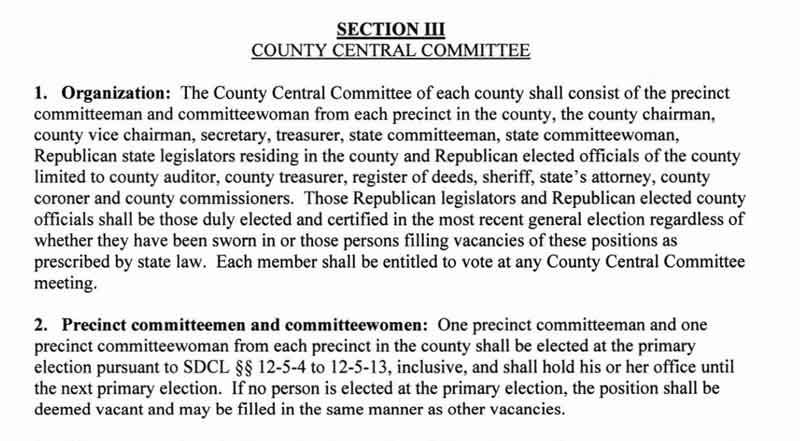
“I do solemnly swear (or affirm) that I …have not accepted, nor will I accept or receive directly or indirectly, any money, pass, or any other valuable thing, from any corporation, company or person, for any vote or influence I may give or withhold on any bill or resolution, or appropriation, or for any other official act.”

Article III, Section 8, South Dakota Constitution
South Dakota Legislative Oath of Office.

LEGISLATOR LEADING EFFORT AGAINST MEASURE IN LEGISLATURE ALSO PAID CONSULTANT

In January, the leader of the Life Defense Fund State Representative Jon Hansen introduced and led House Bill 1244 in an attempt to stymie the petition circulators of a pro-choice measure who wished to enshrine abortion in the South Dakota State Constitution. Hansen claimed and testified as to circulation irregularities:

The bill was the brainchild of Rep. Jon Hansen, who is leading the effort to block a proposed amendment to the constitution that would substantially expand access to abortion in South Dakota.

An emergency clause in the legislation would make it so that it would apply to that effort – spearheaded by Dakotans for Health.

Read that here.

What no one had noticed at the time is that Representative Hansen was not just leading the Life Defense Fund, but the prime sponsor of House Bill 1244 had apparently been receiving income from the group:

In January of 2023, as part of his “Conflict of Interest/Statement of Financial Interest” as an elected official, Hansen disclosed that he was not just co-chair of the Life Defense Fund but disclosed he befitting financially as co-chair/consultant for the organization. He also reiterated that he was receiving funds from the group again in 2024 as part of his “Conflict of Interest” candidate statement.

On both documents, officeholders and candidates are required to disclose “any source of funds” that “contribute more than 10% or more than $2000 to their family’s gross income in the preceding calendar year.”

How much is Hansen receiving as an advocate for the Life Defense Fund? It’s hard to cite a specific amount. Unfortunately, with South Dakota’s fairly lackadaisical campaign finance reporting laws, we’re only allowed a glimpse of the broad category of consulting, as opposed to knowing the specific amount that Hansen is pocketing for his Co-Chairmanship & Consultancy.

In their last 2 campaign finance reports, the group reports expenditures of $209,294.36 in their year-end report, and $69,201.16 in their pre-primary report.  Of those expenditures, across both reports the Life Defense fund notes consulting expenses totaling $142,430.44 of the $278,495.52 they’ve spent in the last 18 months. Or, 51.14%.

Life Defense Fund Year End … by Pat Powers

Over fifty cents of every dollar reported in those reports as being spent by the Life Defense Fund is going out for consulting, as Jon Hansen self-disclosed himself as a consultant receiving renumeration from the organization.

“..any interpretation of Article 3, Section 12 should err on the side of taxpayer protection against legislative conflicts and not on the side of monetary gain for members of the legislature.”

– Representative Jon Hansen
Supreme Court Brief, filed 12/15/2023

PAST CONFLICTS OF INTEREST HAVE RAISED SOUTH DAKOTAN’S IRE

As Hansen’s paid advocacy appears to have more than a passing relation to his efforts in priming and passing House Bill 1244, we have to pause and reflect back on how past conflicts have been viewed.

Some of us can go back and remember one of the incidents that helped propel now Governor Kristi Noem into the greater statewide public view, raising her profile before her bid for Congress in 2010:

During the committee’s discussion about the bill, Noem said Heidepriem’s law firm is representing “someone looking for expansion of gaming in the state.”

“I would believe there are other motivating factors here. There are ties that haven’t come to light yet,” she said.

And..

He further wrote that he was “disappointed” that Noem suggested he was trying to advance the interest of a client.

“In the future, if you have concerns about my ethics, you might consider inquiring of me privately, to avoid suggesting unfounded allegations against a fellow legislator in public, and to spare yourself any appearance of inappropriate partisanship,” Heidepriem’s letter concluded.

Read that story here.

Scott Heidepreim came under then State Rep. Kristi Noem’s fire back in 2009 for introducing legislation which appeared might possibly benefit one of his law firm’s clients. And it received plenty of press back in the day.

15 years later when State Representative Jon Hansen is very openly and actively trying to block an opponent on a ballot measure, no one seems to have has raised any concern over the conflict between his position as the public leader of a ballot measure committee and his work as a legislator.

And now we find that part of his leadership was defined and disclosed as paid work during the time he was introducing legislation to benefit their effort.

WHAT HAS THE LIFE DEFENSE FUND ACCOMPLISHED? PR FAILURES AND AMENDMENT G SURGING IN THE POLLS.

Despite having Hansen, the head of the House Judiciary Committee, leading and passing a bill to give the ability to directly attack the signature collection process (in theory), in practice the implementation ended up resulting in a PR disaster. In one instance, the calls triggered Secretary of State Monae Johnson to refer to calls coming from the group labeling them as “a scam,” as detailed in a story from SD Searchlight:

The callers were contacting people who had signed a petition to place an abortion-rights measure on the ballot in the Nov. 5 election. The phone operation was part of a coordinated attempt to gather information for a legal challenge to the petition, and to inform people that they could withdraw their signatures.

Johnson’s news release said callers were “impersonating” her staff and “trying to pressure voters into asking that their name be removed” from the petitions.

Read the entire story here.

Hansen vehemently denied the label of it being a scam and attacked the Secretary of State, declaring that “by labeling our lawful activity as a scam, Secretary of State Johnson has done significant and irreversible damage to the pro-life movement in South Dakota.”

The Attorney General investigated and determined that he did not believe that any misunderstanding of the calls had been intentional, but conceded that in practice, it could have been a communication issue for Hansen’s group. But it also gave opponents fodder:

“Could they have been reading the script too fast?” Jackley said. “Possibly.”

and..

Dakotans for Health Chairman Rick Weiland described the phone campaign as unethical.

“We knew all this would happen once that signature removal bill passed,” Weiland said. “They did and continue to misrepresent the ballot measure.”

Read that here.

How have South Dakotans viewed the proposed abortion measure Amendment G as all of this has been taking place?

In November of 2023, a joint poll of 500 residents conducted by SD News Watch and the Chiesman Center for Democracy at USD asked people whether they would support or oppose a constitutional amendment that would allow for abortions during the first trimester. The results indicated that 45.6% supported the amendment, 43.6% opposed it, and 10.8% were undecided.

Fast forward to May of 2024. An identical survey was conducted. The results? 53.4% now are said to support Amendment G. 35.4% oppose it. And a higher number – 11.2% – are undecided.

As reported, a nearly 20-point margin shift in 4 months has taken place in favor of Amendment G, while during the same period of time the ballot measure committee opposing it – the Life Defense Fund – has done nothing but flail in their attempts to attack the petitioning process.

And that poll was taken about a week before the flurry of negative press.

WHERE DO AMENDMENT “G” OPPONENTS GO NOW?

Recent news reports indicate that the Life Defense Fund intends to attempt a legal challenge against the validity of the petitions over the manner in which signatures were gathered, claiming that signatories were deceived, re-running the same allegations in court that they were unable to gain any headway with after they received passage of House Bill 1244, their signature challenge bill.

Well, good luck with that.

In South Dakota, the Supreme Court has traditionally taken the position to let the people decide, as opposed to overturning ballot measures in progress, especially given the short timeframe between the time petitions are filed and validated and the fall election, leaving almost no time for a deep examination of allegations that the people attempting to block such petitions make.

With the hostility that some in the pro-life movement have exhibited against a number of elected officials who had stood with them on the life issue – as recently chronicled by long-time legislator Lee Schoenbeck –  and others calling for “a trustworthy new option” for pro-life minded supporters, the anti-abortion movement finds itself going into the fall election completely fractured. A number of high-profile pro-life advocates want to oppose the effort, but given the players leading the game, they’re taking their ball and looking for a new field to play in.

As illustrated by the surging poll numbers in favor of the amendment, if trends continue and are unable to be arrested by what to date has been Jon Hansen’s ham-handed campaign that can’t shoot straight, it does not bode well for South Dakota’s pro-life movement.

At this rate, when the November election rolls around, South Dakota may find itself as host to the strongest pro-choice laws in the nation enshrined in our State Constitution.

Guest Column: Right to Life took Pro-Life donations to oppose 100% Pro-Life Legislators by Senate President Pro Tempore Lee Schoenbeck

RIGHT TO LIFE TOOK PRO-LIFE DONATIONS TO OPPOSE 100% PRO-LIFE LEGISLATORS
By Senate President Pro Tempore Lee Schoenbeck

In the early 1980’s Ruth Karim, one of the founders of South Dakota Right to Life, asked me to serve on their Board of Directors. I was honored to accept, which makes me one of the oldest (since service) surviving members of that board. You can imagine my shock and disappointment when I saw the SD Right to Life logo on campaign literature against two 100% SDRTL voting record House members: Mike Derby and Becky Drury. This misuse of donor funds, and SDRTL’s venture into being an attack group on 100% pro-life SDRTL voting record legislators inspired this article. We donors need to know that SDRTL is no longer using our funds to protect our state’s most vulnerable children, the unborn.

Sadly, they are doing this at a point in time when we need to instead be all hands-on deck fighting the pro-abortion ballot measure. Their actions make no sense.

My Bona Fides

Since this article draws on history and will likely inspire attacks by those supporting and encouraging the misuse of our pro-life donations, indulge a moment to comment on my qualifications to comment.

I don’t pay attention to ratings, but pretty sure for all the years SDRTL did ratings during my 14 sessions, I would have had a 100% rating.

In 2004 Rep Matt McCaulley introduced South Dakota’s first effort at an abortion ban, HB 1191. I was the prime Senate sponsor. There’s a great article Leslie Unruh wrote about how I got the bill through the senate 18-17 when I really only had 17 votes. This was in a time when abortion legislation fights were real.

In 2005 Rep Joel Dykstra introduced our current trigger law, HB 1249. I was a Senate co-sponsor and handled the floor debate.

I can’t claim to solely have the strongest pro-life record in the legislature. As you will see below, Sen Hunhoff and soon-to-be- again Rep Keri Weems have comparable records.

RIGHT TO LIFE TOOK PRO-LIFE DONATIONS TO OPPOSE 100% PRO-LIFE LEGISLATORS

According to recent campaign finance reports, SDRTL’s Board of Directors transferred $10,000 of donor funds to SDRTL’s PAC. The only other funds received by their PAC was $100 personally from Dale Bartscher.

Donors, like myself, would assume these funds were to concentrate on the pro-abortion ballot issue we face in November. But, NO. Dale Bartscher and his Board diverted those donor funds for a very different purpose – and it is all public record.

The board diverted donor funds to 16 races, of which only 3 were incumbents! 13 challengers, with no proven record of handling our pro-life battles, received our donor dollars.

SDRTL PAC 2024 PRE-PRIMARY Report on Scribd

Ten 100% pro-life voting record legislators were opposed by SD Right To Life, in spite of being PERFECT PROVEN pro-life public servants:

  1. Representative Steph Sauder of Hamlin County has a 100% rating, and she was the top target of SDRTL in her senate race! Why you say? SDRTL diverted our donor dollars to help one of their board members, in spite of Steph Sauder having a perfect pro-life voting record.
  2. Senator Erin Tobin, with a 100% pro-life voting record, and a nurse practitioner who worked with other legislators to try and position South Dakota to beat the abortion ballot issue (the one SDRTL was stealing funds from working against).
  3. Senator Mike Walsh not only has a 100% pro-life voting record, he carried these life defining and pro-life attributes: American veteran, spouse of active military and retired respected law enforcement officer. Sounds like our perfect senator – SDRTL spent money to beat him!
  4. Representative Brian Mulder carried a 100% pro-life voting record and has been an assistant pastor at Central Baptist in Sioux Falls. SDRTL spent money to beat him, and former Rep Keri Weems (see that odd story below).
  5. In a Sioux Falls District, where we pro-lifers had the benefit of two incumbent 100% pro-life voting incumbents, Representatives Greg Jamison and Amber Arlint, SDRTL spent money to beat them! This is about as perfect of an example of SDRTL going to the dark side, except there are at least two districts where they were stronger in their anti-life actions!
  6. Representative Tony Venhuizen has a 100% pro-life voting record, and SDRTL spent money to try and beat him. In that race, newcomer Brad Jankord was also pro-life, but SDRTL opposed him too !
  7. In Yankton, Representative Mike Stevens, the House Speaker Pro Tempore has a 100% pro-life voting record as defined by SDRTL, but still they spent money to beat him
  8. In Rapid City, two incumbents, Representatives Mike Derby and Becky Drury both had a 100% pro-life voting record as determined by SDRTL. Under those circumstances, donors like me would say, easy call: Derby and Drury. We would be wrong, SDRTL spent donor dollars to oppose both 100% pro-life voting record representatives.  Donors did not give SDRTL money all these years for them to oppose pro-life public servants.

SD RIGHT TO LIFE’s WORK AGAINST OUR PRO-LIFE CAUSE WAS EVEN WORSE THAN IT LOOKS

It appears the SDRTL didn’t care where our real pro-life legislator strength lies.

For example, they spent our donor dollars to beat Keri Weems, US Senator John Thune’s sister-in-law. Keri was previously in the legislature. If Jon Hansen, Dale Bartscher and Fred Deutsch knew how to turn on a computer, they would have seen that Rep Keri Weems was a cosponsor of our abortion ban bill in 2004 and of Rep Dykstra’s trigger bill (our current pro-life law) in 2005. When there were real fights, she was our pro-life warrior – and SDRTL wants to keep her out of the legislature!

Another great example is Jim Halverson, who SDRTL spent hard to beat. Most real pro-lifers know that Sen Harold Halverson would be on a list of top ten pro-life heroes to serve in Pierre. His SON, Jim shares his father’s values. Yet, SDRTL spent our donor dollars to beat the next generation of our best.

The most egregious misuse of donor dollars was in Yankton. Objectively, Senator Jean Hunhoff is the longest tenured 100% dependable pro-life vote in the Capitol. A very unusual House candidate in Yankton spent a serious amount of time attacking Jean and recruiting an opponent for Jean. Given that Jean has objectively cast more pro-life votes for us and was a co-sponsor of our abortion ban and Rep Dykstra’s trigger law, you would expect her to be the biggest benefactor of SDRTL’s gifts of our donor dollars. You would be wrong. She received ZERO.  The House member attacking her? Zero? Nope! Jean’s attacker made the category for the third largest checks of our donor dollars. If you are in Yankton and see the Hunhoff families at mass, how do you reconcile sending funds to an organization attacking their family member’s faith filled public service?

Lastly, many pro-life donors like and respect US Congressman Dusty Johnson. He is a solid pro-life vote in the Congress. I can think of many Mitchell and Pierre area pro-life supporters that love Dusty Johnson. Remember the nasty campaign run against him two years ago, where Taffy Howard took $500,000 of dark money to smear Dusty’s character in the last month of the campaign? Still, a majority of South Dakotans voting Republicans told Taffy Howard’s lie-filled campaign to get lost.

This year the senate race in Rapid featured pro-life Republican Jason Green, a mild, life-long Hills resident, versus the rejected Taffy Howard. Guess where SDRTL put their money? Yup, they went with the nasty campaigner that’s to this day obsessed with hating Dusty Johnson. Not sure which version of Christian life that SDRTL board reads about, but that nasty lady isn’t any part of the New Testament. Ask the pro-lifers in Pierre and Mitchell that know Dusty and his family.

SO WHAT IS GOING ON? WHY DID SD RIGHT TO LIFE QUIT BEING PRO-LIFE ADVOCATES?

I’m going to write a longer piece on this subject soon, but the answer is very clear. Follow the donor dollars that were diverted from fighting the ballot measure. All of the money went to people on the extreme end of the political spectrum. Only candidates that would support the political careers of Jon Hansen, Fred Deutsch, Scott Odenbach and Spencer Gosch were worthy of seeing our misappropriated donor dollars.

What these people have done with our donor dollars is much worse than this looks. We always were about pro-life. Now, SDRTL spends our dollars to oppose 100% pro-life public servants. Only those that are part of the “tin foil hat” world view, so they will support Jon Hansen for Speaker and Scott Odenbach for Majority Leader, were deemed worthy of getting our misappropriated funds.

We pro-lifers, that aren’t part of the “tin foil hat” world need a place to send our funds in support of the sanctity of life. There are thousands of us in South Dakota. Hopefully a trustworthy new option will surface. We still have much work to do to reach the hearts and minds across our whole state on the sanctity of human life. Time to go hug our kids and grandkids and pray for our future.

Republican State Senator Lee Schoenbeck is currently President Pro Tempore of the State Senate, and has a total of 14 years’ service in the South Dakota Legislature.

Democrats talk Lawrence County man into running for PUC

I wasn’t sure, as it hadn’t appeared in any social media at all, but it appears the Democrats were able to successfully talk someone into running for the public utilities commission.

Forrest Wilson has been nominated to represent the South Dakota Democratic Party in November’s general election, earning the support of party delegates during the Democratic state convention held Saturday in Oacoma.

and..

Wilson, unopposed within the party for the nomination, hails from Lawrence County and is active in the county’s Democratic Party. According to state records, the Lead resident is a former employee of the South Dakota Department of Labor and Regulation and now serves as a director at the Boys and Girls Club of Lead-Deadwood.

Read the entire story here.

Forrest will “run Forrest run” against current Republican utilities commissioner Kristi Fiegen. Libertarian Gideon Oakes has also indicated that he will be seeking his parties nomination for the fall election.

Congressman Dusty Johnson’s Weekly Column: STRENGTHENING SERVICE

BIG Update

Only 32% of current military families would recommend that a family member or friend join the military. Unfortunately, our servicemembers’ quality of life has declined, causing low morale and stress. They’ve struggled with the high inflation and housing costs that have continued to rise in this economy. This is not the treatment our military men and women deserve.

I voted to pass the annual defense bill which will improve servicemembers’ quality of life by improving their housing, access to health care, support for their spouses, and boosting compensation. Specifically, junior enlisted servicemembers will receive a 19.5% pay raise. This is great news for our armed forces.

The annual defense bill also strengthens our national security by deterring China, defending Israel, and securing our southern border. It also included two of my policies to crack down on China and safeguard our supply chains. One provision would investigate China’s unfair pricing in global shipping markets and the other works to counter China’s monopoly of shipping container production.

A fair and functioning supply chain is necessary to ensure our national defense, both within our country and globally. These provisions will strengthen America on the world stage and stifle China’s agenda.

BIG Idea

When you think of public transit, you typically think of trains or buses in bigger cities. However, the services that rural transit providers offer are used heavily by older or disabled individuals, helping folks get to and from medical appointments and errands. I spoke with a panel of transportation leaders on what challenges rural providers face and how to ensure rural South Dakotans have access to these necessary services.

BIG News

The aviation industry is flying towards a more sustainable future. From sustainable aviation fuel to Advanced Air Mobility and hydrogen aviation, there are a lot of new technologies emerging that will improve air travel. I launched the Congressional Sustainable Aviation Caucus with Representative Sharice Davids to facilitate conversations between members and industry leaders regarding fuel supply resiliency, new innovations, and national security.

Transportation & Infrastructure Veterans

Governor Kristi Noem’s Weekly Column: Father’s Day: Shining a Light on the Fatherless

Father’s Day: Shining a Light on the Fatherless
By: Governor Kristi Noem
June 14, 2024

This week I had the opportunity to spend time with a group of people who are involved with our Foster Care system and some of the young people who participate in it. Our Secretary of Social Services invited me to attend, as the day was facilitated by his wonderful staff. When I walked into the gym, I was suddenly stuck by the number of young people in the room who were 14-17 years old and were there to learn how to prepare to live independently. Some had foster families caring for them, but many are currently living in group homes in communities throughout the state. I could tell that many of them must have been thinking, “this lady has no idea who I am or even cares.” I saw crossed arms, hard faces, and even some anger.

I started to speak to the group about how I had no idea what their current situation was or what challenges they had faced already in their young lives. I knew many of them have suffered loneliness, loss of family, addiction, or even abuse. Some may never return to their homes for different reasons and may never be adopted before turning 18 years old.

I told them I had no idea what it was like to be them or what their days were like, but that my name was Kristi, I have a husband named Bryon, three kids, and three grandbabies. I told them I grew up with a foster brother, had spent a lot of time with kids in their situation over my lifetime, have spent more years living without my dad than I had with him, and have faced family conflict and difficulties. The room started to grow quiet as I began to tell them the story of a pearl.

Years ago, I met a women named Shari who owned a pearl store. When I asked her why, she informed me that pearls are the only precious gem that is created by a living creature. That makes it unique and special. Pearls are created by oysters who get sand or grit into their shell, and it begins to irritate the soft tissue inside. It can be hurtful, painful, and very uncomfortable for the oyster. But over time, the oyster goes through a process where it takes that hurt and turns it into something beautiful – something precious.

I told them that my prayer was that whatever hard thing they had faced in their lives, whatever challenge they have gone through or will go through, that they will work to turn it into something that can be for good. Maybe even beautiful or precious. That it would build in them a compassion for other people and encourage them to serve others, which is what God created us all for.

When we are focused on other people, we are often happier and have better perspective on our own problems.  All these kids have dreams, and I encouraged them keep going – that their success, despite the hard things they have gone through, will be a source of incredible hope to others who find themselves in similar situations. Hope is what people need. Hope is not wishful thinking – it is optimism with a plan.

After I spoke with these young people, I spent some time with their caseworkers and caregivers. I’m so grateful for every one of these adults who dedicate their lives to working with these kids. Hearing their stories at times was heartbreaking, but I thought of how one person could impact their lives by mentoring, spending time, being a friend, or even a mom or a dad to them. I left with a lot of “what ifs” running through my mind. “What if” they each just had one adult who decided to be there for them besides their case worker?  “What if” they could go home to a healed family? “What if” a church, or better yet, ALL churches, decided this was their mission, to be fathers to the fatherless, wrap their arms around these kids, love them, and show up? It would be miraculous – life changing!

This Father’s Day, I am grateful for the wonderful father my children have been blessed with and all the fathers in our family. But I am also going to do all I can to try to shine a light on what every person, including myself, can do this Father’s Day for those who may not have one. May God richly bless you and your family and give you a heart for those around you who need you in their lives.

###

Argus Leader posts (another) scathing article anout Minnehaha County Auditor Leah Anderson

It all seems to be crashing down for Minnehaha County Auditor Leah Anderson this weekend, as she continues to be under fire from all sides.

Of course, she’s brought it on herself by possibly being the worst, in terms of promoting election conspiracies, and denying voters the right to vote. The latest? The Argus Leader has posted an article (another article) with scathing criticism of what she’s actually using her office for:

Anderson claimed to have found “drastic differences” in vote percentages between in-person and absentee voting, “concerning” patterns in military absentee voting and “alarming” discrepancies between the official record of votes and the audit logs.

Anderson has released no evidence of any of these claims outside of the press release, and in the last two days has agreed to, rescheduled and eventually declined an interview with the Argus Leader about the claims, citing a heavy workload and deadlines for a post-election audit, which she is expected to discuss with the Minnehaha County Commission next Tuesday.

But since the press release, Anderson has found time to appear on multiple right-wing internet programs, including a conversation with election denier and MyPillow CEO Mike Lindell, where she has connected her concerns about Minnehaha County elections to a theory that claims an algorithm is being used to alter absentee ballots.

She said she was aided by analysis from a “data expert,” who believes that “the United States of America was the victim of a coordinated multi-state conspiracy to defraud the 2020 General Election.”

Read that all here.

And it goes downhill from there.


Minnehaha County Auditor appears to allow absentee ballots to be pulled from mail forwarding company; handling of primary election appears to be a train wreck

Following up on the story from earlier this week (no, not the CIA one), where Minnehaha County Auditor Leah Anderson made the decision to disqualify the vast majority of votes in precinct 4-16, Bret Holien, Codington County GOP Chairman, and the VP/Corporate Counsel for DakotaPost mail forwarding reached out to me at South Dakota War College over Anderson’s actions.

Why? Because Minnehaha County Auditor Anderson’s actions appear to have directly interfered with the voting from a number of people who had every right to vote absentee.

I’m sure you are aware, but those ballots she tried to reject at one of the locations were all from our customers at DakotaPost mail forwarding business the Holien family bought over 10 years ago.  You have written about it previously so I know how in tune with the issue you are, these people are mostly republicans who live abroad as diplomats, students, military, missionaries, or full time RVers that all have a constitutionally protected right to vote.  They also generate millions of dollars for Minnehaha and South Dakota in insurance and vehicle taxes alone.

Another thing is that we know that most of all the mail forwarding businesses in South Dakota, and there are several, are about 85% GOP voters.  So under the guise of election integrity (which we have secure ballot structure so their concerns are unwarranted) these absentee ballot protesting groups and Leah would try to eliminate not 132, but it will be thousands this fall, as they tend to vote mostly in presidential elections.

Bret Holien
Vice President / Corporate Counsel
DakotaPost

Disenfranchising legitimate absentee voters whose vote is protected under state & federal law is not what South Dakotans want.   And these votes could have affected the outcome in at least one major county race, as there was a county commission race within the margin of votes allowed to be pulled:

And it appears to have gotten worse for Anderson, according to a story just posted by the Argus Leader, where they moved challenges forward despite the advice of the State’s Attorney, and the Secretary of State. And Anderson said she was aware it was going to happen, as the SOS rolls Leah Anderson under the bus wheels hard in a story titled Secretary of State’s Office: Challenge to Minnehaha County ballots fell outside state law:

Haggar, along with Chief Civil Deputy State’s Attorney Eric Bogue, said Friday that they presented to both precinct boards that the challenge was not permitted under state law.

Anderson told the canvassing board that she had been made aware of the pending challenge the night before the election, and that she wasn’t sure if the precinct got in contact with each individual voter to establish their identity.

and..

“We had advised a Minnehaha County official that per state law SDCL 12-18-10 on items that are challengeable, what was being challenged didn’t fall into those parameters,” Soulek stated. “This is a county level matter, but we are deeply concerned and care about the voting right of all eligible voters.“

Read that entire story here.

What is going on, where the Minnehaha County Auditor is letting the election nuts loose on Minnehaha County?

I have a son in the Navy – as a South Dakota resident, if he chooses to vote absentee in South Dakota elections, that’s his right to do so while he’s defending our country. We don’t need election conspiracists interfering with the voting rights of our military, people out doing mission work, people temporarily residing overseas, or even people who use South Dakota as their home base for their RV Travel.

If we don’t have clear guidelines how to remove County Auditors gone wild, the Legislature needs to make those laws more clear. Because it looks like we’ve got a bad one out there.

I’m almost afraid to watch this: Minnehaha County Auditor Leah Anderson Does NOT Rule Out CIA Involvement in Irregularities.. that suggest computer manipulation in election results

This is real, and it’s out on “Worldviewtube.com” right now: South Dakota Auditor Does NOT Rule Out CIA Involvement in Irregularities and Statistically Improbable Results That Suggest Computer Manipulation in Election Results

CIA Involvement?  Oh my god.

BRANNON HOUSE: “…Congressman Posey, in this December 2020 letter written to the CIA Director and the CIA inspector General is asking for an investigation to see if there is any relationship between the CIA and any of the voting machine companies. I find that letter by Congressman Bill Posey very interesting that he would be suggesting such. What do you say?

LEAH ANDERSON: Well, I would wonder about that too. I mean, I’m so busy at work I don’t have time to do a lot of investigating about a lot of these things, but I do pay attention to a lot of the work that SD Canvassing has done, and others, and I listen to a lot of the shows like yours and umm on TruthSocial.. I’m on a lot of those platforms.  

This is a South Dakota Republican Elected County Auditor feeding this kind of batsh*t crazy.

Minnehaha County officials, you need to go watch this, and take appropriate action.

Johnson Provisions Pass the House in Annual Defense Bill

Johnson Provisions Pass the House in Annual Defense Bill

Washington, D.C. – Today, U.S. Representative Dusty Johnson (R-S.D.) voted in favor of the annual defense bill (NDAA) when it passed the House. The legislation includes two policies authored by Johnson – a provision from his Ocean Shipping Reform Implementation Act to protect global supply chains from China’s malign influence and increase fairness in the markets, and an amendment to better understand the People’s Republic of China’s (PRC) monopoly of shipping container production.

“Countering China is a crucial aspect of improving our national defense and so is strengthening our supply chains,” said Johnson. “The NDAA is a strong bill that prioritizes our troops and strengthens our national security. I’m glad my provisions were included.”

Johnson’s provision to increase fairness in global shipping markets is included in Sec. 3521 of the bill. This provision was originally included in Johnson’s Ocean Shipping Reform Implementation Act, which passed the House in March 2024 and awaits action in the Senate. Further, Johnson’s amendment (No. 346) was adopted unanimously by the House and would require Congress to better understand the production and acquisition of shipping containers from foreign adversaries.

This is a part of his larger effort to protect U.S. ports, shippers, and manufacturers from the Chinese Communist Party’s (CCP) influence. In February, Rep. Johnson led a coalition of Members urging the Federal Maritime Commission to counter CCP dominance in global shipping exchanges. Last year, Rep. Johnson secured a provision in the National Defense Authorization Act (NDAA) to prohibit the use of the CCP state-controlled shipping platform LOGINK at U.S. ports.

Background on Johnson’s Provisions:

Section 3521: The Shanghai Shipping Exchange (SSE) is the more widely known Chinese shipping exchange. A “shipping exchange” is a platform that connects shippers with carriers to make agreements or contracts for transporting cargo.

Founded in 1996, the SSE is operated by the Ministry of Transport and the Shanghai Municipal People’s Government. The SSE is tasked by the Chinese government with regulating China’s shipping market, maintaining transaction order, and driving the development of China’s shipping market.

At times, the Chinese government has used the SSE to promote Chinese shipping interests above the interests in the market. During the COVID-19 pandemic, reports showed the Ministry of Transport refused to allow carriers to increase rates from China to the U.S. which supported Chinese exporters and continued to go against market trends. Further, there are concerns within the business community that the SSE provides confidential order flow information to domestic Chinese producers, giving them a competitive advantage over other foreign producers.

Amendment No. 346: U.S. companies and the federal government rely on shipping containers to transport goods across the world. The COVID-19 pandemic alerted consumers and government to the use and availability of shipping containers.

Federal Maritime Commissioner Carl Bentzel conducted a study on the PRC’s control of container manufacturing, and found that of the 44.2 million maritime container global inventory, over 95 percent are manufactured in China. In fact, Commissioner Bentzel stated, “when demand for ocean containers increased, Chinese-based intermodal equipment manufacturers were notably slow in ramping up production, raising the question of whether this was part of a deliberate strategy to manipulate prices.”

The United States should not solely rely on foreign adversaries for containers, which are not only used to ship consumer goods, but also sensitive defense systems. Congress should better understand our country’s reliance on foreign adversaries, like the PRC, for production and acquisition of shipping containers in order to make effective policy decisions to better secure supply chains from China.

The FY25 NDAA:

  • Improves Servicemember Quality of Life:
    • Boosts compensation
    • Improves housing
    • Ensures access to medical care
    • Enhances support for military spouses
    • Increases access to childcare
  • Restores American Deterrence
    • Deters China
    • Restores Lethality
    • Defends Israel
    • Secures America’s southern border
    • Increases oversight and accountability

###

Here’s what all those ballot numbers and letters are referring to for this fall’s election. A quick guide to what you’re going to see on the ballot.

Maybe it’s because I’ve been on the run lately, but I hadn’t really noticed a guide that simply states the constitutional amendments and ballot measures that will be on the ballot this fall in order by their assigned letters, so I created this one for the sake of my own knowledge:

AMENDMENT EAn amendment to the Constitution of the State of South Dakota, updating references to certain officeholders and persons. (Updating Constitutional language to include women)

AG’s Explanation: The South Dakota Constitution became effective upon the State joining the United States in 1889. The generic male pronouns he, his, and him are used in the text of the state constitution to reference certain officeholders or individuals. This amendment changes the text of the State Constitution to remove the use of generic male pronouns when referencing certain officeholders or individuals. For example, when referencing the Governor, instead of saying “he shall be commander-in-chief of the armed forces of the state,” the text will be changed to read ‘the Governor shall be commander-in-chief of the armed forces of the state.” The amendment makes similar changes to other references to the Governor, as well as to references to other officeholders including Lieutenant Governor, supreme court Justices, and circuit court Judges. The amendment also makes similar changes to references in the Constitution to general classes of people such as persons, electors, and public officers.

AMENDMENT FAn amendment to the Constitution of the State of South Dakota, authorizing the state to impose work requirements on certain individuals who are eligible for expanded Medicaid. (self-explanatory, allowing work requirements to be imposed)

AG’s Explanation: The Medicaid program is funded by the State and the federal government to provide medical coverage for certain low-income people who qualify for the program. ln 2022, the voters approved a Constitutional provision that expanded Medicaid eligibility for any person over age 18 and under 65 whose income is at or below 133% of the federal poverty level, plus 5% of the federal poverty level for the applicable family size. This constitutional amendment authorizes the State to impose work requirements on any person eligible to receive benefits under the expanded Medicaid program, except for those persons who are physically or mentally disabled. The amendment does not identify any specific work requirement that may be imposed on those receiving expanded Medicaid benefits. Any work requirement proposed by the State must be approved by the federal government prior to implementation.

AMENDMENT GAn Amendment Establishing a Right to Abortion in the State Constitution. (self – explanatory)

AG’s Explanation: This initiated amendment establishes a constitutional right to an abortion and provides a legal framework for the regulation of abortion. This framework would override existing laws and regulations concerning abortion. The amendment establishes that during the first trimester a pregnant woman’s decision to obtain an abortion may not be regulated nor may regulations be imposed on the carrying out of an abortion. In the second trimester, the amendment allows the regulation of a pregnant woman’s abortion decision, and the regulation of carrying out an abortion. Any regulation of a pregnant woman’s abortion decision, or of an abortion, during the second trimester must be reasonably related to the physical health of the pregnant woman. In the third trimester, the amendment allows the regulation or prohibition of abortion except in those cases where the abortion is necessary to preserve the life or health of the pregnant woman. Whether an abortion is necessary during the third trimester must be determined by the pregnant woman’s physician according to the physician’s medical judgment. Judicial clarilication of the amendment may be necessary. The Legislature cannot alter the provisions of a constitutional amendment.

AMENDMENT HAn amendment to the South Dakota Constitution Establishing Top-Two Primary Elections. (Jungle Primary Measure)

AG’s Explanation: Currently, to appear on the general election ballot, major party candidates for the following offices must participate in a partisan primary election: Governor, State Legislature, U.S. Senate and House of Representatives, and elected county offices. Only members of the candidate’s party may vote for that candidate unless that party has opened the primary to voters not affiliated with the party. Minor party candidates may be chosen by primary or party convention. Unaffiliated candidates (independents) are only required to file nominating petitions to appear on the general election ballot. For the listed offices, this amendment requires one primary election wherein all candidates run against each other in their respective races, including major and minor party and unaffiliated candidates. A candidate may list any party next to their name on the ballot regardless of party affiliation or registration. All voters may vote for any candidate. The two candidates receiving the most votes advance to the general election. If there is more than one candidate to be elected to an office, the number of candidates advancing to the general election is twice the number to be elected. Primary elections may be held for other offices. The amendment may be challenged on constitutional grounds.

INITIATED MEASURE 28An Initiated Measure Prohibiting Taxes on Anything Sold for Human Consumption. (Removal of Food Tax)

AG’s Explanation: Currently, the State collects tax on the sale or use of certain goods, including foods and drinks. Many municipalities also collect these taxes. This initiated measure prohibits the State from collecting sales or use tax on anything sold for human consumption. The measure eliminates these sources of revenue for the State. Human consumption is not defined by state law. However, its common definition includes more than foods and drinks. The measure does not prohibit the collection of sales or use tax on alcoholic beverages or prepared food. Prepared food is defined by law to include food that is sold heated or with utensils. The measure may affect the State’s obligations under the tobacco master settlement agreement and the streamlined sales tax agreement. The master settlement agreement resulted from multi-state lawsuits against cigarette manufacturers for the public health effects of smoking. South Dakota’s annual share of the master settlement agreement is approximately $20 million. The streamlined sales tax agreement is a multistate program designed to simplify the collection of sales and use tax for companies selling in multiple jurisdictions. Judicial or legislative clarification of the measure will be necessary.

INITIATED MEASURE 29An Initiated Measure Legalizing the Recreational Use, Possession, and Distribution of Marijuana. (self – explanatory)

AG’s Explanation: This initiated measure allows individuals 21 years of age or older to possess, grow, ingest, and distribute marijuana or marijuana paraphernalia. Individuals may possess up to two ounces of marijuana in a form other than marijuana concentrate or other marduana products. Individuals may possess up to six marijuana plants with no more than twelve plants per household. The measure also places limits on the possession of other forms of marijuana and marijuana products. Under the measure, the possession, ingestion, and distribution of marijuana and marijuana paraphernalia remains illegal for individuals under the age of 21. Driving under the influence of marijuana remains illegal. The measure restricts where individuals may possess or conslrme marijuana, such as schools or where tobacco is prohibited. The measure allows employers to restrict an employee’s use of marijuana. Property owners may also regulate the use of marijuana on their property. The measure does not affect State laws dealing with hemp. It also does not change laws concerning the State’s medical marijuana program. The measure legalizes marijuana-derived substances considered felony controlled substances under State law. Marijuana remains illegal under federal law. Judicial or legislative clarification of this measure may be necessary

Have you figured out your votes yet?