Release: Rounds to Serve as Top Republican on Cybersecurity Subcommittee

Rounds to Serve as Top Republican on Cybersecurity Subcommittee

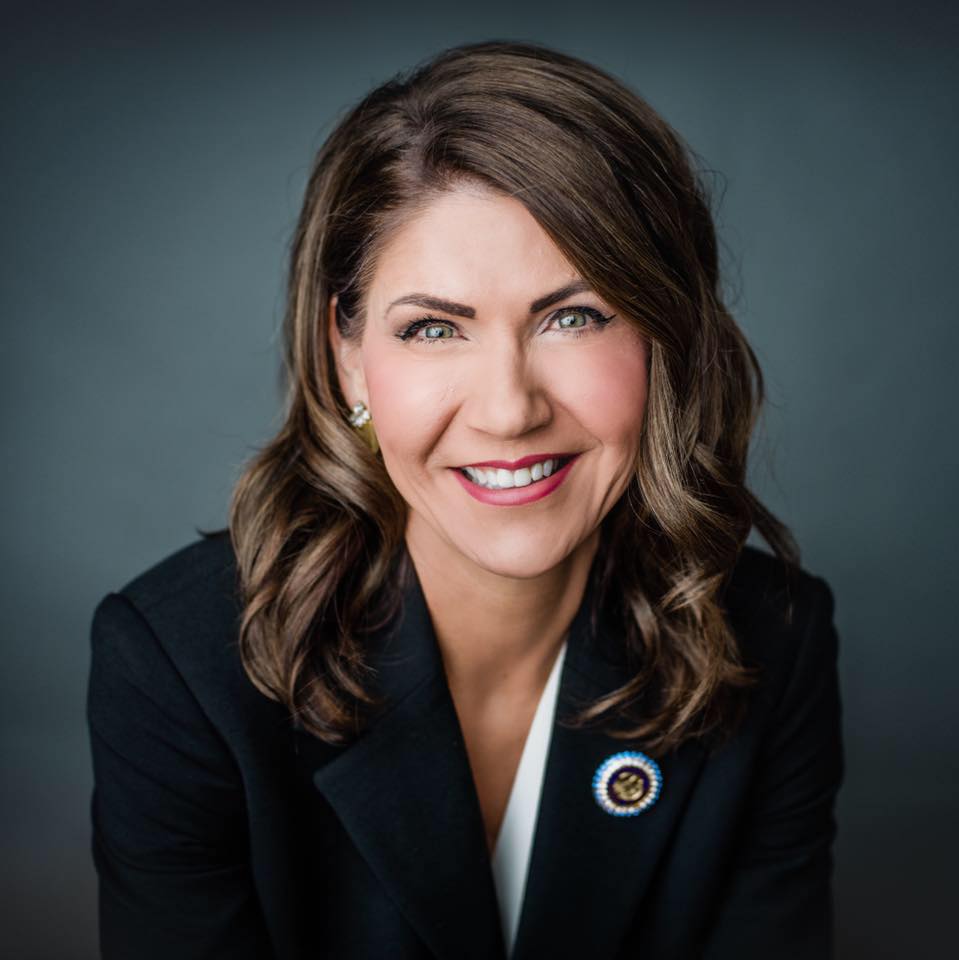
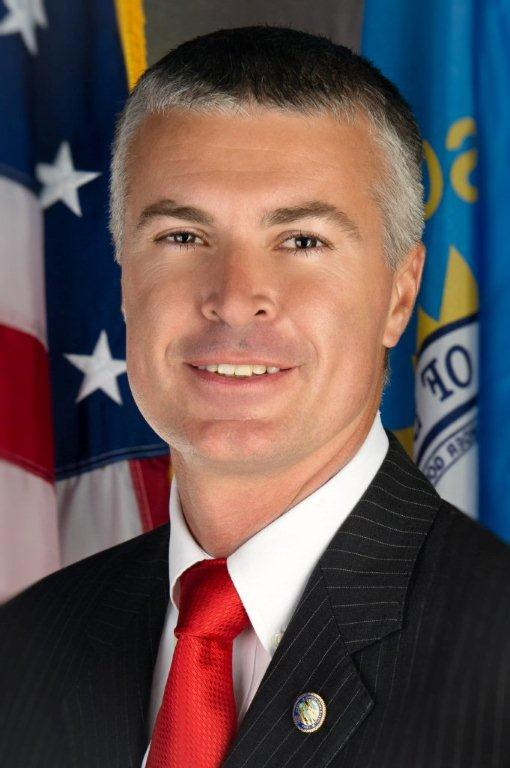
WASHINGTON – U.S. Senator Mike Rounds (R-S.D.) today announced his leadership role on the Senate Armed Services Committee (SASC) Subcommittee on Cybersecurity, where he will serve as Ranking Member during the 118th Congress.

“The SASC Subcommittee on Cybersecurity plays a critical role in the defense of our nation,”said Rounds. “As our near-peer competitors, like China, continue to improve their cyber capabilities, it is important we make sure our men and women in uniform are equipped with better tools and more resources than our adversaries. The cyber domain is involved in every aspect of our nation’s defense – air, land, sea and space – and continues to rapidly evolve. We have seen incredible technological advances over the past several years. New technologies are a good thing, but they also pose new challenges. We must continue to increase and improve our nation’s defensive and offensive cyber capabilities, as cyber-attacks are an existing and dangerous threat to our national security. The threat is not going away, and we must continue to understand and utilize Artificial Intelligence for national security and defense purposes. Additionally, we must hire highly-skilled cybersecurity professionals to help improve the cybersecurity efforts of our armed forces. Dakota State University has been at the forefront of cyber-related research for years, which adequately prepares the cybersecurity workforce for the challenges and opportunities to come. I look forward to continuing my role on the subcommittee as we continue developing our cyber forces, operations and capabilities.”

In addition to his leadership role on the Subcommittee on Cybersecurity, Rounds will also serve on the Subcommittee on Personnel and the Subcommittee on Strategic Forces.

###

Why are we trying to change the rules for ethanol in the middle of the game?

Did you ever play a board game with an older sibling when you were a kid.. where your older brother or sister suddenly changed the game rules in the middle of the game because you figured out a strategy that had you beating them?

That’s a lot like what’s going on in the South Dakota Legislature this year where opponents of pipelines, in this case carbon sequestration pipelines, have found allies in the legislature who are willing to help them change the rules in the middle of the game. Rules that the ethanol producers have invested millions in following, just like every other organization that has proposed a pipeline in the past.

Except, because they’re transporting something that they would normally release in the atmosphere, and the process has “carbon” in the name,  there are those who think it’s appropriate to change the rules.

In case you haven’t noticed, ethanol production has been under fire in the House of Representatives this session with bills that are directed expressly at the industry’s ability to transport the byproducts of it’s production. A number of bills have been brought, solely from the House, with Senate sponsorship of these measures few and far between.  While the measures are introduced under the auspices of reforming eminent domain, if you look at the way they are written, they are less about talking about the legal issues and notices than attacking the ethanol industry for moving forward with projects under existing law.

Think about it. They’re trying to change the rules for a value added agriculture project conceived under long-standing law.  And they’re trying to kick over the checker board.

Take House Bill 1133 for example, a bill up on the House floor today that was allegedly introduced to “define a commodity for the purpose of qualifying as a common carrier.”  It seemingly adds language to the law saying that everyone is a common carrier.. except you guys.  Where the new definition they’ve created says… For purposes of this section, the term, commodity, means a product that is intended for commerce and is being transported to a point of distribution, consumption, or processing, within or outside of this state. The term does not include a product that is disposed of in geological storage…

How is that not a targeted attack on the ethanol industry’s effort to keep up with their market, and do “something” with the carbon dioxide other than just release it in the atmosphere?

For all the talk in the legislature about adding value to our agricultural products for our state’s #1 industry, there is an awful lot of legislation that has been introduced to hamstring a homegrown energy industry. In capturing carbon dioxide and transporting it, the ethanol industry is trying to keep pace with the marketplace and respond to a regulatory environment as well as purchasers that demand that their energy production methods meet certain standards to be salable outside of the state.

As one observer remarked after the passage of House Bill 1233, “Why would we be harder on our own product – ethanol – than on gas and oil?“  These arguments against pipelines were not brought up when the keystone XL pipeline was being worked on.  So why on earth is the legislature trying to kick over the checkers board in the middle of the game now?

And it’s a good point. Energy production is big business that pays off in huge revenues to states that produce them.  Unfortunately, we don’t have the petroleum reserves that our neighbor to the North has.  We have open space and our farmers have the ability to grow things.

If you look at what has been introduced in the legislature this year regarding adding value to South Dakota ag products, only one bill was introduced regarding meat and meat productsAnd that was withdrawn. But when it comes to stopping pipelines that are for the purpose of improving the return on a value added ag product, there are no fewer than six bills trying to change the rules in the middle of the process.  

The legislature – especially Republicans – need to take a step back, look at the big picture, and renew our commitment to value added agriculture in South Dakota.

 Summit Carbon Solutions Partners with Midwest Landowners to Sign Easement Agreements surpassing 60% of the Project Route


 Summit Carbon Solutions Partners with Midwest Landowners to Sign Easement Agreements surpassing 60% of the Project Route   

  • In total, the company has partnered with 2,500 landowners who have signed 4,000 easement agreements 
  • Voluntary easement agreements account for 1,250 total miles of the project route across Iowa, Minnesota, Nebraska, South Dakota, and North Dakota 

AMES, Iowa (February 9, 2023) – Summit Carbon Solutions reached another major milestone this week as landowners across the Midwest have voluntarily signed easement agreements accounting for more than 60% of the proposed pipeline route project-wide. Across the five states in the company’s project footprint – Iowa, Minnesota, Nebraska, South Dakota and North Dakota – Summit Carbon Solutions has signed 4,000 total agreements with landowners, or 1,250 total miles of right-of-way secured.

“Landowners across the Midwest are embracing Summit Carbon Solutions because they know it will bolster the ethanol industry long-term, drive growth in our ag economy, and strengthen land values and commodity prices,” said Summit Carbon Solutions’ CEO Lee Blank. “The Summit team along with our 33 ethanol and sustainable aviation plant partners are tremendously pleased to sign easement agreements totaling more than 60% of our project across all five states in our footprint. Reaching this milestone represents a significant step in advancing this critical investment and securing the future of the ethanol industry.”

Through Summit Carbon Solutions’ infrastructure investment, the company’s ethanol and sustainable aviation plant partners will be able to sell their product at a premium in the growing number of markets that have adopted low carbon fuel standards. Access to these markets is critical to the long-term viability of the ethanol industry that today purchases approximately 40% of all the corn grown in the United States and remains a key driver of commodity prices and land values.

During construction, Summit Carbon Solutions will create more than 11,000 high-quality jobs and contribute $371 million in new federal, state, and local taxes. Once operational, the company will have more than 1,100 full-time team members and pay nearly $100 million in new taxes on an annual basis.

To learn more about Summit Carbon Solutions, please visit www.SummitCarbonSolutions.com.

###

About Summit Carbon Solutions: 

Summit Carbon Solutions is driving the future of agriculture by expanding economic opportunities for ethanol producers, strengthening the marketplace for Midwest-based farmers, and creating jobs. In developing the largest carbon capture and storage project in the world, the company seeks to lower greenhouse gas emissions by connecting industrial facilities via strategic infrastructure to store carbon dioxide safely and permanently in the Midwestern United States. For more information, visit: www.SummitCarbonSolutions.com


Legislative challenges for pipelines to benefit ethanol production also going on in Iowa; aren’t we supposed to be about a level playing field, and creating opportunities?

In reference to today’s vote in the State House on a pair of bills attacking pipeline projects that South Dakota ethanol producers are trying to take part in to be competitive on a world stage for biofuel production, there is a parallel battle taking place in Iowa.  As covered by the Iowa Capital Dispatch, the Director of the Iowa Renewable Fuels Association has some poignant commentary asking legislators in his own state whether they want to actually ethanol production in their state:

“I honestly don’t think it’s hyperbole to say that capturing and sequestering carbon will be life or death for most ethanol plants over the next five years,” Monte Shaw said at the organization’s annual summit in Des Moines.

and..

Shaw argued that the proposed legislation unfairly targets one type of infrastructure project.

“If you are an Iowa legislator and you honestly believe our current laws don’t provide enough landowner protections, that’s your right,” Shaw said. “But if you support legislation that singles out (carbon dioxide) or liquid fuel pipelines instead of applying new standards to all eminent domain requests, then I politely suggest you’re not really interested in property rights.”

and..

Opponents of the pipelines have objected to the projects over safety concerns, landowners’ rights and damage to farmland. Some environmentalists also argue that increasing the long-term viability of ethanol by reducing its carbon intensity will merely prolong its use at a time when the nation is transitioning toward electric vehicles.

Read the entire story here.

South Dakotans proudly point to it as being one of the most business friendly climates in the nation.. except when legislators choose not to be, and are debating whether to change the rules in the middle of the process.  All the state would be doing with passing this legislation is sending a message that pipelines and major energy projects are not welcome in the state. If the goal is to create more business regulation and a system where the legislature picks the winners, the only message it sends is that we want to be more like California. 

As was noted to legislators and media in the tours that the ethanol producers gave of their production plants this last summer, without this project, South Dakota producers cannot sell to the largest ethanol markets in the US, as they are demanding carbon neutrality. And the state’s homegrown energy production will be strangled by the competition in other states who can sequester carbon.  If South Dakota ethanol production plants are able to participate, plants could grow and expand and support farmers even more.

As a state, aren’t we supposed to be about a level playing field, and creating opportunities?

Good question for House members to ask themselves. There will be a test this afternoon.

Thune Responds to President Biden’s State of the Union Address

Thune Responds to President Biden’s State of the Union Address

“Thankfully, with a new Republican majority in the House of Representatives, Congress can now block the worst impulses of the Biden administration and its far-left allies.”


Click here or on the picture above to watch the video.

WASHINGTON — U.S. Sen. John Thune (R-S.D.) issued the following statement after President Biden delivered his State of the Union address:

“In the last two years, Democrats used their total control of Washington to pursue a partisan agenda that sharply increased costs on families, weakened our energy independence, and undermined our national security at the southern border and abroad. Thankfully, with a new Republican majority in the House of Representatives, Congress can now block the worst impulses of the Biden administration and its far-left allies.

“The reality of divided government means that compromise will be required in order to address the many challenges facing our country. I’m optimistic that members of both parties can come together to bolster our energy security, create new opportunities for farmers and ranchers, increase transparency and accountability in big tech, and prioritize our most important responsibility: the safety and security of the American people.

“To achieve these goals, congressional Republicans are ready to roll up our sleeves and get to work. We hope President Biden will join us.”

###

World’s largest association of biofuel producers urging South Dakota House members to support ethanol pipeline projects

With two of the anti-ethanol measures up on the House floor tomorrow, a letter has gone out to legislators tonight from the CEO of the world’s largest association of biofuel producers, reaching out to them in an e-mail urging them to go on the record tomorrow and to not act punitively to change the rules in the middle of the regulatory process on the state’s ethanol pipeline projects.  The letter also notes that the benefits that the pipelines will provide to the state in terms of jobs and economic development.

From: Emily Skor
Sent: Tuesday, February 7, 2023 9:18:12 PM
Subject: Support South Dakota’s Economy

Members of the South Dakota Legislature,

Thank you for your work to grow South Dakota’s economy. My name is Emily Skor and I serve as CEO of Growth Energy. Growth Energy is the world’s largest association of biofuel producers representing 90 U.S. plants that produce nearly nine billion gallons of cleaner-burning, renewable fuel annually; 106 businesses associated with the production process; and tens of thousands of biofuel supporters across the country. Our ultimate objective is to work together to bring better and more affordable choices at the fuel pump, improve air quality, and protect the environment for future generations.

I am writing to you today to respectfully ask for your support of Carbon Capture Utilization and Storage (CCUS) projects in the state. These projects are vital to the long-term competitiveness of our industry in the carbon economy and CO2 has the potential to be just as valuable of a commodity of ethanol production as any of the co-products that come from our facilities. South Dakota’s ethanol industry supports thousands of jobs, generates hundreds of millions of dollars for our economy, and, critically, purchases approximately 60 percent of the corn grown in the state. Bioprocessing facilities have long been pioneers in carbon capture technology, providing pure streams of clean CO2 for use by a range of industries and for multiple purposes, including for food, beverages, and dry ice. CCUS systems will be an important tool for many bioprocessing facilities allowing them to cut their carbon intensity by half, driving significantly more value for their product and making them more competitive. The biofuel industry, farmers, and rural communities are inextricably linked, and these projects will help the entire supply chain compete in a low-carbon economy. With better transport and storage infrastructure, ethanol plants can connect to a larger network of CCUS systems to get CO2 where it is needed.

Ultimately, low-carbon biofuels coupled with CCUS will create thousands of high-quality clean energy jobs across the supply chain, in rural America and throughout the country, while helping us meet our climate targets as quickly as possible. We hope that you will support our industry’s ability to thrive and support the state’s vibrant ag economy by carefully considering the unintended consequences of any legislation and allowing important CCUS projects the opportunity to add more value to the great state of South Dakota.

We hope that you will help keep South Dakota’s ethanol industry competitive and maintain its reputation as a state that welcomes business investment.

Best,

Emily Skor | CEO
Growth Energy
701 8th St NW Suite 450

Washington DC 20001

TWITTER   @GrowthEnergy
FACEBOOK  growthenergy.org/facebook
WEBSITE   www.growthenergy.org

SD Legis CCUS Support Letter_2.7.23 by Pat Powers on Scribd

Governor Noem Appoints Steve Perkins to Board of Education Standards

Governor Noem Appoints Steve Perkins to Board of Education Standards 

PIERRE, S.D. – Today, Governor Kristi Noem announced that she will appoint Steven (Steve) Perkins to the South Dakota Board of Education Standards, effective immediately. He will take the seat previously occupied by Becky Guffin.

“Steve has grandkids of his own, and he realizes that their future is of the utmost importance,” said Governor Kristi Noem. “He will always put the future of our next generation first in his approach to the Board of Education Standards, and that is why he is a great pick for this role.”

Steve has spent years in business, including as the Principal of Perkins Consulting in Sioux Falls since 2006; the Secretary and Treasurer of New Horizon Farms in Pipestone, MN from 1997 to 2006; and the President and CEO of Ellison Meat Co. in Pipestone from 1997 to 2001. Prior to his career in business, Steve served as City Administrator for Red Wing, MN from 1992 to 1997; as the City Administrator for Luverne, MN from 1986 to 1992; and as mayor of Pipestone, MN from 1977-1986.

Steve previously taught real estate education classes and continuing education classes at Minnesota West Community and Technical College, Worthington Campus; Southwest Minnesota State University; and through Community Education at Luverne Public Schools. He was also involved in establishing a 3-way partnership between the City of Luverne, Sanford Health, and Minnesota West Community and Technical College to establish Associate of Arts degree programs for the career paths of radiologic technician, surgical technician, medical assistant, and lab technician.

“Our kids are our most precious asset, and our standards should set them up with the best possible opportunity for success,” said Steve Perkins. “We need to raise the bar for our children and work to ensure that every child has the opportunity to pursue their dreams.”

Steve’s past volunteer service includes serving as Chair of the Luverne Community Hospital Board and Sanford Hospital Luverne Community Advisory Board, as Director and Trustee Council Member of the Minnesota Hospital Association, and as Chair of the Committee on Governance for the American Hospital Association.

Steve received a Bachelor of Arts in Economics, Business, and Political Science from Macalester College.

Steve has four adult stepchildren with his wife Marianne. Together they have eight grandchildren.

###

Senator Mike Rounds Weekly Column: WEEKLY ROUND[S] UP: JANUARY 30-FEBRUARY 5, 2023

WEEKLY ROUND[S] UP: JANUARY 30-FEBRUARY 5, 2023
by Senator Mike Rounds

Things are getting busier out here in Washington! This past week, our committee assignments were announced, which marks the beginning of a lot of work to come over the next two years. You’ll have to keep reading to see where I landed! We also met with several leaders from around the world, and leaders within our school and agriculture communities in South Dakota. Here’s my Weekly Round[s] Up:

South Dakota groups I visited with: Members of the South Dakota Wheat Growers Association and school board members with the Associated School Boards of South Dakota.

Meetings this past week: His Royal Highness Crown Prince Al-Hussein Ibn Abdulllah of Jordan; Several Romanian Members of Parliament including Senator Titus Corlățean, Chairman of the Romanian Senate Foreign Relations Committee; Mr. Ramush Haradinaj, Former Prime Minister of Kosovo; Sandra L. Thompson, Director of the Federal Housing Finance Agency; Robert Fisher, Senior Vice President of Federal Government Affairs at Verizon; Catherine MacGregor, CEO of ENGIE; and Mouloud Said, Representative of Western Sahara to the United States. I also had the opportunity to meet with delegations from several African nations: Burundi, Kenya and the Togolese Republic.

We had our weekly Senate Bible Study (Philippians 1:6 was our verse of the week). On Thursday morning, we also hosted the National Prayer Breakfast. For the past few years, I’ve served in leadership helping to organize this event. Our leadership group privately met with the president and vice president before the ceremony to welcome them to the National Prayer Breakfast.

Each year, the National Prayer Breakfast provides an opportunity for us to come together, Republicans and Democrats alike, and pray for the success of our nation. The tradition of the National Prayer Breakfast dates back to President Dwight Eisenhower, who at the time confided in his close friend, Senator Frank Carlson, that the White House was the “loneliest house” he had ever lived in. Senator Carlson responded: “Mr. President, I think this may be the right time for you come meet with our prayer group.” And that’s just what President Eisenhower did. In this group, he found individuals who were willing to offer their non-partisan support to our president, the leader of the free world, because they knew that’s what was best for the country. The job of the president isn’t easy and you often find yourself in the midst of difficult political situations. However, as the president, you should still be able to count on our prayers for the success of our country. The National Prayer Breakfast provides an opportunity for us to recognize our common bonds and to offer our prayers for one another, our president and our nation.

Met with South Dakotans from: Mitchell, Mobridge, Pierre, White River and Woonsocket.

Topics discussed: Our nation’s debt ceiling, foreign purchases of land in the United States, spectrum (more information on this in the coming weeks) and our new committee assignments.

Legislation introduced: This past week, I reintroduced the PASS Act. This bipartisan legislation would blacklist China, Russia, Iran and North Korea from investing in, purchasing or otherwise acquiring American farmland and ag businesses.

Securing our land is critical to maintaining our national security. This bill, which I introduced with Senator Jon Tester (D-MT) has received good support on Capitol Hill and within the agricultural community in South Dakota. We are hopeful we can get the PASS Act included in a larger package and see this important piece of legislation signed into law. You can read more about the PASS Act here.

Resolution passed: My friend Senator John Thune and I passed a resolution this week honoring the SDSU Jackrabbit football team for their national championship win against the NDSU Bison. You can read the resolution here. Go Jacks!

Committees assigned: Committee assignments for the 118th Congress were announced this week. I will be serving on the following committees:

  1. Armed Services
  2. Banking, Housing, and Urban Affairs
  3. Select Committee on Intelligence
  4. Veterans’ Affairs
  5. Indian Affairs

You can read more about each committee here. I’m grateful for the opportunity to serve on these five key committees on behalf of the people of South Dakota.

Votes taken: 3 – we are a month into the new Congress and Democrats are off to a slow start. These votes were non-controversial. Two of them were for positions on the Board of Directors for the U.S. Institute of Peace. The other was a resolution supporting the observation of January as National Trafficking and Modern Slavery Prevention Month, a resolution that would normally move through unanimous consent and not require a formal vote and the usage of floor time. While it could be easy to get frustrated at the dysfunction, it’s important to remember that every day our Senate Democrat colleagues propose a light schedule, the less damage their proposals can inflict on our nation.

Classified briefings: With my new assignment on the Senate Select Committee on Intelligence, I will begin to receive a much higher volume of classified briefings. Most of our meetings are all classified business – I had three classified Intel meetings already this past week! We also had our bi-weekly cyber education seminar and a Senate Armed Services Committee briefing on the Chinese surveillance balloon and conflict in Ukraine.

Unlike some in the Executive Branch, don’t expect to find any classified documents in my home or next to my Corvette. These documents belong in a secure compartmentalized information facility (or SCIF) and nowhere else!

My staff in South Dakota visited: Aberdeen and Rapid City, including having a booth all week at the Black Hills Stock Show.

Steps taken this week: 51,305 steps (or 24.05 miles).

Video of the Week: There was quite a bit of talk at the end of the week about the Chinese surveillance balloon that was flying across the United States. As you are probably aware, our military shot the balloon down off the coast of the Carolinas on Saturday. In my opinion, the balloon was shot down one continent too late. It should have never been allowed in U.S. airspace. While I was able to receive a classified briefing on the situation on Thursday morning, there are still many more questions than answers. I joined Neil Cavuto on Fox News on Friday to discuss the situation. You can watch the video here.

Frye-Mueller Scandal: Political Action Committee appears to be attacking Senators anew in their neighborhoods for Frye-Mueller vote

A Political Action Committee cited earlier as having been involved in the campaign against Julie Frye-Mueller’s suspension, as well as attacking her opponent in the prior primary, is apparently targeting Senators in their own neighborhoods in direct retaliation for their near unanimous vote to censure Frye-Mueller for her unbecoming conduct with an employee.

It was reported to me that over the last few days that this flyer has appeared in Legislative District 2, in the Brandon area, attacking State Senator Steve Kolbeck for his vote to censure Julie Frye Mueller for her highly inappropriate and comments on a Legislative Research Council’s infant vaccinations and nursing habits:

Claiming that “The Pierre Swamp Is Trying to Silence a Conservative Champion,” the flyer provides the legislator’s personal cell phone number, and superimposes his photo alongside that of Joe Biden and Kamala Harris, for voting to censure Senator Frye Mueller over accusations that Mueller made crude and sexually charged suggestions on how a young mother can initiate lactation. According to sources, a “strange car was putting them on specific houses” in at least one neighborhood in Brandon.

As noted in a previous post, the group backing this material is the Not One Step Back Political Action Committee.  According to Secretary of State Records, The “Not One Step” political action committee was started in 2021, as fronted by Anthony Mirzayants, who is noted as being the contact for the South Dakota School of Mines Young Americans for Liberty organization.

And in the last reports,  most of the funds for the Political Action Committee came from Anthony Mirzayants and Taffy Howard supporter Luke Blindert, with Freedom Caucus Director Jordan Mason also noted as contributing funds in the pre-primary reports.

Previously, this same political action committee had been deeply involved with having made Independent Communications Expenditures in the Julie Frye Mueller/Tim Goodwin primary, spending thousands to go after Goodwin via postcards on COVID, Gun Rights and Spending:

You can read the original documents at the Secretary of State’s website, or in my previous post on the topic here.

The materials curiously use the language that “Senator Kolbeck voted to deprive 24,000 citizens of District 30 of their voice in Pierre,” referring to Frye-Mueller’s suspension for three days. Which is kind of a pittance compare and easily refuted in comparison to the amount of times she has been reported as being absent from the legislative session, skipping 6 days in 2021, 5 days in 2022, and after her suspension ended, Frye Mueller immediately skipped her responsibility to those same 24,000 voters the very next day.

With Frye-Meuller’s sycophants choosing to attacking legislators for the near-unanimous vote to censure her for her improper conduct with a Legislative Research Council employee, in what many were considering a done matter, is now setting up Frye-Mueller to extend the conflict.

With no allies in the body besides her seatmate Senator Tom Pischke, her lone vote of support, Frye-Mueller’s allies may be trying to continue a battle that was done, and have her serving in a far more combative environment against her colleagues.