Beauty queen gone bad in Brookings. South Dakota pageant queen arrested.

After all of last week’s drama over JFM, we should expect that the news cycle would slide back into boring normalcy.

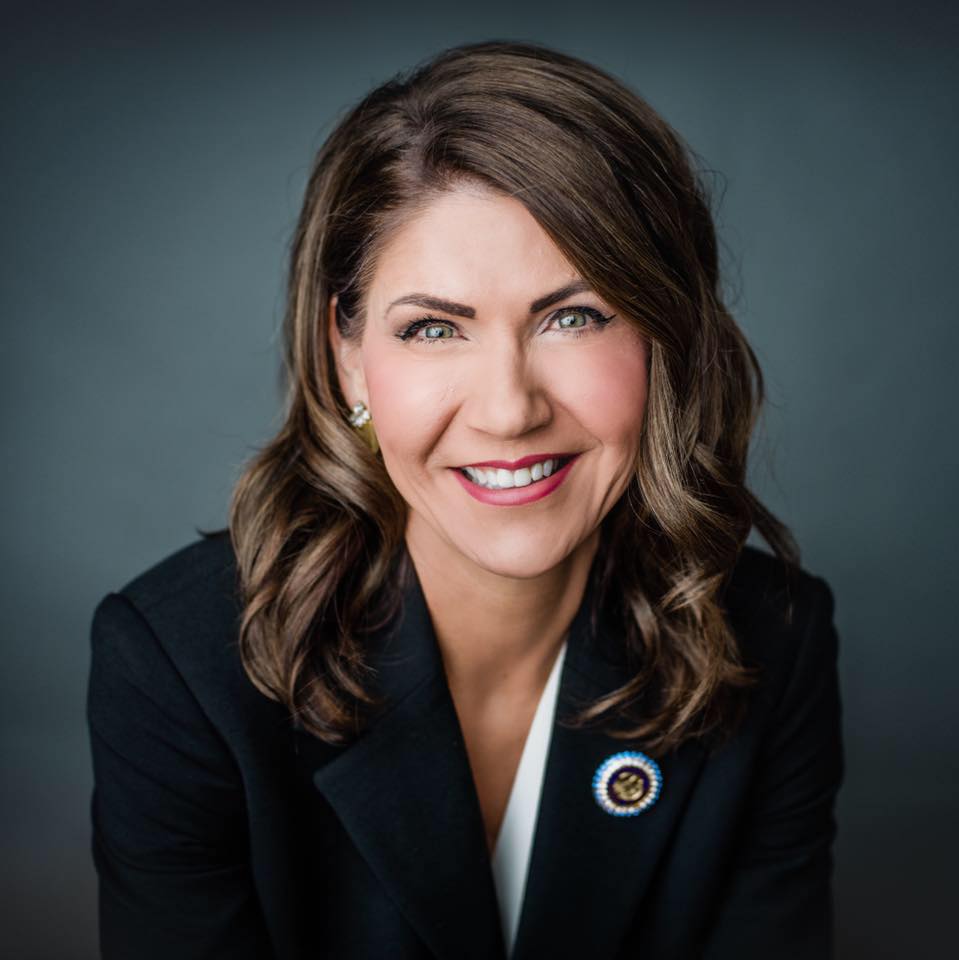
Court documents allege Shania Ann Knutson committed repeat thefts at Walmart between October and December. Knutson allegedly stole a total of $554.54 worth of goods across 12 separate occasions. She was allegedly “‘skip scanning’ and/or ticket switching to commit these acts,” the documents state.

Knutson, of Brookings, was crowned Miss South Dakota USA 2022. Knutson was also Miss South Dakota Teen USA in 2018 and appeared in Miss USA 2022.

Read the entire sordid tale here alleging a beauty queen has gone bad.

… or maybe we’re not doing normalcy just yet.


John Cunningham in race for SDDP Chair, ran in 2019 unsuccessfully.

From Austin Goss at Dakota News Now, former Democrat Treasurer candidate John Cunningham has announced that he is apparently willing to accept being tagged as “it” by Randy Seiler in the South Dakota Democrat chairmanship contest:

Anyone aware of other candidates in this contest at the moment?

Cunningham had ran for the chairmanship previously, in 2019, where he was unsuccessful against Paula Hawks, receiving 12% of the vote at the time.  (With Hawks later running far away and fast when she figured out how bad things were. )

In the 2022 election for South Dakota Treasurer, Cunningham lost to Josh Haeder on a 2-1 basis 67.7% to 32.3%, which is not really demonstrative of the ability to generate efforts that might post a threat to Republican dominance in the state.

So… good for him. I hope he gets it.

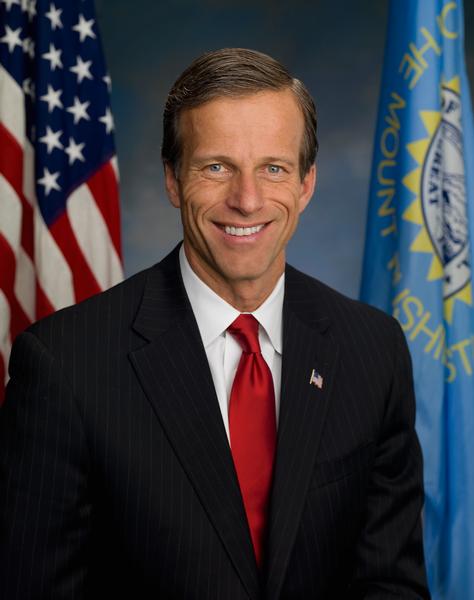
US Senator John Thune’s Weekly Column: The Status Quo at the Border Must Change

The Status Quo at the Border Must Change
By Sen. John Thune

For two years now, a crisis has been raging along our southern border. 4.5 million illegal immigrants have been apprehended at the border, and another 1.2 million migrants have evaded capture while entering the United States. At the same time, the number of individuals on the terrorist watch list arrested at the border and the number of migrants who die attempting to enter the country have reached record highs. The border is clearly in crisis, but until recently, President Biden acted as if this crisis didn’t exist.

Two years ago the border was significantly more secure. It took time, but through a series of commonsense measures that included enforcing the law, stopping border crossers, and discouraging illegal immigration in the first place, the previous administration made real progress to attain operational control of the nearly 2,000-mile long border. But, on his first day in office, President Biden scrapped many of his predecessor’s policies. The effect of his actions was to declare that the United States’ border was effectively open. Unsurprisingly, a sea change occurred and border crossings shot up.

While the border crisis has overwhelmed border patrol and local resources in border communities, its impact reaches across the country. Influxes of illegal immigrants have strained the resources of cities from Denver to New York. Drugs, especially fentanyl, have come across the border and taken lives in communities across the country. In fact, fentanyl overdose is the leading cause of death for U.S. adults ages 18-45. Here in South Dakota, about as far from the southern border as you can get, the Minnehaha County sheriff estimates that 90 percent of fentanyl and methamphetamines in our state comes from Mexico, which recently surpassed China as the leading source of fentanyl.

To stem the tide of illegal immigrants and illegal drugs entering our country, we must secure the border. This depends foremost on the president being willing to enforce the laws currently on the books. Without executive leadership, even new laws to secure the border will fail to meaningfully deter individuals from making a dangerous journey that lines the pockets of coyotes and cartels. As long as illegal pathways are viable, we can expect these recent trends to continue.

We also need to ensure that legitimate, legal immigration is a realistic option for those fleeing persecution, pursuing the American dream, or seeking seasonal economic opportunity. I’ve repeatedly introduced legislation to open up opportunities for individuals to work in the United States when employers can’t find enough domestic labor. These programs help fill the need for supplemental workers in South Dakota, where unemployment is 2.3 percent and many business owners will tell you they just can’t find enough local workers. Ensuring our visa programs are agile enough to deliver labor relief to local businesses is one way we can enable economic growth through legal immigration.

The status quo at the border is neither safe nor humane, not for our country and not for those entering illegally. I hope the president’s visit to the border last month, his first ever, has awakened him to this reality. For our national security, public safety, and the safety of immigrants, we need to uphold the rule of law and secure the border.

###

Congressman Dusty Johnson’s Weekly Column: Planes, Trains, and Automobiles

Planes, Trains, and Automobiles
By Rep. Dusty Johnson
February 3, 2023

Transportation and infrastructure are used by everyone – people traveling to work or vacation, grains and parts transported by train, cargo by plane, or goods driven across the country by a semi-truck.

The COVID-19 pandemic aggravated delays and gaps in our supply chain system. Suddenly, Americans couldn’t get their goods in a timely manner. Christmas presents were delayed for weeks, Amazon packages weren’t delivered on time, store shelves were empty for more reasons than one.

When I came to Congress in 2019, the last thing I expected was a global pandemic. When these problems arose during and after the pandemic, I knew Congress should act. I partnered with Rep. John Garamendi to pass the Ocean Shipping Reform Act, addressing delays at ports across the country. We have seen progress from ocean carriers after passage of OSRA, but more kinks in the supply chain have been discovered.

The T&I Committee had our first hearing this week on the State of the Supply Chain. When seeing and hearing problems faced by our nation’s truck drivers – an 80,000-truck driver shortage, an aging truck driver population, and not enough parking spaces for each semitruck on the road – I introduced the SHIP IT Act with Rep. Jim Costa to address these concerns. The bill increases safety and shipping capacity for truckers; provides recruitment and retention incentives for drivers; and includes flexibility during times of emergencies or black swan events.

Maintaining our infrastructure is critical to keep our economy going and growing. This is my second term on the Transportation and Infrastructure Committee, and I’m ready to keep improving our supply chain. I’m on the Subcommittees on Aviation; Highways and Transit; Railroads, Pipelines, and Hazardous Materials, which increases my ability to be a leader on supply chain issues for each of these modes of transport.

No one likes empty shelves, roads covered in potholes, or delayed packages, and out-of-date regulations aren’t keeping up with technology and innovation. The three subcommittees I am on will allow me to keep working on behalf of South Dakota to deliver results that keep our supply chains moving.

Johnson in Wednesday’s Transportation and Infrastructure Committee Hearing


###

Julie Frye-Mueller skipped more days in each of the last two sessions than she was suspended in 2023

Getting back to the quality of Julie Frye Mueller’s representation for a moment, this recent comment was interesting.

Frye-Mueller was suspended three days in 2023 and howled about not being able to provide representation for her district. Then took the next day off.

In 2022, she is said to have missed 5 days of session.

In 2021, she is said to have missed 6 days.

Exactly how is District 30 being shortchanged any more in 2023 with her being out of the Senate than they were in the prior two years when she skipped?  If anything, they’re a day ahead of the game (so far).

Guest Column: Don’t apply different pipeline rules to ethanol, our most important state energy industry.

Carbon Capture pipelines are common carriers. Don’t apply different pipeline rules to ethanol, our most important state energy industry.
by Walt Wendland, CEO, Ringneck Energy

Recently, Representative Will Mortenson (R-Pierre) wrote an editorial outlining his thoughts regarding eminent domain and carbon pipelines. Rep. Mortenson believes the legislature should look at changing decades old policies to pick and choose which projects should have the right to use eminent domain, despite the harm such changes may bring to our state’s number one industry. While I appreciate the House Majority Leader’s self-professed warmth for ethanol, I find his premises don’t meet the facts and his conclusions to be missing some accurate considerations.

The proposed Carbon Capture pipelines are common carriers under the law. They are transportation entities which have contracted with others to transport goods for a fee. They conduct open seasons and maintain capacity for walk up shippers with goods to transport which meet the specifications of the pipeline. In all respects the proposed pipelines are organized and proposed like the many other pipelines which transport gas and oil for a fee. Why would we apply different rules to these pipelines which compete with them and support our most significant industry? We wouldn’t.

Rep. Mortenson professes to be for eminent domain for other uses but against the use of eminent domain for the carbon capture pipelines. South Dakota has had laws on the books for the use of eminent domain for more than 100 years. The laws are critical for the viability of such projects and for the fair treatment of landowners.  The SD House of Representatives wouldn’t function well if each member had a complete veto over legislation. Pipelines can’t be constructed in that situation either.

The ethanol industry is important to South Dakota and I’m glad to agree with him in that respect. More than one of every two rows of corn grown in this state is sold for use in renewable fuels. Corn prices and land prices have been built upon and depend upon this market.

Yet the ethanol industry is under tremendous pressure going forward. Fuel markets worldwide are demanding a less carbon intensive product. And renewable fuels produced elsewhere are seeking to meet that demand squarely. Carbon capture and sequestration represent the most economical way, by far to lower carbon scores and meet the developing demand. Without carbon capture and sequestration, our state’s renewable fuel industry is at a disadvantage and future opportunities at risk. One can’t be for ethanol and be against carbon capture at the same time. That is a position which doesn’t exist in the real world.

Sincerely,

Walt Wendland, CEO
Ringneck Energy

Julie Frye-Mueller absent from session yesterday to issue press release complaining suspension affected “ability to fulfill her duties of office”

If you recall yesterday’s legislative session when Julie Frye-Mueller skipped session, denying her district representation at both a hearing on one of her bills, and the entire day on the Senate Floor…

…then I’m not sure you can make this press release up, which actually ignores the fact she was absent from session yesterday and instead of “representing her constituents” issued a press release complaining about her suspension preventing her “ability to fulfill her duties of office”

PRESS RELEASE – FOR IMMEDIATE RELEASE
SENATOR FRYE-MUELLER ISSUES STATEMENT ON REINSTATEMENT

Rapid City, SD (Feb.3, 2023) – The South Dakota Senate has reinstated Senator Julie Frye-Mueller, with a public censure and restricting her interactions with the Legislative Research Council. Senator Julie Frye-Mueller has issued another statement:

Press Statement: Senator Frye-Mueller made the decision to withdraw her federal lawsuit, as initially filed. She was given extremely short notice “suspending” the Senator from her elected office based upon unsubstantiated hearsay.

The Senator’s counsel is reviewing both the unauthorized actions of the Senate as a body, and Senate President Pro Tempore, Lee Schoenbeck, individually, in interfering with the Senator’s ability to fulfill her duties of office. She was stripped of her committee assignments; her Senate email account was closed to thwart communicate on with her constituents; she was barred from introducing or guiding legislation in the face of fast-approaching legislative deadlines; and was prohibited from casting any votes on behalf of District 30.

The Senator adamantly denies accusations which were deliberately undisclosed until just prior to a very public hearing on the matter, as they were simultaneously presented to the press. The Senate’s “reinstatement” of Senator Frye-Mueller’s elected office has proven a hasty but nominal announcement to save face, given the absence of any authority to “suspend” the Senator’s office. As of the date of this release, the Senator has not been restored to her committee assignments (which committees have simultaneously been stacked with questionable legislation) and has been given an undefined restriction on her use of essential legislative staff and resources, effectively hamstringing her ability to steer legislation on behalf of District 30.

Senator Frye-Mueller greatly appreciates the outpouring of support and is determined to continue serving the constituents of District 30 and the State of South Dakota.

If JFM actually wants to serve the constituents of District 30, then she might want to start with showing up for work.

New Associated Press article reviews JFM Scandal claims and JFM paranoia about Schoenbeck cat.

The Associated Press has a new article out today looking at the claims of the parties involved in the Julie Frye-Mueller employee harassment scandal, as well as JFM’s paranoia about a deceased Schoenbeck family cat:

Frye-Mueller disputed that account in testimony to a Senate committee investigating the complaint. She said it was the staffer who brought up breastfeeding. Frye-Mueller said she asked the aide whether she wanted advice she had received as a young mother, and when the aide said yes, she said, “Have your husband help.”

And..

During her Senate testimony, Frye-Mueller even pointed to a Facebook post from the Republican Senate Pro Tempore Lee Schoenbeck about the death of a family cat. She alleged it was somehow proof of a conspiracy that he was employing a “dead cat strategy” of drawing attention to something shocking to distract media attention from another story.

Read the entire article here.

Another good reason to choose a dog over a cat. Because even the hard-right knows to just let sleeping dogs lie.

After complaining that her suspension was silencing the voices of 25,000 people, Sen. Frye-Mueller absent from Senate today.

Where is Senator Julie Frye Mueller in this photo of the Senate Floor today? Answer: she’s not, and was marked ABSENT from the legislature. 

If you recall, Senator Mueller is recently off of her suspension from the South Dakota State Senate where during her suspension, she had a lot to say about what happens when a legislator is absent from that body:

“I am thankful to rightfully return to the South Dakota Senate to represent the citizens of District 30.  The action of this body in suspending the Rules of the Senate to immediately suspend a member WITHOUT DUE PROCESS on an accusation alone without evidence is simply unjust.  The consequence of these actions were to silence the voices of over 25,000 people.

Read her words here.

Yet now that her suspension has been lifted, where is Julie? After complaining that her suspension would silence the voices of 25,000, Sen. Frye-Mueller skipped the legislative session today, and was absent for all proceedings on the Senate floor.

Senator Julie Frye Mueller decided to skip session, silencing the voices of 25,000 people in District 30, and leaving them unrepresented?

Someone should investigate that.

*UPDATE*

Hearing that Frye-Mueller also had a bill up in committee that she skipped as well. She really decided that she didn’t want to do her job today.

Further evidence that Rep. Hansen’s claim of increasing campaign limits benefits “corporate interests” was just a strawman argument on HB 1111

This last week then House Bill 1111 was argued in front of the House of Representatives to raise campaign finance limits, State Representative Jon Hansen argued against the measure claiming that it would throw open the doors for “corporate interests.”

Hansen worried that “big corporate interests” would be among the only beneficiaries of the increase and would turn legislative attention away from constituents.

“If we’re honest, I guarantee you that most of your ordinary, everyday constituents don’t even have $1,000,” Hansen said. “But you know who does? Corporate interests.”

Read that here.

As I noted from a quick look at the highest funded campaign in the last election cycle, that statement sounded like a lot of buffalo chips.

The hands down champion in legislative fundraising this last election was State Representative Tony Venhuizen.  As a former Regent, son-in-law to former Governor Daugaard, Long-time campaign worker, Tony arguably has among the best fundraising success of all other people in the South Dakota Legislature, raising an absolutely staggering $126,301 in funds for his State Legislative campaign effort. How much of that came from corporate dollars?

$1450. Approximately 1.1%. Try not to gasp and be shocked over that corporate donation of $50. 

Read that here.

After that article yesterday, Student Regent Brock Brown reached out, and noted that he had previously done full research on the amount of money that corporations donate to legislative candidates.  And the resuts of his study mirrored what I’ve been saying:  Corporations don’t donate to candidates in any significant amount.

Across all legislative campaigns, 2.2% of the amount donated to legislative candidates come from corporations. 2.2%? So much for “corporate interests.”

Unfortunately, Hansen’s argument was a strawman argument for the purpose of hoodwinking his colleagues and playing for the cameras.

But what else is new?