Gov. Noem Signs Bills into Law

Gov. Noem Signs Bills into Law 

PIERRE, S.D. – Today, Governor Kristi Noem signed the following nine bills into law:

  • SB 11 prohibits a practitioner from referring a patient to a medical cannabis clinic with which the practitioner or an immediate family member has a financial relationship and provides a penalty therefor;
  • SB 46 authorizes the disclosure of referral status by Department of Human Services personnel;
  • SB 94 amends provisions pertaining to the partners in education tax credit program;
  • SB 131 includes shelterbelts as a factor affecting productivity in determining assessed value of agricultural land;
  • HB 1007 amends the requirement to employ a county veterans’ service officer;
  • HB 1008 modifies the eligibility for admission to the state veterans’ home and repeal the residency requirement;
  • HB 1023 provides immunity from liability for certain actions of the State Bar and its agents;
  • HB 1091 enacts the Interstate Insurance Product Regulation Compact; and,
  • HB 1104 enhances the penalty for accessory to first- or second-degree murder.

A photo of Governor Noem signing HB 1104 with the prime sponsors, Senator Stalzer and Representative Fitzgerald, can be found here.

Governor Noem has signed 97 bills into law this legislative session.

###

SD Ag Alliance Poll Shows Strong Support for Carbon Pipelines with Landowner Protections and Additional Compensation

SD Ag Alliance Releases Poll Showing Strong Support for Carbon Pipelines with Landowner Protections and Additional Compensation

(Pierre, SD) Earlier this month, the South Dakota Ag Alliance released poll results showing a majority (55%) of Republican primary voters support carbon capture pipelines when landowners are given further protections and additional compensation.

When asked the question, “Would you support carbon capture pipelines in South Dakota, if the legislature provided for more protections and additional compensation for South Dakota landowners?”, Fifty-five percent of Republicans said yes. Twenty-two percent said no and twenty-three percent were undecided.

The poll was conducted by co/efficient, a national research and analytics company that has done work in all 50 states. The poll was commissioned by the SD Ag Alliance, a nonprofit organization.  The poll included 1,017 likely Republican Primary voters.  It was conducted on January 30th and January 31st, 2024, using mobile text message responses and landline phone interviews. It has a margin of error of +/- 3.06%.

“The poll is further evidence that a majority of South Dakotans support carbon capture pipelines when protections and additional compensation are put in place for South Dakota landowners,” said Rob Skjonsberg, founding member.

“A super majority of all landowners along the pipeline route already support the project,” said Jason Glodt, founding member. “A majority of Republican voters in the state also support the project so long as the legislature passes landowner protections and provides additional compensation.”

The SD Ag Alliance is supporting a legislative package comprised of three bills (Senate Bill 201 and House Bills 1185 and 1186) that provide protections for landowners, funding for counties and regulatory certainty for businesses.

A memo from the polling firm is attached.

South Dakota Carbon Capture Memo by Pat Powers on Scribd

Lee Qualm and the lawsuit against him by his family for “attempted conversion” that we never heard anything about

Just yesterday, Lee Qualm filed paperwork to run for an open seat in his Legislative District after being turned out of office a few years back. But it hasn’t been the only battle he’s found himself being involved in with people who know him all too well.

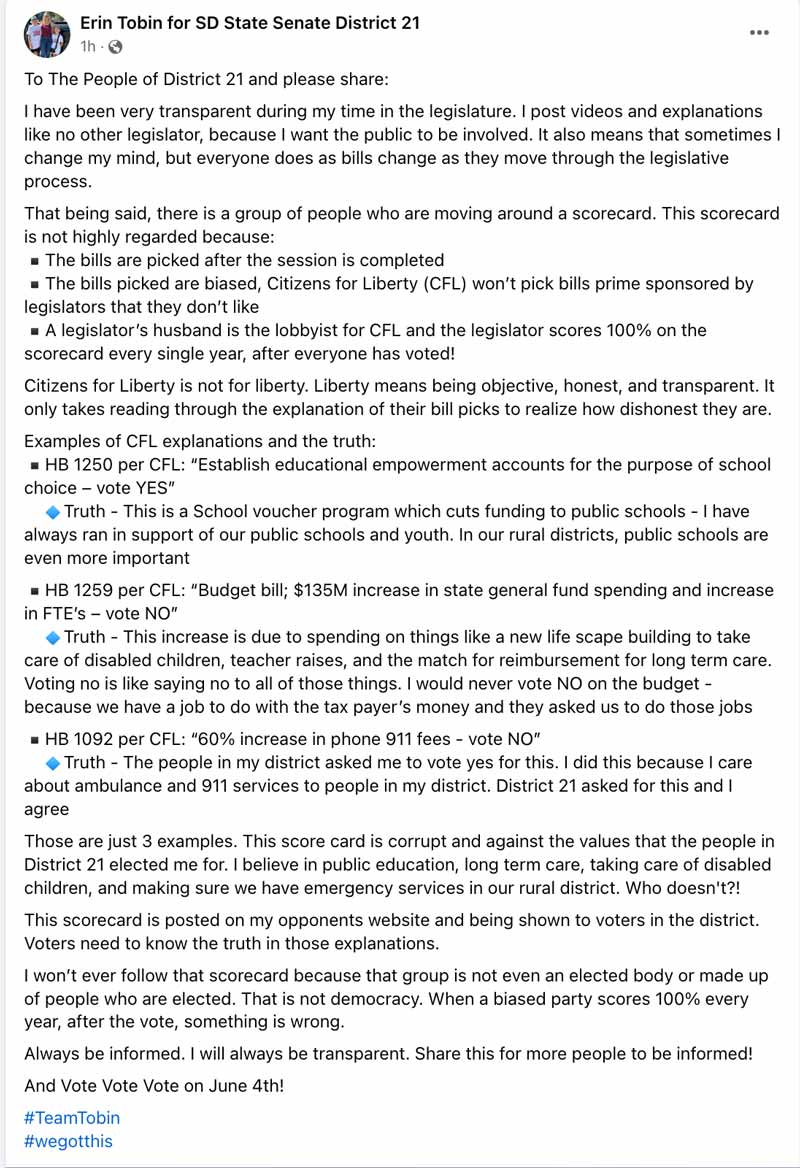
In June of 2020, after a strong campaign by newcomer Erin Tobin, outgoing House Majority Leader at the time Lee Qualm found himself soundly defeated in the race for State Senate by a 2-1 margin. Counted among Tobin’s supporters was State Senator Lee Schoenbeck, who after the 2020 election was on the fast track to run for the highest office within the Senate; President Pro Tempore.

In 2022, less than 2 years later, Qualm found himself back doing battle with people being supported by Senator Lee Schoenbeck. Except this was in Schoenbeck’s non-legislative role, as one of South Dakota’s leading litigators. And in this instance, attorney Lee Schoenbeck was representing Lee Qualm’s own family as they brought suit against Lee and Trudy Qualm for allegations of converting shares of the corporation owned by Qualm’s parents into their names.

This formed the basis of the lawsuit filed in June of 2022; Lynn Qualm, Doreen Qualm, Joel Qualm vs. Lee Qualm, Trudy Qualm, L. Qualm & Sons, Inc.

Lee Qualm Conversion Lawsuit by Pat Powers on Scribd

The allegations contained in the lawsuit are somewhat shocking, as they claim an alleged scheme by the former leader of House Republicans in the legislature and his spouse to transfer stock into their own names.

The lawsuit alleges that annual corporation board of directors meetings ceased in about 1998. And starting in 2013, were said by the lawsuit to have put in place rules which transferred shares upon the death of minority shareholders.

By the time that the stock transfers came to the attention of Qualm’s family members and the lawsuit was filed, Lee Qualm had already assumed a majority ownership of the holdings through transfers, seemingly without paying.    As noted in the lawsuit, the stocks were transferred “for no consideration,” violating the family members’ due process rights, and was “attempted conversion.”  And demand was made for the former Majority Leader and his wife to restore shares to the estates to Luvern and LaVonne Qualm.

Another familiar name, Jon Hansen, a legislator and former Majority Whip under Qualm’s leadership in the House represented Qualm’s side in the matter. Also brought on to represent Qualm in the lawsuit was an attorney familiar with litigation unlike Hansen; Ron Parsons, a respected former US Attorney for South Dakota.

Lee & Trudy Qualm, of course, denied the allegations of conversion, and responded accordingly to the lawsuit filed by the Qualm family members (which you can read in the lawsuit above).  To which Qualm’s family members further pressed their case in response, noting ..

By now, the intra-family lawsuit had continued on through August of 2022, and notices of deposition had started to be issued as the plaintiffs sought answers to some pointed questions regarding their concern over how Lee Qualm found his way from owning some stock into a position of being the majority owner.

The notices of deposition went from September through November of 2022, and then something interesting happened.

The lawsuit went away and was dismissed by the plaintiffs in February of 2023. And about the same time, there were notices filed with the court regarding the distribution of the parent’s estates.

Now, some of the accounting with the parent’s estate is sealed by the court, and what isn’t sealed may be worthwhile reviewing at a later date. But if we’re to believe the voluntary dismissal by the parties, it appears they’ve resolved their differences. Maybe. I’m not sure this lawsuit is the stuff that makes people want to get together at the holiday table afterwards.

I mean, if you can’t trust your family member who was the majority leader of the House of Representatives, who can you trust?

That might also be a question for voters to ponder in June.

Gov. Noem Signs Bills Blocking Central Bank Digital Currency

Gov. Noem Signs Bills Blocking Central Bank Digital Currency 

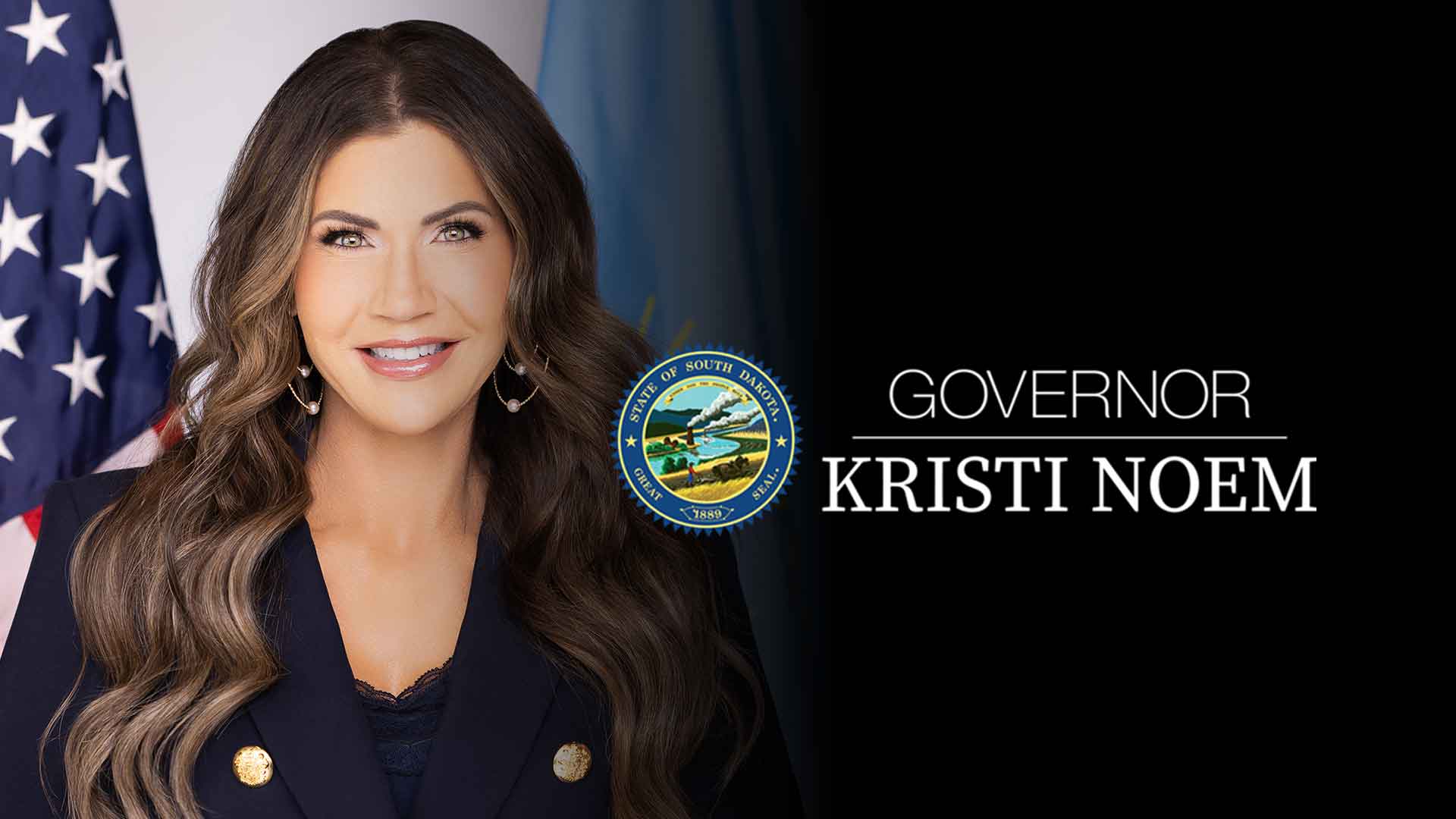
PIERRE, S.D. – Today, Governor Kristi Noem signed two bills that block a Central Bank Digital Currency (CBDC) from being utilized in South Dakota.

“In South Dakota, we will always protect the economic Freedom of our people,” said Governor Noem. “I VETOED last year’s UCC bill because it limited economic Freedom and put South Dakotans at risk. I’m proud that we have been able to work together over the past year to create legislation that prioritizes our people, their security, and their Freedoms.”

Last year, Governor Noem was the first governor in the nation to VETO the Uniform Commercial Code (UCC) bill for two reasons:

  • It needlessly limited the economic Freedom to use cryptocurrency; and
  • It opened the door to the risk that the federal government could adopt a Central Bank Digital Currency (CBDC).

These two bills satisfy both reasons for Governor Noem’s VETO last year.

HB 1163 amends provisions of the Uniform Commercial Code (UCC), into law. HB 1161 regulates the acceptance of a central bank digital currency to further strengthen the laws protecting South Dakotans from CBDCs.

A photo from the bill signing can be found here.

Governor Noem has signed 88 bills into law this legislative session.

###

New Candidates continue to pop up…

Looks like we’re getting some new candidates for the South Dakota Legislature in, which you can monitor as I update the 2024 Candidate List. I’m trying to keep on top of it daily now that things are coming in fast and furious.

Filing petitions in the last few days, the most recent and leading the list is State Senator Ryan Maher, who has filed for the District 28A House seat. Good get for the GOP in that District, as Ryan is a good legislator, and a good campaigner.  Also a good get is State Rep. Kirk Chaffee in District 29, who is moving over to the State Senate seat in that District, replacing Dean Wink.

Greg Blanc, who had announced earlier has his petitions in for D35 Senate, although we will likely see another entrant into that contest with recently appointed Senator Michael Walsh who represents the area now.

Republican House members Aaron Aylward (District 6) and Karla Lems (District 16) have filed petitions. We’ll see if we have primary challengers.

And interestingly, former House Majority Leader Lee Qualm, who was trounced (61% – 39%) in the 2020 primary for Senate by current Senator Erin Tobin, has apparently licked his wounds sufficiently to attempt another go, this time for the House, filing petitions yesterday.

Beverly Johnson, District 9 Democrat for House has filed campaign committee paperwork, which you can read here.

Jeff Church, who had announced privately before is now making more overt efforts against incumbent District 17 Senator Sydney Davis. Jeff has filed a statement of organization to run in the Republican primary. Jeff’s a nice guy, and it’s a free country, but I don’t think this dog is going to hunt. I don’t know that Jeff has exhibited any extraordinary campaign skills and Senator Davis is one of the better Republican campaigners we have. Church will face a very steep uphill battle.

Nutty Mike Zitterich has apparently also filed paperwork to set up a committee to challenge as a Republican for District 15 House. If you’re not familiar, Zitterick was running for Sioux Falls City Council in 2022, but didn’t get around to getting his petitions in. Since then, he’s been busy posting semi-coherent manifestos on facebook. With his failure to get on the ballot once, I’m not sure why we would expect anything different in this race.  Seriously, candidate quality matters, and this is an awful slate. If Mike Zitterich and Brad Lindwurm are the best that the GOP has for District 15 House, Republicans can stay home and we might as well concede now. Because these guys won’t get elected.

Keep watching the filings and announcements here on the 2024 Candidate list. And let me know if you have any hot tips!

Shad Olson bail for felony assault of girlfriend paid by former D34 Legislative Candidate Jodie Frye

I was at the courthouse bright and early this AM pulling some documents from the Clerk of Courts that I need for another story, so I took the opportunity to pull some of the court documents in the ongoing Shad Olson assault case. And it took me down an unexpected rabbit hole, as I discovered who paid $5000 cash to get Olson, accused of strangling his live-in girlfriend, out of jail where he had been lingering for the past couple of weeks.

His bail was paid by former District 34 Legislative hopeful Jodie Frye-Byington, the twin sister of controversial current District 30 State Senator Julie Frye-Mueller.

In case you’d like to look at some of the case documents for yourself, Shad submitted paperwork to have himself declared as “indigent and financially unable to obtain counsel.”  And he sat in jail for a long darn time, unable to make bail. Until Jodie Frye came into the Sheriff’s office with a bag of cash (Starting page 3):

ShadOlson SCAN0001 Redacted by Pat Powers on Scribd

In case I have to remind you of the accusations against Shad, Here’s an excerpt – and a brief one at that – from the affidavit of probable cause:

His live-in of eight years had to flee the house they shared, shoeless in February, because she was (allegedly) lifted by the throat and in fear for her life. And there’s a lot more in the filing. This is the person that former legislative candidate Jodie Frye laid $5000 cash on the counter for to get him out of jail.

I have to say that I’m kind of shocked.. and I’m not being sarcastic or facetious… I’m shocked that any adult woman would take money out of her pocket to put a man like that back on the streets.

There’s at least one reason that we can cite why Jodie wasn’t successful in running for the legislature in 2022. She definitely exhibits poor judgement.

Johnson, Agriculture Trade Caucus Leaders, 24 Members Urge Reduction of Trade Barriers Holding Back Producers

Johnson, Agriculture Trade Caucus Leaders, 24 Members Urge Reduction of Trade Barriers Holding Back Producers

Washington, D.C. – The Co-Chairs of the Agriculture Trade Caucus, United States Representatives Dusty Johnson (R-S.D.), Jimmy Panetta (D-CA), Adrian Smith (R-NE), and Jim Costa (D-CA), led 24 of their colleagues in the House urging the Biden Administration to make agriculture a priority in its trade agenda by reducing tariff and non-tariff barriers for American agricultural exports.

The Members encourage the U.S. Trade Representative (USTR) and the U.S. Department of Agriculture (USDA) to seek enforceable agreements that open markets and reduce existing barriers through bilateral and multilateral engagement. The lawmakers emphasize the need for agreements that lower tariffs, ensure sanitary and phytosanitary (SPS) regulations are science-based, transparent, and consistent, and eliminate the abuse of geographical indicators in the food sector.

“U.S. farmers and ranchers can feed the world, but tariffs and discriminatory barriers aimed at undermining American competitiveness remain a challenge,” the Members wrote. “There is much work to do around the world to expand market access for U.S. producers and raise global sustainability, environmental, labor, and nutrition standards. The Administration should lean into these agreements and demonstrate leadership using all the tools at its disposal, including negotiating agreements that lower tariffs and empower real enforcement.”

The Members conclude, “Maintaining the status quo will only put American agriculture further and further behind as our competitors aggressively pursue such opportunities.”

The recently launched Agriculture Trade Caucus is actively working to advance and promote policies vital to U.S. agriculture, including boosting agricultural exports, facilitating food and agriculture trade, and knocking down unnecessary trade barriers.

Additional signers include Reps. Mike Thompson (CA-04), Glenn “GT” Thompson (PA-15), Josh Harder (CA-09), Don Bacon (NE-02), Don Davis (NC-01), John Duarte (CA-13), Andrea Salinas (OR-06), Mary Miller (IL-15), Elissa Slotkin (MI-07), Mark Alford (MO-04), Dan Kildee (MI-08), Ashley Hinson (IA-02), Kelly Armstrong (ND-AL), Drew Ferguson (GA-03), John Moolenaar (MI-02), Darin LaHood (IL-16), Brad Finstad (MN-01), Doug LaMalfa (CA-01), Michelle Fischbach (MN-07), Randy Feenstra (IA-04), Beth Van Duyne (TX-24), Gregory Murphy, M.D. (NC-03), Jim Baird (IN-04), and Zach Nunn (IA-03).

The full letter can be found here and below.

Dear Ambassador Tai and Secretary Vilsack:

We write to urge the Biden Administration to make agriculture a priority in its trade agenda by reducing tariff and non-tariff barriers for American agricultural exports. U.S. farmers and ranchers can feed the world, but tariffs and discriminatory barriers aimed at undermining American competitiveness remain a challenge. Working together, the U.S. Trade Representative (USTR) and the U.S. Department of Agriculture (USDA) must seek enforceable agreements that open markets and reduce existing barriers through bilateral and multilateral engagement.

Strong U.S. agricultural production outpaces domestic demand, and our farmers and ranchers rely on global markets to sustain prices and revenues. America’s farmers and ranchers lead the world in efficient and sustainable production. However, major tariff and non-tariff barriers continue to impact global competitiveness. Increased U.S. agriculture exports not only sustain an industry crucial to food security and supply chains in the U.S., but also strengthen global sustainability efforts by providing the world with food produced with high environmental and labor standards.

Therefore, we urge the Administration to proactively engage and secure enforceable, high-standard agreements with our trading partners to ensure our farmers and ranchers can compete globally on a level playing field. Specifically, USTR and USDA must work to secure agreements that lower tariffs, ensure sanitary and phytosanitary (SPS) regulations are science-based, transparent, and consistent, and eliminate the abuse of geographical indicators in the food sector.

To that end, we appreciate efforts to enforce our existing agreements and welcome USTR and USDA’s strong use of new enforcement tools available under the U.S.-Mexico-Canada Agreement (USMCA). We appreciate the Administration’s strong efforts on challenging Canada’s dairy tariff-rate quota allocation measures and look forward to continuing to engage. Additionally, we are encouraged to see the Administration’s efforts on engagement of biotechnology.  Biotechnology enables our farmers to harvest heartier and more nutritious crops while using less water and fewer pesticides, improving environmental protections. Mexico’s unscientific ban on American-grown corn undermines these advances and could set a dangerous precedent if it is not reversed. We applaud the Administration’s decision to establish a dispute settlement panel regarding Mexico’s unscientific ban and urge USTR to use every tool available under the agreement to ensure Mexico’s compliance with its commitments.

Addressing tariff barriers in Latin America while maintaining high-standard health and safety standards for agricultural imports is also paramount. Brazilian ethanol continues to enjoy duty-free access to U.S. markets and use our biofuels program while American ethanol exports into Brazil face a 16 percent tariff and have no access to Brazil’s biofuel program. This is unacceptable and must be addressed. We are also concerned about the risks associated with allowing fresh beef imports from Brazil and Paraguay without sufficient information and scientific scrutiny. Improving trade relationships with our neighbors in the Western Hemisphere is critical, but we must do so in a way that maintains a level playing field and protects our agricultural industry from unnecessary risk.

As the U.S. seeks further trade engagement in Europe, addressing non-tariff barriers such as SPS regulations, geographical indicators in the food sector, or use of grape varietals names and traditional expressions in the wine sector should be top priorities. The UK has put in place non-science-based bans of U.S. chicken and beef, which target American farmers and ranchers. Discussions with the European Union (EU) should address these issues as well as geographical indicators in the food sector with the sole purpose of keeping American agricultural products out. If the U.S. is not able to address these issues in trade negotiations, it will weaken our negotiating hand around the world.

We reiterate our belief that any agreement that includes binding trade commitments must receive approval from Congress before going into effect. Not only is this required by the Constitution but is essential to the formation of high-standard, durable agreements. To that end, while we are appreciative of the Administration’s focus on the Indo-Pacific Region, we believe more ambition is needed to fully open markets for U.S. agriculture. SPS provisions must be clear and enforceable, and we urge you to also work to modernize customs policies and import licensing regimes. Current policies, for example, prevent perishable fruits and vegetables from entering Indo-Pacific markets in a timely and predictable fashion. Addressing tariffs would provide incentives and leverage to address non-tariff barriers and facilitate enforcement. Many of our competitors benefit from lowered tariffs from bilateral and regional trade agreements like Comprehensive and Progressive Agreement for Trans-Pacific Partnership (CPTPP). By contrast, our farmers and ranchers continue to face onerous tariff rates which stifle market growth. As long as this dynamic remains in place, U.S. producers will continue to lose market share in the region.

There is much work to do around the world to expand market access for U.S. producers and raise global sustainability, environmental, labor, and nutrition standards. The Administration should lean into these agreements and demonstrate leadership using all the tools at its disposal, including negotiating agreements that lower tariffs and empower real enforcement. Maintaining the status quo will only put American agriculture further and further behind as our competitors aggressively pursue such opportunities.

Thank you for your consideration, and we look forward to working with you to support America’s farmers and ranchers and all in the agricultural supply chain who work to feed the world.

###

Time for South Dakota to be open for business without people blocking the doorway. Senate Bill 201 moves to the floor.

There has been a lot of commentary on what Senate Bill 201 hopes to accomplish, and as part of trying to stake out some middle ground in this matter one of the biggest things it’s going to try to do is to establish consistency that had been somewhat lacking.

One of the biggest problems is that along the pipeline route there are five counties that have tried to wrestle the project away from the PUC and introduce their own standards. And that’s been a major problem. So we have 5 ordinances; One set for Spink County, one set for Brown County, another for McPherson, then Minnehaha and finally Faulk county as they all create their own standards, largely for setbacks.

And here’s where it gets goofier.  Setback ordinances vary from 1500 feet from property line in one county, 330 feet from a property line in another, then 1/2 mile from property line, and 1 mile from structure, then 1/2 mile from a structure and 2 miles from a town.

Some counties require a conditional use permits that have specific requirements from CAFO’s, Residences, Schools, Hospitals, etc. But all are different. Spink County says all those and adds any structure that has a living quarter in it. In McPherson, they require the pipeline to hire an engineer that works with the county with an annual inspection of fences that the pipeline has to pay for to make sure their fence requirements are being met.

Take that against 129 other counties in the United States that host CO2 pipelines without any setbacks. And you can see what they’re trying to deal with when 5 counties try to change the game in the middle of following the rules.

It would be as if we decided we needed an Interstate, but some counties don’t like it. So, one county drops the Interstate speed limit from 80 miles per hour to 55. Then the next has a couple of county commissioners that really hate Interstates, so they drop it to 30 miles per hour. Then another says 75 but 25 if you’re a mile from a church.. and then yet another requires fences and lights along any Interstate, and you have to construct it with asphalt. And yet another says they are making the Interstate a toll road.

And that’s what the pipeline is dealing with. But it’s worse – they’ve been trying to follow the laws as established for some time, but opponents and NIMBY’s keep upending the gameboard and changing the rules.  Not very conducive to groups that want to come in and say, build a billion dollar bio-fuel plant, and all the decade old & older ethanol plants who have to modernize or they will be frozen out of markets, put out of business, and most of the corn & grain prices in the state will crash.

If we as a state are actually open for business, if we want growth and new development the very least we can do is actually create one set of rules, and follow them. Everyone should be able to agree on that.

If we’re going to practice what we preach, Senate Bill 201 is a step in the right direction to show that South Dakota is not California, Minnesota, or insert your least-liked blue state here.

The guidelines to do business in this state need to be clear, consistent, and equitable, and South Dakota is right to move forward with legislation that does just that. Time for South Dakota to be open for business without people blocking the doorway for the people they don’t like.

Kristi Noem VP Speculation: Noem taking meeting with Trump

The Dakota Scout is reporting in a story this morning (inbetween a deluge of ads) that Governor Kristi Noem is meeting with President Donald Trump, with speculation that it may be regarding what she might be doing this summer:

In the midst of growing speculation and heightened anticipation that she’ll be Donald Trump’s running mate, Gov. Kristi Noem is meeting with the former president and GOP front runner at his Mar-a-Lago home Monday afternoon.

The governor’s office has confirmed to The Dakota Scout Monday that the second term Republican extended her trip to Florida this weekend where she spoke at the annual Conservative Political Action Committee (CPAC) conference and will meet with Trump in a one-on-one meeting at one of the president’s Florida properties.

Read the entire story here.

Governor Noem is a tremendous speaker, and would do well for the ticket as his vice-presidential pick. The only downside is that we’re a small state, but Kristi is viewed as a rockstar among Republicans nationwide.

What are your thoughts?

Pipeline compromise measure Senate Bill 201 passes House Commerce & Energy Committee 8-5

Senate Bill 201, which would provide new statutory requirements for regulating linear transmission facilities, and to allow counties to impose a surcharge on certain pipeline companies brought by Senate Majority Leader Senator Casey Crabtree, House Majority Leader Representative Will Mortenson, and Rep. Drew Peterson passed out of the House Commerce and Energy Committee this morning after extensive testimony and a failed attempt to send it to the 41st day.  The bill went out of committee with a Do Pass motion instead on a 8-5 vote (about 61.5% in favor, and 38% opposed)

SB 201, which was brought forth by House & Senate Leadership as a compromise measure to address concerns on both sides of the issue had previously passed the Senate on a 23-11 vote, with about 31% opposed, and now after passage finds itself facing the last hurdle of the House Floor before going to the Governor.

Good work by the sponsors and all who voted in favor of it to bring the matter to a compromise solution, so we can argue about something else next year.