New Candidates continue to pop up…

Looks like we’re getting some new candidates for the South Dakota Legislature in, which you can monitor as I update the 2024 Candidate List. I’m trying to keep on top of it daily now that things are coming in fast and furious.

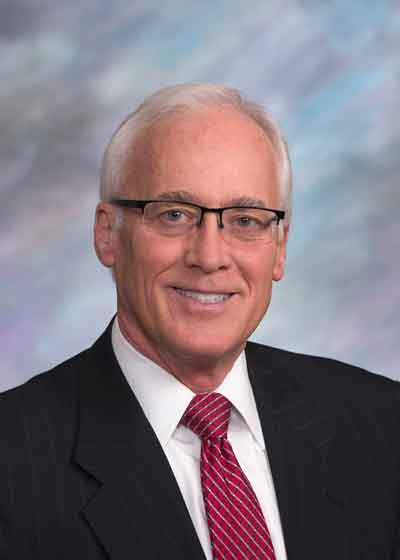
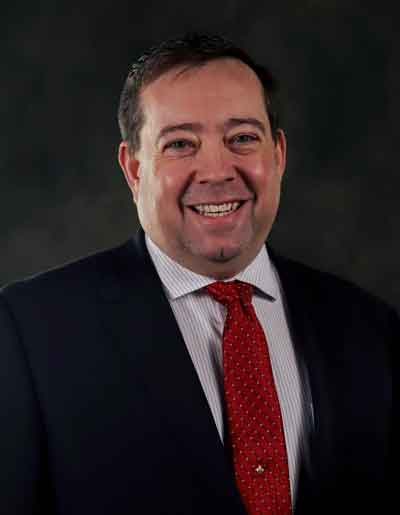
Filing petitions in the last few days, the most recent and leading the list is State Senator Ryan Maher, who has filed for the District 28A House seat. Good get for the GOP in that District, as Ryan is a good legislator, and a good campaigner.  Also a good get is State Rep. Kirk Chaffee in District 29, who is moving over to the State Senate seat in that District, replacing Dean Wink.

Greg Blanc, who had announced earlier has his petitions in for D35 Senate, although we will likely see another entrant into that contest with recently appointed Senator Michael Walsh who represents the area now.

Republican House members Aaron Aylward (District 6) and Karla Lems (District 16) have filed petitions. We’ll see if we have primary challengers.

And interestingly, former House Majority Leader Lee Qualm, who was trounced (61% – 39%) in the 2020 primary for Senate by current Senator Erin Tobin, has apparently licked his wounds sufficiently to attempt another go, this time for the House, filing petitions yesterday.

Beverly Johnson, District 9 Democrat for House has filed campaign committee paperwork, which you can read here.

Jeff Church, who had announced privately before is now making more overt efforts against incumbent District 17 Senator Sydney Davis. Jeff has filed a statement of organization to run in the Republican primary. Jeff’s a nice guy, and it’s a free country, but I don’t think this dog is going to hunt. I don’t know that Jeff has exhibited any extraordinary campaign skills and Senator Davis is one of the better Republican campaigners we have. Church will face a very steep uphill battle.

Nutty Mike Zitterich has apparently also filed paperwork to set up a committee to challenge as a Republican for District 15 House. If you’re not familiar, Zitterick was running for Sioux Falls City Council in 2022, but didn’t get around to getting his petitions in. Since then, he’s been busy posting semi-coherent manifestos on facebook. With his failure to get on the ballot once, I’m not sure why we would expect anything different in this race.  Seriously, candidate quality matters, and this is an awful slate. If Mike Zitterich and Brad Lindwurm are the best that the GOP has for District 15 House, Republicans can stay home and we might as well concede now. Because these guys won’t get elected.

Keep watching the filings and announcements here on the 2024 Candidate list. And let me know if you have any hot tips!

Shad Olson bail for felony assault of girlfriend paid by former D34 Legislative Candidate Jodie Frye

I was at the courthouse bright and early this AM pulling some documents from the Clerk of Courts that I need for another story, so I took the opportunity to pull some of the court documents in the ongoing Shad Olson assault case. And it took me down an unexpected rabbit hole, as I discovered who paid $5000 cash to get Olson, accused of strangling his live-in girlfriend, out of jail where he had been lingering for the past couple of weeks.

His bail was paid by former District 34 Legislative hopeful Jodie Frye-Byington, the twin sister of controversial current District 30 State Senator Julie Frye-Mueller.

In case you’d like to look at some of the case documents for yourself, Shad submitted paperwork to have himself declared as “indigent and financially unable to obtain counsel.”  And he sat in jail for a long darn time, unable to make bail. Until Jodie Frye came into the Sheriff’s office with a bag of cash (Starting page 3):

ShadOlson SCAN0001 Redacted by Pat Powers on Scribd

In case I have to remind you of the accusations against Shad, Here’s an excerpt – and a brief one at that – from the affidavit of probable cause:

His live-in of eight years had to flee the house they shared, shoeless in February, because she was (allegedly) lifted by the throat and in fear for her life. And there’s a lot more in the filing. This is the person that former legislative candidate Jodie Frye laid $5000 cash on the counter for to get him out of jail.

I have to say that I’m kind of shocked.. and I’m not being sarcastic or facetious… I’m shocked that any adult woman would take money out of her pocket to put a man like that back on the streets.

There’s at least one reason that we can cite why Jodie wasn’t successful in running for the legislature in 2022. She definitely exhibits poor judgement.

Johnson, Agriculture Trade Caucus Leaders, 24 Members Urge Reduction of Trade Barriers Holding Back Producers

Johnson, Agriculture Trade Caucus Leaders, 24 Members Urge Reduction of Trade Barriers Holding Back Producers

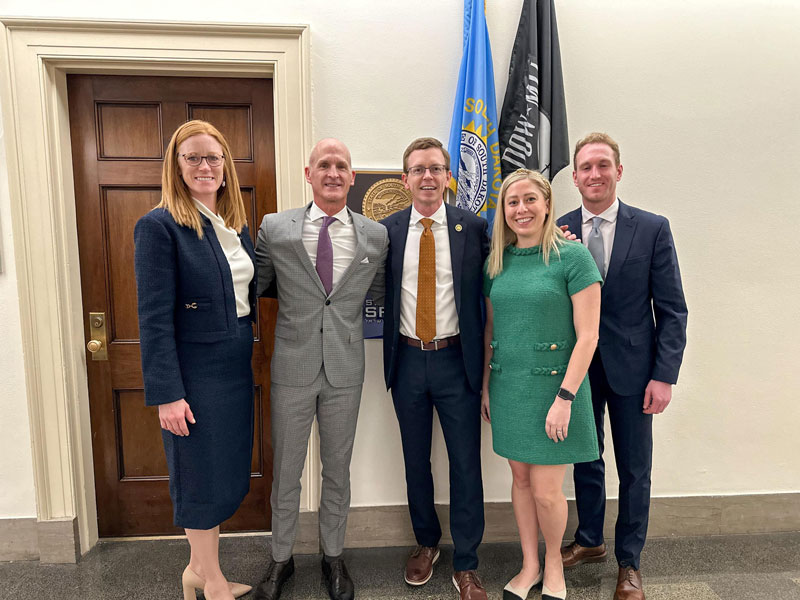
Washington, D.C. – The Co-Chairs of the Agriculture Trade Caucus, United States Representatives Dusty Johnson (R-S.D.), Jimmy Panetta (D-CA), Adrian Smith (R-NE), and Jim Costa (D-CA), led 24 of their colleagues in the House urging the Biden Administration to make agriculture a priority in its trade agenda by reducing tariff and non-tariff barriers for American agricultural exports.

The Members encourage the U.S. Trade Representative (USTR) and the U.S. Department of Agriculture (USDA) to seek enforceable agreements that open markets and reduce existing barriers through bilateral and multilateral engagement. The lawmakers emphasize the need for agreements that lower tariffs, ensure sanitary and phytosanitary (SPS) regulations are science-based, transparent, and consistent, and eliminate the abuse of geographical indicators in the food sector.

“U.S. farmers and ranchers can feed the world, but tariffs and discriminatory barriers aimed at undermining American competitiveness remain a challenge,” the Members wrote. “There is much work to do around the world to expand market access for U.S. producers and raise global sustainability, environmental, labor, and nutrition standards. The Administration should lean into these agreements and demonstrate leadership using all the tools at its disposal, including negotiating agreements that lower tariffs and empower real enforcement.”

The Members conclude, “Maintaining the status quo will only put American agriculture further and further behind as our competitors aggressively pursue such opportunities.”

The recently launched Agriculture Trade Caucus is actively working to advance and promote policies vital to U.S. agriculture, including boosting agricultural exports, facilitating food and agriculture trade, and knocking down unnecessary trade barriers.

Additional signers include Reps. Mike Thompson (CA-04), Glenn “GT” Thompson (PA-15), Josh Harder (CA-09), Don Bacon (NE-02), Don Davis (NC-01), John Duarte (CA-13), Andrea Salinas (OR-06), Mary Miller (IL-15), Elissa Slotkin (MI-07), Mark Alford (MO-04), Dan Kildee (MI-08), Ashley Hinson (IA-02), Kelly Armstrong (ND-AL), Drew Ferguson (GA-03), John Moolenaar (MI-02), Darin LaHood (IL-16), Brad Finstad (MN-01), Doug LaMalfa (CA-01), Michelle Fischbach (MN-07), Randy Feenstra (IA-04), Beth Van Duyne (TX-24), Gregory Murphy, M.D. (NC-03), Jim Baird (IN-04), and Zach Nunn (IA-03).

The full letter can be found here and below.

Dear Ambassador Tai and Secretary Vilsack:

We write to urge the Biden Administration to make agriculture a priority in its trade agenda by reducing tariff and non-tariff barriers for American agricultural exports. U.S. farmers and ranchers can feed the world, but tariffs and discriminatory barriers aimed at undermining American competitiveness remain a challenge. Working together, the U.S. Trade Representative (USTR) and the U.S. Department of Agriculture (USDA) must seek enforceable agreements that open markets and reduce existing barriers through bilateral and multilateral engagement.

Strong U.S. agricultural production outpaces domestic demand, and our farmers and ranchers rely on global markets to sustain prices and revenues. America’s farmers and ranchers lead the world in efficient and sustainable production. However, major tariff and non-tariff barriers continue to impact global competitiveness. Increased U.S. agriculture exports not only sustain an industry crucial to food security and supply chains in the U.S., but also strengthen global sustainability efforts by providing the world with food produced with high environmental and labor standards.

Therefore, we urge the Administration to proactively engage and secure enforceable, high-standard agreements with our trading partners to ensure our farmers and ranchers can compete globally on a level playing field. Specifically, USTR and USDA must work to secure agreements that lower tariffs, ensure sanitary and phytosanitary (SPS) regulations are science-based, transparent, and consistent, and eliminate the abuse of geographical indicators in the food sector.

To that end, we appreciate efforts to enforce our existing agreements and welcome USTR and USDA’s strong use of new enforcement tools available under the U.S.-Mexico-Canada Agreement (USMCA). We appreciate the Administration’s strong efforts on challenging Canada’s dairy tariff-rate quota allocation measures and look forward to continuing to engage. Additionally, we are encouraged to see the Administration’s efforts on engagement of biotechnology.  Biotechnology enables our farmers to harvest heartier and more nutritious crops while using less water and fewer pesticides, improving environmental protections. Mexico’s unscientific ban on American-grown corn undermines these advances and could set a dangerous precedent if it is not reversed. We applaud the Administration’s decision to establish a dispute settlement panel regarding Mexico’s unscientific ban and urge USTR to use every tool available under the agreement to ensure Mexico’s compliance with its commitments.

Addressing tariff barriers in Latin America while maintaining high-standard health and safety standards for agricultural imports is also paramount. Brazilian ethanol continues to enjoy duty-free access to U.S. markets and use our biofuels program while American ethanol exports into Brazil face a 16 percent tariff and have no access to Brazil’s biofuel program. This is unacceptable and must be addressed. We are also concerned about the risks associated with allowing fresh beef imports from Brazil and Paraguay without sufficient information and scientific scrutiny. Improving trade relationships with our neighbors in the Western Hemisphere is critical, but we must do so in a way that maintains a level playing field and protects our agricultural industry from unnecessary risk.

As the U.S. seeks further trade engagement in Europe, addressing non-tariff barriers such as SPS regulations, geographical indicators in the food sector, or use of grape varietals names and traditional expressions in the wine sector should be top priorities. The UK has put in place non-science-based bans of U.S. chicken and beef, which target American farmers and ranchers. Discussions with the European Union (EU) should address these issues as well as geographical indicators in the food sector with the sole purpose of keeping American agricultural products out. If the U.S. is not able to address these issues in trade negotiations, it will weaken our negotiating hand around the world.

We reiterate our belief that any agreement that includes binding trade commitments must receive approval from Congress before going into effect. Not only is this required by the Constitution but is essential to the formation of high-standard, durable agreements. To that end, while we are appreciative of the Administration’s focus on the Indo-Pacific Region, we believe more ambition is needed to fully open markets for U.S. agriculture. SPS provisions must be clear and enforceable, and we urge you to also work to modernize customs policies and import licensing regimes. Current policies, for example, prevent perishable fruits and vegetables from entering Indo-Pacific markets in a timely and predictable fashion. Addressing tariffs would provide incentives and leverage to address non-tariff barriers and facilitate enforcement. Many of our competitors benefit from lowered tariffs from bilateral and regional trade agreements like Comprehensive and Progressive Agreement for Trans-Pacific Partnership (CPTPP). By contrast, our farmers and ranchers continue to face onerous tariff rates which stifle market growth. As long as this dynamic remains in place, U.S. producers will continue to lose market share in the region.

There is much work to do around the world to expand market access for U.S. producers and raise global sustainability, environmental, labor, and nutrition standards. The Administration should lean into these agreements and demonstrate leadership using all the tools at its disposal, including negotiating agreements that lower tariffs and empower real enforcement. Maintaining the status quo will only put American agriculture further and further behind as our competitors aggressively pursue such opportunities.

Thank you for your consideration, and we look forward to working with you to support America’s farmers and ranchers and all in the agricultural supply chain who work to feed the world.

###

Time for South Dakota to be open for business without people blocking the doorway. Senate Bill 201 moves to the floor.

There has been a lot of commentary on what Senate Bill 201 hopes to accomplish, and as part of trying to stake out some middle ground in this matter one of the biggest things it’s going to try to do is to establish consistency that had been somewhat lacking.

One of the biggest problems is that along the pipeline route there are five counties that have tried to wrestle the project away from the PUC and introduce their own standards. And that’s been a major problem. So we have 5 ordinances; One set for Spink County, one set for Brown County, another for McPherson, then Minnehaha and finally Faulk county as they all create their own standards, largely for setbacks.

And here’s where it gets goofier.  Setback ordinances vary from 1500 feet from property line in one county, 330 feet from a property line in another, then 1/2 mile from property line, and 1 mile from structure, then 1/2 mile from a structure and 2 miles from a town.

Some counties require a conditional use permits that have specific requirements from CAFO’s, Residences, Schools, Hospitals, etc. But all are different. Spink County says all those and adds any structure that has a living quarter in it. In McPherson, they require the pipeline to hire an engineer that works with the county with an annual inspection of fences that the pipeline has to pay for to make sure their fence requirements are being met.

Take that against 129 other counties in the United States that host CO2 pipelines without any setbacks. And you can see what they’re trying to deal with when 5 counties try to change the game in the middle of following the rules.

It would be as if we decided we needed an Interstate, but some counties don’t like it. So, one county drops the Interstate speed limit from 80 miles per hour to 55. Then the next has a couple of county commissioners that really hate Interstates, so they drop it to 30 miles per hour. Then another says 75 but 25 if you’re a mile from a church.. and then yet another requires fences and lights along any Interstate, and you have to construct it with asphalt. And yet another says they are making the Interstate a toll road.

And that’s what the pipeline is dealing with. But it’s worse – they’ve been trying to follow the laws as established for some time, but opponents and NIMBY’s keep upending the gameboard and changing the rules.  Not very conducive to groups that want to come in and say, build a billion dollar bio-fuel plant, and all the decade old & older ethanol plants who have to modernize or they will be frozen out of markets, put out of business, and most of the corn & grain prices in the state will crash.

If we as a state are actually open for business, if we want growth and new development the very least we can do is actually create one set of rules, and follow them. Everyone should be able to agree on that.

If we’re going to practice what we preach, Senate Bill 201 is a step in the right direction to show that South Dakota is not California, Minnesota, or insert your least-liked blue state here.

The guidelines to do business in this state need to be clear, consistent, and equitable, and South Dakota is right to move forward with legislation that does just that. Time for South Dakota to be open for business without people blocking the doorway for the people they don’t like.

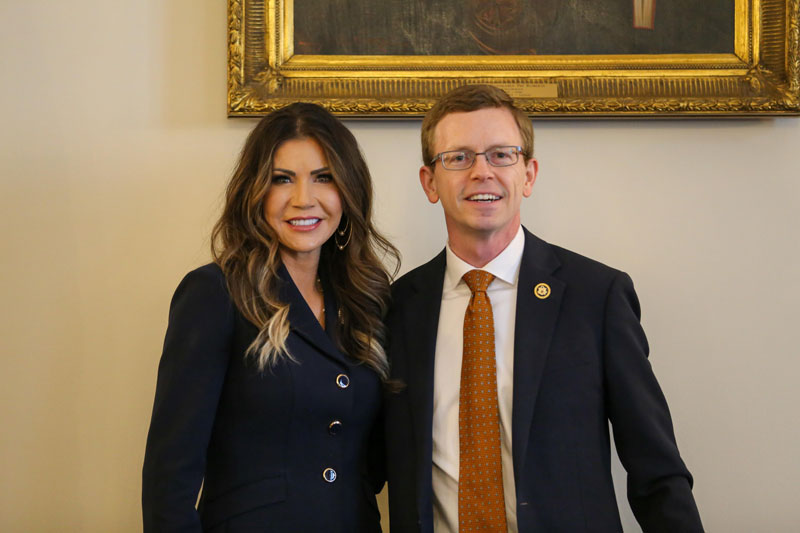
Kristi Noem VP Speculation: Noem taking meeting with Trump

The Dakota Scout is reporting in a story this morning (inbetween a deluge of ads) that Governor Kristi Noem is meeting with President Donald Trump, with speculation that it may be regarding what she might be doing this summer:

In the midst of growing speculation and heightened anticipation that she’ll be Donald Trump’s running mate, Gov. Kristi Noem is meeting with the former president and GOP front runner at his Mar-a-Lago home Monday afternoon.

The governor’s office has confirmed to The Dakota Scout Monday that the second term Republican extended her trip to Florida this weekend where she spoke at the annual Conservative Political Action Committee (CPAC) conference and will meet with Trump in a one-on-one meeting at one of the president’s Florida properties.

Read the entire story here.

Governor Noem is a tremendous speaker, and would do well for the ticket as his vice-presidential pick. The only downside is that we’re a small state, but Kristi is viewed as a rockstar among Republicans nationwide.

What are your thoughts?

Pipeline compromise measure Senate Bill 201 passes House Commerce & Energy Committee 8-5

Senate Bill 201, which would provide new statutory requirements for regulating linear transmission facilities, and to allow counties to impose a surcharge on certain pipeline companies brought by Senate Majority Leader Senator Casey Crabtree, House Majority Leader Representative Will Mortenson, and Rep. Drew Peterson passed out of the House Commerce and Energy Committee this morning after extensive testimony and a failed attempt to send it to the 41st day.  The bill went out of committee with a Do Pass motion instead on a 8-5 vote (about 61.5% in favor, and 38% opposed)

SB 201, which was brought forth by House & Senate Leadership as a compromise measure to address concerns on both sides of the issue had previously passed the Senate on a 23-11 vote, with about 31% opposed, and now after passage finds itself facing the last hurdle of the House Floor before going to the Governor.

Good work by the sponsors and all who voted in favor of it to bring the matter to a compromise solution, so we can argue about something else next year.

Katie Washnok for Senate campaign hosting big fundraiser in Aberdeen on March 3rd.

The Friends of Katie Washnok campaign is hosting a fundraiser in Aberdeen on March 3rd with a number of community leaders already slated to be hosts:

Lots of familiar names for the Aberdeen area including Kessler, Falk, Rylance, Jewettt, Lust, Thares, and many more. The event is featuring Senate Majority Leader Casey Crabtree, and Senate President Pro Tempore Lee Schoenbeck. And I note that State Senator Michael Rohl is also a co-host for the event.

As Brown County GOP Chair, and in many other roles, Katie has been one of the strongest carriers of water for the elephant that local Republicans have.  If you can’t attend, the QR code links to Katie’s fundraising page, or you can send a donation for the campaign to:

Friends of Katie Washnok
c/o Robert Fouberg
PO Box 285
Aberdeen, SD 57401

Let’s get out there and support a great candidate for State Senate!

Guest Column: Listening and Following Through by Senate Majority Leader Casey Crabtree

Listening and Following Through
by Senate Majority Leader Casey Crabtree

MADISON–Wednesday was a pivotal day in the debate on forging a path forward to facilitate value-added agriculture’s future in South Dakota. SB 201 gives money to farmers and counties, not out of state trial lawyers and environmental activists who line their pockets by killing value-added ag projects with misinformation and propaganda. I’m standing up on SB 201 to fight for farmers and was joined by ag groups like SD Corn, SD Soybeans, Ethanol Producers Association, the SD Chamber of Commerce and many more.

When South Dakota farmers succeed, all of South Dakota succeeds, and that cuts both ways. When South Dakota farmers have limited access to national and global markets, our whole state suffers. A rising tide lifts all boats, and that’s why I am committed to legislation like SB 201 that fosters a brighter future for all of South Dakota.

I have heard from hundreds of landowners in South Dakota about pipelines and landowner rights. Some of these folks do not want any reforms. Instead, they want to block all progress in South Dakota. The overwhelming majority of South Dakotans see the opportunity that comes with expanding ethanol markets and historic investments like Gevo in Lake Preston. I’ve listened to all sides of the debate, and I’m delivering on my promise to deliver policy reform that promotes respect, fairness, and certainty for all parties involved in infrastructure and value added agriculture.

Last week the Senate also overwhelmingly passed a change in South Dakota law to prevent foreign entities from owning South Dakota ag land. HB 1231 is now on the way to the Governor. Our ag economy and food security belong in the hands of Americans. This bill also prohibits ownership by China, Cuba, Iran, North Korea, Russia or Venezuela.

SB 187 is a funding request to help cities and counties support cybersecurity levels. This can help local governments protect citizen information, critical infrastructure and elections by avoiding potential cyber attacks and ransoms. It was good to see this  bill was approved unanimously. Also up in Joint Appropriations on Friday was SB 45 to establish the Center for Quantum Information Science and Technology at Dakota State University. Appropriators also passed this request onward to the Senate floor to be heard in the upcoming week.

On Thursday, the halls of the Capitol were filled with young Bulldogs. The fourth grade “Little Legislators” from Madison Elementary made their annual trip to visit us. Thanks for representing Madison and learning about state government. The pledge of allegiance was as loud as it has ever been in the senate chamber with them joining us from the gallery.  Our state’s future is bright with kids like these!

###

Governor Kristi Noem tied for first in CPAC poll for Trump running mate

Governor Kristi Noem is tied for first in a CPAC poll for who attendees thought should be Donald Trump’s running mate in the upcoming presidential election. According to The Hill:

South Dakota Gov. Kristi Noem (R) and biotech entrepreneur Vivek Ramaswamy were tied for first place as Republican grassroot activists’ preference for former President Trump’s vice presidential pick.  

Attendees at the Conservative Political Action Conference (CPAC) gave Noem and Ramaswamy 15 percent each when asked whom they believed Trump should pick as his running mate for 2024.  

Read it all here.

Further bolstering Governor Noem’s chances is that if you’ve ever met Kristi, she’s pretty down to earth and not leaning towards being a crackpot like Ramaswamy, as keeps coming up in anecdotes.

US Senator John Thune’s Weekly Column: IRS Needs to Do More to Protect Taxpayer Data

IRS Needs to Do More to Protect Taxpayer Data
By Sen. John Thune

In 2022, Congress passed the No TikTok on Government Devices Act. As its name suggests, this law bans TikTok on government devices due to the significant security risks that the app poses. This was an important step to protect sensitive data and government networks, but a recent report indicates that the Internal Revenue Service (IRS) has not fully complied with the law.

A recent inspector general report revealed that 2,800 mobile devices used by IRS Criminal Investigation employees and computers assigned to those employees can access TikTok. The inspector general also found that the IRS has not updated its “Bring Your Own Device” program, which shockingly allows IRS employees to use personal devices for business purposes. That means that IRS employees who are accessing sensitive taxpayer information on their personal devices are also potentially accessing TikTok. Worse still is that the IRS won’t commit to complying with recommendations to resolve the personal device issues until October 2024.

As the lead Republican on the Subcommittee on Taxation and IRS Oversight, holding the IRS accountable is an obligation I take very seriously. In response to this troubling report, I recently sent a letter to the IRS commissioner requesting information about the agency’s compliance with the No TikTok on Government Devices Act, the IRS’s “Bring Your Own Device” program, and the security of taxpayer information being accessed on personal devices. TikTok’s close ties to the Chinese Communist Party and their troubling data practices are reasons to be concerned about the app being loaded onto or accessible on a device that also deals with taxpayer and government data. This warrants swift action by the IRS to comply with the law and protect Americans’ data.

Unfortunately, this is only the latest issue in the IRS’s troubling history of mishandling taxpayer information. In the last few years alone, the IRS has inadvertently posted confidential information from 120,000 taxpayers on its website, destroyed 30 million unprocessed tax documents, and tens of thousands of Americans’ tax information was stolen by an IRS contractor and wound up in the hands of the left-leaning news site ProPublica.

The American people should be able to trust that when they file their taxes with the IRS, their personal information is safe. I will continue to hold the IRS accountable for its handling of taxpayer information and ensure the agency is adequately protecting Americans’ information.

###