Johnson Continues Commitment to Secure the Border 

Johnson Continues Commitment to Secure the Border 

Washington, D.C. – This week, U.S. Representative Dusty Johnson (R-S.D.) cosponsored three bills to strengthen security and policies at the southern border.

“Under the Biden Administration’s weak border policies, every state has become a border state,” said Johnson. “An increase in drugs and crime is seen in communities across America. I remain committed to securing the border to keep South Dakota families safe.”

The Biden Administration’s border policies have increased the monthly average of illegal crossings by 368 percent from September 2020 vs. September 2023. Although South Dakota is 1,000 miles from the southern border, illegal immigration has cost our state $56.9 million in 2023. In May, Johnson voted in support of H.R. 2, the Secure the Border Act, when it passed with some of the strongest border security measures to be voted on by the House.

Legislation:

The Preventing the Recycling of Immigrants is Necessary for Trafficking Suspension (PRINTS) Act, led by U.S. Rep. Ashley Hinson (R-IA), would:

  • Give CBP the authority to fingerprint non-citizens under the age of 14 in order to combat trafficking and child recycling;
  • Require DHS to publicly report the number of apprehensions in a given month involving child traffickers who falsely claimed that an accompanying child was a relative;
  • Require DHS to submit an annual report to Congress identifying the number of minors who were fingerprinted pursuant to this Act;
  • Remove the Attorney General’s authority to waive fingerprinting requirements for those illegally crossing the southern border; and
  • Criminalize child recycling.

The Southern Border Transparency Act, led by Rep. Ashley Hinson (R-IA), would require Department of Homeland Security (DHS) to report:

  • Number of migrants paroled at each POE and each Border Patrol sector, broken down by nationality and demographics.
  • Number of migrants apprehended at each POE and each Border Patrol sector, and how many were granted voluntary departure, placed into expedited removal, or entered another process (likely humanitarian release).
    • For each POE and Border Patrol sector: the number of migrants that entered into expedited removal, how many claimed a fear of persecution, credible fear of persecution, and were either removed, detained, or entered another process (likely release).
  • The number of petitions for parole received and granted by USCIS.
  • The total number of aliens paroled into the US, broken down by nationality and demographics, and of these for each fiscal year—
    • How many granted employment authorization;
    • How many still had a valid employment authorization;
    • How many have not had parole expire;
    • How many had status adjusted or parole extended;
    • How many had parole expire, and of these, how many exited the United States;
    • How many were returned to DHS custody from which they were paroled.

The Migrant Protection Protocols Permanency Act, led by U.S. Rep. Randy Weber (R-TX), would reinstate the “Remain in Mexico” policy, requiring those seeking asylum at the southern border or without proper documentation to return to Mexico to wait for their immigration proceedings.

###

Summit Carbon CEO notes that future of ethanol market is at stake for South Dakotans with pipeline

South Dakota Searchlight has an interview today with the CEO of Summit Carbon Solutions Lee Blank, and COO Jimmy Powell, as they point out that it is vitally important for the ethanol industry in the state to be able to pump the CO2 generated in the process into the ground, because otherwise, it’s challenging to sell ethanol at a margin profitable for the Ethanol CO-OP’s. And without it, South Dakota will miss the opportunity to become a continental hub for renewable aviation fuel:

Powell: To sell in these markets, and to sell to the sustainable aviation markets, which are evolving, you have to have a carbon intensity score of less than 50.

This plant [NuGen in Marion] is one of the newer plants, and it’s in that ballpark. A lot of the plants that we partner with have a score in the 60s and 70s.

If they power this entire plant with a solar farm or wind turbines, it’s going to give them a three- or five-point reduction. Meanwhile, by pulling the CO2 stream out of their process, it cuts it 25 to 30 points.

So they can’t get the same bang for their buck doing anything but pulling the CO2 out.

Right now, it’s about a 50-cent margin in those low-carbon fuel markets. So, if it’s 15 cents to transport to those markets, they net 35 cents a gallon.

and..

Powell: The goal of the major airlines, like Delta, United and Southwest, their goal is 3 billion gallons of sustainable aviation fuel by 2030. They’re targets, but they are pushing for that today.

In this country today, there are less than 100 million gallons produced. So, plants have to be built and they have to be operational.

I’m sure you know about Gevo in this state being one. And if we don’t have this project, if it’s not successful in South Dakota, Gevo will not construct here.

So, the 15 or so ethanol plants in this state will be disadvantaged from that aspect. They won’t be able to access that.

Read the entire story here.

Rounds Leads Legislation to Address Federal Government Overreach on South Dakota Farmers, Ranchers and Landowners

Rounds Leads Legislation to Address Federal Government Overreach on South Dakota Farmers, Ranchers and Landowners 

WASHINGTON – U.S. Senator Mike Rounds (R-S.D.) introduced legislation to address federal overreach and provide regulatory certainty to South Dakota farmers, ranchers and landowners. The Farmers Freedom Act of 2023 would protect the definition of prior converted cropland (PCC) in the Biden administration’s most recent Waters of the United States (WOTUS) rule.

The Farmers Freedom Act of 2023 is cosponsored by Senators John Thune (R-S.D.), Pete Ricketts (R-Neb.), Roger Marshall (R-Kan.), Mike Braun (R-Ind.), John Hoeven (R-N.D.), John Barrasso (R-Wyo.), Kevin Cramer (R-N.D.) and Cindy Hyde-Smith (R-Miss.).

“For far too long, South Dakota producers have been subject to a number of complex and burdensome WOTUS rule changes,” said Rounds. “While past administrations have issued problematic WOTUS rules, the previous Navigable Waters Protection Rule (NWPR) worked to protect owners of prior converted cropland from undue regulation while providing producers with needed flexibility. This legislation seeks to restore this definition of PCC and prevent further overreach on South Dakota farmers and ranchers, who know their land better than any D.C. bureaucrats.”

“The Biden administration continues to burden American agriculture with onerous rules,” said Ricketts. “Producers need relief, not regulation. I’m pleased to support this effort to bring certainty to landowners and prevent more big government overreach.”

“Since coming to Congress, I have worked to protect our farmers from the reckless overreach of the Biden Administration and its misaligned use of WOTUS,” said Marshall. “While I’m disappointed to see this Administration defy the U.S. Supreme Court’s ruling on the issue, we cannot give up our fight to protect our landowners from more red tape and burdensome regulations. We must provide certainty to close loopholes that can and will be abused by the EPA in its attempt to regulate every pond, stream and puddle.”

“Farmers supported President Trump’s definition of WOTUS because it gave them clear protections for prior converted cropland,” said Braun. “I am proud to cosponsor the Farmers Freedom Act, which reinstates the Trump-era protections and gives farmers much-needed peace of mind.”

“Landowners need more freedom to use their land as they see fit without excessive, burdensome environmental regulations,” said Cramer. “The Biden administration is deferring to a loosely-defined and arbitrary definition for prior converted croplands which creates uncertainty for landowners, especially those in the Prairie Pothole region. Our producers will always be better caretakers of the land than federal bureaucrats in Washington, and the administration should acknowledge it.”

For the last several decades, wetlands converted to cropland before 1985 have remained exempt from WOTUS regulation. Under the Biden administration’s rule, previously-converted cropland could revert to a wetland status if it is unavailable for commodity production. Specifically, if a section of PCC floods and is unable to produce commodities, it could be subject to regulation under the authority of the Clean Water Act.

The Farmers Freedom Act of 2023 is supported by the South Dakota Farm Bureau and the American Farm Bureau.

“Unfortunately, the definition of prior converted cropland (PCC) in the latest WOTUS rule will only contribute to further uncertainty for producers,” said South Dakota Farm Bureau President Scott VanderWal. “I thank Senator Rounds for introducing legislation to address this problematic piece in the latest reiteration of WOTUS.”

“Farmers take seriously the responsibility for properly caring for the land they’ve been entrusted with,” said Courtney Briggs, American Farm Bureau’s Senior Director of Government Affairs. “The current rules surrounding prior converted cropland make it difficult for farmers to ensure they are making the best use of their land while protecting the environment. We appreciate Sen. Rounds for working to bring clarity to the PCC exclusion.”

BACKGROUND:

·         For the last several decades, wetlands that were drained to be cropland prior to 1985 have remained exempt from regulation under the Clean Water Act.

·         In 2015, the Obama administration finalized a rule that expanded the definition of WOTUS, creating confusion and burdensome red tape, especially for South Dakota’s agricultural communities.

·         The Trump administration released a proposed rule to replace the 2015 WOTUS rule with a new one that provided much-needed predictability and certainty for farmers by establishing clear and reasonable definitions of what qualifies as a “water of the United States.” The Navigable Waters Protection Rule (NWPR) was finalized in 2020.

·         The NWPR clarified the rules governing PCC, protecting impacted land from Clean Water Act regulation as long it was used for agricultural purposes once every five years.

·         On day one of his administration, President Biden signed an executive order to begin the process of rolling back the Trump administration’s NWPR.

·         In December 2022, the U.S. Environmental Protection Agency (EPA) issued a new rule repealing the NWPR and changing the definition of WOTUS in a way that will expand federal regulatory authority.

·         The Biden administration’s WOTUS rule also tightened the regulations guiding PCC, allowing the federal government to end the exemption for such land immediately upon a change in use.

·         In May 2023, the Supreme Court issued a decision in Sackett v. Environmental Protection Agency that overturned the previous 2022 WOTUS rule.

·         In August 2023, the EPA issued a new iteration of the WOTUS rule with changes after Sackett, which retained the problematic definition of PCC.

###

Dusty Johnson: George Santos “a crook,” and “does not belong in Congress.”

In a KELOland interview yesterday, Congressman Dusty Johnson minces no words in his belief that George Santos needs to be removed from office:

The first-term Republican could become the sixth member of the House to be expelled by colleagues. The House Ethics Committee earlier this month said there was “substantial evidence” that Santos repeatedly broke the law.

and..

Johnson calls Santos “a crook.”

“Now that we have that ethics report I am full throatedly behind kicking George Santos out; the guy does not belong in Congress,” Johnson said.

Read the entire story here.

Attorney General Jackley Announces Two Men Sentenced in Connection to Fatal Shooting

Attorney General Jackley Announces Two Men Sentenced in Connection to Fatal Shooting

PIERRE, S.D. — South Dakota Attorney General Marty Jackley announces that two men have been sentenced to prison after earlier pleading guilty for their actions connected to a 2021 fatal shooting that occurred at a Sioux Falls restaurant.

Isaac Mohammed Wali, 22, of Sioux Falls was sentenced Thursday to 30 years in prison, with 17 years suspended, after pleading guilty to two counts of Aggravated Assault with a Deadly Weapon. Antoine Demetrius Richardson Jr., 30, of Sioux Falls was sentenced Tuesday to a suspended sentence of 42 months in prison after pleading guilty to Possession of a Firearm while having a felony drug conviction. The two men were convicted and sentenced after agreeing to plea bargains.

Both were charged in the November, 2021 fatal shooting at Giliberto’s Mexican Taco Shop. The shooting resulted in the death of 37-year-old Garang Hakim Aluong of Sioux Falls. Another person was injured.

“These sentencings hopefully bring some comfort to the one person who was injured and the two families involved,” said Attorney General Jackley. “Thank you to the law enforcement officers and prosecutors who brought these defendants to justice.”

The case was investigated by the Sioux Falls Police Department.

Prosecution was handled by the South Dakota Attorney General’s Office.

-30-

Thune Highlights South Dakota’s Time-Honored Pheasant Hunting Tradition

Thune Highlights South Dakota’s Time-Honored Pheasant Hunting Tradition

 “Whether you’re gathered around a meal of fresh pheasant in our great outdoors or gathered around the Thanksgiving turkey, there’s a lot to be thankful for as a South Dakotan.”

Click here or on the picture above to watch the video.

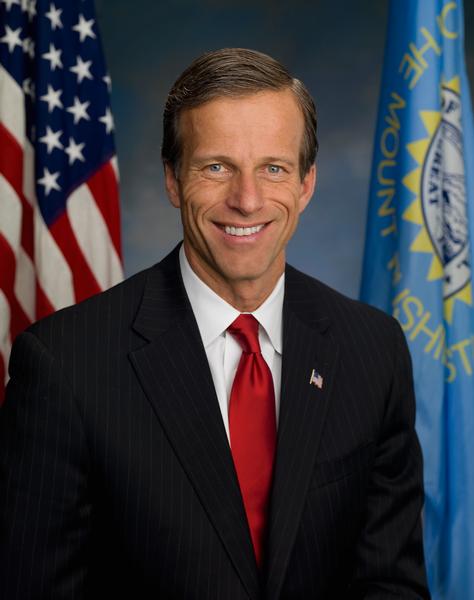
WASHINGTON — U.S. Sen. John Thune (R-S.D.) today spoke on the Senate floor about South Dakota’s time-honored pheasant hunting tradition and discussed the important role it has on the state’s economy and its dependence on effective conservation practices. Thune also spoke about the worsening security and humanitarian crisis at the southern border, and he called on the White House and Senate Democrats to prioritize a border security package that includes meaningful asylum and parole reforms.

2 new candidates file to run for the legislature in Sioux Falls

2 new candidates have filed Statements of Organizations to run for the South Dakota Legislature this week.

JR Anderson of Sioux Falls has filed paperwork to run for the House in District 12 for the seats currently held by incumbent Republicans Amber Arlint and Greg Jamison.  While no immediate information is available, it appears from his social media that Anderson is likely to run as a Democrat.

Erik Muckey of Sioux Falls has also filed a statement of organization to run, specifically in District 15. Muckey’s campaign chair is former D15 State Rep and Gubernatorial Candidate Jamie Smith, if we’re to take that as an indication of his party affiliation.


Representative Bethany Soye to seek re-election to District 9 House

Representative Bethany Soye to seek re-election to District 9 House

Sioux Falls, SD – Representative Bethany Soye has announced her intention to seek re-election to the South Dakota House in District 9. Soye is an attorney and full-time mom living in Northwest Sioux Falls. She was first elected in 2020 and has served on the House Judiciary, Education, and Redistricting Committees. Soye received her bachelor’s degree from North Central University and holds a J.D. and master’s in public policy from the College of William & Mary.

In addition to sponsoring and passing pro-life and pro-family legislation during her tenure in the House, Soye has helped school districts recruit quality candidates by offering signing bonuses, advocated for uninterrupted nursing home visitation, and reformed the civil asset forfeiture process. Last year she was the House Prime Sponsor of the state’s Help Not Harm legislation.

“It has been an honor for me to serve the people of District 9 for four years. I appreciate the trust you have placed in me and I will continue to work hard to earn your support in 2024 as I stand boldly for truth and conservative principles,” said Soye.

For more information visit bethanysoye.com.

Release: SD Residents Launch South Dakota Ag Alliance

SD Residents Launch South Dakota Ag Alliance

(Pierre, SD) Today, Jason Glodt and Rob Skjonsberg announced the formation of South Dakota Ag Alliance, a non-profit organization designed to mediate and advocate for reasonable solutions to difficult ag and rural development issues, such as the controversial CO2 pipeline proposal.

In regard to CO2 pipelines, the organization will urge the legislature to establish landowner guardrails that include 1) land survey reform; 2) liability protection; 3) minimum depth of carbon-capture pipelines; and 4) additional recurring compensation for landowners. In exchange for these concessions, they will also support improving legal and regulatory certainty for businesses.

South Dakota Ag Alliance is not associated with any company. The sole purpose is to discuss and propose reasonable guardrails for both South Dakota residents and prospective developers. Glodt and Skjonsberg are long-time friends and business partners who disagreed on the value of CO2 pipelines in South Dakota.

Skjonsberg, is a cow-calf producer in Jones and Stanley Counties and is a founding board member of the South Dakota Landowner & Outfitter Alliance. Skjonsberg doesn’t disagree with the value to corn ethanol that carbon sequestration will provide, but disliked the manner in which South Dakota landowners were being treated and the lack of certainty for landowners and developers alike.

“There’s a manner in which we do business in South Dakota. If you try to run over us, you won’t like the response. And, I think that’s what’s happened here. On one hand, I’m proud of the way landowners have banded together. On the other hand, if we don’t provide certainty for how these projects are going to work, we’ll be fighting these fights for the next 50 years. I think it’d be much wiser, to set the tone and create guardrails for landowners and certainty for investors in these types of projects. There’s precedent for handling these big projects.  We just need to be able to communicate.” stated Skjonsberg.

Glodt, an attorney from Pierre who also specializes in government relations and previously worked for the Navigator project said, “Our state’s ag economy took a big punch to the gut recently when Navigator CO2 Ventures announced the end of its Heartland Greenway CO2 sequestration project. That project was essential to keeping our ethanol industry viable. The project would have generated millions of annual property tax revenue for counties while increasing net farm income for South Dakota farmers.”

“Now that our state has lost the Navigator project and biofuel companies are re-evaluating their future investments in the state, we cannot afford to lose the Summit Project so we have to find a path forward,” said Glodt. “Unless South Dakota ethanol plants and, consequently South Dakota corn growers, have access to carbon sequestration opportunities, these South Dakota plants will not be able to compete with other states around us and we will be at risk of losing our ethanol industry- which would be devastating for our state’s economy.”

The opposing viewpoints is what led the two to create South Dakota Ag Alliance. “Jason and I were on entirely opposite sides when this fight erupted. Neither of us were interested in what the other had to say, and then over lunch we agreed – what this deal is lacking is certainty and a referee,” said Skjonsberg. “In hindsight, somebody should have put everyone in a room and said, ‘listen, this is how this is going to work, or it’s not going to work at all.  We have thousands of miles of pipelines in South Dakota, wind turbines and processing facilities – it’s not like we haven’t worked through those issues before.”

The mission of South Dakota Ag Alliance is to support landowner rights along with reasonable ag and rural development. The two believe that regulatory certainty can be obtained that prevents these types of fights from continually erupting and plan to discuss their proposal with stakeholders in the near future and hope to collectively agree on a solution for the legislature to consider. “We don’t expect either side to fully endorse what we’re proposing. But, if both sides put a little skin in the game and both sides have certainty, we’d like to see a workable environment for everyone,” said Glodt.  Skjonsberg added, “That starts with updated landowner protections and subsequently, the pipeline companies will have their certainty.”

South Dakota Ag Alliance will next announce an advisory committee comprised of South Dakota residents involved in farming and ranching operations. Long-time South Dakota ag advocate Lorin Pankratz will serve as the chair of the advisory committee.

###