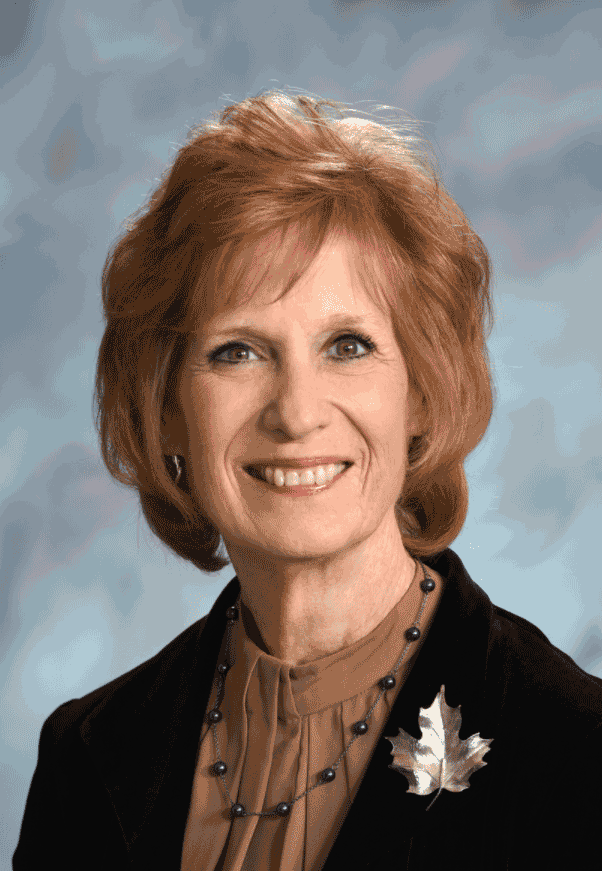
Rounds, Colleagues Introduce Bipartisan TRUST Act

Rounds, Colleagues Introduce Bipartisan TRUST Act

Bipartisan, bicameral legislation to rescue endangered federal trust funds and rein in national debt

WASHINGTON – U.S. Senator Mike Rounds (R-S.D.) joined Sen. Mitt Romney (R-Utah) and 10 other colleagues in introducing theTime to Rescue United States’ Trusts (TRUST) Act, bipartisan and bicameral legislation which would create a process to rescue the endangered federal trust funds and rein in the national debt. Rounds and Romney initially introduced the legislation last Congress. A one-pager of the legislation is available here.

Some of the nation’s most important federal programs are financed through dedicated revenue sources and managed through trust funds. A number of the largest trust funds are heading towards insolvency—made worse by the COVID-19 pandemic. In September 2020, the Congressional Budget Office (CBO) found that four of the major trust funds will exhaust their reserves within the next 11 years. The bipartisan, bicameral TRUST Act would provide a vehicle to address the key structural issues behind the debt and allow Congress to put our major federal programs on a stronger footing.

“Our federal trusts, including Social Security and Medicare, are on an unstable fiscal trajectory,” Rounds said. “Unfortunately, necessary deficit spending during the COVID-19 pandemic has only made this situation more urgent. We must act now to shore up our budget and protect Americans’ hard-earned retirement benefits. The TRUST Act is a bipartisan solution for managing the 75 percent of the budget that we do not currently vote on. Our bill will create congressional committees specifically tasked to develop legislation to restore and strengthen endangered federal trust funds. It’s time we get a handle on our debt and protect our federal trusts for generations to come.”

“There is broad recognition that we need to address the looming insolvency of our federal trust funds,” Romney said. “Getting our country through the COVID-19 pandemic has required us to borrow trillions of dollars, which has in turn threatened essential programs like Medicare and Social Security. Congress must respond in a way which will address this long-term problem, which is coming down the pike much sooner than was expected. Our TRUST Act is a bipartisan solution which will shore up our federal trust funds and put us on a path toward a stronger fiscal future.”

The TRUST Act is cosponsored by: Senators Joe Manchin (D-W.Va.), Todd Young (R-Ind.), Kyrsten Sinema (D-Ariz.), Shelley Moore Capito (R-W.Va.), Angus King (I-Maine), Rob Portman (R-Ohio), Mark Warner (D-Va.), John Cornyn (R-Texas), Kevin Cramer (R-N.D.), and Cynthia Lummis (R-Wyo.). U.S. Representatives Mike Gallagher (R-Wis.), Ed Case (D-Hawaii), Scott Peters (D-Calif.), Jodey Arrington (R-Texas), and Carolyn Bourdeaux (D-Ga.) have introduced companion legislation in the House of Representatives.

Support for the TRUST Act:

“More than a decade after the Fiscal Commission we co-chaired released common-sense, comprehensive recommendations to fix the debt and to secure our major entitlement programs, those programs still remain in serious financial jeopardy. The Social Security, Medicare, and Highway Trust Funds are all predicted to be insolvent in the next 11 years, triggering deep, across-the-board cuts in benefits. The COVID-19 pandemic has sped the timeline to insolvency and makes solutions even more urgent. While most people in Washington would prefer to burrow – or leave! – their heads in the sand, the TRUST Act would create a truly bipartisan process to save these important programs. We know from personal experience that when Democrats, Republicans, and Independents work together in good faith, they can identify real and lasting solutions: the Fiscal Commission recommendations were supported by 11 of 18 commissioners. We earnestly thank Senators Romney and Manchin, Representatives Gallagher and Case, and other co-sponsors for taking the lead on this important and vital effort. Time is running out to enact critical and thoughtful reforms to appropriately fund our infrastructure and return solvency to Social Security and Medicare.”Alan Simpson and Erskine Bowles, co-chairs of the National Commission on Fiscal Responsibility and Reform

“Senator Romney and these cosponsors deserve immense credit for developing a plan to fix the federal government’s most important trust fund programs, which are headed toward insolvency due to years of neglect. We just can’t wait any longer to fix a problem that leaves all who depend on these programs dangerously vulnerable. The TRUST Act is a sensible, bipartisan and balanced approach that would bring together lawmakers to develop fixes, without pre-baking any of the outcomes. We have known for decades that we must shore up the finances of these critical systems, and the current crisis is a reminder of how being prepared is a must in responsible governing. The TRUST Act would provide much-needed fiscal leadership.”Maya MacGuineas, President of the Committee for a Responsible Federal Budget

“The Senate expressed bipartisan support for the TRUST Act in its recent budget resolution. It’s good to see momentum behind this and other proposals that would help ensure we don’t lose sight of the serious fiscal challenges that lay ahead.”Michele Stockwell, Executive Director of BPC Action

“This proposal could prompt bipartisan action on key trust fund depletion dates that threaten indiscriminate across-the-board cuts to vital programs within the next 15 years. It is, in effect, a responsible call to repeal and replace the irresponsible ‘do nothing plan.’ Democrats and Republicans may have very different ideas about how to address the shortfalls in these trust funds, but neither party should want to be responsible for the damaging and disruptive consequences of inaction. Time is running out to enact reforms. The TRUST Act is a credible way to get the process started and The Concord Coalition applauds its bipartisan, bicameral leaders.”Robert L. Bixby, Executive Director of The Concord Coalition

###

Thune: Democrats’ Court-Packing Plan is a Danger to Democracy

Thune: Democrats’ Court-Packing Plan is a Danger to Democracy

“I hope that at least some of my Democrat colleagues will find the courage to speak up and consign the idea of court-packing to the ash heap of history, where it should have remained.”


Click here or on the picture above to watch the video.

WASHINGTON — U.S. Sen. John Thune (R-S.D.) today discussed Democrats’ partisan legislation to pack the U.S. Supreme Court and warned of the destruction it would do to America’s well-established court system. Thune strongly encouraged Democrats to consider the damage this blatant power grab would do to the health of the nation’s democracy and the stability of our country.

Release: Club for Growth Foundation Releases South Dakota Missed Votes Scorecard

CLUB FOR GROWTH FOUNDATION RELEASES SOUTH DAKOTA MISSED VOTES SCORECARD

WASHINGTON, D.C. – The Club for Growth Foundation today released its Missed Votes scorecard for the South Dakota Legislature’s 2021 session. The newly launched Missed Votes Scorecards calculate how often lawmakers show up to vote and how often they miss votes.

Lawmakers miss votes for a whole host of reasons, including medical issues, family concerns, prior commitments, purely political motivations, or other reasons. The Club for Growth Foundation has not analyzed why any lawmaker has missed a vote and is simply publishing this quantified information for educational purposes only.

According to Club for Growth Foundation President David McIntosh, “Constituents need to know the missed votes records of their representatives so they can decide for themselves if elected officials are avoiding a difficult vote or have a legitimate reason for missing a particular vote. Sadly, this information is often not available, and that is why the Club for Growth Foundation is publishing Missed Votes scorecards.”

This scorecard is based on a review of all floor votes taken in the South Dakota Legislature for January 20, 2021 to March 29, 2021. There are inherent limitations in judging the overall qualifications of any legislator based on how many votes he or she has missed, and the Club for Growth Foundation does not endorse or oppose any legislator for public office.

Key Insights

South Dakota Senate

The average South Dakota senator missed 3% of 332 total floor votes. Senator Julie Frye-Mueller (SD-30) missed the most votes – 60 votes out of 332 – for a score of 18% missed. By not missing a single vote, the following senators received a perfect attendance score:

Sen. Jim Bolin (SD-16)
Sen. Bryan Breitling (SD-23)
Sen. Gary Cammack (SD-29)
Sen. Jessica Castleberry (SD-35)
Sen. Casey Crabtree (SD-08)
Sen. Michael Diedrich (SD-34)
Sen. Mary Duvall (SD-24)
Sen. David Johnson (SD-33)
Sen. Jack Kolbeck (SD-13)
Sen. Ryan Maher (SD-28)
Sen. Reynold Nesiba (SD-15)
Sen. Kyle Schoenfish (SD-19)
Sen. Wayne Steinhauer (SD-09)

South Dakota House of Representatives

The average South Dakota House member missed 3% of 373 total floor votes. Rep. Peri Pourier (HD-27) missed the most votes – 90 votes out of 373 – for a score of 24%. By not missing a single vote, the following house members received a perfect attendance score:

Rep. David Anderson (HD-16)
Rep. Hugh Bartels (HD-05)
Rep. Doug Barthel (HD-10)
Rep. Shawn Bordeaux (HD-26A)
Rep. Roger Chase (HD-22)
Rep. Ryan Cwach (HD-18)
Rep. Drew Dennert (HD-03)
Rep. Mike Derby (HD-34)
Rep. Becky Drury (HD-32)
Rep. Linda Duba (HD-15)
Rep. Mary Fitzgerald (HD-31)
Rep. Timothy Goodwin (HD-30)
Rep. Randy Gross (HD-08)
Rep. Steven Haugaard (HD-10)
Rep. Erin Healy (HD-14)
Rep. Charles Hoffman (HD-23)
Rep. Kevin Jensen (HD-16)
Rep. Chris Johnson (HD-32)
Rep. Jennifer Keintz (HD-01)
Rep. Lance Koth (HD-20)
Rep. Elizabeth May (HD-27)
Rep. Paul Miskimins (HD-20)
Rep. Scott Odenbach (HD-31)
Rep. Ernie Otten (HD-06)
Rep. Marty Overweg (HD-19)
Rep. Carl Perry (HD-03)
Rep. Tom Pischke (HD-25)
Rep. Tony Randolph (HD-35)
Rep. Lynn Schneider (HD-22)
Rep. Mike Stevens (HD-18)
Rep. Richard Thomson (HD-13)
Rep. Mike Weisgram (HD-24)
Rep. Mark Willadsen (HD-11)
Rep. Nancy York (HD-05)

##

Governor Noem Names Rave, Partridge to Board of Regents

Governor Noem Names Rave, Partridge to Board of Regents

PIERRE, S.D. – Today, Governor Kristi Noem announced that she will appoint Tim Rave of Baltic and Jeff Partridge of Rapid City to the South Dakota Board of Regents.

“Tim Rave and Jeff Partridge are two seasoned, thoughtful public servants who care deeply about higher education in our state,” said Gov. Noem. “I know they will be excellent regents, and I thank them for their willingness to serve.”

Partridge is the president of Partridge Financial Services in Rapid City. He served on the Rapid City Council from 2003 to 2005, including as vice president of the council. Partridge served in the South Dakota House of Representatives from 2015-17 and in the State Senate from 2017-21, spending all six years on the Joint Appropriations Committee. He is a graduate of Augustana University.

Tim Rave
Tim Rave

“I am thankful and honored Governor Noem has appointed me to the Board of Regents,” said Partridge. “One of our largest state expenditures is for education, and I look forward to using my experience in helping set the state budget to ensure our education deliverable is cost effective for the State and the student.”

Rave is the president and CEO of the South Dakota Association of Healthcare Organizations. He served in the State House of Representatives from 2003-11, including two years as speaker of the house, and in the State Senate from 2011-15, where he was majority leader from 2013-15. Rave attended South Dakota State University and is a graduate of the University of Sioux Falls.

“I thank Governor Noem for asking me to serve as a regent,” said Rave. “I know from my own experience how important higher education can be, and during my years in the legislature I was an advocate for our state universities. I will be honored to helping guide our higher education system for the next generation.”

Jeff Partridge
Jeff Partridge

Partridge will succeed Randy Schaefer of Madison and Rave will succeed Jim Morgan of Brookings, and they will join Tony Venhuizen of Sioux Falls as newly-appointed members of the Board. All three will serve six-year terms that continue through March 31, 2027.

The nine-member South Dakota Board of Regents is the constitutional governing board for the state’s six public universities: Black Hills State University, Dakota State University, Northern State University, the South Dakota School of Mines and Technology, South Dakota State University, and the University of South Dakota. The Board also oversees the state’s two special schools: the South Dakota School for the Deaf and the South Dakota School for the Blind and Visually Impaired.

###

US Senator Mike Rounds’ Weekly Column: Thank a Rancher

Thank a Rancher
By U.S. Sen. Mike Rounds (R-S.D.)
April 19, 2021

Calving season is the time of the year our South Dakota ranchers look forward to until: they have headlights out in the pasture at two in the morning; they are trying to tag 1202’s calf without finding out if she’s bluffing; or they are bringing heifers to the barn and out of the blizzard. There are a lot of variables in this industry. Whether you know a rancher or you are one, one thing is for sure – it’s tough work.

Most people wouldn’t work a job without knowing what their paycheck will be at the end of the month. They probably wouldn’t take a job without any vacation or sick days, either. There are no days off for our local producers. Despite not knowing how many calves they will have come sale day or what the markets will do, they continue to get the job done just as they have for decades. It’s a job of integrity. It’s a way of life that has been and will continue in the family for generations.

Every generation of ranchers face challenges, and this generation has been especially tested. But one of these challenges should not be government bureaucrats telling them what’s best for their operation. Suits and ties don’t feed the world – ranchers do.

As it stands today, the four largest meat packers control over 80 percent of the cattle market. We have to increase competition for local producers if we want our small towns and operations to survive. For years, ranchers have seen immense price discrepancies between the price they receive per head of cattle and the price of beef on the shelf at the grocery store. The COVID-19 pandemic brought to light that reform is necessary. I am working for our independent South Dakota ranch families, not the packers who continue pushing the bureaucrats around. Their grip on government has been going on for years, weakening and preventing policies that help ranchers.

Last month, I reintroduced bipartisan legislation with Senator Chuck Grassley (R-IA) known as the “50-14” bill. The bill would require that a minimum of 50 percent of a meat packer’s weekly volume of cattle purchases take place on the open or spot market. It would apply to meat-packing facilities that slaughter more than 125,000 head annually. These facilities would also be required to slaughter cattle purchased under this requirement within 14 days.

South Dakota ranchers produce some of the highest-quality beef in the world. Without a mandated amount of cash trade, our ranchers don’t have a level playing field. We won’t give up trying to get our ranchers a fair price in a competitive market.

Regardless of what happens in Washington, our ranchers will continue facing the variables head on and with grit. They will finish out calving season and do the work it takes to get ready for it all over again next year. Some years are harder than others, but they always show up. I am grateful for the work our ranchers do every day, and I am proud to represent them.

And, if you haven’t already, thank a rancher.

###


Release: Rounds, Shaheen Reintroduce Bipartisan Bill to Alert Veterans & Service Members Exposed to PFAS Contaminants

Rounds, Shaheen Reintroduce Bipartisan Bill to Alert Veterans & Service Members Exposed to PFAS Contaminants

WASHINGTON – U.S. Senator Mike Rounds (R-S.D.) and Jeanne Shaheen (D-N.H.) reintroduced legislation that would create a national database for service members and veterans experiencing health problems possibly due to contamination from per- and polyfluoroalkyl substances (PFAS). PFAS chemicals are byproducts of aqueous firefighting foam and have been found in drinking water at 600 military installations. Initial analyses have linked PFSA contamination with birth defects, various forms of cancer and immune system dysfunction.

The PFAS Registry Act would require the Department of Veterans Affairs to maintain a registry of those likely impacted by PFAS contamination, and require the VA to update military personnel and veterans on recent scientific developments on the effects of PFAS exposure and the availability of possible treatment options.

“As the military continues to clean up PFAS contamination around our bases, we owe full transparency to the individuals likely impacted,” Rounds said. “Our bipartisan legislation will create a national PFAS registry and hold the VA accountable for regularly updating our service members and veterans on the latest information and treatments related to PFAS contamination.”

“After dedicating their lives to serve our nation, our service members deserve every resource available to stay healthy after being exposed to PFAS contamination,” said Shaheen. “The federal government has a duty to ensure access to information and treatment so families can stay safe, and establishing a national database for service members is crucial to that mission. Our service members and their families deserve nothing short of the best care available – especially after being exposed to potentially harmful PFAS chemicals.”

The VA has established registries for veterans who may have been exposed to environmental contaminants, including Agent Orange and emissions from open burn pits. This act would support these existing efforts, and the legislation specifically:

• Requires VA to establish/maintain a PFAS registry that provides relevant metrics on exposure

• Directs VA to educate eligible individuals about the registry and notify of significant developments

• Requires an independent organization to evaluate the registry and issue a report to Congress

• Directs the VA in consult with the DOD and EPA to continuously provide recommendations to Congress on additional chemicals that should be included in the registry

###

US Senator John Thune’s Weekly Column: Another Day, Another Liberal Power-Grab Attempt

Another Day, Another Liberal Power-Grab Attempt
By Sen. John Thune

In what is fast becoming a theme of his presidency, President Biden caved to the demands of the far left and officially established his court-packing commission. Yes, court-packing. An idea that had been consigned to the ash heap of history almost a century ago has been given new life by the far left, who are upset that a duly elected Republican president was able to get his justices confirmed to the Supreme Court.

The terrible crisis we’re facing is that a Republican president was able to fill three vacancies on the Supreme Court. I confess I had missed the part in the Constitution that said the Supreme Court is only legitimate if a majority of its members were nominated by a Democrat president – or at least reliably deliver liberals’ preferred outcomes. But Liberals didn’t. Now they’re eager to “restore balance” to the Supreme Court by expanding the number of Supreme Court justices and ensuring that a Democrat president fills the new spots.

President Biden – the same man who once called President Roosevelt’s failed court-packing proposal a “bonehead idea” and a “terrible, terrible mistake to make” – is apparently falling in with the far left’s demands. His commission – composed largely of left-leaning scholars, Democrat operatives, and a few conservatives as bipartisan window-dressing – will consider court-packing and other structural “reforms,” like term limits for Supreme Court justices.

Republicans – and a lot of independent and Democrat voters as well – will see this for exactly what it is: an attempt by Democrats to undermine an essential institution to ensure that Democrats get the Supreme Court rulings they want. Democrats can dress up their openness to court-packing proposals in lofty language and faux expressions of concern for the institution, but no one is fooled. This is about power, pure and simple. Democrats want power. They want to be able to impose the policies they want, when they want them. Justice Breyer, a reliable liberal vote on the Supreme Court, recognizes the extraordinary damage court-packing would do to the legitimacy of the Supreme Court, recently stating that “[i]t is wrong to think of the Court as another political institution. And it is doubly wrong to think of its members as junior-league politicians.  Structural alteration motivated by the perception of political influence can only feed that perception, further eroding that trust.”

Let’s suppose Democrats actually succeed in expanding the Supreme Court and adding more Democrat nominees. What do they think is going to happen next time there’s a Republican president and a Republican Congress? I can tell you. Republicans would make their own move to “restore balance” and add some more Republican Supreme Court nominees. Then I imagine when Democrats retook power they’d do the same thing. In a decade or so, the Supreme Court could be expanded to laughable proportions.

This may seem like all talk and no action from a few radical fringe Democrats, but recently, the chairman of the House Judiciary Committee and senior Senate Democrats stood on the steps of the Supreme Court to announce they had introduced legislation to expand the court from nine to 13. History will not look kindly on those who seek to intimidate the Supreme Court by threatening to pack it with partisans, in much the same way history does not look kindly on President Roosevelt’s effort to do the same thing back in 1937.

I understand Democrats’ passion for their political beliefs, as I’m also pretty passionate about advancing my political principles, but I believe we should be advancing our principles the democratic way, by persuading people to vote for us – not by undermining our democratic institutions to give our party an advantage.

I am deeply disappointed that President Biden found himself unable to stand up to pressure from the radical left. I hope that at least some Democrats will find the courage to oppose these dangerous attempts to undermine our system of government. The Biden court-packing commission is a solution in search of a problem – and an attempt at a raw power grab by Democrats. I will work to ensure it fades into the obscurity it deserves.

###