Tales from the Ag Committee.. When you’ve been Zoomed just a little too much.
I just caught this on Facebook from Rep. Overweg. Can they put in for hazard pay on this?


I just caught this on Facebook from Rep. Overweg. Can they put in for hazard pay on this?
South Dakota, Wyoming Delegations Urge U.S. Forest Service to Reconsider Recommendation to Reduce Timber Sale Program at Black Hills National Forest
WASHINGTON — U.S. Sens. John Thune (R-S.D.), John Barrasso (R-Wyo.), Mike Rounds (R-S.D.), and Cynthia Lummis (R-Wyo.) and U.S. Reps. Dusty Johnson (R-S.D.) and Liz Cheney (R-Wyo.) today expressed their concern with the U.S. Forest Service’s (USFS’s) recommendation to reduce the timber sale program in the Black Hills National Forest (BHNF). The members are also seeking answers about the process the USFS used to reach this recommendation.
“To continue successful management and care of the BHNF, we urge the USFS to substantially increase involvement from the states of South Dakota and Wyoming, local county commissions, and other stakeholders who stand to be most affected, including the forest products industry, in discussions of the BHNF timber sale program and forest planning,” the delegations wrote. “We also request that the USFS immediately implement the recommendations from the BHNF Advisory Board, including maintaining the timber sale program at 181,000 continuous cover forestry (ccf) sawtimber and 21,000 ccf of 5-9” trees, and prioritize providing resources needed for the BHNF to accomplish the recommendations.”
Full text of the letter below:
The Honorable Vicki Christiansen
Chief
U.S. Forest Service
1400 Independence Avenue, SW
Washington, DC 20250-1111
Dear Chief Christiansen:
We write to express concern with the U.S. Forest Service (USFS) recommendation to reduce the timber sale program on the Black Hills National Forest (BHNF) and the process the USFS used to reach this recommendation. Further, we are concerned that a reduction in the sale program would have a detrimental impact on the ability of the USFS to manage and care for the forests in the Black Hills and on the health of our local communities.
Notably, the BHNF Advisory Board recently recommended that the timber sale program not be reduced below the allowable sale quantity in the current BHNF forest plan. This recommendation was formed with participation by the South Dakota and Wyoming state foresters, forest management professionals, and others after months of research and data analysis.
In 2018, the South Dakota and Wyoming Congressional offices wrote to you expressing concern with the premature efforts by the BHNF to examine flawed data pertaining to timber resources on the BHNF while new information was being gathered by the Forest Inventory and Analysis (FIA). At the time, stakeholders in the Black Hills were assured there would be a collaborative process to examine the data and develop a path forward for the best use of the data collected by the FIA. This position of collaboration was reiterated in your response letter which stated, “When the FIA dataset becomes available we will work collaboratively with industry and others to develop a course of action for analysis.”
Unfortunately, we are concerned about the lack of collaboration in analyzing and determining how to use the FIA data. At the same time the congressional offices sent a letter in 2018, the BHNF was commissioning a timber resources report without informing any stakeholders in the Black Hills. A draft of that report was released in early 2020 without any input from stakeholders, and since that time, input has been constrained to one comment period.
As you know, the BHNF has been nationally recognized as an example of how proactive forest management can be successful in reducing impacts from mountain pine beetles and wildfires, with multiple senior officials touring the BHNF to see the successes firsthand. The BHNF is one of the last National Forests where, together, we can still implement forest management on a meaningful scale to benefit forest health.
To continue successful management and care of the BHNF, we urge the USFS to substantially increase involvement from the states of South Dakota and Wyoming, local county commissions, and other stakeholders who stand to be most affected, including the forest products industry, in discussions of the BHNF timber sale program and forest planning. We also request that the USFS immediately implement the recommendations from the BHNF Advisory Board, including maintaining the timber sale program at 181,000 continuous cover forestry (ccf) sawtimber and 21,000 ccf of 5-9” trees, and prioritize providing resources needed for the BHNF to accomplish the recommendations.
Thank you for your consideration of this critical issue.
Sincerely,
###
Governor Noem Signs Bills into Law
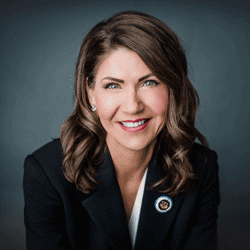
PIERRE, S.D. – Today, Governor Kristi Noem signed twelve bills into law:
Governor Noem has signed 104 bills into law this legislative session.
###
Governor Noem Signs Bill to Defend Privacy Rights of Charitable Donors
PIERRE, S.D. – Today, Governor Kristi Noem signed HB 1079, which protects the privacy rights of donors to charitable organizations, into law.
“South Dakotans should be free to give to charity without having their personal information released against their will,” continued Governor Noem. “This bill protects the privacy rights of all South Dakotans, especially those who generously give of their own treasures to support charitable organizations.”
This legislation comes in the wake of attacks on the privacy rights of charitable donors in stateslike California. Contrary to media reporting, HB 1079 will have no impact on campaign finance laws.
###
Delegation Reintroduces Bill to Allow State to Conduct Clean-Up Effort at Gilt Edge Mine
WASHINGTON — U.S. Sens. John Thune (R-S.D.) and Mike Rounds (R-S.D.) and U.S. Rep. Dusty Johnson (R-S.D.) today reintroduced the Gilt Edge Mine Conveyance Act, legislation that would authorize the state of South Dakota to purchase approximately 266 acres of U.S. Forest Service land in Lawrence County. The land transfer authorized by this legislation would allow the state to conduct a clean-up effort within the boundary of the Gilt Edge Mine superfund site once the Environmental Protection Agency completes its clean-up actions.
“This legislation would make certain that the state of South Dakota is able to manage an efficient clean-up at the mine,”said Thune, Rounds, and Johnson. “We have been working effectively with the state on this project, and we ask Congress to swiftly pass this legislation in order to fully complete this effort.”
“We appreciate the federal delegation assisting the state with the clean-up of this site,” said Ryan Brunner, state commissioner of school and public lands. “The state is responsible for managing the entire superfund site but we cannot manage or control federal property making this legislation necessary.”
###
From FoxNews, catch a preview of Governor Noem on Fox Nation Outdoors doing what so many have the opportunity to enjoy in South Dakota – Pheasant Hunting!
“For us, hunting is a way of life,” Noem told Jones. “To be here with my kids and to enjoy it is something that I think my dad, my grandpa … would all appreciate, that some things change really fast in the world today, but some things never change and that’s what’s important.”


Johnson, Biofuels Caucus Co-Chairs Introduce Legislation to Showcase Environmental Benefits of Biofuels
Washington, D.C. – Today, U.S. Representative Dusty Johnson (R-S.D.) introduced the Adopt GREET Act, a bill which would require the U.S. Environmental Protection Agency (EPA) to update its greenhouse gas modeling for ethanol and biodiesel to more accurately reflect the environmental benefits of agriculture and biofuels.
The GREET model is a tool which examines the lifecycle impacts of vehicle technologies, fuels, products, and energy systems.
“It’s time for the bureaucracy to catch up to science,” said Johnson. “We know biofuels are an integral part of protecting our environment and building up our economies in rural America. Including the entire lifecycle from a farmer’s field to the fuel pump will allow consumers across this country, and the world, to better understand the benefits biofuels offer.”
Specifically, this bill would require the EPA to adopt the Argonne National Lab’s Greenhouse Gases, Regulated Emissions, and Energy Use in Transportation (GREET) Model for both ethanol and biodiesel. EPA would also be required to update its modeling every five years or report to Congress to affirm its modeling is current or otherwise explain why no updates were made.
Johnson introduced this bill with fellow Biofuels Caucus Co-Chairs Reps. Rodney Davis (R-IL), Mark Pocan (D-WI), Adrian Smith (R-NE) and Angie Craig (D-MN). The Senate companion, S. 193, is led by Senators Thune (R-S.D.) and Klobuchar (D-MN).
This bipartisan, bicameral bill is also supported by POET, South Dakota Corn Growers Association, Growth Energy, American Coalition for Ethanol, National Corn Growers Association, and the Renewable Fuels Association.
###
From Twitter via KELOland:
BREAKING: The House State Affairs committee voted 13-0 to amend HC7001, the impeachment of Attorney General Jason Ravnsborg. The amendment halts impeachment proceedings until after a Hyde County criminal proceeding is finalized, at the earliest. https://t.co/B2TwYJG1NM
— KELOLAND News (@keloland) March 3, 2021
Apparently the State House Speaker wants to put the brakes on the articles of impeachment against Attorney General Jason Ravnsborg until the misdemeanor criminal charges have been resolved in court:
Speaker of the House Spencer Gosch will ask his fellow House State Affairs members Wednesday morning to amend a resolution calling for the impeachment of the attorney general for his role and conduct since he killed a pedestrian with his car in Hyde County last fall.
That would mean any impeachment proceedings wouldn’t take place until after the courts determine whether he’s guilty of the three misdemeanors traffic violations.
This could definitely protract this out for a while…
I’ve noticed recently that some rocks have been lobbed from writers on the left towards Governor Noem regarding the belief that the administration should be doing more for the disability community during this time of COVID, as if the Governor somehow doesn’t care or is non-responsive to the needs of those with disabilities.
At least from my own experience, I don’t believe this could be farther from the truth. And you don’t have to go back very far to prove it so. Back just before this crisis that we collectively call COVID, when families of those with Autism and other disabilities were seeking relief for expensive treatments not covered by insurance, it was Governor Kristi Noem who moved the needle.
Her hand wasn’t forced. She was not compelled by action or inaction of the legislature. But she listened, empathized and made things happen in her administration to change the status quo. And not to take anything away from her predecessors in the Governor’s office, but Kristi made things happen that had not happened before.
In 2017 after 2 years of battling out measures in the legislature against insurance carriers, Governor Daugaard signed HB1195, which was an enhancement of Autism Insurance reform previously passed to help cover payment for Applied Behavior Analysis (ABA) treatment. It was a continuation of a previous effort.. but in a way it was a baby-step, because these things never cover everyone and all insurance plans because of the patchy nature of how plans are regulated (state v federal), etc.
2018 was largely quiet on the issue.. but in 2019 during Governor Kristi Noem’s first legislative term, a new bill was back to extend that coverage to additional insurance plans under House Bill 1236. That years’ fight was to attempt to extend the protections to all insurance plans. Naturally, the insurance carriers trotted out their same arguments against it, and the bill met the same fate as when the battle was first started several years back.
But, unbeknownst to a lot of people, the fight wasn’t over. If anything, it had only begun, and it moved from the legislative venue to the battleground of Governor Noem’s administration. And things happened. Big things that Governor Noem’s administration had initiated on their own.
Shortly out of that legislative disappointment Governor Noem’s administration dropped a bomb into the discussion, and blew up the coverage question when the administration announced in April of 2019 that they had filed a proposal that has been filed which would potentially add coverage for applied behavior analysis (or ABA therapy) for children diagnosed with Autism Spectrum Disorder within certain limits for individual and small group ACA compliant health.
It may have been such a technical change to come off as wonky or gobbledygook to many – but to advocates who had been fighting to add coverage for ABA treatment it was literally a holy grail, as it added the coverage as a mandatory benefit in the individual and small group market. And as of July 2019, it was made official.
The Governor made a promise to help families of children with Autism – and this was a promise kept. And that would have simply a tremendous thing on its own. But she didn’t just end it there. In October of 2019, as Governor Noem announced…
Governor Kristi Noem, in conjunction with Avera Health Plans and Sanford Health Plan, is pleased to announce health insurance coverage options that include Applied Behavioral Analysis (ABA) therapy in the South Dakota insurance market for 2020.
“As governor and as a mom, I understand how important it is to get kids the kind of care they need,” said Noem. “After talking with parents of kids with autism and assessing the coverage options available, we recognized the need for an alternative option. I’m thrilled to announce Avera and Sanford have found a way to provide added coverage options for kids and families with autism.
Not only did Governor Noem’s administration update the Essential Health Benefits benchmark plan, the Governor took the lead to work with Avera and Sanford health plans to offer at least one option for plans to cover ABA therapy to help fill the gap in the interim.
These solutions came about because Governor Noem saw the needs from families, recognized that solutions were needed, and she acted in ways that the administration could unilaterally do so on their own, as well as acting in collaboration with insurance industry and health care partners.
And really, this is just one example, as Governor Noem continues to advocate for children as well as the families of those with disabilities, whether they are those affected by autism as my own family is, or advocating for those with Downs Syndrome as she has been active with this session.
Are advocates always going to get everything we want right away? As much as I wish it were so, I know we’re not, as we’re competing against others who seek funds, and sometimes competing interests such as the insurance industry.
It’s a give and take. That’s why we all go to the legislature, often register to lobby, and try to make the best case we can. We cheer our victories, and lament our defeats, and pick ourselves up to try, try again. But make no mistake – In the victories that I’ve watched over the past 2 years – these victories have been because Governor Kristi Noem has been interested, and actively stepped in and made solutions happen.
It has been Governor Noem whose heart has always been open for advocates listened, advocated and moved the ball down the field for those with Autism and other disabilities. Kristi Noem made it happen for families.
And I could not be happier that she is in the Governor’s office continuing to advocate and solve problems for families of those with disabilities.