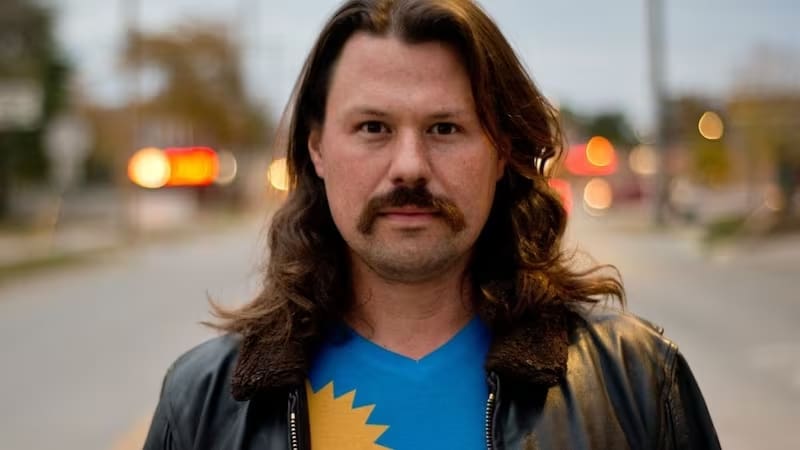
Guest Column: Yesterday’s Reporters by Sen. John Wiik. Chairman, South Dakota Republican Party

Yesterday’s Reporters
by Sen. John Wiik
Chairman, South Dakota Republican Party

I love history. Learning how things were and imagining life in decades past is a neat way to attempt to relate to life in days gone by. I couldn’t help but see the retirees at SD News Watch have the same hobbies as I have, only instead of the pioneers and the cowboys, they’re imagining 1980s journalism is still relevant in this world.

I got my start in radio news in 1986. I understand the old ways of journalism. If a state agency, city, or county government needed to get the word out about something going on, there was usually a smoke filled room full of polyester clad men ready to tell their story. In fact, they usually had contacts inside of those agencies, and these reporters would actually look through a rolodex, manually dial a number, take notes with a pen and paper, and compose a story to fill the spaces in their radio newscasts and local newspapers. Sometimes, a FAX even showed up with a press release to follow up on.

Forty years ago, that was the reality. It was pretty easy to fill up your local paper and newscasts because there was no other way to get the word out about the happenings of daily life. Then one by one, these small smoke filled newsrooms started to fade away. 5 radio stations might share one news person. The local paper probably sold its building and is printed in another state. Something had to fill that gap, and the internet and social media took over. All of those agencies can connect directly to those most interested and affected by their happenings. The middle man left, and the news moved to direct distribution. The state’s website contains more information now than those old reporters ever imagined. Open.sd.gov has the state’s checkbook on display for the world to see. The Governor and all of her department heads can reach out directly to the public any time they wish. Governor Noem and her team excel at this—she has hundreds of thousands of social media followers, and they engage with her regularly.

That can leave the Rolodex and Fax Machine crowd with a bitter taste in their mouth. How dare the Governor talk to people without them sliding their biases and slants into the stories? So once they realize no one’s calling them or even calling them back anymore, they attempt to regain relevance by attacking the Governor for not asking their permission to run the state her way. That will wake up the reporters in New York and Washington to start looking at South Dakota again for a minute.

So if SD News Watch is really wondering, there is plenty of paper left in your FAX machine—there’s just nothing left on the other end of that line.

Thune 4th most popular Senator in country; Rounds close behind at #6

South Dakota likes our Republican US Senators.

The website Morning Consult has issued it’s rankings of how popular every US Senator in the country is, and as expected, South Dakota Senators John Thune and Mike Rounds are both in the top ten.

With 63% of South Dakotans liking him, and only 26% contrarians, US Senator John Thune is #4 in the country… with only Bernie Sanders between he and Senator Mike Rounds #6 standing.

You can see the chart and Morning Consult’s entire story here.

Thune, Cardin Urge IRS to Prevent Organizations From Obtaining Tax Write-Offs for NIL Contributions

Thune, Cardin Urge IRS to Prevent Organizations From Obtaining Tax Write-Offs for NIL Contributions

WASHINGTON — U.S. Sens. John Thune (R-S.D.), ranking member of the Subcommittee on Taxation and Internal Revenue Service (IRS) Oversight, and Ben Cardin (D-Md.), a member of the Subcommittee on Taxation and IRS Oversight, today requested that the IRS and the U.S. Department of the Treasury strengthen their recent general legal advice memorandum (GLAM) on the tax-exempt status of many name, image, and likeness (NIL) collectives by providing formal guidance such as a revenue ruling. This letter coincides with the senators’ bipartisan legislation, the Athlete Opportunity and Taxpayer Integrity Act, that would prohibit individuals and organizations from using the charitable tax deduction for specific contributions that compensate college or incoming college student athletes for the use of their NIL.

“A fundamental requirement for tax-exempt status under section 501(c)(3) is that an organization must operate exclusively for a public benefit, such as a religious, charitable, scientific, or educational purpose,” wrote the senators. “The GLAM concludes that ‘many organizations that develop paid NIL opportunities for student athletes are not tax-exempt as described in section 501(c)(3) because the private benefits they provide to student athletes are not incidental both qualitatively and quantitatively to any exempt purpose furthered by that activity.’ We agree with this conclusion that many NIL collectives should not be granted tax exempt status.”

Since the recent adoption of the National Collegiate Athletic Association’s NIL rules, certain organizations, like NIL collectives, have established models that facilitate payment to current and incoming college student athletes, while claiming tax-exempt status under section 501(c)(3) of the Internal Revenue Code. In response to this development, on June 9, 2023, the IRS Office of Chief Counsel published a GLAM concluding that many tax-exempt NIL collectives’ activities are not fulfilling a tax-exempt purpose.

Full letter below:

Dear Commissioner Werfel and Assistant Secretary Batchelder:

On June 9, 2023, we were pleased to see the Internal Revenue Service (IRS) Office of Chief Counsel release general legal advice memorandum (GLAM) AM 2023-004, which concludes that certain organizations that make payments to college or incoming college student athletes for rights to their name, image, and likeness (NIL) are, in many cases, not eligible to have tax-exempt status. We appreciate the IRS’s attention to this important issue through the GLAM and urge your agencies to take the next step by adapting the GLAM’s conclusions into more formal guidance, such as a revenue ruling.

As you know, individuals and organizations can make certain contributions to college or incoming college student athletes for the use of their NIL. According to the GLAM, several of these organizations, commonly known as NIL collectives, claim tax-exempt status under section 501(c)(3) of the Internal Revenue Code. A fundamental requirement for tax-exempt status under section 501(c)(3) is that an organization must operate exclusively for a public benefit, such as a religious, charitable, scientific, or educational purpose.

The GLAM concludes that “many organizations that develop paid NIL opportunities for student athletes are not tax-exempt as described in section 501(c)(3) because the private benefits they provide to student athletes are not incidental both qualitatively and quantitatively to any exempt purpose furthered by that activity.” We agree with this conclusion that many NIL collectives should not be granted tax exempt status.

Related to these points, earlier this year we introduced the Athlete Opportunity and Taxpayer Integrity Act to protect student athletes, uphold the integrity of college athletics, and prevent the abuse of the tax code. This bill would achieve these objectives by denying charitable deductions for donations used to compensate college or incoming college student athletes for the use of their NIL, which would include donations to NIL collectives.

The GLAM is an encouraging step forward and more should be done. We respectfully request that your agencies take the next step by adapting the GLAM’s conclusions into more formal guidance, such as a revenue ruling.

Sincerely,

Still No Explanation for Leak of Gov. Noem’s Social Security Number

Still No Explanation for Leak of Gov. Noem’s Social Security Number

PIERRE, S.D. – Today, Governor Kristi Noem issued a statement on the lack of response or action from the Biden Administration or Democrats in Congress regarding the leak of her Social Security number.

“More than 6 months later, Democrats in Washington have still not addressed how they will rectify the situation where they leaked my family’s personal information, including our Social Security numbers. Attorney General Garland has not responded to our request for an investigation into this unlawful action,” said Governor Kristi Noem. “DC bureaucrats callously mishandled sensitive information, all while accusing others of the same misstep.”

Because of this leak, Governor Noem and her family have experienced hardships where nefarious actors have used their personal information illegally.

The leak was a violation of the Privacy Act of 1974. Governor Noem was notified of the leak by the Washington Post, rather than by the agencies responsible for the unlawful leak. According to that media report, the leak was a result of a document dump as the former House January 6th Select Committee wrapped up its work.

The Government Publishing Office (GPO) was the entity that published the file containing the leaked Social Security numbers. They acknowledged the leak but did not take admit fault. Their remedy was merely to offer identify theft services. They appeared to shift the blame back to the January 6th Select Committee, which “directed GPO to publish the materials referenced in their report.”

No response has been received from the January 6th Select Committee.

The National Archives stated that the leak was not their fault.

Texas Governor Greg Abbott, South Carolina Governor Henry McMaster, former Trump Administration Secretary Housing and Urban Development Dr. Ben Carson, and former Trump Administration Secretary of Health and Human Services Alex Azar also had their Social Security numbers leaked.

###

Is it me, or is the Minnehaha County GOP trying to ignore the Trump event out west.

South Dakota GOP announces President Trump coming to South Dakota for major event on July 19..


Minnehaha County Republican Party facebook, July 20 forward…

Is it me, or is the Minnehaha County GOP’s leadership actively avoiding any mention to Minnehaha County Republicans the fact that former President and front-running Republican candidate Donald Trump is coming to South Dakota on September 8?

(They must be busy planning the next rummage sale.)

Reports coming out claiming that Senator Castleberry is not likely to run again due to dispute with state over COVID funds. Will a resignation take place before January? Unfortunately, it may be unavoidable.

For the last week, I’ve been hearing reports through sources that South Dakota State Senator Jessica Castleberry is not likely to seek re-election to her District 35 Senate seat in light of the dispute she’s having with the State of South Dakota over her business receiving over $600,000 in COVID funds.

This morning, the Dakota Scout is reporting that they are hearing reports of the same rumors as well:

And since Attorney General Marty Jackley publicly called for the Pennington County legislator to return the funds or face criminal penalty, Castleberry has told numerous colleagues she will not run for the office again in 2024, according to multiple sources of The Dakota Scout.

Read that here.

I think that goes without saying that Senator Castleberry would be challenged to mount a successful campaign in light of the not insignificant fiscal demands being made of her business. There’s not a lot of businesses that have $603,000 of liquidity, especially if they had to apply for pandemic relief.  It would be challenging for anyone to run a campaign in that kind of environment.

What is not being speculated as much is whether the issue the Senator is facing will bring on a resignation prior to the next legislative session. It’s not being spoken of as yet, but as was the case with former Attorney General Jason Ravnsborg, sometimes a person has to read the room.

Go back to January of this year, and recall the Senate hearings for disgraced State Senator Julie Frye-Mueller over her harassment of a legislative employee with lewd breast sucking advice, while her lobbyist husband stood at the Senator’s side. At the time there were those questioning if expulsion might be appropriate, with the Senate finally deciding on censure, with GOP leadership continuing to ban Frye-Mueller from committee assignments.

Those hearings were over Frye-Mueller’s conduct outside of the legislative chambers, and there remains a lot of bitterness with Frye-Mueller and her ally Senator Tom Pischke over the Senate taking action. So much so that they tried to gin up false charges against most of the Senate for kicking her out of the Senate Chamber while they investigated, going so far as Pischke & Frye-Mueller holding a press conference demanding those Senators be arrested. No one in law enforcement, whether it was the Attorney General or the local states attorney took them seriously, because let’s face it. They’re idiots.  As Senate Leader Lee Schoenbeck noted at the time, “She should be embarrassed,” Schoenbeck said. “She and her bully friends need to go away and leave our workers and citizens alone.”

At the time, Senator Jessica Castleberry was one of the Senators that Frye-Mueller and Pischke were trying to demand the arrest of, according to the affidavit they were passing around, when they were shot down hard. Pischke also earned himself the boot from the Republican Legislative caucus to go along with Frye-Mueller’s dis-invitation from same.

Now think of what’s happened in the months since.  The political environment has not gotten kinder and more conciliatory. Unfortunately, that’s the environment that Senator Castleberry is stuck working with.

With the Governor herself requesting an investigation citing the “ethics of the malfeasance,” even in the best case scenario, with the guidance being issued by the South Dakota State Supreme Court that legislators could not accept COVID funds (starting page 4 here), I have the feeling that the Senate will have no choice but to take up the Castleberry issue. Even as much as Senators like Senator Castleberry personally.

Under Legislative rules, the very first item in the legislative code of conduct reads as follows:

CHAPTER 1B. LEGISLATIVE CODE OF CONDUCT

1B-1. Maintenance of ethical standards. The people of South Dakota require that their legislators maintain the highest of moral and ethical standards as such standards are essential to assure the trust, respect and confidence of our citizens. Legislators have a solemn responsibility to avoid improper behavior and refrain from conduct that is unbecoming to the Legislature or that is inconsistent with the Legislature’s ability to maintain the respect and trust of the people it serves. While it is not possible to write rules to cover every circumstance, each legislator must do everything in his or her power to deal honorably with the public and with his or her colleagues and must promote an atmosphere in which ethical behavior is readily recognized as a priority and is practiced continually, without fail.

Read that here.

Even if the over half-a-million in funds can be repaid in full, I don’t know that legislative hearings on it are avoidable. I can think of at least two who will press it, if no one else does.

I have no doubt that Senator Castleberry put the funds into her business to keep it afloat, as many businesses did during COVID. Personally, I’ve known her to be a hard working businesswoman who lives frugally, so I don’t believe any of this took place because she had greed or avarice in mind.  But the fact of the matter is that as much as she’s liked, if she is a member of the legislature in January, there will be Senate hearings, adding to the Senator’s legal troubles over accepting the funds and increasing her legal expenses in responding to the matter.

As I noted in my column in April of 2022, noting former Attorney General Jason Ravnsborg’s situation, The thing about the political life is that for 99% of people involved in it, it really isn’t forever. It will end at some point, and there will be another chapter that has nothing to do with being elected to something.  I’d say “change is hard.” And people avoid change. But I’d argue that if you see that change is coming like a freight train; if you can see that the end is coming no matter what you do, you might also do some soul searching as to “why are you prolonging something that you know is going to end?” Because sometimes it’s just better for a person’s own mental and spiritual health to just begin that next chapter.  You can’t control what other people think. But you can control what you do for yourself.

This is going to be challenging enough for Senator Castleberry to address, and it’s a crappy thing to have to deal with for her, especially considering that she believed she was in the right at the time.  But, one way or another, this is not going to be a result that remotely resembles being good. Either it ends in more than likely repayment of $603,000, or it ends in repayment of $603,000 and a public show via a Senate trial. (Let’s not say trial, and use the term conduct or ethics hearing, since it’s confusing people.-pp)

I’d hope that she chooses the path that causes herself the least amount of anguish, and allows her to address what’s taken place and to move forward.

The Hill: Thune one of two front-runners in shadow race to replace McConnell as Senate GOP Leader

As many people across the country witnessed the moment when Kentucky Senator and Senate GOP Leader Mitch McConnell lost his words during a press conference recently, speculation has run rampant as to who will be replacing Senator McConnell as Minority Leader if he steps down. As the #2 person in the Senate, South Dakota Senator and Minority Whip John Thune is one of the front runners for the position, and an article in “The Hill” goes into further detail:

McConnell’s health came back into the spotlight Wednesday when he froze midsentence while delivering his opening remarks at the weekly Republican leadership press conference and had to step away from the podium and return to his office for a few minutes to recover.

and..

The lawmaker noted that Senate Republican Whip John Thune (R-S.D.) ran the Senate floor this month during the debate and votes on the annual defense authorization bill, with his staff working in close coordination with floor staff to get agreements on amendments and resolve objections.

“Thune is running the floor, he’s running the [National Defense Authorization Act] negotiations,” the lawmaker said.

and..

The senator said the shadow race to one day replace McConnell has boiled down to Thune, Sen. John Cornyn (Texas), who previously served as Senate GOP whip, and Senate Republican Conference Chairman John Barrasso (Wyo.).

Read the entire story here.

South Dakota Republican Party newsletter features Trump Rapid City event; Wiik says Trump will “bring a message to all South Dakota Republicans”

The South Dakota Republican Party distributed the latest edition of their newsletter “The Majority Report” with “Republican Party Hosts President Donald Trump for Rally in Rapid City” splashed across the front page in anticipation of the former President’s visit to Rapid City in early September.

2023 Majority Report July 28-2 by Pat Powers on Scribd

Limited Tickets at $25 each are available by going to www.sdgop.com, or directly from the Monument at https://www.themonument.live/events/detail/trumprally.  In their e-mail sending it out, it appears the GOP may also have some exclusive VIP opportunities as well, but a person has to contact the party directly for information on those exclusive events.

Governor Kristi Noem will also be a featured speaker at the Rally on Friday September 8th at the Monument in Rapid City.

US Senator John Thune’s Weekly Column: A Strong Economy Helps Us Compete with China

A Strong Economy Helps Us Compete with China
BySen. John Thune

The threat that China poses both militarily and economically is widely recognized. I’m proud that the Senate recently passed a strong defense bill that will enable the U.S. military to better deter Chinese aggression. But we also need to compete with China from a position of economic strength, and a key part of doing that is strengthening American industry and building a more resilient economy.

There’s widespread agreement that competing with China requires stronger industry at home. But how we go about doing this matters. The president and Democrats in Congress have shown a preference for costly taxpayer subsidies for select industries. The level of government involvement in the economy they envision is a significant departure from our tested free enterprise system. And it’s worth asking, what will be the result of increased government involvement in our economy in the long term? Will it stifle innovation in our most important engines of growth? Will small businesses and start-ups be able to compete with large, government-subsidized firms?

We now know that the green energy subsidies included in Democrats’ so-called Inflation Reduction Act are largely going to large companies and often to companies based in foreign countries, including China. And the Biden administration has implemented subsidies for semiconductor manufacturers in a way that goes far beyond the scope of the program. They are giving preference to companies using union workers and, in some cases, conditioning funding on companies offering employee benefits that align with their social agenda. This is the opposite of creating a level playing field – it’s government using taxpayer dollars to pick winners and losers.

I believe that government should be focused on creating conditions in which businesses large and small can grow, innovate, and create jobs. Republicans’ 2017 tax reform provides an example of this sort of pro-growth policy at work. It lowered our sky-high corporate tax rate to make American businesses more competitive and made it easier to recover the cost of a small business, farm, or ranch investing in themselves. The result was a stronger economy with rising wages and job creation, and companies bringing production back to the United States. Republican-led tax reforms have made our economy more resilient, and making these pro-growth policies permanent would give American businesses and entrepreneurs the certainty they need to compete and grow.

We also need to resume a real and robust trade agenda. Trade opens new jobs and opportunities for American workers. It opens new markets for our agricultural products and other goods and services. And while the Biden administration has been largely inactive on trade for over two years, the rest of the world has not. In fact, China is negotiating or implementing a number of new trade agreements. It’s clear that if the United States stays on the sidelines on trade, China will be happy to fill the vacuum. So, competing with China will require that we stay engaged and lead on trade.

The United States must rise to the occasion to compete with China. We have to compete from a position of economic strength, but we won’t get there with the heavy hand of government meddling in the economy. I believe that America succeeds when innovators and entrepreneurs are empowered to do what they do best and government steps out of the way. I’ll continue to push for pro-growth policies that put us in the best position to create opportunity at home and compete around the world.

###

Congressman Dusty Johnson’s Weekly Column: Bringing Clarity to Cryptocurrency

Bringing Clarity to Cryptocurrency
By Rep. Dusty Johnson
July 28, 2023

Cryptocurrencies are confusing. Is it real money? Is it digital money? Is it worth the investment? Is it risky?

Many people see a great advantage to investing in the digital asset market. However, the past few years have been riddled with lawsuits, bankruptcies, and complications for digital asset developers and investors. Because of a lack of regulatory framework, digital asset companies encounter a higher risk of regulation-by-enforcement by the Securities and Exchange Commission (SEC). A recent District Court decision in the Ripple Labs case held that Ripple’s token, XRP, is not a security in and of itself, highlighting the fact that legislation from Congress is past due.

Every market expert I have spoken with or heard testify in the House Ag Committee says this regulatory gap needs solved so the market can innovate and thrive with certainty. Earlier this month, the House Ag Committee and House Financial Services Committee introduced a historic bill to do just that. The Financial Innovation and Technological (FIT) for the 21st Century Act is the product of months of collaboration between the two committees, bipartisan joint committee hearings, and conversations with experts.

This week, it passed with bipartisan support out of both committees. This type of collaboration is unprecedented and could be the most substantial piece of digital asset legislation in the history of Congress.

The European Union, Britain, and authoritarian countries like China have established regulatory frameworks and protections for developers which has led many digital asset companies to move overseas. I don’t own any cryptocurrency, but if we want to remain the global leader in technology and financial innovation, we have to be engaged in the area. As the Chairman of the Subcommittee on Digital Assets, I was proud to secure committee passage on this important legislation.

Both our committees will push to get this legislation on the House floor for a vote this year so we can bring clarity to cryptocurrency.

View my remarks from the Ag Committee hearing here.

###