Senate defeats ‘election integrity’ and Pillow Guy symposium measures designed to disenfranchise voters.

Remember when Julie-Frye Mueller went to the Pillow-Guy Symposium to bring things to Pierre this session?  Thankfully, the Senate put those notions down hard.

The State Senate took Frye-Mueller’s trio of election extremist measures out behind the woodshed today and put them down hard in a series of 9-0 votes, as noted on KELOland:

“This is about harassing local officials,” Republican Sen. Lee Schoenbeck said after bringing a motion to defeat SB-124. “In this case, you have a group of a half a dozen people that clearly have some kind of an obsession or fetish.”

Schoenbeck, the Senate President Pro Tempore, aimed his comments at Rick Weible, Jessica Pollema and others who call themselves the South Dakota Canvassing Group. The group played a role in Tripp County decision to hand count ballots for the 2022 election.

“This would give them the ability to take their little hobby, their obsession and fetish and give papers to these county auditors all across South Dakota,” Schoenbeck said. “Instead of working on South Dakota, local issues that the auditors are elected to do, they would be stuck trying to help these people with their fetish.”

Read the story here.

These bills would have attacked provisions protecting sex-trafficking victims, as well as people who choose to call South Dakota home. Thankfully, the madness on these measures was put down for another year.

Senate Bill 40: Where everything old is new again.

“This should reduce the danger of politicians railroading objectionable candidates onto the party to a minimum.”

Editorial, Aberdeen American News, January 1929

I was doing some research on Senate Bill 40, and the origins of our current system of how we nominate candidates for statewide office.  And it’s amazing how the issues of the past come around again.

Recognizing that in elections in days gone by that candidates for State Auditor, Treasurer, etc. were on the primary ballot in the 1928 election, but not in 1930, I pulled up some research and found some interesting commentary on why they made the changes they did at the time.

Apparently, up until that time, those candidates had been vetted exclusively by party nominating committees, and by 1929, legislators had had enough complaints that they had to do something to change the system.

From the Aberdeen American News, via Argus Leader, 22 Jan 1929, Tue  Page 6

It appears that the problem before was that the choices that ended up in front of them were not great via that party system of vetting, and “party followers are too often given the choice of voting in the fall for a candidate they do not want.”

Something that people believe we came awfully close to in the last convention, which has raised a bit of concern in our modern age.

Back then the legislature proposed taking the US Senate, Congress and Governor contests out of the party organization’s hands (unless they didn’t get 35% of the vote), as well as changing how “the State Legislative tickets and the County officials would be nominated.”  At the time, “the nomination of the balance of the ticket, together with the State Chairman and National Committeemen or women, would be left to the State convention to dispose of.”

According to the editorial, at the time, the hope was that “this should reduce the danger of politicians railroading objectionable candidates onto the party to a minimum.

Fast forward 93 years later, and we’re back examining their wisdom with the “balance of the ticket” offices that they left to the “State Convention to dispose of,” as there are those who are discovering that while those offices might not be US Senate or Governor, those elections will have an impact on our state as well.

“It is probable also that if it passes, as it probably will, that it will be found when put into effect that it contains minor defects unforeseen by the author and the legislators. We believe, however, that these defects will prove to be trivial in character and easily corrected at later sessions.”

Editorial, Aberdeen American News, January 1929

And with SB40, Legislators will have the opportunity to determine if the “minor defects” that were “unforseen” can be remedied.

The State Senate will be discussing Senate Bill 40 today during session when they convene at 2PM.

You can listen to the testimony here starting at 2..

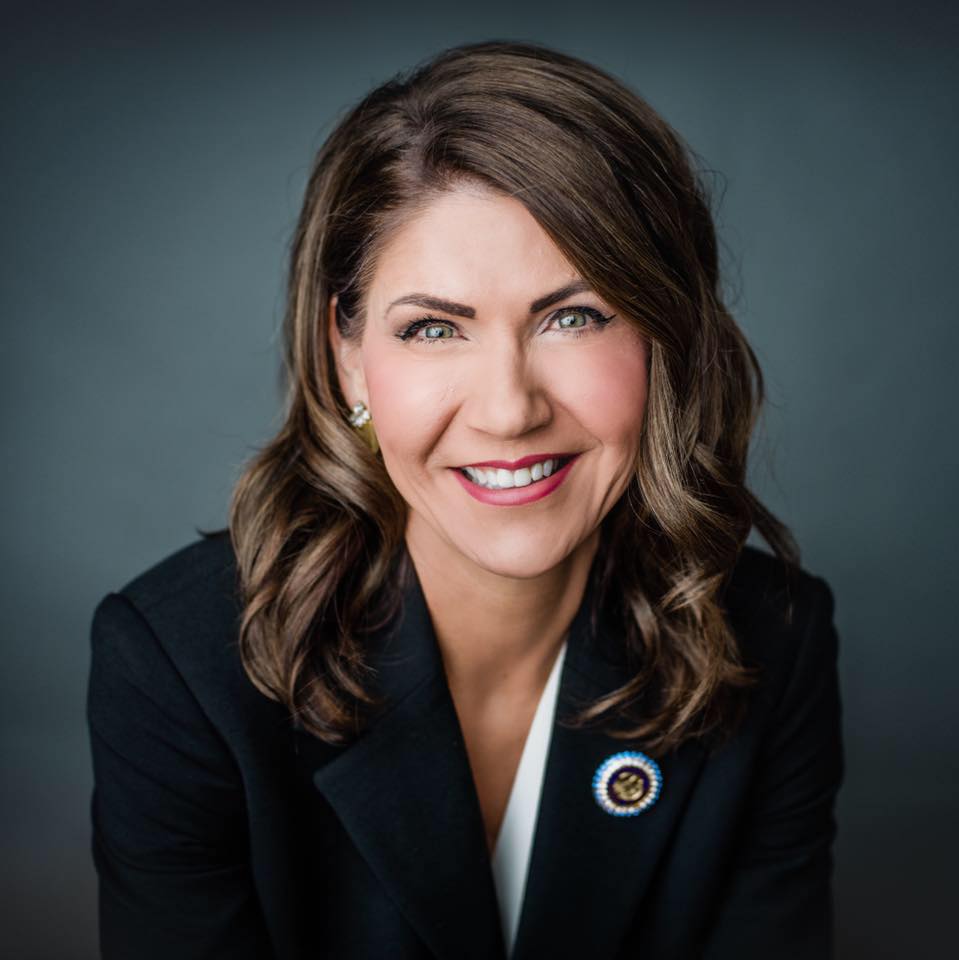
Gov. Noem to Highlight Freedom-Focused Approach to Health Policy

Gov. Noem to Highlight Freedom-Focused Approach to Health Policy

“Government and Healthcare – A Dangerous Policy Cocktail” at Cato Institute

PIERRE, S.D. – Governor Kristi Noem will highlight South Dakota’s freedom-focused approach to health policy, especially throughout the COVID-19 pandemic, at an event hosted by the Cato Institute on Thursday. The event is titled “Government and Healthcare – A Dangerous Policy Cocktail.” The event will be moderated by Cato senior fellow Dr. Jeffrey Singer.

The event will take place at 11:00 am ET on Thursday, February 16 at the Cato Institute – 1000 Massachusetts Ave. NW Washington, DC 20001.

Governor Noem was the only Governor in America who never ordered a single business or church to close or even define which businesses were “essential” or “nonessential.” In August 2020, she was the only Governor to decline President Trump’s offer of extended unemployment benefits. As a result, South Dakota has consistently ranked at the top of the nation in a wide array of economic measures since the pandemic.

WHAT: Governor Noem to highlight South Dakota’s freedom-focused approach to health policy
WHEN: 11:00 am ET on Thursday, February 16
WHERE: Cato Institute – 1000 Massachusetts Ave. NW Washington, DC 20001
LIVESTREAM: https://www.cato.org/events/government-health-care-dangerous-policy-cocktail

###

Hearing for anti-vaxxer bill providing ‘my aunt read it on facebook’ exemption devolves into slurs and name-calling. Who would have imagined?

House Bill 1035 to provide an anti-vaxxer “conscience exemption” to allow people to take a pass on COVID vaccinations if their aunt read something on facebook, predictably took a turn down the rabbit-hole in testimony provided from one of the ‘experts’ gathered to speak on the measure:

The hearing Tuesday included remote testimony from Benjamin Marble, who’s known for appearing on disgraced conspiracy theorist Alex Jones’ show to argue that Anthony Fauci, formerly the chief medical adviser to President Joe Biden, “created” COVID-19 and is “the greatest mass murderer in the history of the world.”

“Earth to poison pushers, you need to wake up,” Marble said during testimony. “These fake vaccines are far more deadly than cyanide.”

and..

“Please focus on the bill and stop the attacks, OK?” Jensen asked of Marble.

“Sure, OK. In summation, are you a retard or did God give you a brain?” Dr. Marble said.

“OK, stop, stop. You’re done. You’re done.” Jensen said.

Read the crazy here.

More on Senate Bill 40: Primary versus Convention – a comparison

As I got thinking about it in debating the merits of Senate Bill 40, which proposes to put the constitutional offices (except Lt Gov) to a vote of their party members at large, I thought it would be interesting to look at the public offices in South Dakota where we select the partisan candidates in a primary election process to represent those parties in the November election, and those we select at the Republican or Democrat State Conventions.

US Senate – Primary
US House – Primary
Governor – Primary

Lt. Gov – Convention
Atty General – Convention
Secretary of State – Convention
State Auditor – Convention
State Treasurer – Convention
School & Lands – Convention
Public Utilities Commission – Convention

State Senate – Primary
State House – Primary
Circuit Court Judge – Primary (if more than 2 for each seat)
County Commissioners – Primary
State’s Attorney – Primary
Sheriff – Primary
County Auditor – Primary (and/or county finance officer)
County Treasurer – Primary
Register of Deeds – Primary
Coroner – Primary (appointment after 2023 per HB 1057)

Did I miss any?

For public offices, we select around 15 or more in a primary process, depending on how many commissioners and judges are up in a given year.  The parties (party offices, not public) also select a National Committeeman & Woman at their respective conventions. But, the party’s Precinct Committeemen and Women, and at-large convention delegates may also be selected at primary.  And only from 1 PUC member (as we will in 2024) up to around 7 or 8 in 2026 are selected as part of the convention process.

If you think about it, the argument against the constitutional offices being decided by the voters in a primary is largely being made by precinct people.. who themselves are chosen in a primaryI imagine they would be the first people against precinct committee positions being chosen and filled by a small group of party insiders.  So we’ll see the arguments that are made when the debate is to put some statewide officeholders on the same playing field as they are. 

Food for thought.

Thune: Gigi Sohn is Unfit to Serve on the FCC

Thune: Gigi Sohn is Unfit to Serve on the FCC

“In each of her nomination hearings, Gigi Sohn has misled the Commerce Committee, and her long record of virulent partisanship and bad judgment make her unfit to serve on the FCC.”

Click here or on the picture above to watch the video.

WASHINGTON — U.S. Sen. John Thune (R-S.D.), ranking member of the Subcommittee on Communications, Media, and Broadband, today issued the following statement regarding the nomination of Gigi Sohn to serve on the Federal Communications Commission (FCC).

“Americans deserve an FCC nominee who can do his or her job impartially, regardless of the matter before the commission,” said Thune. “In each of her nomination hearings, Gigi Sohn has misled the Commerce Committee, and her long record of virulent partisanship and bad judgment make her unfit to serve on the FCC. Should her nomination come for a vote before the Commerce Committee, I will oppose it and urge my colleagues to do the same.”

Today, Thune questioned Sohn during a Senate Commerce Committee hearing about her extreme position on net neutrality and her role in leaking information that led to the collapse of a bipartisan broadband deal when working at the FCC. Thune has previously raised concerns about Sohn’s partisanship. Thune also spoke about Sohn’s partisan record during the Senate Republican leadership press conference today.

Thune’s press conference remarks below:

“One of the most important tasks that we will have over the course of the next two years is processing nominees that the president puts forward to the courts or to the executive branch of the government.

“And you would hope that these would be nominees who would be capable of carrying out the task of performing the people’s business. But that hasn’t been the case with a number of Biden administration nominees.

“In fact, there was a huge story in the last couple of weeks about a Biden nominee for a judgeship who couldn’t answer basic, simple questions about the Constitution. That performance, as a matter of fact, went viral.

“There have been nominees who have been soft on crime, anti-police, that have been put forward for important positions on the judiciary. And so, it’s important for us as the Senate to do our diligence when it comes to vetting and processing these nominees. And one that I would like to speak to is one that was before the Senate Commerce Committee this morning, and that is Gigi Sohn to be a commissioner on the Federal Communications Commission.

“Ms. Sohn is somebody who has a record of far-left activism, of rank partisanship. She has expressed disdain for Republicans, including supporting, contributing to, something we’ve never seen before, Democrats’ Senate campaigns this year. She has gone after and demonized conservative media outlets.

“She has been part of, there was a campaign back in 2016, where the then-chairman of the FCC, Tom Wheeler, asked her to leak information to the press, which scuttled a deal, a bipartisan deal, that the commission had agreed to. So, she’s just got a record of partisanship and activism that doesn’t suggest that she would be able to perform her job in a nonpartisan way and do the kind of work that we expect an agency with that kind of jurisdiction that impacts so much of our daily lives to do.

“She is somebody who should be rejected by the United States Senate, and I hope there are enough discerning Democrats out there that will come to that conclusion.

“Right now, the FCC is two-two. It’s functioning in a perfectly normal way, they’re getting things done, and putting her on the FCC would add partisanship, make it increasingly difficult, I think, for the FCC to do its job in the way the American people expect it.”

###

GOP Issues resolution against SB 40, which is up on the Senate Floor Wednesday. If the primary process is good for the county auditor, why isn’t it good for the State Auditor?

Coming on the Senate Floor on Wednesday is Senate Bill 40, which would send all statewide partisan office nominations to a primary process, just as we do for US Senate, Congress, Governor, and all legislative and county candidates.

The South Dakota Republican Party has sent out a resolution passed by the GOP back in January directing the executive Board to oppose Senate Bill 40, which eliminates the carve-out for several constitutional offices:

This comes after the Senate State Affairs Committee notes that the last Republican Convention wasn’t exactly…. representative of statewide voters as a whole in trying to foist Steve Haugaard on the Governor as a Lt. Governor in the last Republican Convention, contending that only a select few were empowered with making the selection and made it more about hard-core conservatives sending some sort of message:


Is the process that we use for every other primary candidates not good enough for (most) constitutional officers? Or is it time to put them on the same playing field as every other candidate running for partisan political office?

I don’t know. If the primary process is good enough for your County Auditor, why isn’t it good enough for the State Auditor?

Get your popcorn ready for the Senate this afternoon.

Should be interesting to watch..


Lots of disavowals on the Freedom Caucus roster. Is there anyone who didn’t get a copy?

Is there anyone who didn’t get a copy of the “alleged” Freedom Caucus roster that is going around the State Capitol like a raging case of COVID in 2022?

With this supposedly “Confidential” roster abandoned in a pile by a legislative copier, as quickly as the list was posted on a lobbyist corkboard yesterday the denials and disavowals can’t roll out fast enough.

Rep. Overweg wrote on it the piece of paper hanging up that he wasn’t part of this group. Rep. Gross and Rep. Odenbach noted not us in the comment section under my prior post.  I’d even heard that Hillary Clinton Donor Liz May has told people that she’s not involved with those guys.

If there really is a caucus in the first place, that’s got to be one of the worst membership drives I’ve ever seen.

I’m sure there will be more to come on the Free-dumb Caucus. Much more.

Welcome Safe Surgery Coalition to Advertisers Row. Please see what our advertisers have to say, and ads available.

If you hadn’t noticed the new banner ad on the website, the Safe Surgery Coalition/South Dakota Academy of Ophthalmology has joined us on advertisers row for a short time encouraging legislators to educate themselves on Senate Bill 87, and to ask House members to vote NO on the measure.  If you review their website, they note:

  • The South Dakota House of Representatives is considering Senate Bill 87 , which would put patients at risk by allowing optometrists authority to perform a wide variety of surgery on and around the eye using instruments such as scalpels and lasers.
  • Optometrists are valued members of the eye care team who provide important vision care to eye patients.  But they are not medical doctors or trained surgeons.
  •  Eye surgery should only be performed by ophthalmologists–medical doctors and trained eye surgeons who have the necessary level of medical education and clinical training.

Please click on the ad, and visit their website.

And don’t forget to check out our other advertisers including our friends at Summit Carbon Solutions supporting the ethanol industry, Governor Kristi NoemUS Senator John ThuneDusty Johnson for US Congress, and the South Dakota Republican Party!

And if you have a cause or organization you’d like to bring to the attention of our state’s decision makers, we’re down to only two or three limited advertising opportunities left for reaching South Dakota’s opinion leaders. Advertising on the Dakotwarcollege.com website is based on a first come, first serve basis for available positions.

Information on ad prices, ad positions, and ad commitments may be directed to the webmaster by clicking here.


Sioux Falls Mayor Pau TenHaken to propose new sales tax for big ideas.

Similar to Republican State Senator Al Novstrup’s multi-year push to create new taxing authority to fund county projects, Sioux Falls Mayor Paul TenHaken is in the news today, similarly looking for local taxing authority for what he terms “big idea” projects that the City of Sioux Falls does not otherwise have a dedicated revenue source to generate funds for:

“We are a low-tax state, and we do not have a lot of revenue sources,” he said as he gave potential examples. “I’m nervous, we’re talking about all this. But a baseball stadium’s $80 million, you want an indoor recreation space with 100,000 square feet, that’s $40 million. We’re at $150 million. How are we going to pay for this? No idea.”

and..

“Very tough sell in South Dakota with a very conservative legislature,” he admitted. “But I think it’s a very important thing that we have to consider. If we want to keep dreaming big, these things cost money.

Read the entire story here.

Of course, these all come at the same time Governor Kristi Noem is working to eliminate the sales tax on groceries, among several other efforts to decrease taxes.

Should the South Dakota state legislature be giving more taxation authority to lower levels of government? Or not?