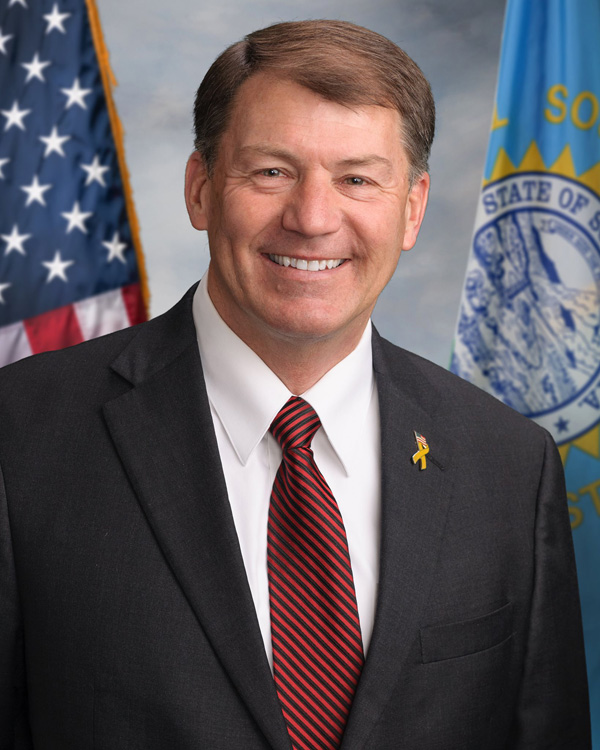
Aberdeen democrat Brian Bengs files FEC paperwork to run against John Thune for US Senate

From the Federal Elections Commission, it appears that Democrats have a candidate for US Senate.

Brian Bengs, a former assistant professor at Northern, has filed paperwork to run against US Senator John Thune:

Brian Bengs Fec by Pat Powers on Scribd

Bengs has also posted a linked-in page for his candidacy, where he labels himself as an “Independent thinker, former professor, attorney, U.S. Navy veteran and U.S. Air Force retiree,” and he has a facebook page up noting he’s a political candidate, but that’s about it at the moment.

Thune Joins Colleagues in Introducing Legislation to Put Patients Over Paperwork

Thune Joins Colleagues in Introducing Legislation to Put Patients Over Paperwork

“I’m proud to support this bipartisan legislation that makes health care more efficient and patient-centered.”

WASHINGTON — U.S. Sens. John Thune (R-S.D.), Roger Marshall, M.D. (R-Kans.), and Kyrsten Sinema (D-Ariz.) yesterday introduced the Improving Seniors’ Timely Access to Care Act, bipartisan legislation that would improve timely access to quality care for seniors under Medicare Advantage (MA). Specifically, the bill would modernize the way MA plans and health care providers use prior authorization. This legislation addresses the top administrative issue for physicians, and it will make the delivery of health care more patient- and doctor-friendly.

“I’m proud to support this bipartisan legislation that makes health care more efficient and patient-centered,” said Thune. “By implementing electronic prior authorization, providers are able to reduce delays and help seniors in South Dakota get quicker access to the treatment and care they need.”

The Improving Seniors’ Timely Access to Care Act has gained support from more than 320 national and state organizations representing patients, health care providers, medical device manufacturers, and health IT companies across the country.

“The bill is a carefully crafted, bipartisan work product that reflects significant input from all direct stakeholders,” said Katie Orrico, senior vice president for health policy and advocacy at the American Association of Neurological Surgeons/Congress of Neurological Surgeons and leader of the Regulatory Relief Coalition. “The congressional team behind this bill focused on transparency, oversight, and modernization of the Medicare Advantage program to benefit patients and the providers and health plans who serve them. We eagerly await congressional action.  The bill is ready for the finish line.”

“Physicians know the best treatment for our patients but they’re often not the ones making the final decision due to artificial barriers constructed by insurance companies,” said Gerald E. Harmon, president of the American Medical Association. “The time delays and administrative burdens associated with prior authorization continue to undermine our patients’ health. Nearly a third of physician respondents to a 2020 AMA survey reported that prior authorization led to a serious adverse event — such as hospitalization, medical intervention to prevent permanent impairment, or even disability or death — for a patient in their care. The AMA thanks Senators Marshall, Sinema, and Thune for putting patients first by introducing the Improving Seniors’ Timely Access to Care Act, which would simplify and streamline the prior authorization processes in Medicare Advantage.”

“Hospitals and health systems strongly support the Improving Seniors’ Timely Access to Care Act because physicians, nurses and other providers of care should be able to spend their time on patients, not burdensome paperwork,” said Stacey Hughes, executive vice president at the American Hospital Association. “Efforts to streamline and standardize prior authorization are long overdue. Used appropriately, prior authorization can be a helpful tool for ensuring patients receive the right treatment, but too often the process results in delayed care, clinician burnout and unnecessary waste in the health care system. The AHA is eager to continue to work with Senators Marshall, Sinema and Thune to make improvements to the prior authorization process that protect patients.”

Prior authorization is a tool used by health plans to reduce spending from improper payments and unnecessary care by requiring physicians and other health care providers to get pre-approval for medical services. The current system of unconfirmed faxes of a patient’s medical information or phone calls by clinicians takes precious time away from delivering quality and timely care. Prior authorization continues to be the top administrative burden identified by health care providers, and nearly four out of five MA enrollees are subject to unnecessary delays. In recent years, the Office of the Inspector General at the U.S. Department of Health and Human Services raised concerns after an audit revealed that MA plans ultimately approved 75 percent of requests that were originally denied.

Health plans, health care providers, and patients agree that the prior authorization process must be improved to better serve patients and reduce unnecessary administrative burdens for clinicians. In fact, leading health care organizations released a consensus statement to address some of the most pressing concerns associated with prior authorization. Building on these principles, the bipartisan legislation would:

  • Establish an electronic prior authorization process that would streamline approvals and denials;
  • Establish national standards for clinical documents that would reduce administrative burdens on health care providers and MA plans;
  • Create a process for real-time decisions for certain items and services that are routinely approved;
  • Increase transparency that would improve communication channels and utilization between MA plans, health care providers, and patients;
  • Ensure appropriate care by encouraging MA plans to adopt policies that adhere to evidence-based guidelines; and
  • Require beneficiary protections that would ensure the electronic prior authorization serves seniors first.

The House companion, led by U.S. Rep. Suzan DelBene (D-Wash.), Mike Kelly (R-Pa.), Ami Bera, M.D. (D-Calif.), and Larry Bucshon, M.D. (R-Ind.), was reintroduced in May.

###

South Dakota Family Heritage Alliance appears to add Political Action Committee which may “recruit and train challengers” to current legislators.

Last month, it appears that the South Dakota Family Heritage Alliance quietly added another organization to their portfolio and filed the creation of a state Political Action Committee headed by former Commissioner of School & Public Lands Tim Amdahl:

Standforthefamily_sdcfdisclosure by Pat Powers on Scribd

Or at least, it added While FHA isn’t named directly on the filing for Stand for the Family South Dakota PAC, it shares an address. In speaking with FHA Director Norman Woods, he notes that the PAC has permission to use the FHA office as it’s headquarters, and that..

The PAC will focus on protecting incumbents who have stood strong for family values, recruiting and training challengers if the current representation is not standing strong, and highlighting the strongest candidate when there are multiple people running for an open seat.

And, Norman also provided a note from PAC President Tim Amdahl, which noted:

“Here in South Dakota there is a need for more people to rally behind the Legislators that are protecting family values. Whether it’s helping current Legislators who are fighting hard or training new candidates when they are needed, the PAC will focus on supporting those who stand for the family here in South Dakota.”

Add this group to several others who are possibly recruiting and running candidates in the upcoming election.

Slightly cleaned up Blackbird proposed Sioux Falls Legislative map

If you’ve been watching redistricting, you’re aware that the Senate Blackbird map seems to be the primary map that’s moving forward. And you’re also aware that the maps that are being provided to the public don’t exactly have a lot of detail.

So, based on overlaying that map over the existing map, I’ve “eyeballed” and roughed out where the lines appear to lay, and what the Sioux Falls districts may be looking like in a month or so. (And if there are little splotches in the middle of a color area, it’s just not me filling in every polygon)

Cap Journal covering how both political parties looking at redistricting. Blackbird seems to have the focus

The Pierre Capital Journal has a story on redistricting today where they’ve reached out to the two political parties on redistricting, and ask what their goals are for the redistricting process:

South Dakota Democratic Party Executive Director Berk Ehrmantraut told the Capital Journal that minority representation, particularly among Native Americans, is the party’s biggest point of concern.

“I think Democrats are open to working with Republicans on the Blackbird map where we can,” Ehrmantraut said. “…We’ve seen significant issues with Census undercount in places like District 26 and District 27. I think there’s room for the Legislature to accommodate for that and provide some additional flexibility on the 5 percent up, 5 percent down rule. We know that representing minority voices is also an important consideration for drawing these maps.”

State Democrats want the legislature to deviate from the 5% deviance guidelines they’ve set to benefit minorities.  And the State GOP?

In a statement to the Capital Journal, South Dakota Republican Party Chair Dan Lederman noted that his party itself is “not a participant in the process, nor are we being consulted, as it should be.”

“Like any other state resident, we’re encouraging our legislators to come together to draw district lines that provide fair and equitable representation in a process that’s transparent for all South Dakotans,” Lederman said. “As both the House and the Senate have been travelling around the state and gaining local input as they work out their respective plans, it’s a testament to the fact that redistricting as currently provided for in the State Constitution is a system that works just fine as is, and the state does not need special interest groups monkeying around with the redistricting system, creating star-chambers who are responsible to none.”

And the SDGOP notes “we’re not a participant in the process” and are not supposed to be, legislators are supposed to follow the constitution!

Blackbird 222129 by Pat Powers on Scribd

Interesting though, that the blackbird map is the one that both parties are focusing on, which might be the biggest clue to the direction that redistricting is going.

Thune Demands Answers on Supply Chain Crisis, Presses Biden Nominees

Thune Demands Answers on Supply Chain Crisis, Presses Biden Nominees

“This inefficiency has downstream effects on commodity prices, hurting farmers and ranchers across the country, including in South Dakota.”

Click here or on the picture above to watch the video.

WASHINGTON — U.S. Sen. John Thune (R-S.D.) today questioned several Biden nominees about the unprecedented supply chain crisis in the United States. Thune emphasized that these massive backlogs at American ports are hurting farmers and ranchers in South Dakota and negatively affecting commodity prices.

Johnson Leads Effort to Provide Pricing Leverage to Cattle Producers

Johnson Leads Effort to Provide Pricing Leverage to Cattle Producers

Washington, D.C. – Today, Ranking Member of the Livestock & Foreign Agriculture Subcommittee Dusty Johnson (R-S.D) and Representative Henry Cuellar (D-TX-28) introduced the bipartisan Cattle Contract Library Act of 2021 (H.R. 5609), which would create a library for cattle contracts within the U.S. Department of Agriculture’s (USDA’s) Agriculture Marketing Service Department. Currently, cattlemen are unaware of contract terms being offered by packers, leading to a decline in leverage for smaller producers during price negotiations.

Currently, USDA maintains a pork contract library, and following significant volatility in the cattle market and the release of the July 2020 Boxed Beef & Fed Cattle Price Spread Investigation Report, the creation of a library was recommended by experts and stakeholders. In response to this investigation, Johnson introduced sweeping cattle reform legislation to provide more transparency in the market, including the creation of a contract library.

“Producers have been asking for increased transparency and leverage in the cattle market for years, the Cattle Contract Library Act will provide granular data in near real time, ensuring producers understand the value of marketing agreements,” said Johnson. “Data drives marketing decisions and a contract library will provide much-needed leverage for independent producers.”

“Throughout my time in Congress, I have worked hard to ensure the success of the agriculture industry—one that is a critical facet of our nation’s economy. The bipartisan Cattle Contract Library Act will further this agenda through the creation of a contract library that will provide cost transparency in the cattle market,” said Cuellar. “We must support all of our cattle businesses, including our small producers, who are indispensable for our country’s food supply chain. I thank Rep. Johnson for his leadership on this critical legislation for Texas farmers, ranchers, and the agriculture industry as a whole.”

Johnson has been a leader on cattle market reform since 2019 and has worked to secure a number of legislative priorities for producers. In July, USDA implemented two of Johnson’s bills aimed at increasing capacity space for small producers and curbing steep overtime fees small processing facilities incurred during the peak of the COVID-19 pandemic.

“After months of record-breaking drought and volatile markets, ranchers in South Dakota and across the country are struggling to get by. We need to act,” said National Cattleman’s Beef Association Vice President and South Dakota Rancher Todd Wilkinson. “As we heard during the recent hearing in the House Agriculture Committee, the cattle contract library is a popular and necessary element of the broader push to bring relief to cattle producers. It would equip our producers with the data they need to make competitive marketing decisions and exert leverage in negotiations with the packers, and it would also serve as an oversight tool. NCBA thanks Congressman Johnson and Congressman Cuellar for their urgent efforts to stand up for ranchers and bring greater transparency to the beef supply chain.”

“The U.S. Cattlemen’s Association would like to thank Rep. Dusty Johnson and his team for continuing to push forward with meaningful changes to the Livestock Mandatory Reporting (LMR) program that will increase transparency in the cattle marketplace,” said U.S. Cattlemen’s Association Vice President Justin Tupper. “A cattle contract library is sorely needed, and this bill is one step closer to bringing that concept to fruition.”

“Market transparency is a critical component of price discovery in cattle marketing. As the industry has evolved, most sales are now taking place through alternative market agreements,” said South Dakota Cattlemen’s Association President Eric Jennings. “We need a contract library to create transparency in those agreements to achieve better price discovery in the live cattle market. The South Dakota Cattlemen’s Association has been advocating for a contract library and we applaud and thank Representative Johnson for putting forth the legislation to fill this need.”

“In meetings with ranchers and feeders across the state, there is agreement that we need cattle market transparency, including reporting details of all cattle marketing arrangements,” said South Dakota Farm Bureau President Scott VanderWal. “The Cattle Contract Library is common sense and I hope we can get it quickly moved out of committee and passed in the House.”

The Cattle Contract Library Act is cosponsored by Reps. Tracey Mann (R-KS-01), Frank Lucas (R-OK-03), Rick Allen (R-GA-12), Ashley Hinson (R-IA-01), Kelly Armstrong (N.D.-AL), Jason Smith (R-MO-08), Trent Kelly (R-MS-01), Michelle Fischbach (R-MN-07), Angie Craig (D-MN-02), Mariannette Miller-Meeks (R-IA-02), Jim Hagedorn (R-MN-01), David Rouzer (R-NC-07), Vicky Hartzler (R-MO-04), Adrian Smith (R-NE-3), Abigail Spanberger (D-VA-07), and Darren Soto (R-FL-09).

The Cattle Contract Library Act of 2021 is supported by the American Farm Bureau Federation, National, Cattlemen’s Beef Association, U.S. Cattlemen’s Association, National Farmers Union, Livestock Marketing Association, SD Cattlemen’s Association, South Dakota Farm Bureau, and the South Dakota Farmers Union.

Read the full bill here and the one-pager here.

###

Anti-vaccination group calling for rally at State Capitol during special session

A group that testified in favor of a bill in 2020 to make it a criminal offense to mandate teachers be vaccinated against measles and smallpox is coming back to Pierre during the special session for a rally to oppose the federal government mandating anti-COVID vaccinations for large employers and those doing business with the federal government.

Anti-vaxxer group “Health Freedom South Dakota,” who most recently held protests across the street from Sanford Hospital in September has announced a rally to be held at the State Capitol on November 8th.

In checking with the State of South Dakota, no rally or event of this nature has been registered to take place on state property as of earlier this week, so they may be holding their rally on the sidewalk in front of the building.

The group had previously advocated for a special session to be called to consider legislation proposed by several House members, however, Governor Kristi Noem had rejected convening the legislature for that purpose, as well as opposing such legislation.

Governor Noem has expressed her opposition to mandates from the federal government, and has taken the position that it is similarly not the duty of State Government to interfere in the employer/employee relationship to tell businesses what they can and cannot require of employees when it comes to vaccinations.