5 Questions with— Brigham McCown, former administrator of the Pipeline and Hazardous Materials Safety Administration (PHMSA)

As the battles over pipelines continue in South Dakota, and advocacy group spring up on either side, I had the opportunity this week to sit down with a true expert on pipeline safety.

Brigham McCown has seen pipelines from all sides, and is one of the parties who has provided information as part of the PUC hearing on the Summit Carbon pipeline.  Tremendously well versed on pipelines, Mc Cown is President & CEO of Noveau, a regulators consulting firm, founder of the non-partisan group Alliance for Innovation and Infrastructure, an adjunct Professor with Miami University teaching business and regulatory law, and a Senior Fellow at Hudson Institute.

But he’s not some wonky professor from the coast – he’s a Midwesterner himself, and a retired Naval officer. He’s worked his entire life in the transportation sector; first in the military, then as a regulatory attorney, later still as a federal regulator, and ultimately as a pipeline operator.

McCown was the first acting administrator and first deputy administrator of the Pipeline and Hazardous Materials Safety Administration (PHMSA), and served as an advisor to the 2016 presidential transition as a core member of the president-elect Donald Trump’s infrastructure policy and agency action teams.

In other words, he knows what he’s talking about inside/out when it comes to energy transportation. And he’s very big on pipelines, referring to them as “the unsung hero of the economy.”  As McCown told me, he’s had the opportunity to see it from all sides, and it’s an important topic.

So, with that introduction, here are 5 questions with pipeline expert Brigham McCown:

One of the special interest groups opposing the pipelines, Dakota Rural Action, tells its followers that “CCS (Carbon Capture & Sequestration) is a Dangerous and failed technology.” How old is this technology, and how long has this been used in practice?

The technology for carbon capture & sequestration has actually been around for 50 years, and is is improving all the time. In Europe, such as Germany, the UK, they’re very excited for this technology to capture and sequester carbon. In their view, if we have to change the way we do business, we can’t get from today’s types of energy production without intermediary steps, as we continue to rely on existing sources while we add new ones into the mix.

Carbon capture has implications for other industries besides ethanol, such as hooking up pipelines to large plants for steel and concrete. There’s worldwide recognition that the carbon capture technology is critical for the future.

Going back to some of the rhetoric, opponents also claim that people have been “gassed and poisoned in their own homes,” which comes off to me as a lot of fear-mongering.  Have there been any fatalities during all this time?

No one in the US, and I don’t believe anyone in the world, has ever died as a result of a broken CO2 pipeline.  There is a single pipeline break that opponents cite heavily, where there were people treated for exposure as a result of the break in Mississippi.  However, the pipeline was one that piped CO2 and Hydrogen Sulfide together, and the injuries were from the Hydrogen Sulfide. That’s not being done in this project.

The break in that pipeline was as a result of the pipeline operator not doing their geology correctly, as the ground shifted from heavy rainfall.

How safe are CO2 pipelines in comparison to another pipeline, such as natural gas?  In South Dakota,  I believe we have four natural gas pipelines, and I don’t believe they’ve received the same level of anti-pipeline sentiment or pushback that CO2 pipelines do. Why is a pipeline better than rail or truck?  Are those even practical for CO2?

For transporting materials, if a CO2 pipeline is a 1 out of 10 for a risk, trains are at a 15/10, and off the scale for the risk of something happening along the transport route. 

When looking at pipelines, you have those that transport HVL’s – Highly volatile liquids. That’s your natural gas, etcetera, that are explosive or flammable.  You don’t have those same issues with CO2 pipelines, and it’s considered safe. This is a product currently being released in the air as part of production. 

When there are issues with pipelines, it is typically because someone dug where they weren’t supposed to, and they hit a pipeline.  I’m proud to note that while at PHMSA, I introduced the national 811 system to help prevent pipeline damage.

Arguments over setbacks pushed by opponents arguments about safety are a big part of what is happening in South Dakota right now in terms of the Summit Project. Can you provide more background?

Setbacks are designed to keep people away from pipelines, not pipelines away from people.  When pipeline routes are planned, regulations and safety concerns dictate that when creating routes, planners avoid houses and buildings are much as you can.

As opponents go to counties to create ordinances try to dictate setbacks, claiming they are improving safety, they need to understand that county ordinances are going to fail, as it is settled law that only the Federal Government, such as through PHMSA and the Department of Transportation have exclusive jurisdiction when it comes to pipeline safety.  In Iowa, under 2 different cases, county ordinances were pre-empted, and it was specifically cited by the judge that counties can’t use the safety argument.

Any other thoughts when it comes to Carbon Capture Pipelines and the debates we’re currently having in South Dakota?

As I’ve taught in my US Energy Policy Class, pipelines are the unsung hero of the economy, and often taken for granted. In South Dakota, the Summit Pipeline will provide free money for counties, which can have a significant positive impact for their budget for rural counties with a limited tax base. 

People should understand that the world’s energy mix will change over time. The concern is to provide as much as we need, and to keep it affordable.  Ethanol has an important role to play. And more importantly, the Summit CC&S pipeline will extend the ramp for ethanol’s longevity, and keep it around for generations.

And there you have it. Thank you to Mr. McCown for a very informative and interesting discussion!

Senator Thune, others criticize Trump claim that immigrants are “poisoning the blood of our country”

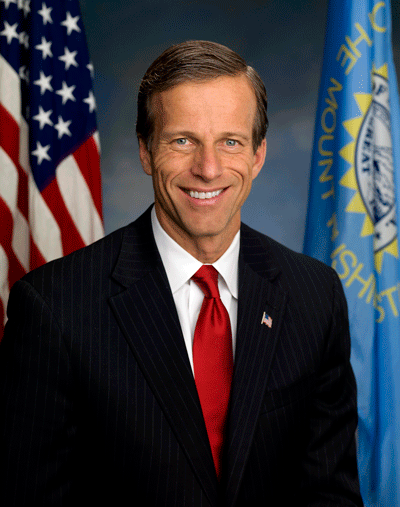
From The Hill late this afternoon, South Dakota Senator John Thune and others are calling out former President Trump’s attack on immigrants, where he claimed that immigrants are “poisoning the blood of our country”:

Asked about Trump’s controversial comments, which have drawn comparison to Nazi rhetoric before and during World War II, McConnell pointed out the hypocrisy of the remarks.

“It strikes me that didn’t bother him when he appointed Elaine Chao the secretary of Transportation,” he said.

and..

Other Senate Republicans have recoiled at Trump’s racially-charged language that immigrants are poisoning the country’s blood.

“My grandfather was an immigrant, so I don’t agree with that sentiment,” said Senate Republican Whip John Thune (S.D.). 

Read the entire story here.

Given that 9/10 of us or more had family members emigrate to our country at one time or another (Even President Trump), this statement might be one of the dumber things Trump has said. We can largely agree that illegal immigration is a problem that needs to be addressed by the government, but that kind of statement is not good for our nation.

Release: Summit Carbon Solutions Signs 80 Percent of North Dakota Landowners 

Summit Carbon Solutions Signs 80 Percent of North Dakota Landowners 

Since implementing reroutes, the company surpasses previous ROW achievements

AMES, IA (December 19, 2023) — Summit Carbon Solutions announces today it has acquired 80% of the Right-of-Way (ROW) needed for its proposed carbon capture, transport, and storage project across North Dakota. This significant milestone comes after the Public Service Commission (PSC) initially denied the Company’s permit, prompting the company to undertake extensive rerouting.

“Our team is dedicated to working with landowners to address concerns and reach a mutually agreeable path,” said CEO Lee Blank. “This has led to a higher percentage of ROW acquisition, reflecting our commitment to progress and community partnership.”

Following the denial of Summit’s application by the PSC, Summit completed multiple reroutes in Burleigh, Emmons, and Dickey counties. Even considering the addition of 12 miles to the route, the Summit team has successfully acquired about 80% of the North Dakota route, and continues to work with landowners every day to reach a solution that works for both Summit and the landowner.

“Working with the Summit team was fair and mutually beneficial. This partnership is important to us, as it’s a good thing for our land now and in the years to come,” said Bruce Speich, a Milnor ND landowner. “Together, we’re making a big difference for the future of agriculture and energy in North Dakota.”

As Summit continues to listen to everyone’s input, and work with landowners, community members, and permitting bodies, the company remains committed to respectful and transparent engagement with all stakeholders. Summit believes that this project aligns with the long-term vision that North Dakota has for its energy and agricultural sectors.

###

Summit Carbon Solutions is driving the future of agriculture by expanding economic opportunities for ethanol producers, strengthening the marketplace for Midwest-based farmers, and creating jobs. In developing the largest carbon capture and storage project in the world, the company seeks to connect industrial facilities via strategic infrastructure to store carbon dioxide safely and permanently in the Midwest United States. More information, visit: www.SummitCarbonSolutions.com.


Minnehaha Co Commissioner Kippley on Auditor Leah Anderson: “An Embarassment”

At least one Minnehaha County Commissioner is calling out County Auditor Leah Anderson for her circus-like approach to elected office, as Minnehaha County Commissioner Joe Kippley calls out Anderson as “embarassing.”

A Minnehaha County commissioner criticized county Auditor Leah Anderson Tuesday, calling her behavior an embarrassment to the county.

Commissioner Joe Kippley was reacting to Anderson’s request two weeks ago for a pay increase amid news that Anderson allowed her supporters to secretly sit in on a phone call with staff from the Secretary of State’s Office and officials with Election Systems & Software, the company that is the vendor for the software used in vote tabulating machines.

and..

Kippley accused Anderson of stoking conspiracy theories about election integrity and “burning down” the institution from within. He said that other local election officials have “grave concerns” about next year’s elections given her performance in office.

Read the entire story here at the Dakota Scout.

Commissioners have the power of the purse, and should make sure they exercise it when it comes to Anderson’s antics…

Retired Lake Co. Sheriff Tim Walburg to run for House as Republican in District 8

The Madison Daily Leader has a story on their website noting that the recently retired Lake County Sheriff Tim Walburg is going to be a candidate for State House in District 8:

Walburg has dedicated decades of his life to serving his community. For 30 years, his law enforcement career included service as a correctional officer, deputy sheriff, assistant police chief and chief deputy. In 2012, he was appointed Lake County sheriff and retired earlier this year. Walburg also has 30 years of experience in emergency medical services, including 18 years at Madison Regional Health Systems, where he currently serves as a paramedic. Walburg has been active in the community, serving as a member of the Madison Housing and Redevelopment Commission for Lake, Miner and McCook counties, the Trinity Lutheran Church council and the Community Counseling board of directors.

Walburg has achieved success working with lawmakers in Pierre. He was an active member of the South Dakota Sheriffs Association, including serving as the association’s president in 2022.

Read the entire story here.

This expands both D8 races into primary elections, with both the Republican House and Senate seats now facing contested ballots on June 4, 2024:

District 8 State Senate:

Casey Crabtree (R – Incumbent)
Patty Shiery (R)

District 8 House:

Matt Wagner (R)
Rick Weible (R)
Tim Walburg (R)
Tim Reisch (R-Incumbent)

Stay tuned!

Former Gubernatorial Democrat candidate Jamie Smith to run for D15 Senate

It appears that State Dems intend to try to run a stronger candidate in District 15 Senate than Linda Duba, as Jamie Smith announces he’s going to run after losing to Governor Noem:

The 52-year-old teacher-turned-realtor has stayed active within the South Dakota Democratic Party since falling short in his challenge against the governor during the last election cycle when Noem cruised to reelection. His decision to run for the Legislature again comes amid much uncertainty for District 15, a Democratic stranglehold in the last decade.

Read that in the Dakota Scout.

District 15 used to be a Democrat District.. but since redistricting, it is not. Now, it just depends on who steps forward on the side of the GOP to run.

At the very least, the opposition research is already done for the fall.

Attorney General Jackley Releases 2024 Legislative Package

Attorney General Jackley Releases 2024 Legislative Package

PIERRE, S.D. – South Dakota Attorney General Marty Jackley announces that the Attorney General’s Office’s proposed legislative package for 2024 features five bills including separate legislation to regulate the drug Xylazine, add fentanyl protections, and make Artificial Intelligence Generated Child Pornography a felony crime.

“This is a proactive legislative package designed to protect South Dakotans, especially the most vulnerable,” said Attorney General Jackley. “We look forward to working with the Governor and legislators on securing passage of these bills this session.”

The bills are: 

1.    An Act to Regulate Xylazine.

The Attorney General’s Office and the state Department of Health will jointly introduce the bill. The draft legislation would criminalize the use and possession of Xylazine. The proposal also would add the drug to the state statute that criminalizes the possession of multiple controlled substances.

Because Xylazine is not an opioid, the use of Narcan by law enforcement is not effective in dealing with a person suffering from an overdose.

“Xylazine is important for veterinary uses and will remain available for those intended uses, but human consumption has led to overdoses and deaths,” said Attorney General Jackley. “This drug is dangerously being mixed with fentanyl by drug distributors.”

2.    An Act to regulate Artificial Intelligence (AI) generated child pornography. 

The proposal would revise certain definitions to the current child pornography laws and criminalizes the possession, manufacturing, or distributing of child pornography to include Artificial Intelligence (AI) generated image and videos. That would include “deepfake” images or videos of an actual child that have been manipulated to make it look like the subject is a child engaged in prohibited sexual acts and AI-generated images that do not depict any actual person but are created to look like a child engaged in prohibited sexual acts.

“Artificial Intelligence can do great things, but there is potential for serious harm that we are now experiencing with several investigations in South Dakota,” said Attorney General Jackley.  “That harm is real with ‘deepfakes’ that include the use of real children’s voices and photographs taken from social media to create computer generated child porn.”

3.    An Act to modify the sex offender registry.

South Dakota’s sex offender registry has three tiers of offenders. Tier 1 includes those offenders who have been convicted of having sexual contact with a person under legal age while being 21 years old or younger themselves.

One current state statute indicates that a Tier 1 sex offender registrant must remain on the sex offender registry for a minimum of 10 years while a second current statute sets the minimum time at five years. Attorney General Jackley recommends 10 years as the minimum amount of time for someone to remain on the registry before removal.

“This bill would strengthen the registry to protect the public and remove the confusion about how long a Tier 1 registrant must remain on the sex offender registry,” said the Attorney General.

4.    An Act to modify the membership of the open meetings commission.

The South Dakota Open Meetings Commission was created in 2004 to consider possible violations of the state’s open meeting law. The commission currently consists of five State’s Attorneys appointed by the Attorney General.

Current state law only allows for State’s Attorneys to serve on the commission. This revision would allow Deputy State’s Attorneys, who are equally qualified, to serve on the commission.

5. An Act to modify the 24/7 participation in fentanyl testing.

South Dakota’s 24/7 program is a voluntary offender pay program aimed at keeping participants sober and protecting the public. A participant in the 24/7 program who wears a drug patch currently pays a user fee of $50 for each drug patch that is attached.

The new patches cost more than that with the increased cost of fentanyl testing. This proposal would raise the fee to no more than $70 for each drug patch that is attached.

“Fentanyl use is a growing concern in South Dakota, and preventive testing is important to public health and safety,” said Attorney General Jackley.

All five bills will be filed with the state Legislative Research Council prior to the legislative session starting Jan. 9, 2024.


-30-

Attorney General’s Brief in Governor Noem’s request for an advisory opinion

The South Dakota Attorney General has released his brief provided to the South Dakota Supreme Court in reference to Governor Noem’s request for an advisory opinion, on what constitutes a conflict of interest between a legislator and the state of South Dakota under Article 3 of the constitution.

In case you were looking for some white reading this afternoon…

NoemopinionSCTbrf Filed 12-15-23 by Pat Powers on Scribd

Johnson Secures South Dakota Wins in Annual Defense Bill

Johnson Secures South Dakota Wins in Annual Defense Bill

Washington, D.C. – Today, the House passed the 2024 National Defense Authorization Act (NDAA) with two bills led by U.S. Representative Dusty Johnson (R-S.D.). One provision would create a congressional charter for the National American Indian Veterans (NAIV) organization, while another bans the use of LOGINK, a Chinese Communist Party (CCP) state-controlled shipping platform, at U.S. ports. The NDAA now heads to the president’s desk.

The NDAA also includes:

  • $395 million for construction projects at Ellsworth Air Force Base.
  • $2.325 billion for B-21 procurement.
  • $5.25 million to complete the construction of the National Guard Readiness Center in Sioux Falls.
  • A 5.2% pay raise for troops – the largest pay raise in over 20 years.

“South Dakota and our troops will certainly benefit from the NDAA,” said Johnson. “Our military will be stronger and our nation will be more secure. I’m proud of the work done to support our state.”

In March, Johnson introduced legislation to ban LOGINK. Read the full amendment text here.

Johnson’s NAIV legislation was introduced in May. U.S. Senators John Thune (R-S.D.) and Mike Rounds (R-S.D.) introduced companion legislation in the Senate. Read the full amendment text here.

###

Argus notes Democrats criticizing Minnehaha Auditor. Sorry, but it’s not just Democrats.

The Argus has an article today on members of the Democrat Party criticizing the Minnehaha County Auditor over her recent actions, as she intentionally erodes confidence in how County Auditors conduct elections:

“It is inappropriate for the Minnehaha County Auditor to sow distrust in the integrity of state and local elections in concert with private groups focused on spreading consistently debunked conspiracy theories,” said Minnehaha County Democratic Party Chair Erik Muckey in a statement released Wednesday by the South Dakota Democratic Party. “Minnehaha County residents should know that our elections have been, and will continue to be, secure regardless of the Minnehaha County Auditor’s personal beliefs.”

and..

Anderson concluded the call by revealing that unbeknownst to the other participants, a group of nearly two dozen of her supporters had been listening in.

and..

One of those supporters was Rick Weible, a candidate for a District 8 House seat who the next day spent an hour praising Anderson and Mathis to Brannon Howse on “The Lindell Report” while talking about clips from the call.

The show’s namesake, MyPillow CEO Mike Lindell, recently said he was no longer able to pay his lawyers to represent him in a $1.3 billion defamation lawsuit brought by voting machine companies Smartmatic and Dominion Voting Systems.

Read the entire story here.

I don’t think it’s a partisan position to think the Auditor and her staff are a few ballots short of a box in their approach to elections, and the County Commission needs to rein her in before disaster strikes. I suspect there are many Republicans who also share that belief.