Dem’s 2006 Candidate for Governor, Jack Billion, passes away

Jack Billion, who represented Democrats in their 2006 race for Governor has passed away yesterday, according to reports.

Billion faced the uphill task of running against incumbent Governor Mike Rounds as he pursued a second term of office, as Billion lost to Rounds on a vote of 62% to 36%

In addition to running for Governor, Bilion served as a State Representative from 1993-1996.

Services are currently pending.


Senate Majority Leader Casey Crabtree’s Weekly Column: Progress for South Dakota

State Senate Majority Leader Casey Crabtree
Weekly Column: Progress for South Dakota

MADISON–While most of District 8 was digging out from the latest blizzard, your state Legislature dug in and worked hard to meet our Crossover Day deadline and we considered the largest tax cut in South Dakota state history.

South Dakota’s Legislative process works. We extend an opportunity for every piece of legislation to have a hearing. This allows every lawmaker the chance to be a voice for their district. The Senate recorded 219 proposals in 2023, and 63 percent have been agreed to by the Senate and sent to the House of Representatives.

This week I continued to advocate for tuition freezes at our universities and technical colleges. Making school affordable is one of the best ways we can impact workforce development for our next generation leaders. Tuition freezes help kids fight inflation and keep more dollars in their pocket as they enter the workforce. Plus, keeping our talent in South Dakota after high school means we need more affordable higher education. That is how we grow South Dakota’s economy and expand prosperity for our residents.

The Senate had a robust and healthy debate on a number of issues in Week 7. Notably, the Senate considered two proposals to address the foreign ownership of agricultural land in the state. Every member of the Legislature agrees that the Chinese Communist Party should not own land in South Dakota. We agree in principle along with the Governor. The question is how the state establishes laws, processes and regulations that do not adversely impact honest, hardworking farmers looking to sell land to young families who want to start farming.

My hope is that farmers, landowners and policymakers can agree on a proposal for the 2024 session in the absence of a federal solution to this national security threat. The Legislature did unanimously pass HB 1189 to address foreign land ownership. This bill closes a loophole in the current foreign ag land ownership ban. Right now, foreign persons are banned from owning 160 acres or more. This bill bans foreign entities from owning more than 160 acres.

Next week is our deadline to pass policy proposals before we turn our attention to finalizing the state’s budget in the final week of session. The Senate will have its first chance to vote on the largest tax cut in the history of the state. I am committed to a fiscally conservative budget for our state. We can meet our needs and increase funding for schools and vulnerable populations while also reducing the tax burden for South Dakota families. Based on the strength of our economy, we can do it, South Dakota.

###

Yesterday’s quote of the day from the Democrats.

As related by Austin Goss at Dakota News Now, South Dakota Democrats aren’t exactly bullish on their standing in South Dakota:

Cunningham, who unsuccessfully mounted a bid for State Treasurer in November, used much of his five minute speech to criticize the party’s past electoral performance.

“We have spent millions of dollars and what have we accomplished? We have accomplished sinking into the toilet.”

Read the entire story here.

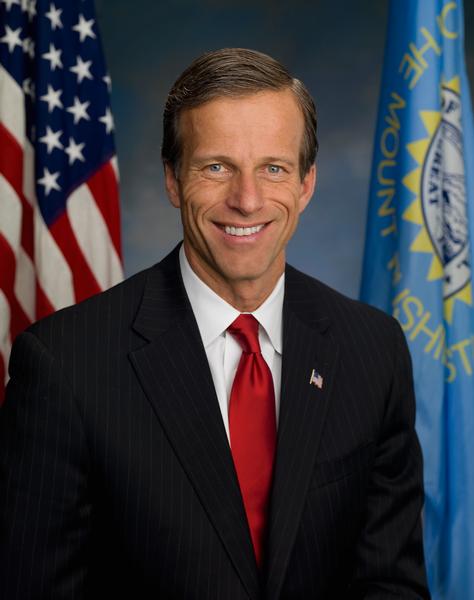
US Senator John Thune’s Weekly Column: Choose “All-of-the-Above” for a Secure Energy Future By Sen. John Thune

Choose “All-of-the-Above” for a Secure Energy Future
By Sen. John Thune

America’s energy security depends on our ability to produce reliable and affordable energy at home. President Biden and Democrats’ Green New Deal agenda to prematurely transition from conventional energy, like oil and natural gas, entirely to renewable power would undermine our energy security, as it has already begun to do. The truth is we can’t rely solely on renewable sources, as the technology has not advanced to the point that it can support all of our energy needs. Instead of an ill-fated transition that would lead to higher prices and increase dependence on foreign imports, we should pursue an all-of-the-above energy policy.

An all-of-the-above energy policy embraces the full spectrum of available resources: clean sources like wind, solar, hydropower, biofuels, and nuclear, as well as oil, natural gas, and clean coal. South Dakota’s all-of-the-above model of wind, hydroelectric, conventional energy, and production of renewable fuels like ethanol and biodiesel has made our state a leader in cleaner and more efficient energy technologies. While South Dakota generates over 80 percent of our electricity from renewable sources, conventional fuels still play an essential role in delivering a reliable and affordable energy supply. In contrast, California relies too heavily on renewables without sufficient storage or backup from conventional sources to meet demand. As a result, Californians pay some of the highest energy prices in the country for a highly unreliable electrical grid.

Unfortunately, President Biden and Democrats remain focused on a premature transition from conventional fuels to green energy. From cutting off oil and natural gas development on federal lands and canceling the Keystone XL pipeline to raising taxes on oil and gas producers, President Biden’s policies have made investing in conventional energy an increasingly risky prospect. But the Biden administration is also working to discourage private investment in conventional energy by using the long arm of regulation to implement environmental, social, and governance (ESG) policies.

One example of this overreaching ESG agenda is the Securities and Exchange Commission’s proposed climate disclosure rule. It would require publicly traded companies to evaluate climate risks in their financial statements and disclose their own greenhouse gas emissions, as well as that of their suppliers and customers. Since this regulation is infeasible, many companies would be coerced into severing or reconsidering their ties with industries that produce emissions, namely conventional energy and agriculture.

The Biden administration has extended its climate policies across the financial system in an effort to discourage investment in conventional energy, and many financial regulators have promulgated draft principles for “climate-related financial risk management.” And, recently, the Department of Labor issued a new rule to allow pension plans to consider ESG factors, rather than just the rate of return, when investing for millions of Americans’ retirements. In other words, using workers’ retirement funds to invest in green companies, even if it means lower returns for hardworking Americans.

The Biden administration’s climate agenda puts America’s energy security at risk. By relying too heavily on renewables before the technology is able to meet our energy needs, Democrats’ plan ensures today’s high prices will persist. A genuine all-of-the-above energy policy, on the other hand, would put the United States on a path to a more secure energy future. I will continue to work toward solutions that embrace all available energy technologies and ensure a reliable, affordable, and secure energy future.

###

Dusty Johnson’s Weekly Column: The Value of Interns in Congress

Guest Column: The Value of Interns in Congress
By Mason Ohnstad
February 24, 2023

I grew up in Sioux Falls, South Dakota, and stayed around to study Government and Philosophy at Augustana University. After graduating, I knew I needed to gain experience in politics to apply my field of study, so I applied to intern in Congressman Johnson’s office.

It only took a few days for the internship to exceed my expectations.

I’ve learned it takes a lot of work to accomplish anything in Congress. From speaking to constituents, introducing legislation, committee hearings, and so much more; the work of a Congressman is fast-paced.

Much of the work to keep up with the inner workings of Congress is done by young and intelligent individuals, known as interns.

Rep. Dusty Johnson has just 15 full-time staff across four offices, which is a similar scenario for most rural America Representatives. In order to efficiently and effectively serve the needs of over 800,000 South Dakotans, interns are hired. The intern is a vital member in any effective office. Interns also benefit from their service by gaining experience as a young professional.

A Congressional internship provides a unique opportunity to gain firsthand experience of how Congress works with insights and guidance from an office filled with advanced and established professionals.

I’m a couple months into my internship and I’ve worked on several projects assisting the press and legislative teams, giving tours of the Capitol, talking with constituents, attending meetings and briefings, and so much more.

Oh, and did I mention you go to work on Capitol Hill?!

I cannot give enough praise for how valuable this internship has been, nor can I put words to how much I recommend this experience.

The window for applying for the summer internship is open, so apply now! You can fill out the application at https://dustyjohnson.house.gov/services/internships.

###

Hughes County State’s Attorney completely shuts down Pischke complaint against Pischke’s fellow Senators – There will be “no further action” on Frye-Mueller victim impact statements

Hot of the press, Hughes County State’s Attorney Jessica LaMie has completely shut down any notion of an investigation in response to Tom Pischke’s monkey-grinder show demanding criminal action against 27 of his fellow State Senators in support of Julie Frye-Mueller.

In her response, LaMie noted “The law is clear in South Dakota. The Executive Branch, which includes State’s Attorneys, cannot interfere in the internal workings of the Legislature including the investigation and discipline of a legislator. It is for that reason that no further action will be taken by the Office of State’s Attorney for Hughes County.”

No coming back from that one, as the State’s Attorney was quite clear in confirming the “victim impact statements” dog isn’t going to hunt.

Poor Tom. He can’t get any bills passed, and now he fails once again.

It now looks like there are now *two people* who aren’t attending the Senate GOP caucus anymore.

Word from the State Capitol building today is that Julie Frye-Mueller wasn’t the only person not attending the Senate Republican Caucus today.

I’m told that she has now been joined on the Senate floor during caucus time by Senator Tom Pischke, who announced at a press conference yesterday that he was asking for a criminal investigation against 27 of his fellow State Senators for suspending JFM while they investigated allegations of harassment against an LRC staff member.

There might be a moral to this story for Senator Pischke that if you don’t want to be asked not to attend (kicked out of?) the Senate Republican caucus, you probably shouldn’t ask that nearly everyone else in the caucus be brought up on criminal charges when there’s no chance of it happening.

Sometimes you should know your audience before you open your mouth.

From yesterday’s press conference..

In a signed victim impact statement and affidavit of senator in support of prosecution, Pischke wrote he believed Frye-Mueller’s suspension was in violation of state law by “preventing a legislator from attending or voting.” The violation is a class two misdemeanor.

and..

“I’m asking today officially the States Attorney of Hughes County to investigate this matter,” Pischke said in a press conference to reporters Thursday.

Read that here.

From LinkedIn…

I’m kind of thinking that the Hughes County States Attorney is the last person they want to send a complaint over to that involves a legislator (Julie Frye Mueller) being awful to a LRC employee. She’s probably had more than her share of exposure to bad legislators.

(I did hear that she’s referring it to the Pierre Police Dept, as she is related to one of the twenty seven legislators named in the action. Probably another audience who has had their share of legislators when they act badly.)

As he hitches his wagon to Frye-Mueller, Pischke joins scandal-ridden Senator as least effective in Senate this year

With yesterday’s efforts to mitigate the damage done to herself, as Julie Frye-Mueller insists on defending herself, it brings up a question as to whether her efforts are dragging down the standing of her few allies in the legislature.

Yesterday’s press conference where Sen. Tom Pichke took the lead in defending his seatmate Julie Frye-Mueller as she continues to deny her harassment of a Legislative Research Council employee further nudges Pischke into Frye-Mueller’s radioactive zone, and begs the question how his close association with her might be affecting his legislative performance.

In a review of Pischke’s record of success this legislative session, you can’t help but notice that every single piece of legislation where he was the originating prime sponsor has gone down in flames.

Status Bill Title
Tabled SB 60 make an appropriation for completing improvements of the road leading to the former entrance into Palisades State Park and to declare an emergency.
Deferred to 41st Day SB 66 modify provisions related to the suspension of probationary permits issued to minors.
Deferred to 41st Day SB 96 provide for the recall of school board members.
Deferred to 41st Day SB 97 establish a for-cause requirement for inspections of motor carriers on possible vehicle weight and load violations.
Deferred to 41st Day SB 130 provide for philosophical exceptions to required vaccinations.
Deferred to 41st Day SB 136 provide a rebuttable presumption in favor of joint physical custody of a minor child.
Deferred to 41st Day SB 137 provide for the consideration of a child’s wishes in awarding custody.
Deferred to 41st Day SB 194 to establish certain provisions regarding fairness in repairs of equipment sold or used in this state.

For 2023, Pischke already finds himself at a ZERO success rate,  passing 0/8 of his bills this session. This matches Frye-Mueller’s own performance as mentioned a few days ago.

In reviewing, compared to his previous session in the House, it’s actually about the same, where in 2022 Pischke didn’t manage to pass any legislation, again earning a zero percent success rate, but managed to get one of his six bills into a conference committee before it died. In 2021, Pischke similarly goose-egged at zero, failing to pass any of eight bills.

Whether the toxicity around Frye-Mueller will rub off is actually a moot point for Tom, given his legislative performance as of late where he hasn’t managed to get the job done for several years.

So he might as well be Frye-Mueller’s chief defender. It’s not as if he has anything to lose.