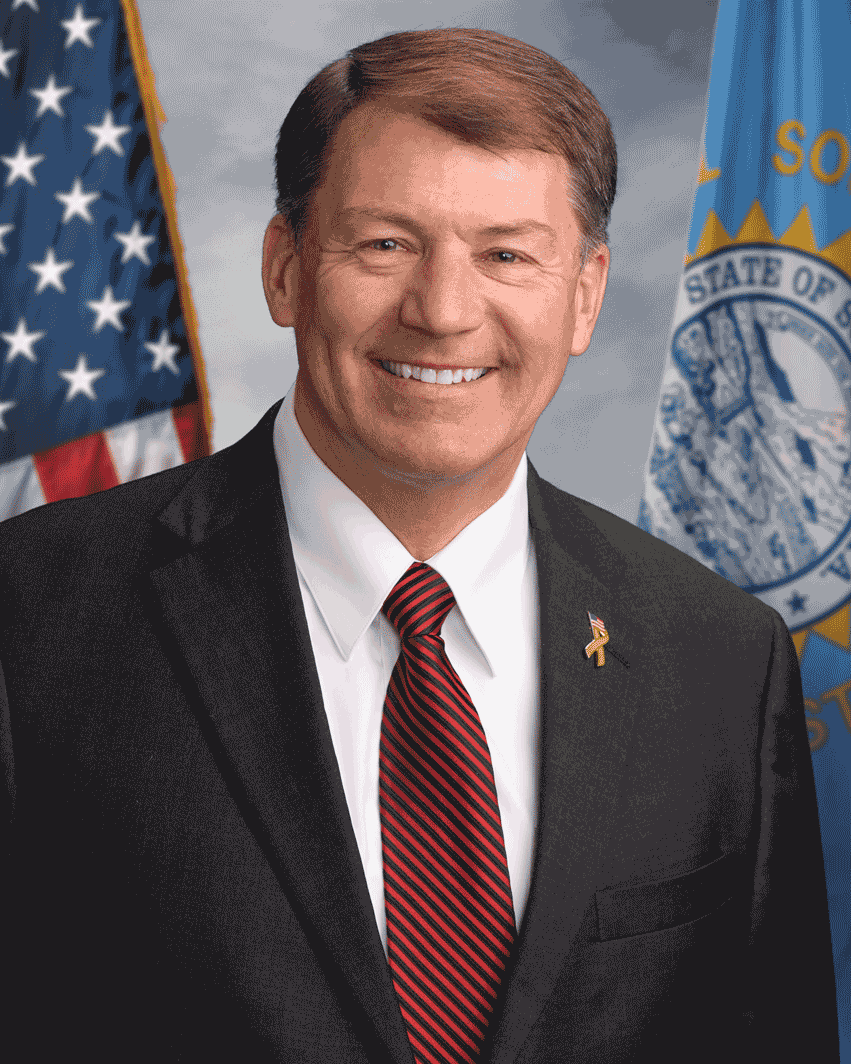
Rapid City Councilwoman Laura Armstrong, who was said to have created “naughty list” to shame businesses for not requiring masks, now running for Mayor

Rapid City Councilwoman Laura Armstrong has thrown her hat into the ring to run for mayor of that community, according to the Rapid City Journal.

Ward 5 Council member Laura Armstrong announced Friday her intention to run for Rapid City mayor in 2023.

If elected, she would be the first woman to serve as mayor in Rapid City’s 146-year history.

“I want to inspire women to step into the political arena,” Armstrong told the Journal Friday. “I want to inspire others to step forward. We have a lot that we can do together.”

Read that here.

Or should I say, she’s “thrown her mask into the ring,” as it wasn’t so long ago she as making the news for a website she created to shame Rapid City Businesses who weren’t requiring masks during the early days of the COVID pandemic.

Rapid City Council President Laura Armstrong is under fire from business owners and residents after they hand delivered nearly 100 complaints to the City Attorney Joel Landeen.

It all stems from a Facebook page called “The Caring Businesses of Rapid City” that highlights businesses that enforce a mask mandate in their establishment, versus those that do not. The rolodex of businesses not requiring masks has been dubbed the “naughty list.”

The complainants accuse Armstrong of creating or supporting the page and are asking she be removed from the Council.

Read that story here.  And more on the story here.

I have this feeling this campaign isn’t going to go very far.

If she had left it at praising those who required it, I don’t think it would have been a big deal. But when as an elected official you go out of your way to shame businesses that don’t agree with you politically, that’s behavior that people are not going to forget very quickly.

Gov. Noem Announces Plan to Restrict Foreign Purchases of Ag Land

Gov. Noem Announces Plan to Restrict Foreign Purchases of Ag Land

 PIERRE, S.D. – Today, Governor Kristi Noem and legislators announced proposed legislation to restrict foreign purchases of agricultural land in South Dakota. The plan creates a new board, the Committee on Foreign Investment in the United States – South Dakota (CFIUS-SD), which will investigate proposed purchases of ag land by foreign interests and recommend either approval or denial to the Governor.

“With this new process, we will be able to prevent nations who hate us – like Communist China – from buying up our state’s agriculture land,” said Governor Kristi Noem. “We cannot allow the Chinese Communist Party to continue to buy up our nation’s food supply, so South Dakota will lead the charge on this vital national security issue.”

The prime sponsors of the legislation will be Senator Erin Tobin (R-Winner) and Representative-elect Gary Cammack (R-Union Center).

“For those of us who have lived and worked on the land, we know that it’s our past, but also our future,” said Senator Erin Tobin. “We grow the world’s food, and we need to protect the security of that food supply for our kids.”

The CFIUS-SD board would be made up of three ex officio members: the Governor’s General Counsel (who would serve as board chair), the Secretary of the Department of Agriculture and Natural Resources, and the Director of the South Dakota Office of Homeland Security (part of the South Dakota Department of Public Safety). The board would also include two governor’s appointees: an agricultural industry expert who owns at least 160 acres of agricultural land in SD, and a national and/or state security or foreign policy expert.

“With vital national security resources like Ellsworth Air Force Base, we cannot afford for our enemies to purchase land in South Dakota,” said Representative-elect Gary Cammack. “We want to keep this land in the hands of South Dakota agriculture producers. I look forward to working with Governor Noem and my colleagues to guarantee the continued security of our state and nation.”

The jurisdiction of CFIUS-SD would cover transactions on or after July 1, 2023, including:

  • Any transaction of any number of acres – including a land transfer, purchase, grant, devise, descent, or inheritance of agricultural land – involving a “foreign entity” (any foreign person, foreign government, foreign business, or any organization controlled by a foreign person, government, or business);
  • Any lease of agricultural land to a foreign entity for a period of one year or longer; and,
  • Any transaction previously considered by the federal CFIUS board.

Currently, South Dakota has a law on the books limiting aggregate foreign ownership of agricultural land to 160 acres.

Two weeks ago, Governor Noem signed an Executive Order banning TikTok for South Dakota state government. Since then, the number of states banning TikTok for state governments has risen to eight.

Last week, Governor Noem called on the South Dakota Investment Council (SDIC) to immediately review all state investments for potential ties to nations that hate America, like Communist China. The SDIC has already divested from multiple Chinese holdings as a result of that call.

###

Governor Noem Closes State Government Offices Statewide

Governor Noem Closes State Government Offices Statewide

PIERRE, S.D. – Today, Gov. Kristi Noem ordered all state government executive branch offices statewide to be closed Tuesday, Dec. 13, because of the winter storm expected in South Dakota.

The National Weather Service forecast calls for freezing rain, heavy snow, and high winds to occur throughout South Dakota. Travel will be impacted in those areas.

Officials continue to closely monitor the storm. A decision on state government office availability for Wednesday will be made Tuesday.

Citizens should be prepared to stay home Tuesday if possible. If they must travel, they should check sd511.org or the SD511 mobile app.

###

Statewide elected officials endorse John Wiik for South Dakota Republican Party Chairman, Fitzgerald to run for Vice Chair

Statewide elected officials endorse John Wiik for South Dakota Republican Party Chairman

BIG STONE CITY, SOUTH DAKOTA – John Wiik announces endorsements from statewide elected officials and outgoing Republican State Party Chairman.

“South Dakota has set an example for the nation that conservative principles work.” Said Governor Kristi Noem “John Wiik has a vision that our state party can set that example too – and the work ethic to make it happen.”

“John Wiik understands what it takes to win and conservative values can make our state and nation stronger.” Said Congressman Dusty Johnson “He has the connections and work ethic to make a great party chair.”

The following statewide elected officials have endorsed John Wiik’s race for GOP state party Chairman:

  • Governor Kristi Noem
  • Lt. Governor Larry Rhoden
  • Senator Mike Rounds
  • Congressman Dusty Johnson
  • Attorney General Elect Marty Jackley
  • Treasurer Josh Haeder
  • Secretary of State Monae Johnson
  • Auditor Rich Sattgast
  • Public Utilities Commissioner Chris Nelson
  • Public Utilities Commissioner Gary Hanson
  • School & Public Lands Commissioner Elect Brock Greenfield
  • Republican State Party Chairman Dan Lederman

John Wiik also announces the addition of Mary Fitzgerald for Vice-Chair of the South Dakota Republican Party. “Mary is a dedicated county party chair and state legislator.” said John Wiik “She knows a lot about long days of hard work in public service and will be a great addition to the leadership team.”

“It is an honor to be chosen by John Wiik to run as his Vice-Chair.” said Mary Fitzgerald “We look forward to working with every republican in South Dakota to move our party forward”

The South Dakota Republican Party will vote for Chairman and Vice-Chairman on January 14th, 2023.

###

Spencer Gosch approves taxpayer paid Hawaiian trip for self, Jamie Smith in last month of office.

Apparently, it’s good to be Speaker of the House. Because even when you’re on the way out the door, you get to approve sending yourself to Hawaii on the back of the taxpayer:

Gosch, as well as Rep. Jamie Smith, both went on a trip to Hawaii to attend the Council of State Governments’ national conference in Honolulu. They were among a dozen South Dakota lawmakers to attend.

But neither Gosch nor Smith are returning to the Legislature in January. Both are lame-duck lawmakers.

And..

“As God is my witness, I can think of no justifiable reason for the outgoing House speaker, with less than 30 days left in his term, to be at a taxpayer-funded legislative conference in Hawaii,” Hoffman said. “My constituents will not be pleased to hear of it.”

Read the entire story here (subscription required).

According to the story, Gosch would have approved his own travel to the legislative conference where he learned about topics important to South Dakota.  Such as the cliff jumping which caused Gosch’s leg injury.

The cliff-jumping session for Gosch must’ve been in-between his important session on bouncy houses and the all important luau round table.

Understandably, legislators are not happy about Gosch sending himself and Jamie Smith on a Hawaiian junket a month before they’re out of office. Not the last we’ll hear about that one. Especially when the final bill is available.


“I don’t find Jamie Smith extreme in anything, and I wouldn’t call him a liberal Democrat, I really wouldn’t … he’s just the kind of guy that everybody loves, he’s a guy who’s really hard not to love. When he talks to you he really listens and he really cares.”

Republican Speaker of the House Spencer Gosch. SD News Watch 10/19/22

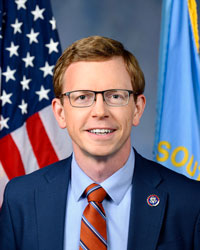
Congressman Dusty Johnson’s Weekly Column: Victory for our Servicemembers

Victory for our Servicemembers
By Rep. Dusty Johnson
December 9, 2022

On Thursday, the House voted with bipartisan support to pass the annual defense bill—the National Defense Authorization Act (NDAA). This bill has been passed on time for 62 consecutive years. This is a pillar of defense policy and funding, a critical way to protect national security.

There’s a lot in these bills, so I have highlighted some wins:

After a year-long push for a repeal of the COVID-19 vaccine requirement for servicemembers—the NDAA removed that requirement. In recent years, we have seen a decrease in recruitment and retention in our military. Requiring servicemembers to get a vaccine they are not comfortable with limits the pool of qualified applicants. Some of these individuals may have natural immunity but have not been allowed to join the military because of this vaccine requirement—I’m grateful we were able to get this done.

The NDAA authorized a pay raise for our troops. Inflation has hit families hard over the past year and it’s no different for servicemembers and military families. I am thankful for those who have chosen service and sacrifice—this is just one small way to thank them.

Funding for Ukraine has been a point of contention over the past several months. The NDAA authorizes funds for the Inspector General to audit and account for the U.S. dollars being spent for Ukraine. Assisting Ukraine in their fight against Russia’s invasion is a noble cause, but we must ensure the dollars are being used wisely and as they were intended by Congress. Having this audit and account of federal dollars will give the public and elected officials transparency.

Great news for South Dakotans, the NDAA provides necessary funding for the B-21 Raider that is coming to Ellsworth Air Force Base. This is a huge investment in our nation’s Air Force, national security, and the Ellsworth community. I was excited to see the unveiling of the first B-21 Raider in California last week. The incredible, cutting-edge technology will ensure our military continues to be the best of the best for generations. I am grateful South Dakota was chosen to be home of the Raider.

I was proud to vote in support of the NDAA, a vote that supports our nation’s military, something we should all agree on.

###

Governor Kristi Noem’s Weekly Column: The Right Tax Cut – The Right Time

The Right Tax Cut –
The Right Time
By: Governor Kristi Noem
December 9, 2022

Over the last couple months, I’ve checked out groceries at stores in communities across South Dakota. One out of every four or five customers had to put something back because of how much it cost. They were shocked at how much their grocery bill has gone up. And it isn’t getting better. South Dakotans need relief – and we can give it to them by eliminating the sales tax on groceries.

Prices are rising far too rapidly on everyday food items like milk, ground beef, eggs, and other groceries. Eggs alone have increased to over 140% of what they were in January 2021. Even with South Dakota having the best personal income growth, family budgets are not keeping up.

When you elected me to serve a second term as Governor, you tasked me with continuing to fulfill the duty of proposing a budget for our state. I recently announced my budget for the next year, and South Dakota has $310 million in permanent revenue growth because of our strong economy.

This means we can afford to eliminate the sales tax on groceries. It is a $102 million tax cut for the people of South Dakota – meaning we still have $208 million in permanent new revenue even after we deliver this tax cut to the people. The people of South Dakota overwhelmingly want this tax cut, and they know we can afford it.

Gas prices continue to increase because of President Biden’s energy policies. New regulations and taxes, a lack of utilization of American energy sources, and a dwindling reserve indicate this trend will continue.

Every South Dakotan is paying more for food, gas, and to heat and cool their homes – including those who can afford it least, like senior citizens, working parents, and single moms. Their family finances are struggling under the strain.

Remember – our revenues are strong because we have grown our economy. It is the strongest in the nation. People have moved their families, their jobs, and their businesses to South Dakota. Our new housing developments are here to stay. New industries are thriving. The jobs of the future are right here in South Dakota.  We have the fastest growing incomes in America – and we can grow incomes even more by letting people keep more of their own hard-earned money in their pockets.

This growth is sustainable. And there won’t be a better opportunity in the future. My team and I are fully confident that this is the right tax cut at the right time. I look forward to working with the legislature to get it done.

###


Guest Column: Bluffing Their Way to an Art. V Convention by Judi Caler

(In light of the recent push by the Convention of States to attack Republican legislators and continue to push for passage of a resolution in the legislature for an Article V. convention, I found this guest article interesting enough to share with you for your consideration. -pp)


Bluffing Their Way to an Art. V Convention
Part 1: Validation Schemes
By Judi Caler. 

Sound the alarm!! We are closer than ever before in our nation’s history to Congress’s calling a  convention under Article V of the US Constitution, where we would likely lose our Constitution. And it’s because of yet another deception from the con-con lobby.

Article V says that “The Congress…on the Application of the Legislatures of two thirds of the several States [now 34], shall call a Convention for proposing Amendments [to the US Constitution]…”

There have been approximately 450 applications passed by 49 State Legislatures since 1788, the year our Constitution was ratified. So, whether or not a constitutional convention has been triggered depends upon the criteria Congress uses to determine which of the 450 applications are valid. Only then can Congress count the States that submitted those applications to find out whether or not the 34-state threshold was reached.

On July 19, 2022, US Rep. Jodey Arrington (R-TX), introduced H.Con.Res.101 and  H.R.8419. The former is a purported “call” for a convention.[1] And the latter directs the Archivist of the United States to “authenticate, count, and publish” all non-rescinded applications and notify Congress of its duty to call a convention, if those applications were passed by at least 34 State Legislatures.

Of the 450 applications passed since 1788, about 230 have since been rescinded[2]—leaving about 220 non-rescinded applications from 39 States. So, if H.R.8419 becomes law, Congress will all but guarantee that the first constitutional convention since 1787 will be triggered—simply by establishing “all non-rescinded applications” as the only criterion by which Congress would authenticate applications!


H.R.8419—A Validation Scheme Too Big to Fail

Although counting states from the set of “non-rescinded applications” seems reasonable on its surface, it’s a trick. Every application passed since the 18th century that states hadn’t bothered to rescind would be considered valid under H.R.8419 (or an updated 2023 bill #). And almost 80% percent of those “valid” applications were passed before the 21st Century.

Rep. Arrington would combine all relatively recent applications with applications passed by at least 24 State Legislatures asking Congress to call a convention to propose amendments on obsolete topics, including directly electing US Senators (resolved by the 17th Amendment ratified in 1913); averting the Civil War (ended in 1865); prohibiting polygamy (now outlawed in all 50 states), repealing prohibition (resolved by the 21st Amendment ratified in 1933), prohibiting slavery (resolved by the 13th Amendment ratified in 1865), averting the Nullification Crisis of 1832–33, and adding a Bill of Rights to our Constitution (ratified in 1791).

In fact, we hit the 2/3-state threshold for Congress’s calling a convention per H.R.8419 in…(drumroll)… 1907, and we’ve NEVER dropped below the threshold in the 115 years since! The number of states with non-rescinded applications gradually grew from 34 states in 1908 to 48 & 49 States during the 3 decades between 1970 and 2000; and stands at 39 states today due to rescissions. That’s more than enough States to trigger a convention. (See graph).

Raise your hand if you think the Framers envisioned giving the states centuries in which to reach the 34-state threshold—so that by the time Congress called a convention, the American People would no longer remember or care about the issues that triggered the call!


Common Sense Validations

There are common sense ways for Congress to validate applications that would yield markedly different results than H.R.8419. In addition to considering all rescinded applications invalid, Congress could add the following criteria:

Validation by Obsolescence. Common sense dictates that if the purpose for calling the convention has been resolved (i.e. the Civil War, etc.), the applications should automatically expire.

Validation by Age. If a crisis could be remedied by altering or overhauling our founding document, then 34 States should be able to pass applications within, say, a five-year timeframe.[3] Consider that 46 States enacted COVID-19 legislation within just 10 months in 2020; and all 50 States did so within the 2021 calendar year.[4]

Validation by Type (limited or unlimited). Yale law professor Charles L. Black Jr. (1915–2001) was one of the leading constitutional law scholars of the twentieth century. Black considered all applications asking Congress to call a convention limited by subject, null & void—and that would include most of the applications passed by State Legislatures in the last 45 years. Other scholars agree[5]:

“I believe that, in Article V, the words ‘a Convention for proposing Amendments’ mean ‘a convention for proposing such amendments as that convention decides to propose…’[thus] a State application for a convention limited to one or more proposals or subjects is not an application for the ‘Convention’ denoted by the words in Article V…

“…[I]f thirty-four States may put Congress under a certain obligation by, and only by, requesting X, and thirty-four States request Y instead, then no congressional obligation arises6.  —Charles L. Black, “Amending the Constitution: A Letter to a Congressman

Depending upon which criteria Congress chooses, there are currently valid applications submitted to Congress from NO states, 39 states, or somewhere in between! Change the criteria, and you’ll change the result.


The Convention Deception 

Mark Meckler, President of “Convention of States (COS),” and the other special-interest lobbyists have been falsely assuring legislators for nearly a decade, that a “runaway convention” is next to impossible. That’s because, they say, only when Congress receives 34 identical or similar applications on the same subject or subjects can Congress call a convention; and, they say, that convention would be limited to the subject of the 34 applications.

But the proponents’ own Article V experts contradict their lobbyists! Attorney and Article V scholar John Cogswell, who admittedly bends over backwards to ensure Congress’s calling a convention, made the following points in a 2018 report to the American Constitution Foundation (ACF)7:

“Congress has a duty to call a convention for proposing amendments without any limitations on the agenda of the convention…” p. 2

“There is no such thing as a ‘limited’ constitutional convention because a convention by definition and practice is a free agency and may propose whatever it likes…” p. 18

“…a convention for amendments could easily amend the Constitution in its entirety and replace it with some other document…” p. 27

“…it is unanimously understood by all scholars that the rules of the convention are to be decided by the convention.”  p. 28.

Proponents bury the “too-big-to-fail” validation scheme in one bland adjective—non-rescinded—in §106c(b) under §1(a) of H.R.8419 and in §1(a)(2)(A) of H.Con.Res.101. But the accompanying press release, including legislative summaries and comments by Rep. Arrington, pretend to promote a “Fiscal Responsibility Amendment” and “Article V Accountability.”


H.R.8419 & H.Con.Res.101 are in-your-face evidence that proponents are attempting to manipulate the 34-state count to trick Congress into calling a convention which is inherently illimitable. This is not surprising, coming from the same folks that misled State Legislatures into passing applications for a “limited” convention.

Coming soon: Part 2

Judi Caler is a citizen activist working to defend our Constitution from those who would risk it at an Article V constitutional convention. She serves as Article V Issues Director for Eagle Forum of California.

—–

[1] But since applications from 34 States need to be authenticated before Congress calls a convention, H.Con.Res.101 appears to defy the Constitution.
[2] Compiled from applications posted on the unofficial Article V Library website, corrected for Illinois’ 2022 rescission.
[3] Only 10 States passed applications in the past 5 legislative years (2018–2022).
[4] Select Year (2020 or 2021); and Status: “Enacted” within the COVID-19 Database.
[5] For example, convention proponents John Cogswell and Michael Stokes Paulsen. See Cogswell’s 2018 ACF Report.
6  Yale Law Journal, 199 1972–1973
7 ACF’s goal is to facilitate a “general” convention, where no amendment is declared off-limits in advance by language in the applications. In 2018, John Cogswell conducted a study for ACF and found valid applications from 36 States.