If we could assign any broad overall themes to the top ten political stories of the year, I would argue there are two that are obvious.
The first and more prevalent theme I would apply is simply “conflict.” There was conflict within the GOP. There was conflict between the GOP and Democrats. There was conflict between branches of government. In a time when things were getting better, there was still a lot of bickering. The second theme would be that of “law and order,” with not one but two accusations of rape against legislative candidates, but the entire gamut of Jason Ravnsborg impeachment surrounding the trial and the penalty for his actions in the September 2020 accident which claimed the life of Joe Boever.
Top ten SDWC political Stories of 2022 – Part 1
10. Removing Speaker Gosch.
Some might say that Spencer Gosch might have been the worst Speaker ever. And you wouldn’t get any argument out of me. After coming off of a bad stretch with Speaker Steve Haugaard’s performance as Speaker highly criticized, people thought Gosch would have been better. They would have been wrong as Gosch doubled down on some of Haugaard’s bad decisions, and made so many more of his own.
After his declaring impeachment would be an open and transparent process, it was anything but. Between his abysmal handling of the Ravnsborg impeachment investigations with a culture of secrecy which in one case sought to shield a vote of whether to have a special session from the eyes of the public, his appointment of a very pointed and select group to investigate, his appointment of a dysfunctional Appropriations Committee, and his open warfare with Governor Kristi Noem, there was not a lot of support for him moving from the House to the Senate. In fact it was open warfare against him by a significant number in the political arena who thought he was so bad they just wanted him gone.
And they were successful, preventing him from moving over to the state senate on a vote of 54-45%
But even after defeat, Gosch managed to be in the news once again before the year ended, when it came out he was injured “cliff diving in Hawaii” after – when he knew he was voted out in the June Primary – Gosch treated himself to a Hawaiian Junket at the Council of State Governments December Hawaiian meeting. And not only did he send himself, he brought along his friend and unsuccessful Democrat for Governor candidate Jamie Smith.
Having been voted out of office, the only thing they would be bringing back to South Dakota would be matching tans and an expense bill. And the knowledge that it was all on the back of taxpayers.
9. Joel Koskan (& to a lesser extent, Bud May) – Could we have done a better job of vetting?
The Joel Koskan story was one that brought horror to many Republicans, including myself. For the crime, the deception, the negotiated resolution, and especially what he is accused of doing to his adoptive daughter. As noted…
A Republican running for South Dakota state Senate was charged with felony child abuse Thursday for allegedly grooming and raping a young family member for years, according to local reports.
Joel Koskan, a third-time candidate for the state Senate, allegedly groomed and abused the young girl for at least six years starting in 2014, court documents obtained by the Mitchell Republic revealed.
Koskan, 44, could also face counts of rape, sexual contact with a child under the age of 16 and aggravated incest-related child, according to a probable cause statement the outlet cited.
Read that here.
This was an atomic bomb dropping into political circles the week before the election. The State Senate PAC was horrified, as they had made a $10,000 donation for his campaign months before that had gone uncashed. They immediately sprung into action and stopped payment on the check before it could be deposited. They were successful. Over the course of the campaign, I had worked on several slate pieces for the GOP with his picture on it, the most recent sent out days before.. that cat was already out of the barn, and could not be stopped. This wasn’t Joel’s first campaign, but his third. None knew at the time it was going on, but many shared a sense of bewilderment and anger that in years’ past, many had met his daughter on the campaign trail or while she was serving up at session. And we just didn’t know that this was happening.
While that tale was getting spun up, there was a double punch courtesy of another candidate immediately after the election:
A defeated South Dakota House of Representatives candidate is facing a sexual assault allegation.
Bud Marty May, 37, was arrested on Nov. 13 and charged with second-degree rape. He appeared in court Tuesday.
Court documents say he used “force, coercion, or threats of immediate and great bodily injury” to rape the woman in “multiple ways” in a bar bathroom stall.
The victim claims he told her, “I am 6’8″, white, it is all consensual.”
Coming so soon after the Koskan accusations, it leaves a person just stunned that this kind of allegation would not just come up once, but now twice. In neither case could people have known the kind of candidate the Republican Party was putting out there. But if anything, in the world of campaigns, it might beg for more attention to the process of candidate recruitment. And a higher premium on making sure that candidate vetting takes place, even where Republican candidates are scarce.
In both cases, we’re left hoping the victims are able to receive justice.
8. Monae Johnson ousts Steve Barnett from Secretary of State office
Was it insufficient preparation from incumbent Steve Barnett going into the convention, or an effort from the challenger Monae Johnson to recruit her people into the convention to cast a vote? Or maybe a little of both?
It was a perfect storm for Secretary of State challenger Monae Johnson when she decided to run. Incumbent Steve Barnett had come off of a challenging prior election cycle with COVID and sending out absentee ballots which didn’t sit well with some in the far right. Coupled with that were questions on election integrity beat upon like a drum by Trump supporters, legitimate or not. South Dakota had been the host of the Pillow Guy election integrity summit, and pockets of radical activists from across the state had jumped on the issue to some success, even ousting the Minnehaha County Auditor, who had been appointed only months before.
But now they were on to bigger game – the Secretary of State’s office.
For some reason, that office has been a center of discontent. Tribes unhappy with how their county elections are run? Sue the Secretary of State. Don’t like how the voting rolls are or or not cleaned? Blame the SOS. Don’t like that a political opponent skipped a disclaimer and nobody did anything? Blame the SOS, even though they don’t have any authority. Candidate screwed up their petition? Sue the SOS to try to get a court to allow it. If the Secretary of State isn’t getting sued or blamed, you’d be checking to see if the sun was rising that day.
Incumbent Steve Barnett had never been a particularly loud or bombastic elected official, and had already served 8 years as State Auditor before jumping offices over to the Secretary of State during one of the most turbulent times in recent history. And so he never really seemed to feel the need to put on his armor and make sure he was at every Republican meeting, all the rubber chicken events, and be a constant presence up at session. In a year of radical upheaval, when the forces claiming elections shenanigans – proof be damned – got somewhat organized, Steve found himself in the crosshairs. With a significant number of Republican Convention attendees recruited to attend the biennial gathering, whose only edict was to vote for Monet Johnson for Secretary of State, the challenger managed to recruit enough people to attend to oust Barnett.
As noted by Public Broadcasting:
And the June convention was dominated by a web of coordinated newcomers interested more in fringe ideology, and maybe some personal payback, than in selecting qualified nominees.
Many of those newcomers have what I’d call extreme political philosophies. They brought an anti-establishment personality, promotion of the Big Lie of election fraud in 2020, and in some cases a resentment toward Barnett for not playing their voter-fraud conspiracy game.
Monae Johnson seems willing to play that game. If she weren’t, she almost certainly wouldn’t have won 61 percent of the delegate votes to 39 percent for Barnett. She campaigned to the delegates on “election integrity” and “election fraud,” which is Trump-speak for “Biden stole the election” and “if Democrats win, it must be fraud.”
Read that here.
With that many people recruited, losing 39% to 61%, Johnson managed to oust Barnett.
The Precinct Committeeperson recruitment which ousted Barnett, and caused tremendous chaos with the races for Attorney General and Lt. Governor are going to change for the next convention, one way or another. So making runs at influencing the Constitutional Officer selection process may be done for the time being.
But the recruitment of single-minded precinct people worked in one race. Now if they can only hold on to the office.
7. Primary John Thune effort produces abysmal challenge candidates, Thune wins by ignoring them.
At the end of last year, into the early parts of the year, there was a buzz about a group that had been formed in an attempt to challenge three-term US Senator John Thune in the primary. Thune, who was going to attempt to break the “Mundt curse,” was in to run for a 4th term of office, despite being at times with former President Donald Trump.
Trump opposition to Senator Thune emboldened some. Formed by Julie Korth of Rapid City and now Representative-elect Karla Lems, the “Primary John Thune” group had been working for months and managed to convince two candidates in challenging Senator Thune. Political unknown Mark Mowry was the first to announce closely followed by previous Congressional candidate Bruce Whalen. They were also joined by New Jersey transplant Patrick Schubert, Jr. It’s as if they looked for the worst candidates they could find, and they managed to inflate them enough with the ego to run. The results were disastrous.
Once 2022 dawned, and it was time for the rubber to hit the road, these Thune challengers didn’t just fizzle out, but it was as if there was a case of spontaneous combustion. Schubert failed to make the ballot. I’m not sure if I even saw his petitions. Mowry and Whalen made the ballot, but to say their campaigns were lackluster would be giving them too much credit. While the “Primary John Thune” facebook group had amassed followers in the thousands, apparently their only edict was to write memes in their group, which had gone private, due to spies and other paranoias. Their army of supporters was only on paper, and they did nothing to affect the political races.
Thune’s strategy for the primary was basically to ignore the gnat-like candidates who couldn’t nip through his socks, and it worked. Mowry and Whalen were less than underfunded, and with every appearance seemed to lose traction. For a group that started out making noise, and claimed to have tough candidates recruited, the “Primary John Thune” group and their candidates ended up being no more than a trifle. The more they spoke, the less people had any interest in them.
Sometimes it’s best to let your work stand for itself, and in keeping a low campaign profile while serving in Washington, South Dakotans resoundingly endorsed keeping Senator John Thune on the job.
6. Haugaard, the houseguest who wouldn’t leave.
In the final few weeks of 2021, former Speaker of the House Steve Haugaard shocked few when his fractious relationship with Kristi Noem fractured even further and he announced he was going to challenge her for Governor. And as 2022 rolled out, he showed us what not to do in a race for Governor.
He couldn’t raise any money. He would go months between issuing press releases. He relied almost exclusively on facebook ads. In the middle of the campaign, he was referring to a woman as a “wrung-out whore” on the House Floor. There was nothing new, no excitement in his campaign, and it was literally that people should vote for him because he wasn’t Kristi Noem.
At one point, Haugaard whined to the press that Kristi Noem wasn’t engaging him.
She has refused so far to engage her Republican primary opponent, former House Speaker Steve Haugaard, on any kind of public platform, aside from appearing at private county Republican dinners.
That’s left Haugaard frustrated with time running short before the June 7 primary. A recent poll of self-identified Republicans by South Dakota State University faculty showed Noem leading Haugaard 61-17%.
Read that here.
When you’re complaining that your opponent is ignoring you, it’s a good indication that you have gotten no traction. And it showed, as in the primary election, Haugaard was crushed by a massive wave for Governor Kristi Noem on a 77% to 23% basis – a more than 3-1 basis. Most would have taken the hint that voter didn’t want you around.. but what does Steve Haugaard take from that? Fresh off of getting his rear-end handed to him on a 3-1 basis by Governor Noem, Steve Haugaard filed a last minute challenge to Lt. Governor Larry Rhoden to be voted on at convention to be a candidate for Lt. Governor forced on Governor Noem.
Haugaard was defeated 56-44%, but the risk of being saddled with Haugaard did bring up a problem that will be rectified during the legislative session about Governor and Lt. Governor being severed from each other in the primary/convention process.
Even later after he was rebuked by delegates, in July, Haugaard held a meeting where he tried to people together to continue the conversation… in part..
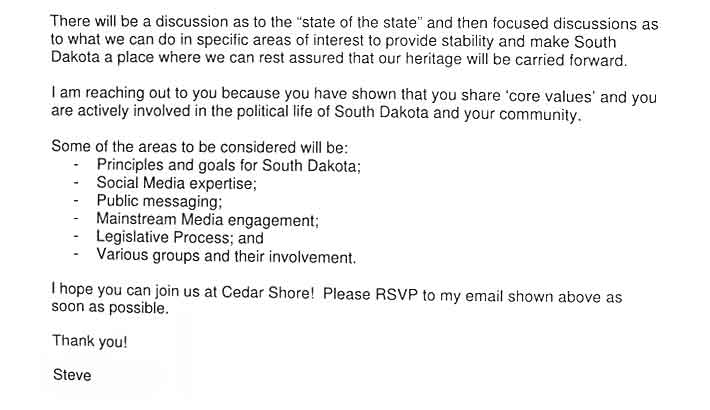
That “rest assured our heritage will be carried forward” does not leave a good taste on the palate.
But, we’re over and done with the Haugaard era of state politics. Aren’t we?
Stay Tuned for Part 2 !

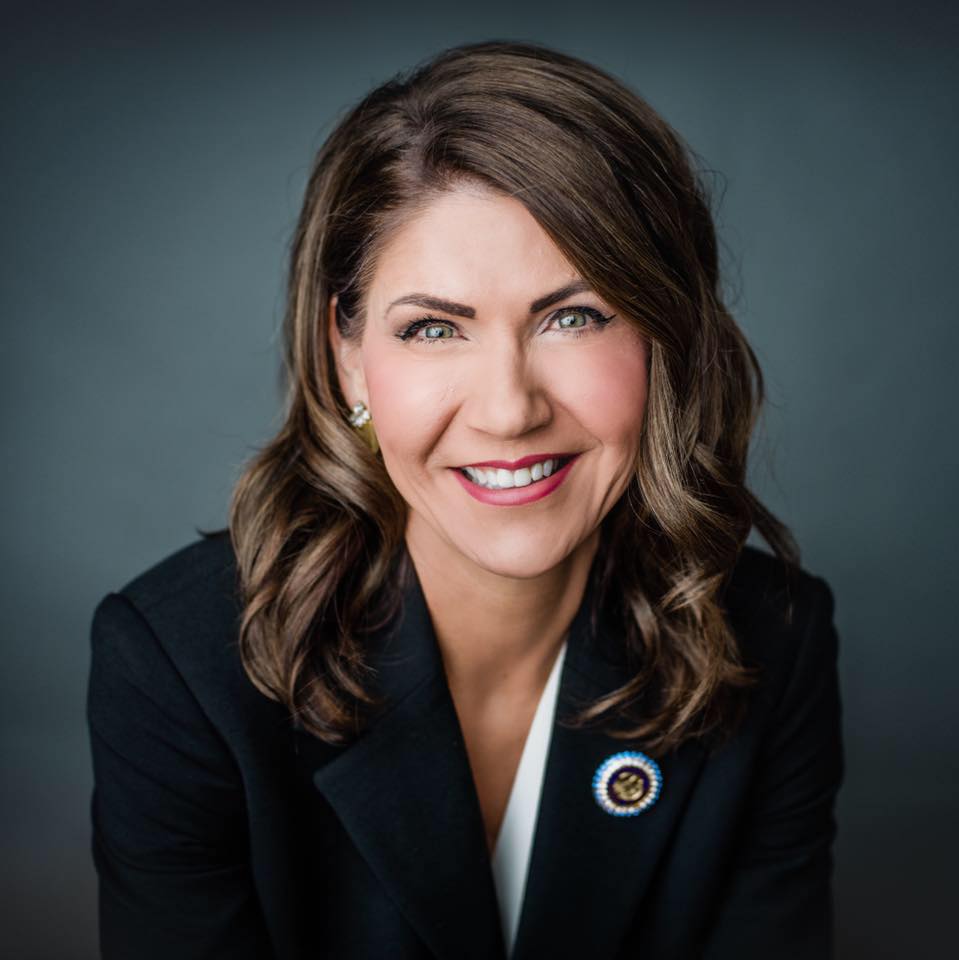 PIERRE, S.D. – Today, Gov. Kristi Noem appointed Joe Graves as Secretary of the South Dakota Department of Education. Joe’s appointment will be effective January 10th. Joe is replacing Secretary Tiffany Sanderson, who has accepted a job as president of Lake Area Technical College.

 You’ve had several stints in the South Dakota Legislature going back to the late ’70s. What is it about legislative life that keeps you coming back?