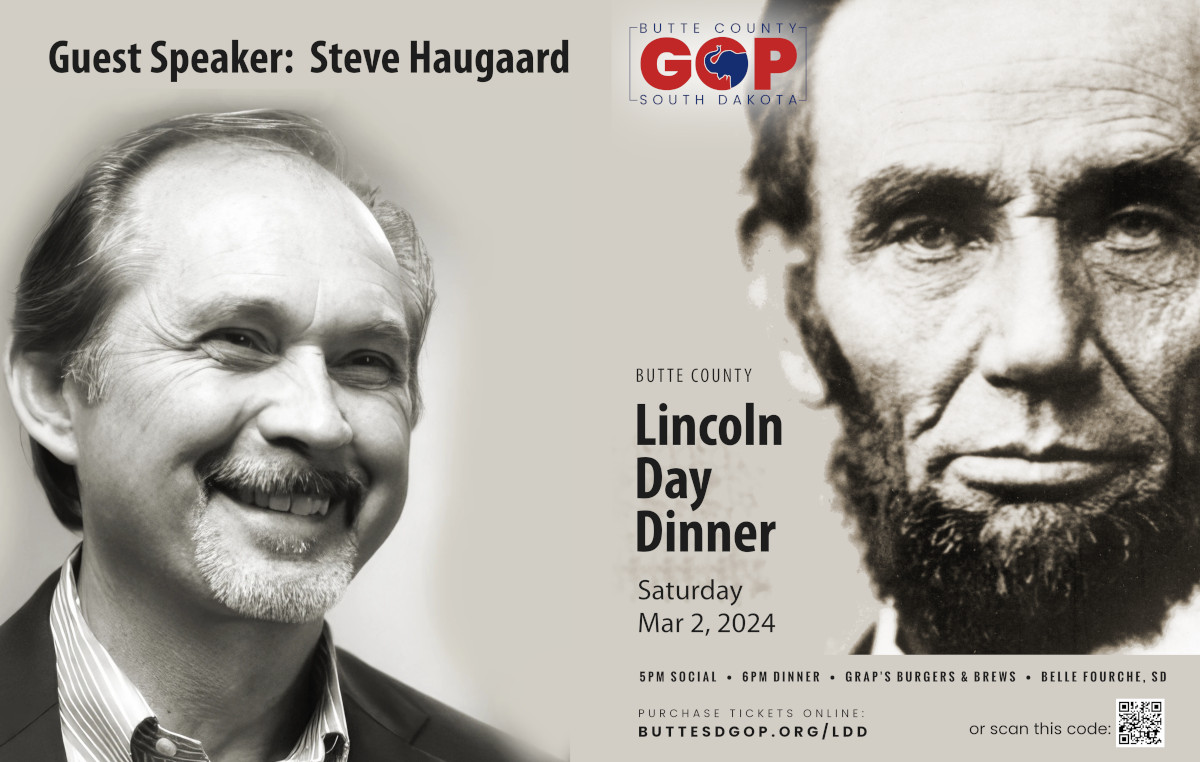
Heard a rumor that is rocketing around among politicos this weekend with regards to the really unusual event of Steve Haugaard headlining the Butte County Lincoln Day Dinner on March 2.
Aside from the fact that the speaking engagement isn’t going to draw anyone but the furthest right of the far right, a rumor keeps going around that an announcement will be made in Butte County that – and again, this is just rumor at this point, but the claim is Haugaard is supposedly using the occasion to announce the start of a run for Attorney General in 2026.
I’m not sure how a person can really assess that water cooler chatter.
Is this supposedly coming off of Haugaard’s representation of Julie Frye Mueller? Because I don’t think that went too well for them. Would it be seeking a bounce from his previous effort(s) to run for statewide office? Again, something that didn’t end so well.
I talked to one politico who had heard it from three different sources today so I don’t know if it’s just circulating that quickly secondhand through the winter inhabitants of the state capital, or there is actual substance to it.
Put me down as a doubting Thomas, because I think the notion of Steve Haugaard running for AG is pretty silly. It would be like R. Shawn Tornow announcing he was running because you don’t have to be an attorney to be attorney general.
But given what’s happening with some members of the GOP lately, I can’t discount anything.
Attorney General Jackley Warns Public About Medicare Telephone Scam
PIERRE, S.D. – South Dakota Attorney General Marty Jackley is warning the public to be careful about telephone calls they receive threatening to take away a person’s Medicare benefits.
The South Dakota Attorney General’s Consumer Protection Division has received calls from citizens in recent weeks who say they have received telephone calls from scammers purporting to be from Medicare. The callers will demand the person to provide their Medicare number and if not, threaten to stop their benefits.
“This is not a new scam, but it is a relentless one,” said Attorney General Jackley. “These scammers will do anything they can to convince the person to disclose personal or financial information, including their Medicare numbers. Please remember that the official Medicare office does not call people.”
The Consumer Protection Division recommends that consumers:
*** Never provide their financial or personal information to someone via the telephone.
*** If they receive such a call from a number that does not show up on caller ID, hang up and contact the businesses directly using a known number, not the number showing up on caller ID.
*** Never accept back, knee or wrist braces that are mailed to them, but that they have not ordered. Medicare will require the consumer to pay for the brace even if they didn’t order it.
Consumers who believe they may have been a victim of any type of scam should contact the Attorney General’s Office’s Consumer Protection Division at 1-800-300-1986.
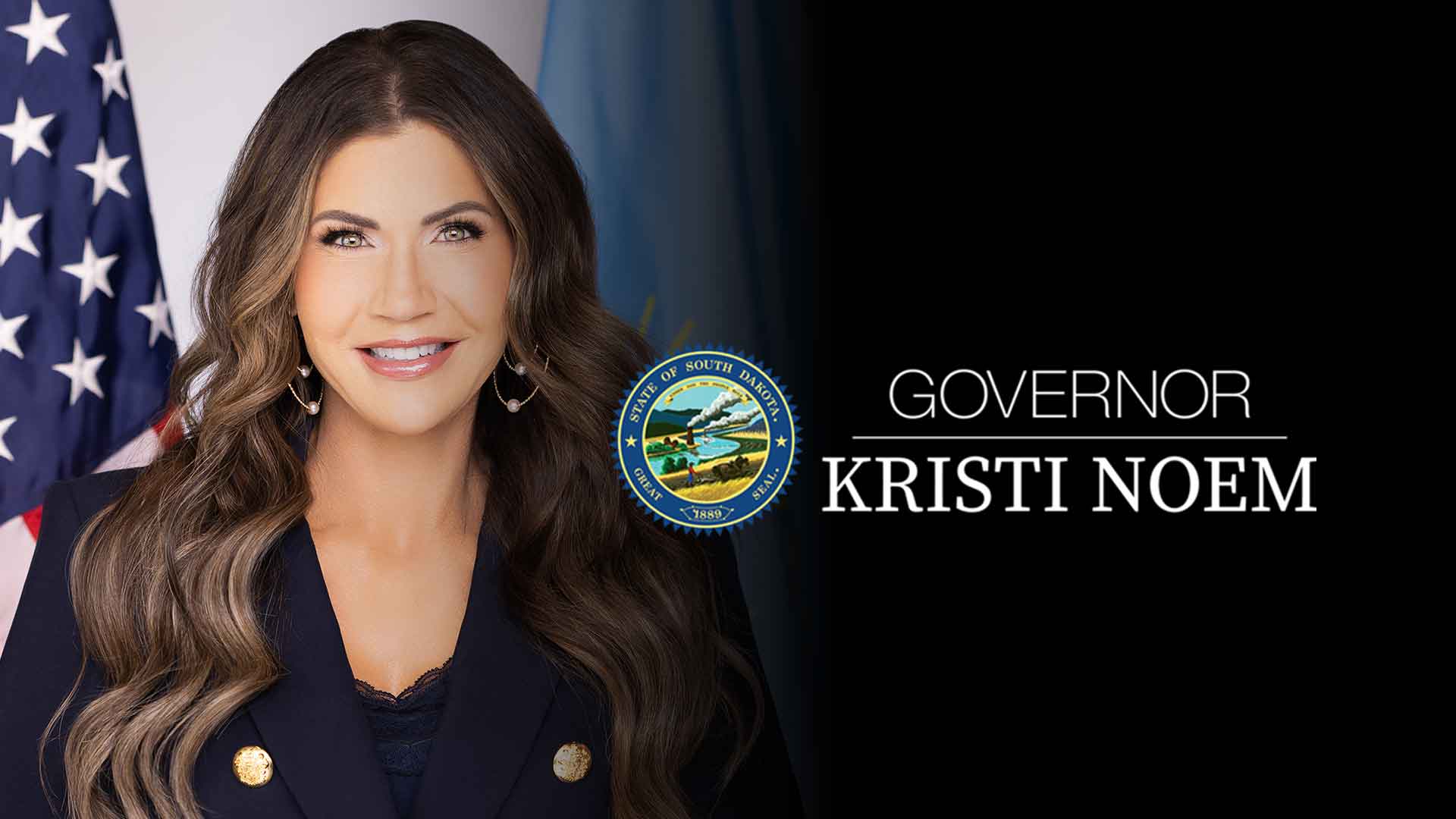
The Freedom to Work By: Governor Kristi Noem February 16, 2024
In South Dakota, we respect the Freedom to Work. That is what America was built on. We each have the Freedom to get up every morning and to provide for ourselves and our families. That’s the American Dream. South Dakotans continuously remind the rest of the country the value of hard work and the dignity it brings.
There are few professions where hard work, dedication, and passion are as significant as law enforcement. South Dakota is already the Freest state in America – I’m determined to make it the safest, too. The best way to do that is by putting more law enforcement officers on our streets. The goal of our newest Freedom Works Here ad is to recruit more law enforcement officers to South Dakota. You can view “33 in a 65” here.
I always say that South Dakotans are some of the hardest working people I know. We still understand the value of hard work. And my goal as Governor has never been to create a government that does everything for people, but to create a government that empowers our people to do things for themselves.
When the pandemic hit and many states closed down, South Dakotans kept working. While other states were experiencing record high unemployment levels, we broke the national record for the lowest state unemployment less than a year ago.
We are creating opportunities for people to get into the career of their dreams. And we’re just getting started.
I knew that if we could just tell our story, Freedom-loving Americans from across the country would want to be a part of what we’re doing here. I knew that we needed to celebrate our success – then take the opportunity to capitalize and build on it. I knew that we had to show all of America that Freedom Works Here.
We are continuing the Freedom Works Here workforce recruitment campaign. This campaign is still less than a year old, and we’ve received thousands of applicants interested in moving to our state just through the program, not counting those who independently made the move. Thousands have already moved here!
After our first round of ads, I had businesses asking me how they could help us keep the campaign going. It quickly became clear that these ads were working, and that we needed to do more. So we did some research into some of the most-needed professions in South Dakota. The results were professions like electricians, plumbers, welders, and even accountants, so we’ve targeted ads towards those professions.
These ads are so successful because they tell South Dakota’s story.
Our state licensing boards are reporting huge increases of out-of-state applicants seeking licenses in South Dakota – including a 78% increase in plumbers, a 44% increase in electricians, and a 43% increase in accountants. Our labor force has grown by more than 10,000 people in just the last year. Our license recognition bill combined with the microphone of Freedom Works Here is a powerful tandem to fill these much-needed jobs.
That is a story that many people across this country have never heard before.
Folks are moving here in record numbers to become a part of our winning way of life. Californians and New Yorkers have never seen a state like ours – one that trusts our people, and one that embraces and promotes liberty and Freedom.
Freedom Works Here is indisputably the most impactful workforce campaign in South Dakota’s history.
Safety and Security By Rep. Dusty Johnson February 16, 2024
BIG News
This week, I voted to impeach Homeland Security Secretary Alejandro Mayorkas. His willful and systemic refusal to follow the laws set by Congress to secure the southern border has created a national security and safety crisis in communities across America, including South Dakota. We have not seen a domestic crisis of this magnitude from a department’s making before. America is less safe because of the drugs and increased crime from illegal immigrants coming across the border. Congress had to act. I hope the Democrat-controlled Senate takes the impeachment seriously and the Administration takes notice and takes steps to secure the border.
Click here or the image above to view remarks from Johnson about his vote to impeach Secretary Mayorkas.
BIG Idea
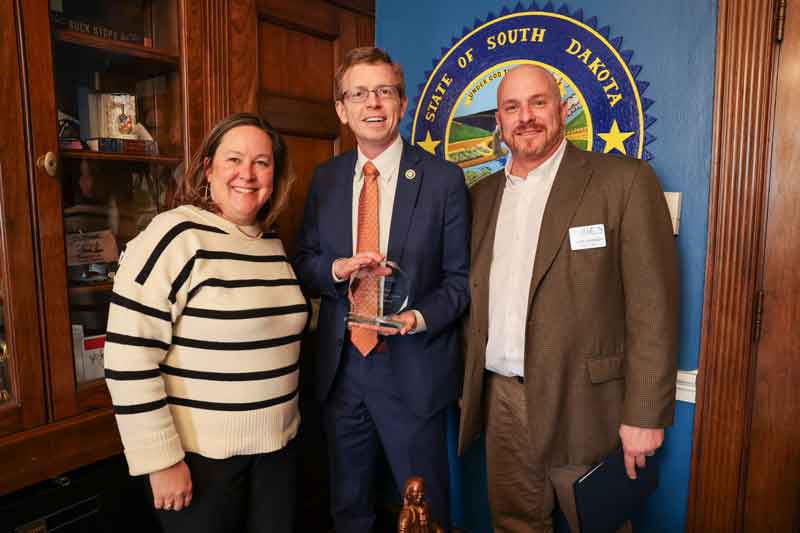
I met with Community Healthcare Association of the Dakotas and Horizon Health Care to talk about federal funding for health centers that support underserved populations, the 340B drug pricing program, and the importance of telehealth. They awarded me the Distinguished Community Health Center Advocate award for my actions in Congress to support Community Health Centers.
Johnson with Shelly Ten Napel (CEO of CHAD) and Wade Erickson (CEO of Horizon Health Care)
BIG Update
Recently, the Biden Administration proposed a ban on new permits for new domestic liquified natural gas (LNG) exports. This is another decision the President made in an effort to advance his climate agenda, but the decision fails to recognize American-made energy is actually cleaner than energy from countries like Russia and Iran. Prohibiting new exports will force our allies to rely on dirtier energy from these adversarial countries, bolstering the economies of enemies instead of ours. Increasing exports could add as much as $73 billion to the U.S. economy and support 453,000 jobs by 2040, but with Biden’s ban, we lose all of that growth opportunity.
This week, I supported the Unlocking Our Domestic LNG Potential Act when it passed the House so we can continue to grow our LNG exports, ensuring America and our allies can remain energy secure.
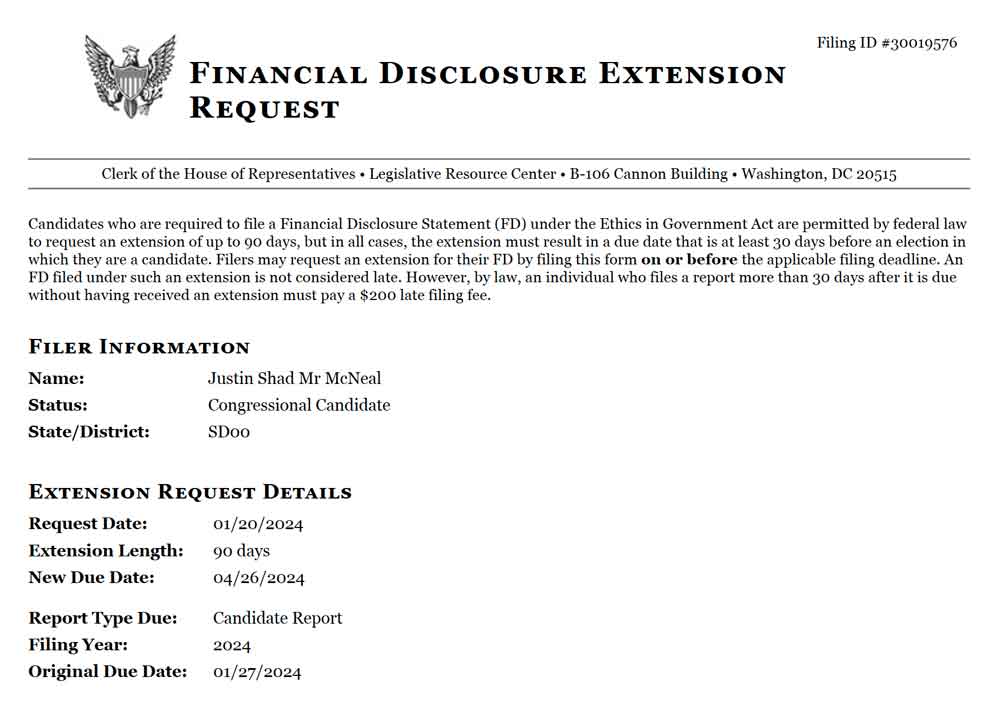
Justin is making us wait for his campaign finance disclosure report.
And you’re probably saying “who’s that?”
Justin. Justin McNeal.. you know who that is, don’t you? You probably don’t even though he’s been running for Congress since about the 28th of December. According to his bio, Justin McNeal was born in Illinois and was raised in Texas, and moved to the state in 2021. He had some grandparents live here, so of course he thought – I should go to South Dakota and run for Congress. Because everyone does that after they live in the state for two years. You can find his website here, although it appears that it has some disclaimer issues.
Anyway, the point of the post is that Justin is kicking the can down the road with regards to filing his financial disclosure report that all congressional candidates have to do, so it looks like we might be waiting for it until the end of April. Assuming he makes it any farther in the race.
Kudos to McNeal for at least attempting to do some paperwork for the race, as the other guy, Patrick Schubert, hasn’t even gone so far to file anything but declaring his committee in August of last year. You would think that after having tried running in the last election in 2022 against Senator Thune, and tanking epically, not being able to achieve the ballot, he might have gotten his act together this time with 6 months on the trail this time. But, no.
While these guys are still trying to figure things out, current Congressman Dusty Johnson is adding to his total of $3.9 million in the bank to put towards the upcoming election.
Gov. Noem Signs E15 Fuel Tax Refund into Law Signs Six Other Bills
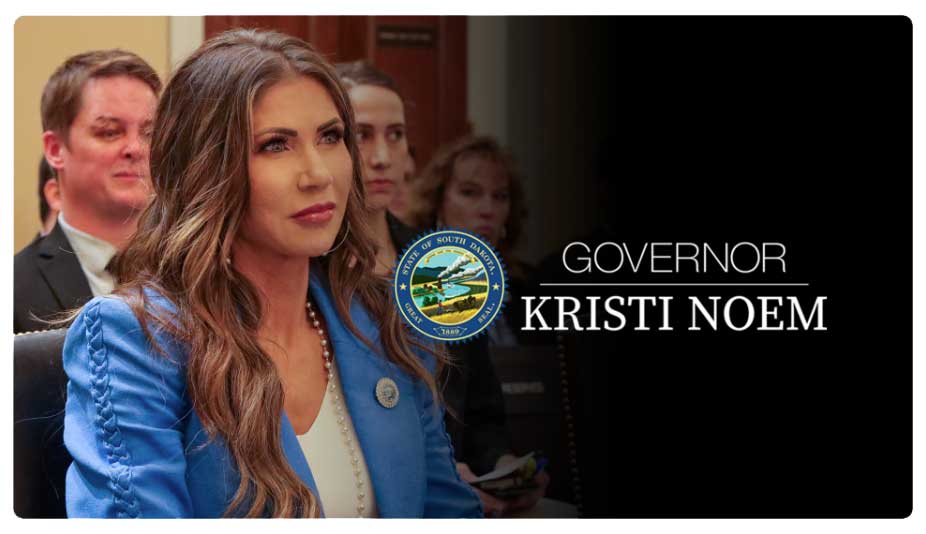
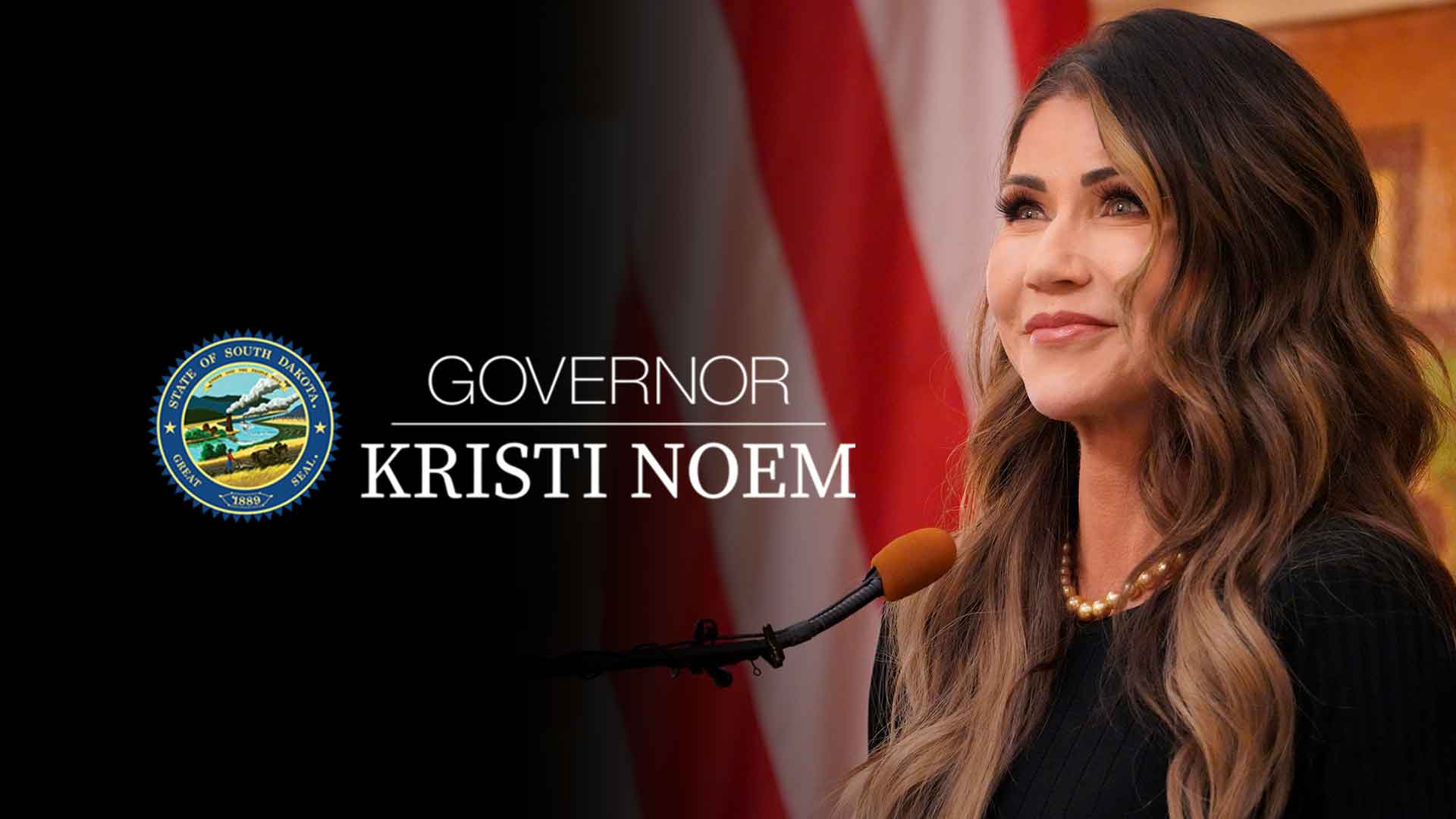
PIERRE, S.D. – Today, Governor Kristi Noem held a bill signing ceremony for SB 78, which provides for an E15 fuel tax refund.
“Renewable fuels are a very important part of America’s all-of-the-above energy supply, and ethanol is vital to South Dakota’s future. The Biden Administration’s policies have driven gas prices up for South Dakotans, and this bill will provide our citizens with needed relief,” said Governor Noem. “It will make higher ethanol blends more readily available, bringing prices down at the pump. We’re committed to an all-of-the-above approach to energy that doesn’t pick winners and losers but lowers prices for all South Dakotans.”
Governor Noem was joined by the bill’s prime sponsors, Senator Casey Crabtree and Representative Drew Peterson, as well as leaders from the state’s ethanol industry. A photo from the bill signing can be found here.
Governor Noem also signed the following six bills into law:
SB 16 makes appropriations for water and environmental purposes and to declare an emergency;
SB 28 modifies tax refunds for elderly persons and persons with a disability, to make an appropriation therefor;
SB 35 provides that certain personal information of a lottery prize winner may only be used for advertising or promotion with the winner’s consent;
HB 1077 provides for the disbursement of the catastrophic county poor relief fund to the participating counties in the event of the discontinuance of the fund;
HB 1124 provides for the temporary filling of water development district board positions created as a result of population increases, and;
PIERRE, S.D. (February 15, 2024) – South Dakota Ethanol Producers Association applauds Governor Kristi Noem and the South Dakota Legislature for passing Senate Bill 78. This bill provides a five-cent per gallon retail tax incentive for E15, a 15% bioethanol fuel blend.
“Thank you to Governor Kristi Noem, Senate Majority Leader Crabtree, Representative Drew Peterson, and all of South Dakota’s legislators who supported South Dakota drivers and farmers with this bill,” said Walt Wendland, SD Ethanol Producers Association Board President. “It will expand access to E15, which saves consumers money at the pump, bolsters our agricultural industry and state economy, and supports farming families across the state.”
E15 is a high-performance biofuel blend made from South Dakota-grown corn and is compatible with virtually every car, truck and SUV on the road today.
First ‘Med Ed’ Bill in the Nation Passes House with 63-6 Vote Measure Stops Abortion Industry Misinformation from Endangering Women
Pierre, S.D.– The SD House of Representatives has passed a bi-partisan bill to protect pregnant women’s lives. The Med Ed Bill that received approval by a 63-6 vote is sponsored Rep. Taylor Rehfeldt (R), Rep. Joh Hansen (R), Rep. Oren Lesmeister (D), and 27 other lawmakers to establish clarity to medical professionals on the ability and necessity of providing emergency care to pregnant women under South Dakota’s life at conception law.
The South Dakota Med Ed Bill is the first legislation of its kind drafted to end the confusion caused by the abortion industry through direct education to medical professionals. Other states have taken similar steps administratively: The Louisiana Health Department put out guidance on their life of the mother provision and Oklahoma and Kentucky attorneys general issued advisory opinions.
Under HB 1224, the materials will be established through the Department of Health and with input from the attorney general, medical professionals and legal experts. The video will cover the details of the state’s abortion law, the most common medical conditions that threaten the life or health of a pregnant woman, the standards of care for treating a pregnant woman in a medical emergency, and a practitioner’s ability to use reasonable medical judgment in all situations.
Kelsey Pritchard, state public affairs director for SBA Pro-Life America, thanked Rep. Taylor Rehfeldt for bringing the legislation:
“We thank the sponsors and those who voted yes today to defend South Dakota moms. South Dakota is showing the rest of the nation how to protect women’s lives by making it abundantly clear that pregnant women can and must receive timely emergency care under our pro-life law. Abortion activists have sown confusion on this point around the nation to justify their agenda for no limits on abortion. This lie not only deceives but puts women in danger, and a Med Ed policy is the solution.”
During her comments on the House floor, Rep. Rehfeldt said:
“Mother’s lives are worth having a conversation about. Mothers lives are worth having a bill. The Department of Health is supportive of this bill as well as multiple stakeholders including healthcare, including some of our friends from organizations, and the best part about it is that it requires medical and legal expertise – to rely on their expertise so that we can best take care of moms.”
The bill passed in House State Affairs earlier this week with overwhelming support and zero testimony in opposition. Those who testified in favor of the bill included the Governor’s Office, the Department of Health, SBA Pro-Life America, SD Right to Life and Sanford Health. In her testimony on behalf of Sanford, Grace Beck said:
“At Sanford Health we recognize that each time a mother walks through our doors we’ve been entrusted with the health of two patients. The mother and the child. We are supportive of House Bill 1224 and appreciative of the prime sponsor’s efforts to provide clarity around our abortion laws.”
Susan B. Anthony Pro-Life America is a network of more than one million pro-life Americans nationwide, dedicated to ending abortion by electing national leaders and advocating for laws that save lives, with a special calling to promote pro-life women leaders.
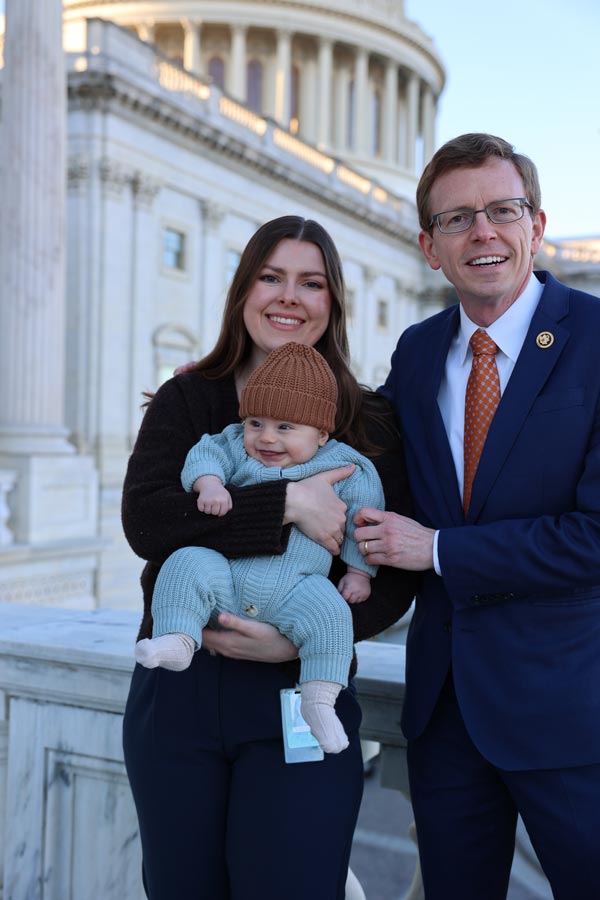
A very nice departure note came out a short time ago from Jazmine Kemp, Dusty Johnson’s Deputy Chief of Staff & Communications Director:
Colleagues & Friends –
After 7+ years on the hill, five of those with Dusty, my time in the House is coming to an end. Friday will mark my last day with the office.
It has been a privilege to work with so many of you, whether it was as a coworker, a source, or just a friendly face in the hallway – you have all made an impact.
Everyone says having a child changes your priorities – that being said, I will be taking some time off to stay home with my little one.
Please stay in touch and don’t hesitate to reach out if you ever need anything from me. Keep up the fight!
Signing off,
JazmineKemp | Executive Director Republican Main Street Caucus Rep. Dusty Johnson
As noted, the new mom is taking some time off for her new baby. Best wishes for Jazmine and family on her new adventures and wherever the road takes her.
Governor Noem Now Accepting Applications for Summer Interns
PIERRE, S.D. – Governor Kristi Noem and her office are now accepting applications for the 2024 Summer Internship Program. This internship program provides students with a first-hand experience within state government and the functions of the Governor’s Office.
Student interns will work directly with the governor’s staff on projects centered around the applicant’s interests and strengths. Work may include researching projects, assisting with events and meetings, and staffing the general office. Additional duties include aiding the governor’s policy team, general counsel, constituent services team, and communications team. Interns will also have the opportunity to make meaningful connections and the experiences during their time.
The length of this in-person internship is negotiable and the schedule is flexible. The recommended availability is May through September.
Those who are interested and would like to be considered for an internship should submit a resume, cover letter, and letter of recommendation to brad.otten@state.sd.us. Applications should be submitted by Friday March 15, 2024.


 Colleagues & Friends –