No more D5 House Primary? Kobat for House off-line.

Had a tip yesterday that a primary for District 5 House is looking less likely now.

Incumbent State Rep. Hugh Bartels and challenger Byron Callies remain full speed ahead in the contest as of this writing, but the third candidate in the contest seems to have taken himself off-line.

Lucas Kobat had previously filed a statement to form a committee to run for D5 House back in May of 2021. Kobat is the same person who a year or so ago created something he called the “FreedomScore” project, where he declared that most of the Republicans in the State Legislature were RINOs, despite the fact that at the time he was not a Republican himself. He had started a Facebook page and Twitter for the effort, but both seem to have disappeared in recent weeks:

For all of his smack talk, Kobat seems to have gone away rather quietly.

With Nancy York said to not be running, this clears the deck for a straight run straight through to the fall for Bartels and Callies, where Democrat Kahden Mooney will likely only be a minor obstacle for the pair.

Unless something changes. Which it quickly could in this crazy election cycle.

Several members of State House of Representatives focused on Legislative Branch power grab

If you recall a few days ago, I reported that State Representative Rhonda Milstead had introduced a resolution to block the executive branch from lobbying…

A CONCURRENT RESOLUTION, Urging the executive branch to refrain from seeking or promoting specific legislative outcomes.

And..

WHEREAS, it is a direct conflict of interest for the executive branch to introduce legislation that, once enacted, is subject to the executive branch’s independent exercise of enforcement authority;

NOW, THEREFORE, BE IT RESOLVED, by the House of Representatives of the Ninety-Seventh Legislature of the State of South Dakota, the Senate concurring therein, that the executive branch is urged to serve as a transparent resource in the provision of accurate and objective information to the Legislature, but to refrain from utilizing public resources, directly or indirectly, to introduce legislation or lobby members of the Legislature, in an attempt to seek, or promote, a specific legislative outcome.

Read that here.

But come to find out from a correspondent, this isn’t the only legislative push from the State House to block suggestions from the executive branch on legislation to fix problems and challenges they‘ve come across in the preceding months.

In addition to the resolution, there have been three bills filed along the same lines:

These bills certainly appear to be a power grab by the legislative branch, because why else would they be trying to ban proposals from the Governor, department head of an executive agency, a constitutional officer or board, or the Chief Justice of the Supreme Court (as Randolph & Milstead attempt to do in HB 1260.)?

If Secretary of State Barnett finds a deficiency or loophole in our election process, they don’t wanna hear it. If as State Auditor, Rich Sattgast wants to improve a process for paying the state’s bills, or expand open government for the documents he holds, they’re telling him to talk to the hand. Or if the Chief Justice wants to fix a problem in the guardianship law they passed a session or two ago, he would have to jump through new legislative bureaucratic hoops just to get a fair hearing.

Or not get a fair hearing, as they did to the Governor last week.

HB1290 might be even worse, in that some legislators simply want to turn a deaf ear to any concerns that the people who would have to carry out the changes in legislation on a day to day basis can quickly identify at the time of introduction of bills, whether the bright ideas coming out of session could add time and/or expense, all the way to measures being violative of the United States Constitution.

Then we have HB1251, Steve Haugaard’s open-ended vehicle to introduce whatever changes he wants to make to the process of lobbying the Legislature in South Dakota. I’ll defer to Yvonne Taylor’s judgment on whether giving Steve the authority to write that measure on lobbyists would be a good idea.

Fortunately, I suspect all of these measures will go down in flames at some point, whether cooler heads prevail in the House itself, or in the State Senate.

But it’s a good indication of what some members of the House of Representatives are looking for in the years to come for the State Legislature.

More power for a part-time Legislature at the expense of the people who keep the trains running on time each and every day.

Pro-Life website columnist taking issue with South Dakota legislature sandbagging Noem heartbeat measure

A columnist on the pro-life website “Live Action” has an article up today regarding the South Dakota State House State Affairs committee putting the brakes on Governor Kristi Noem’s fetal heartbeat bill.  And in particular, the author, Mike Feuz, is taking issue with politics getting in the way of the Governor’s initiative, as House members refused to allow the measure to be given a hearing:

According to the Leader, South Dakota legislative committees typically give every governor’s bill a hearing. Instead, the governor’s proposal has been blocked since Day One by the same lawmakers who say a more stringent bill will endanger unborn children. This is a ridiculous argument, akin to Kasich’s argument that taxpayers shouldn’t fund every effort to protect innocents and their families from the predatory abortion industry.

Like in Ohio, opponents to the South Dakota heartbeat bill now consist of certain pro-lifers as well as abortion supporters. Prominent opponents to the Texas version include pro-abortion groups including Planned Parenthood and the Center for Reproductive Rights. It makes zero sense for the two most pro-abortion groups in the nation to agree with South Dakota conservative pro-life legislators against heartbeat bills.

When elected officials put byzantine politics ahead of protecting the unborn, bad things happen and good things are prevented.

Read the entire article here.

What do you think? Should legislators have at least given the bill a hearing?

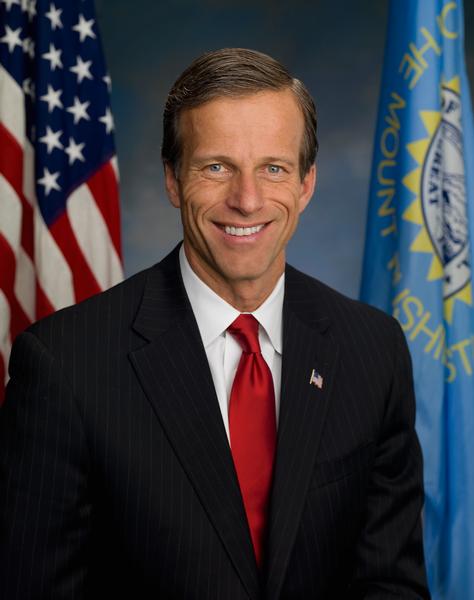
US Senator John Thune’s Weekly Column: Every State is a Border State

Every State is a Border State
By Sen. John Thune  

The crisis at our southern border is the worst in our nation’s history, and the Biden administration bears full responsibility. During President Biden’s first year in office, there were nearly 2 million illegal border crossing attempts. Instead of listening to early warnings from border experts, the president caved to the far-left and refused to acknowledge the humanitarian crisis unfolding right in front of him. Not literally in front of him, I suppose, since the president hasn’t actually visited the crisis zones on our southern border at any point during his entire career as a senator, vice president, or president. During his first year as president, he’s largely ignored the crisis from the comfort of the White House in Washington. 

The Biden administration has single-handedly escalated this crisis, and it has refused to implement meaningful policies that will deter illegal immigrants from coming across our border – it has essentially created a haven for illegal border crossers. Now, instead of addressing the real security and humanitarian crisis that this massive wave of illegal immigration represents, the president and his administration have doubled down, resisting court orders to reinstate the Remain in Mexico policy and conducting migrant relocation flights in the dead of night.

The southern border crisis is not only a problem for border states. It is impacting communities all across our country, including ours in South Dakota. The president’s failed policies make every state a border state. He and others in his administration can’t waste another minute by plugging their ears and covering their eyes. They must act now.

When I traveled to the southern border last April, I didn’t think it could get any worse than what I was seeing at that time. Well, I was wrong. Currently, there is a massive increase of fentanyl being smuggled across the border to states all around the country, with seizures up an average of 134 percent – 1,000 percent in south Texas alone. But this poison obviously doesn’t stay there. It makes its way to communities across the country. Fentanyl overdoses are now the leading cause of death for Americans between the ages of 18 to 45. You would think that statistics like these would snap the Biden administration back to reality, but in fact, Vice President Kamala Harris – the president’s designated border czar – has yet to travel to the border for more than a scripted photo op since taking office.

What’s just as concerning to me are recent reports that revealed U.S. Immigration and Customs Enforcement has been releasing large numbers of illegal immigrants into communities around the country. After migrants are processed at a makeshift border facility, they are put onto planes and scattered throughout the country. This is inexcusable and only encourages continued waves of illegal migration.

Now don’t get me wrong, immigration has helped build this country, and I strongly support making sure that the United States continues to offer a chance for individuals to achieve their dream of a better life and positively contribute to our nation. I also support temporary worker programs, like the H-2B visa program, that allow individuals from other countries to come to the United States for a limited time period before returning to their home countries. This is a critical program for supplementing domestic workers that enables South Dakota businesses, like those in the tourism industry, to handle peak seasonal demand. I have introduced legislation to make this supplemental system more reliable for our employers. But we cannot have endless floods of illegal immigration that fly in the face of our laws and overwhelm the men and women who are trying to protect our country. Immigration has to have limits, and, most of all, it has to be legal.

The administration should prioritize strong border security, stop the rampant abuse of the asylum system, and crack down on the traffickers and cartels that prey on migrants. President Biden has the power to start ending this crisis today by enforcing immigration laws and asserting that the way to come to this country is by doing it legally. It’s time for the president and his border czar to get out of Washington, D.C., to see the crisis they have created and take action before it gets any worse.  

###

Congressman Dusty Johnson’s Weekly Column: Pump the Brakes, Sec. Buttigieg!

Pump the Brakes, Sec. Buttigieg!
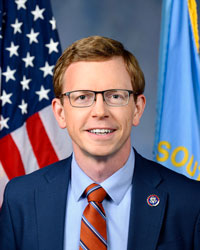
By Rep. Dusty Johnson
February 4, 2022

The Federal Motor Carrier Safety Administration (FMCSA) is set to implement the Entry-Level Driver Training (ELDT) rule on February 7—this Monday. This rule imposes new requirements on entry-level Commercial Driver License (CDL) applicants before they can get behind the wheel. These regulations–originally mandated as part of the 2012 surface transportation reauthorization bill known as MAP-21–requires drivers to complete their training from a provider on the FMCSA’s Training Provider Registry List. 

While well-intended, these new requirements come at a terrible time. We are in the midst of a global supply chain crisis, intensified by an ongoing labor shortage. The American Trucking Associations reports there is a shortage of more than 80,000 truck drivers – I’ve heard for weeks from truck drivers who have said this will disrupt their business and make things worse.

I have been working with my colleagues to delay the ELDT rule, but unfortunately the Biden Administration remains largely unreceptive. This week, I sent a letter to Secretary Buttigieg, urging him to listen to the boots on the ground and delay the implementation of these new requirements.

In November, I sent a letter to Secretary Buttigieg urging reimplementation of the FMCSA’s Under-21 Commercial Driver Pilot Program. The Administration just recently re-started the program, however, the current handling of the supply chain crisis seems to be one step forward, two steps back. Many are concerned that these ELDT requirements will only compound the supply chain crisis and hurt prospective CDL applicants, especially those in rural areas, as well as those pursuing part-time employment in the trucking industry. This will disincentivize new truck drivers from joining the industry, increasing the truck driver shortage.

While the Ocean Shipping Reform Act that Congressman Garamendi (D-CA) and I introduced will help combat part of the supply chain crisis – having readily available truck drivers to transport American goods around the country is a necessity of a proper-functioning supply chain. 

Pump the brakes, Secretary Buttigieg. We need common sense solutions that solve our current crisis, and the new ELDT rule isn’t one of them.

P.S. – If you want to know if the provider near you is qualified as a training provider, you can find a list at https://tpr.fmcsa.dot.gov/. You’ll need to scroll down until you see the “Do you need to find a training provider?” section. Once there, click on “Download the list of registered training providers.” This link will allow users to download a spreadsheet of the ELDT training locations that have registered with FMCSA. Please note the regulations are not retroactive—they do not apply to people who hold these licenses or endorsements prior to February 7, 2022, or who renew them prior to expiration.

###

Thune Takes IRS to Task for Intrusive Identity Verification Measures

Thune Takes IRS to Task for Intrusive Identity Verification Measures

Senators ask IRS how new partnership with outside vendor will affect private taxpayer information and civil liberties

WASHINGTON — U.S. Sen. John Thune (R-S.D.), a member of the Senate Finance Committee and the top Republican on the Subcommittee on Taxation and IRS Oversight, recently joined several of his Senate Republican colleagues in raising serious concerns with the Internal Revenue Service’s (IRS’s) announcement of a major expansion of its collaboration with ID.me that will require taxpayers to have an account to access key IRS online resources. In order to register with ID.me, taxpayers will need to submit a trove of personal information, including sensitive biometric data, starting in the summer of 2022.

“The IRS has unilaterally decided to allow an outside contractor to stand as the gatekeeper between citizens and necessary government services,” the senators wrote. “The decision millions of Americans are forced to make is to pay the toll of giving up their most personal information, biometric data, to an outside contractor or return to the era of a paper-driven bureaucracy where information moves slow, is inaccurate, and some would say is processed in ways incompatible with contemporary life.”

The senators identify a number of problematic issues and raise serious questions, including, but not limited to:

  • The intrusive verification measures that may be required of taxpayers, such as submitting to ID.me biometric data like a video “selfie” – an identifier that cannot be changed if compromised, unlike a password;
  • Cybersecurity standards, and how such sensitive data will be stored and protected;
  • Oversight issues, since ID.me is not subject to the same oversight rules as a government agency; and
  • What assurances and rights are allowed taxpayers within the collaboration, as it appears taxpayers would be subject to multiple terms of agreement filled with dense legal print.

In addition to Thune, the letter, which was led by U.S. Sen. Mike Crapo (R-Idaho), was signed by U.S. Sens. John Barrasso (R-Wyo.), Marsha Blackburn (R-Tenn.), Richard Burr (R-N.C.), Bill Cassidy (R-La.), John Cornyn (R-Texas), Steve Daines (R-Mont.), Chuck Grassley (R-Iowa), James Lankford (R-Okla.), Rob Portman (R-Ohio), Ben Sasse (R-Neb.), Tim Scott (R-S.C.), Pat Toomey (R-Pa.), and Todd Young (R-Ind.).


Full letter below:

The Honorable Charles P. Rettig
Commissioner
Internal Revenue Service
1111 Constitution Avenue, NW
Washington, DC 20224

Dear Commissioner Rettig:

On November 17, 2021, the Internal Revenue Service (IRS) announced a major expansion of its collaboration with ID.me that will require, starting in the summer of 2022, taxpayers to have an ID.me account in order to access key IRS online resources.  While we understand the IRS’s use of ID.me is intended to protect data and reduce fraud, we have serious concerns about how ID.me may affect confidential taxpayer information and fundamental civil liberties.

To access IRS online services, including to check on the status of a return, view balances and payments received, obtain a transcript, and enter into an online payment agreement, taxpayers will soon be required to register for an ID.me account. As part of the registration, ID.me requires a trove of personal information, which may include one or more of the following: (1) government-issued photo ID, (2) passport, (3) birth certificate, (4) Form W-2, (5) social security card, (6) veteran health ID card, (7) DHS trusted traveler card, (8) video “selfie” with a smartphone or webcam, (9) utility bill, (10) insurance bill, (11) telephone bill, and (12) a recorded video interview with an ID.me employee.

The list above is not exhaustive. There are other items ID.me may require. The most intrusive verification item is the required “selfie,” which is much more than simply uploading a picture; it is submitting one’s face to be digitally analyzed by ID.me into a “faceprint.” Additionally, using ID.me appears to subject taxpayers to the terms of three separate agreements filled with dense legal fine print:  a privacy policy agreement, a terms of service agreement, and a “Biometric Data Consent and Policy.”

ID.me‘s “Biometric Data Consent and Policy” defines biometric data as including “fingerprints, voiceprints, hand scans, facial geometry recognition and iris or retina recognition.” Unlike a password, authenticator application, or hardware key, biometric items can never be changed.

We are deeply concerned for many reasons. The government and private companies have an unfortunate history of data breaches. The examples are many. Two of the most prominent are the Office of Personnel Management breach, where the government failed to protect some of its critical employees’ most sensitive identity details, and the recent Pro Publica leak, exposed the legally protected confidential taxpayer information of many American taxpayers. There is ample evidence to be very concerned about an IRS contractor’s ability to safely manage, collect and store this unprecedented level of confidential, personal data. To put this in perspective, in 2019 the IRS estimated it faced 1.4 billion cyber-attacks annually.   It is highly likely, with personal information on a reported 70 million individuals, including biometric data, ID.me could be a top target for cyber-criminals, rogue employees, and espionage.

The IRS has unilaterally decided to allow an outside contractor to stand as the gatekeeper between citizens and necessary government services. The decision millions of Americans are forced to make is to pay the toll of giving up their most personal information, biometric data, to an outside contractor or return to the era of a paper-driven bureaucracy where information moves slow, is inaccurate, and some would say is processed in ways incompatible with contemporary life.   Of concern, also, is that ID.me is not, to our knowledge, subject to the same oversight rules as a government agency, such as the Freedom of Information Act, the Privacy Act of 1974, and multiple checks and balances.

We are interested in obtaining more information about the IRS’s collaboration with ID.me. We also ask that you please respond in writing to the following questions and requests by February 27, 2022, and provide a subsequent briefing to review your written responses.

  1. How did the IRS decide to require taxpayers to submit their personal information, including biometric data, to an outside vendor, in order to access certain online IRS resources?
  2. What due diligence did the IRS complete to ensure taxpayer’s information would be protected before entering into a contract with ID.me?
  3. What oversight does the IRS exercise over ID.me after entering into an agreement with them?
  4. In order to register with ID.me to access an IRS online account, must one agree, or be subject to, ID.me‘s privacy policy agreement, terms of service agreement, and Biometric Data Consent and Policy
  5. Before contracting with ID.me, did the IRS verify that ID.me‘s entire system had gone through an independent cyber-security audit? If yes, are such audits periodic?
  6. List all the types of taxpayer data that will be collected and stored by ID.me. Where will the data be stored? How long will the data be stored? What safeguards are in place to protect the data?
  7. Can an ID.me employee access information uploaded to ID.me by taxpayers? If yes, how does the IRS ensure this taxpayer information is not abused?
  8. Will taxpayers have the ability to remove all their data from ID.me‘s storage? Does removal equate to permanent deletion from all devices where the data is stored? Assuming permanent deletion is possible, how long does it take from request to actual permanent deletion?
  9. If the IRS cancels its collaboration with ID.me, or the contract’s term expires, what will happen to the personal information submitted by taxpayers?
  10. How does the IRS’s contract with ID.me navigate state laws limiting the use of biometric data (e.g., the Illinois Biometric Information Privacy Act)?
  11. Does the IRS know how ID.me‘s required “selfies” are analyzed (e.g., are digital forensics employed to analyze a picture’s metadata, EXIF data, depth map, facial geometry, or 1:1 or 1:many facial recognition)?
  12. Considering the IRS has encountered unprecedented difficulty handling the volume of taxpayer correspondence and telephone calls, does the IRS or ID.me gather information about the taxpayer experience with ID.me (e.g., customer satisfaction, hold times, number of repeated contacts, and difficulties with facial recognition technology)? What mechanisms are in place to ensure quality service by ID.me?
  13. What contingency plans are in place for an event in which ID.me has a data breach that includes taxpayer information?
  14. Please describe the IRS’s process to make ID.me a “trusted technology provider.”
  15. What criminal penalties would IRS employees or contractors face who intentionally or negligently release taxpayer’s personal information without their consent?

Thank you for your immediate consideration of this matter.

Sincerely,


Governor Kristi Noem’s Weekly Column: Teach Our Children to be United 

Teach Our Children to be United 
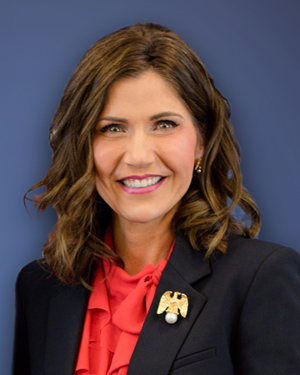
By Governor Kristi Noem 
February 4, 2022 

Imagine teaching your child that our country was founded on racism, or that hard work is not a virtue, or that a young boy or girl should be ashamed of themselves because of their skin color. As a mom and as a grandma, I can’t even begin to imagine poisoning my child with those lies. But believe it or not, lessons like those are being taught to children in America’s K-12 schools and universities. As governor, I want to keep that from happening in South Dakota.

You might have heard about it on TV or read about it on the internet: Critical Race Theory, a neo-Marxist philosophy that says the United States is racist to the core, that equal opportunity is a myth, and that the American Dream is a lie. There are some folks who deny that it’s being taught to kids. They claim it’s a concept that’s just studied in universities or in law schools. Wrong. The truth is, the proponents of Critical Race Theory are hiding their anti-American philosophy in plain sight: in colorful children’s books, revisionist textbooks, and radical lesson plans designed to indoctrinate children into their way of thinking.

Critical Race Theory is embedded in books like “Antiracist Baby,” which teaches children at the earliest of ages not to be colorblind, and even tells them to “confess” to being racist. It’s in the 1619 Project—a series of New York Times articles that invent lies about our country’s history, even teaching that the American Revolution was fought to preserve slavery. Today, those articles are forming the basis of a new curriculum that is being used in 4,500 schools nationwide. And it’s in the curriculum that tells teachers to “challenge the ways that math is used to uphold capitalist, imperialist, racist views.”

If it’s not enough that some schools are teaching kids ideas that are entirely against everything that America stands for, they’re also turning children into political pawns. Through “Action Civics,” students are being forced to take part in political protests. Instead of teaching children our nation’s history, the founding principles, or even the structure of our government, Action Civics unleashes them on the streets as activists, turning them into foot soldiers for partisan fights they may not even understand.

And under President Biden, the U.S. Department of Education is rubber-stamping these materials and using federal dollars to entice school districts into teaching this harmful ideology. In July 2021, I signed an executive order preventing South Dakota schools from being able to apply for federal grants in history or civics until the legislature could provide a solution to this indoctrination from the federal government.

We will not stand for this in South Dakota. Racial division and political activism will have no place in our classrooms. That’s why I have introduced two bills to put a stop to it before it spreads to our state. The first bill ensures that our public schools are not indoctrinating kids and teachers with Critical Race Theory and that students won’t be compelled to engage in political activism. The second bill extends protections against Critical Race Theory to college students and employees, too, while also preserving academic freedom.

It’s also important to note what these bills will not do. They do not prevent difficult conversations about racism, or lessons about moments in the past when we have failed to live up to our American ideals. Bad books and ideas should be balanced, not banned, and students should have access to a wide range of perspectives. But overtly divisive lessons that teach children to hate America should not be forced on a captive audience of young students.

No child should be taught that someone is better or less than someone else because of their skin color. No child should be forced to participate in riots, protests, or lobbying to push a political agenda. And no child should be taught that America is racist, or that the American Dream is not for them. It’s time to put Critical Race Theory and Action Civics in the ash heap of history where they belong.

###

Speaker Gosch, Governor at odds. Governor: “There’s something, some reason this guy doesn’t like me”

The Argus Leader has a story tonight of an apparently acrimonious working relationship between Speaker of the House Spencer Gosch and Governor Kristi Noem.

Did I say working? I don’t seem to think that the leader of the House of Representatives is working with the Governor on much of anything:

“As for the personal attacks, DC politics are not welcome here,” Gosch said. “South Dakotans deserve better from their elected officials, and that’s what they can expect from their Legislature as we continue the crucial work of ending abortion in America.”

Noem said generally her relationship with other Republican leaders in the House, as well as the Senate, is positive, but said it’s obvious Gosch has chosen to repeatedly attack her for reasons she’s not aware of.

and..

“There’s something, some reason this guy doesn’t like me and it seems like a personal agenda but I don’t know what it is.”

Read the entire story here.

Attorney General Jason Ravnsborg makes statement on crash investigation, reaching out to convention delegates

Attorney General Jason Ravnsborg is speaking to the press today on a couple of subjects, including how he believes investigators were looking at the September 2020 car accident which has been the subject of significant scrutiny, as well as speaking to delegates about the next election around the corner.

According to the article by Stephen Groves of the Associated Press:

“I was willing to take a lie detector test. I was willing to go to North Dakota,” Ravnsborg said when asked to respond to the investigators’ testimony. “I took their testimony to basically say that they didn’t want me to because they knew I would tell the truth. So I think that speaks volumes.”

and..

He acknowledged that he had been making calls to the state Republican party’s delegates, who in June will decide the party’s nominee for attorney general, though he cast it as part of his regular order of business. Ravnsborg would face Republican Marty Jackley, his predecessor, at the state convention.

Read the entire article here.

Gov. Noem to Sign Fairness in Women’s Sports Legislation

Gov. Noem to Sign Fairness in Women’s Sports Legislation

PIERRE, S.D. – Today, Governor Kristi Noem will sign Senate Bill 46, which protects fairness in women’s sports. Governor Noem will hold a public signing at 4 pm CT in the Rotunda of the South Dakota State Capitol. The bill signing will be livestreamed on Facebook atFacebook.com/GovNoem.

Following the bill signing, Governor Noem will be holding a press conference at approximately 4:15 pm CT. Below is the information for that press conference:

WHAT: Governor Noem to hold press conference after signing fairness in women’s sports legislation

WHEN: 4:15 pm CT / 3:15 pm MT

WHERE: South Dakota State Capitol – Governor’s Large Conference Room

CALL #: 1-866-410-8397; Conference Code: 833-598-7236

LIVESTREAM: SD.net; Facebook.com/GovNoem

###