Johnson Calls for Committee Field Hearings in Indian Country 

Johnson Calls for Committee Field Hearings in Indian Country 

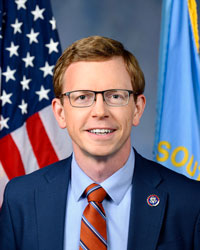
Washington, D.C. – Today, U.S. Representative Dusty Johnson (R-S.D.) called on the House Appropriations Subcommittee on Interior, Environment, and Related Agencies to hold field hearings on Indian reservations to learn about the challenges faced by tribal law enforcement in the Great Plains.

“As I speak with leaders from South Dakota’s nine tribes, it is clear the number one concern facing Indian reservations is the dismal state of law enforcement,” Johnson wrote. “Tribal communities are desperate for relief…The federal government [should honor] the commitment we made and works to meet the law enforcement needs of Indian country.”

“We praise Rep. Dusty Johnson’s action today to request House field hearings on tribal law enforcement needs in the Great Plains. We welcome these hearings as an opportunity for Members of the House to hear firsthand about the crisis we face every day in our tribal communities. A generation of our people are now born plagued by gangs and cartels, human and drug trafficking, organized crime, abuse, and murder. The sole provider of law enforcement services to the Oglala Sioux Tribe is the federal government, and this plague has only grown under their administration in the last 20 years. After years of effort to raise awareness about the dire public safety situation on our lands and our victory in court, we still need federal decision-makers to focus on the reality of public safety in Indian Country in the Great Plains and to take the bold actions to address it.  We thank Rep. Dusty Johnson for being an unwavering ally in our fight for the survival of our people. We look forward to a frank discussion with Congress at the field hearings and a plan of action to address this problem once and for all,” said President Frank Star Comes Out Oglala Sioux Tribe.

Johnson has fought to secure resources for tribal police departments and has been a leader on legislation such as the Tribal COPS Act and the Invest to Protect Act.

Background:

  • This year, [dustyjohnson.house.gov/sites/evo-subsites/dustyjohnson.house.gov/files/evo-media-document/2023-07-02-crow-creek-emergency-declaration.pdf]Crow Creek Sioux Tribe and Oglala Sioux Tribe each issued a State of Emergency on their reservations due to insufficient law enforcement in their communities. The Oglala Sioux Tribe has only 33 officers to cover land areas of more than 3 million square acres.
  • Oglala Sioux Tribe Chief of Police Algin Young shared how his officers must work 80 hours of overtime each month in an Interior Appropriations Subcommittee Hearing earlier this year.
  • Reservations face violent crime rates much higher than the national average.
  • The Pine Ridge Reservation has only one officer to every 1,333 persons and face slow response times as long as thirty minutes.

Read Johnson’s full letter here.

###

Gov. Noem and Colleagues Oppose the Chinese Communist Party Owning American Land

Gov. Noem and Colleagues Oppose the Chinese Communist Party Owning American Land

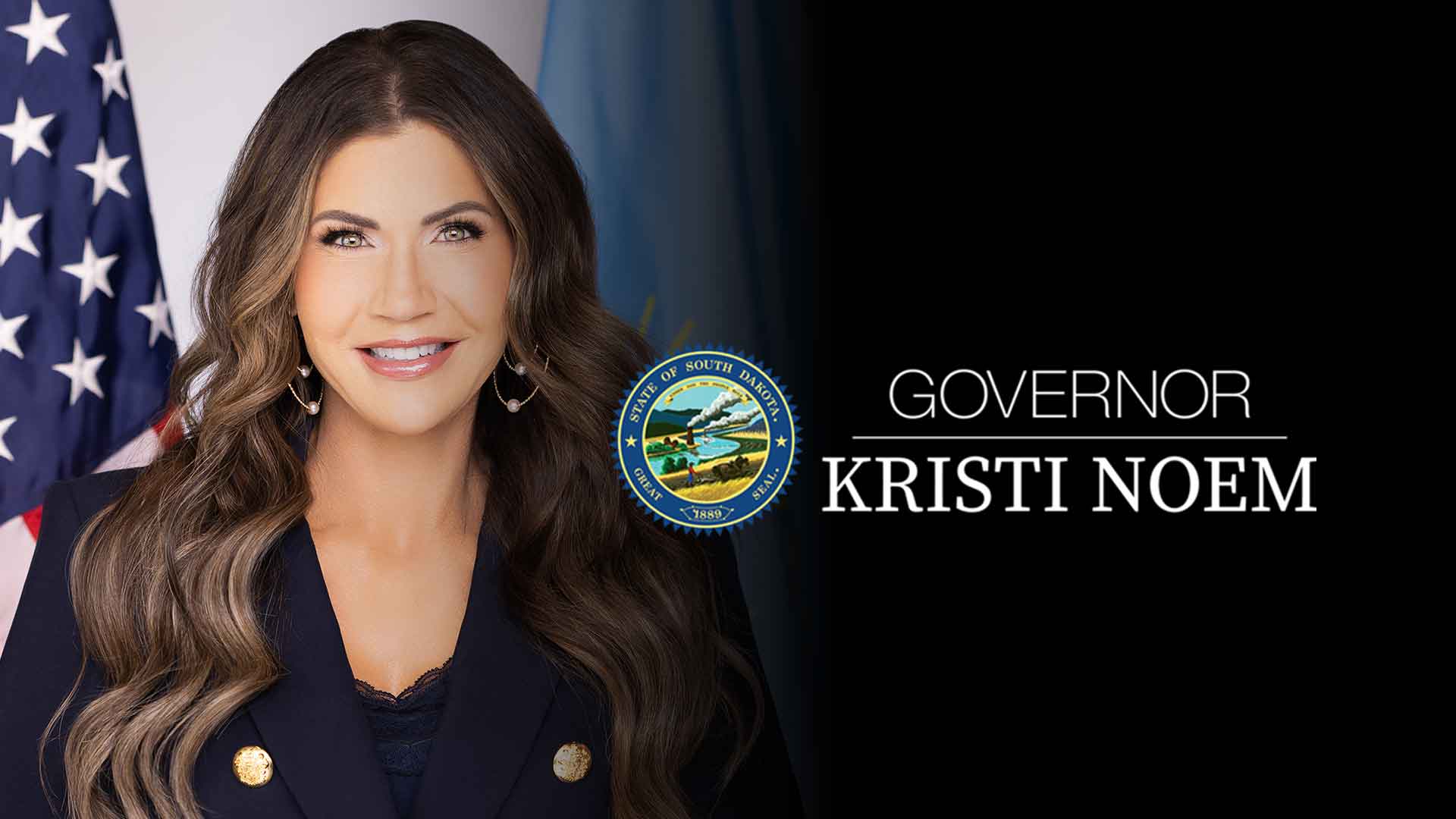
PIERRE, S.D. – Today, Governor Kristi Noem and 16 of her fellow Republican governors sent a letter to President Biden opposing the Chinese Communist Party owning American land. The letter was also sent to U.S. Treasury Secretary Janet Yellen and U.S. House and Senate leadership. You can read the letter here.

“Numerous governors and state legislatures have taken action to protect our citizens form the imminent national security threat of the Chinese Communist Party,” wrote Governor Noem and her colleagues. “But national security demands a national response from national leaders. The responsibility is now with you – follow the lead of our states and prevent CCP amassing of American lands.”

In their letter, the governors call out the Biden Administration for failing to address the threat at hand – leaving states to step up to do the job. South Dakota has, in turn, created the blueprint for state-led foreign policy.

“For too long, we have allowed dangerous and adversarial governments to infiltrate our country. Our states will tolerate such allowances no longer,” continued Governor Noem and the other governors. “The Biden Administration must reckon with the fact that such entities are plain threats to our national security, our farmers, and our citizenry.”

Governor Noem was joined by the following Republican governors in issuing the statement:

Arkansas Governor Sarah Sanders, Florida Governor Ron DeSantis, Georgia Governor Brian Kemp, Idaho Governor Brad Little, Iowa Governor Kim Reynolds, Louisiana Governor-elect Jeff Landry, Montana Governor Greg Gianforte, Nebraska Governor Jim Pillen, North Dakota Governor Doug Burgum, Oklahoma Governor Kevin Stitt, South Carolina Governor Henry McMaster, Tennessee Governor Bill Lee, Texas Governor Greg Abbott, Virginia Governor Glenn Youngkin, West Virginia Governor Jim Justice, and Wyoming Governor Mark Gordon.

###

New items for my political collection, including a missing inaugural pin

I spent this weekend out in the Black Hills, working on a couple of things that I’ll talk about later, but the big thing to share is that when I was in Spearfish, I located a couple of shops with political buttons, including an gubernatorial inaugural pin that’s been missing from my collection for quite some time:

So, the Snoopy for President tab will end up in the frame with other “Snoopy for President” items I have – including a flasher pin. Snoopy doesn’t have quite the top of mind popularity the Schultz cartoon characters had in my youth, but they’re still a fun item. The VOTE GOP ’74 pin was an off-presidential year, so a little more rare, and will go with my GOP items.  The Clinton/Gore is more unusual, campaigning for the native vote, but as it’s not specific to South Dakota, I’ll probably just speculate on that.

The big “Get” for me in this group was  the George T. Mickelson pin I managed to find for $25 – which is a very good price. Near mint condition, including the back paper, this is one that I have not been able to put back with my collection for YEARS. The other George T. Mickelson pin for ’49 is been a lot easier to find, but this one has been tough.  As a bit of trivia, the design for this is almost identical to the Joe Foss 1955 pin.

To complete my set, that leaves me the 1933 pin, the 1953 Sigurd Anderson pin, and the large 1975 Kneip pin.

The other find this weekend just came off of eBay, and no one really picked up on it except me. I was the sole bidder on a pin for Ed. S. Johnson for US Senate, a pin I’ve never stumbled across before in over 30 years of collecting:

Edwin Stockton Johnson, was an unsuccessful candidate for SD Governor in 1912, and you see those pins around, and they pop up on eBay several times a year. I might even have an extra.  But this pin is for Edwin’s US Senate race, in which he had far more success:

(Johnson) was elected as a Democrat to the U.S. Senate in 1914 and served from March 4, 1915 to March 3, 1921. He was the first Senator popularly elected from South Dakota and also the first Democrat to represent South Dakota in the Senate.

From Wikipedia.

So noted, the US Senate pin for Johnson is one I’ve not come across before. Looks like it might have a rust spot or two, but not having it my collection, it was happy win to the sale for this 7/8″ pin for me.

Great items from South Dakota’s political past!

US Senator John Thune’s Weekly Column: Rules of the Road for Artificial Intelligence

Rules of the Road for Artificial Intelligence
By Sen. John Thune

The launch of a new wave of consumer-facing artificial intelligence (AI) applications over the past year has ushered in a renewed focus on AI. Amazon chatbots, Netflix recommendations, and even directions on our phone all use AI, but recent developments demonstrate that the technology is about to take a giant step forward. While the applications with which most people have already interacted are trained to perform narrow tasks, the next generation of AI is designed to produce original content and make complex decisions based on massive amounts of data.

This new technology brings with it seemingly endless possibilities. It promises potentially tremendous advances in medicine, farming, and manufacturing. It can improve everything from national defense to daily life. But, as with any sophisticated technology, this next generation of AI also presents risks. The challenge, then, is how to encourage the promise of AI while ensuring there are basic safeguards in place to minimize potential dangers.

I believe the light-touch approach the United States has taken on internet regulation is a good model to follow for AI. The explosive growth of internet innovation in our country is in large part a result of government not weighing down a new technology with heavy-handed regulation. Leadership in AI will benefit our economy and make America more competitive, so we need to be sure we’re promoting innovation while protecting consumers from the riskiest applications of AI.

To this end, I recently introduced bipartisan legislation that would establish some basic rules of the road for artificial intelligence. Our proposal focuses on two things: transparency for consumers and risk-based oversight of high-impact AI applications. On transparency, our bill would require big internet platforms to clearly inform consumers if the platform is using generative AI to create content. For AI being used to make high-impact decisions – such as those related to health care or critical infrastructure – our bill establishes an oversight framework to ensure it meets certain standards. This bill won’t be the last word on AI, but it’s the right place for Congress to start to preserve space for innovation while protecting against serious dangers and the knee-jerk reaction from Washington to overregulate.

It’s clear that a race to regulate AI has already begun. President Biden has issued a sweeping executive order that empowers multiple government agencies to regulate AI systems. The European Union is pressing forward with a heavy-handed regulatory regime. But this is the wrong approach. It risks stifling innovation just as it’s getting started, which we cannot afford to let happen. If we fall behind adversarial nations, particularly China, there will be profoundly dangerous implications for our national security and economic prosperity.

Unlike these heavy-handed approaches, the bipartisan bill I’m proposing does not assume the worst about artificial intelligence, and it doesn’t rush into sweeping regulation of all uses of AI. Instead, the bill puts guardrails in place to mitigate dangers on high-risk, high-impact AI applications, while leaving American innovators and entrepreneurs free to move forward. I look forward to continuing to work with my colleagues to get this bill across the finish line, and to ensure the United States is once again the leader in an important new technology.

###

State Rep. Kevin Jensen: “Most of us do this out of a sense of duty, not for the money.” What about those contracts?

Back in the saddle after a weekend in the hills!  And if there is one thing that had my phone blowing up while I was on the road, it was State Representative Kevin Jensen’s facebook post which seems to have him lamenting over a potential legislative pay cut of $1300 in 2024, as legislative pay is tied to median income:

Oh my. It’s kind of hard to figure out where to start here.

One of my correspondents took issue with his statement where Rep. Jensen notes “Many of us fund our campaigns out of pocket,” as I had a note fired off to me that they couldn’t “resist to see how much of Kevin Jensen’s campaign he funds himself.”  They looked:

It ends up being (according to itemized amounts) that he’s given $5000 to himself out of a total of $42,486.4 or just around 11.7%. That is not including the $7619.74 that he has loaned his campaign but it does not appear that his campaign has paid back. Meaning that donations for his campaign today may go to paying debt owed to Kevin himself.

Even if you count the loan, I’m not sure how that costs as “mostly.”  Also, and more of a technical item for the SOS.. the campaign finance form really doesn’t provide for loan carry-over information from reporting period to reporting period.

But by and large, the main comments were with regards to another issue that’s more in the news. Noting where Jensen brought up..

I cant think of a day in the last 7 years I have not been involved in issues at some level. Many legislators will tell you the same. Most of us do this out of a sense of duty, not for the money.

Maybe we can’t speak to the last seven years of his involvement in issues at some level, but I and others can’t think of a day over the last few years that a member of his family hasn’t been on the receiving end of a number of state contracts (totaling $528k+), with several that Kevin himself was named as the business fiscal contact.

(You can go look up all those contracts here).

Is Kevin really going to go on facebook and crab about legislative pay when he and his spouse have been involved in state contracts during his tenure to the tune of a half-million dollars?

If he doesn’t care for the legislative pay, he should not run again. Somehow, I think his family has other lucrative income streams which will prevent his starvation.

Miskimins Announces State Senate Candidacy

Miskimins Announces State Senate Candidacy

MITCHELL–Former State Representative Paul Miskimins is excited to announce his candidacy for District 20 State Senate.

Paul and his wife, Ellen, have three adult children, 11 grandchildren, and 14 great-grandchildren. Giving back to South Dakota and working hard to build a brighter future for his family and all South Dakotans is at the core of Miskimins’ drive to bring his leadership experience back to the Legislature.

“I would be honored to once again serve the citizens of District 20 as their voice in Pierre,” said Miskimins. “I care deeply about South Dakota and I’m ready to roll up my shelves and work hard for my neighbors in the region. During my four years in the Legislature, we had challenging issues before us. I’m proud to say I helped look for solutions and I listened to my constituents to do what was best for District 20 and South Dakota.”

Miskimins served in the State House of Representatives for District 20 from 2019-2022. During his tenure, he sat on the Commerce and Energy, Education, and Health and Human Services committees.

Born in Wessington Springs and raised in Mitchell, Miskimins grew up on a ranch with his parents and three brothers. Paul attended the University of South Dakota and graduated from the University of Nebraska College of Dentistry. For 38 years, he owned and operated a dentistry practice in Mitchell until his retirement in 2017. Paul’s love of farming continued throughout his life. Today, he still serves as the President of Miskimins Ranch, a cow/calf operation.

Miskimins believes in serving his community in a variety of ways. His family worships at First United Methodist Church where he served as the president of the church council and as a past Sunday School teacher. Paul serves on the YMCA Board of Directors, Abbott House Board of Directors and Foundation Board, Dakota Wesleyan Board of Directors, and the Life Quest Board. He is a strong advocate for youth sports along with a coach for baseball and football.

Due to term limits, Senator Joshua Klumb is unable to run for re-election to the Senate.

District 20 includes the counties Davison, Jerauld, Miner, and Sanborn. The general election is Tuesday, Nov. 5, 2024.

###

Who said it better? Al Gore or Karla Lems?

I found this quote interesting today, as State Representative Karla Lems provides advice on how to preserve the ethanol market:

“What would it mean if ethanol plants only purchased corn from farmers doing sustainable practices,” Lems asked, “like no-till and cover crops, which pull carbon into the ground?”State Rep. Karla Lems, SD Searchlight 12/1/23

Which sounds a lot like what we hear from some groups..

“New research shows that farming practices that protect and conserve the soil, like no-till farming and raising grass-finished beef, can keep soils healthy and greatly reduce the amount of CO2 lost to the air.”Sierra Club Debuts at ‘Soil Not Oil’ International Conference, SierraClub.org.

and this guy..

“If farming practices are changed through the use of cover crops, low-tilling and tree-planting,” Gore said, agriculture could fight climate change. – Al Gore, Bloomberg 11/4/19 

Just sayin’.

Dusty Johnson’s Weekly Update – The Big Three: Protecting South Dakota

Protecting South Dakota
By Rep. Dusty Johnson
December 1, 2023 

BIG Update

The border crisis continues – and it extends beyond the southern border.

This week, House Republicans passed the Protecting Our Communities from Failure to Secure the Border Act to block the Biden Administration from housing undocumented migrants on National Parks and other public lands.

The need to act came after the Biden Administration set up makeshift shelters for migrants to stay in at a public park in New York City. This park used to be a place for families to play and the public to enjoy. Now it’s filled with thousands of migrants whose backgrounds are not known. This housing is in the middle of a floodplain – it’s not even a safe place for the migrants to stay.

I enjoy using our public lands in South Dakota. They should remain accessible and safe for all Americans to use. Passing the Protecting Our Communities from Failure to Secure the Border Act this week will help safeguard our parks for our communities.

BIG Idea

I spent Monday in Indian country meeting with Crow Creek Sioux Tribe Chairman Peter Lengkeek and Lower Brule Sioux Tribe Chairman Clyde Estes and heard about ways they are improving their communities.

We talked about the new boat dock at LBST, their upcoming grocery store, and CCST’s emergency facilities, mental health resources and law enforcement. Law enforcement in Indian country faces unique challenges such as too few officers, slow emergency response times – as long as thirty minutes – and officer retainment. I’m working on this issue so tribal police departments have the resources they need to keep their communities safe.

BIG News

Investments of state funds across America could be invested in companies backed by the Chinese Communist Party – financing the growth of our biggest adversary. These dollars are available to the CCP to make spy balloons, steal Americans’ personal data on TikTok, and grow the CCP’s military. Some states like South Dakota have attempted to divest their funds, but have trouble doing it. Divesting from these companies requires express consent from Congress.

I introduced the PRC Accountability and Divestment Act to give states the authority to pull their funds from Chinese companies of concern that have humanitarian and military values antithetical to America. We shouldn’t be giving our adversary capital to increase their tyrannical power.

You can read more here.