The other group in this coming year’s ballot measure fight, Dakotans for Health, has their report in to the Secretary of State in case you are interested in perusing that file as well.
(Sorry about the sideways thing.. I’m working on it)
It’s a good thing they started they year with $96,231.30 in the bank, because this group spent the money. Raising $185,002.52 against $248,899 in expenses, the big ticket items on the group’s expenditures was $167,394.98 in consulting fees, and $44,006.95 in salaries. Given that they’re collecting signatures, I can understand the salaries, but again – the consultants win. And they won bigger than they did on the other side of the battle as just like their pro-life counterparts, most of the cash went to them – but FAR WORSE, as consultants pocketed .90 cents of every dollar raised in 2023.
About those donors? No current legislators, but a couple of former ones. Former State Rep. Larry Lucas was in for $100. Former Legislator Caitlin Collier was good for $120. Former Legislator Tom Katus, another $100. Former Sioux Falls Councilwoman Loila Hunking was in for $600 and Former US Senator Tom Daschle for $850.
Biggest donors for the measure in 2023 were Elizabeth Zieglmeier of Rapid City and Former legislator Stan Adelstein who both sent the pro-choice movement $5,000 each.
Again, catch anything interesting? You know where the comment section is.
The Life Defense Fund Ballot Committee’s filing for what they raised and spent in 2023 is finally posted.. almost 10 days after it was filed with the Secretary of State’s office. A bit of lag time, to be sure.
So, what did we learn about the committee from their filing? From the looks of it, when a ballot measure is being contested it looks like the true winners are the consultants, reaping nearly .57 cents of every dollar the group took in.
Against income of $210,930.11 were expenditures of $209.294.36. And within those expenditures, the two biggest ticket items were advertising of $61,095.72 and eye-popping consulting costs of $119,741.94. YOW!
A few Legislators on the list of donors. Only two donated money out of their campaign; Sen. Al Novstrup and Rep. Carl Perry, who both donated $100 each from their campaign accounts. (Although I have to wonder if Carl may have donated because Al told him to?) State Sen. Jack Kolbeck donated $500 out of personal funds, State Rep. Fred Deutsch $500, Sen. Jim Mehlhaff $300, State Rep. John Mills was in for $200, and State Rep. Bethany Soye was the largest legislative donor as she was in for $2400, comprised of 8 donations of $300 each.
Adam Broin of the Patriot Ripple Effect donated over $5k. Marj Anderson of White, SD was another $5k donor, and it looks like Steve Perkins is down twice for $2500 each, totaling $5k.
A few Republican Women groups donated varying amounts from $500 on down. Some are listed under In-State PACs, and Codington County Republican Women and Cenkota both donated and were listed as an “entity.”
Go ahead and read it for yourself.
(In case anyone else picks up anything interesting, go ahead and post it under the comment section.)
Welcome back to another edition of the Weekly Round[s] Up! As many of you may know, I attend the Senate Prayer Breakfast with my colleagues nearly every week when I’m out here in Washington. Once a year in early February, we have the National Prayer Breakfast, where our typical small group of 15 or so expands well into the hundreds. We welcome several guests to the Capitol, including the President, to join us for a morning of prayer and fellowship. The National Prayer Breakfast is an important example of elected officials coming together from both sides of the aisle, putting politics aside for one morning to pray for the good of our nation. Here’s my Weekly Round[s] Up:
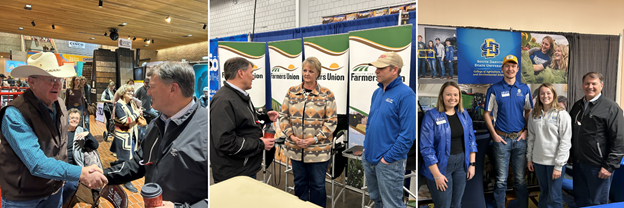
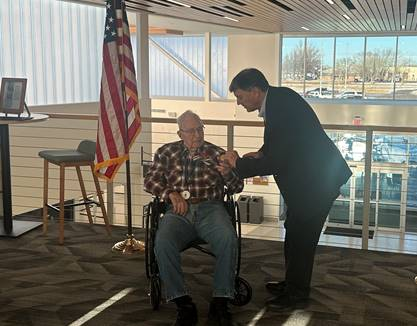
South Dakotans I met with: Students from Lincoln High School visiting Washington D.C.; the South Dakota Chiropractors Association; the South Dakota Wheat Growers Association; and South Dakota members of the Merchants Payments Coalition. I was in Rapid City for the Black Hills Stock Show, and I traveled to Watertown to present United States Army veteran Clifford Lindner with the Atomic Veterans Commemorative Service Medal.
Visited with South Dakotans from: Aberdeen, Dakota Dunes, Lead, Miller, Pierre, Rapid City, Sioux Falls, St. Lawrence and Watertown.
Photos from the Black Hills Stock Show:
Other meetings: Admiral Samuel Paparo, nominee to be Commander of United States Indo-Pacific Command; Judy Faulkner, CEO of Epic Systems; David Maurstad, FEMA’s Assistant Administrator of the Federal Insurance Directorate and the senior executive of the National Flood Insurance Program; Eric Schmidt, former CEO of Google; Jacob Helberg, Senior Policy Advisor at Palantir; Ramush Haradinaj, former Prime Minister of Kosovo; Jason Kelly, Chair of the National Security Commission on Emerging Biotechnology; President Paul Kagame of Rwanda; Azarias Ruberwa, former Vice President of the Democratic Republic of the Congo; and Senate Bible Study, where we studied Philippians 1:9.
In addition to the National Prayer Breakfast, we had our Senate Prayer Breakfast, where I was our speaker this past week. There is a sign that hangs in the Washington Monument with a quote from George Washington in 1785 that reads “My first wish… is to see the whole world in peace, and the inhabitants of it as one band of brothers, striving who should contribute most to the happiness of mankind.” I had a copy of it made to put in my Washington D.C. office. I spoke about this quote at prayer breakfast this past week.
Votes taken: 21 – These were on nominations for judge positions across the United States, as well as several executive branch positions, including on the Amtrak Board of Directors and at the Environmental Protection Agency.
Hearings: I attended seven hearings over the past two weeks. Three in the Select Committee on Intelligence, two in the Senate Armed Services Committee and one in the Senate Banking Committee. I also attended one hearing in the Senate Banking Committee’s Housing, Transportation, and Community Development Subcommittee on AI in Housing.
Classified briefings: I had four classified briefings these past two weeks, three of which were related to my work on the Senate Armed Services Committee. One was our bi-weekly cyber education seminar.
Legislation introduced: I introduced legislation that would ban fake meat products from being served in school lunches. The School Lunch Integrity Act of 2024 would prohibit the use of cell-cultivated meat under the National School Lunch Program and the School Breakfast Program. You can read more about this bill here.
I also introduced legislation with Senator Bill Hagerty (R-Tenn.) that would work to make certain that only U.S. citizens are factored into the count for congressional districts and the Electoral College map that determines presidential elections. You can read more about the Equal Representation Act here.
My staff in South Dakota visited: Aberdeen, Fort Pierre, Huron, Madison, Pierre, Rapid City, Sioux Falls and Watertown.
Steps taken this past week: Week 1: 53,838 steps or 26.71 miles Week 2: 58,804 steps or 29.19 miles
Photo of the week: As I mentioned, I traveled to Watertown to present U.S. Army Veteran Clifford Lindner with the Atomic Veterans Commemorative Service Medal for his work on Operation Upshot-Knothole, a series of nuclear tests that took place in Nevada in 1953:
It must be kismet. Fate, if you’re not familiar with the term.
I spent most of yesterday sick as a dog and curled up in bed, having eaten something I shouldn’t have the night before when I was traveling back to Brookings from Spearfish. I thought it might be the Chinese I ordered after I got home, but my wife is convinced that it was the gas station sandwich I grabbed for Lunch during the 6 1/2 hour drive home. And a couple days later, I notice my likely gas station cuisine induced illness had distracted me from an important milestone. This website – South Dakota War College – in a universe where most blogs hardly last more than two years has managed to fully achieve 19 years of age.
When I wrote my first post, I was 38 years old with six kids, one of which was a newborn. Now, I’m that much older, the father of seven, with most out of the house; two married, one in the middle of law school, one a Legislative Assistant in Congress, one learning how to drive submarines in the Navy, and the last child’s graduation in sight in a couple of years. Maybe I’m close to minimizing the number of boomerang kids, but I won’t count on it.
It’s still hard to wrap my head around it that I’ve been around 19 years. Literally, it’s like an employment career… with the worst salary and benefits ever. Come join the world of blogging! Be avoided on the street! Your friends and enemies alike will throw rocks! Get the tar beaten out of you on-line for years to come!
Sounds attractive, doesn’t it?
There are times when writing/posting gets to be a chore, and there are times when words just flow. In an environment where just about all of the websites who were around when I started are gone, and those that came after have dropped off, I’m not sure why I’m one of the last ones standing. But here I am after 19 years.
When I started writing, it was for the goal of making state politics better, and I don’t know that the goal has changed all that much, because it’s a constantly a moving target.
Over the years, I’ve had the opportunity to find and some candidates and elected officials who were and are worth believing in, because they have found a way to be both inspirational and aspirational as they try to find solutions for their fellow South Dakotan. There’s also those who you think are ok, but turn out to be schmucks. Of course, you have those that you know to be awful, and leave you shaking your head in disbelief that their voters don’t get it.
But hopefully we can find come across more champions of their fellow men and women who are guided by their values and sense of the common good, as opposed to the cookie cutter candidates whose bullet points are all nearly identical, because their values come less from themselves than they do from what they read on facebook.
I’m starting to make this overly long when I have other things I need to get done tonight. But suffice it to say, I appreciate you, my readers, and thank you for the 19 years to date. We’ll see if I can keep this up for another 19!
and a musical note from Joe Jackson about remaining Nineteen forever!
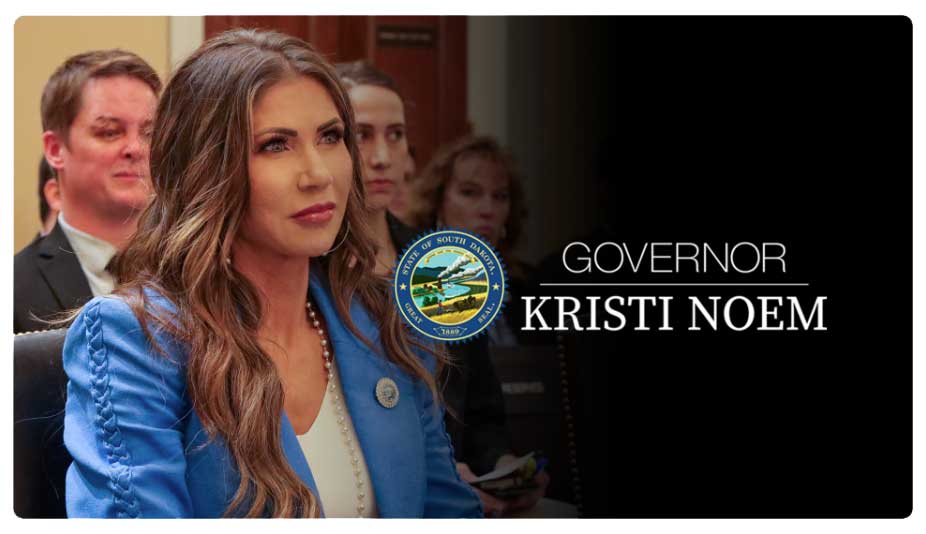
Gov. Noem and Colleagues Oppose Biden’s Amendments to the National Forest System
PIERRE, S.D. – Today, Governor Kristi Noem and five of her fellow Republican governors sent a letter to President Biden and United States Department of Agriculture (USDA) Secretary Tom Vilsack opposing the amendment of all land management plans for units of the National Forest System. You can read the letter here.
“We have watched this effort unfold over the course of nearly two years. During this time, USDA and USFS leadership have failed to engage with us as leaders of our states to address any of the challenges and flaws we have identified with this old–growth forest policy,” wrote Governor Noem and the other governors. “We cannot have confidence that this policy is sound and supported by science… The USFS should abandon this effort or at the very least, begin this process again.”
The governors in their letter explain that the existing old-growth forest definitions are sound and sufficient for informing decisionmakers.
“We are witnessing a concerning theme across federal land management agencies where decision-making is being elevated to the Washington Office and the expertise of the field is being ignored,” continued Governor Noem and her colleagues. “USDA and USFS should be focusing on where the need truly is – removing administrative bottlenecks and working with partners to increase the pace and scale of forest management projects in order to meaningfully address our forest and wildfire health crisis.”
South Dakota Department of Agriculture and Natural Resources State Forester Markus Warnke also sent a letter on this subject to the director of the Ecosystem Management Coordination Staff. You can read that letter here.
Governor Noem was joined by the following Republican governors in issuing the statement:
Montana Governor Greg Gianforte, Wyoming Governor Mark Gordon, Idaho Governor Brad Little, Utah Governor Spencer Cox, and Nevada Governor Joe Lombardo.
*Update*. I thought a new graphic would be more appropriate.
Hadn’t paid much attention to the actual press release that went out this morning for Toby Doeden announcing that he’s going to back out of challenging Congressman Dusty Johnson in the race for US House.
But as I went and re-read it, a name not unknown popped up..
Takeaways? Well, #1, I call bullsh*t that they’re going to raise anything approaching a million dollars. And #2 – We have yet to see a committee filing any public disclosure on anything that Doeden has spent in his failed effort. Coming after his effort crashed and burned after about a month, it seems like a lot of false bravado trying to claim all these things Toby and his hired flak Caroline are going to do unless and until we actually see a committee and they file a finance report, which remains to be seen.
But considering the players and all the attacking both do against the leading Republicans in the state, it may provide some explanation why they never used the word “Republican” in any of their efforts.
Flags at Half-Staff Statewide in Honor of Chief Deputy Ken Prorok
PIERRE, S.D.– Today, Governor Kristi Noem ordered that flags be flown at half-staff statewide from sunrise until sunset on Thursday February 8, 2024, in honor of Moody County Sheriff’s Office Chief Deputy Ken Prorok, who was killed in the line of duty on February 2.
“We are grateful for the life and service of Chief Deputy Prorok – he is a true hero,” said Governor Noem. “My prayers are with Chief Deputy Prorok’s family, friends, and the entire community.”
Visitation for Chief Deputy Prorok will be from 5:00-8:00pm CT on Wednesday February 7 at the Chester Area High School Gymnasium (101 2nd Ave, Chester, SD, 57016). Funeral services will be held at 1:00pm CT on Thursday February 8 at Dakota Prairie Playhouse (1205 Washing Ave N, Madison, SD, 57042).
I’ve been keeping an eye on the campaign finance reports filed with the Seretary of State’s office in their reporting system. And it appears that the SOS office is listing some noteworthy reports that seem to be missing that were supposed to be filed on on JANUARY 26, 2024 for the Year End reports that were due.
According to information on the Secretary of State’s website, Statewide candidates owed the SOS the 2023 Year-end report, as well as statewide political parties (not county parties), Statewide PAC’s, and Statewide Ballot Question committees. All should have had their reports in by now.. and their website list a few that they say have not met that benchmark. So, who ended up on Secretary of State Monae’s Johnson’s naughty list as of this morning as not having submitted their reports yet?
Former Attorney General Jason Ravnsborg has a double hit of being on the list. Once for his PAC $99 for Freedom, and once for his Statewide Candidate Committee Jason for South Dakota. Dude.. get your reports in. You seriously don’t need more bad press.
Former legislative candidate, and now chair of SD Gun Owners Michael Boyle seems to be missing the latest SDSOS Campaign Finance report. Which, you would think should bar a group from sending out flourescent postcards in the next primary if they can’t file their campaign report. There ought to be a law…
South Dakota State Representative Jon Hansen counts among his various soapboxes the Life Defense Fund, but running an organization must not be his strong suit, as this ballot question committee is on Monae Johnson’s naughty list under the “not submitted” status.
State Rep. Peri Pourier didn’t file her Strengthening Common Ground PAC. And while State Rep. Liz May might claim to have conservative principles, filing a timely report for her Conservative Principles PAC would not seem to be included among them.
And finally, the Adam Broin/Dave Roetman group Ripple Effect had been on the “didn’t file your PAC” list at about the time of the deadline, but then mysteriously disappeared. A review of their organizational landing page on the Secretary of State’s website seems to show no record for a report having been filed. So… are they tardy, or aren’t they a week-and-a-half after the deadline?
We’ll keep watching the report filings.
(Update)
Jon Hansen sends a note this afternoon indicating that the report for the Life Defense Fund has actually been filed. Which if that’s the case, makes you wonder what’s going on with the records being provided to the public by the SOS, since this is 11 days past the filing deadline?